Hippocampus reidi
Rare and easy to miss: spot the longsnout seahorse on Bonaire's East Coast and Leeward reefs in 24 to 28C water, year-round.
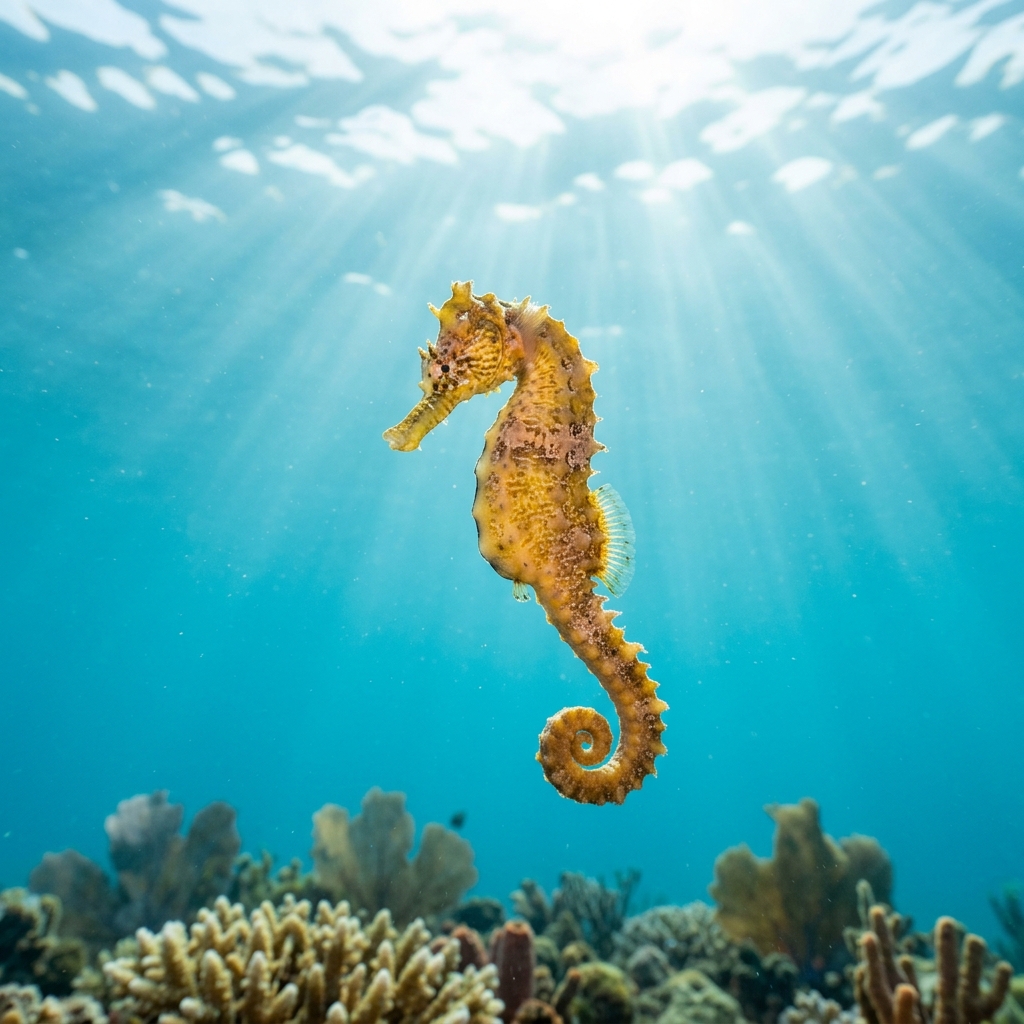
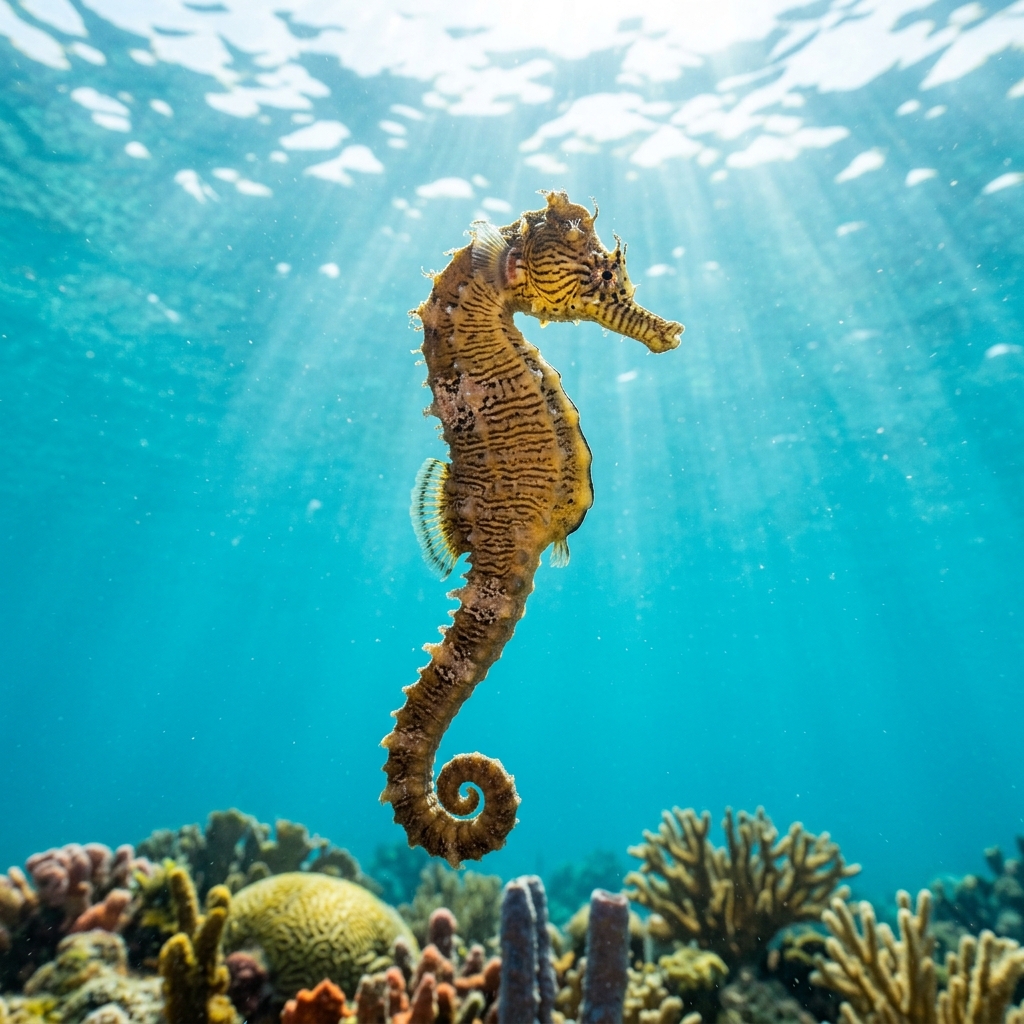
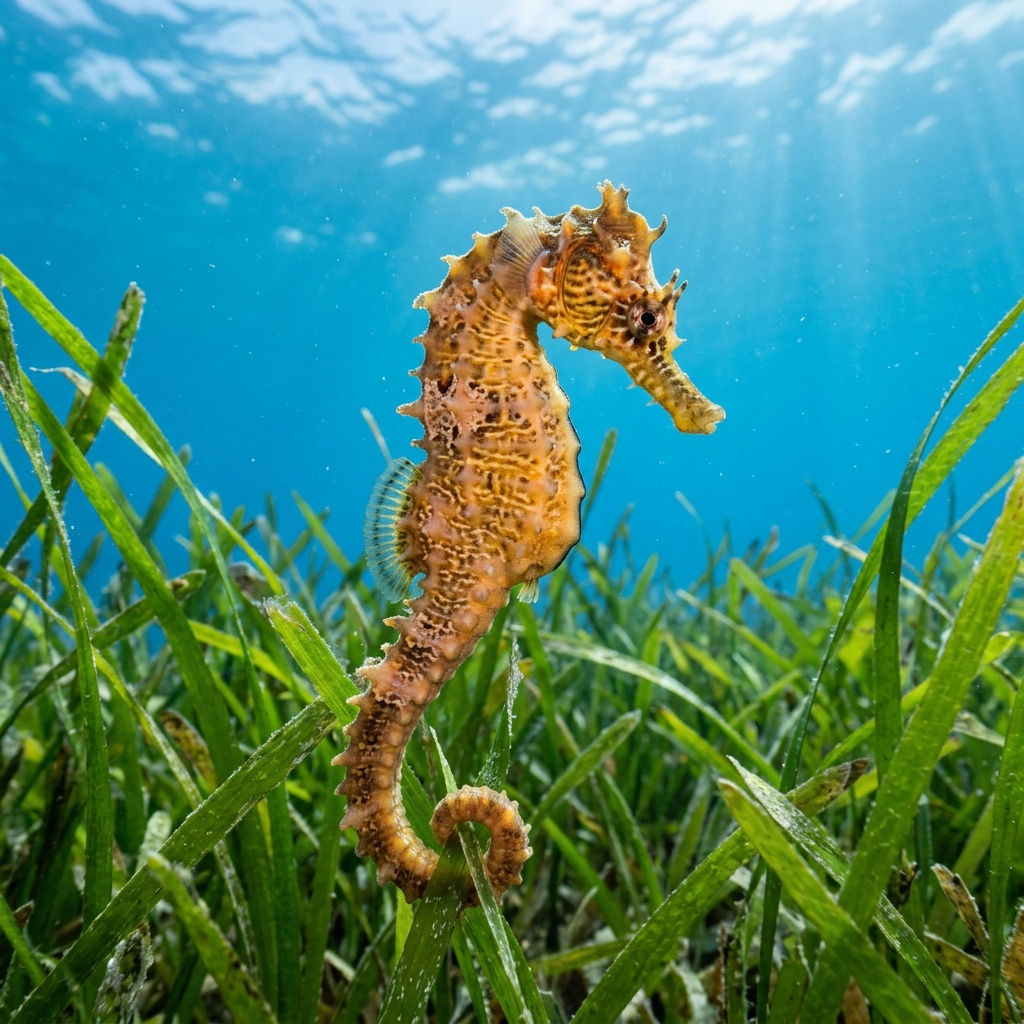
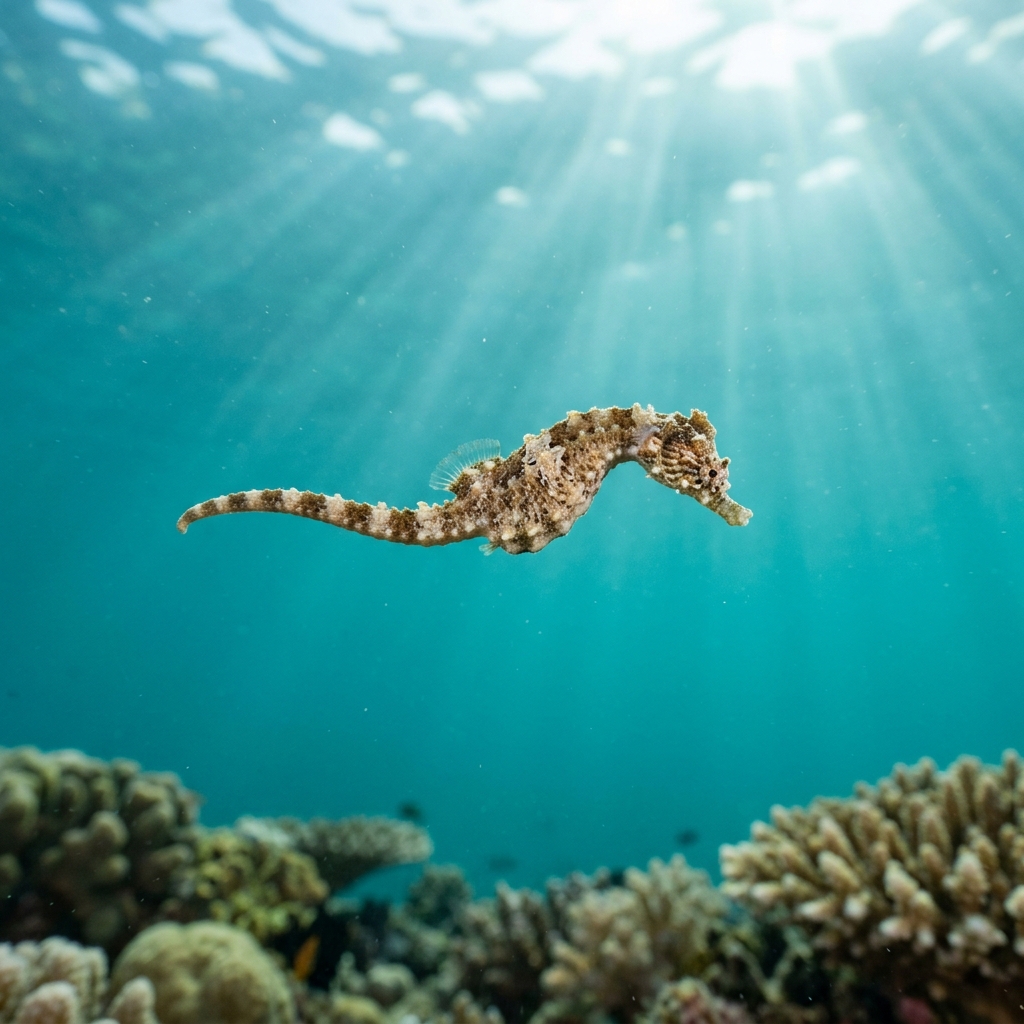
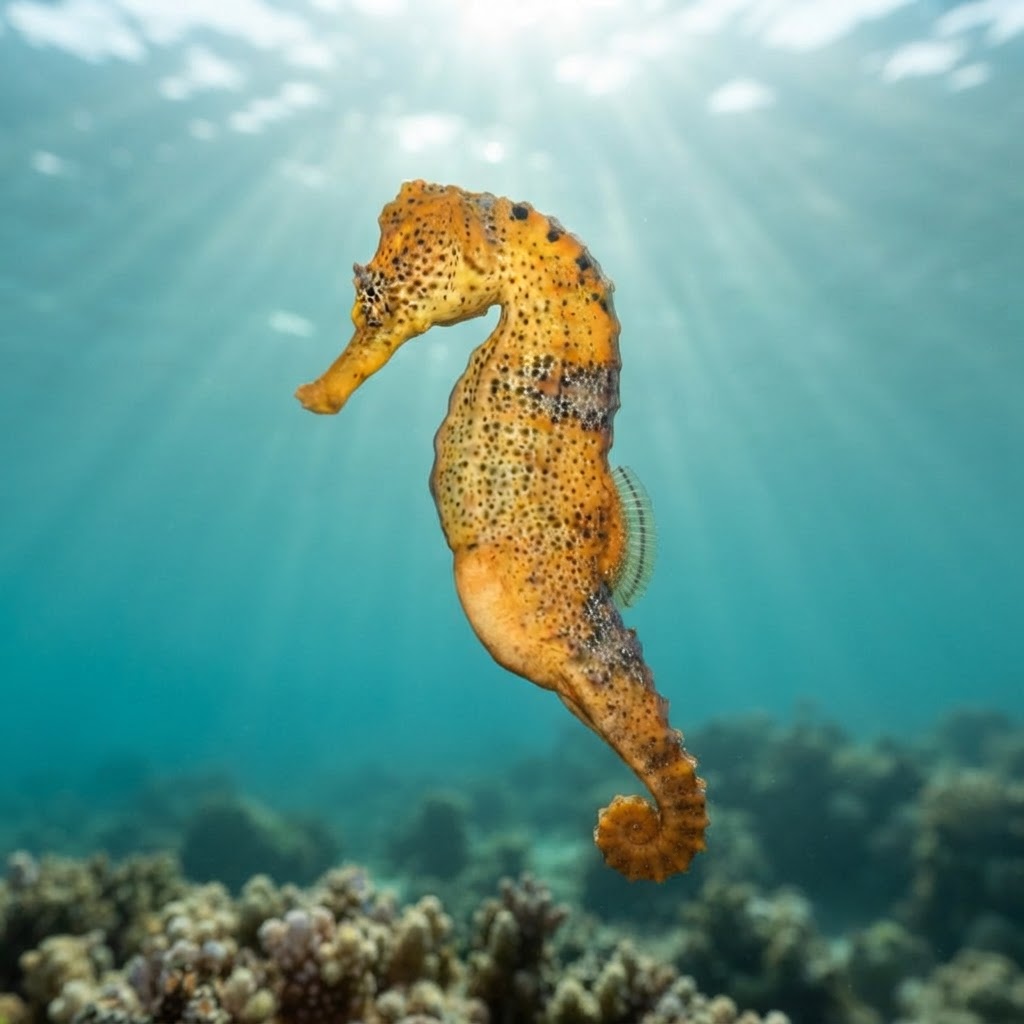
A slender, elongated snout and a smooth body set this apart from stockier seahorses, growing to around 13 cm in the water. Colour is highly variable, from bright orange or yellow to red, brown or mottled patterns, often matching whatever sponge or gorgonian it is gripping. Look for the long, thin tail curled tight around a holdfast and a body covered in fine, low spines rather than sharp knobs.
Expect a still, well-camouflaged animal gripping a sponge, gorgonian branch or bit of rope with its tail rather than swimming in open water. It tends to sit tight rather than flee when a diver approaches slowly, which is helpful given how easily its mottled colouring blends into the reef. Most sightings come from divers moving slowly and scanning holdfasts closely rather than covering ground.
Males carry and give birth to the young after females deposit eggs into a brood pouch, a reversal of typical vertebrate parenting that is standard across all seahorse species.
Sightings show no detectable seasonal pattern, and with water sitting comfortably between 24 and 28C year-round on Bonaire's reefs, this is a species to look for on any given month.
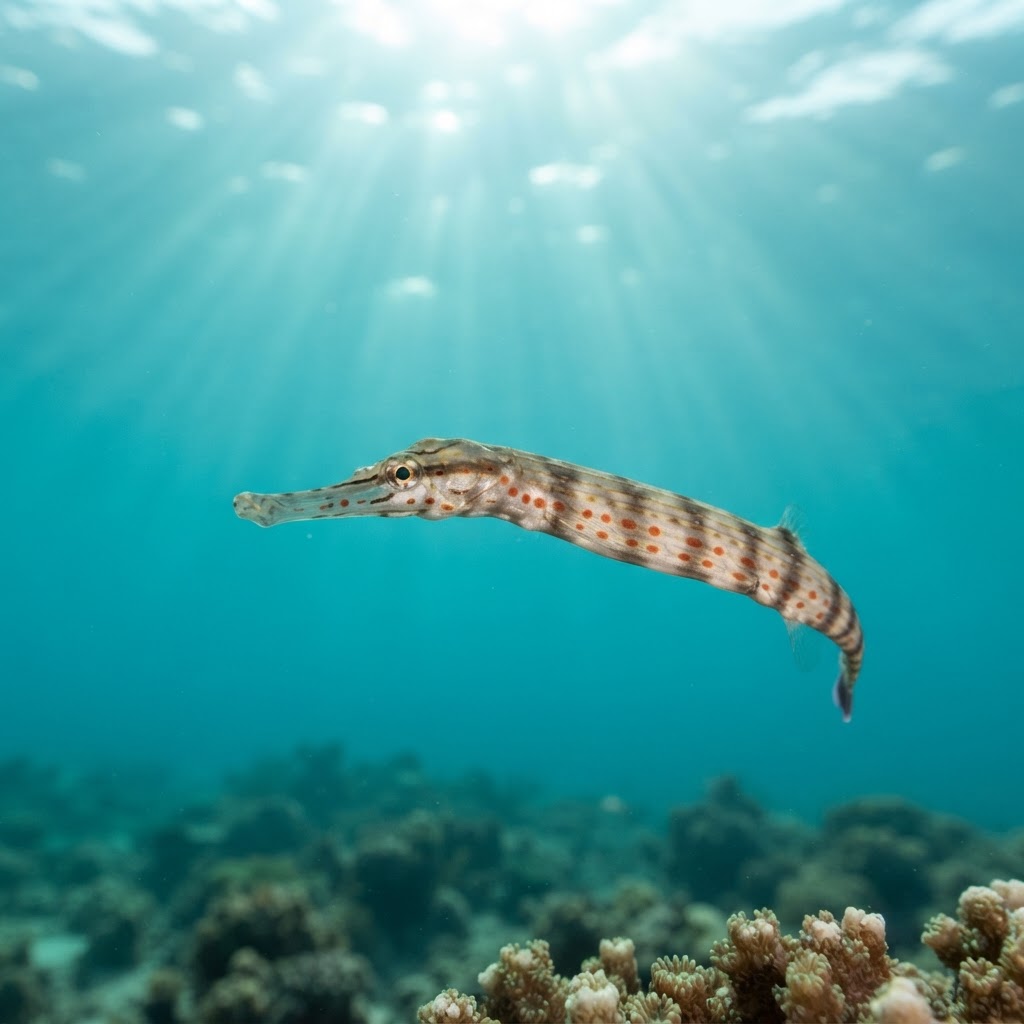
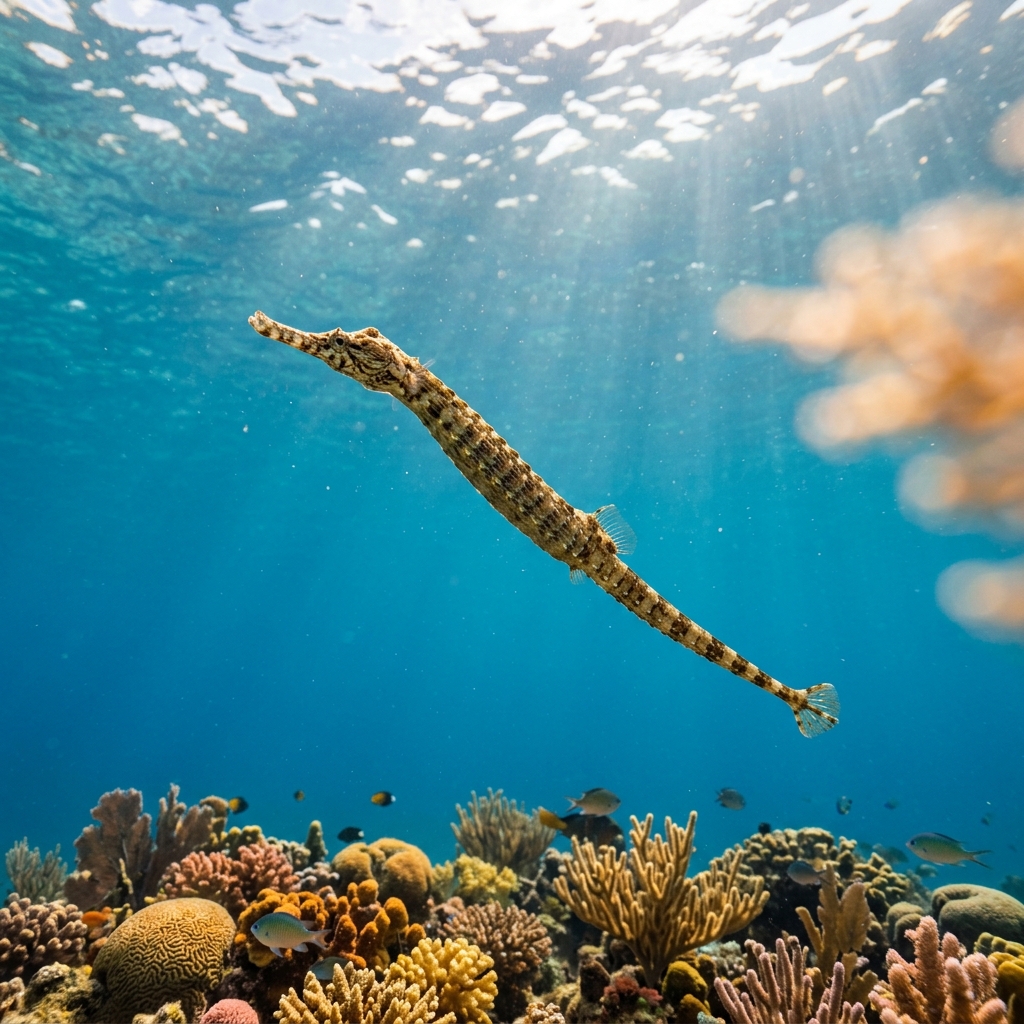
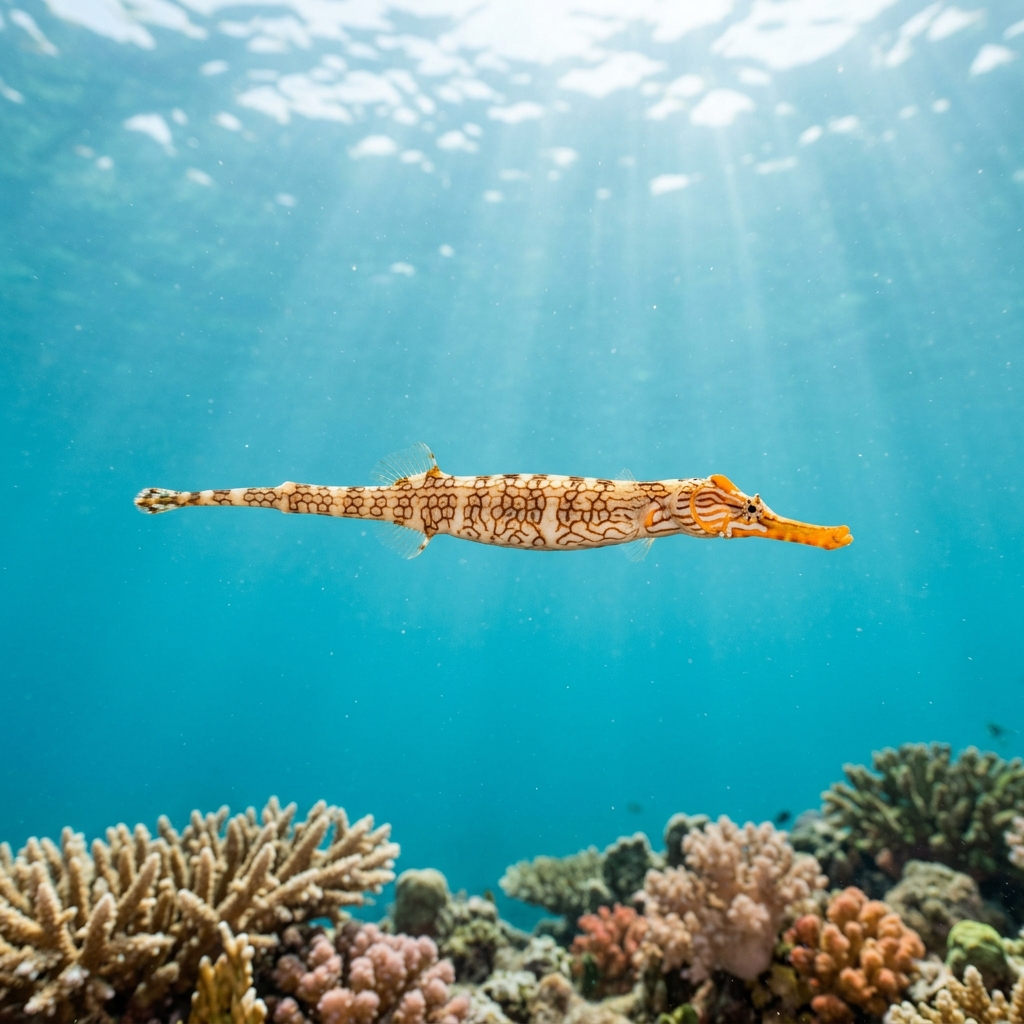
Reef neighbours a diver could mistake it for. Use the identification notes above to tell them apart.
Bonaire is the place to look, with sightings concentrated along the East Coast and the Leeward Coast. It is not a widely reported species elsewhere in the data, so a trip to Bonaire is currently the most reliable way to plan a search for one.
Mapping where Longsnout Seahorse is logged…
Bonaire is the standout location, with sightings logged along the East Coast and the Leeward Coast in particular. Look for sites with sponges and gorgonians rather than open sand or rubble.
There is no clear seasonal pattern in sightings, and water temperatures on Bonaire's reefs stay in a comfortable 24 to 28C range all year, so any month is fair game.
Check for a long, thin snout, a slender body up to about 13 cm, and a tail curled around a sponge or gorgonian branch. Colour varies widely from orange to red to brown, so shape and posture matter more than colour for ID.
They typically reach around 13 cm in length, measured from the top of the head to the tip of the extended tail. That makes them a mid-sized seahorse, larger than the pygmy species but smaller than pot-bellied seahorses.
As with all seahorses, males carry the developing young in a specialised brood pouch after females transfer eggs to them. The male then gives birth once the young are ready to leave the pouch.
Site and sighting data is aggregated from diver logs, iNaturalist and GBIF. For taxonomy and conservation status:
Seahorse
1,346 sites