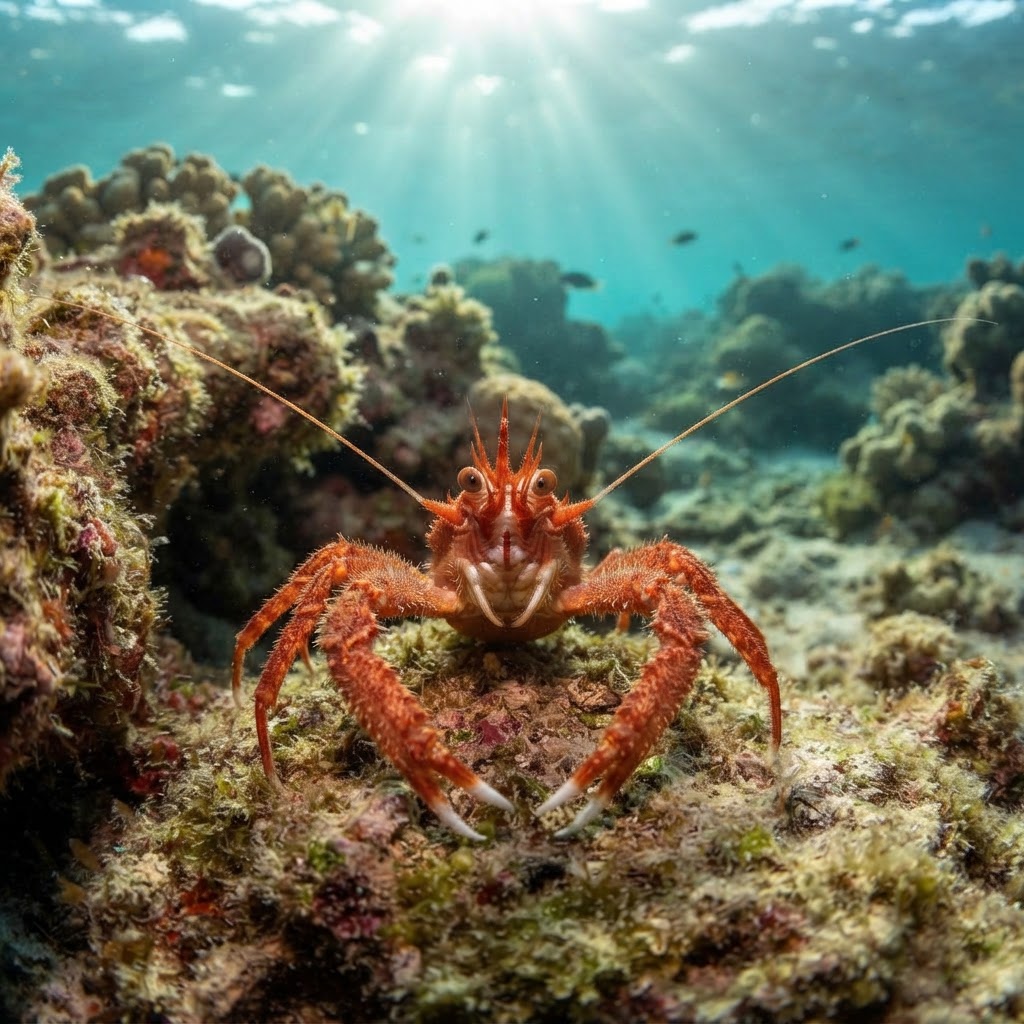
Munida rugosa
Spot the long-clawed squat lobster tucked in Scotland's rocky reefs, year-round in water as cool as 9.6C. Here's where and how to find one.
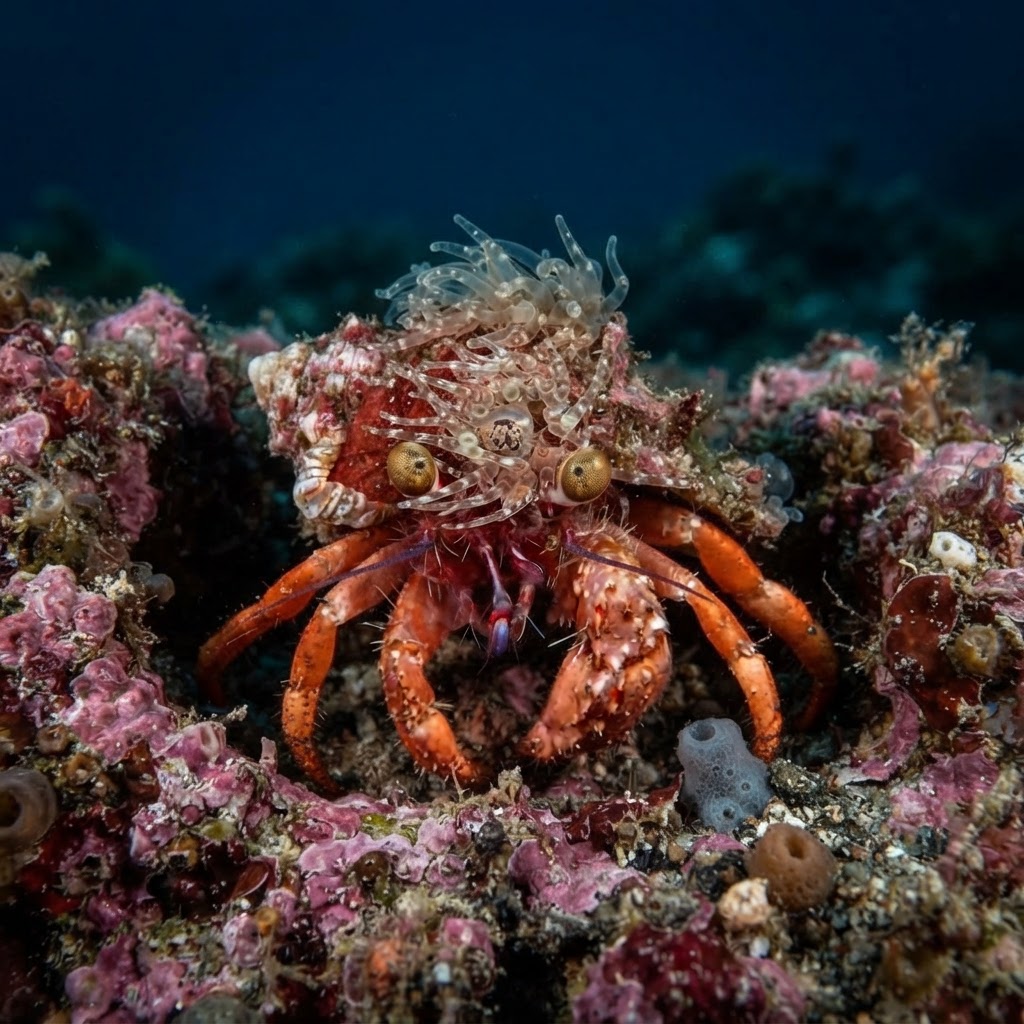
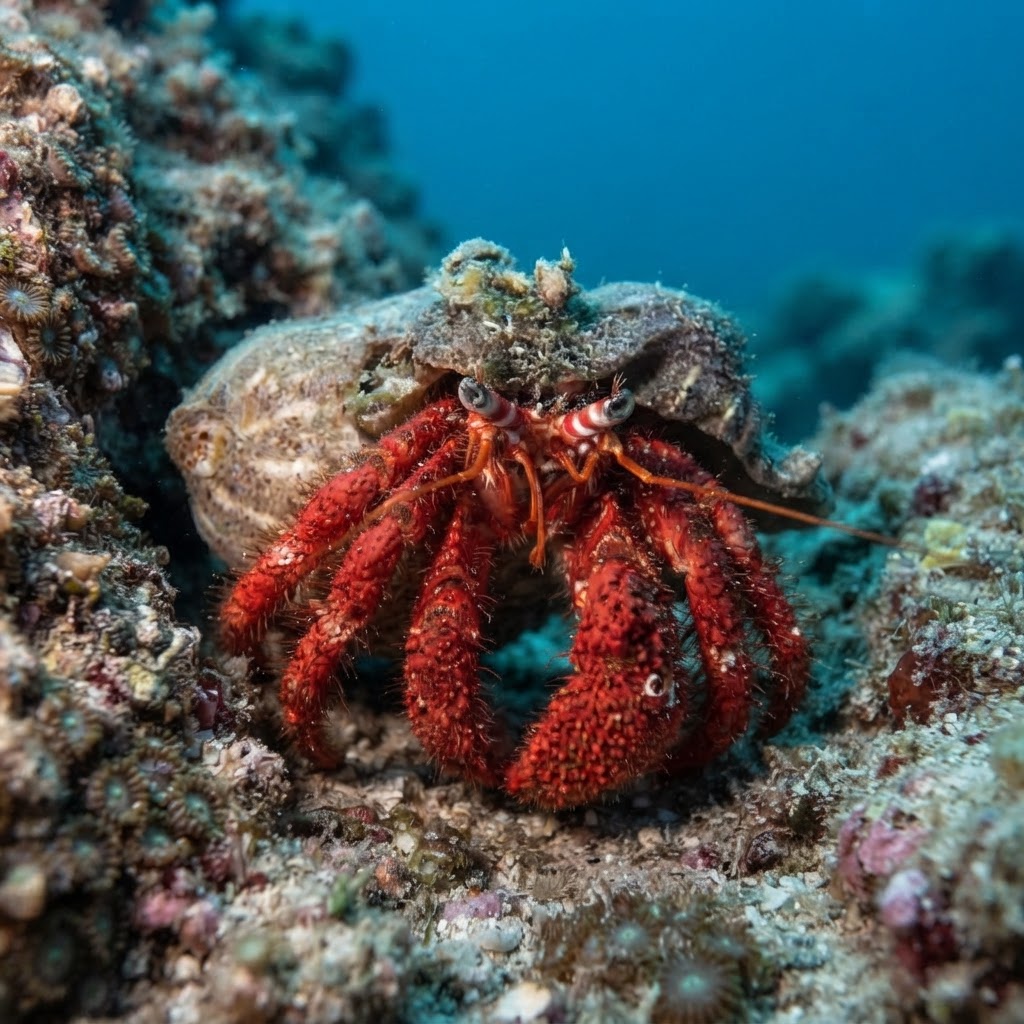
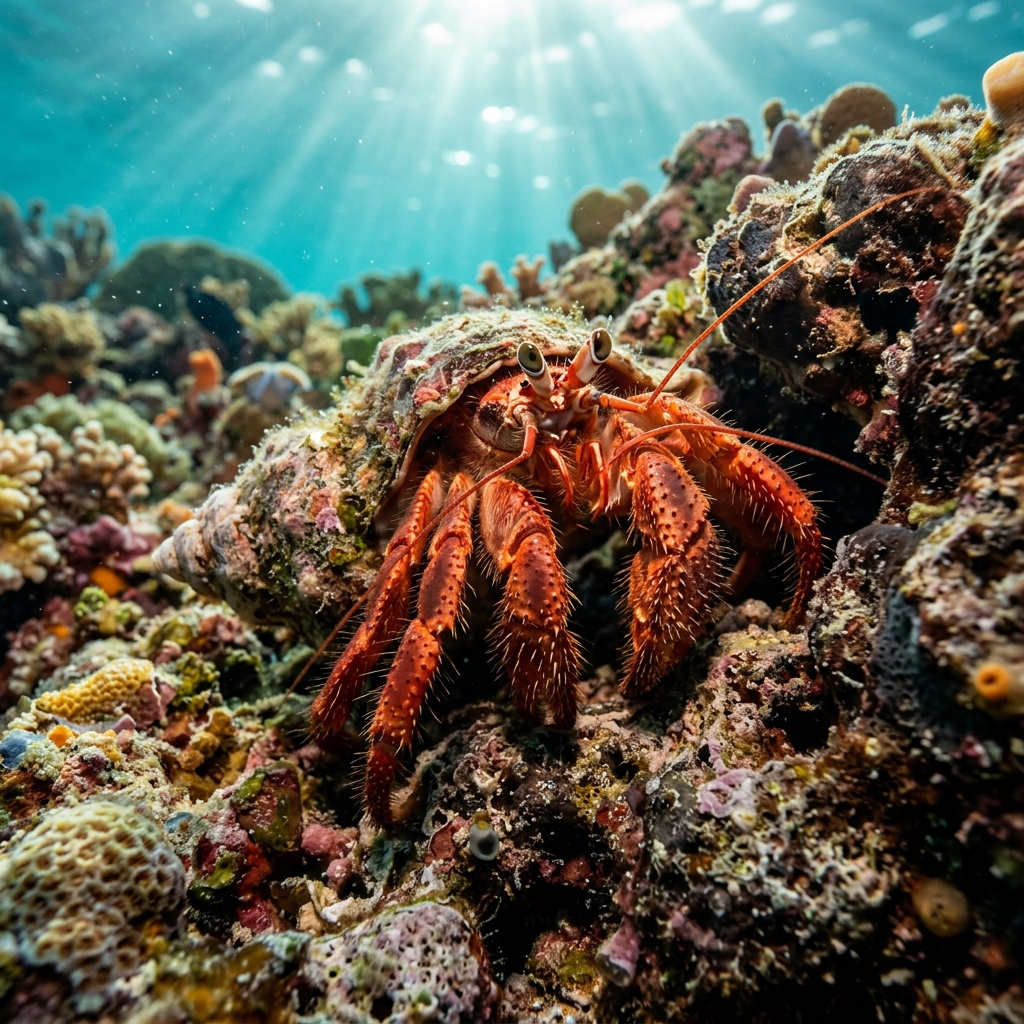
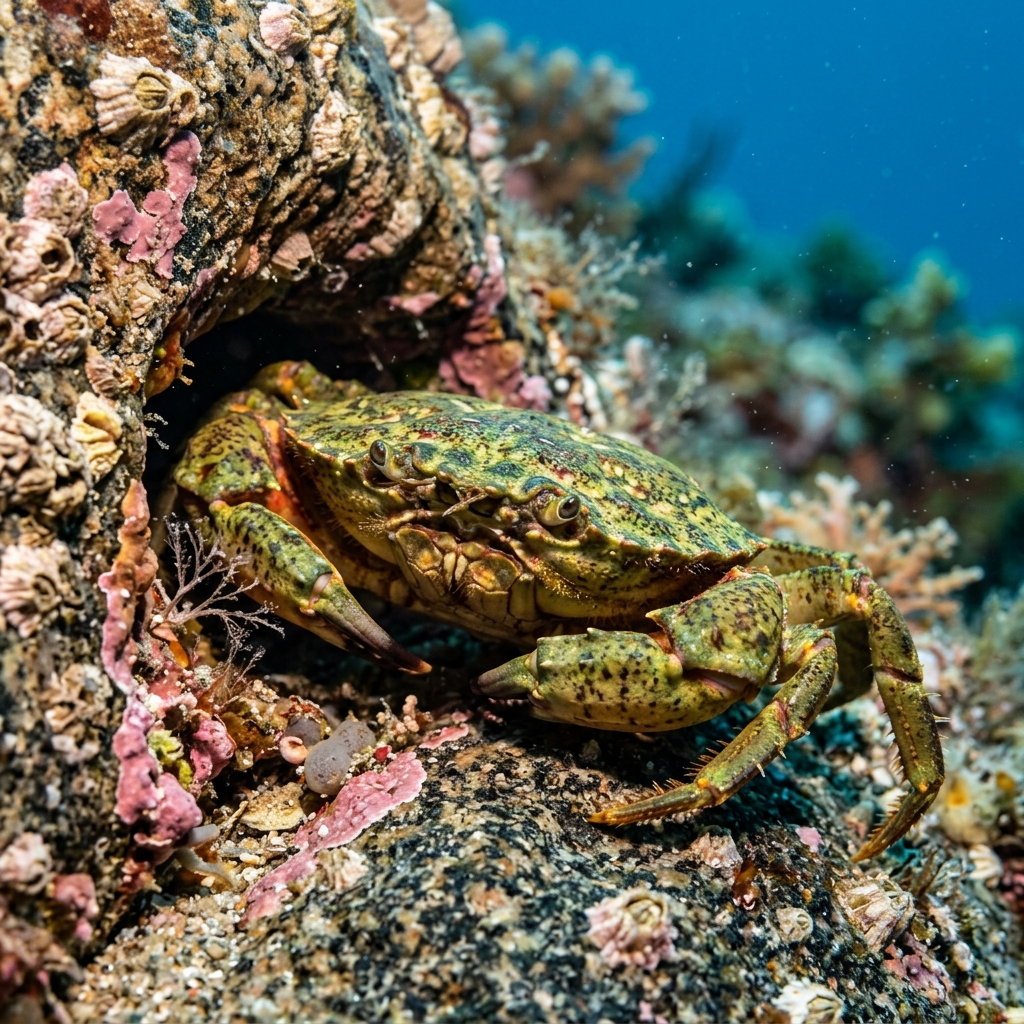
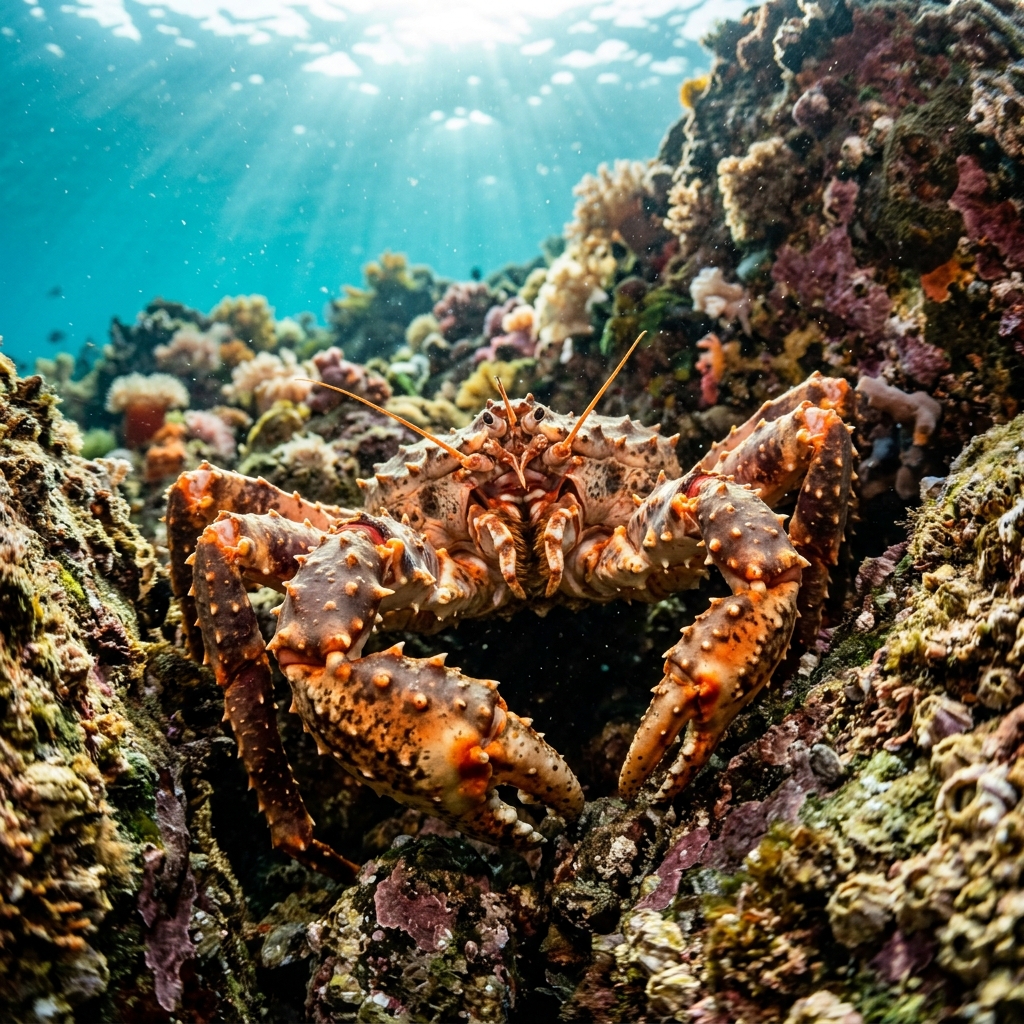
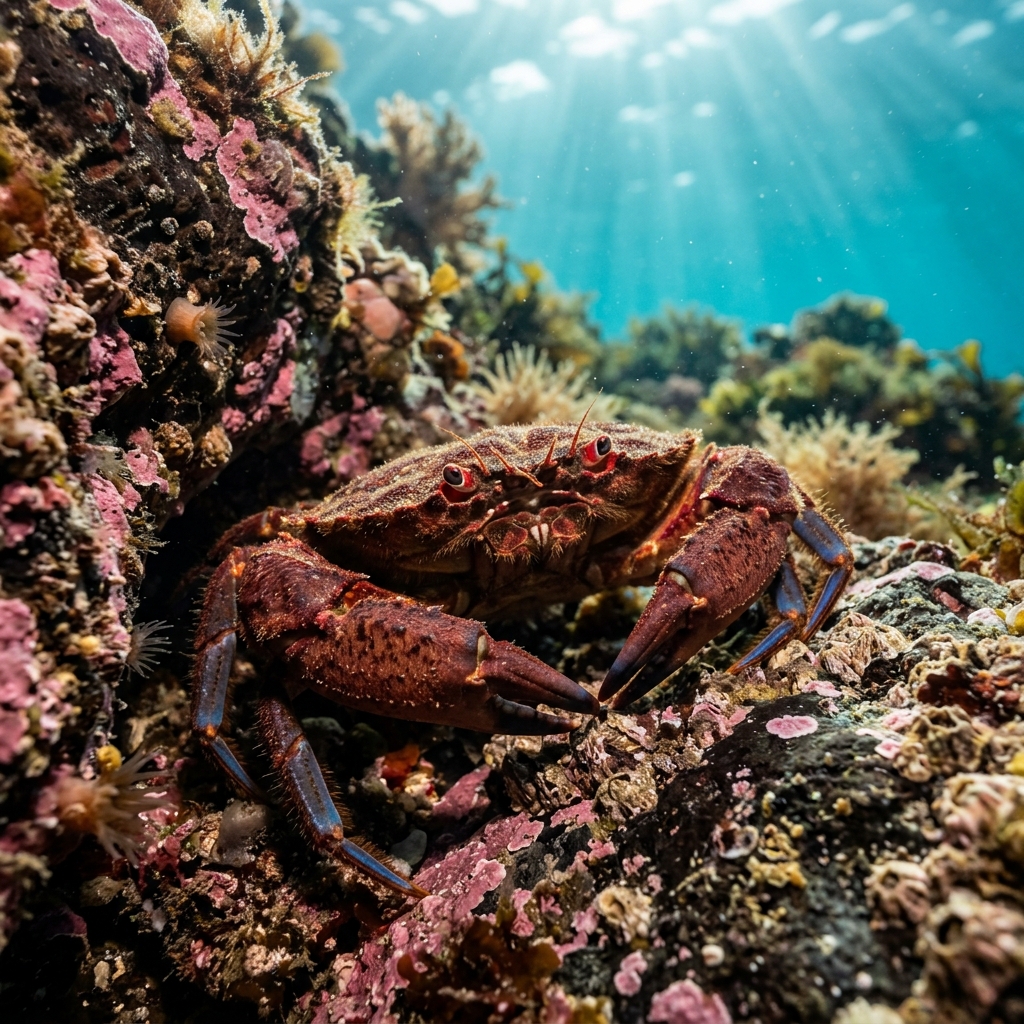
Small, flattened crustacean that sits back on its tail with its long, slender claws held out in front like pincers rather than folded away. Body is usually a mottled reddish-brown to orange, and the claws are noticeably longer and thinner than the rest of the body, which is the easiest tell versus other reef crabs. You'll usually see just the front half poking out of a crevice or under a rock ledge, eyes and claws first.
Divers most often find it wedged into rock crevices, under boulders, or tucked beneath ledges with just its claws and eyestalks showing, rather than out foraging in the open. It tends to react to a torch beam or close approach by retreating deeper into its hiding spot instead of bolting, so a slow, patient look into gaps and under rocks is the way to find one. Most sightings come from rocky reef and boulder habitat rather than open sand or silt.
Those long claws aren't just for defence: squat lobsters use them to pick at detritus and small food particles from the current, filtering a meal out of water most divers would swim straight past without a second look.
Sighting logs don't show a clear seasonal pattern, and it's recorded in water from about 9.6 to 18.1C, so treat it as a year-round find on Scottish reefs rather than something tied to a particular month.
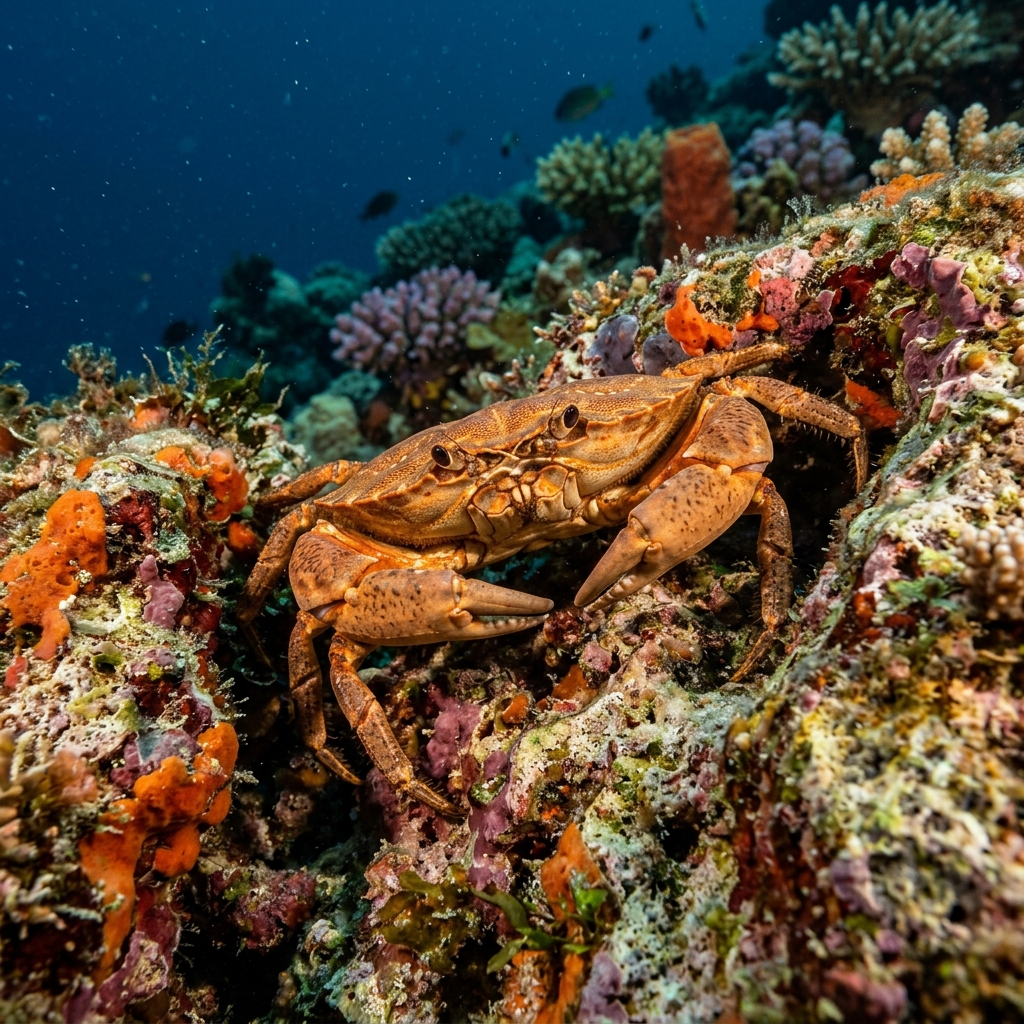
Reef neighbours a diver could mistake it for. Use the identification notes above to tell them apart.
This one is very much a UK species as far as logged sightings go, with Scotland the standout region and dive sites there accounting for almost all records. There's also at least one confirmed sighting further afield in Bohuslän, Sweden, suggesting a wider cold-water North Atlantic and North Sea range than the log data alone shows.
Mapping where Long-clawed Squat Lobster is logged…
Scotland is by far the most reliable place, with numerous dive sites logging it in rocky, boulder-strewn habitat. It has also been recorded in Bohuslän, Sweden, pointing to a broader cold-water range across the North Sea and North Atlantic.
There's no strong seasonal pattern in the sighting data, and it's found across a wide water temperature range from around 9.6 to 18.1C, so it's essentially a year-round sighting on Scottish reefs.
Look for a small reddish-brown crustacean sitting tail-tucked in a crevice with unusually long, slender claws held out in front. The claw length relative to the body is the main giveaway compared with hermit crabs sharing the same rocky habitat.
No, they pose no threat to divers. They retreat into crevices when approached rather than defend themselves, so there's no need to keep any particular distance.
They're logged as uncommon at most sites where divers report them, though a handful of Scottish sites see them regularly enough to call common. Checking under ledges and in rocky crevices improves your odds of a sighting.
Site and sighting data is aggregated from diver logs, iNaturalist and GBIF. For taxonomy and conservation status:
Sally Lightfoot Crab
2,422 sites