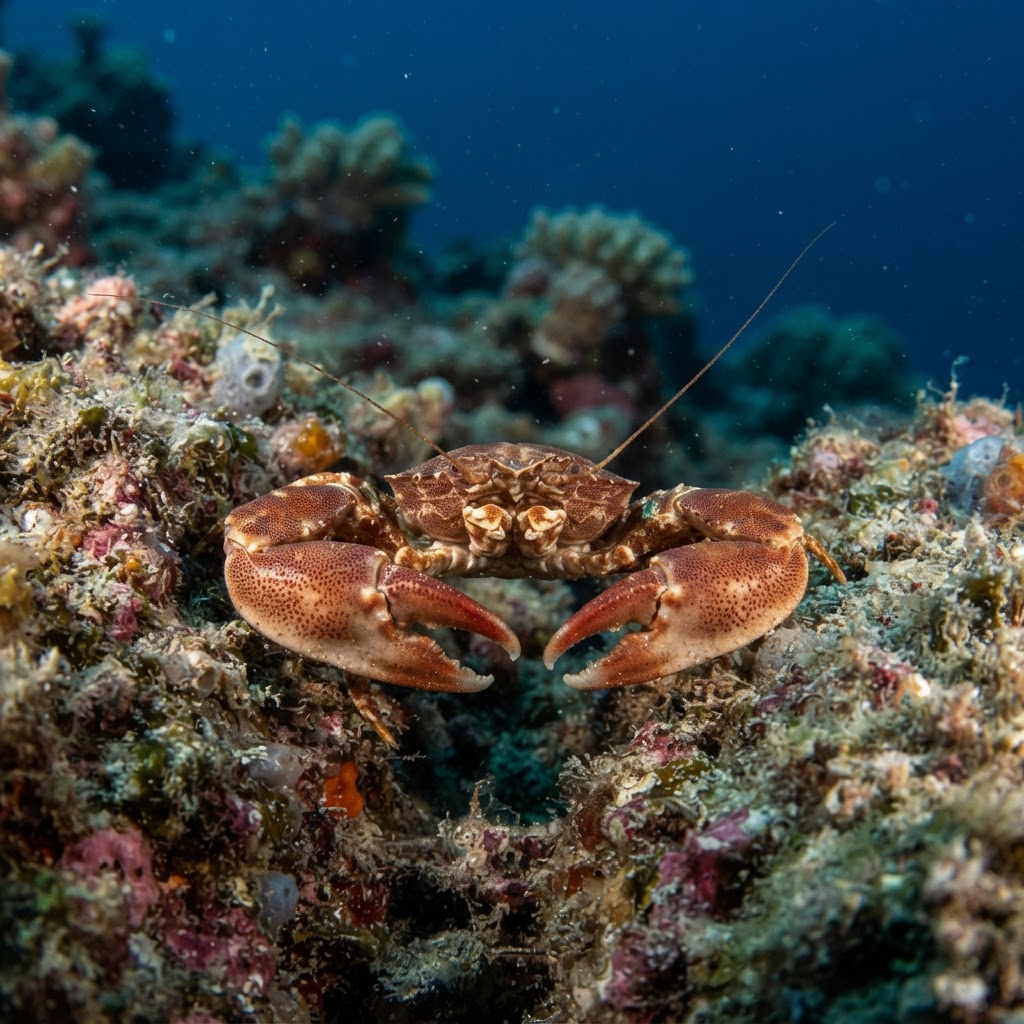
Pisidia longicornis
Flattened, fan-clawed crab tucked under stones and kelp holdfasts from Brittany to Zeeland, best spotted year-round in cool Atlantic water.
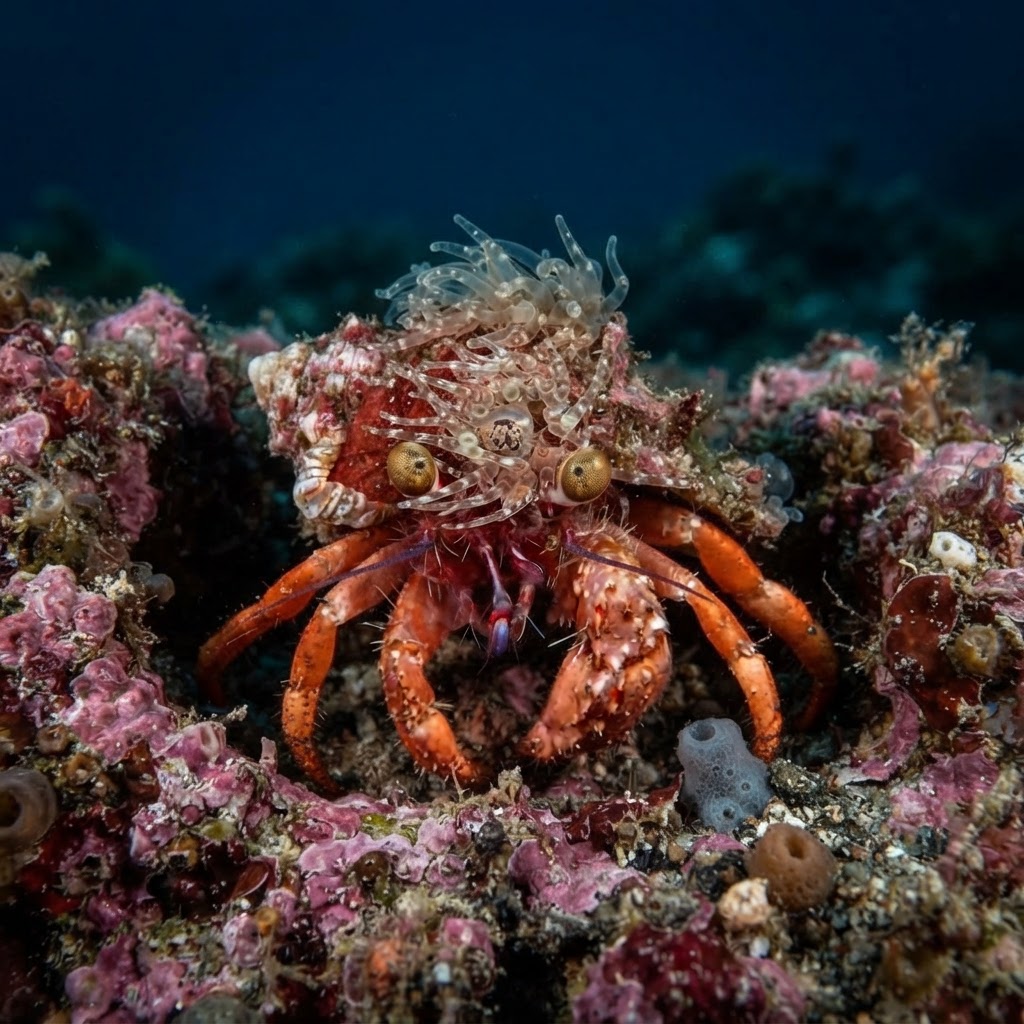
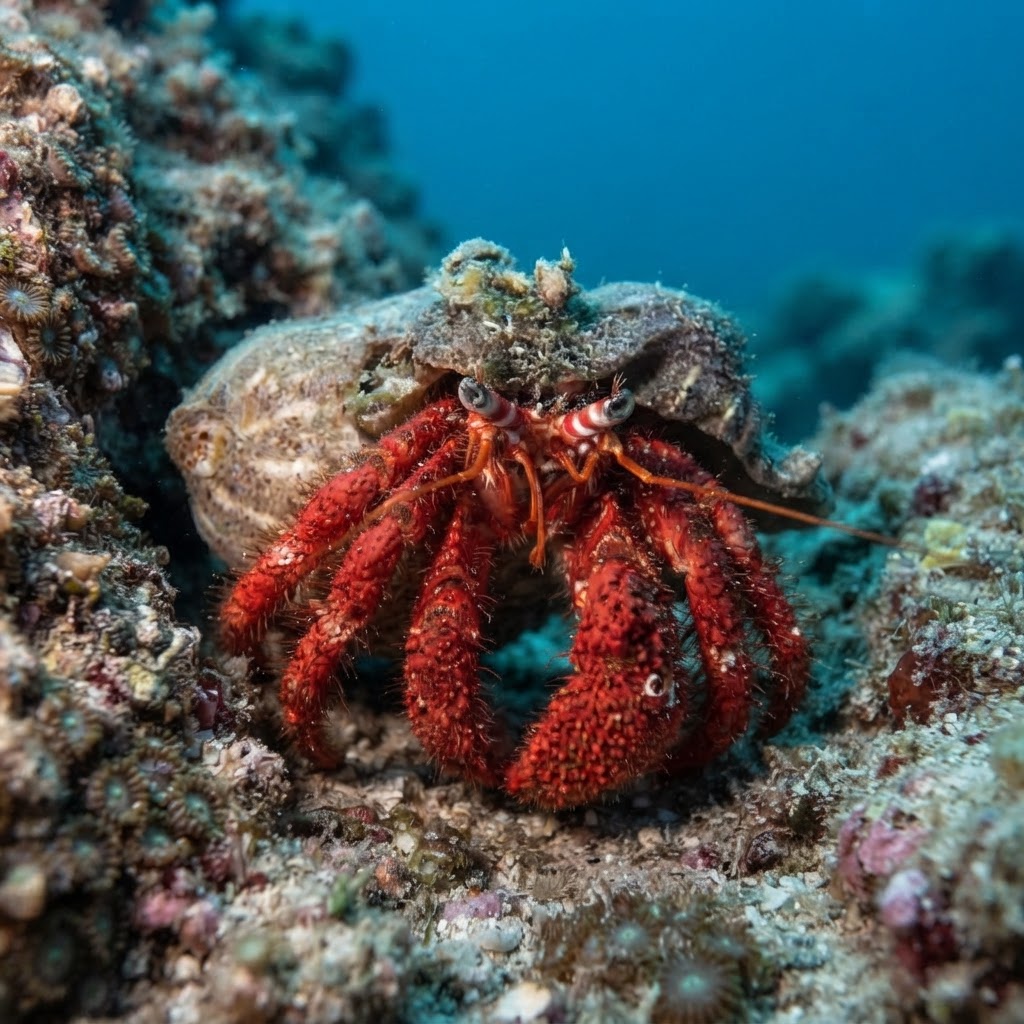
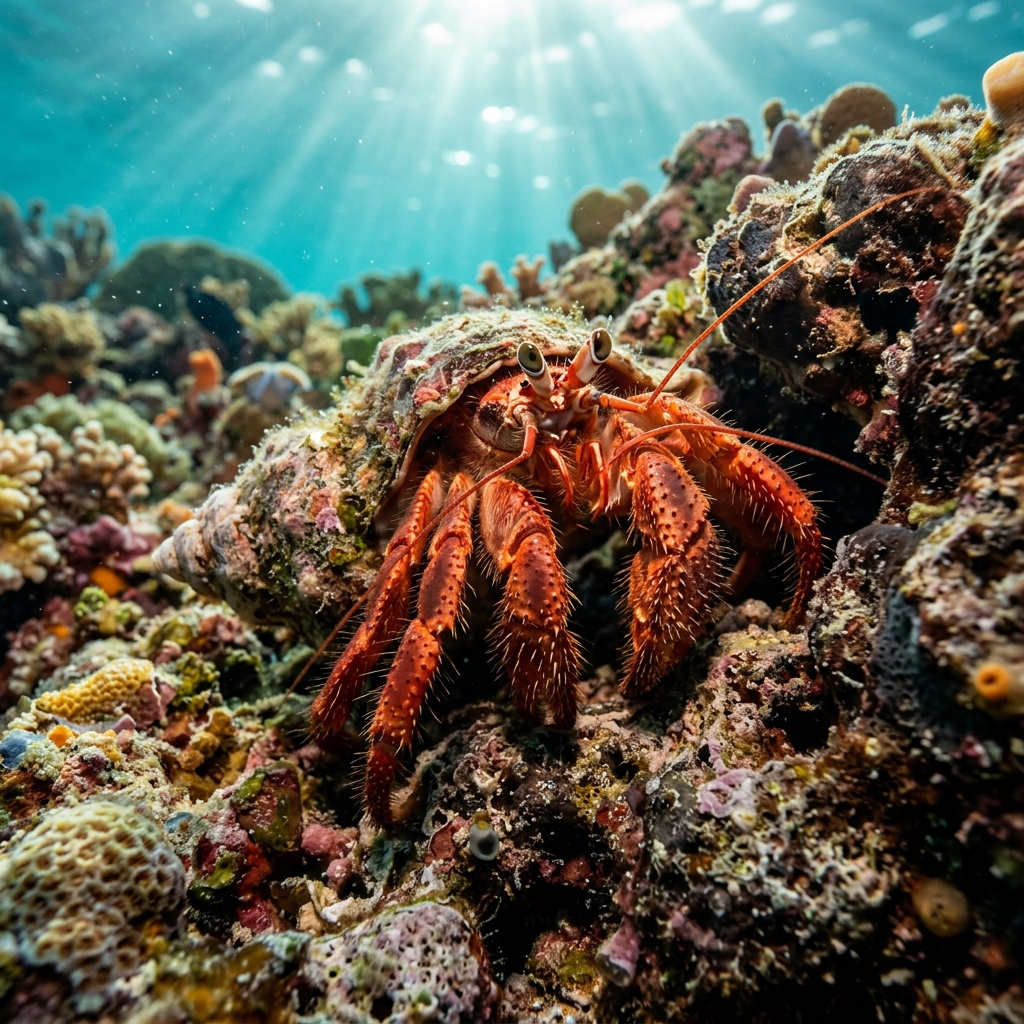
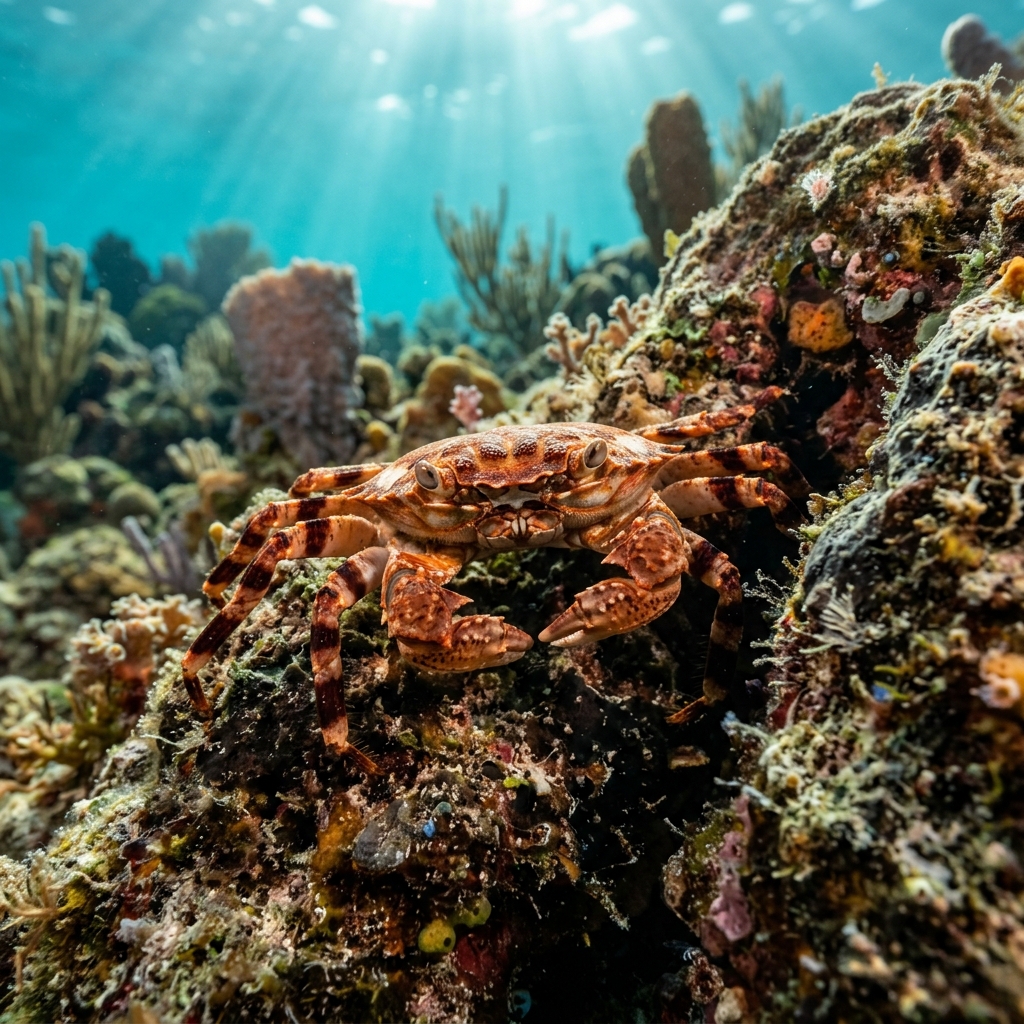
Small, flattened, fan-shaped body no bigger than a fingernail, coloured mottled brown to orange so it blends against rock and gravel. Its most obvious feature is the long, slender pair of claws held out well in front of the body, disproportionately larger than the rest of the crab. Only three pairs of walking legs are visible, since porcelain crabs tuck a reduced fourth pair out of sight, and the antennae are long and whip-like compared to true crabs.
Look for it wedged under loose stones, in crevices, or among kelp holdfasts and mussel beds rather than out in the open. When disturbed it tends to flatten tighter against the surface or scurry sideways for cover instead of fleeing far, and it uses its fan-like mouthparts to filter tiny food particles from the water rather than actively hunting. Most divers find it while carefully turning rocks or scanning encrusted vertical faces on drift and wreck dives.
Despite the name, it is not a true crab at all; porcelain crabs are more closely related to squat lobsters, and like them can shed a claw to escape a predator's grip and simply regrow it later.
Seen year-round with no strong seasonal pattern in the data, which fits its comfort range of roughly 8.5 to 14.5C, cool water it can find in these regions in any month.
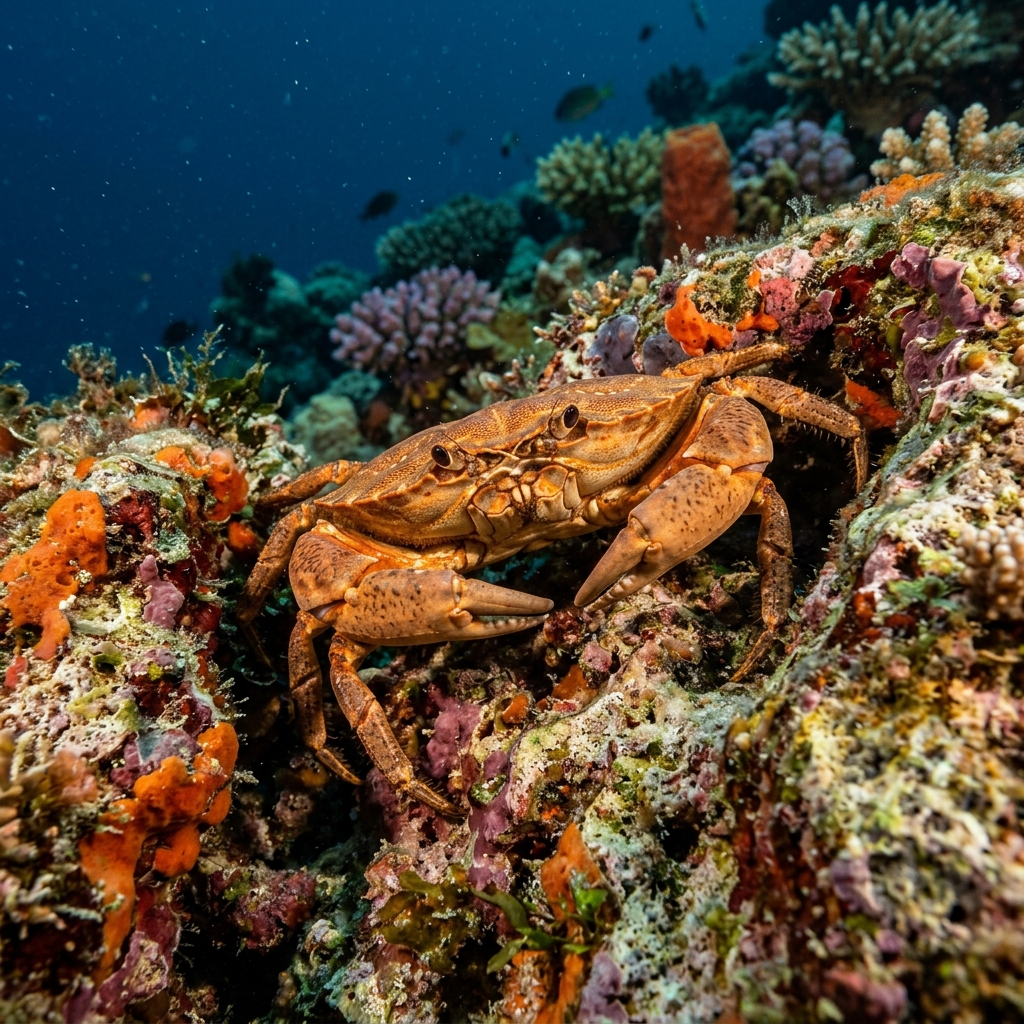
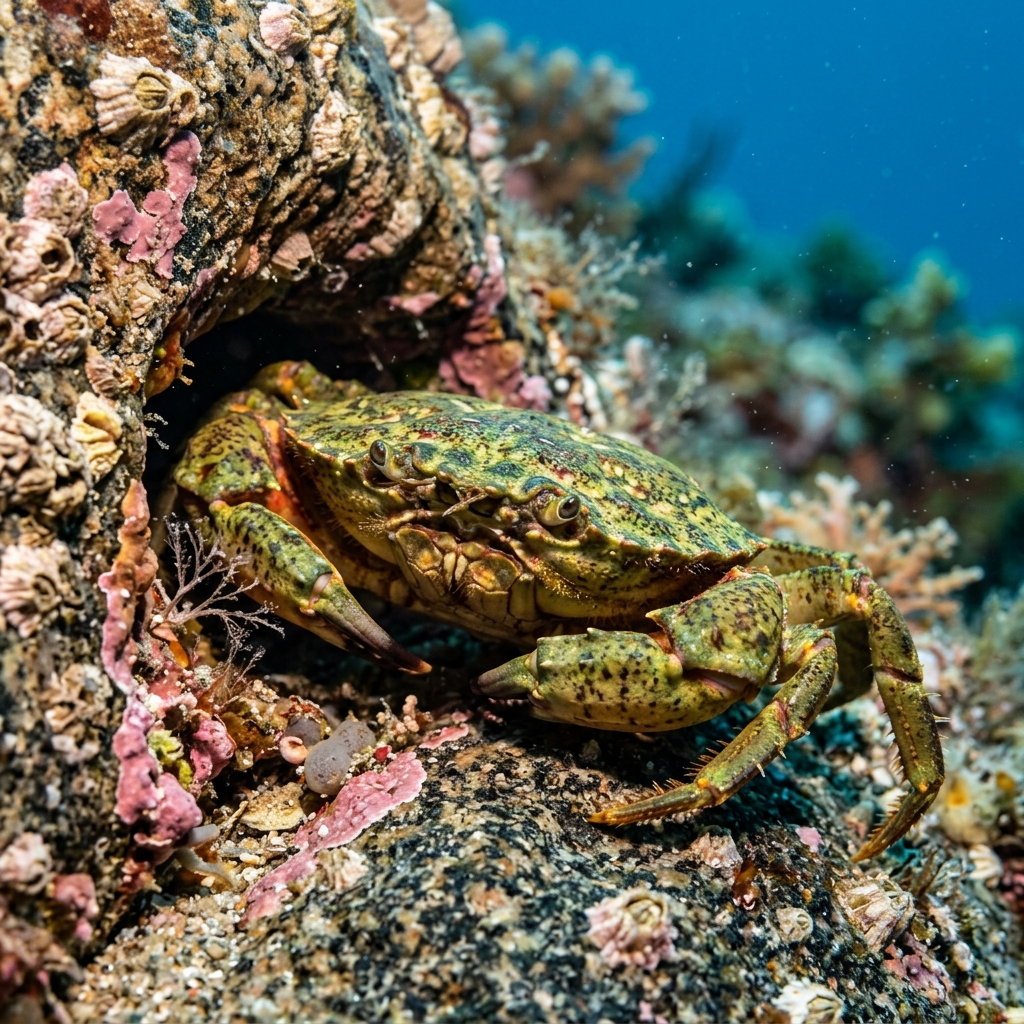
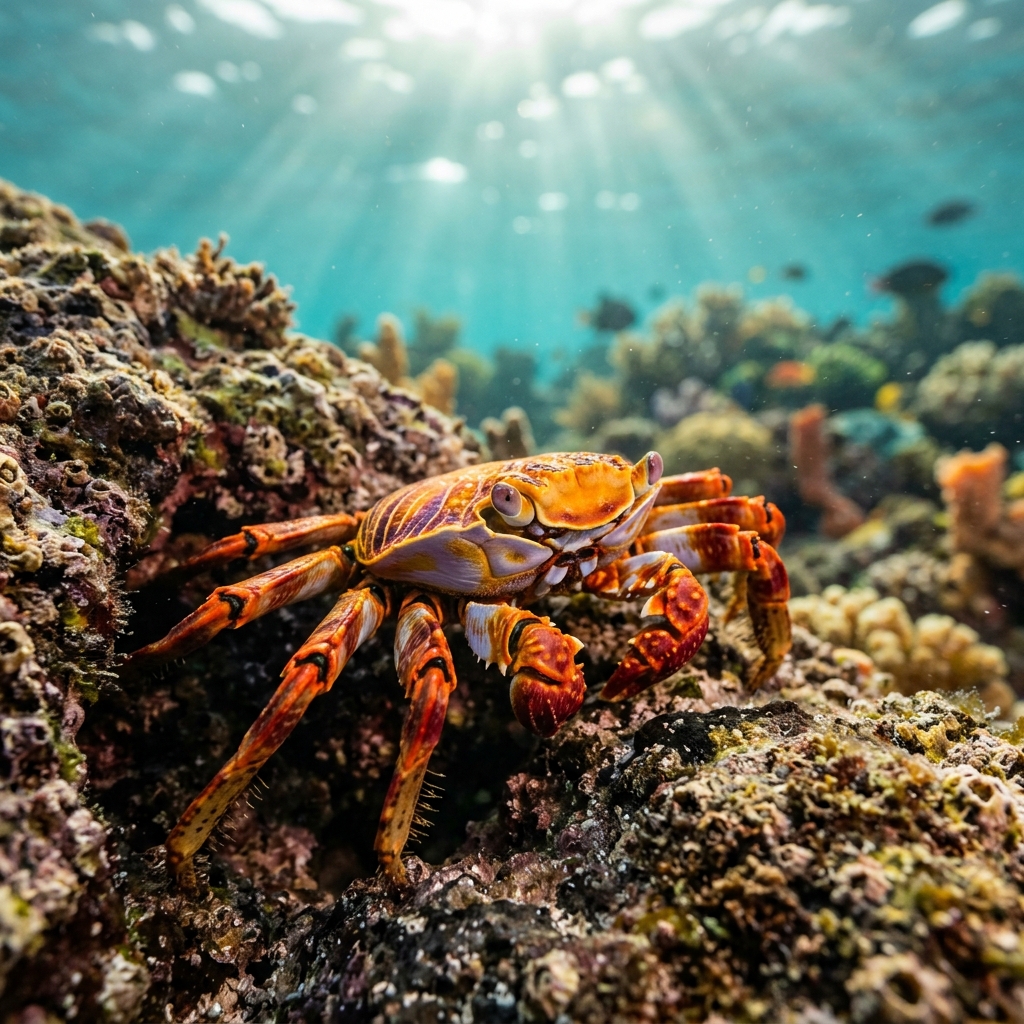
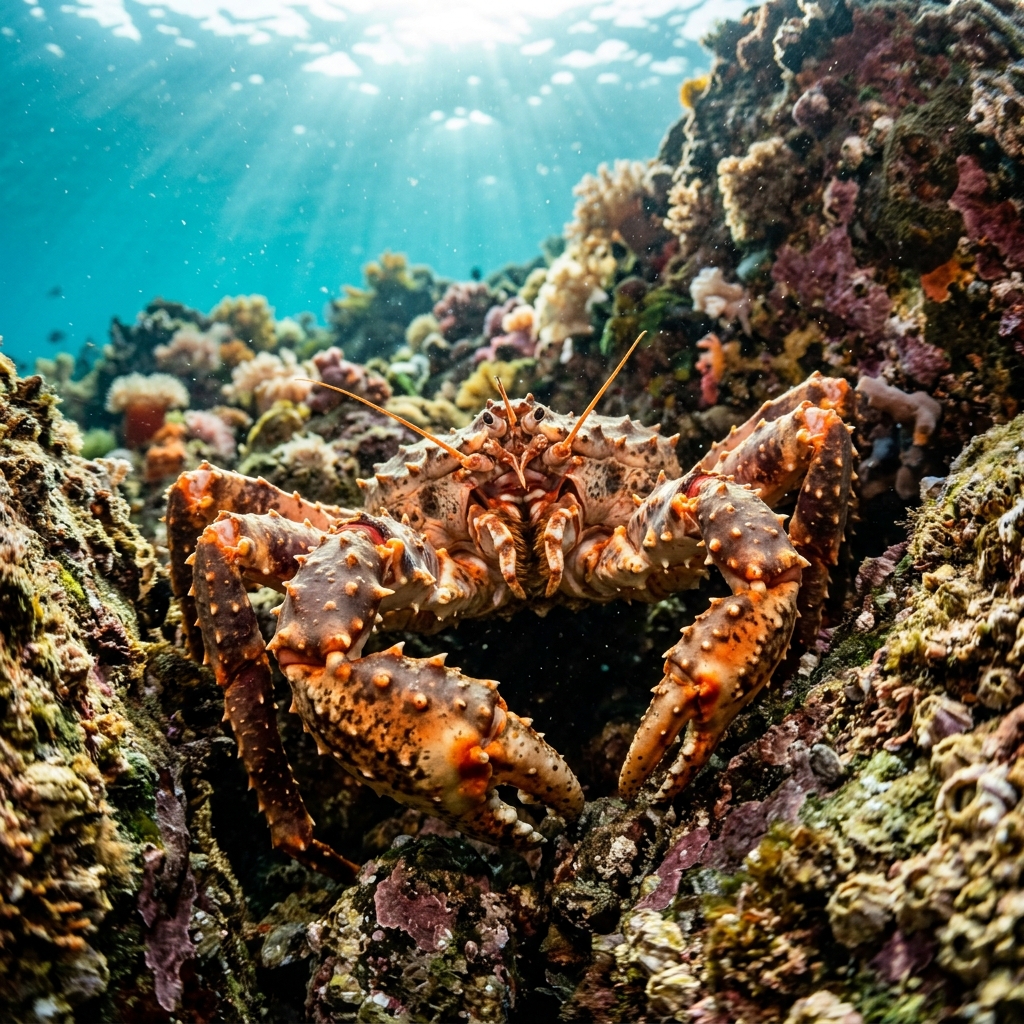
Reef neighbours a diver could mistake it for. Use the identification notes above to tell them apart.
Most consistently logged in the United Kingdom, particularly across England, Northern Ireland, Scotland and Wales, with strong records also in Brittany in France and Zeeland in the Netherlands. Istria in Croatia and sites around Dublin in Ireland also produce regular sightings, making this a wide-ranging north-east Atlantic and Mediterranean find rather than a single hotspot species.
Mapping where Long-clawed Porcelain Crab is logged…
It is most reliably logged around the United Kingdom, including England, Northern Ireland, Scotland and Wales, plus Brittany in France, Zeeland in the Netherlands, Istria in Croatia, and coastal sites near Dublin in Ireland.
Sightings are spread across the year with no clear seasonal peak, which matches its tolerance for cool water between about 8.5 and 14.5C found across these regions in most months.
Check for a flattened, fan-shaped, mottled brown body tucked under a rock or kelp holdfast, with unusually long, slender front claws held out ahead of the body and only three visible pairs of walking legs.
No. It is a tiny, harmless benthic crustacean that hides under rocks and poses no risk to divers.
They stay very small, generally under 2 cm across the body, so most divers spot them only when deliberately searching crevices and rock undersides.
It is not a true crab but a relative of squat lobsters, feeding by filtering particles from the water with fan-like mouthparts rather than scavenging or hunting like most crabs.
Site and sighting data is aggregated from diver logs, iNaturalist and GBIF. For taxonomy and conservation status:
European Green Crab
2,469 sites