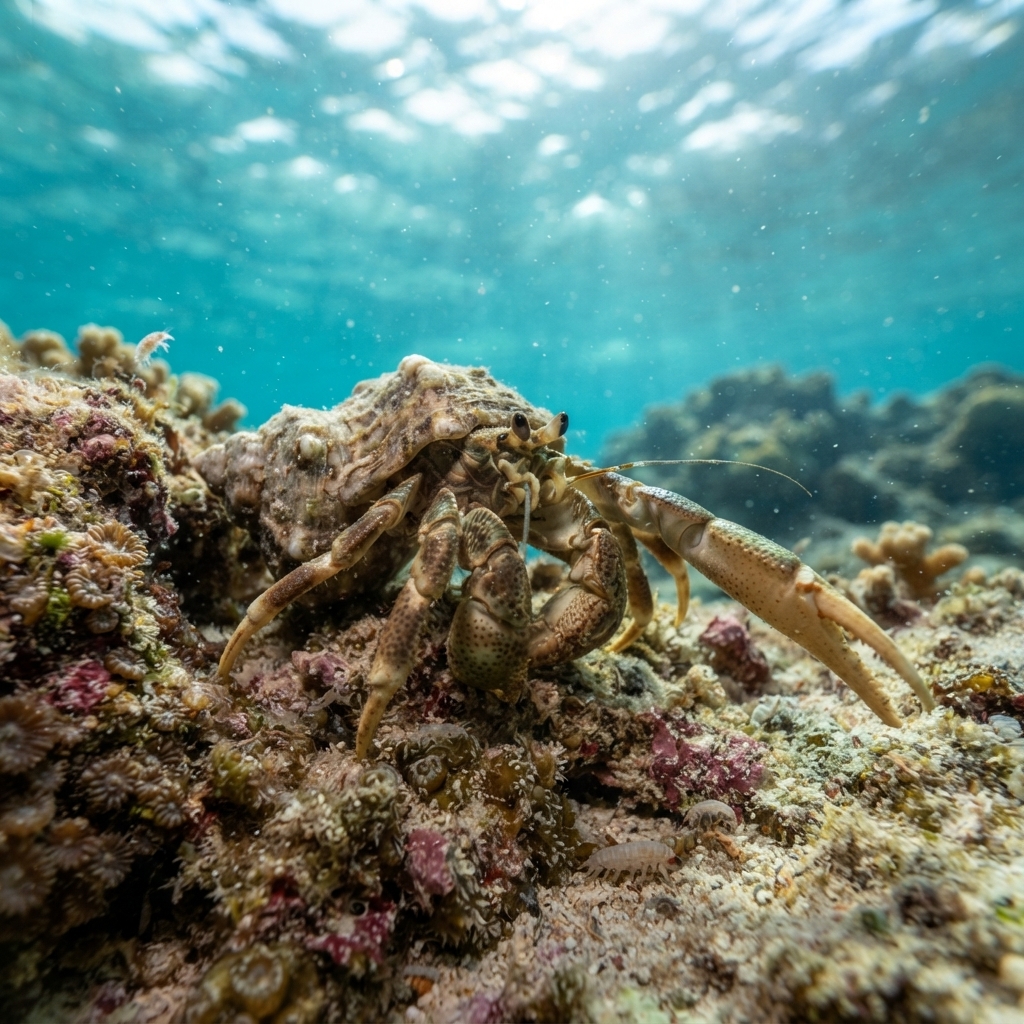
Pagurus longicarpus
Common on cold-water dives from the US Northeast to New Brunswick, this small hermit crab turns up year-round in shallow snorkels and shore dives.
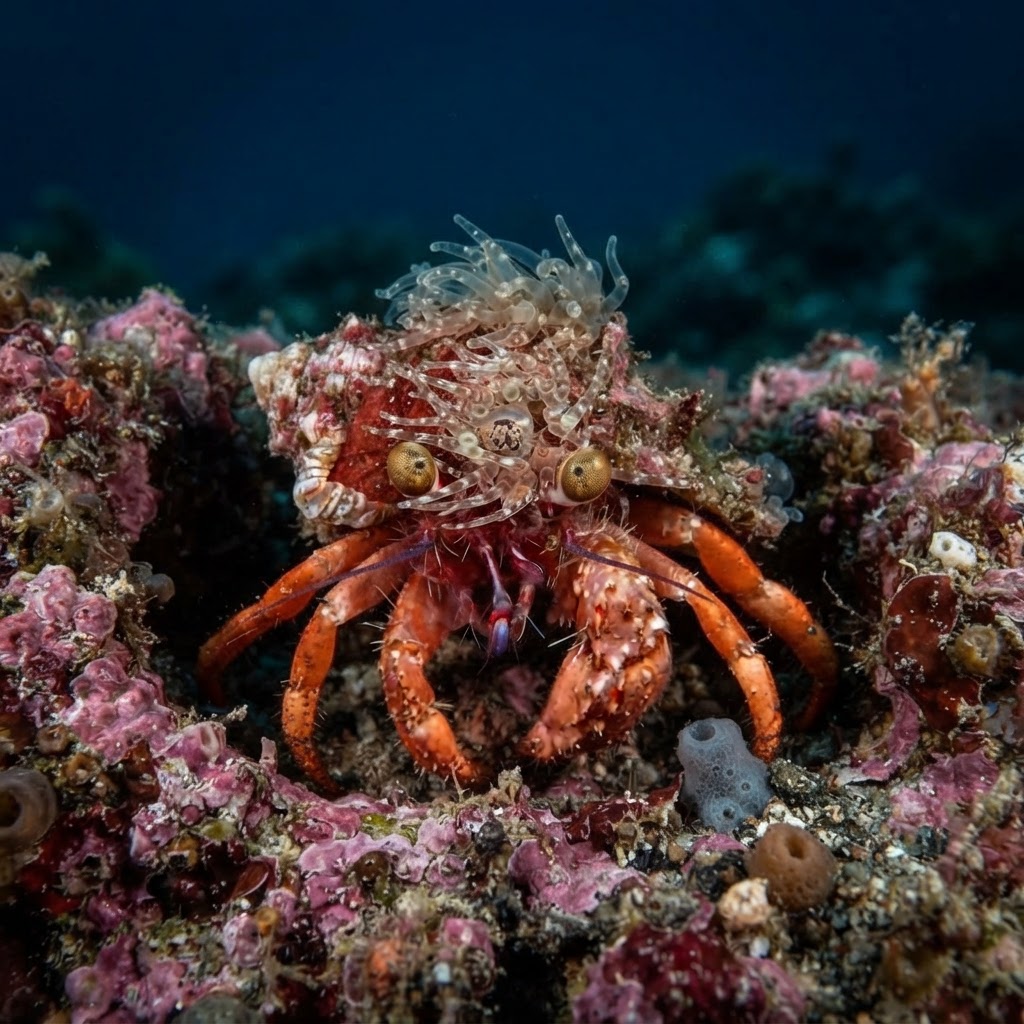
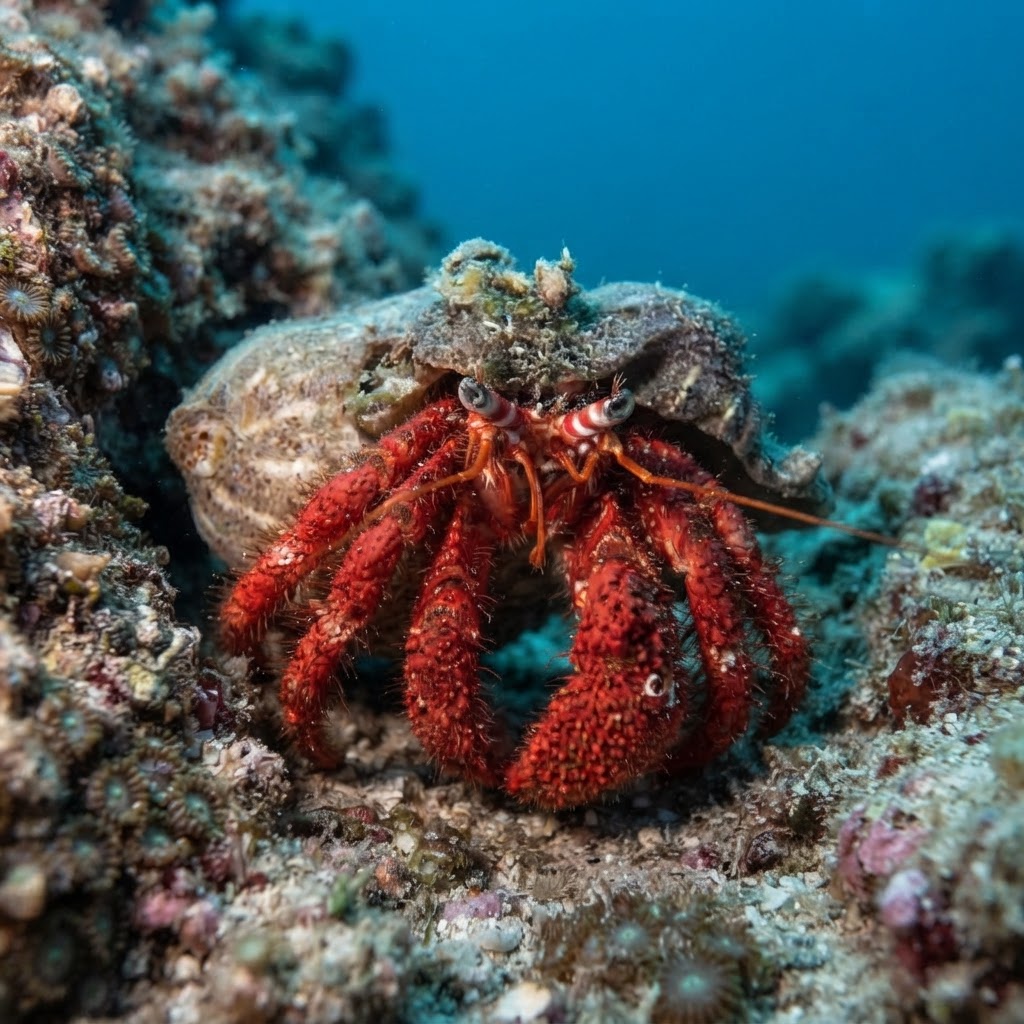
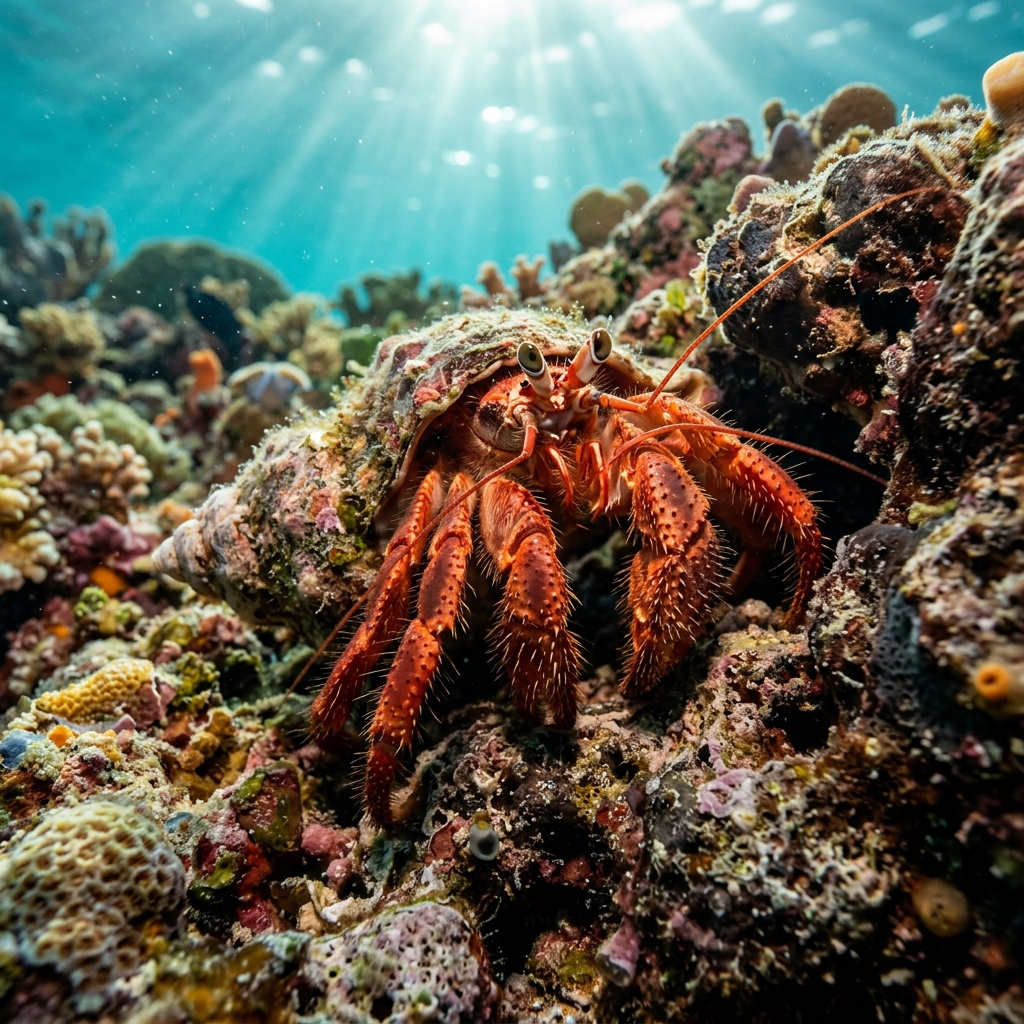
A small hermit crab, usually tucked into a scavenged snail shell, with notably long, slender walking legs and claws compared to its body size. Colour runs pale grey to tan or olive, often blending with sand or algae, and the right claw is slightly larger than the left. Look for the long antennae waving out of the shell opening as it forages, that's usually the first giveaway before you spot the whole animal.
Divers usually spot it picking over sand or eelgrass beds, using those long claws to sift for scraps of algae and detritus rather than hunting anything lively. It tends to freeze or retreat deeper into its borrowed shell when a light or hand gets close, then resumes foraging once left alone. Most sightings come from shallow, calm water where it's easy to hover close and watch without disturbing it.
As it grows it has to abandon its shell for a roomier one, and these swaps sometimes turn into a scramble among several hermit crabs jostling over the same vacant shell.
Sightings show no clear seasonal pattern in the data, and with a wide observed temperature range of 6.3 to 23.9 C it seems to tolerate both cold Canadian Maritime water and warmer Florida shallows, so treat it as a year-round find wherever it's logged.
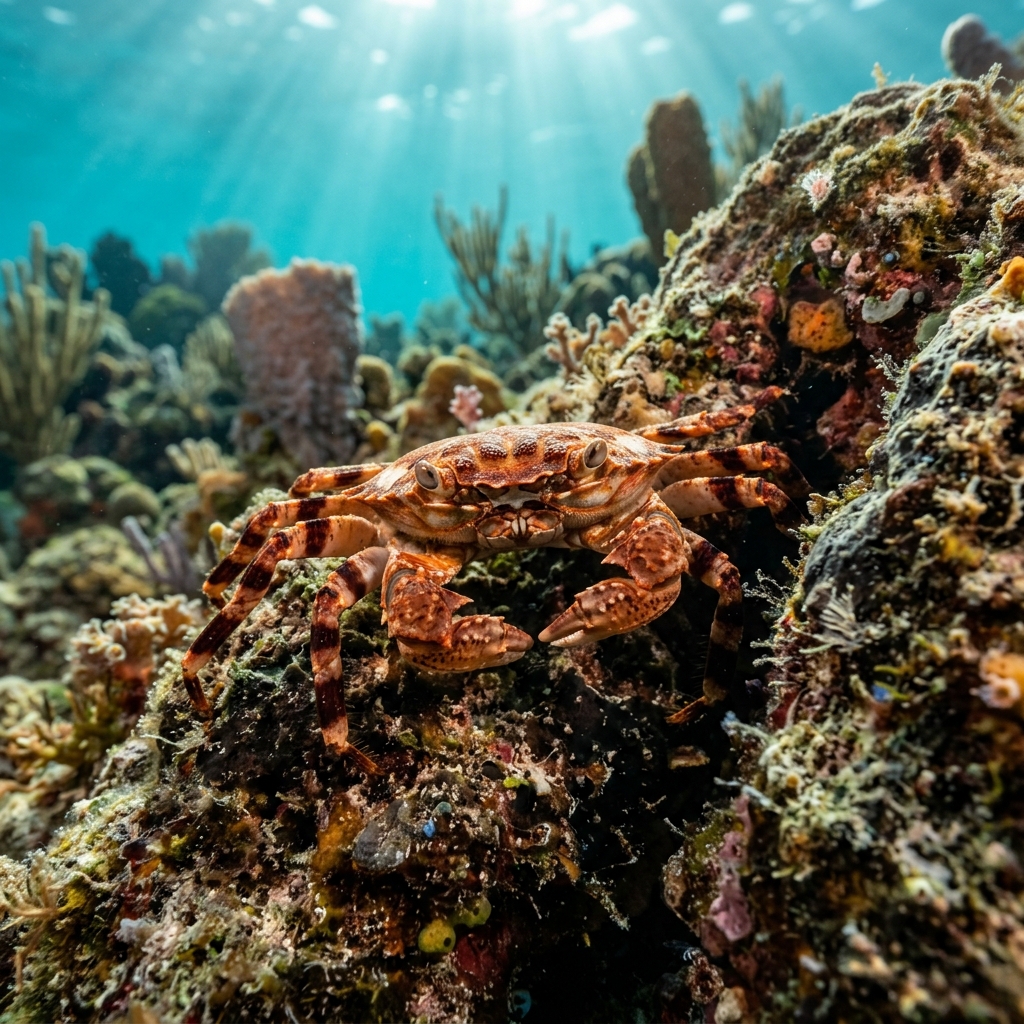
Reef neighbours a diver could mistake it for. Use the identification notes above to tell them apart.
Most reliably logged on shore dives and shallow sites across the US Northeast, with strong numbers also coming out of New Brunswick and Prince Edward Island in Canada. Florida sites and a handful of spots in the Carolinas round out the range, so it's a species you can find on both cold rocky coasts and warmer sandy shallows.
Mapping where Long-clawed Hermit Crab is logged…
It's most commonly logged on shallow sites in the US Northeast, with good numbers also reported from New Brunswick and Prince Edward Island in Canada, plus scattered sightings in Florida and the Carolinas.
There's no strong seasonal pattern in the sightings data, and it turns up across a wide temperature range from cold Canadian shallows to warmer Florida water, so it's a fair bet on any dive year-round.
Look for a small hermit crab in a snail shell with unusually long, slender legs and claws, and long antennae poking out as it forages over sand. Colouring is pale grey to tan, which helps it blend into sandy bottoms.
No, they pose no risk to divers. They're small, retreat into their shell if disturbed, and have no venom or aggressive behaviour worth noting.
As it grows, its borrowed snail shell becomes too tight, so it has to find and move into a larger empty one. This can trigger a small scramble among nearby hermit crabs competing for the best vacant shell.
Site and sighting data is aggregated from diver logs, iNaturalist and GBIF. For taxonomy and conservation status:
European Green Crab
2,469 sites