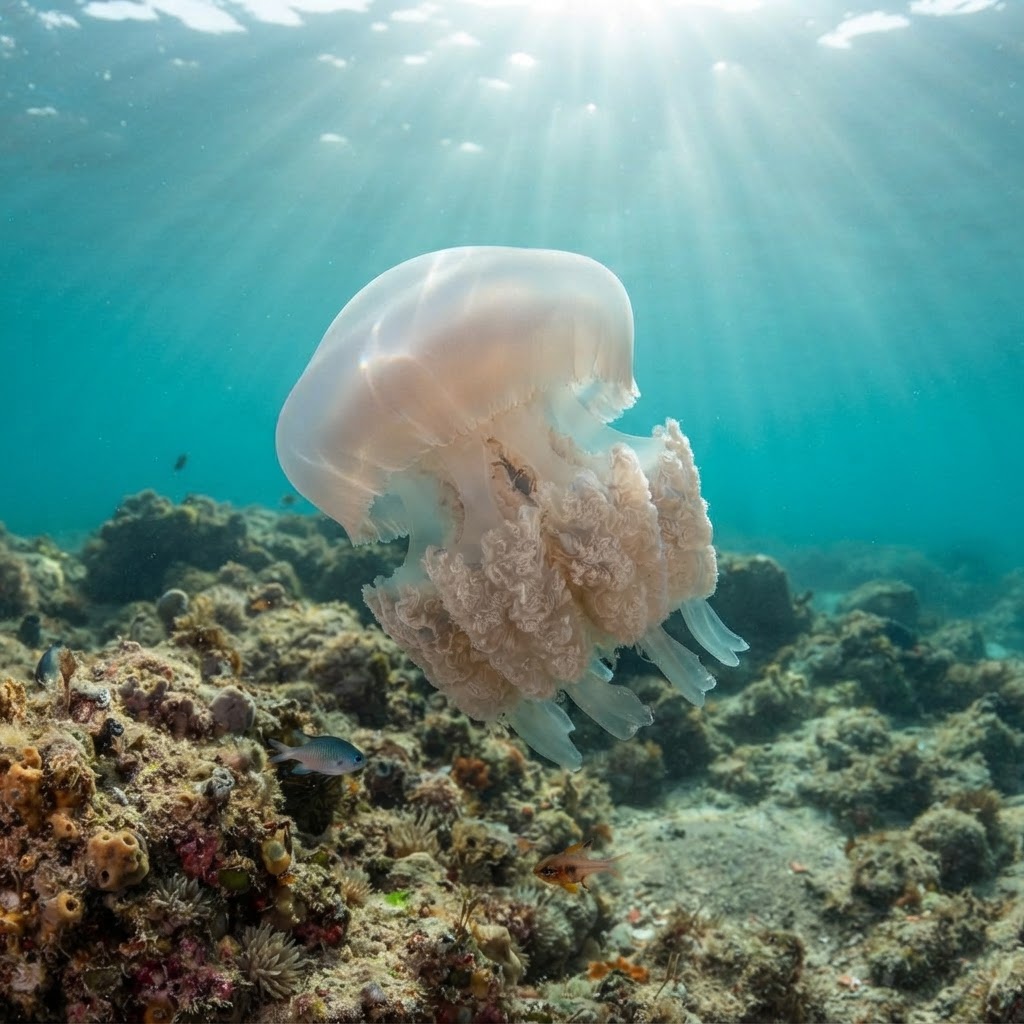
Cyanea nozakii
Trailing amber tentacles off Sai Kung: how to spot a Lion's Mane jellyfish in Hong Kong waters and stay clear of the sting.
Safety warning
Contact causes a painful sting and welts, and sensitive individuals can have a stronger reaction, so give it a wide berth and never handle one, even a stranded or apparently dead specimen. If stung, exit the water calmly, rinse with vinegar or hot seawater rather than fresh water, and remove any clinging tentacle fragments without direct bare-hand contact.
If you're stung
Stinging tentaclesGeneral first-aid guidance, not a substitute for professional medical care. In an emergency, call your local emergency number.
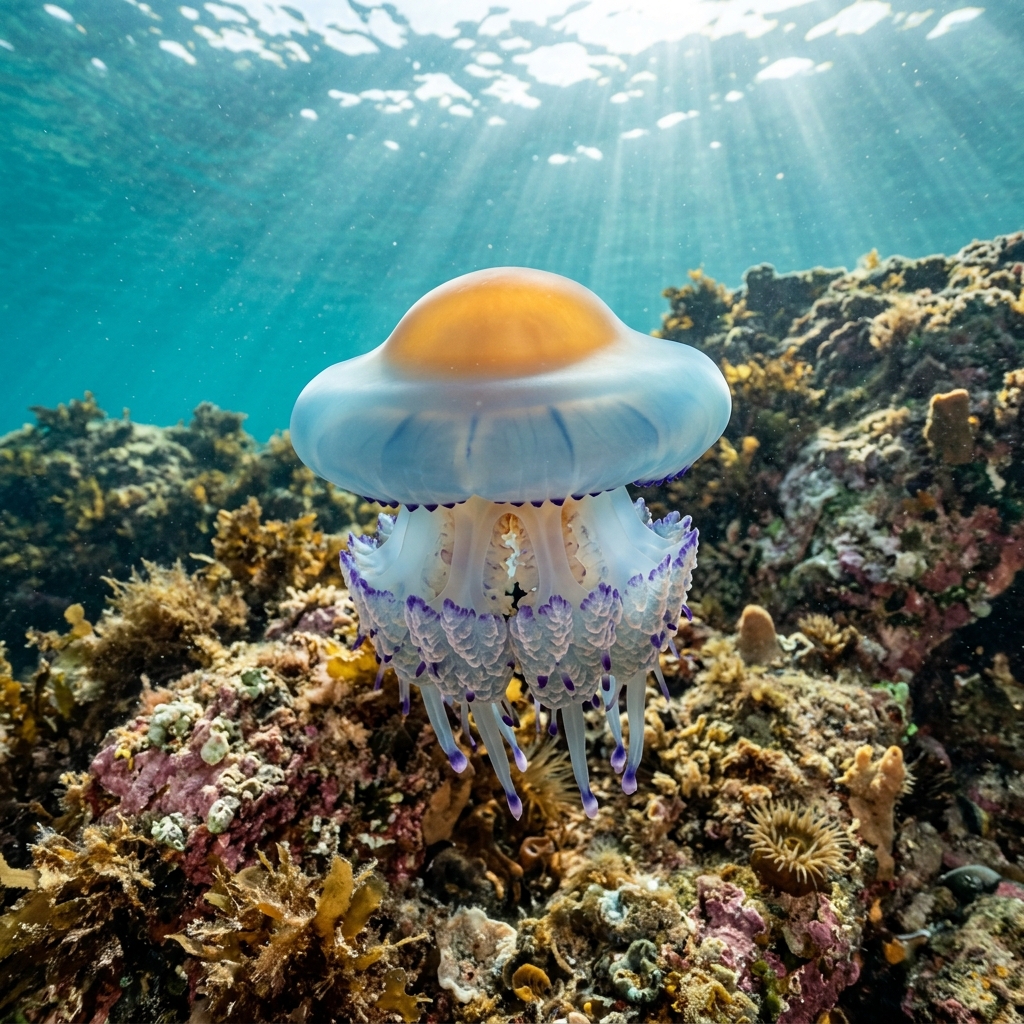
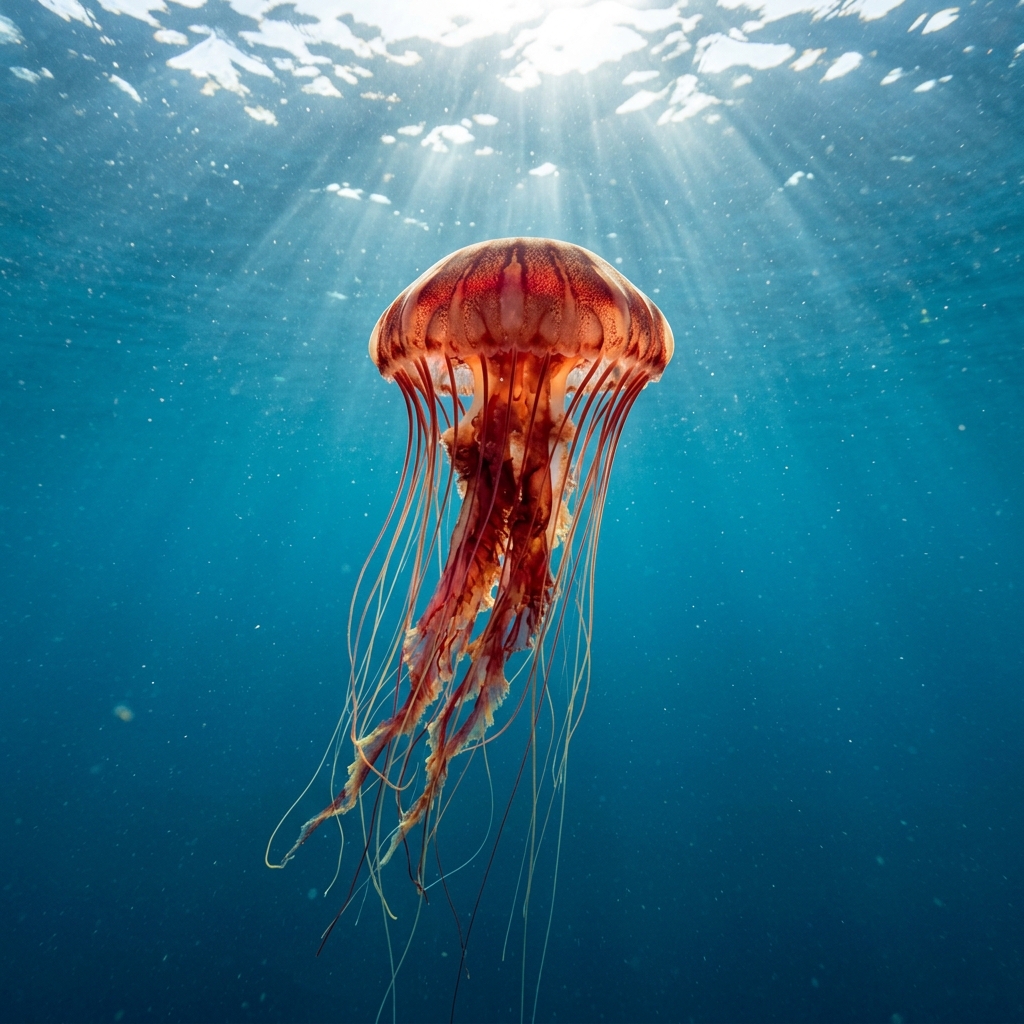
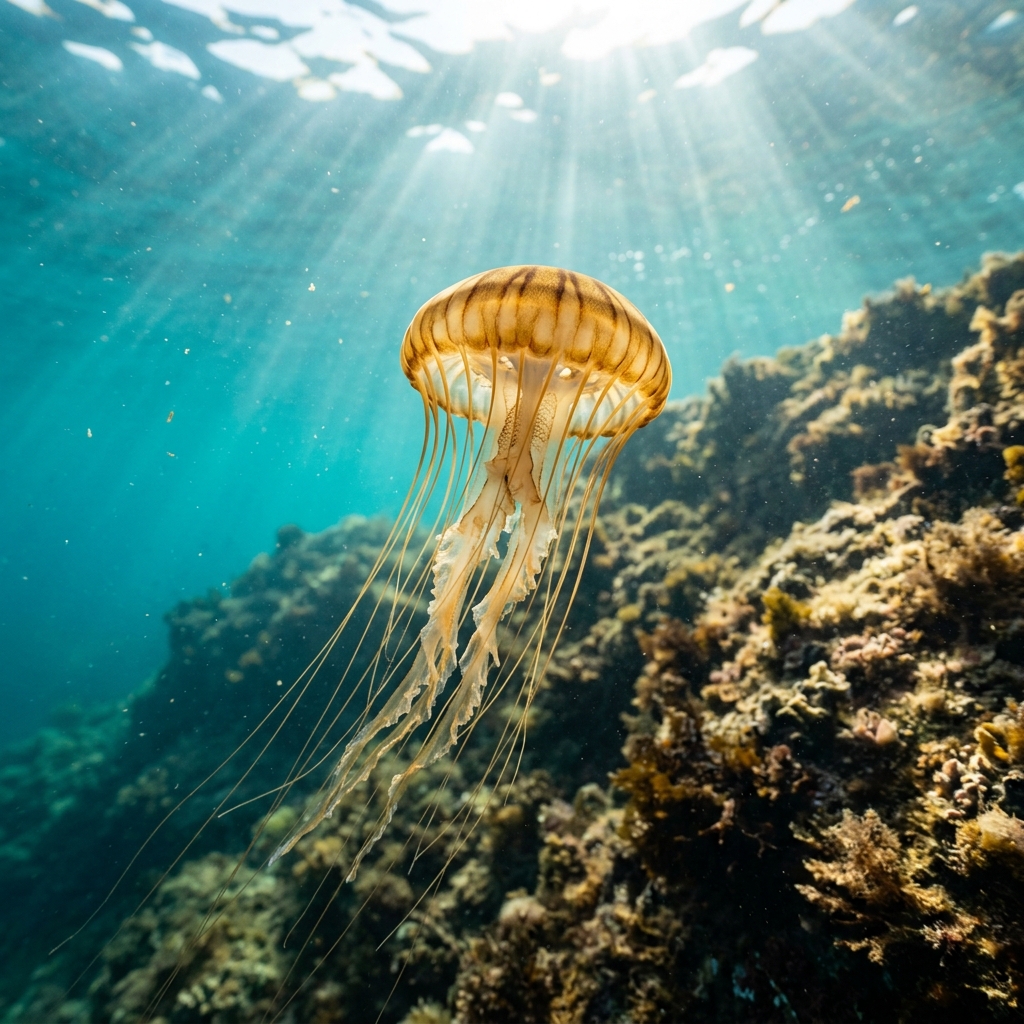
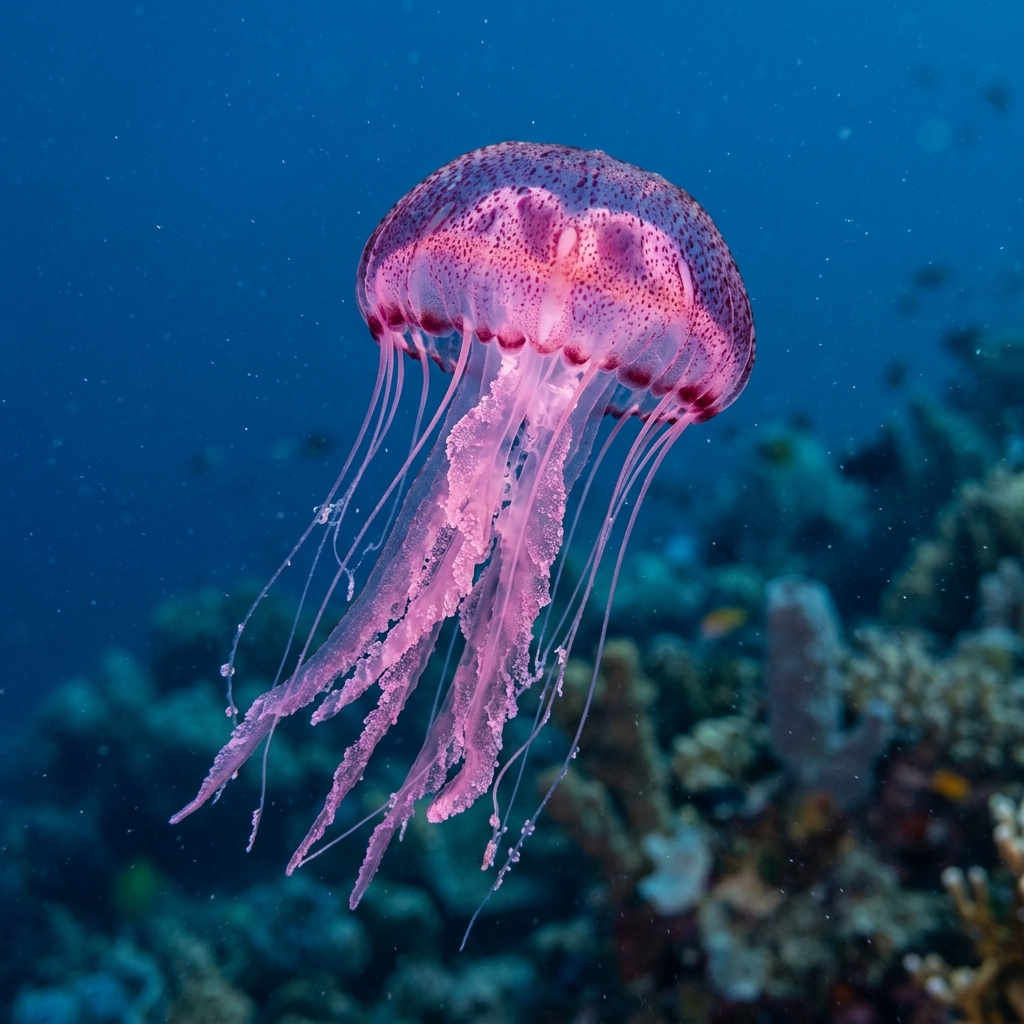
Look for a domed bell around 18 cm across, usually amber to reddish-brown, with a dense curtain of thin, hair-like tentacles trailing well behind it, which is where the name comes from. The bell has visible frilled lobes at the margin and the tentacle mass often looks tangled rather than neatly arranged. Colour can wash out to pale yellow-brown in bright surface light, but the shaggy tentacle bundle is the giveaway even from a distance.
Divers mostly see it drifting passively in open water or mid-water rather than anchored to any reef structure, letting current and tide carry it along. It's logged as uncommon to rare at most sites, so encounters tend to be a single animal spotted rather than anything clustered. It shows no interest in divers and will not react to your presence, so the only behaviour to manage is your own distance from those tentacles.
Those trailing tentacles are armed with stinging cells (nematocysts) that fire on contact and can still deliver a sting even when the animal is dead or in pieces, so a jellyfish washed up or floating motionless is not necessarily harmless.
Sightings don't show a clear seasonal pattern here, and with a comfortable range of 21.4 to 27.4 C it can turn up across the warmer months without a single obvious peak. Treat it as a year-round possibility in Sai Kung rather than a seasonal target.
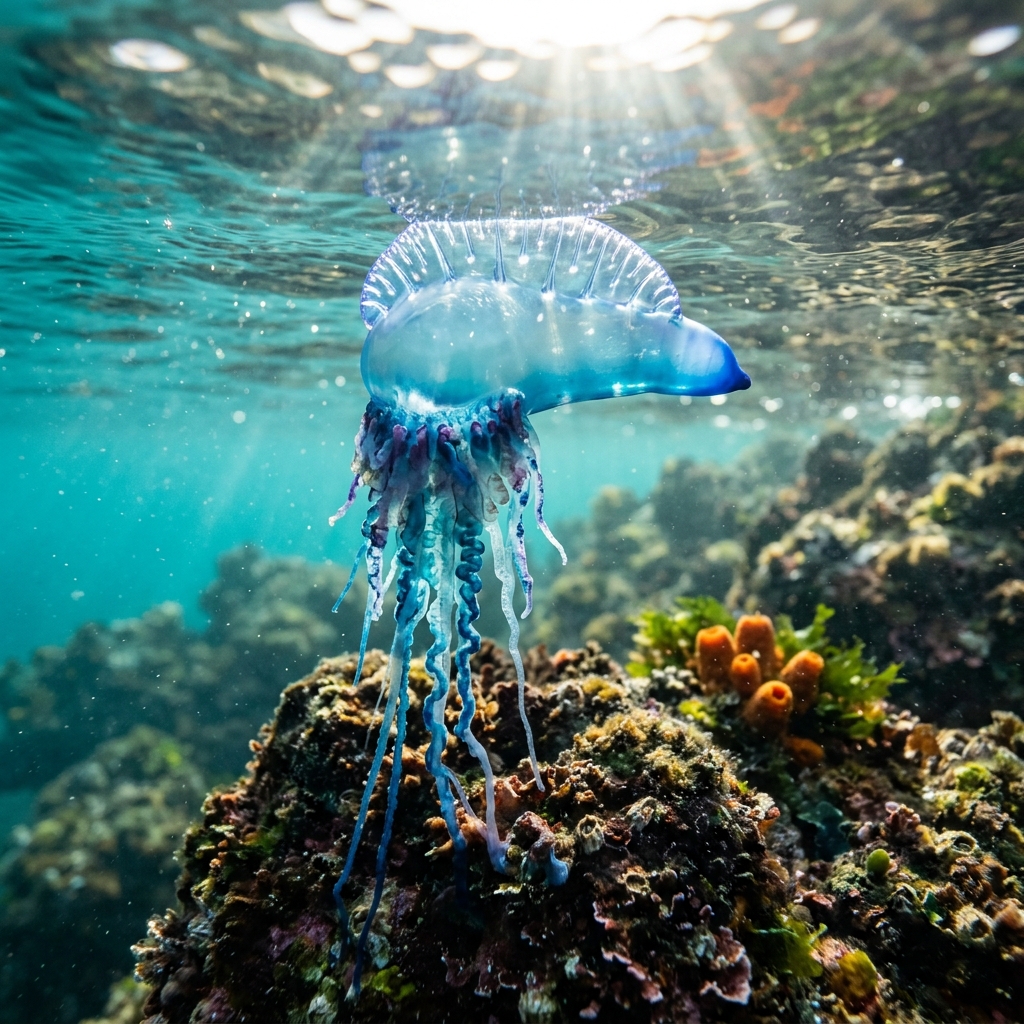
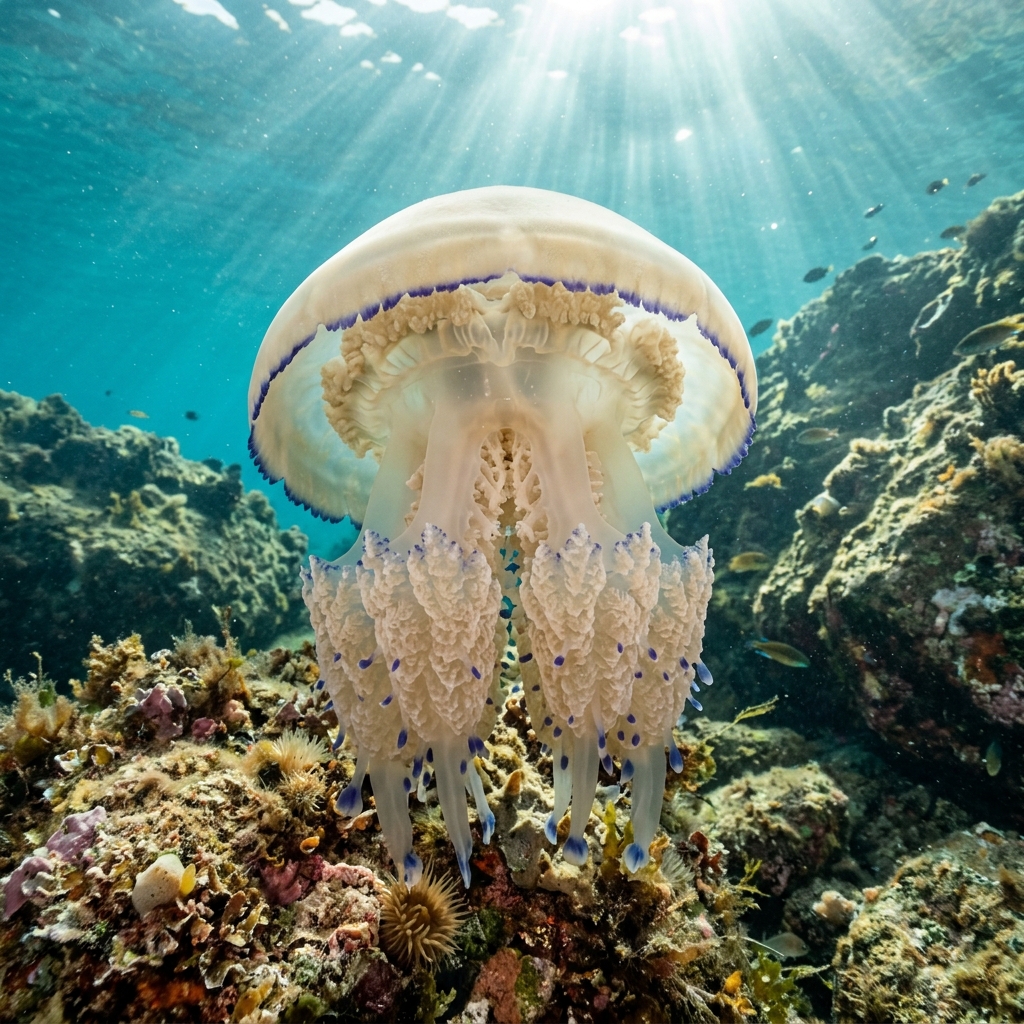
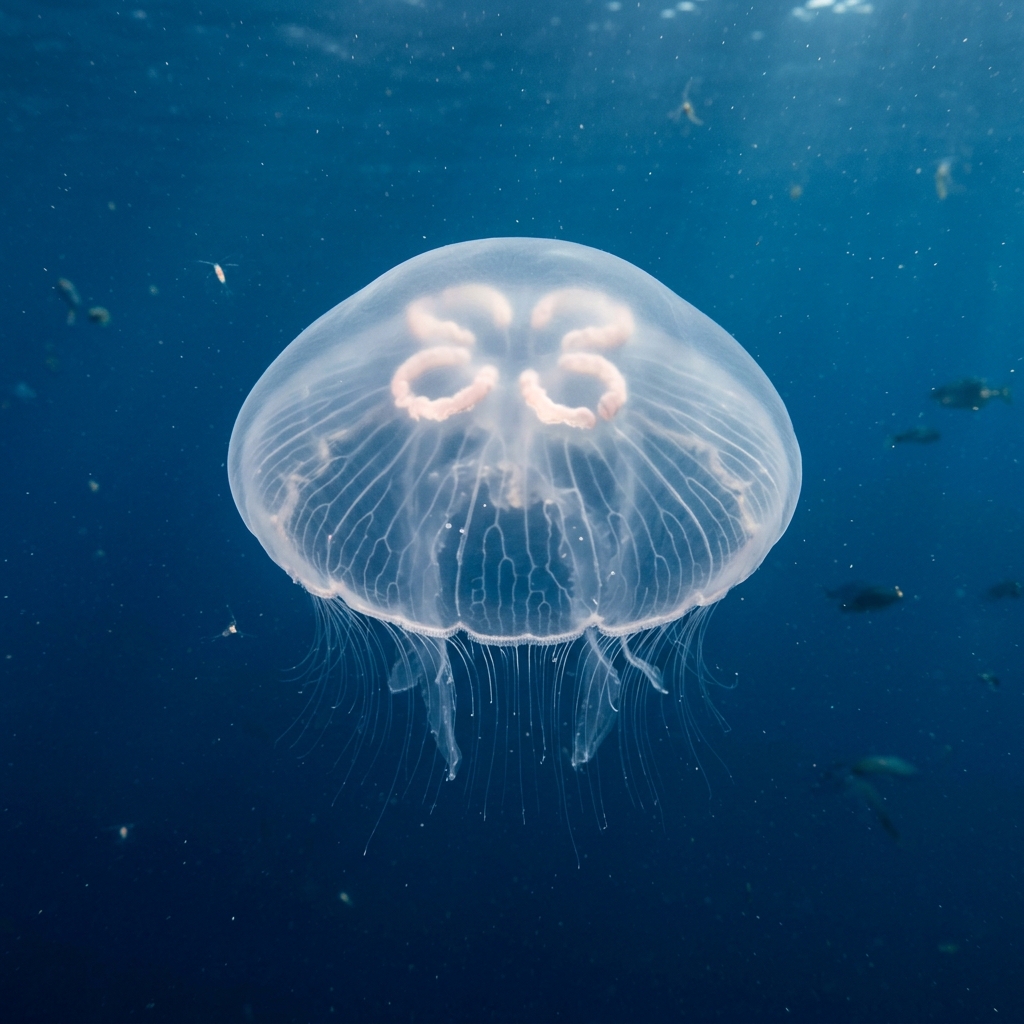
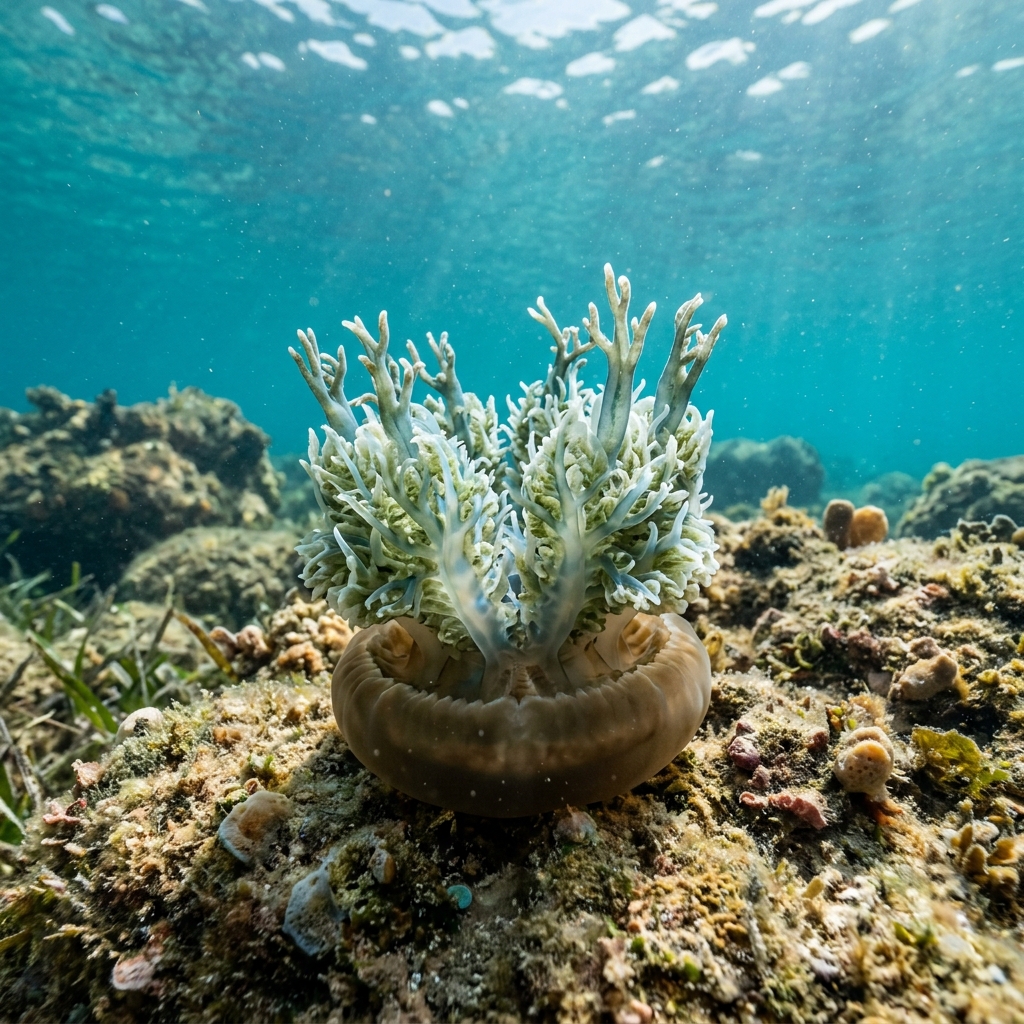
Reef neighbours a diver could mistake it for. Use the identification notes above to tell them apart.
Every logged sighting for this species comes from Hong Kong, with Sai Kung standing out as the main region divers report it from. If you're diving that stretch of coast, it's the one to have on your radar rather than something you'd plan a trip around elsewhere.
Mapping where Ghost Jelly is logged…
Recorded sightings are concentrated in Hong Kong, particularly around Sai Kung, where divers log it drifting in open water at multiple sites.
There's no strong seasonal signal in the data, and it tolerates a fairly wide temperature range, so it can appear across the year in Sai Kung rather than at one fixed time.
Yes. Their long tentacles carry stinging cells that cause painful welts on contact, and even a dead or stranded jellyfish can still sting, so keep clear and never touch one.
Look for a reddish-brown to amber bell roughly 18 cm across trailing a dense, shaggy mass of thin tentacles behind it, longer and messier looking than most other jellyfish you'll encounter on the same dive.
Divers in Hong Kong typically log this species around 18 cm across the bell, noticeably smaller than the enormous cold-water Lion's Mane jellyfish famous from colder oceans.
Their stinging cells stay active even after the animal dies, so a motionless jellyfish drifting or washed up on shore can still deliver a sting if touched.
Site and sighting data is aggregated from diver logs, iNaturalist and GBIF. For taxonomy and conservation status:
Moon Jellyfish
1,766 sites