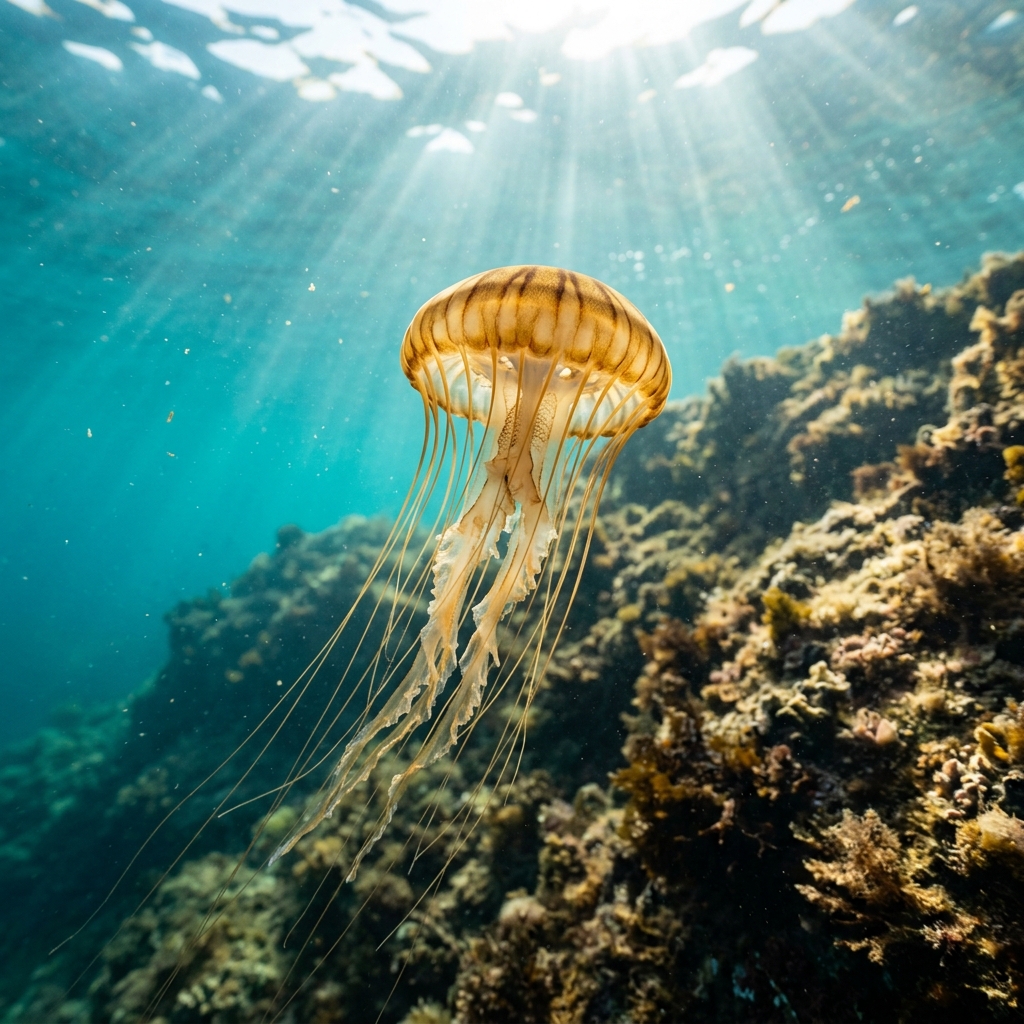
Chrysaora fuscescens
Sea nettles drift along the Pacific Coast US and British Columbia in cool 10-15 °C waters from May to September. Here's where and when to find them.
Safety warning
This species can sting on contact with its tentacles, which may trail well beyond the body and can still sting after the animal is dead or washed up. Look but do not touch, and give it a wide berth.
If you're stung
Stinging tentaclesGeneral first-aid guidance, not a substitute for professional medical care. In an emergency, call your local emergency number.
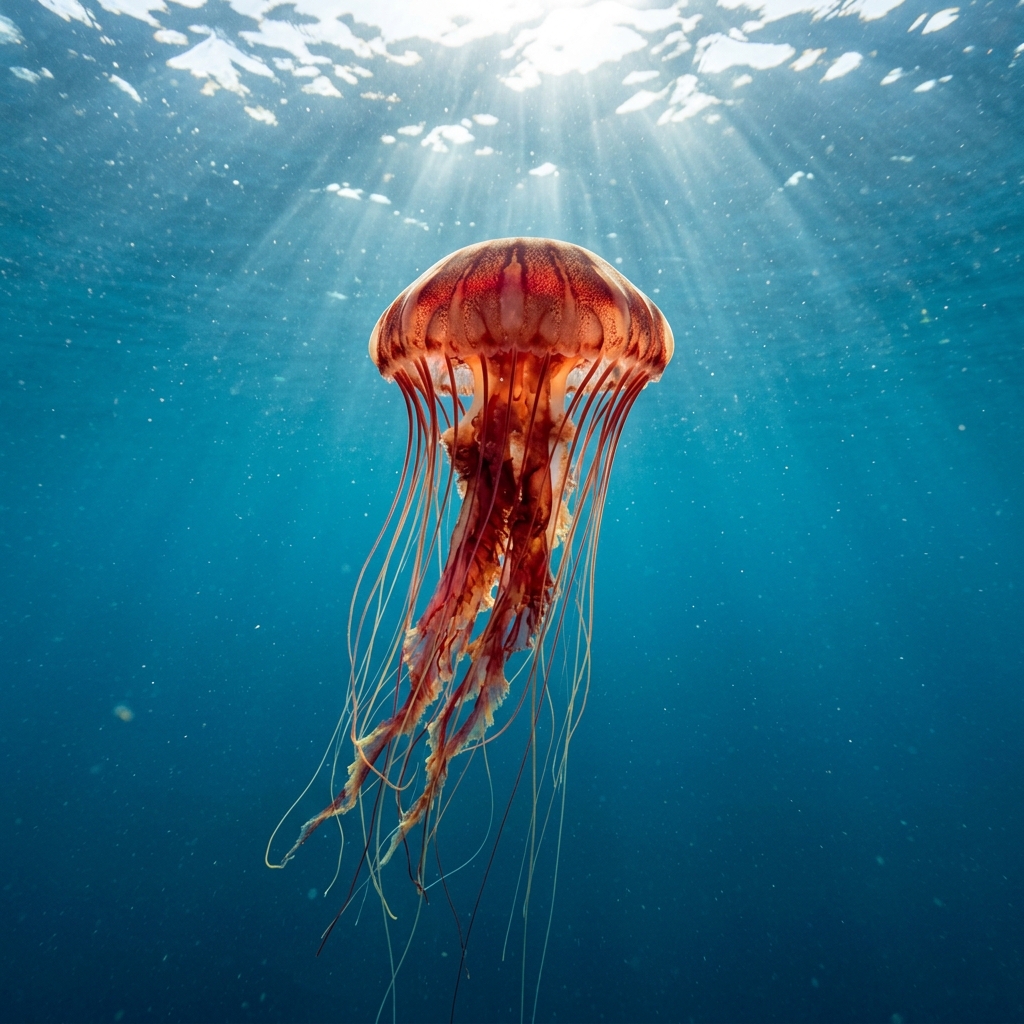
Look for a broad, dome-shaped bell in warm amber to deep reddish-orange, typically patterned with radial brown streaks or bands across the surface. Long, frilly oral arms and slender trailing tentacles hang beneath, often matching the bell's amber tones. In the water, the overall impression is of a glowing orange lantern shape, the rich colouration separates it from most other Pacific jellies. Individuals can grow large enough that the bell alone is clearly visible from a metre or two away.
Sea nettles are open-water drifters, carried by currents rather than swimming with any real direction, though they do pulse their bells rhythmically to maintain depth. Divers most often encounter them suspended in the mid-water column, sometimes in loose aggregations when currents concentrate plankton. They show no particular response to divers and will drift past without changing behaviour.
Sea nettles are active predators in the plankton, using their tentacles to snare small fish, crustacean larvae, and other jellyfish, they are one of the few jellyfish known to regularly consume other gelatinous animals, including comb jellies.
Sightings concentrate between May and September in the Northern Hemisphere, aligning with seasonal upwelling and the cooler water temperatures, typically 10 to 15 °C, that this species favours along the Pacific Coast.
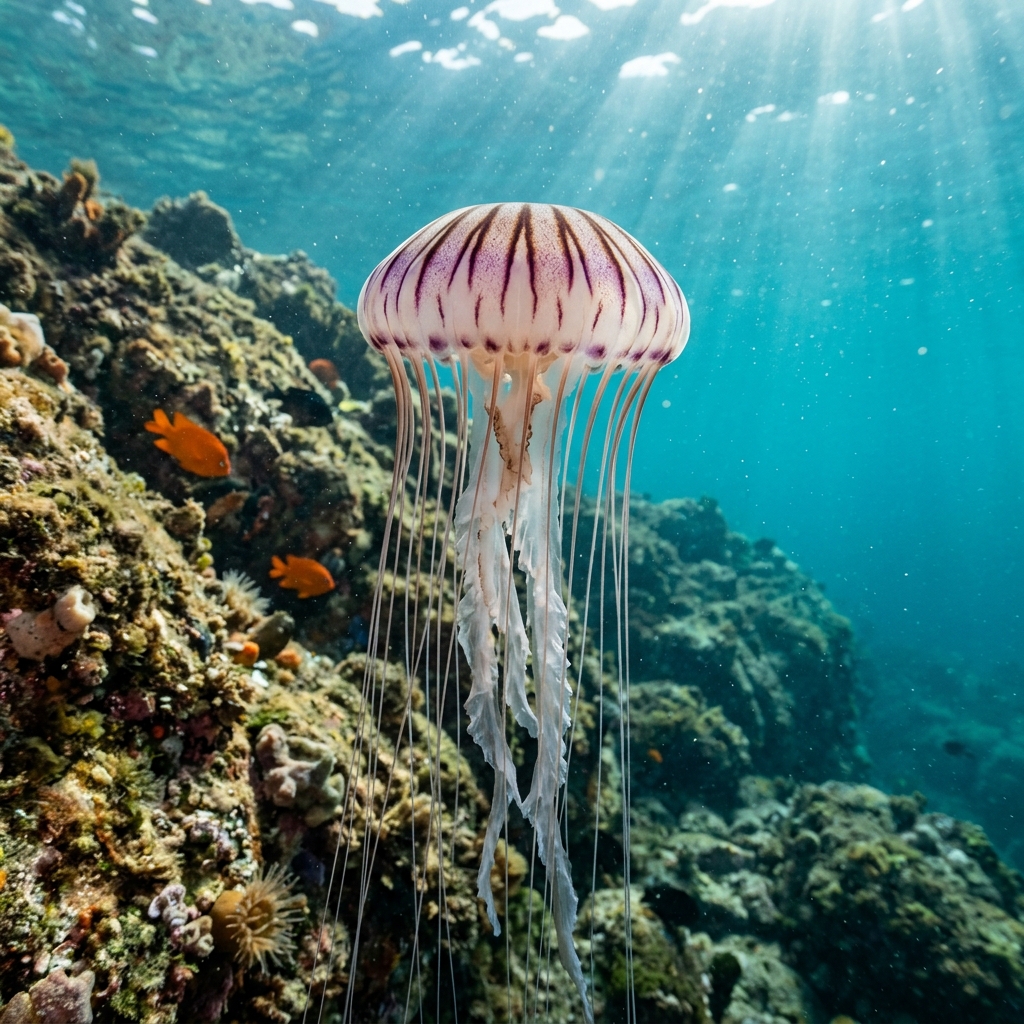
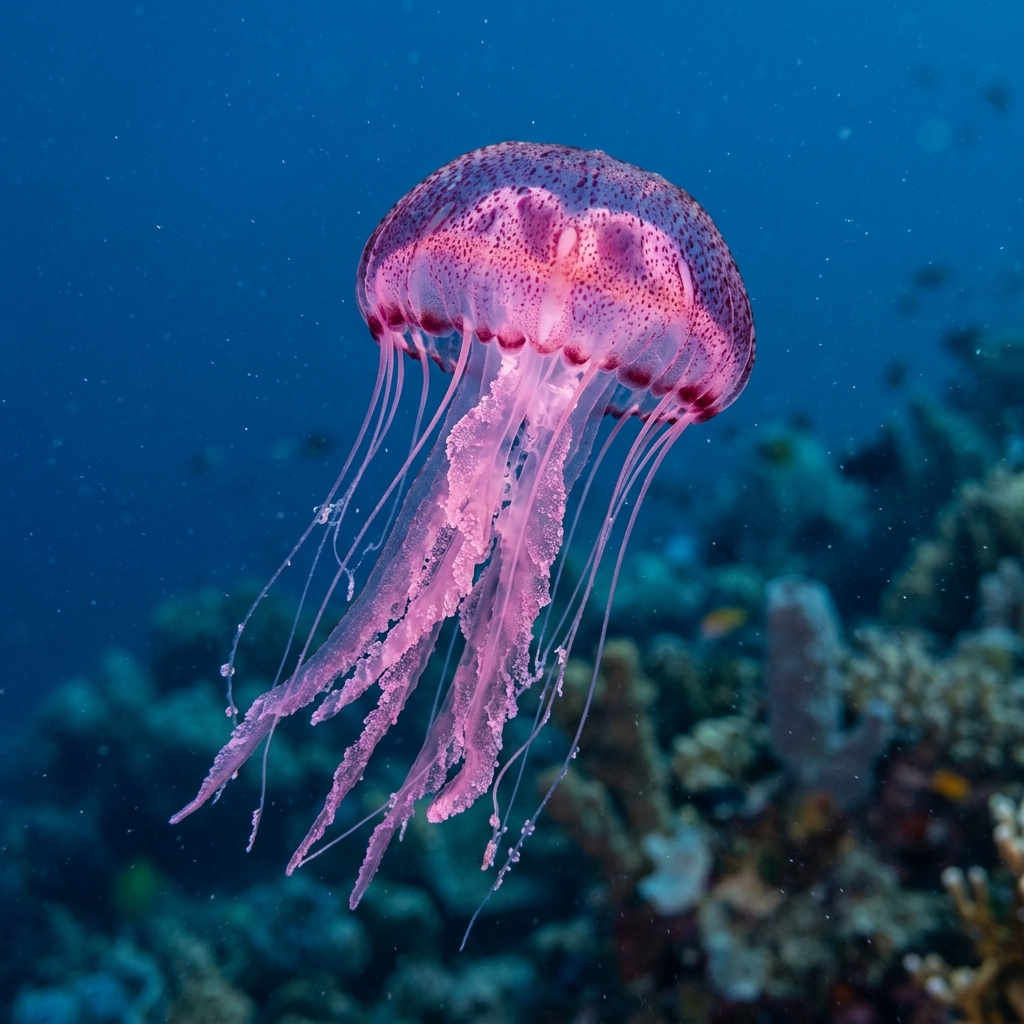
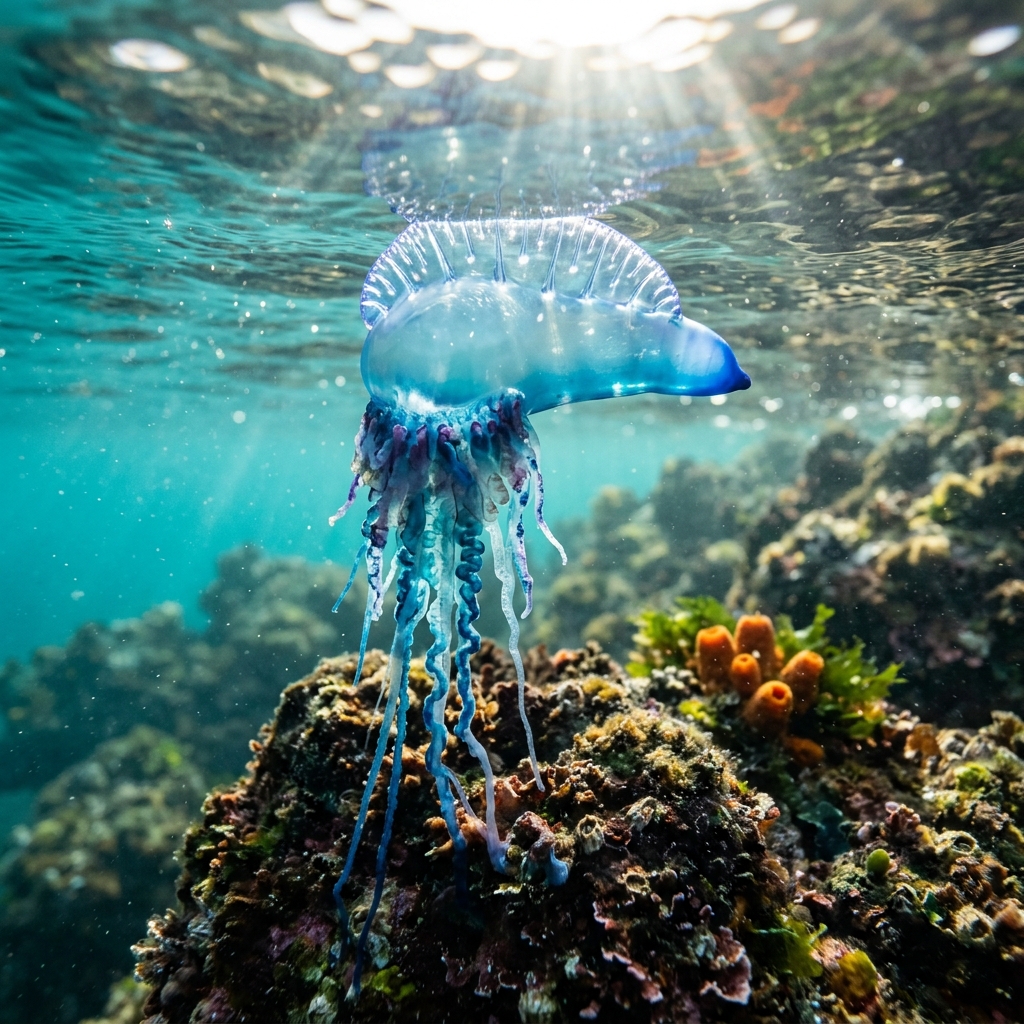
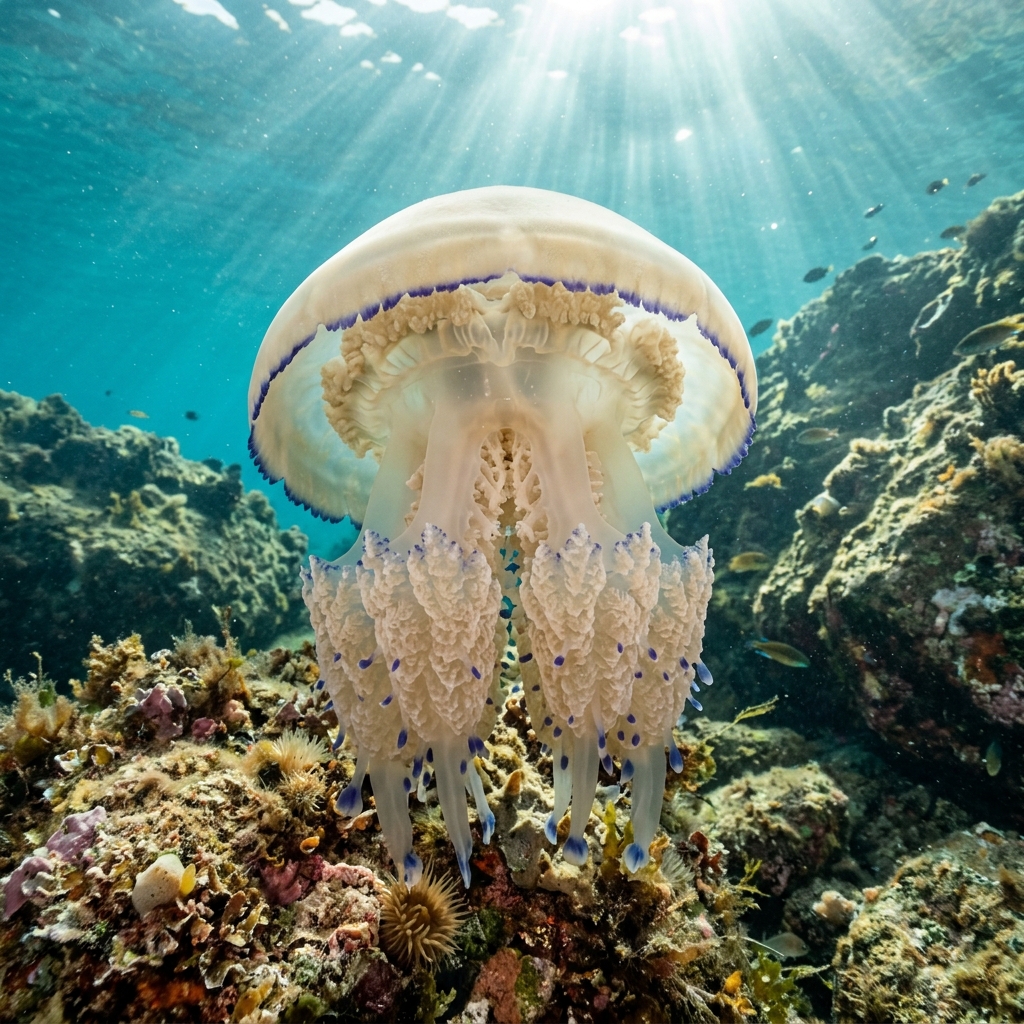
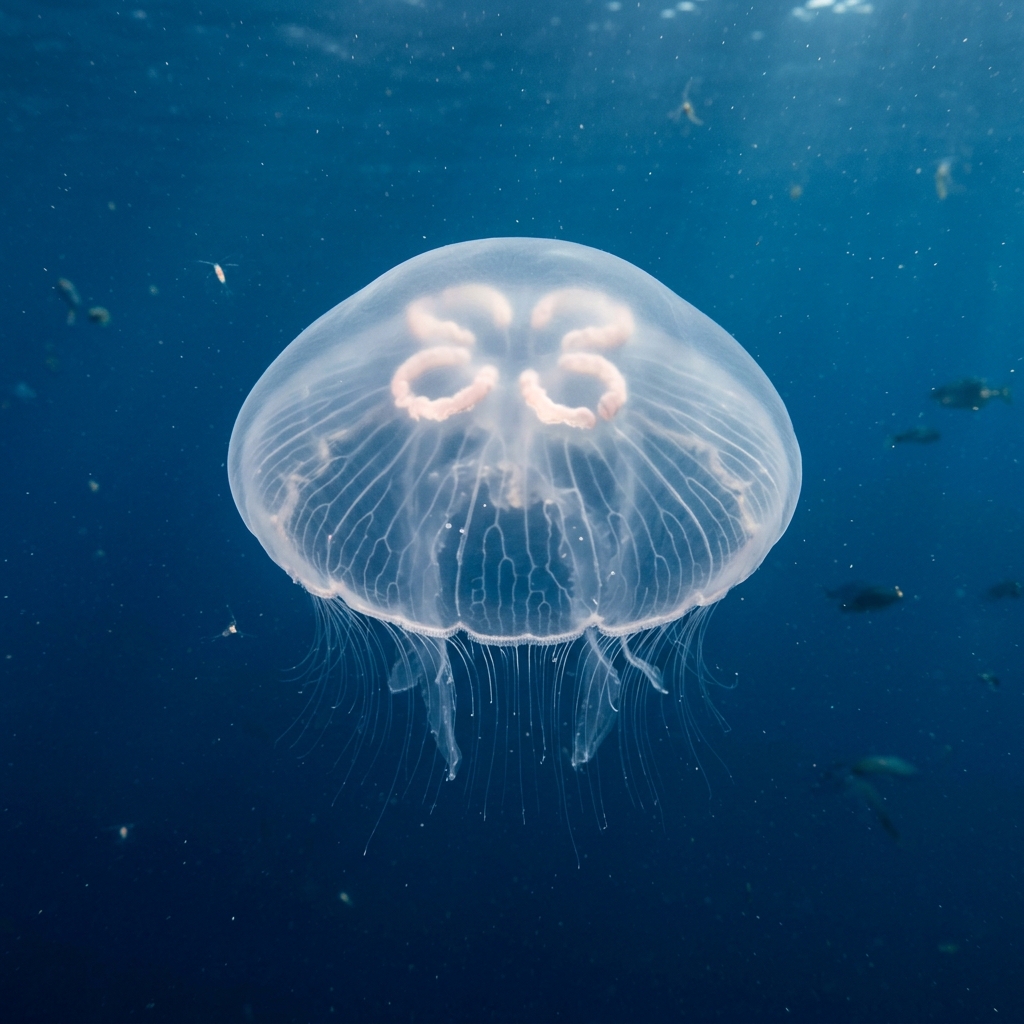
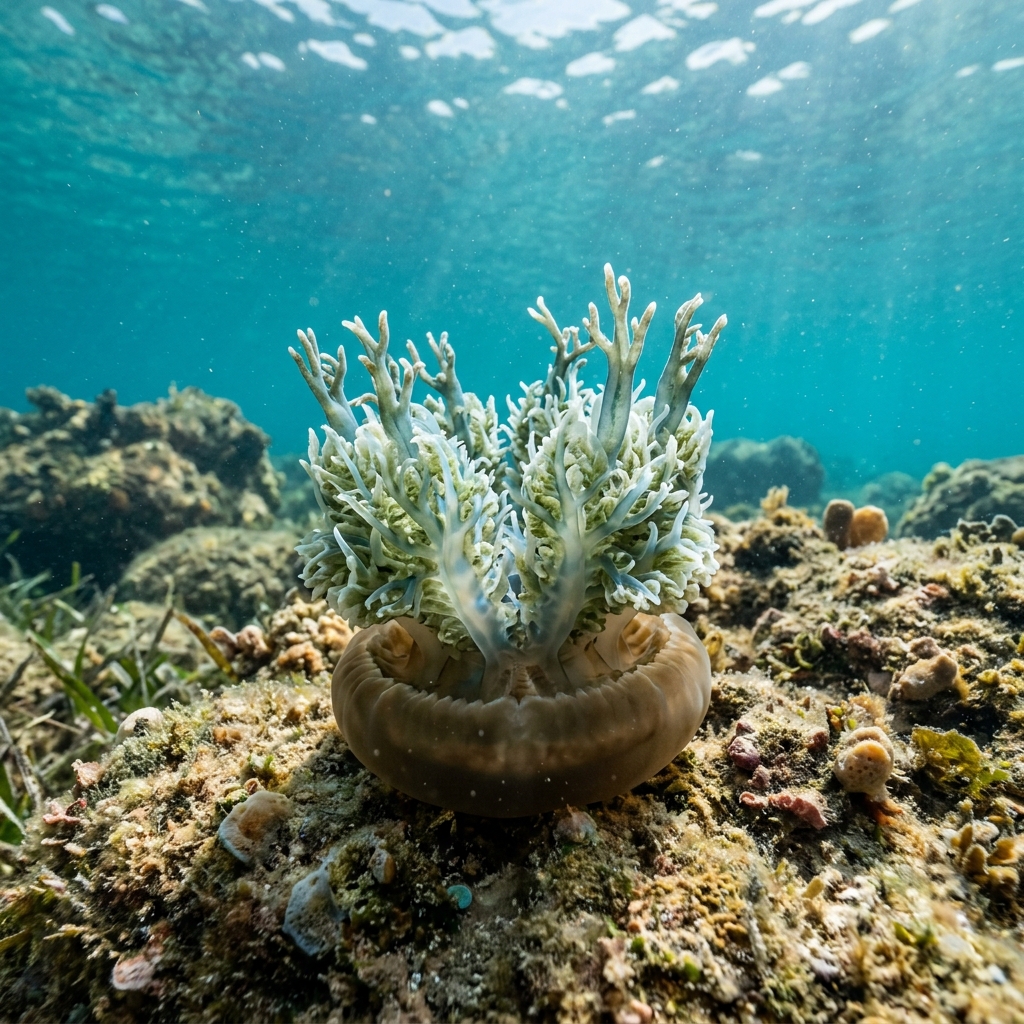
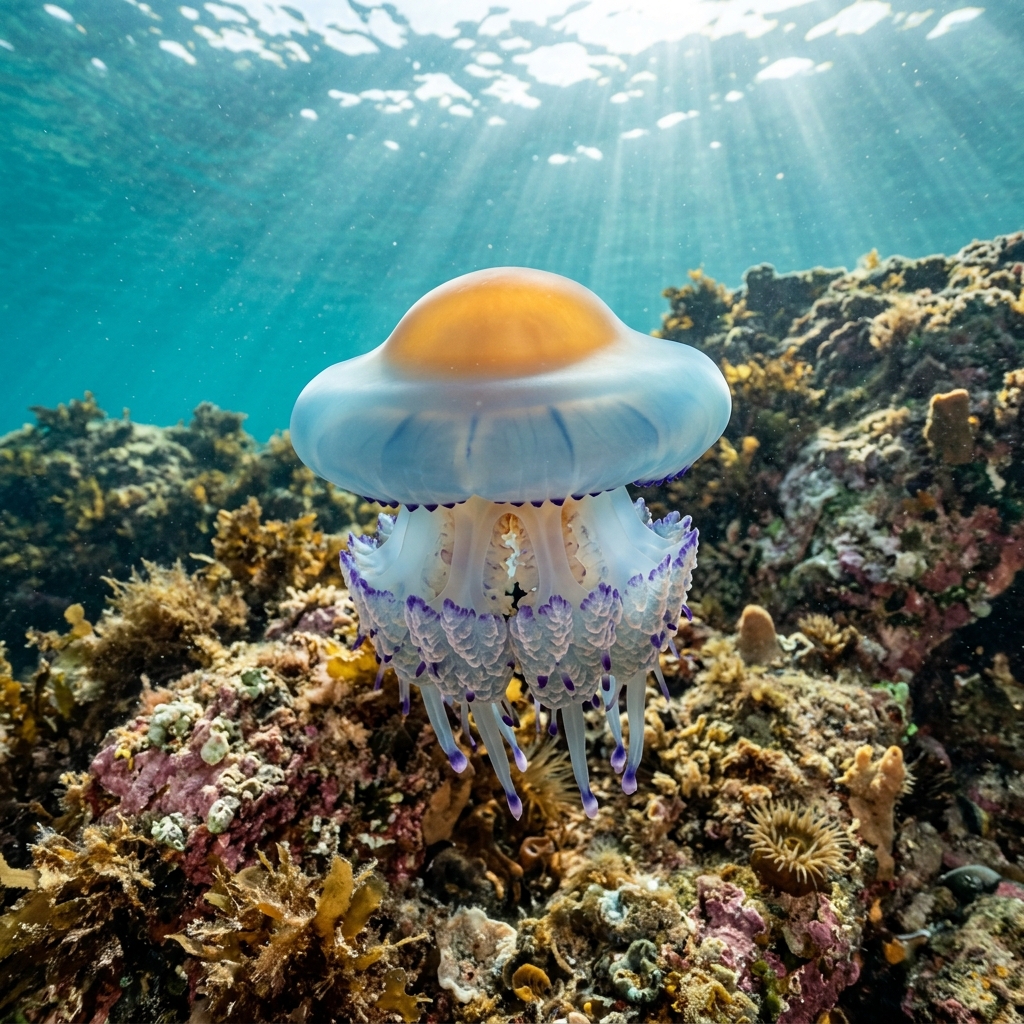
Reef neighbours a diver could mistake it for. Use the identification notes above to tell them apart.
Nearly all logged sightings come from the eastern Pacific, with the vast majority recorded along the Pacific Coast of the United States, stretching from California northwards. A solid share of sightings also come from the British Columbia coast in Canada, making the broader northeastern Pacific the place to look. Sightings are most consistent in nearshore and open-water sites within these regions.
Mapping where Sea Nettle is logged…
Sea nettles are most reliably logged along the Pacific Coast of the United States, with a strong secondary presence along the British Columbia coast in Canada. Both areas offer cool, nutrient-rich water that suits this species well. They are a pelagic (open-water) animal, so dive sites with current or open exposure tend to produce more encounters.
On the northeastern Pacific coast, sightings peak between May and September. This window corresponds to seasonal upwelling that brings cold, productive water to the surface, exactly the conditions sea nettles favour. Outside these months, encounters drop off noticeably.
The amber to reddish-orange bell with distinct radial brown streaking is the key feature. The long, trailing oral arms and tentacles share the warm colouration, giving the whole animal an orange lantern appearance. This warm-toned colouration distinguishes it from the purple-striped jellyfish and the much larger, mane-like Pacific lion's mane.
Sea nettles can deliver a mild sting if tentacles brush bare skin, but they are not considered dangerous to divers. The sting is generally described as a minor irritation, far less severe than that of a lion's mane. Wearing a wetsuit provides effective protection during encounters.
Across the sites where they have been recorded, sea nettles are most frequently logged as rare or uncommon, with common sightings at a smaller number of sites. A handful of sites report them as very common, likely reflecting local aggregations driven by current and upwelling conditions.
Site and sighting data is aggregated from diver logs, iNaturalist and GBIF. For taxonomy and conservation status:
Moon Jellyfish
1,766 sites