Myrichthys pardalis
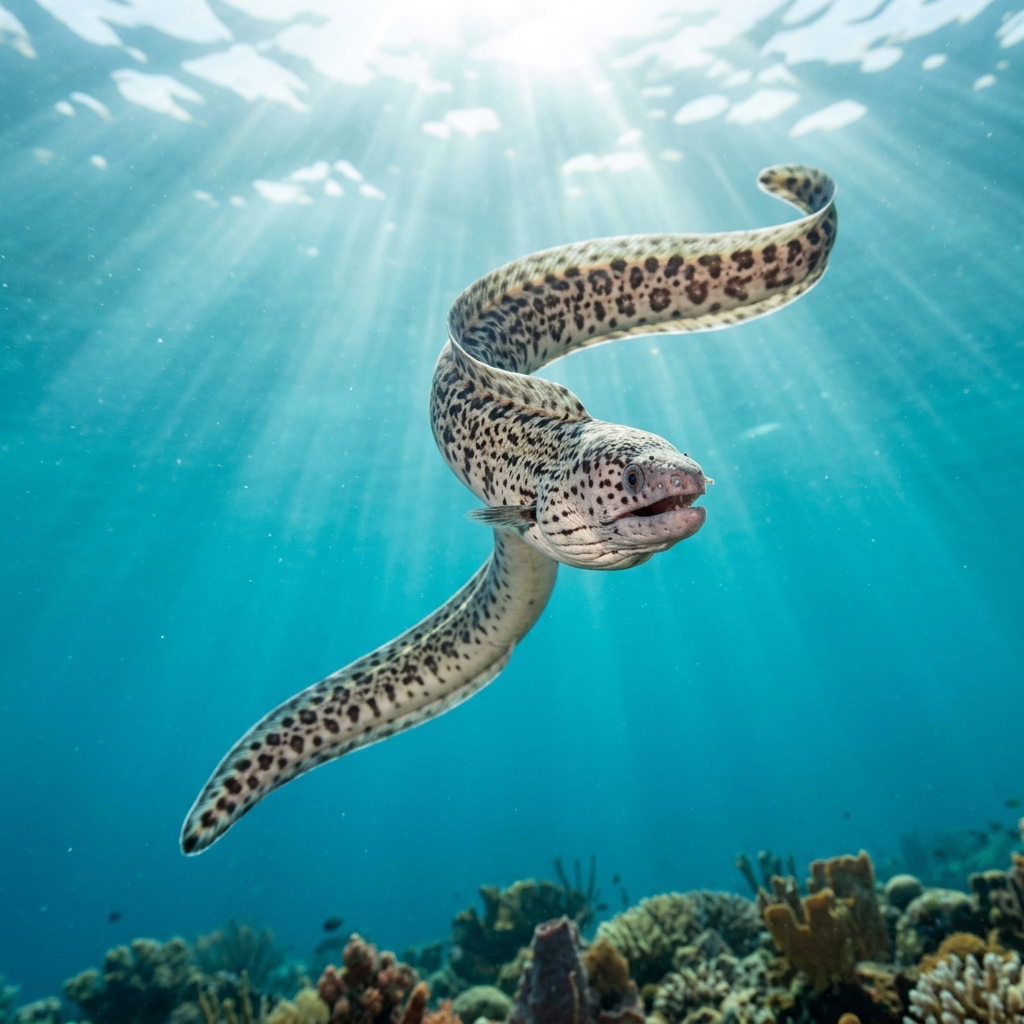
Cream body dotted with dark leopard-like spots, cruising sand in El Hierro and Sal at 20-28C, year-round and usually solo.
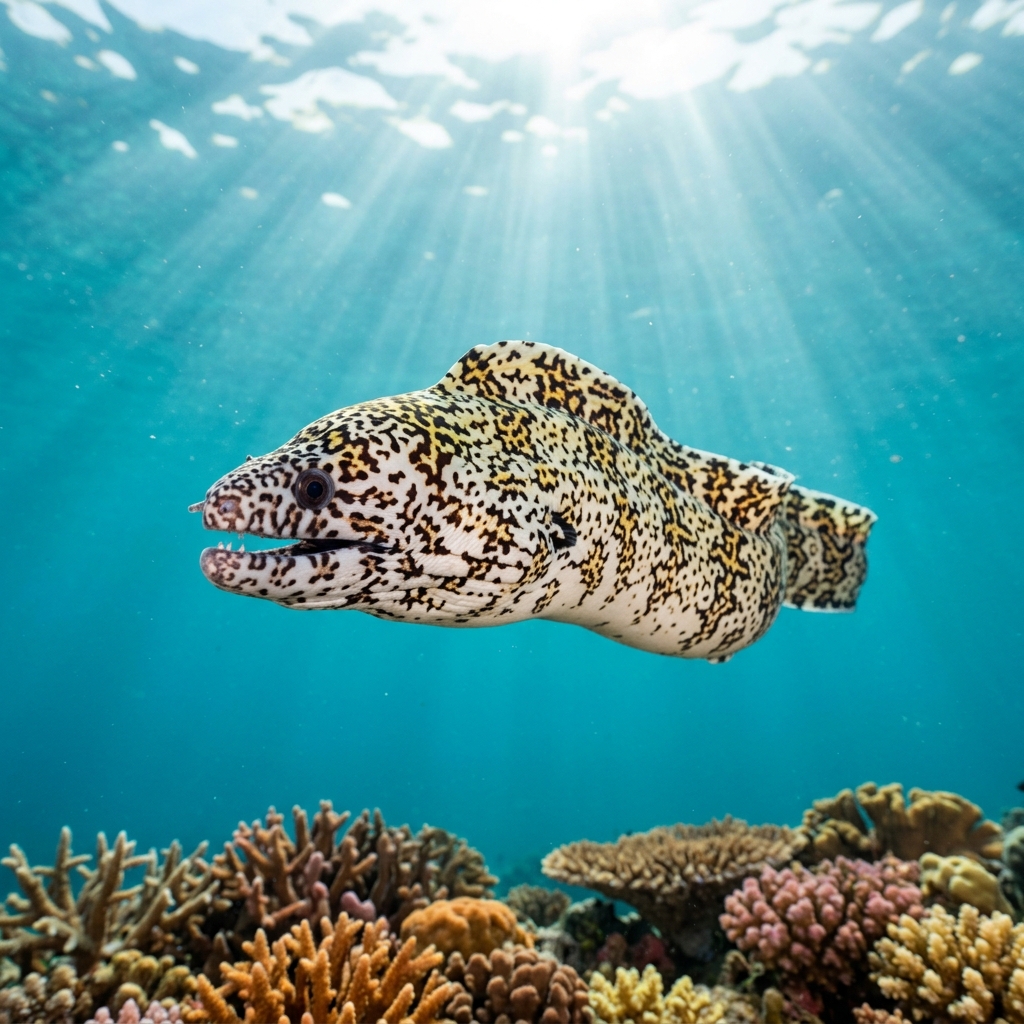
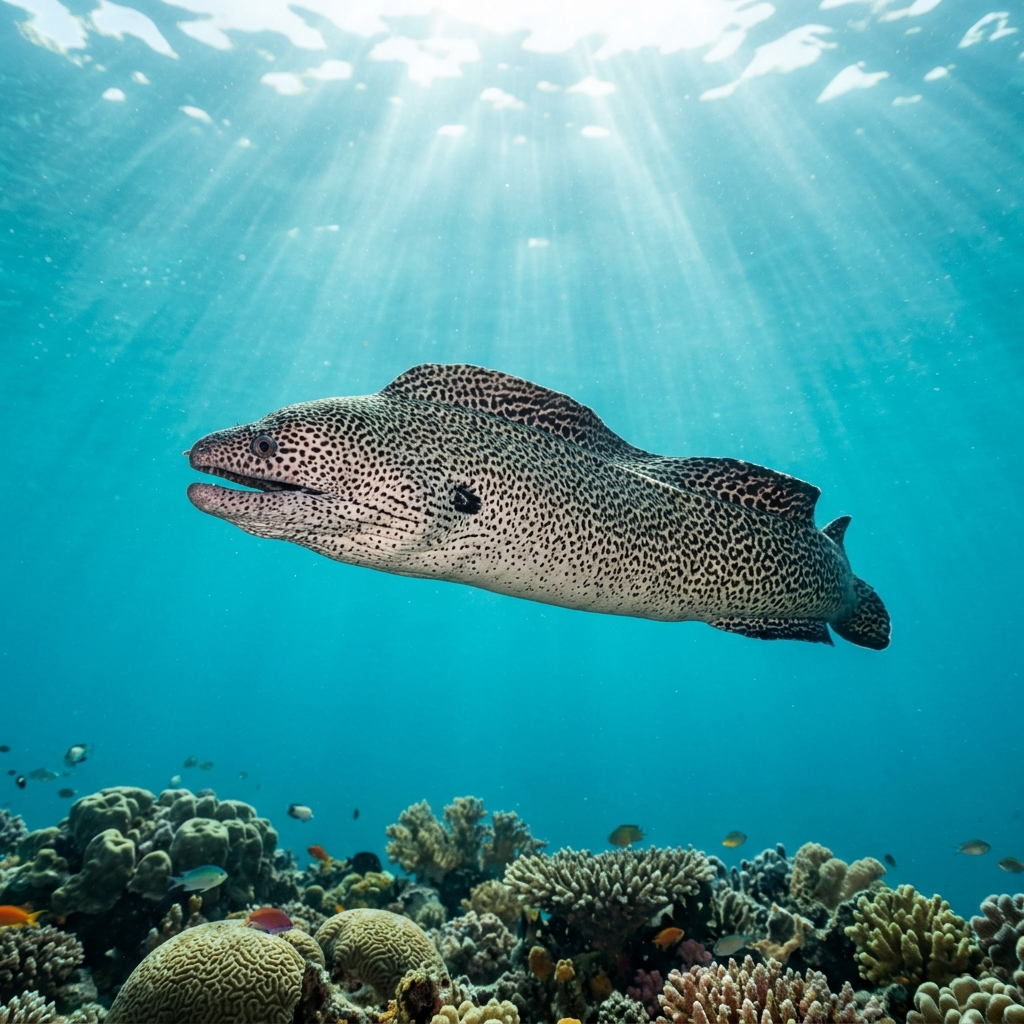
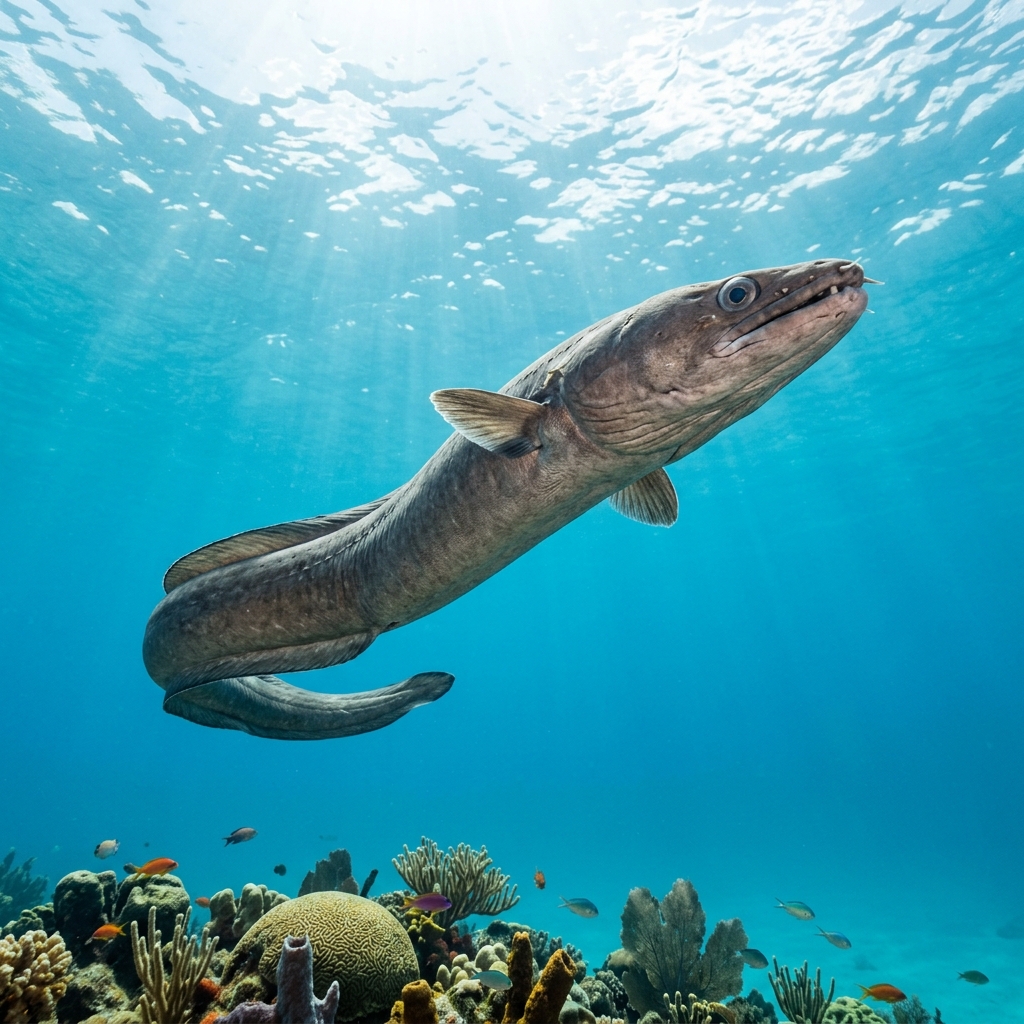
Slim, snake-like body around 44 cm long, pale cream to sandy yellow, covered in dark brown to black spots that give it the leopard pattern its name promises. No dorsal fin frills or obvious fins breaking the smooth outline, and it tapers to a pointed tail rather than the paddle-shaped tail of a moray. Usually seen with just its head and forebody poking from sand, or gliding low over open sand and rubble patches between reef structure.
Spends most of its time nosing along sand and rubble patches close to reef edges, hunting by smell and feel rather than sight since snake eels have small eyes and poor vision. Divers usually find it half-buried with just the head visible, or moving slowly and low over open sand during the day, and it tends to retreat into the substrate rather than react defensively when approached. Logged as uncommon at most sites where it appears, so a calm, patient look along sandy patches near reef structure is the best way to spot one.
Snake eels like this one can back into sand tail-first thanks to a hardened, pointed tail tip, letting them disappear into the substrate almost as fast as they emerged.
No clear seasonal pattern shows up in the sightings, and with a comfortable range of roughly 20 to 28C it is around on these sites year-round rather than tied to a particular month.
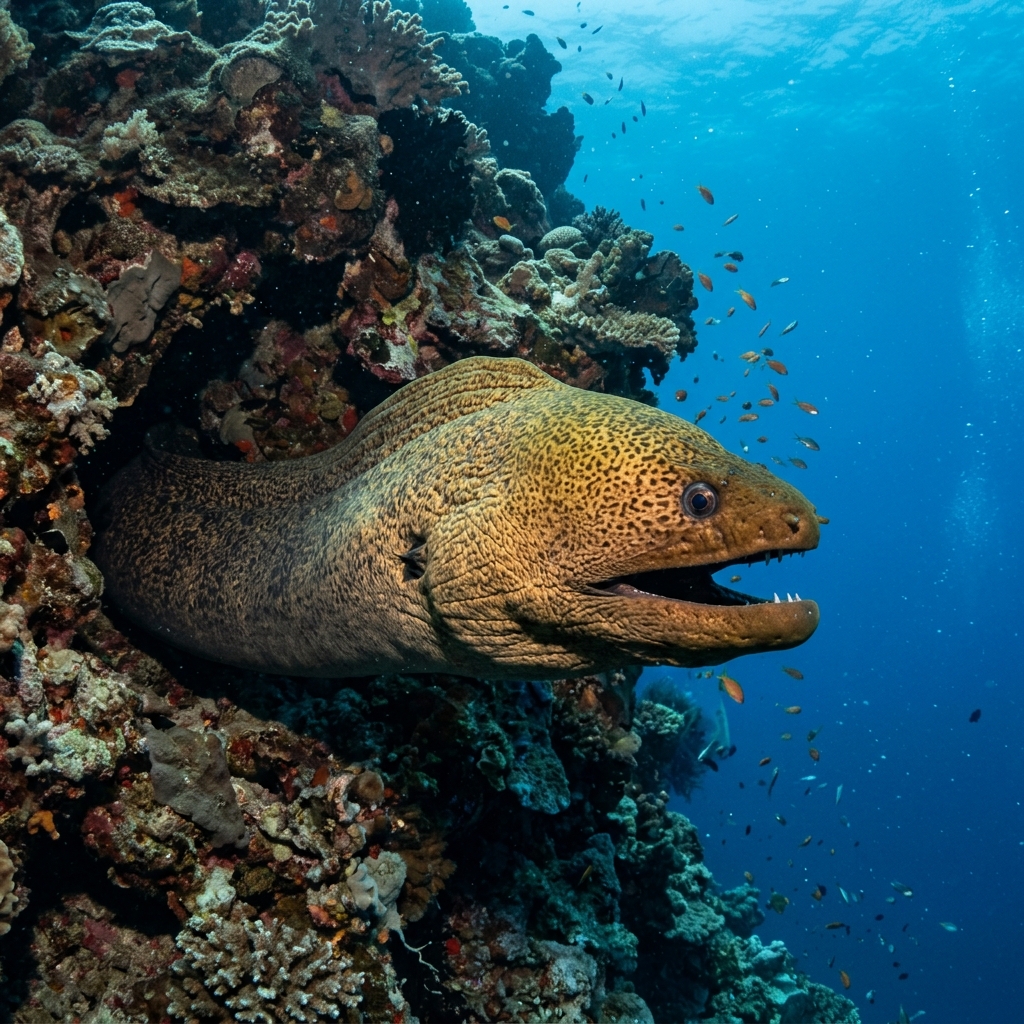
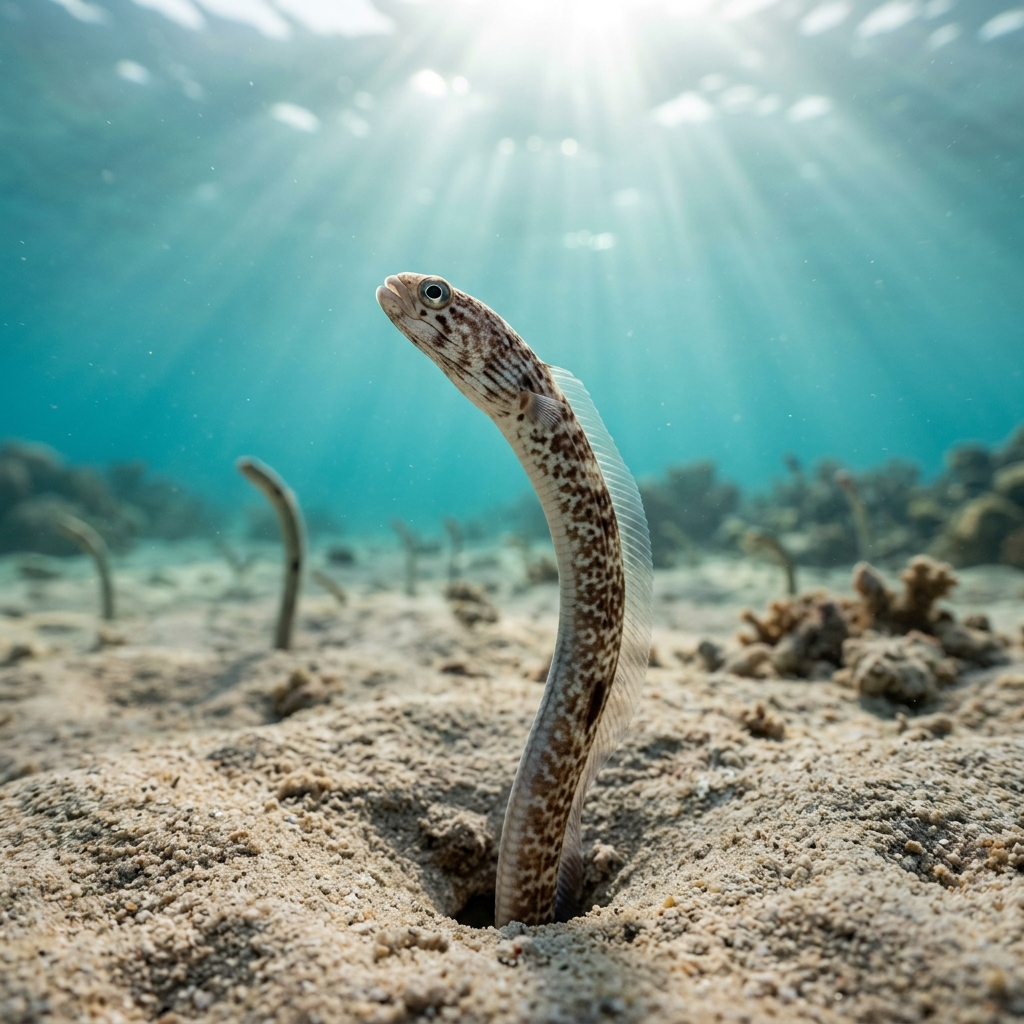
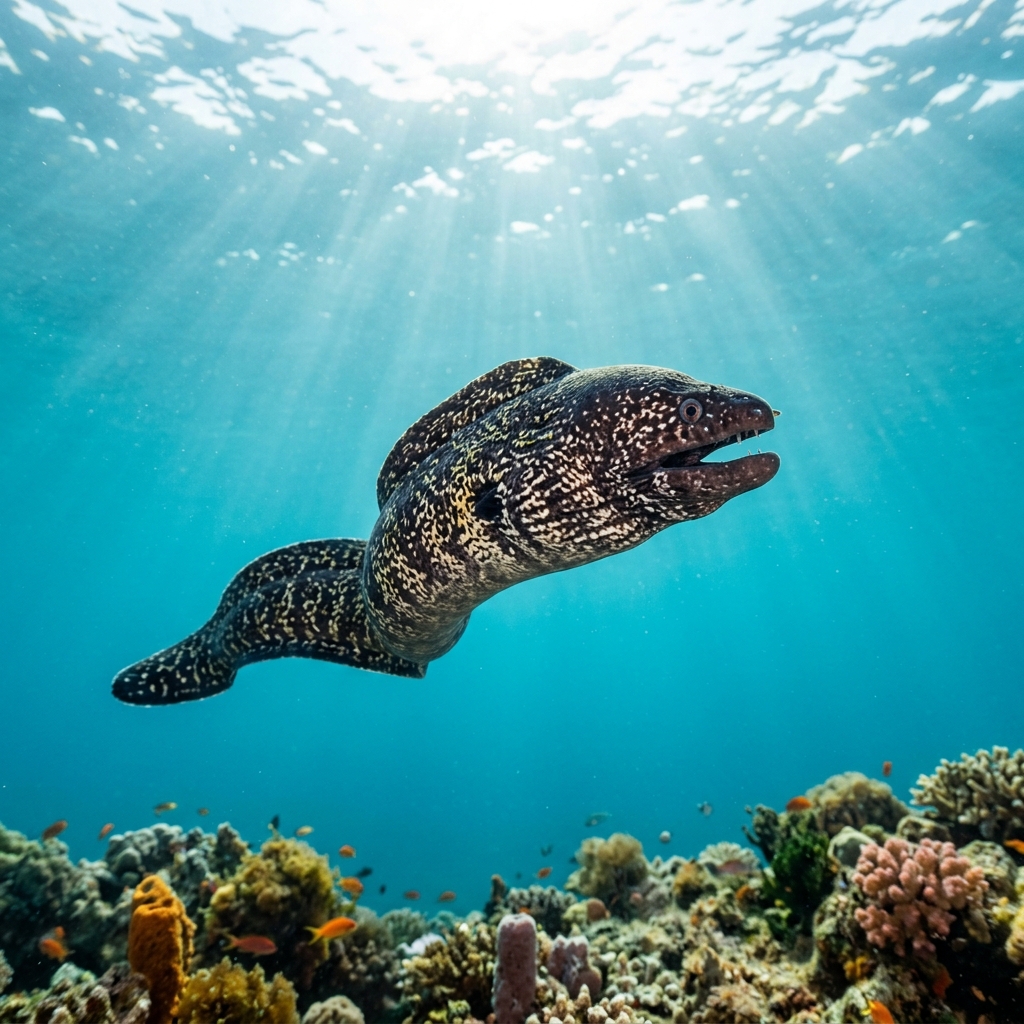
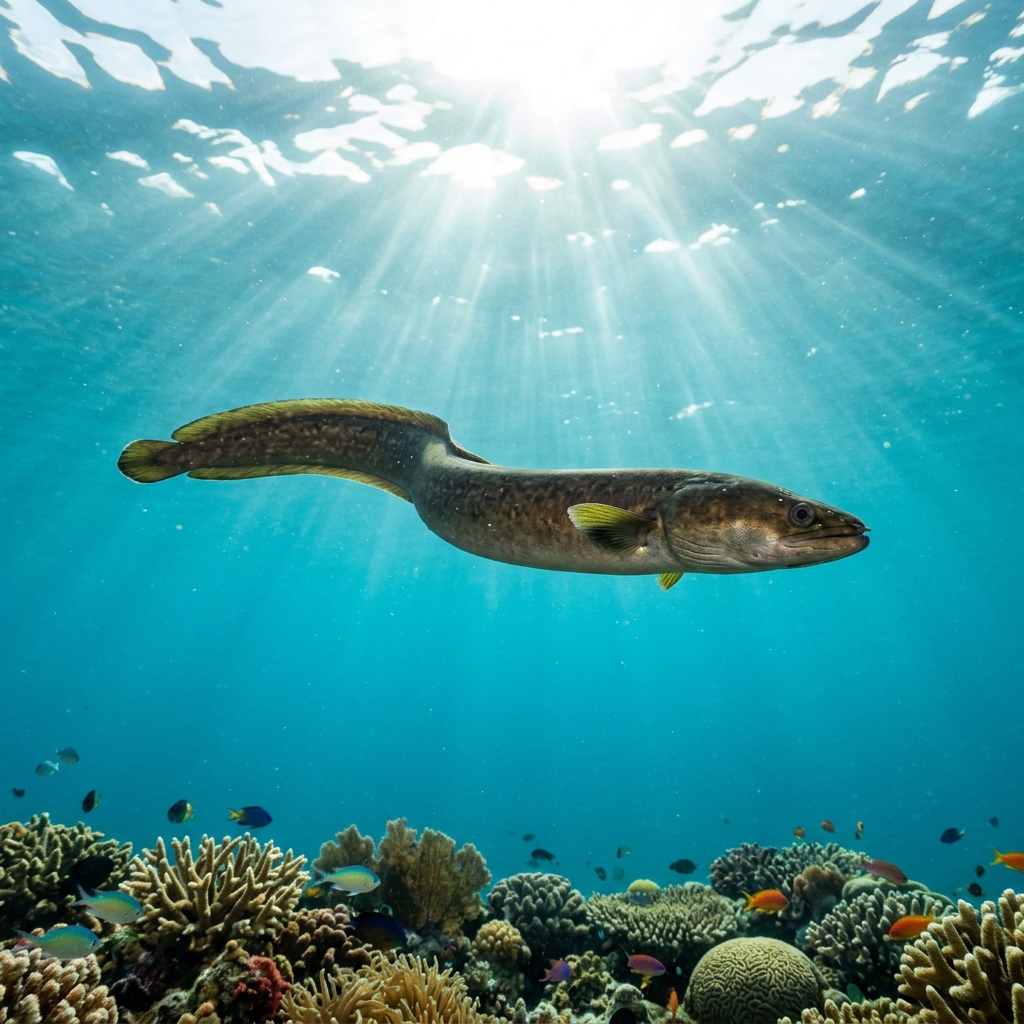
Reef neighbours a diver could mistake it for. Use the identification notes above to tell them apart.
Most reliably logged around Cape Verde, especially Sal, Boa Vista and Santiago, and across the Canary Islands, with El Hierro and Tenerife standing out as strongholds. The Azores, particularly Sao Miguel and Santa Maria, also turn up regular sightings, with smaller numbers reported from France, the United States, Cuba, Angola and Sierra Leone.
Mapping where Leopard Snake Eel is logged…
Cape Verde and the Canary Islands are the strongest areas, particularly Sal, Boa Vista and Santiago in Cape Verde and El Hierro and Tenerife in the Canaries. The Azores, especially Sao Miguel and Santa Maria, is another solid option.
There is no strong seasonal signal in the sightings, and it tolerates water from about 20 to 28C, so it is generally a year-round find on the sandy patches it favours.
Look for a slim, snake-shaped body around 44 cm long, pale cream to yellowish with dark leopard-style spots, no fins interrupting the smooth outline, and a pointed tail rather than a flattened one. It is usually seen half-buried in sand or gliding low across it.
They typically reach around 44 cm in length, making them a modest-sized eel compared to morays sharing the same reefs.
It relies on smell and touch rather than sight to hunt, since snake eels have poor eyesight, and it can reverse tail-first into sand using a hardened tail tip to vanish almost instantly when disturbed.
Site and sighting data is aggregated from diver logs, iNaturalist and GBIF. For taxonomy and conservation status:
Garden Eel
2,448 sites