Dermasterias imbricata
Spot leather stars along British Columbia and the US Pacific Coast in cool 11-15 °C water. Most sightings concentrate March to August.
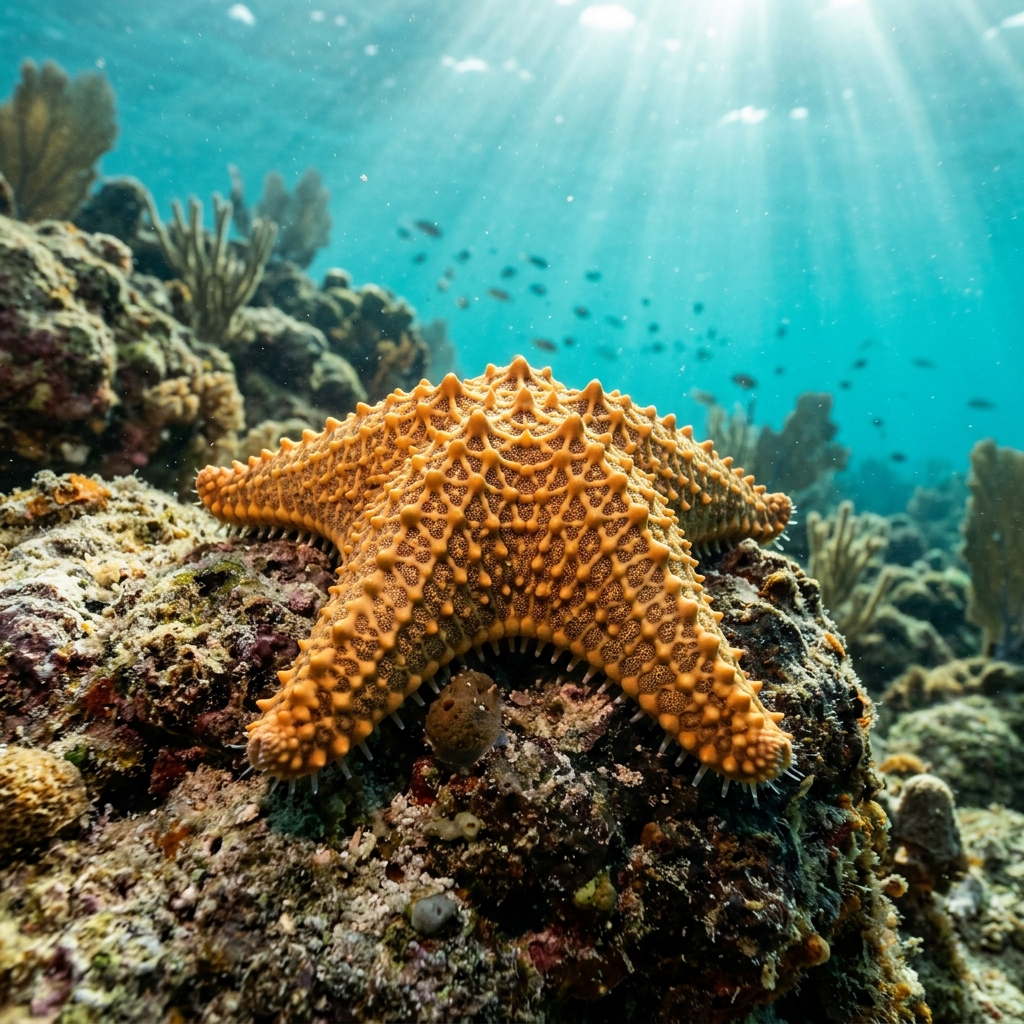
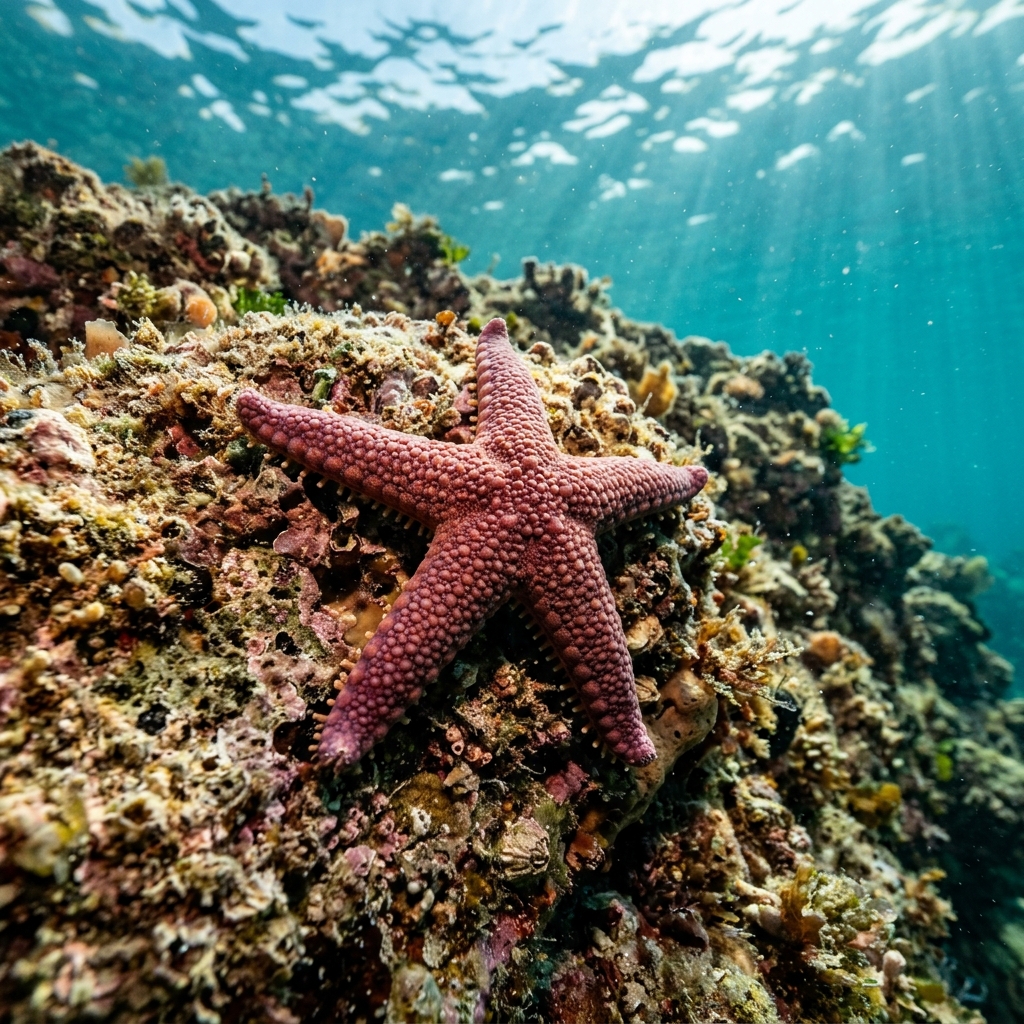
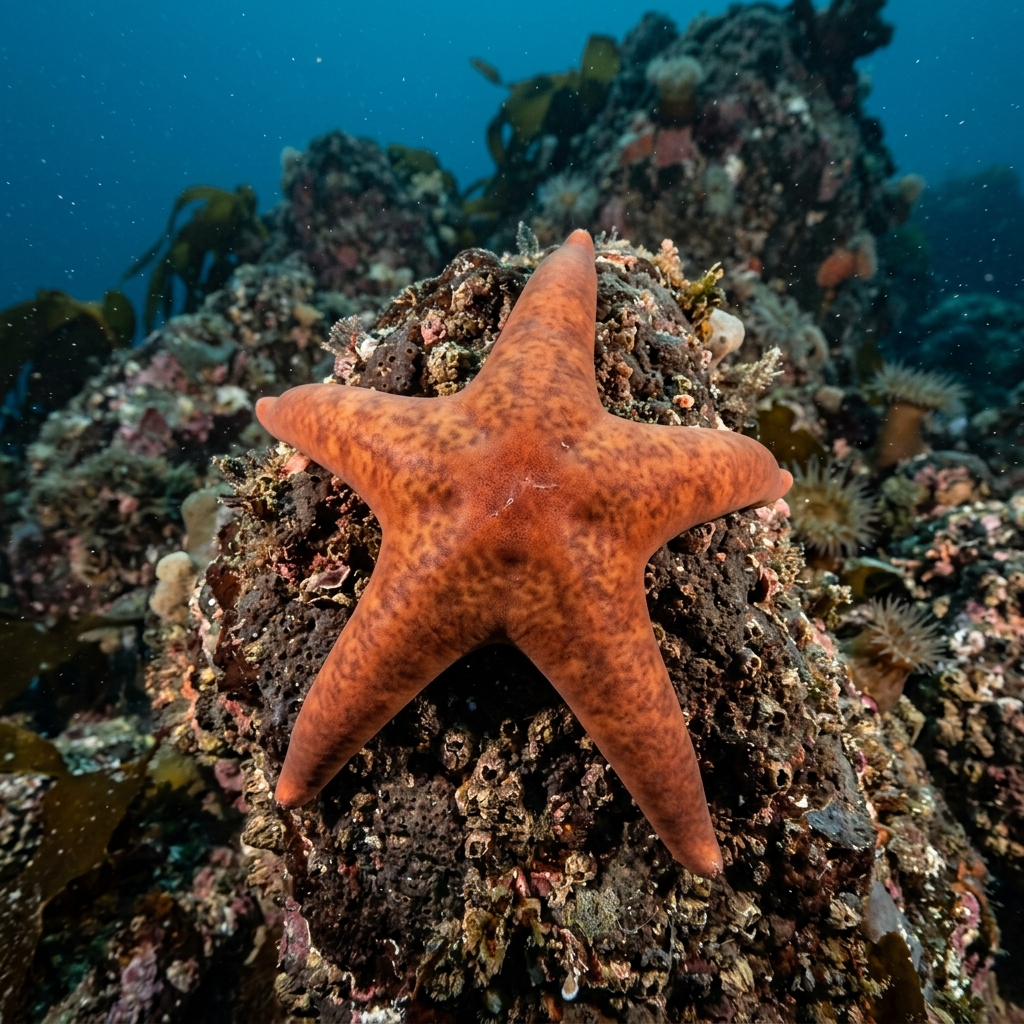
Roughly 21 cm across, the leather star has a distinctly smooth, slippery-looking surface that sets it apart from rougher, spiny sea stars, that skin texture is the key field mark. Colouration runs from grey-brown to purple-grey, typically overlaid with orange or red mottling in a roughly garlic-clove pattern. The arms are broad and somewhat webbed at the base, giving the whole animal a chunky, almost padded look rather than the narrow-armed silhouette of many other sea stars.
Leather stars are slow, purposeful foragers, when you find one it will almost certainly be moving steadily across rock or mixed substrate with no interest in you whatsoever. They neither approach nor retreat from divers, so you can watch at close range without disturbing them. Active both day and night, they turn up on any dive, and it is worth pausing to watch the area around them carefully for feeding activity on small invertebrates.
Leather stars have a notable chemical defence: they produce a strong garlic-like smell from skin secretions, and many other echinoderms, including some sea urchins and sea cucumbers, visibly flee from contact with them. That flight response is one of the more striking predator-prey interactions a diver can observe in a temperate rocky-reef community.
Sightings along the North American Pacific Coast concentrate from March through August, which aligns with the cold, productive conditions this species favours. Outside those months encounters become less frequent, though the animal is present year-round in its preferred cold-water zone.
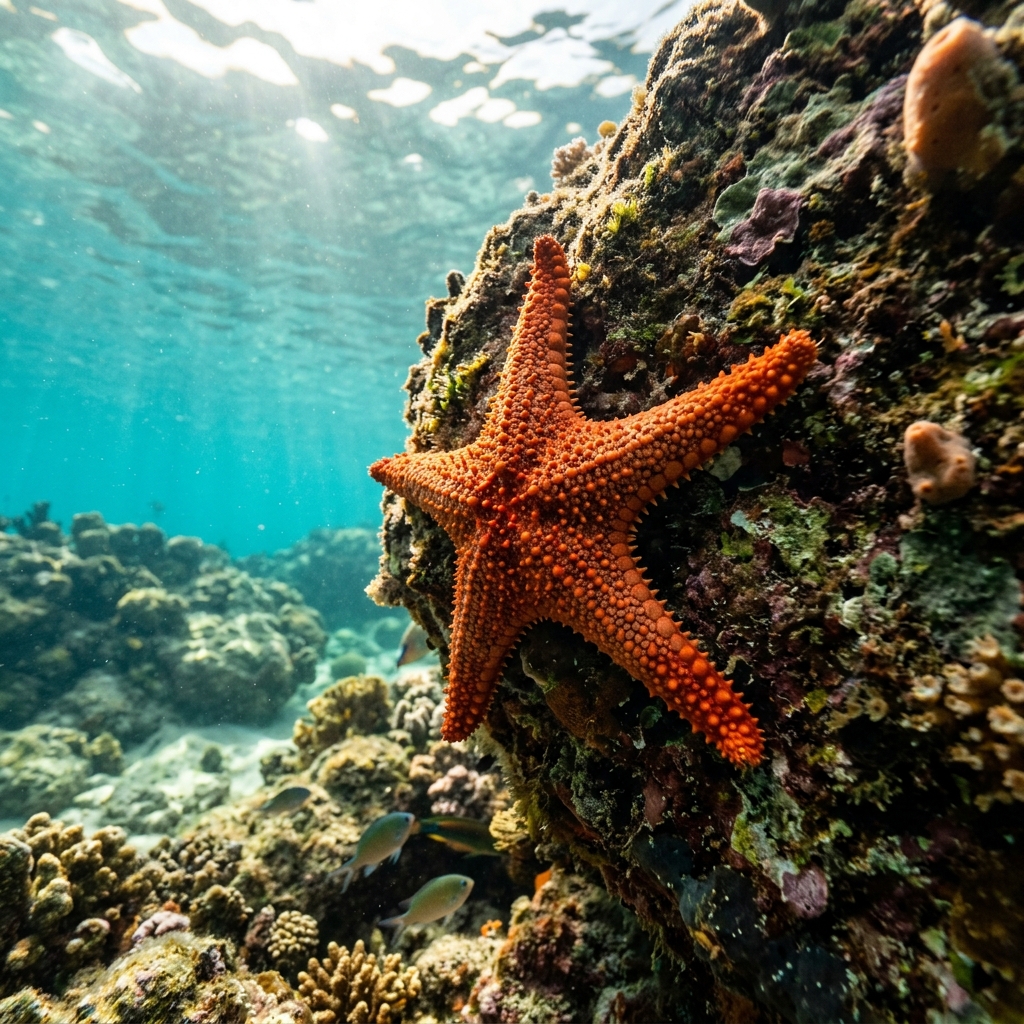
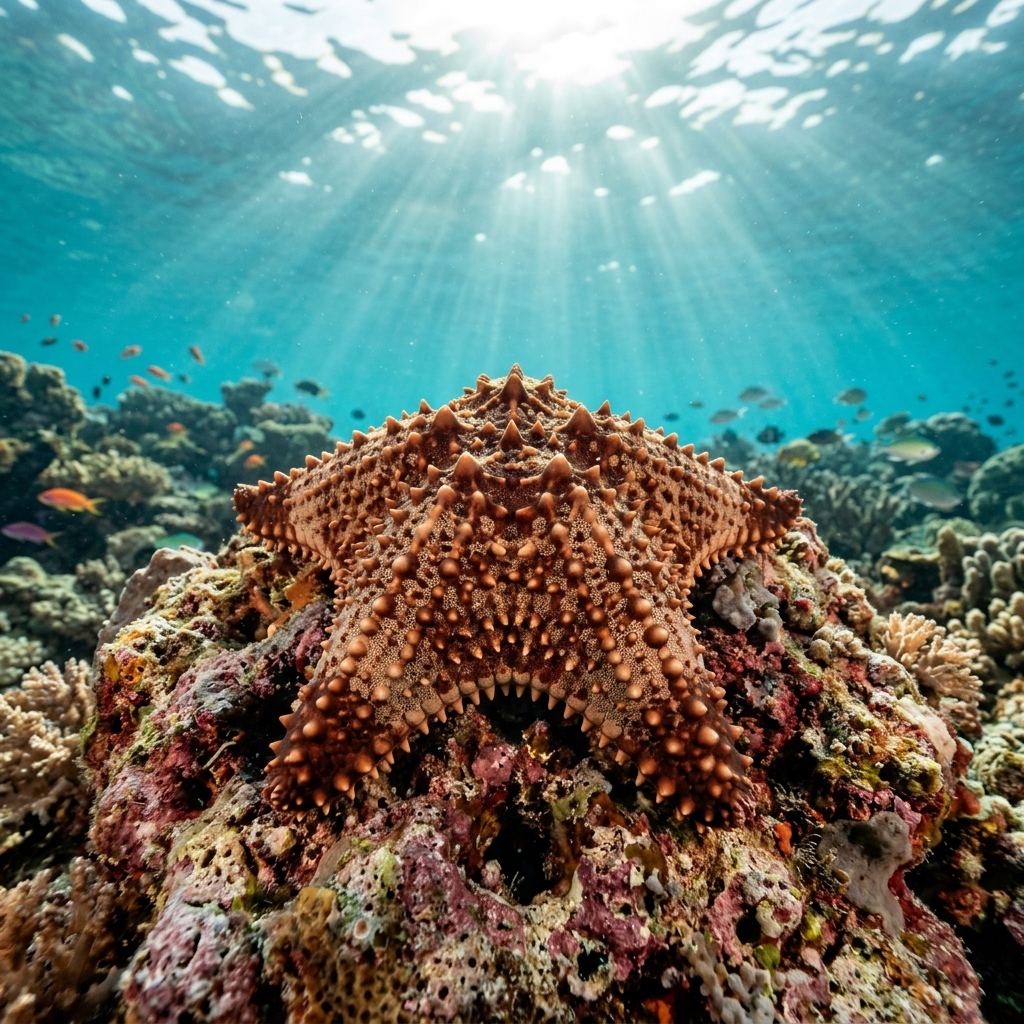
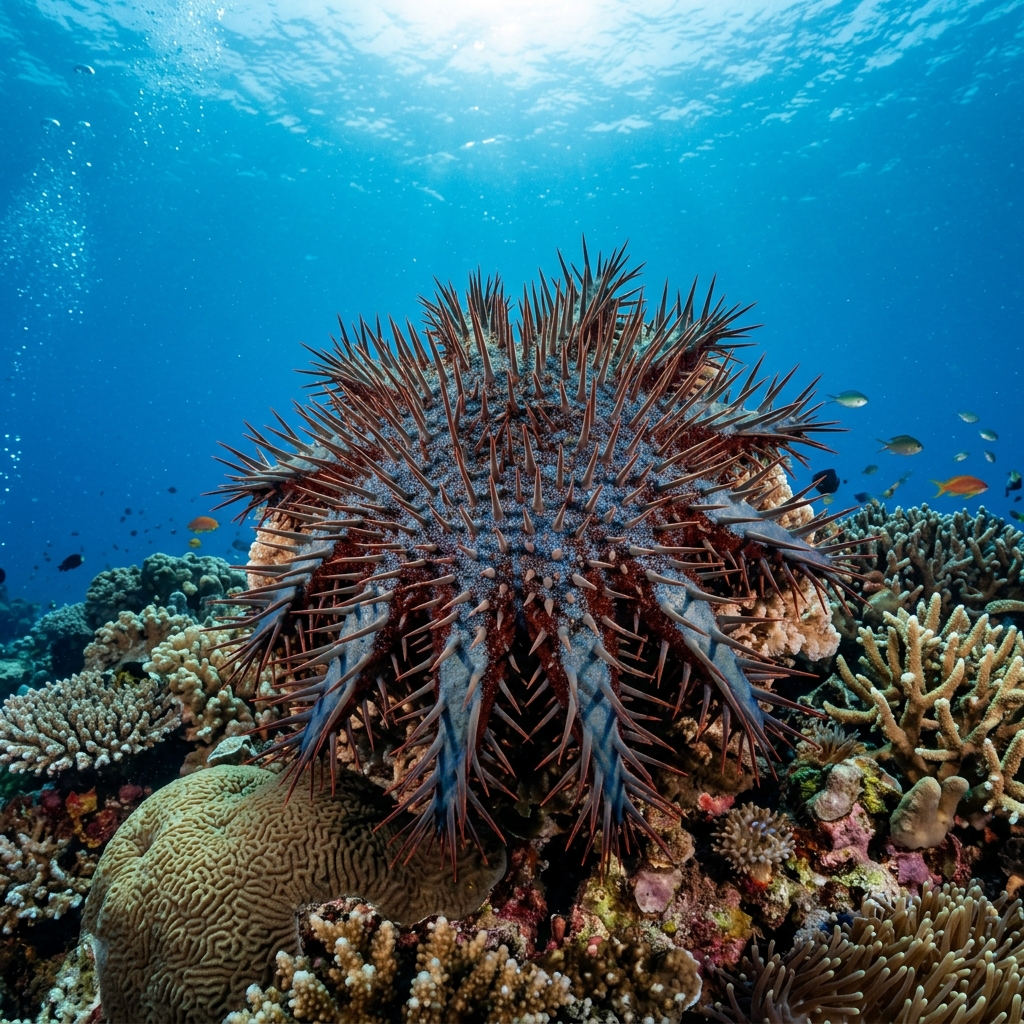
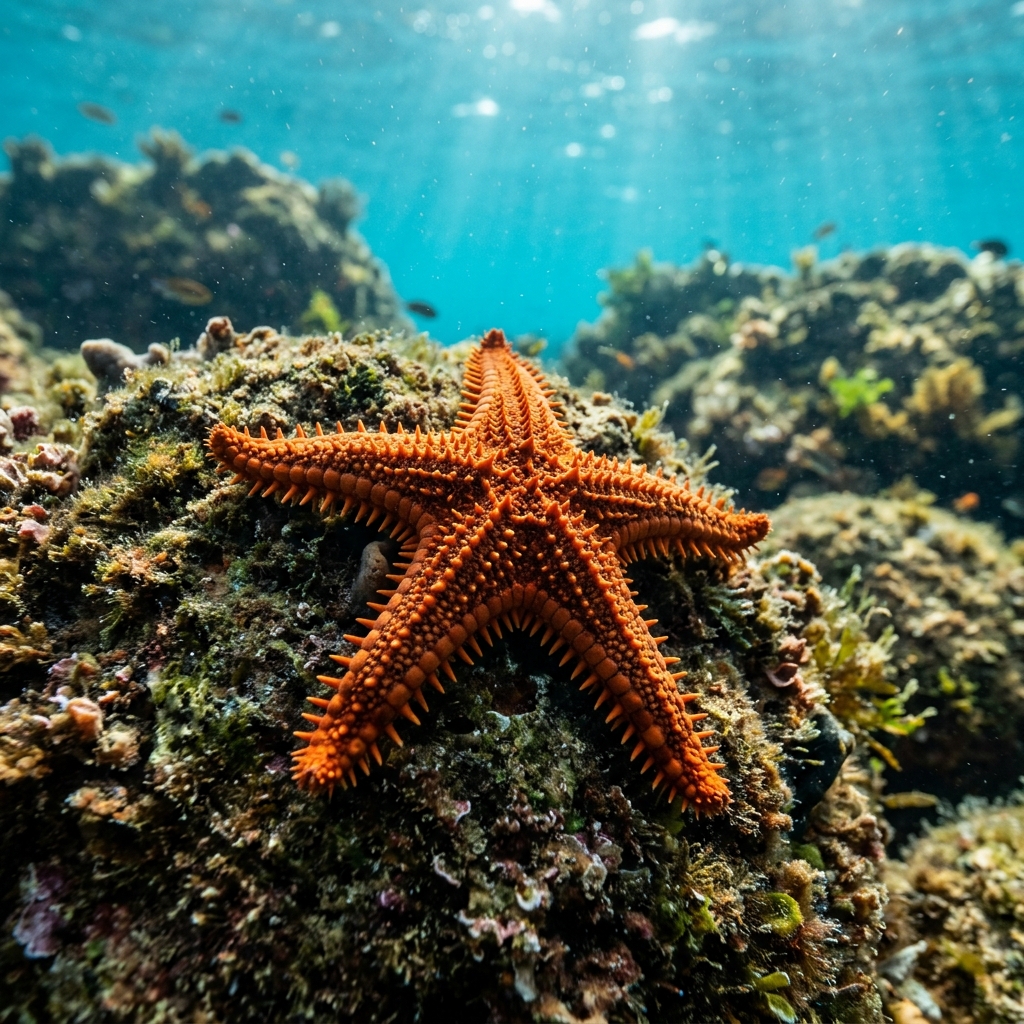
Reef neighbours a diver could mistake it for. Use the identification notes above to tell them apart.
Leather stars are most commonly logged along the British Columbia coast and the US Pacific Coast, which together account for the vast majority of recorded sightings. British Columbia waters, particularly around Vancouver Island, represent the heart of the range, while Washington, Oregon, and California also offer reliable encounters. A small number of records extend north into Alaskan waters.
Mapping where Leather Star is logged…
Leather stars are most reliably found along the British Columbia coast and the US Pacific Coast, from Alaska south through Washington, Oregon, and California. British Columbia, particularly the waters around Vancouver Island, holds the strongest concentration of sightings. A handful of records also come from Alaskan waters.
Most diver sightings along the Pacific Coast fall between March and August. The species tolerates very cold water, observed temperatures run roughly 11 to 16 °C, so it is present year-round, but encounter rates are higher during those spring and summer months.
The smooth, almost rubbery skin texture is the single most reliable field mark, no prominent spines or granules, just a slick surface. Look for grey-brown to purplish colouration with orange or reddish mottling and broad, somewhat webbed arms. Size around 21 cm helps, but the skin texture alone distinguishes it from most other Pacific sea stars.
Leather stars typically reach around 21 cm in diameter. They are medium-sized sea stars, large enough to be conspicuous on rocky reef, but not as imposing as some of the larger sunflower or sunstar species sharing the same habitat.
Leather stars produce chemical compounds in their skin that smell strongly of garlic. Many echinoderms, including certain sea urchins and sea cucumbers, detect these secretions and actively move away. Watching this predator-avoidance behaviour in the field is one of the more fascinating things you can observe when you find a leather star on the reef.
Site and sighting data is aggregated from diver logs, iNaturalist and GBIF. For taxonomy and conservation status:
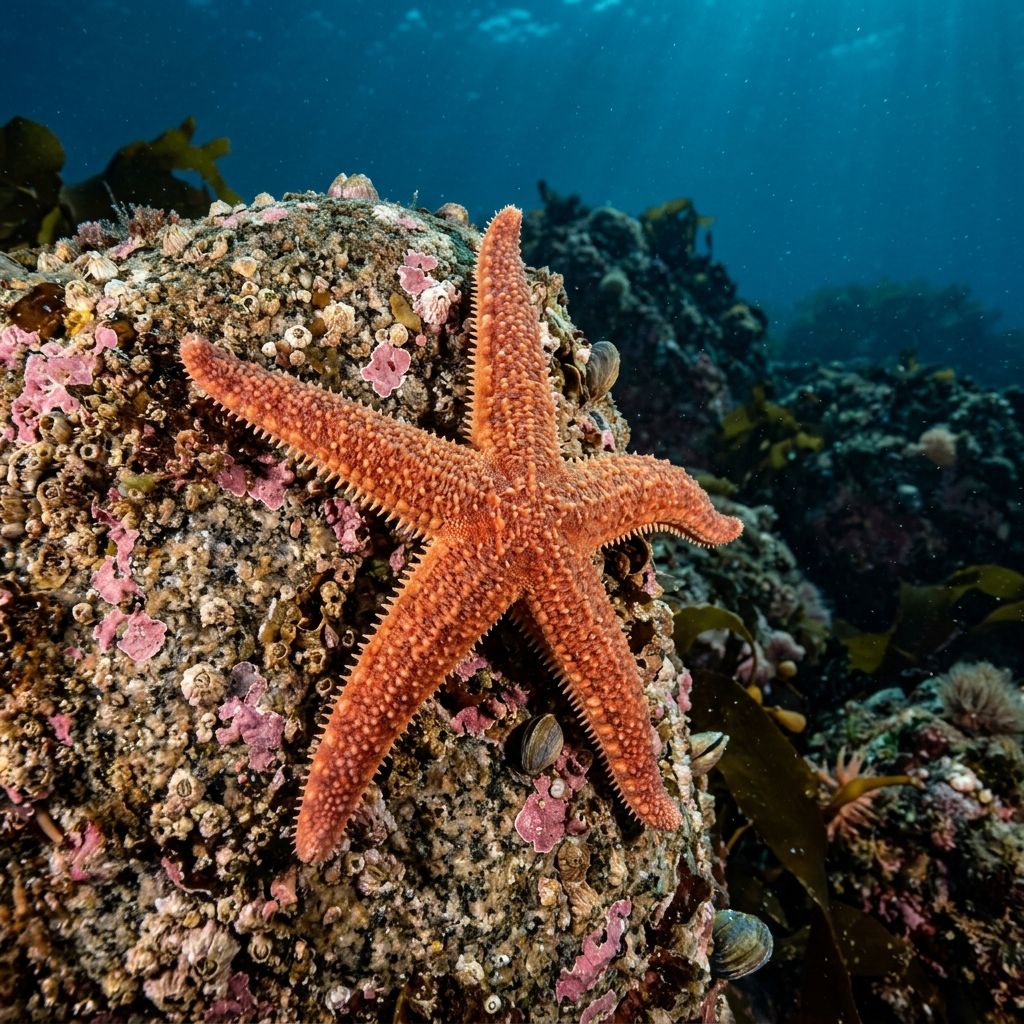
Common Sea Star
2,271 sites