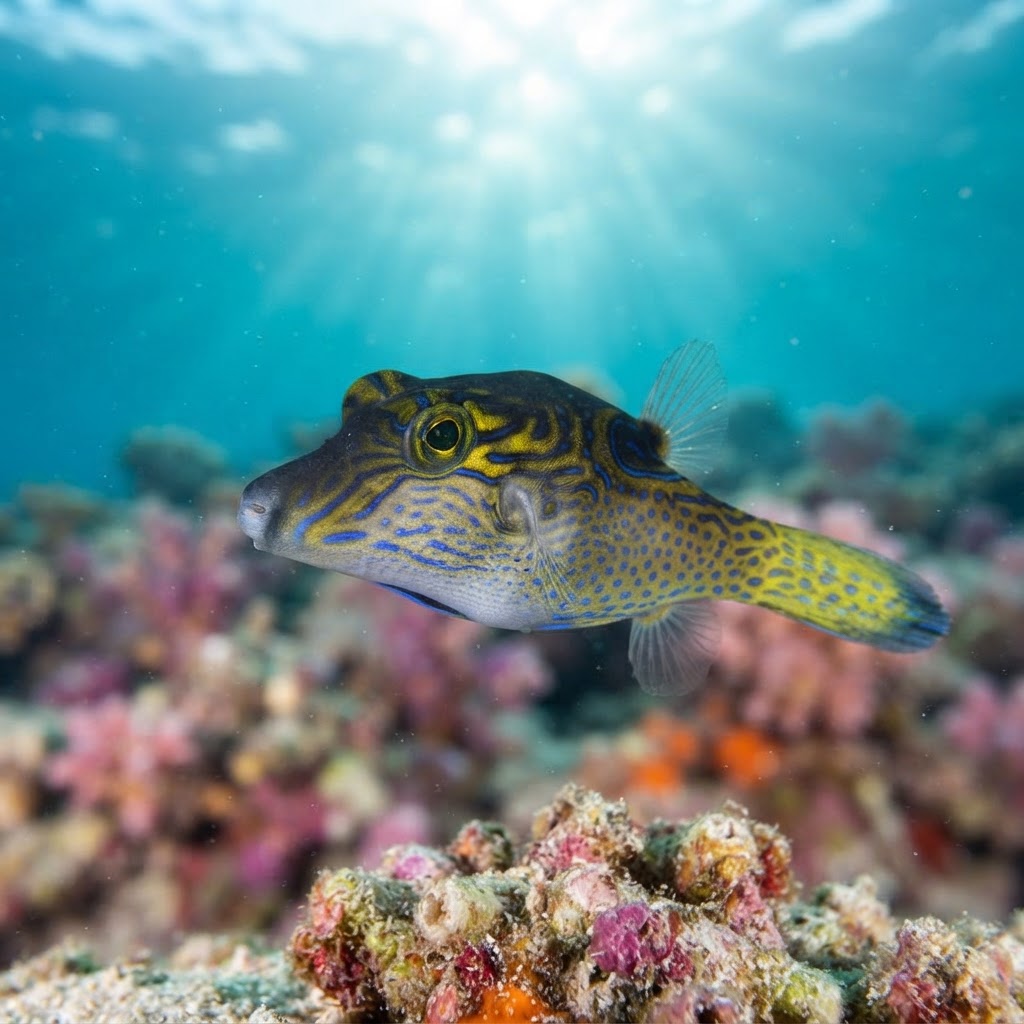
Canthigaster epilampra
A small, uncommon reef puffer spotted in Luzon, Philippines and Hawaii, active in warm 25-29C water year-round.
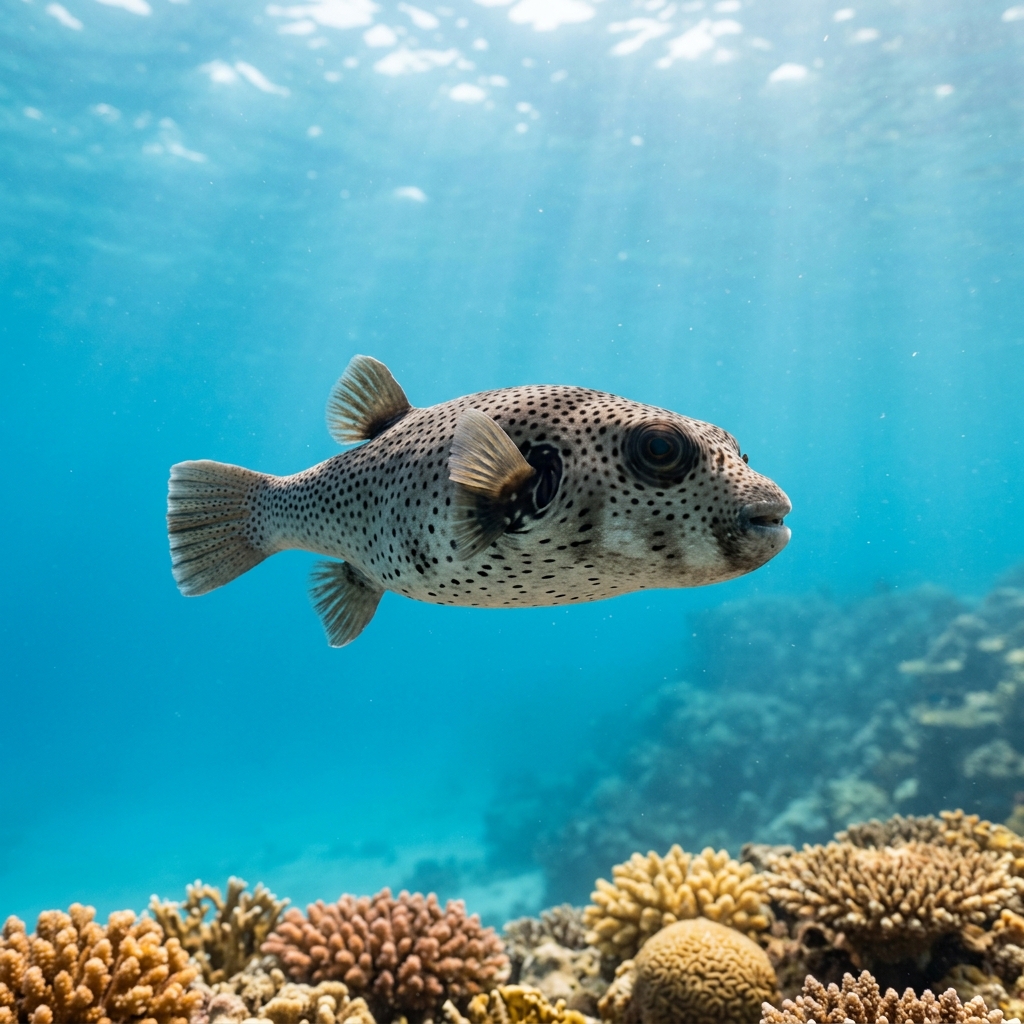
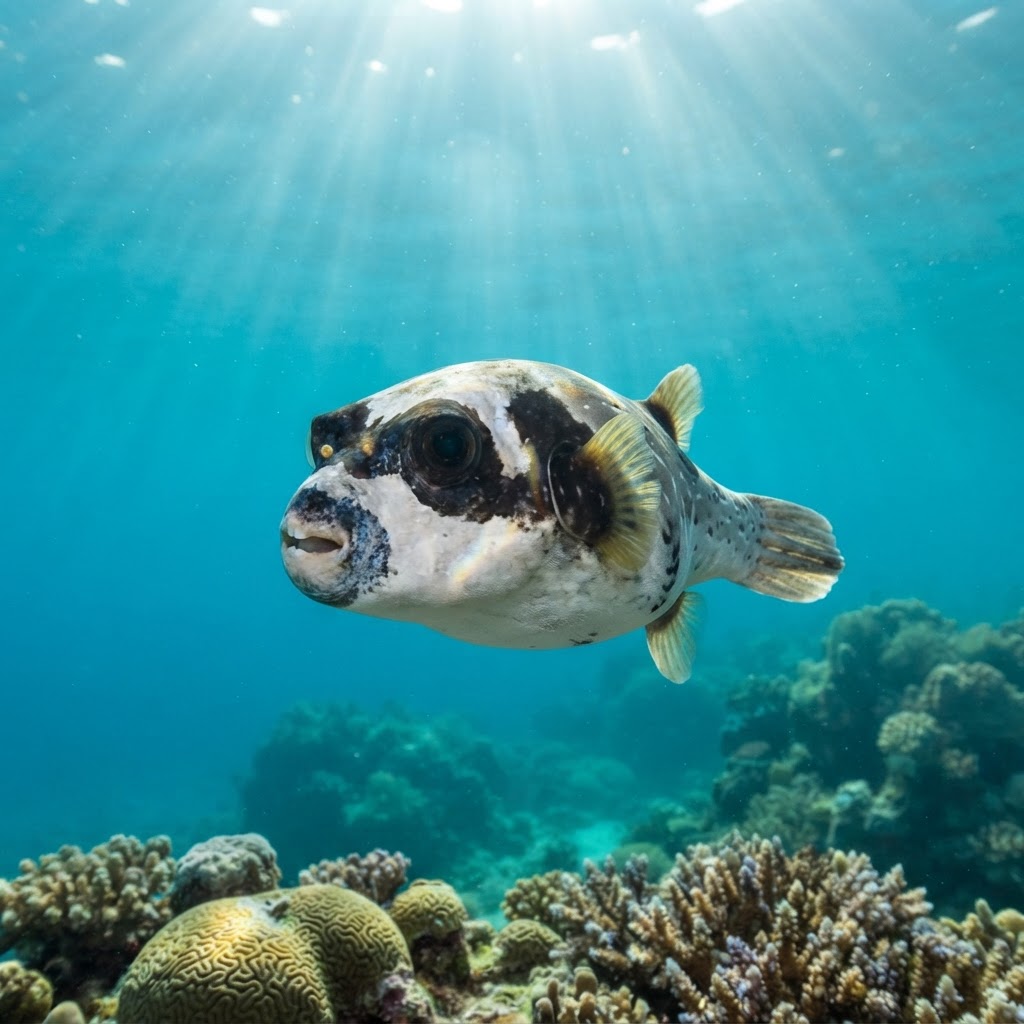
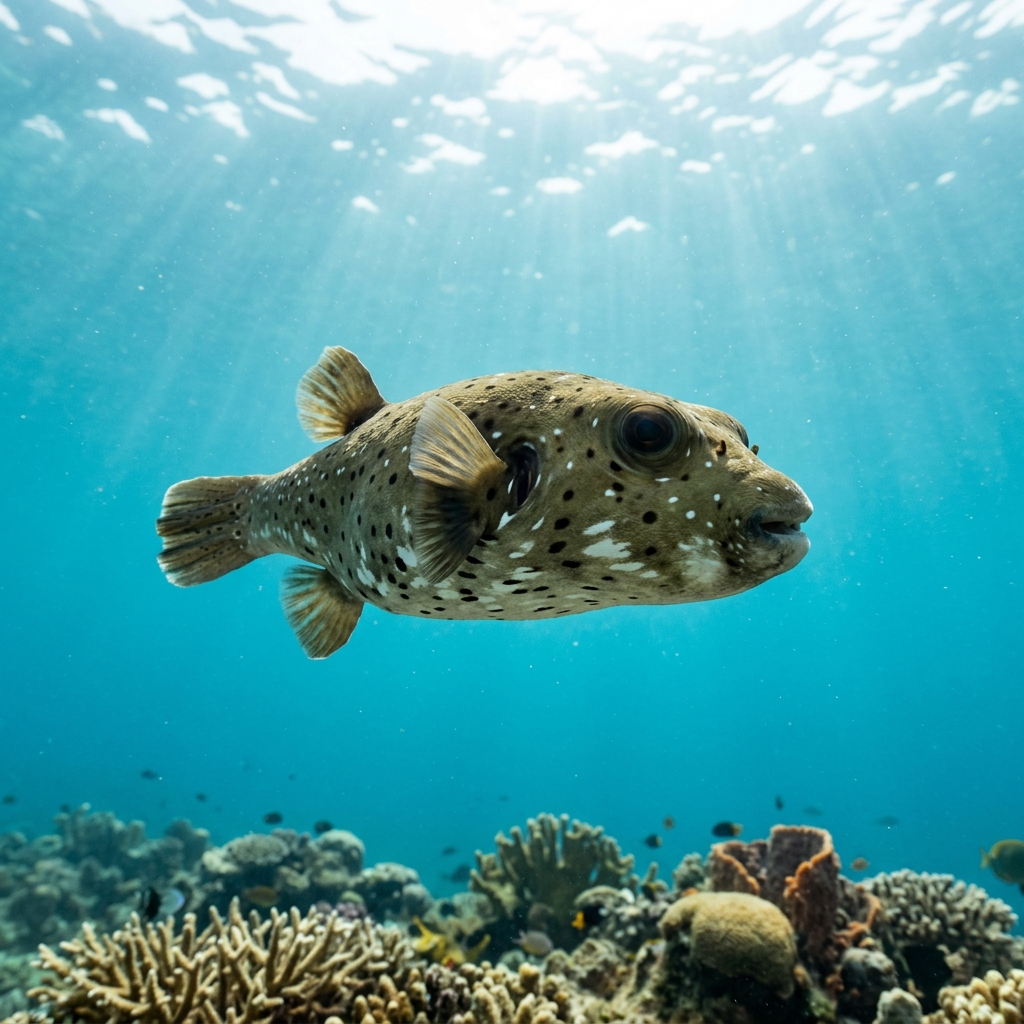
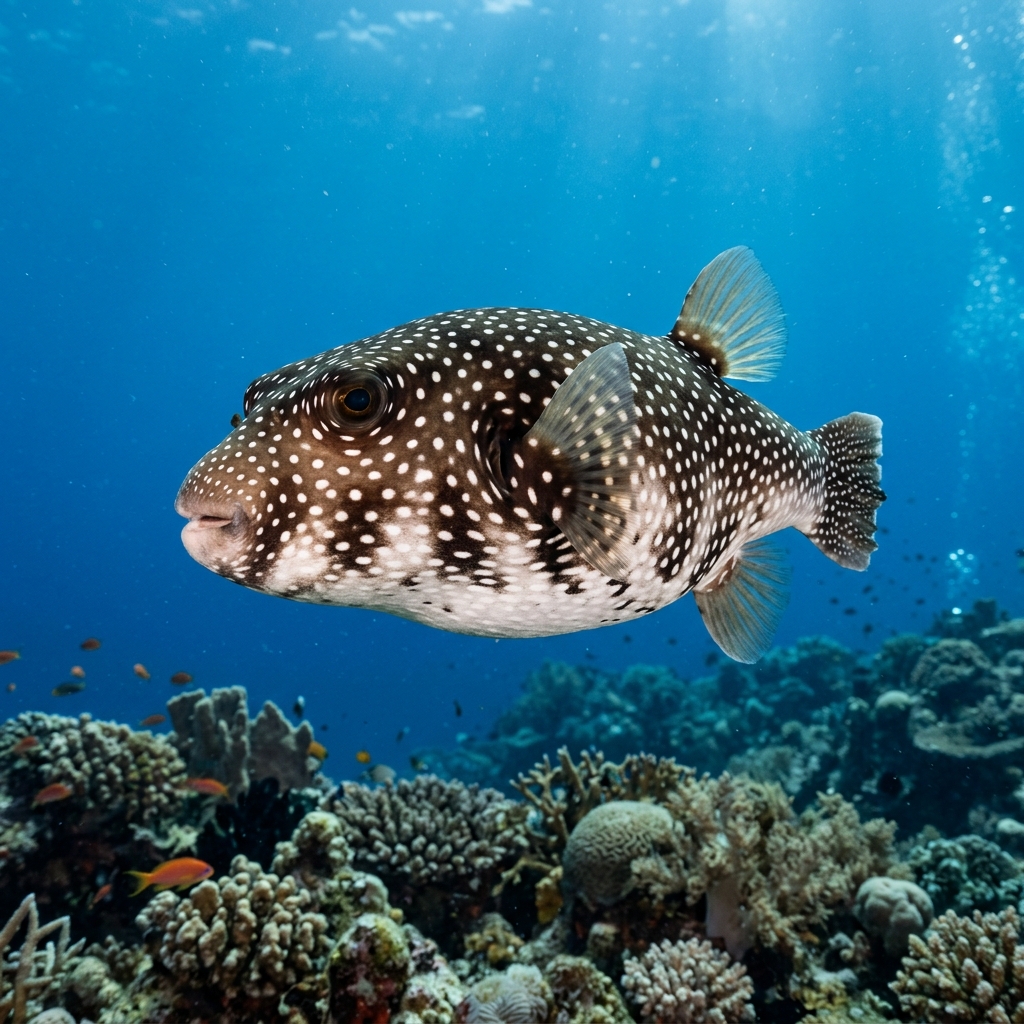
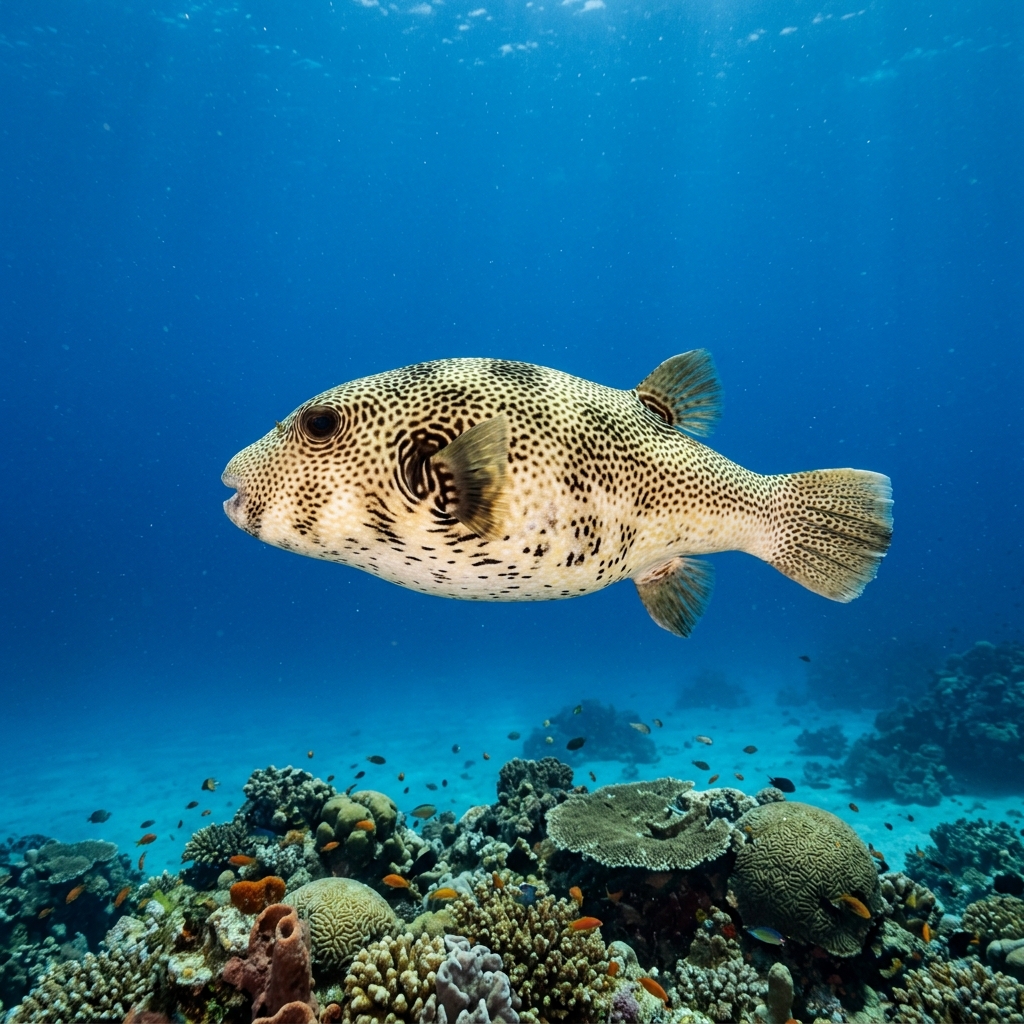
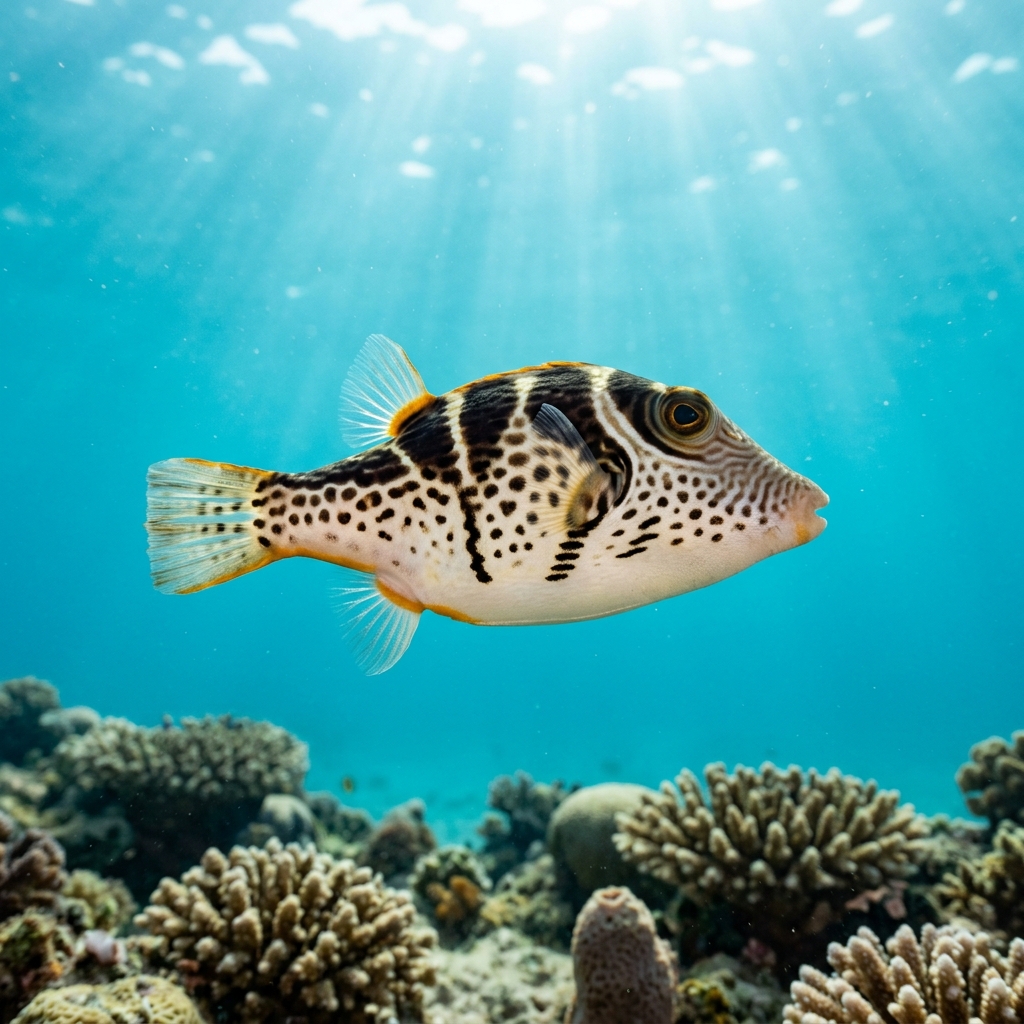
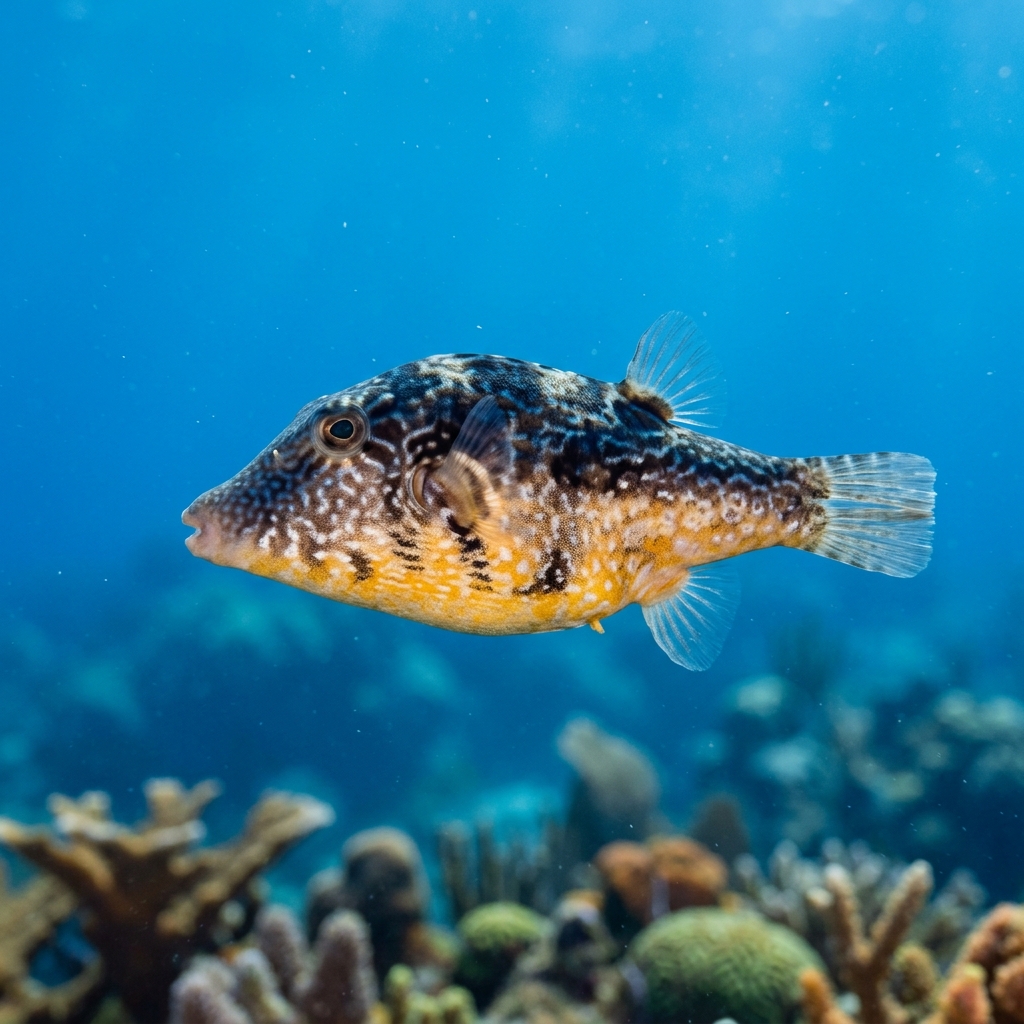
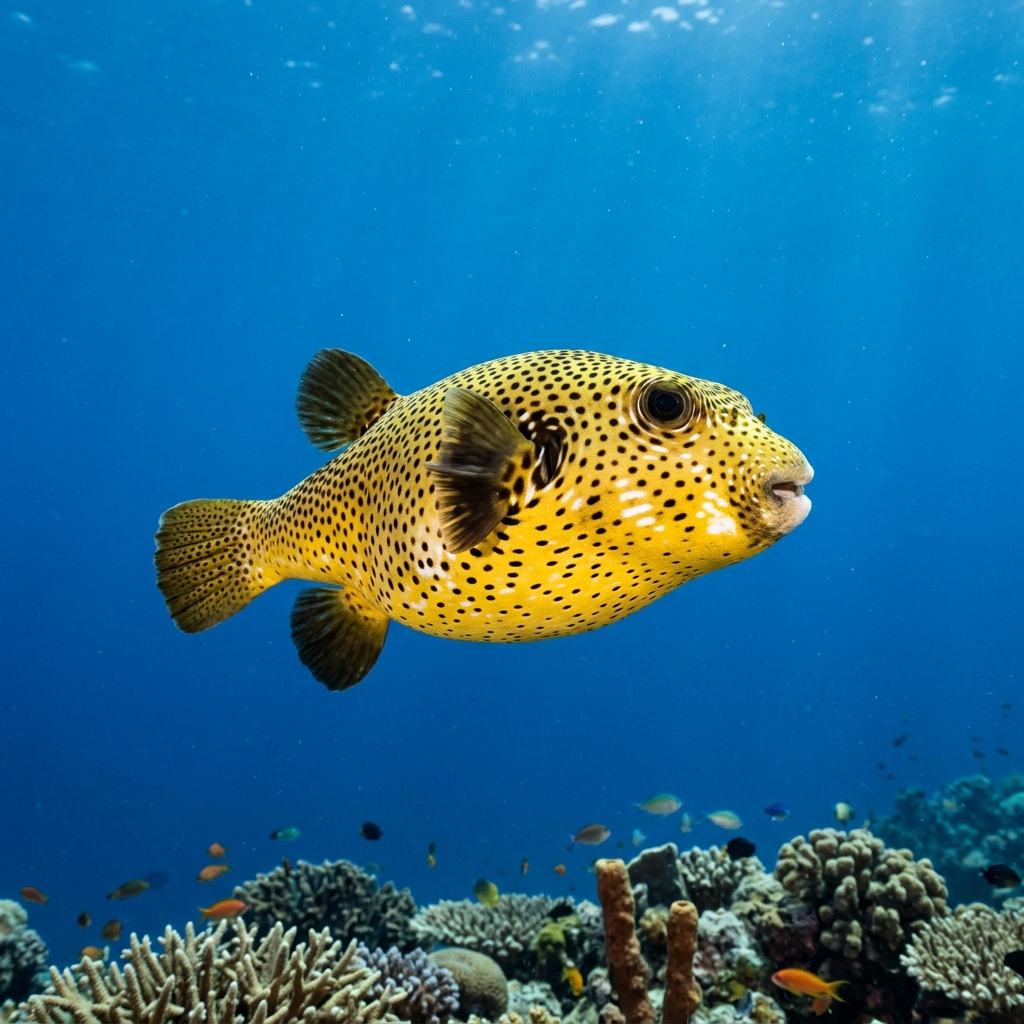
A small pufferfish, rarely more than 8 cm, with a brown to olive body covered in fine pale spots and lines that give it a mottled, lantern-lit look. The rounded body, small mouth, and blunt tail are classic puffer shape, and the eyes carry a subtle blue ring that stands out at close range. It moves with the slow, hovering paddle-fin style typical of toby pufferfish rather than darting like a damselfish.
Usually seen alone, hovering close to reef structure or rubble patches rather than out in the open water. It tends to hold station and let divers approach fairly close before easing away, rather than bolting, and it is not shy about poking around crevices for food during the day.
Like other tobies, it carries tetrodotoxin in its skin and organs as a defence, which is part of why reef predators mostly leave it alone despite its slow, unhurried swimming style.
No clear seasonal pattern shows in the sightings, and its comfort range of 25 to 28.8C matches warm tropical reef water year-round, so any month is fair game in Luzon or Hawaii.
Reef neighbours a diver could mistake it for. Use the identification notes above to tell them apart.
Most reliably logged in Luzon in the Philippines, with additional sightings from Hawaii in the United States, though it turns up in low numbers wherever it is found. Treat it as a scattered find rather than a guaranteed reef resident at any single site.
Mapping where Lantern Toby is logged…
It is most often logged around Luzon in the Philippines, with additional sightings from Hawaii in the United States. Sightings are scattered and uncommon rather than guaranteed at any one site.
There is no detected season for this species, and its preferred water temperature of 25 to 28.8C is available on tropical reefs all year, so it can turn up in any month.
Look for a small, rounded pufferfish around 8 cm with a brown to olive body covered in pale spots and fine lines, plus a subtle blue-ringed eye. It swims slowly with small paddling fins rather than darting like typical reef fish.
They stay small, typically reaching around 8 cm in length, which is on the compact end for reef pufferfish.
No, it poses no threat to divers and will simply move away if approached too closely. Like other pufferfish, its skin and internal organs contain toxins, but this is only a concern if handled or eaten, not something a diver needs to worry about while observing it.
It carries tetrodotoxin, a potent natural toxin, in its skin as a defence against predators, which lets it swim slowly and confidently around the reef without much fear of being eaten.
Site and sighting data is aggregated from diver logs, iNaturalist and GBIF. For taxonomy and conservation status:
Valentini Pufferfish
2,830 sites