Arothron diadematus
A common find across South Sinai and Marsa Alam reefs, sitting comfortably in 25-29 C water year-round.
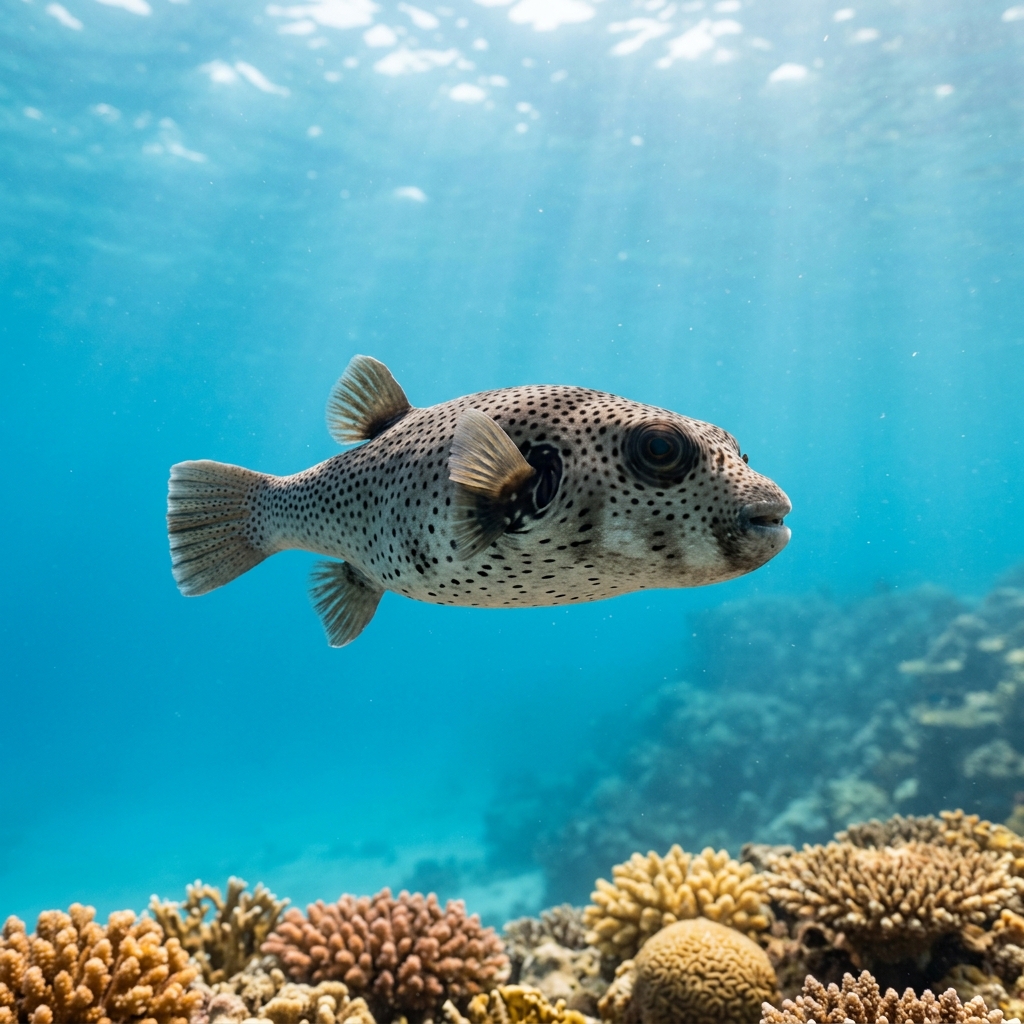
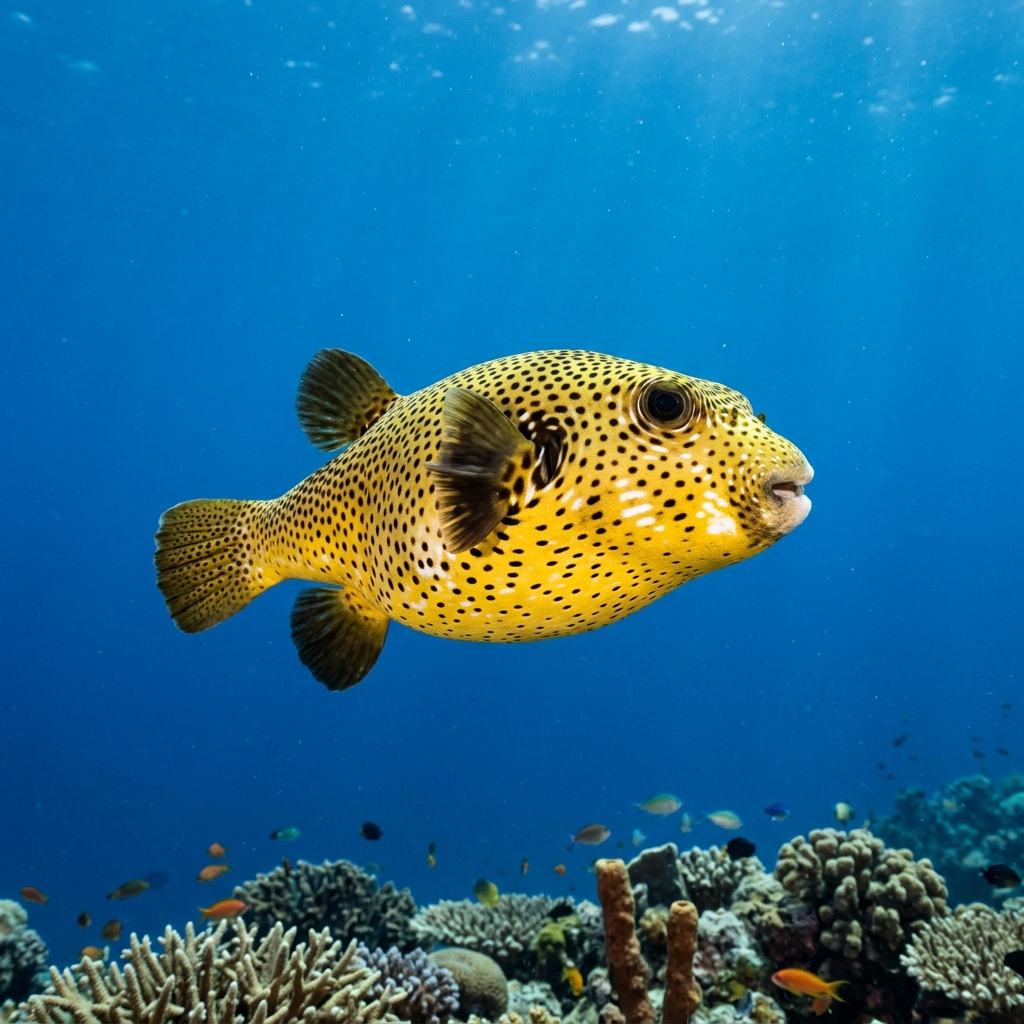
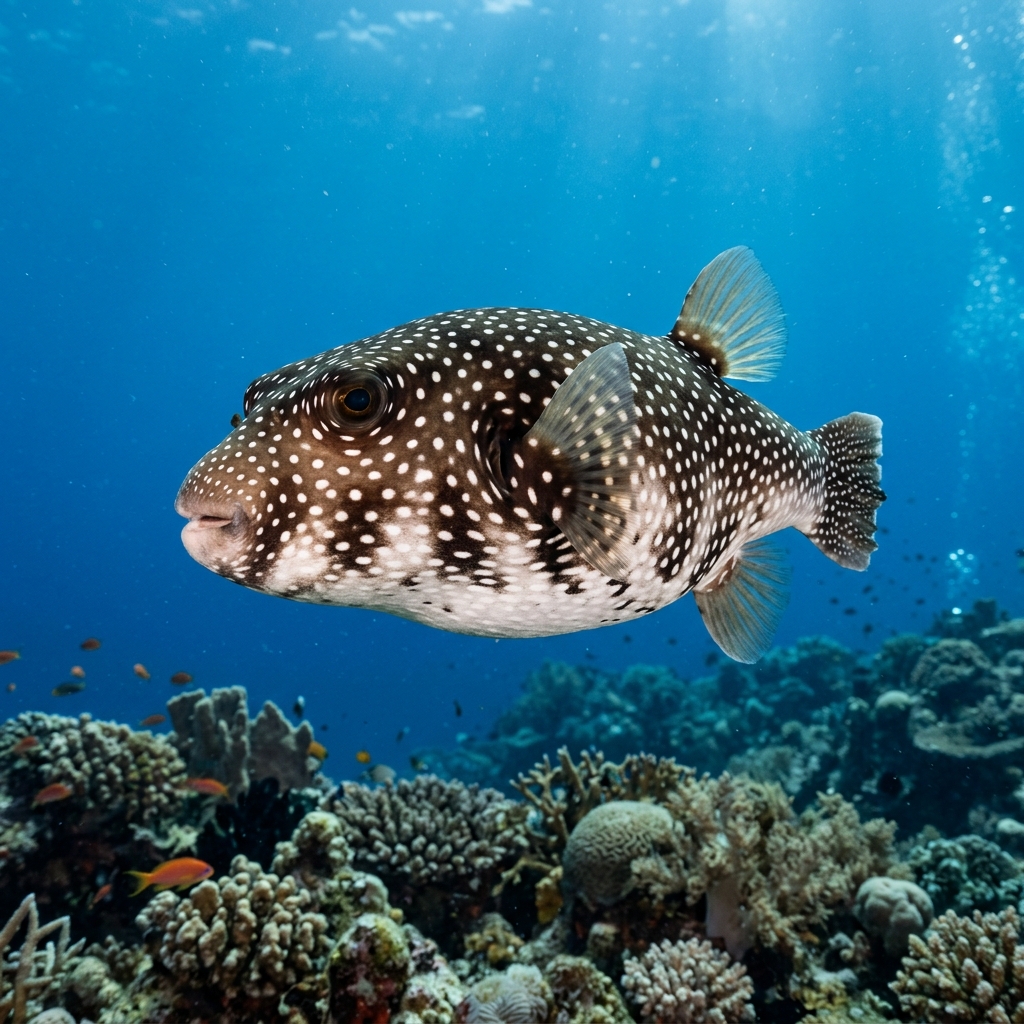
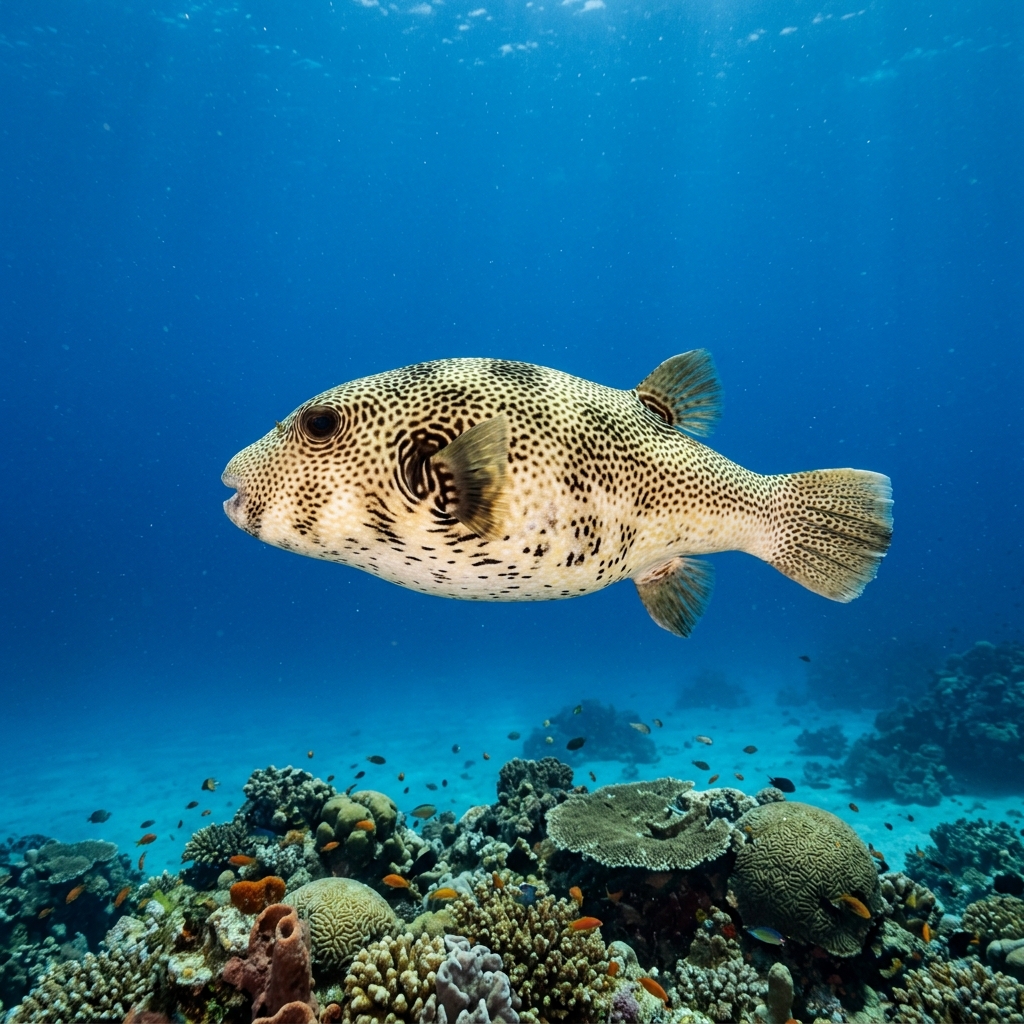
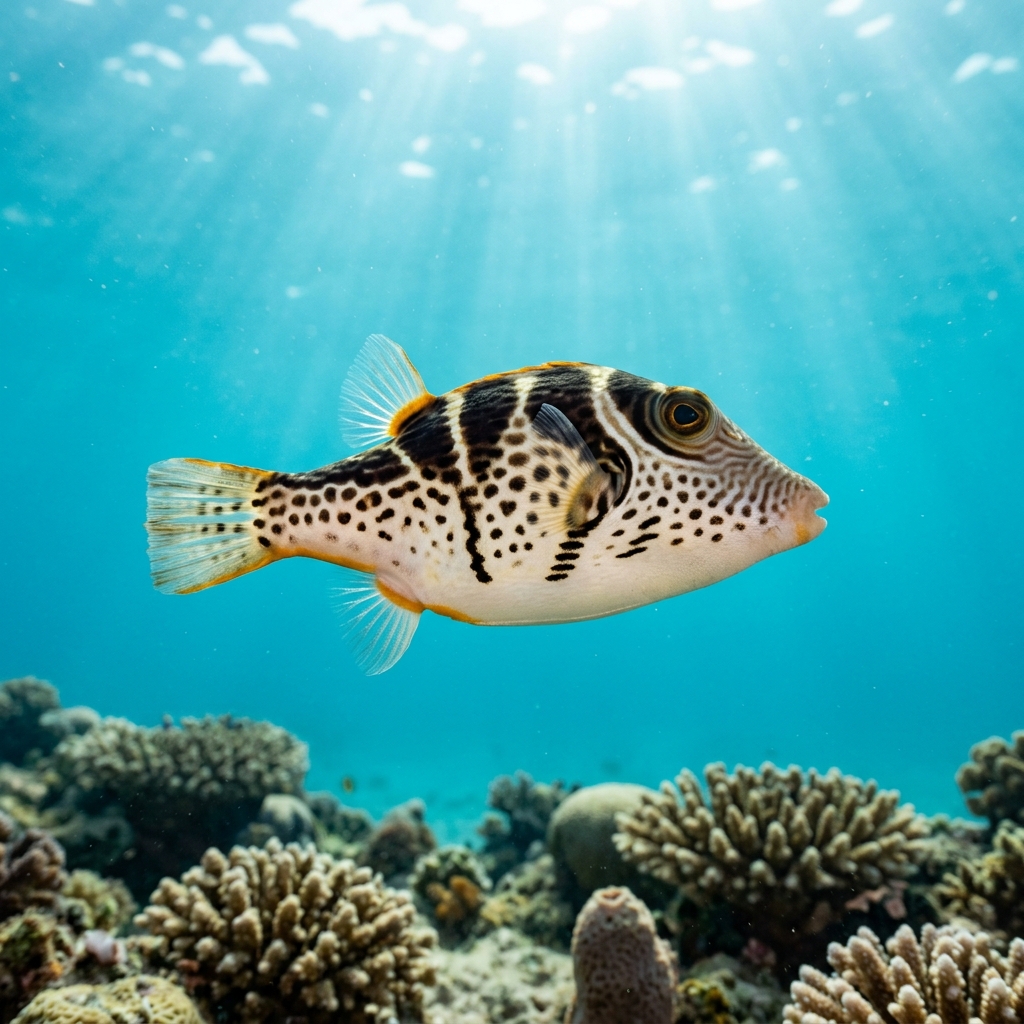
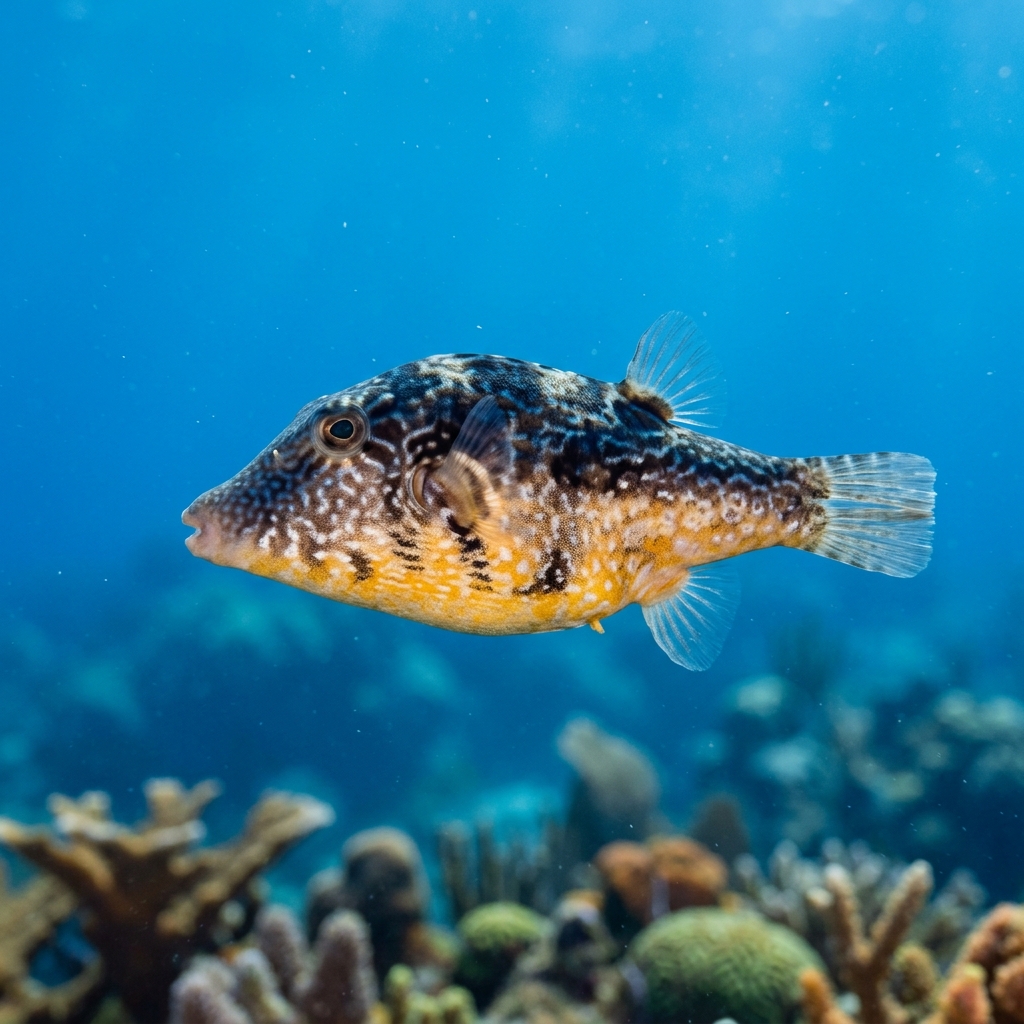
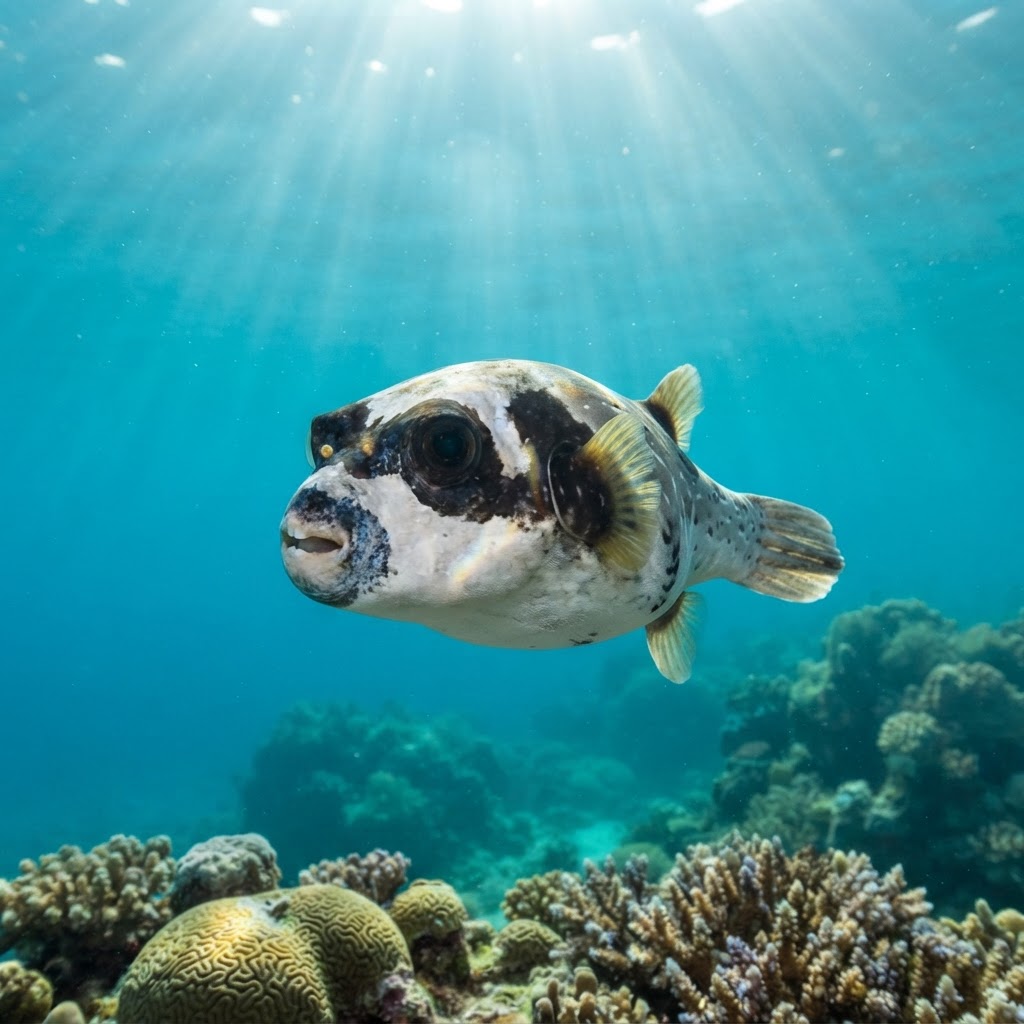
A stocky, balloon-shaped body around 21 cm long, usually greyish-brown to olive with a pale belly and no bold spotting pattern across the flanks. The giveaway is the dark, mask-like band running across the eyes, which is where the common name comes from. Look for the small fins set far back on the body and the slow, almost hovering swimming style typical of pufferfish.
Divers most often find it hovering or resting near reef structure, moving with the unhurried, almost bumbling style typical of pufferfish rather than darting for cover. It tends to hold its ground when approached slowly, making it an easy subject for a calm, close look without a chase. Most sightings come from open reef and sandy-edge habitat rather than deep swim-throughs or overhangs.
Like other Arothron pufferfish, it can inflate itself by gulping water when threatened, a defence that makes it far harder for a predator to swallow.
No clear seasonal pattern shows up in the sightings data, and with a comfortable range of roughly 25 to 29 C, Red Sea reefs stay within its niche year-round, so any month is a fair bet.
Reef neighbours a diver could mistake it for. Use the identification notes above to tell them apart.
This is a Red Sea specialist, most reliably logged across Egypt, especially South Sinai, Marsa Alam and the Deep South, and the Red Sea Riviera. It also turns up regularly at Aqaba in Jordan, Eilat in Israel, and along Saudi Arabia's Red Sea Coast.
Mapping where Masked Puffer is logged…
It is a Red Sea species, most commonly logged in South Sinai, Marsa Alam and the Red Sea Riviera in Egypt, with regular sightings at Aqaba in Jordan and Eilat in Israel.
There's no strong seasonal signal in the sightings, and the water stays within its comfortable 25-29 C range through the year, so it is seen on Red Sea reefs in any month.
Look for a plain greyish-brown, balloon-bodied puffer around 21 cm long with a distinctive dark band across the eyes like a mask. Unlike its spotted relatives, its body lacks a bold pattern, which is itself a useful clue.
They typically reach around 21 cm in length, making them a small to medium-sized reef pufferfish.
No, they pose no threat to divers and are not considered dangerous. Like all pufferfish they carry toxins internally as a defence against predators, but this has no bearing on divers simply observing them.
Site and sighting data is aggregated from diver logs, iNaturalist and GBIF. For taxonomy and conservation status:
Valentini Pufferfish
2,830 sites