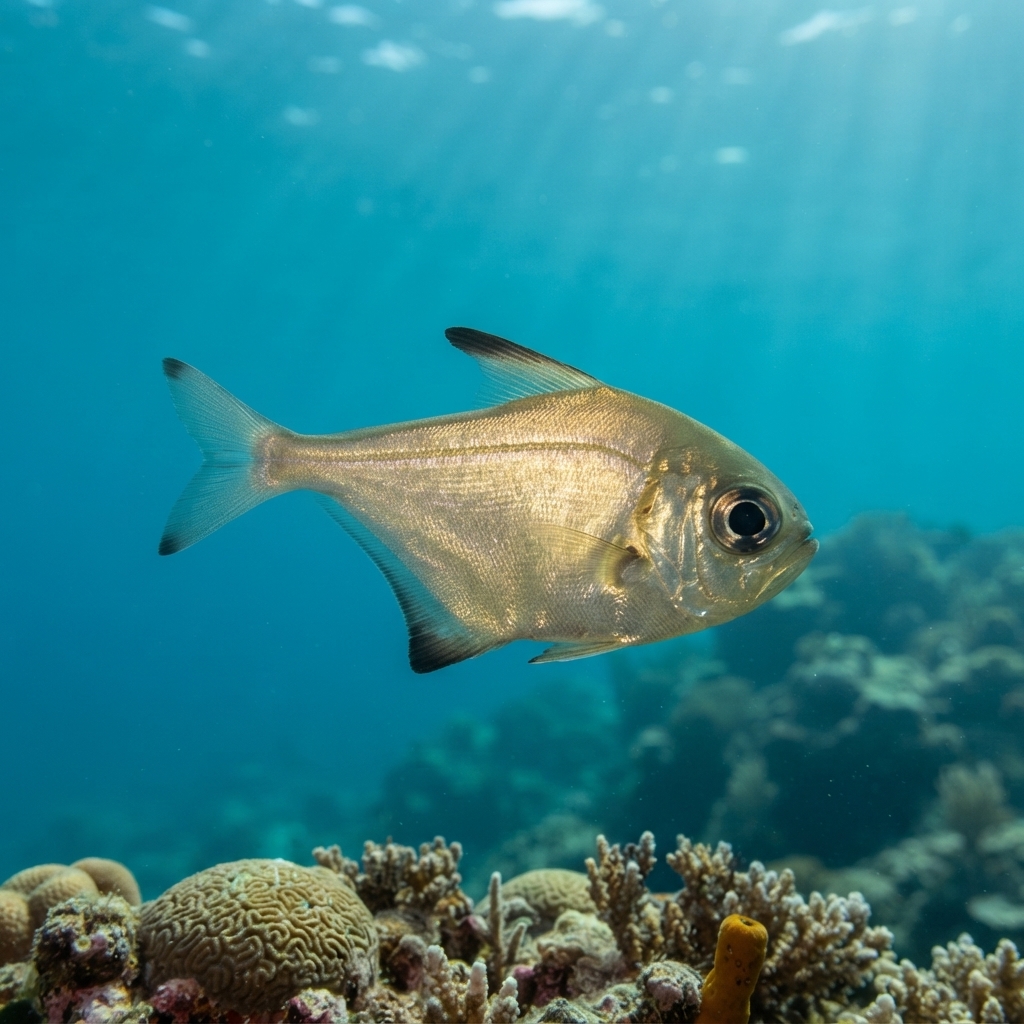
Pempheris klunzingeri
Schooling reef fish common off Western Australia in 15.7 to 23.3C water, year-round and easy to spot in caves and ledges.
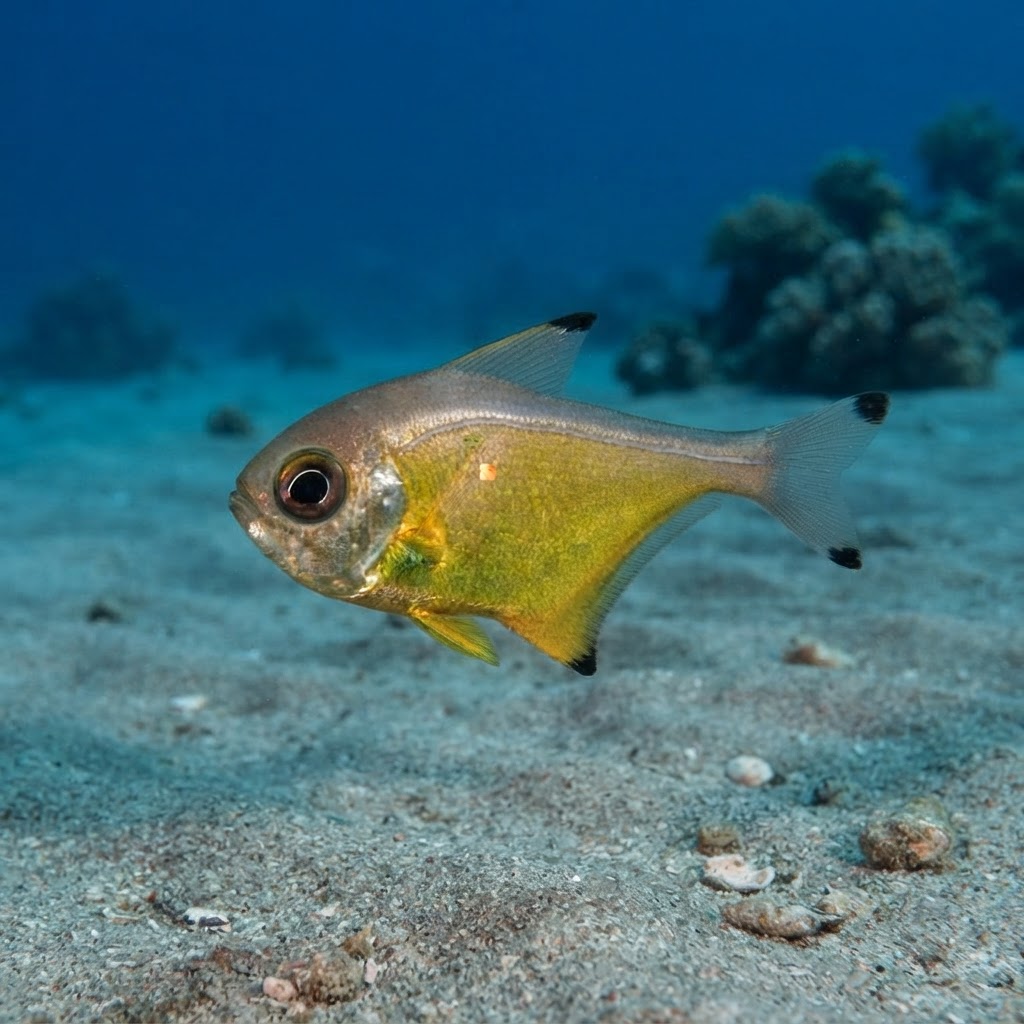
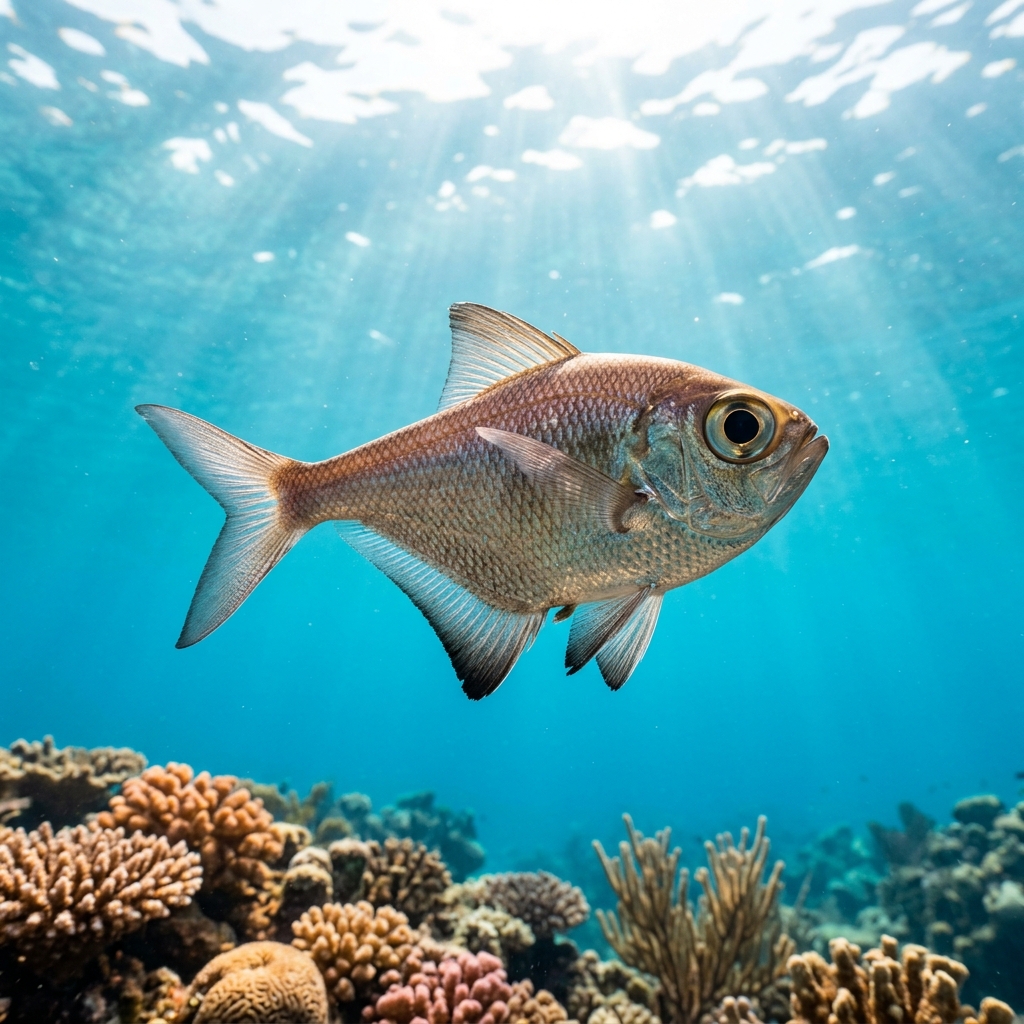
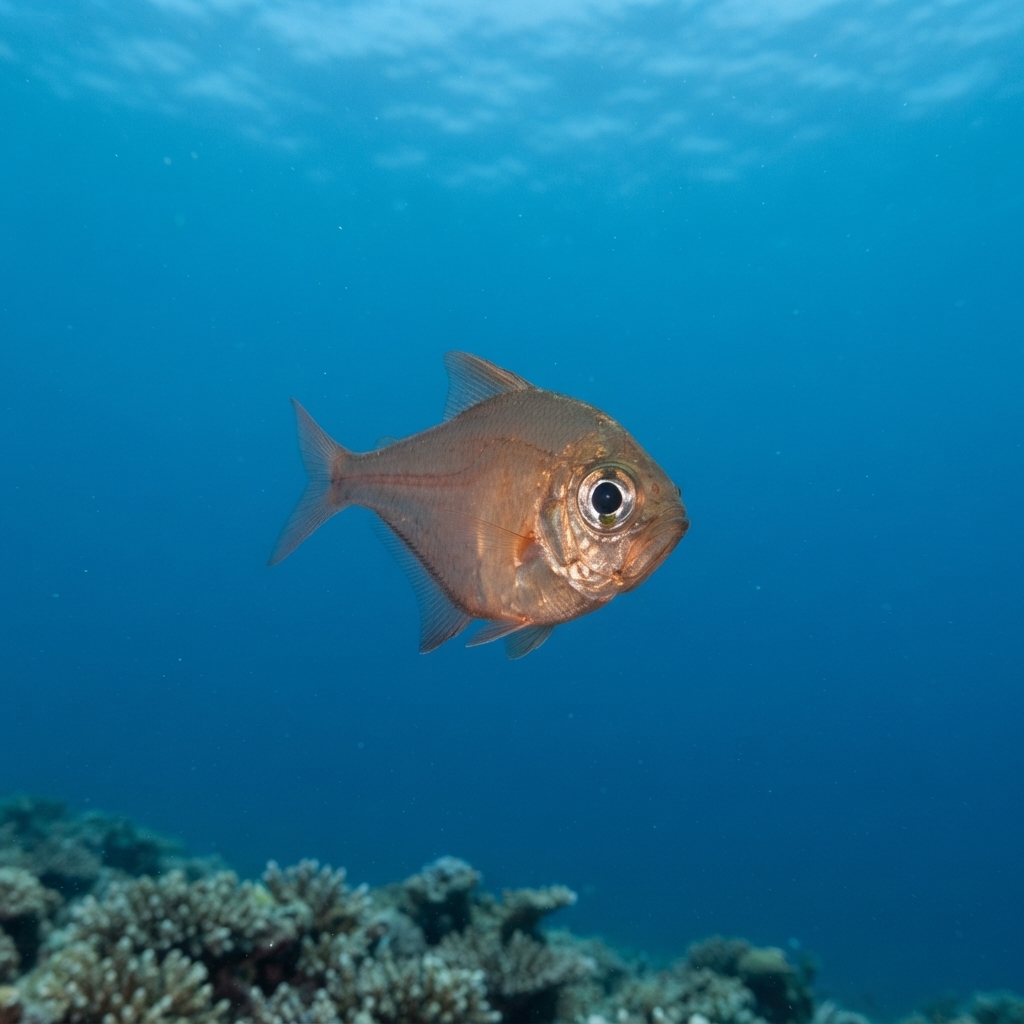
A small, deep-bodied fish around 13 cm with a compressed, almost coin-shaped silhouette and a coppery to dusky brown body that darkens toward the tail. The stand-out feature is the oversized, glassy eye that gives the whole genus its bullseye name, useful for picking it out in low light under ledges. It usually shows up in tight, static schools rather than alone, hovering nose-into-current in a loose ball.
Look for it packed into shaded overhangs, cave mouths and beneath jetties, where it forms loose schools that hold position facing into any current. It is a low-energy fish to dive with, generally holding its ground rather than scattering, though schools will shuffle back deeper into shadow if a diver pushes in too close. Most sightings are during the day in these sheltered spots rather than out in open water.
Its enlarged eyes are a giveaway that this is a fish built for low light, it feeds mostly after dark, drifting out from its daytime shelter to pick off plankton over the reef.
Sighting logs show no strong seasonal pattern, and the observed water temperature range of 15.7 to 23.3C spans most of the year on these temperate reefs, so it is best treated as a year-round find. Plan the dive around the site rather than the calendar.
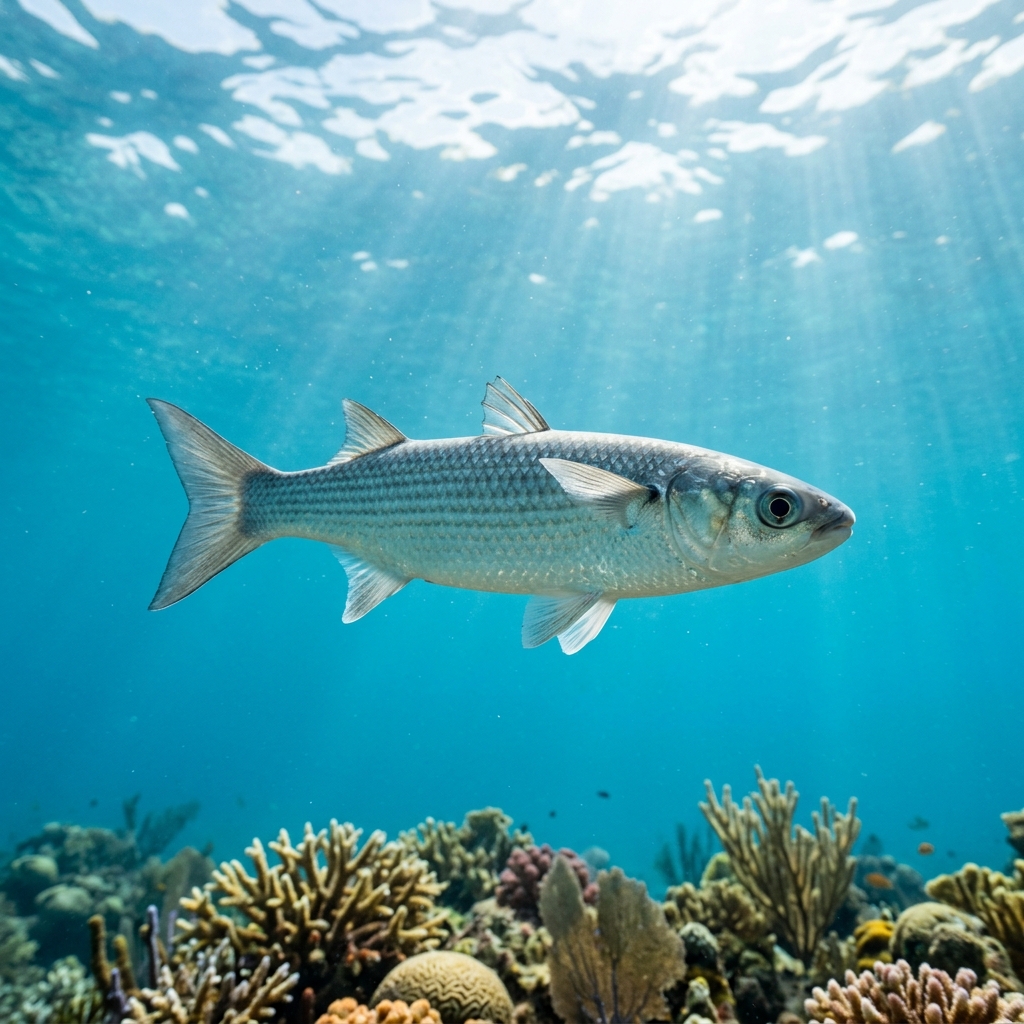
Reef neighbours a diver could mistake it for. Use the identification notes above to tell them apart.
Almost every logged sighting comes from Australia, with Western Australia the clear stronghold and South Australia a secondary hotspot. Divers most often find it tucked under ledges and in caves on temperate reef sites through these two regions rather than on tropical reef.
Mapping where Klunzinger's Bullseye is logged…
It is most reliably seen in Australia, especially around Western Australia and, to a lesser extent, South Australia, sheltering under ledges and in caves on temperate reef.
There is no clear seasonal pattern in sightings, and it sits comfortably in water from about 15.7 to 23.3C, so divers log it across the year rather than in one particular season.
Look for a small, deep-bodied, coppery brown fish around 13 cm with a large glassy eye, usually seen schooling tightly under ledges or in cave entrances rather than swimming in the open.
They typically reach about 13 cm, making them a small schooling reef fish best spotted in groups rather than as a single standout individual.
Its oversized eyes suit a mostly nocturnal feeding pattern, it shelters in dark caves and under ledges by day and moves out to feed on plankton after dark.
No, it poses no danger to divers and simply schools quietly in shaded reef structure, easily observed without any risk.
Site and sighting data is aggregated from diver logs, iNaturalist and GBIF. For taxonomy and conservation status:
Anchovy
2,433 sites