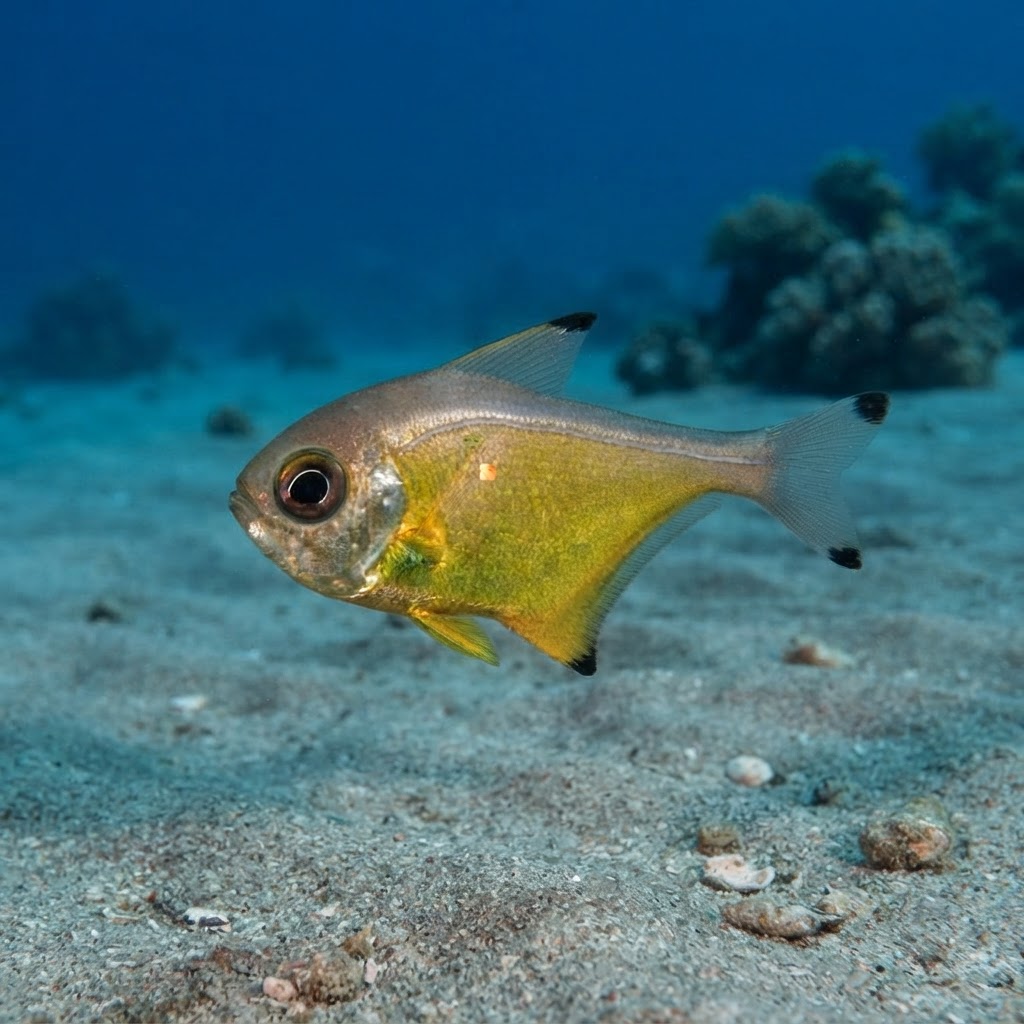
Pempheris affinis
Small schooling reef fish common on cave and ledge dives in New South Wales, active year-round in 18.6-24.6C water.
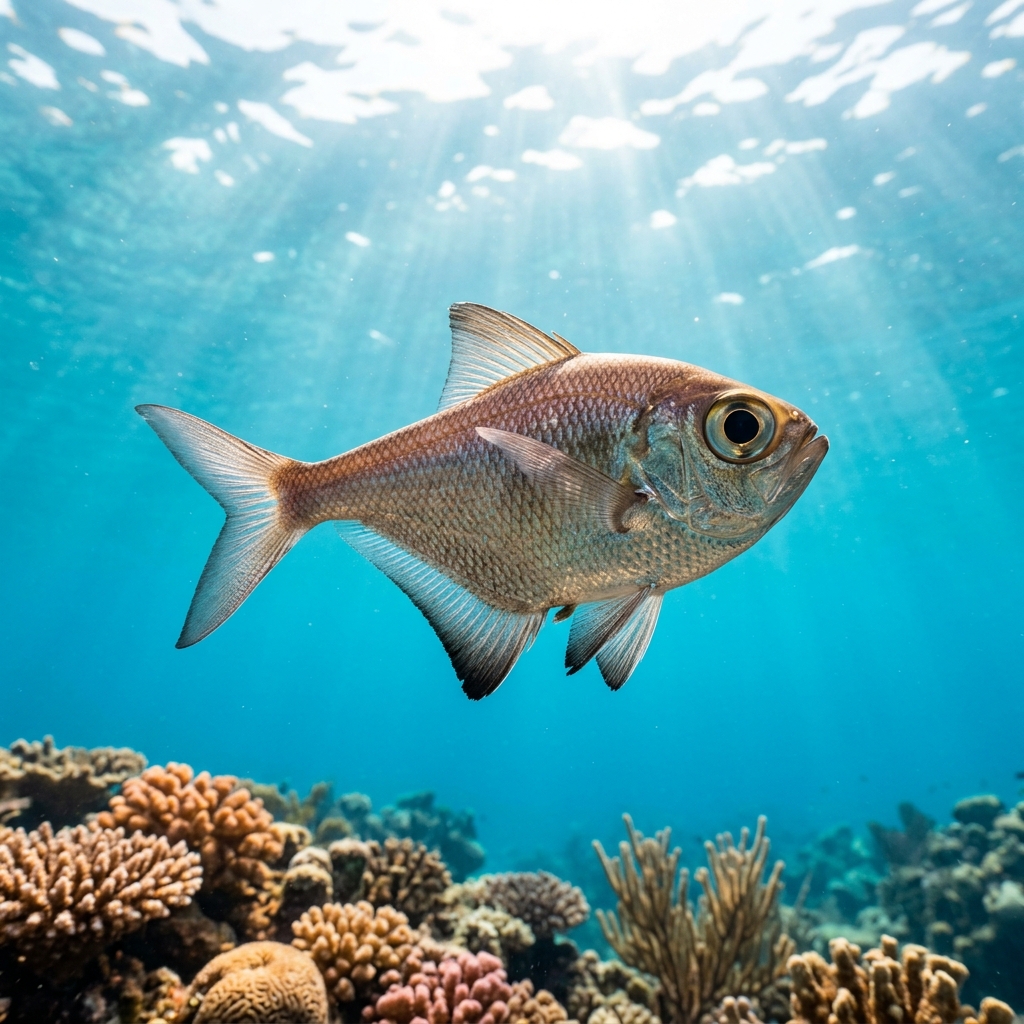
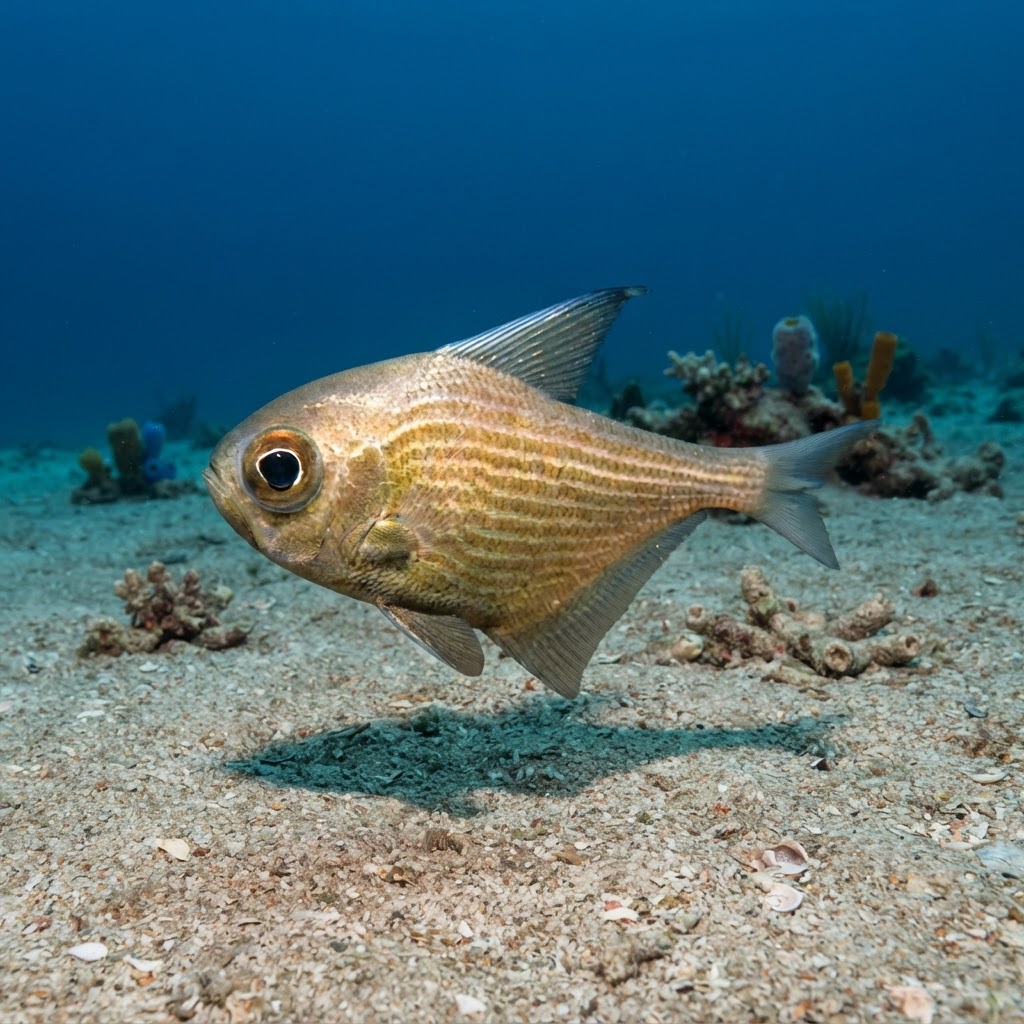
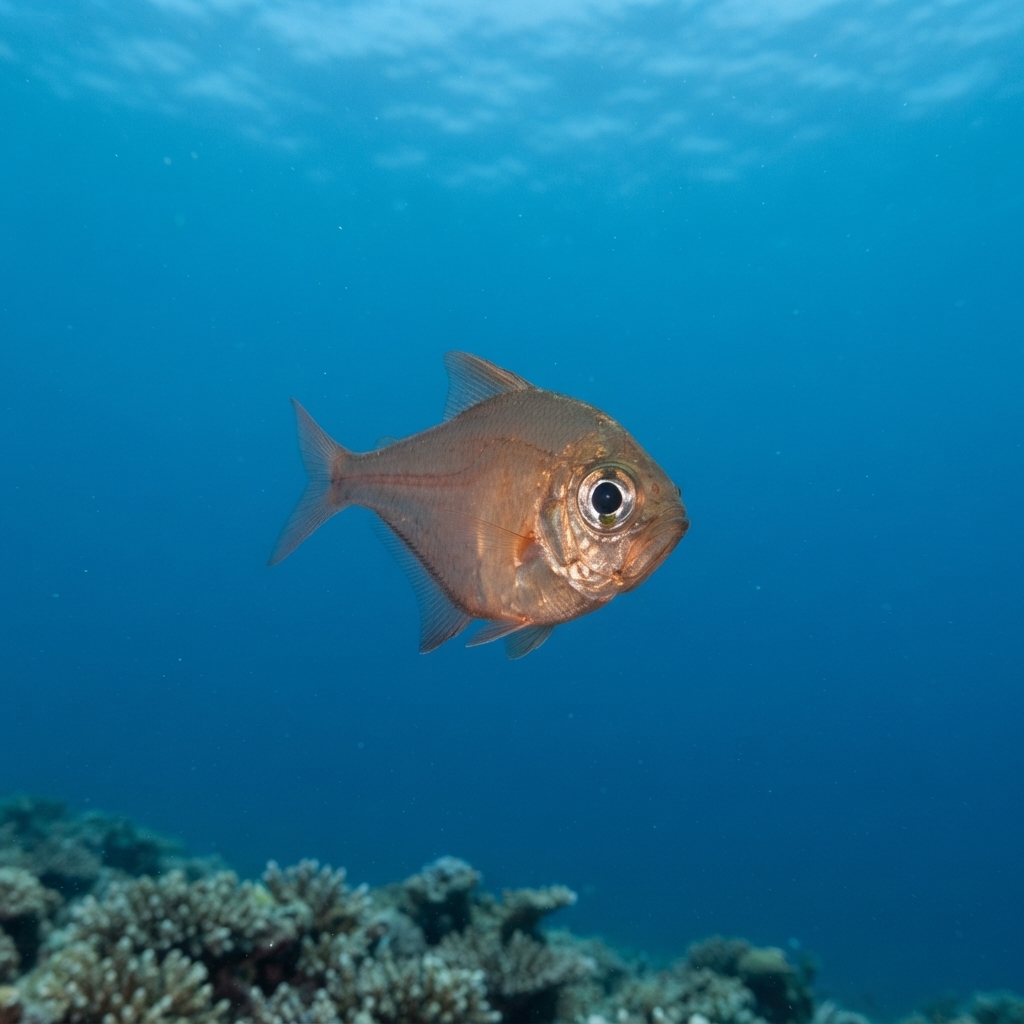
A small, deep-bodied fish around 10 cm long, coppery-bronze with a silvery sheen and large dark eyes typical of the bullseye family. Look for the dusky to black margins on the fins, especially the tail, which give it its common name and separate it from plainer relatives. It usually shows up as a tight, motionless cluster rather than a lone fish, packed under an overhang with bodies angled the same way.
Expect to find it packed into caves, overhangs and dark crevices in loose to tight schools, hanging almost motionless with the group facing into the current. It is a demersal species that stays close to structure rather than the open water, and divers can usually get a good look without it scattering, though the whole school will shift deeper into the shadow if you crowd the entrance. Most sightings happen during the day, when it is resting up in shelter rather than actively feeding.
Like other bullseyes, it is thought to feed mainly at night, drifting off its daytime shelter to pick zooplankton from the water column once the reef goes dark.
Sightings show no clear seasonal pattern, so treat it as a year-round find on NSW reefs. Its recorded temperature range of 18.6 to 24.6C spans the usual swing between NSW's cooler winter and warmer summer water, so it stays put rather than migrating with the seasons.
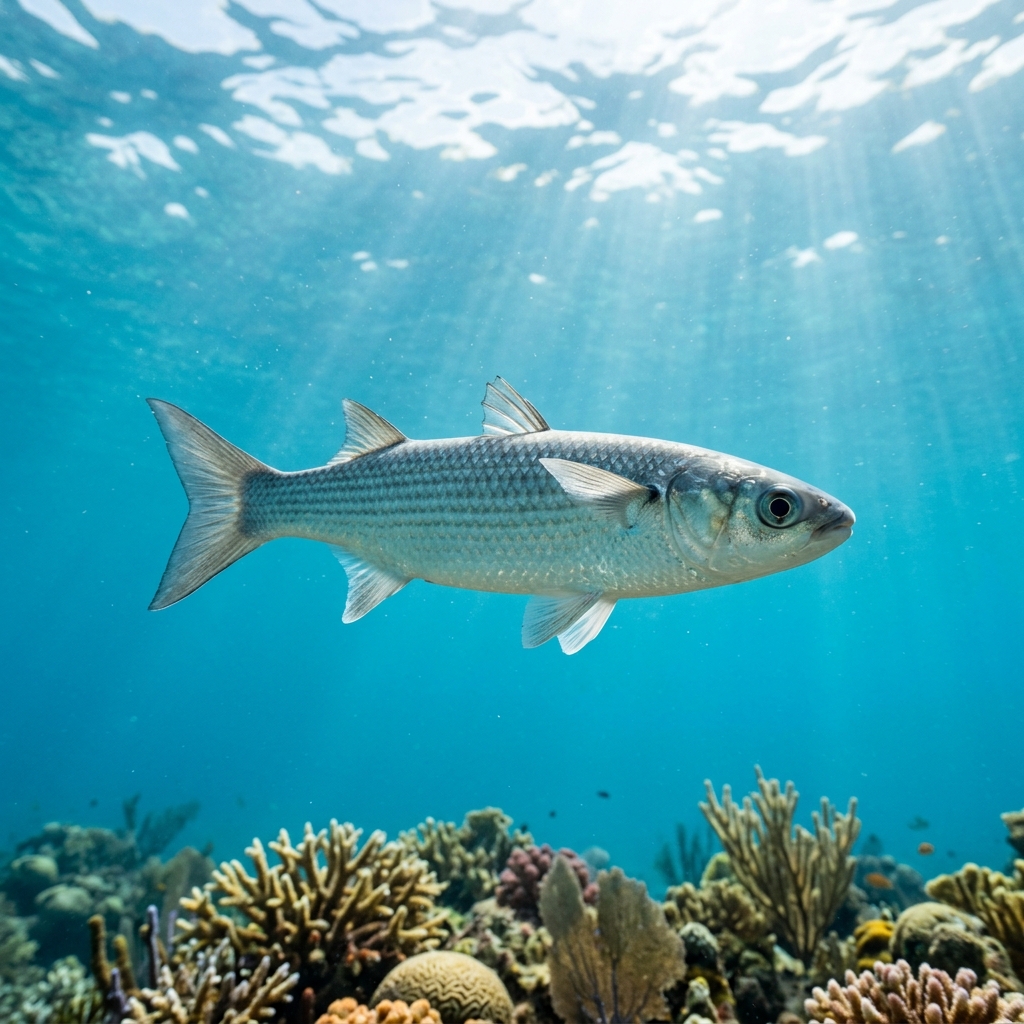
Reef neighbours a diver could mistake it for. Use the identification notes above to tell them apart.
Almost every logged sighting comes from Australia, with New South Wales carrying the vast majority of records and a smaller presence in Queensland. Divers most reliably find it tucked into ledges and cave mouths on temperate reef sites along the NSW coast, from around 30 metres and deeper.
Mapping where Blacktip Bullseye is logged…
It is almost exclusively logged in Australia, overwhelmingly in New South Wales with a smaller number of sites in Queensland. Look for it sheltering in caves and under ledges on temperate reef dives along the NSW coast.
There is no strong seasonal pattern in the sightings, so it can be found year-round. Water temperature on the sites where it is recorded ranges from about 18.6 to 24.6C, which covers NSW's normal seasonal swing.
Look for a small, deep-bodied, coppery fish around 10 cm long with large eyes and dark-tipped fins, usually seen packed into a tight school under a ledge or in a cave mouth rather than swimming in the open.
They stay small, typically reaching around 10 cm, which is one reason they are easy to overlook until you spot the whole school clustered in a shaded crevice.
No. They are a harmless small schooling fish that simply shelters in caves and under overhangs, with no sting, bite or defensive behaviour to worry about.
They spend daylight hours packed motionless into caves and dark ledges, only moving out into open water at night to feed, which is a common pattern among bullseye species.
Site and sighting data is aggregated from diver logs, iNaturalist and GBIF. For taxonomy and conservation status:
Anchovy
2,433 sites