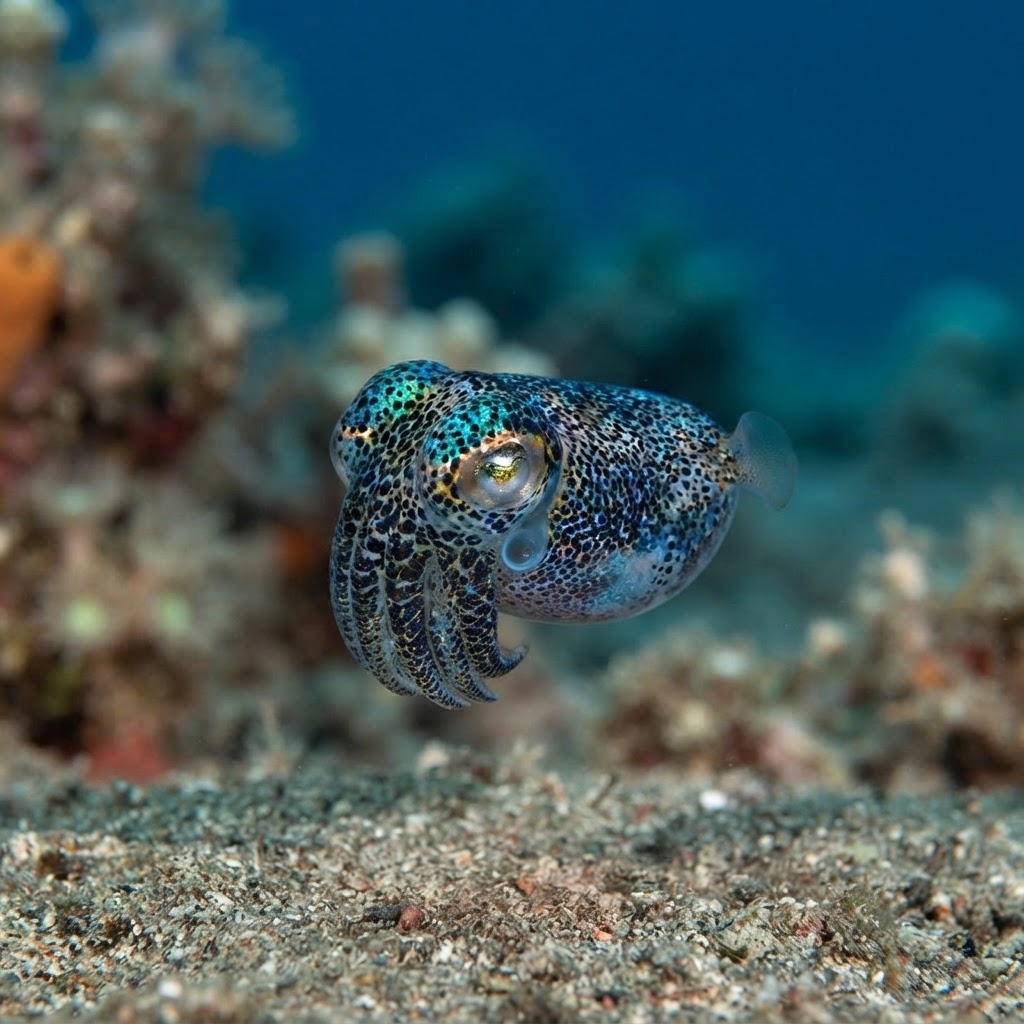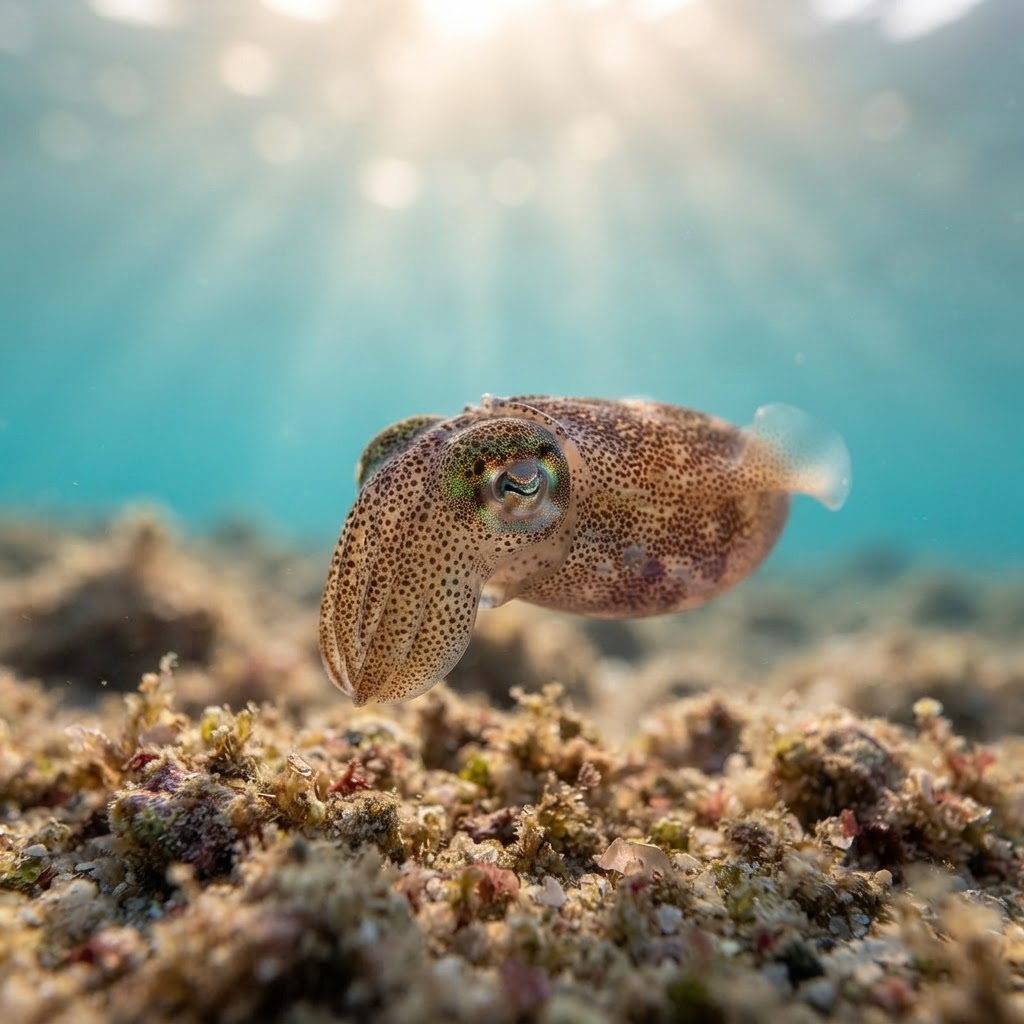
Sepia grahami
A tiny 4cm cuttlefish found almost only around New South Wales, Australia, at 18.6 to 24.6C, spotted year-round on sand and rubble.
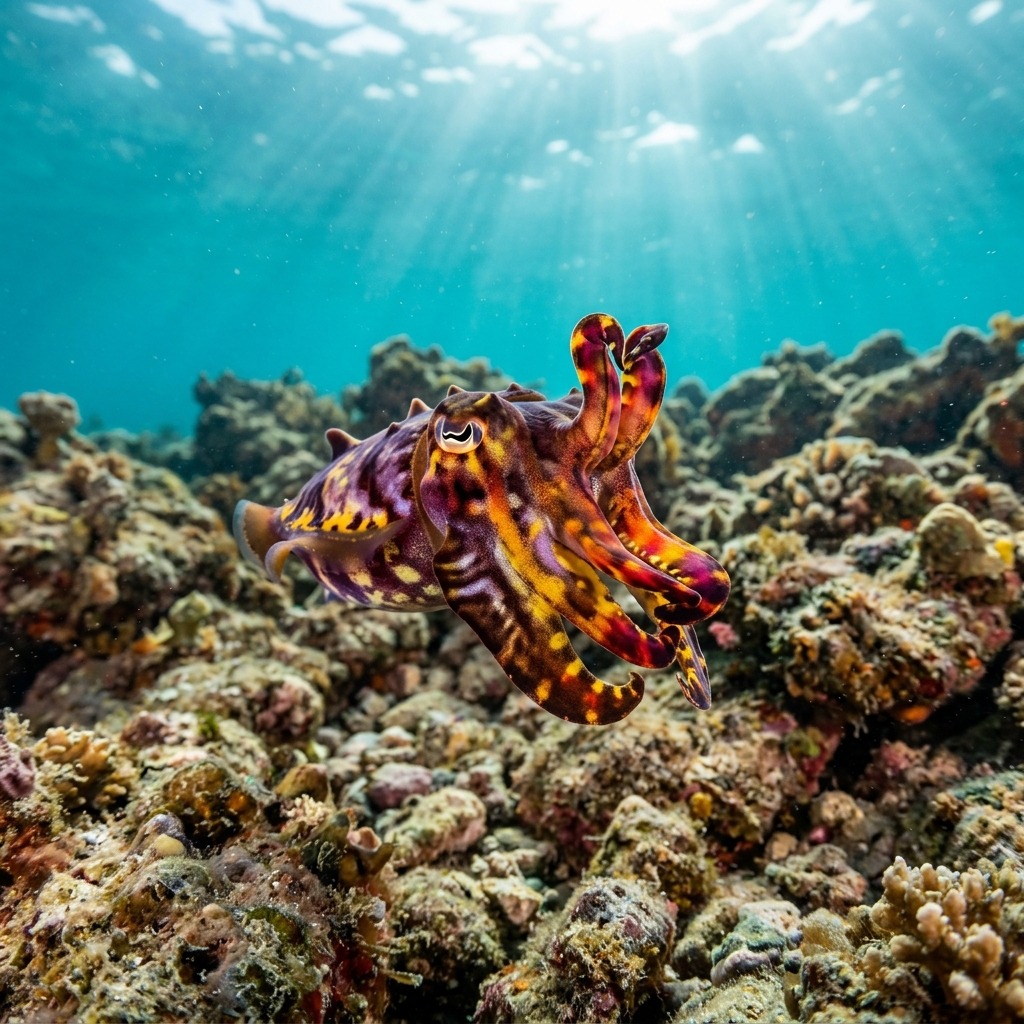
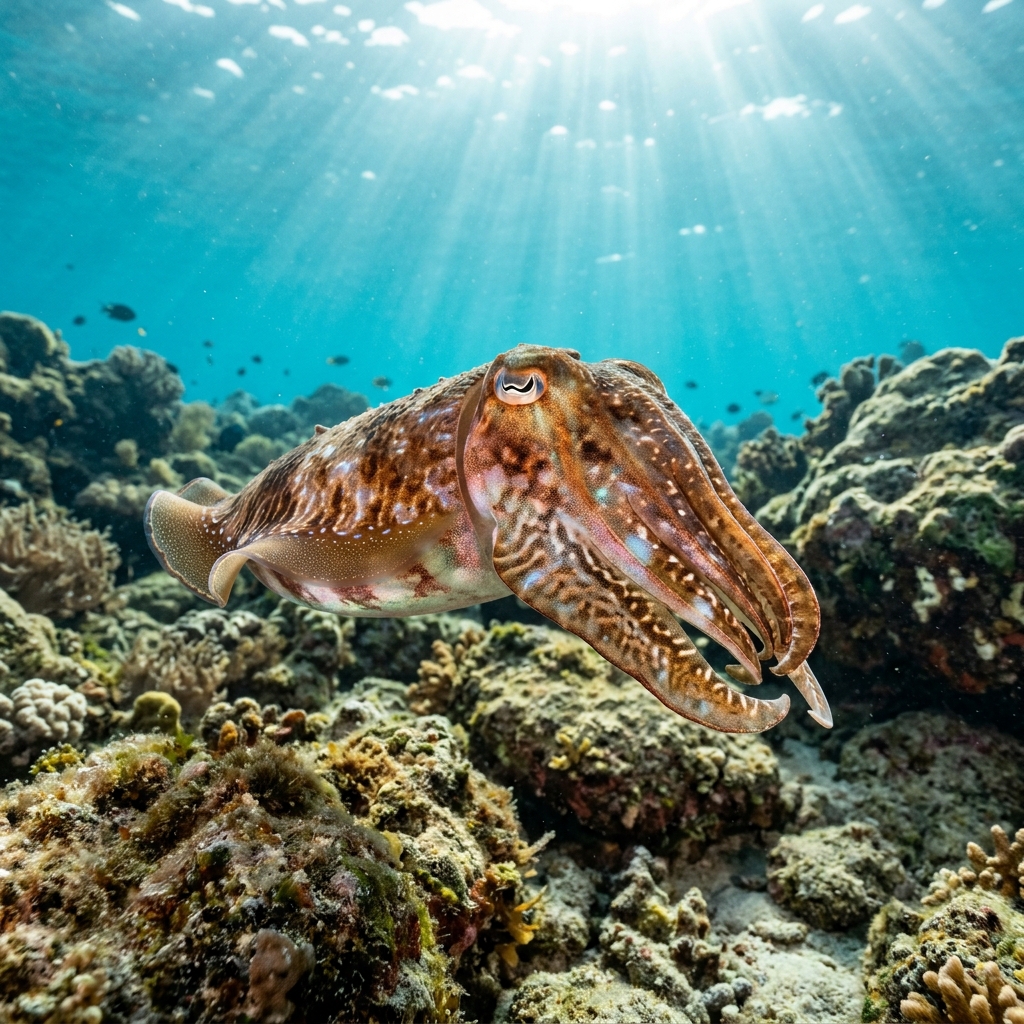
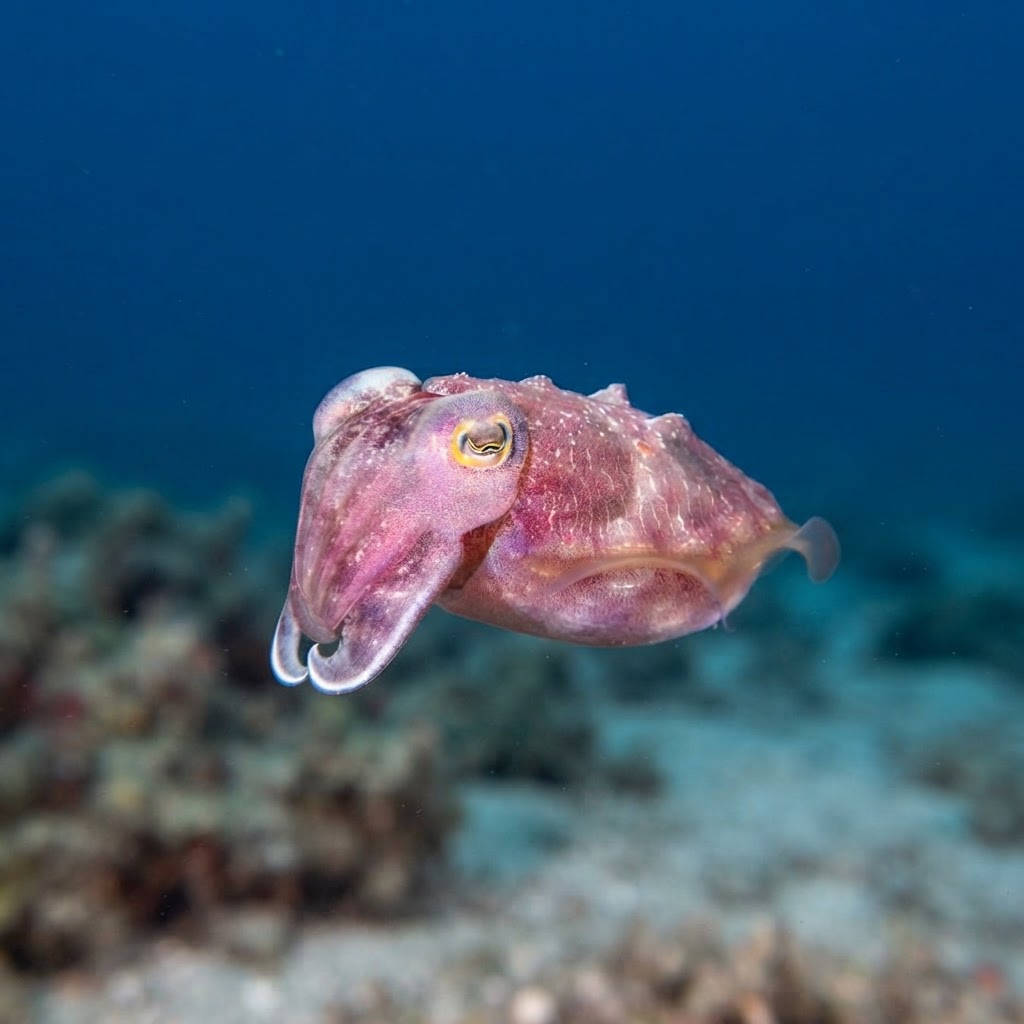
A small cuttlefish, topping out around 4 cm, so look low on sand, rubble or weedy patches rather than mid-water. Body is short and rounded with a mottled brown, grey and cream pattern that shifts as it flares its fin skirt around the mantle. The give-away is scale: at this size in these habitats, few other cuttlefish species are candidates, so a tiny cuttlefish hugging the bottom in this region is a strong match.
Divers typically find it sitting still on sand, rubble or low weed, relying on its mottled colouring to disappear against the bottom rather than swimming off. Like other cuttlefish it can shift its pattern and flare the skirt-like fin around its mantle when it does move, but at this size it's easy to swim straight past without noticing. Most sightings are on the benthic (bottom) zone in coastal, shallow-to-moderate depth settings rather than out in open water.
At around 4 cm this is one of the smallest cuttlefish a diver is likely to log, small enough that most sightings come from divers actively scanning the substrate rather than spotting it from a distance.
Sightings don't show a clear seasonal spike, and it's recorded across a temperature range of 18.6 to 24.6C, so it's reasonable to treat this as a year-round find in New South Wales rather than a species tied to one season.
Reef neighbours a diver could mistake it for. Use the identification notes above to tell them apart.
Almost every logged sighting comes from New South Wales, Australia, making it the place to look, with a single record from Queensland showing it turns up a little further north too. Sightings are spread across around thirty sites in the region, most describing it as uncommon rather than a guaranteed find, so it rewards divers who search sand, rubble and weedy edges rather than open water.
Mapping where Ken's Cuttlefish is logged…
Almost all recorded sightings are from New South Wales, Australia, with an occasional record from Queensland. It's logged across a good number of sites in the region, so it's worth searching sandy and rubble patches on typical NSW dives rather than seeking a single famous location.
There's no strong seasonal pattern in the sightings, and it's found across a fairly wide temperature range of 18.6 to 24.6C, so it appears to be a year-round find in New South Wales waters.
Look for a very small cuttlefish, only around 4 cm, sitting on sand or rubble with a mottled brown, grey and cream body. Its size alone rules out most other cuttlefish in the same habitat.
They're small even by cuttlefish standards, reaching only about 4 cm, which makes them easy to overlook on the seafloor.
No. They pose no danger to divers and simply rely on camouflage and stillness to avoid attention rather than any defensive behaviour towards people.
It has been recorded from as shallow as 2 metres down to 84 metres, showing it can turn up on both shallow reef dives and deeper sandy slopes.
Site and sighting data is aggregated from diver logs, iNaturalist and GBIF. For taxonomy and conservation status:
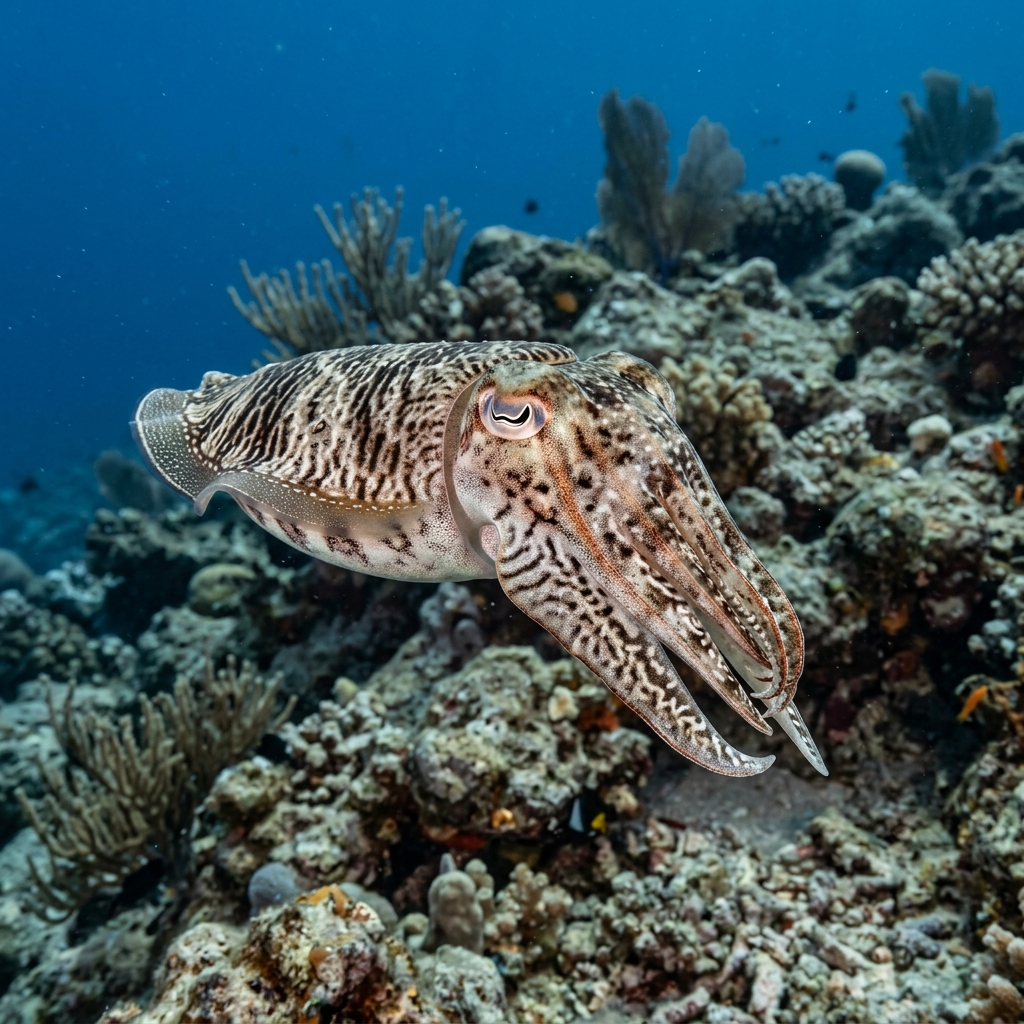
Pharaoh Cuttlefish
925 sites