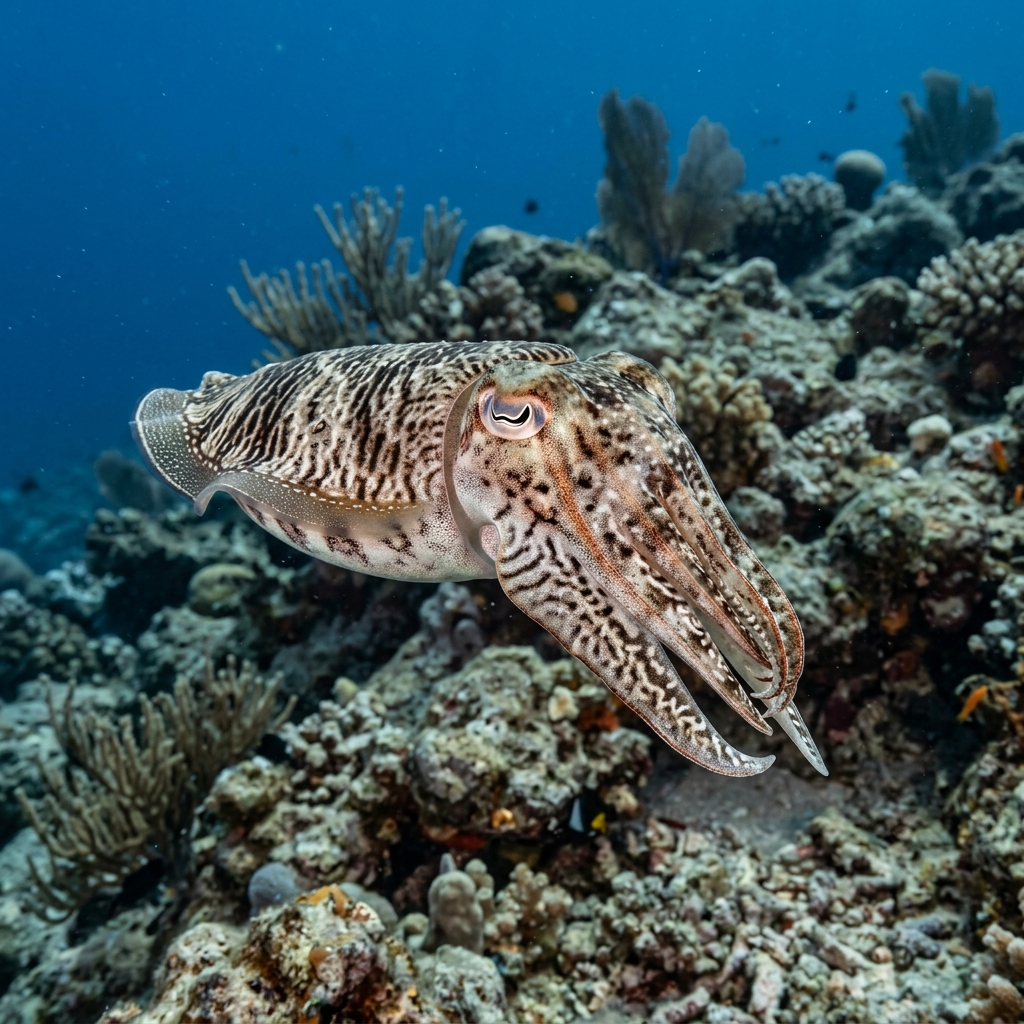
Acanthosepion pharaonis
Spot the Pharaoh Cuttlefish across the Indo-Pacific, from Phuket reefs to Muscat's coast, in warm water year-round. ID tips and top dive sites inside.
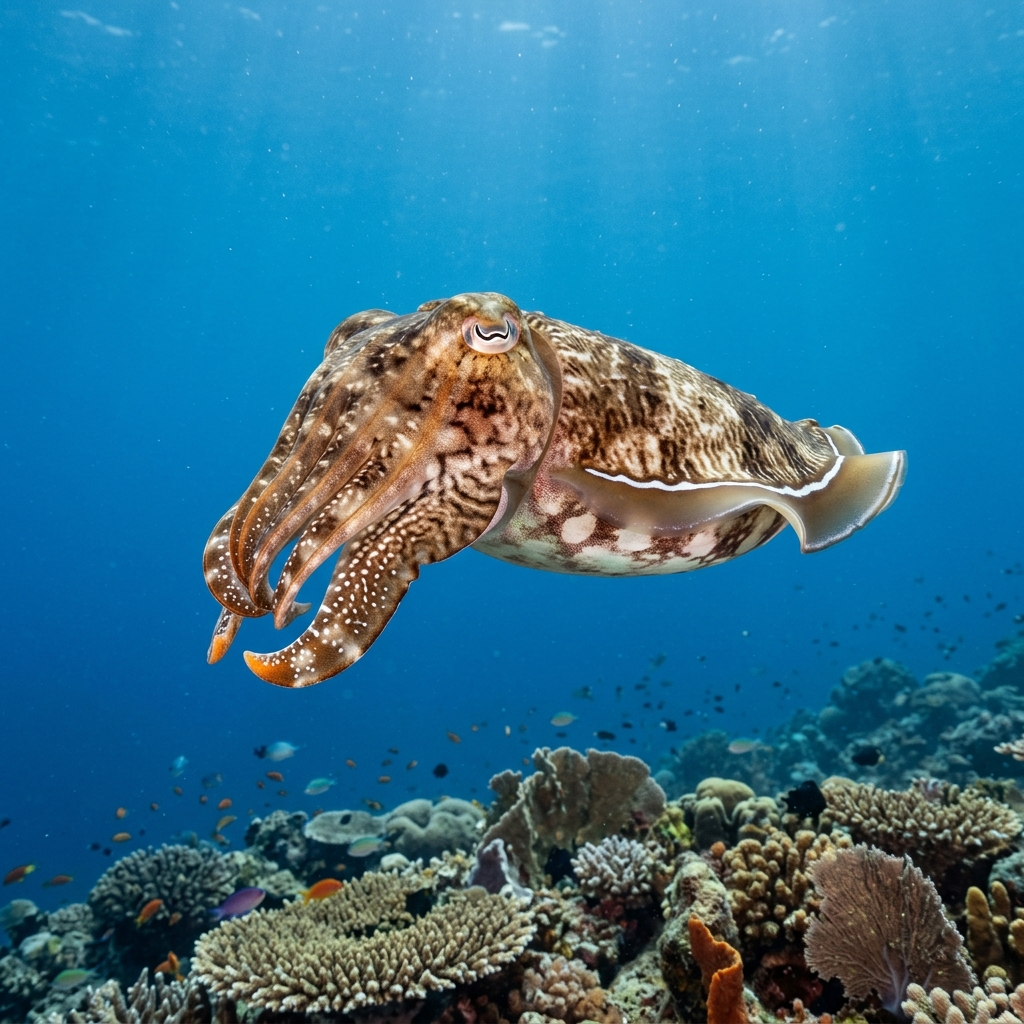
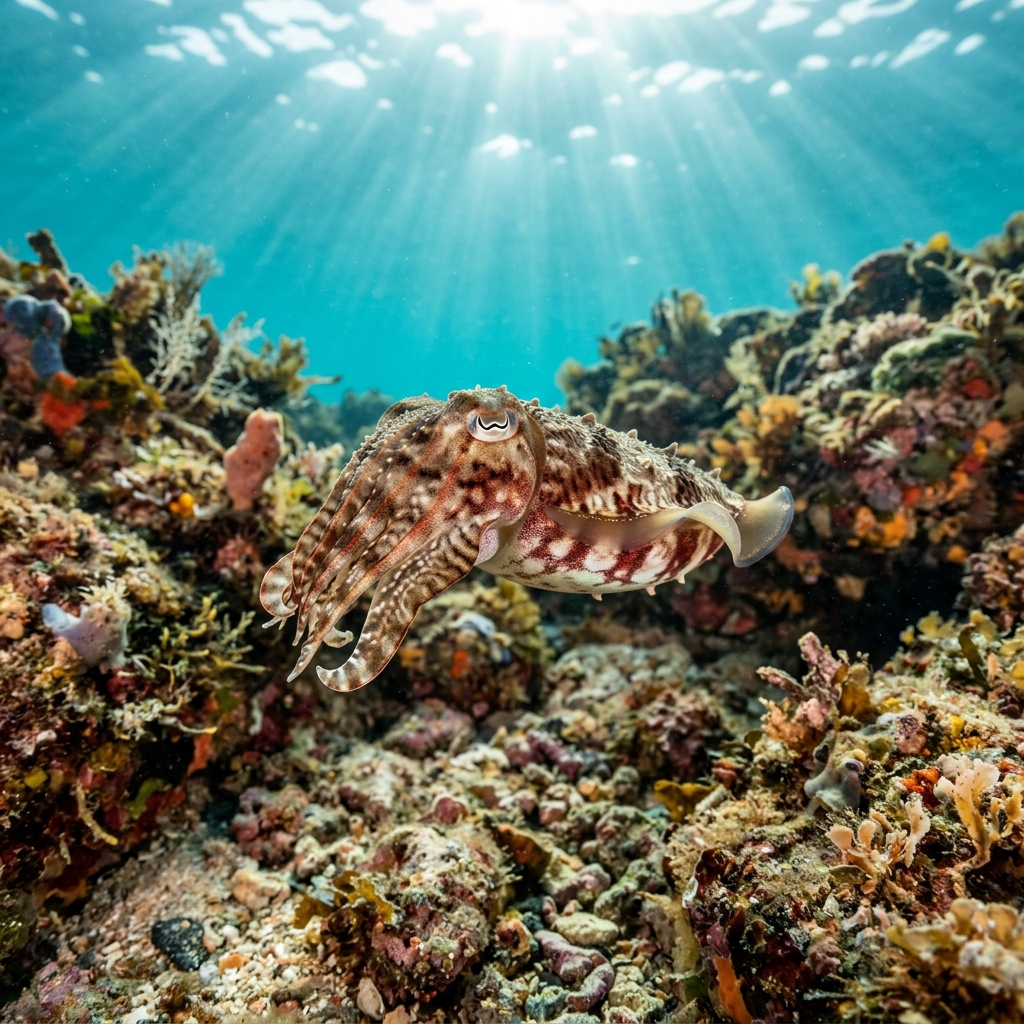
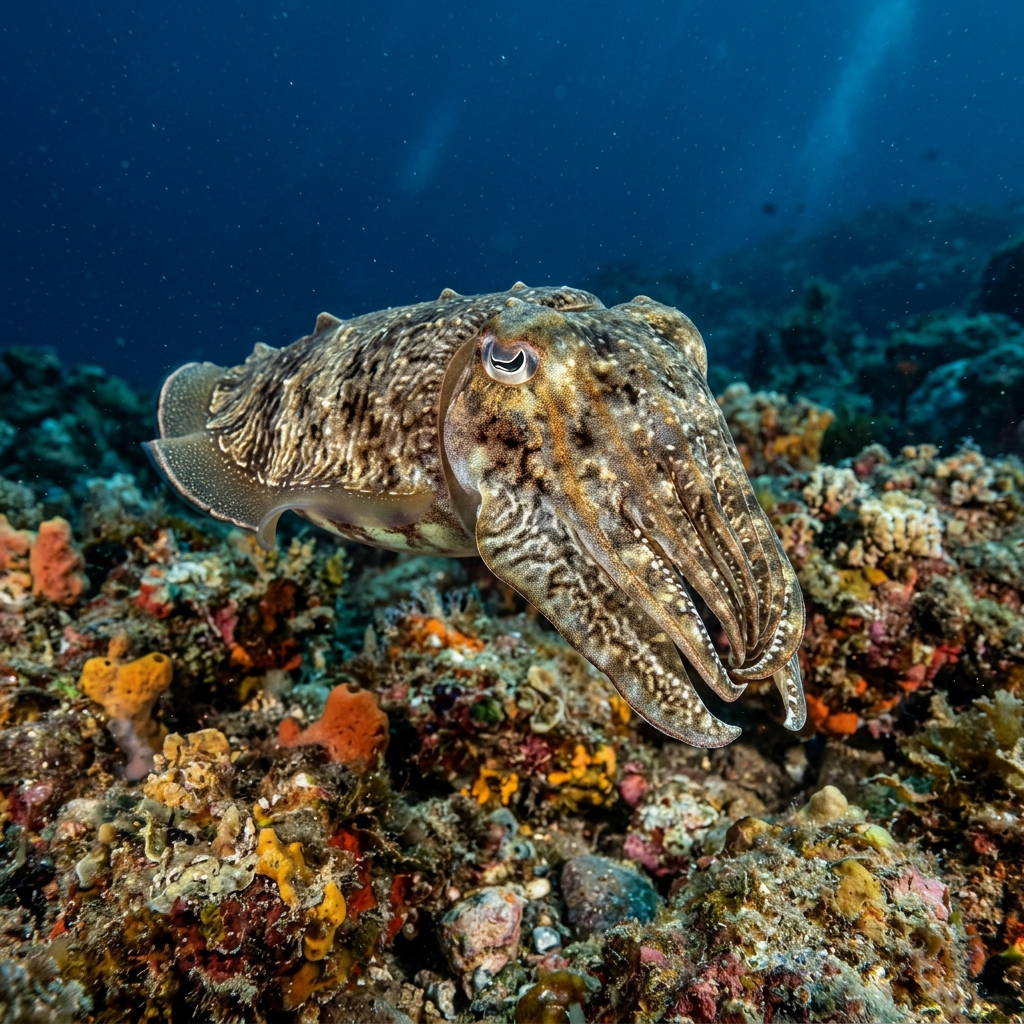
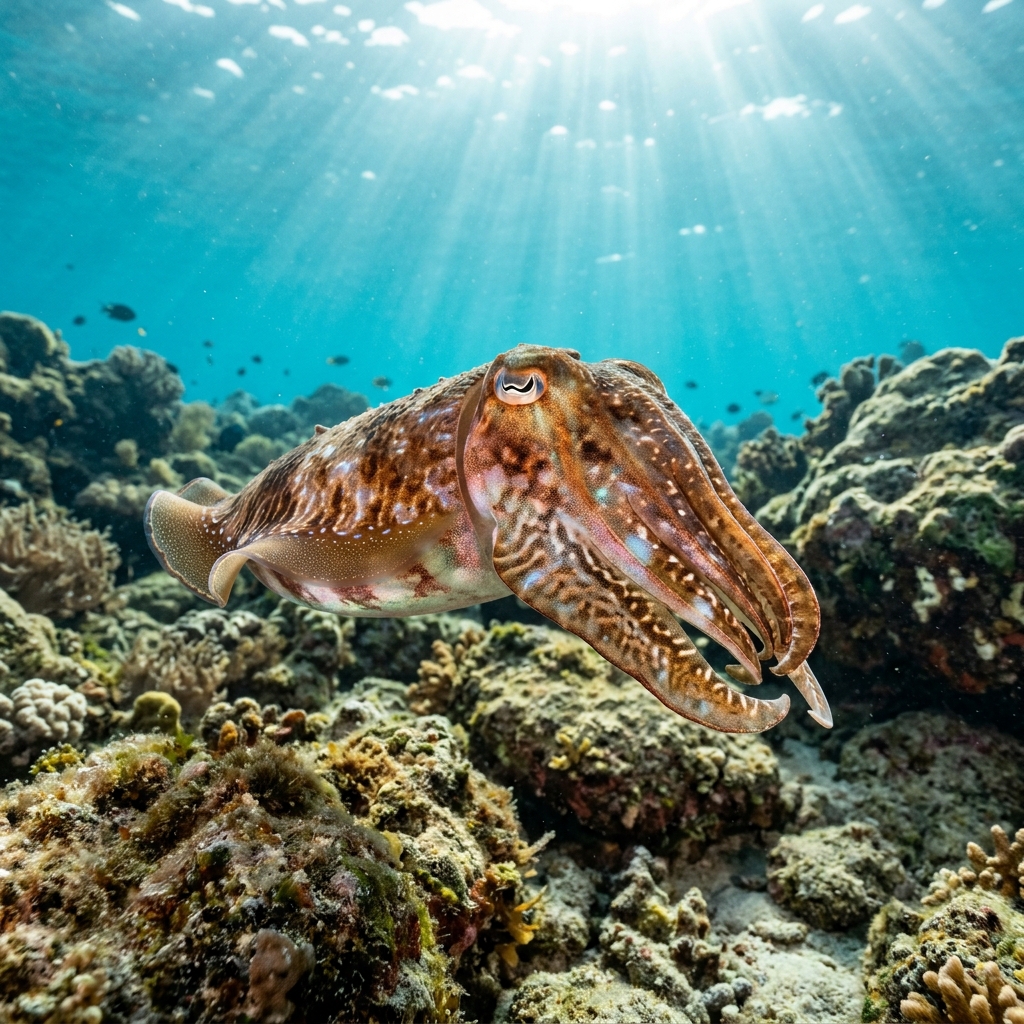
One of the largest cuttlefish in the Indo-Pacific, it reaches around 30 cm and has a broad, flattened mantle with a distinctive undulating fin running its full length. Colouration shifts constantly thanks to chromatophores (pigment cells in the skin), but resting animals typically show mottled browns, creams, and ochres with pale banding across the mantle. The eyes are W-shaped and distinctly visible, and the arms often display pale-tipped suckers. Size alone separates it from most smaller cuttlefish on the same reefs.
Pharaoh cuttlefish are wary rather than bold; the typical response to a diver's approach is a slow backward retreat or an immediate skin-pattern change to blend with the substrate. Move slowly and stay low, and curiosity often wins out, they may hover and study you with those expressive eyes. They hunt actively during the day, with activity picking up around dawn and dusk when they stalk small fish and crustaceans, sometimes using a rippling skin display to mesmerise prey before striking with their tentacles.
Like all cuttlefish, pharaoh cuttlefish have three hearts and blue-green blood; more usefully for divers, males will engage in elaborate arm-wrestling contests to defend females during mating aggregations, which can make for extended, close-up viewing if you find a courting pair.
Sighting data does not point to a defined season, so treat it as a year-round resident on its Indo-Pacific reefs. Its observed temperature niche of roughly 23 to 29 °C matches the permanent conditions across tropical reef sites in the Philippines, Indonesia, and Thailand, meaning there is no poor month to target it.
Reef neighbours a diver could mistake it for. Use the identification notes above to tell them apart.
Most commonly logged across Southeast Asia and the western Pacific, with the Philippines and Indonesia together accounting for the largest share of recorded sites; Phuket and the Phi Phi Islands in Thailand and the Visayas in the Philippines are strong starting points. Australia's Queensland coast and Oman's Muscat region also offer reliable encounters, reflecting the species' broad Indo-Pacific range from the Red Sea and Arabian Gulf east through to the Pacific.
Mapping where Pharaoh Cuttlefish is logged…
The best-documented dive destinations are the Philippines (particularly the Visayas and Palawan), Indonesia (especially Sulawesi), and Thailand's Phuket and Phi Phi area. Oman's Muscat coast and Queensland in Australia are also reliable options for divers outside Southeast Asia.
There is no identified peak season in the sighting data, so they can be encountered year-round. Their preferred water temperatures of around 23 to 29 °C are a constant on tropical Indo-Pacific reefs, meaning any month is a viable time to look.
Size is your first clue, at up to 30 cm they are notably large compared to most cuttlefish on the same reef. Look for a broad, oval mantle, a continuous fin along the mantle edge, and mottled brown-and-cream skin that shifts pattern as you watch. The W-shaped pupils are unmistakable up close.
They typically reach around 30 cm in mantle length, making them one of the larger cuttlefish species a diver is likely to encounter on Indo-Pacific reefs. Their bulk makes them noticeably substantial in the water compared to the smaller, more cryptic cuttlefish species.
No. They are not considered dangerous to divers. Like all cuttlefish they can deliver a small nip if handled, but they are neither aggressive nor venomous in any way that poses a risk during a normal dive. Leaving them undisturbed ensures they stay curious rather than retreating.
Site and sighting data is aggregated from diver logs, iNaturalist and GBIF. For taxonomy and conservation status:
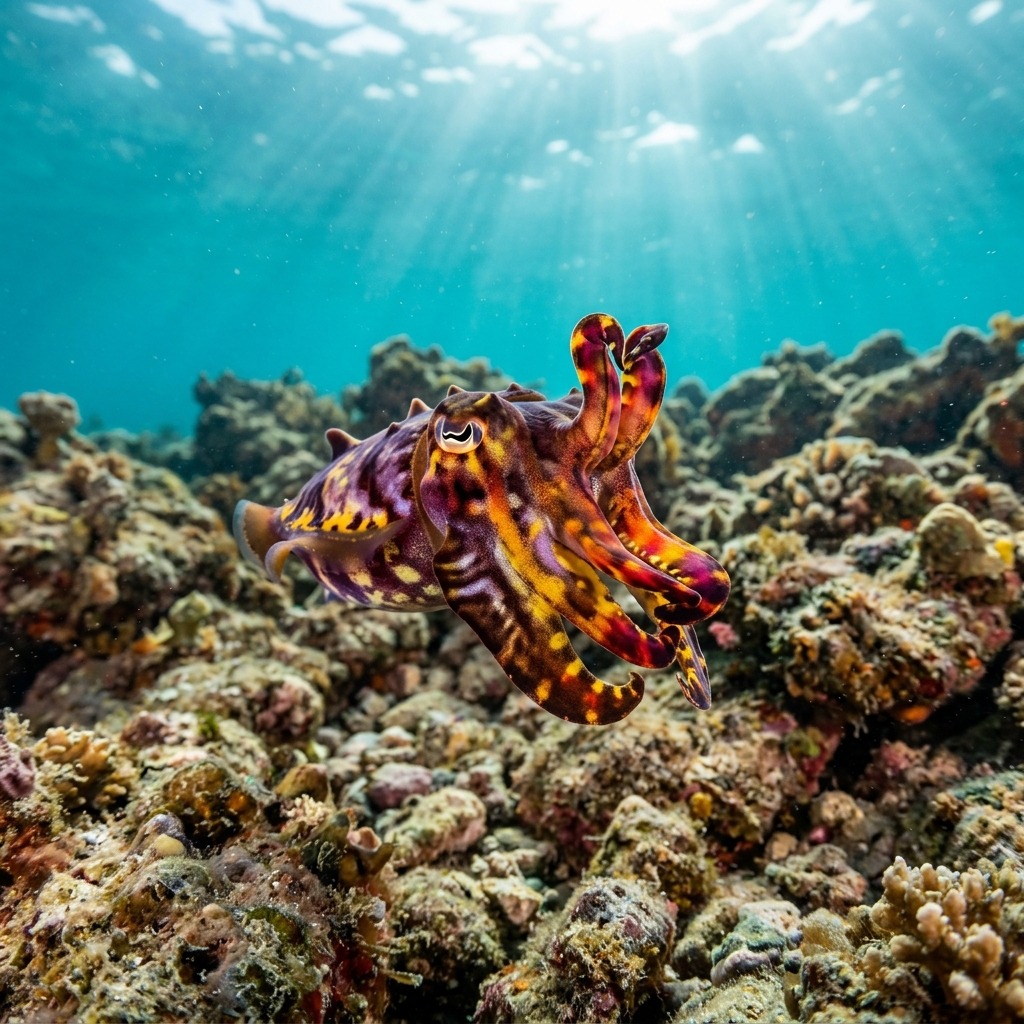
Flamboyant Cuttlefish
377 sites