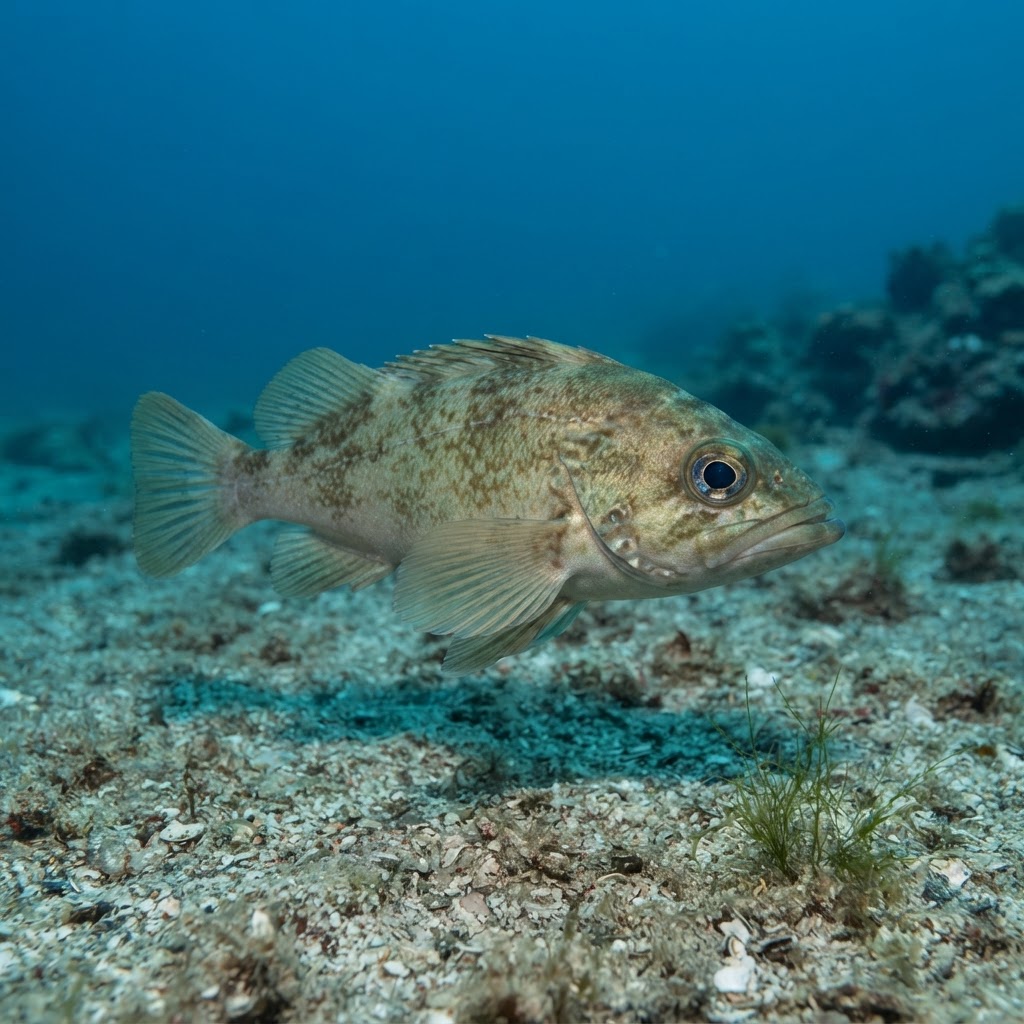
Sebastes atrovirens
Mottled brown and hovering motionless in kelp forests off California, this rockfish shows up in 12.8-19C water year-round.
Safety warning
Its dorsal, anal and pelvic fin spines carry venom that can cause a sharp, painful sting if handled or bumped against. The real risk to divers comes from careless hands near rock crevices, so photograph it and leave it undisturbed rather than touching or moving it for a shot.
If you're stung
Venomous spinesGeneral first-aid guidance, not a substitute for professional medical care. In an emergency, call your local emergency number.
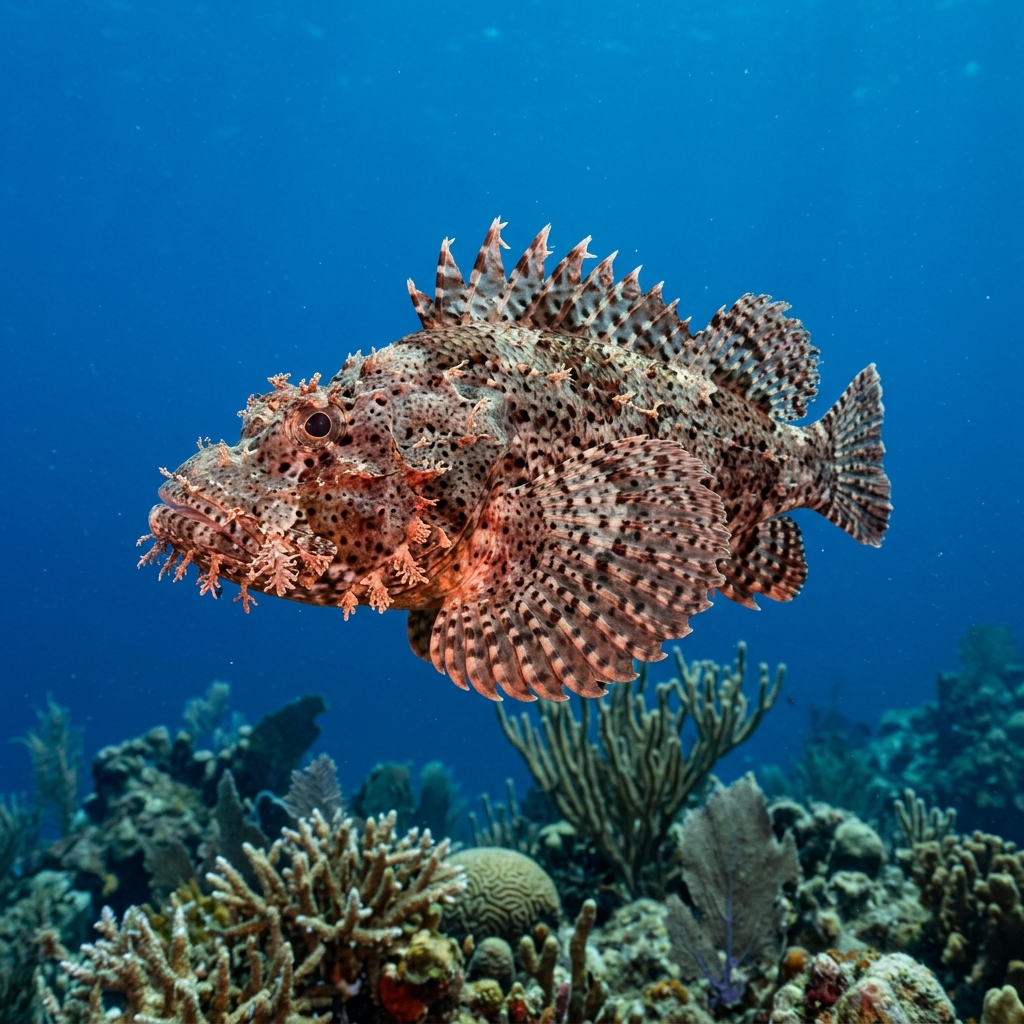
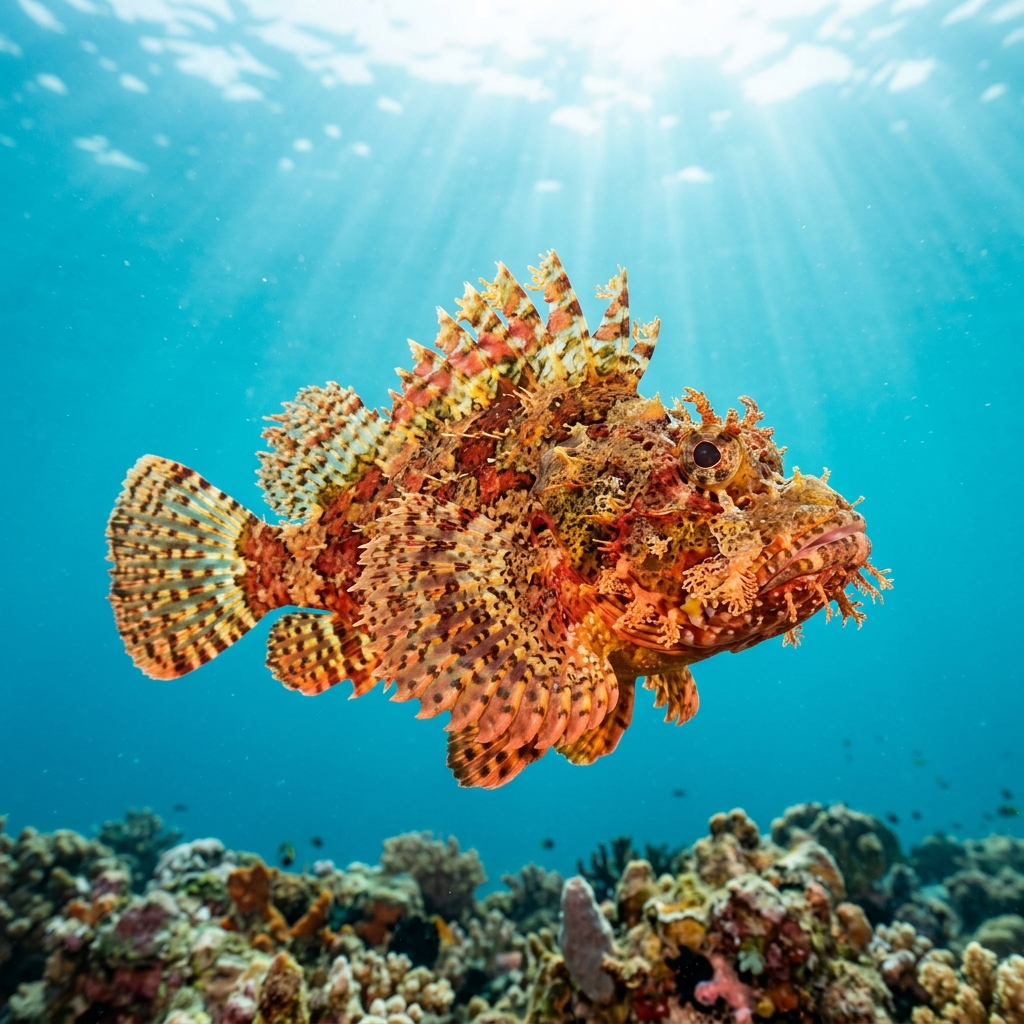
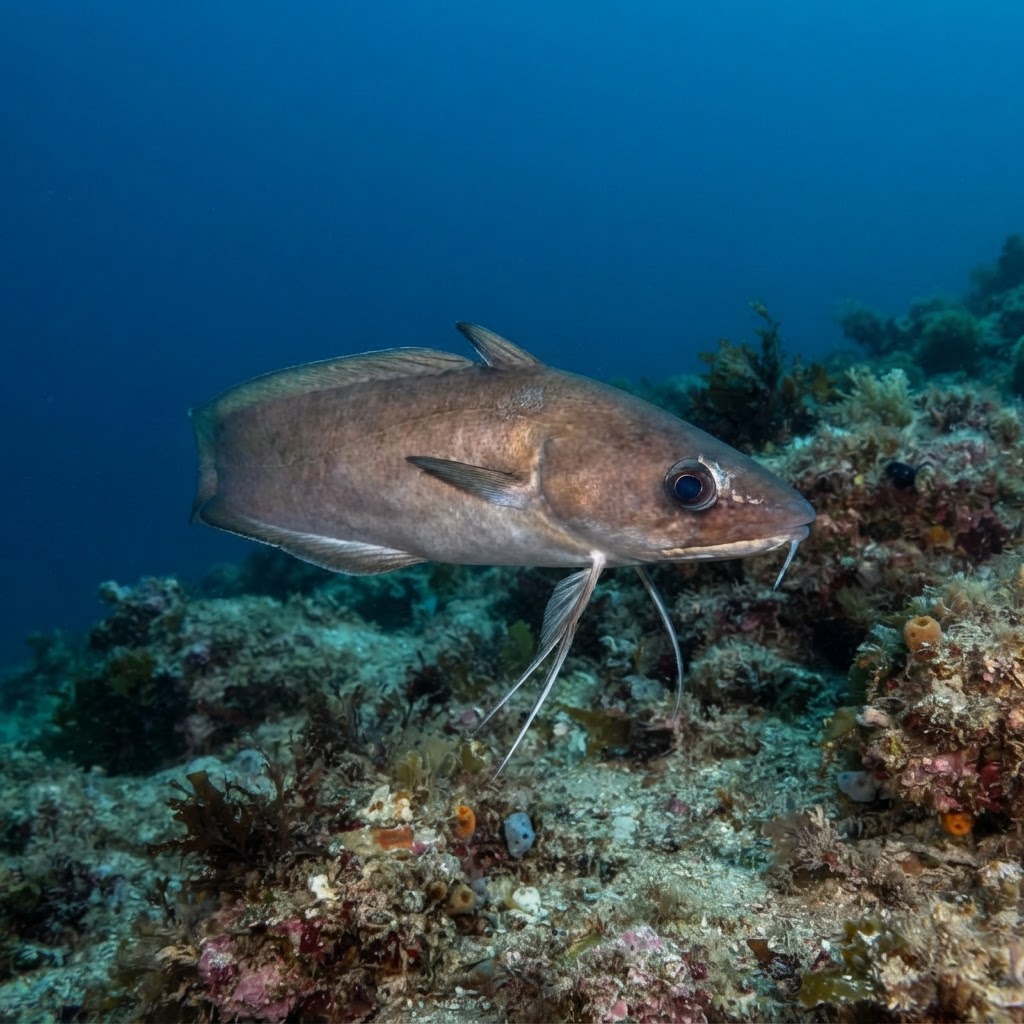
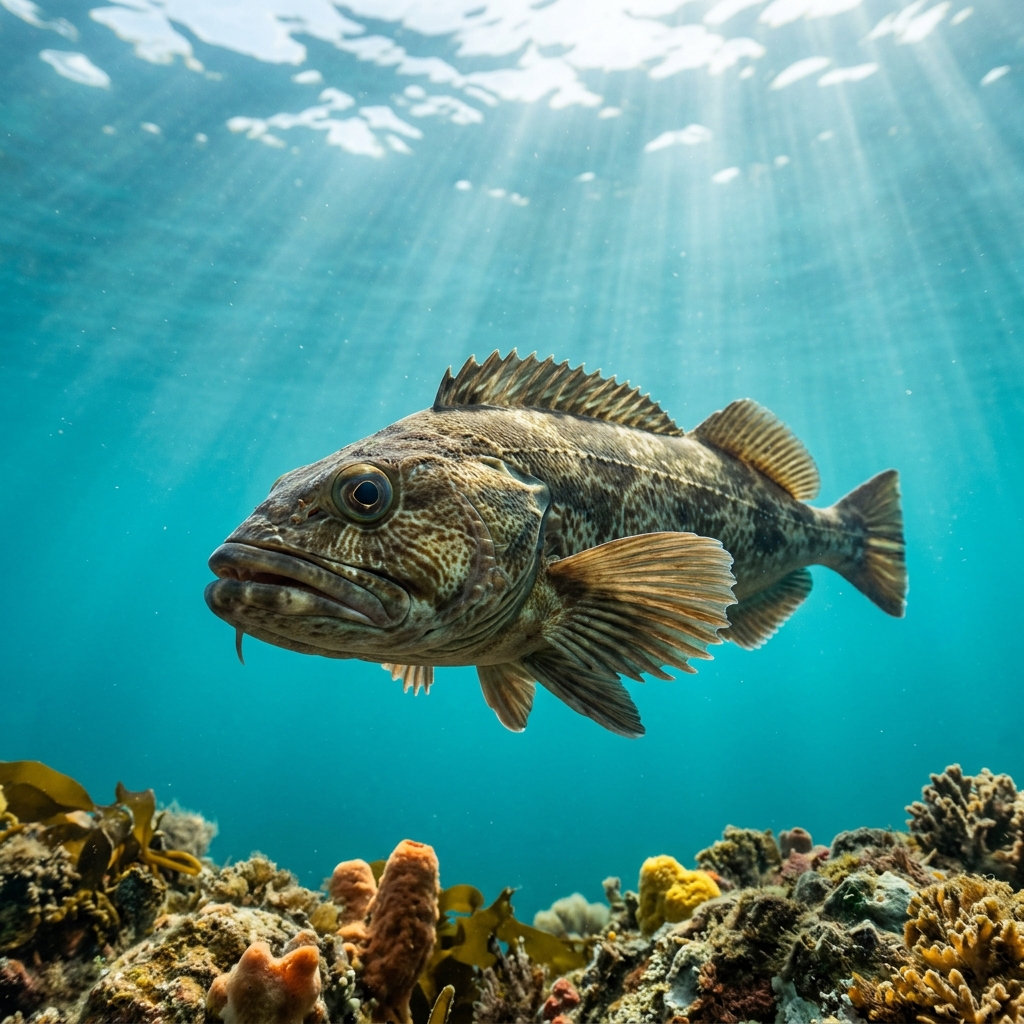
Grows to around 29 cm and shows a mottled brown, olive or grey pattern that breaks up its outline against kelp holdfasts and rock. Look for a stocky, spine-headed body typical of rockfish, with a slightly compressed shape and large eyes set high on the head. It usually hangs motionless just off the bottom or tucked against a rock ledge rather than swimming in open water, which is often the giveaway before the colour pattern is.
Typically seen holding still near a rock crevice or kelp stipe, using its camouflage rather than speed to stay unnoticed. It tends to let divers approach fairly close before easing off to another perch, and is most often spotted hovering just above the substrate rather than out in open water. Reported as uncommon at most sites where it turns up, with a smaller number of sites where it is logged as a common resident.
Like many rockfish, it relies on venomous dorsal, anal and pelvic spines for defence rather than fleeing, which is part of why it can afford to sit still and let divers get close.
Sightings show no clear seasonal pattern, so this is a year-round fish on Californian and Baja kelp reefs. Its comfort range of roughly 12.8 to 19C covers the water temperature divers encounter in this region across most of the year.
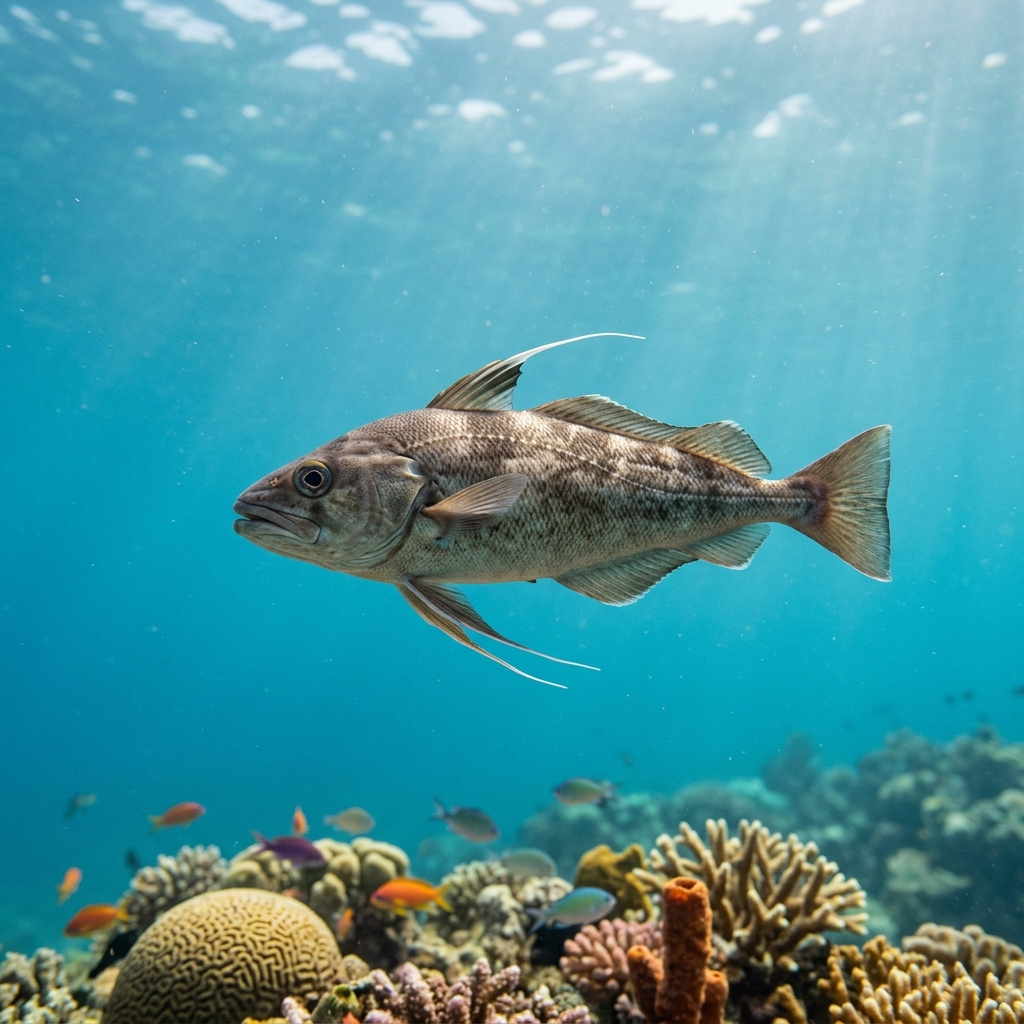
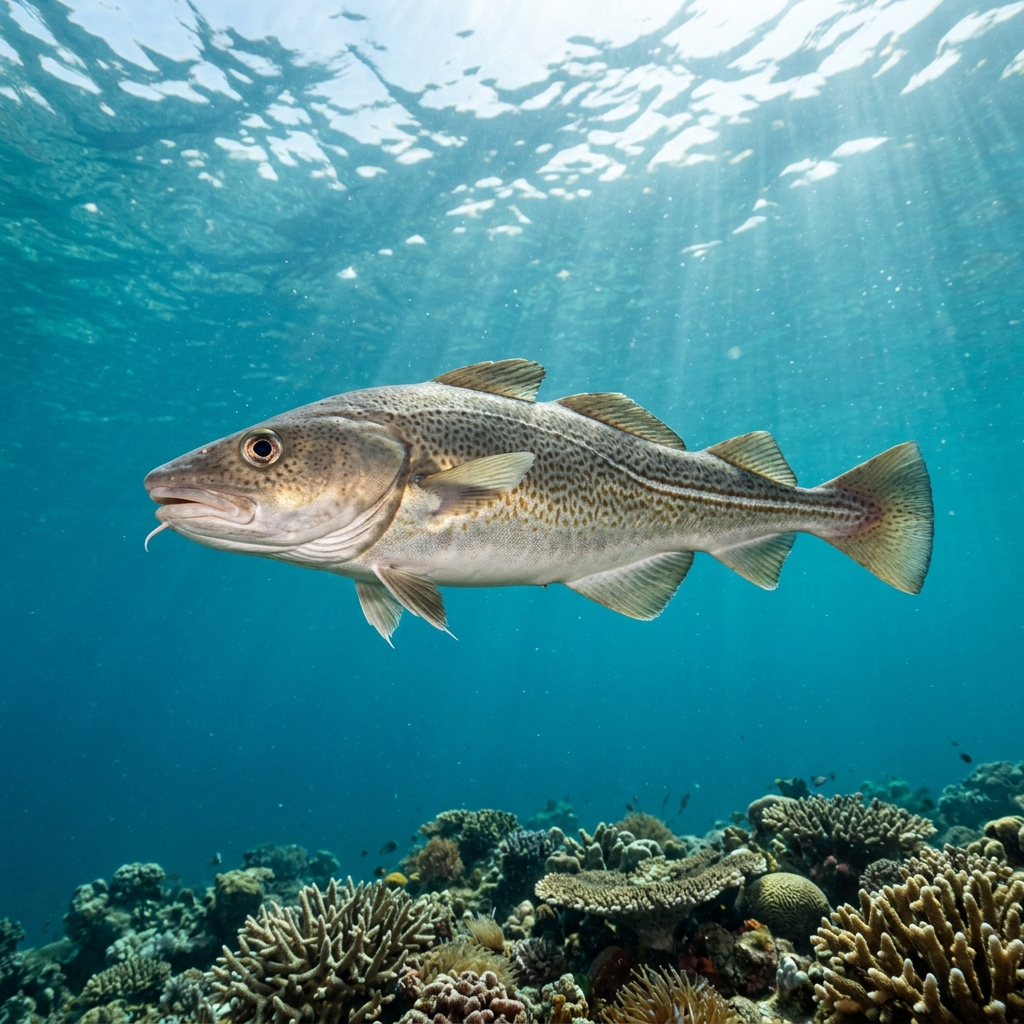
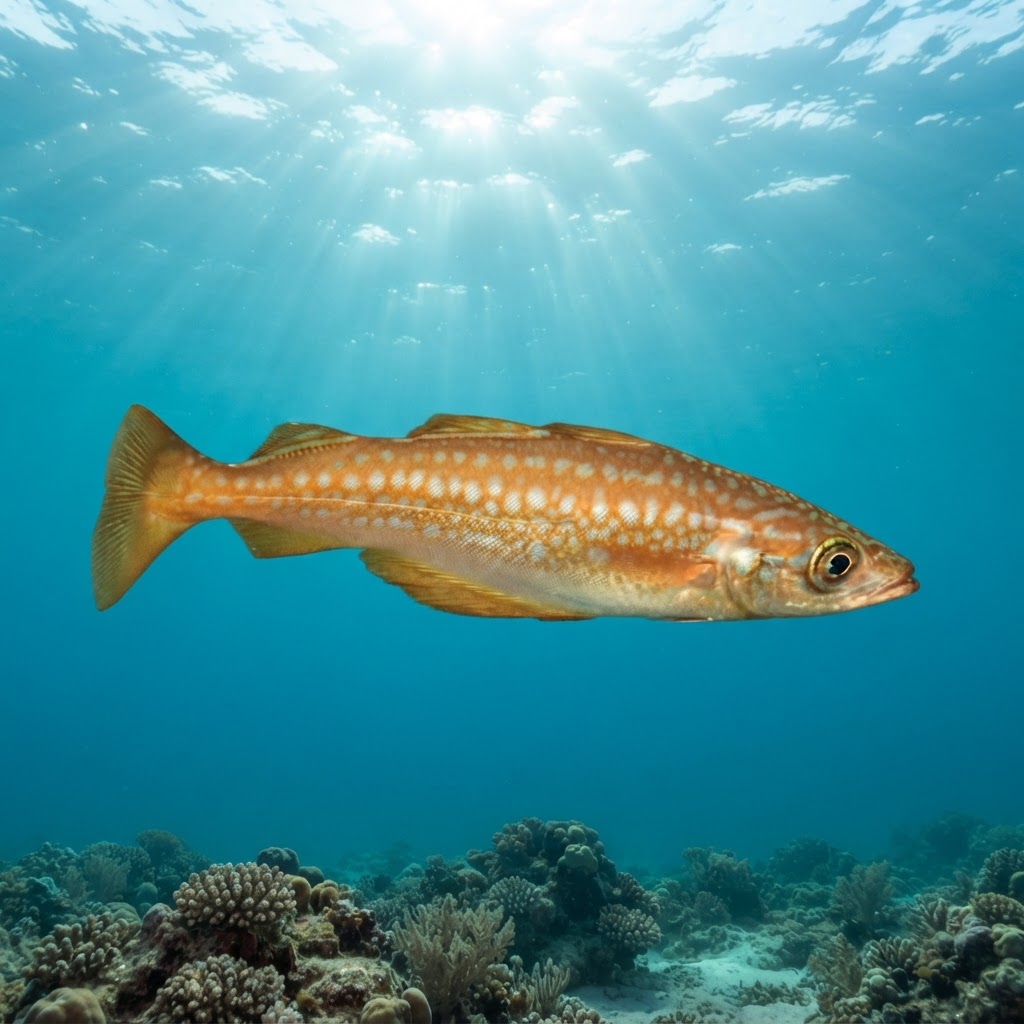
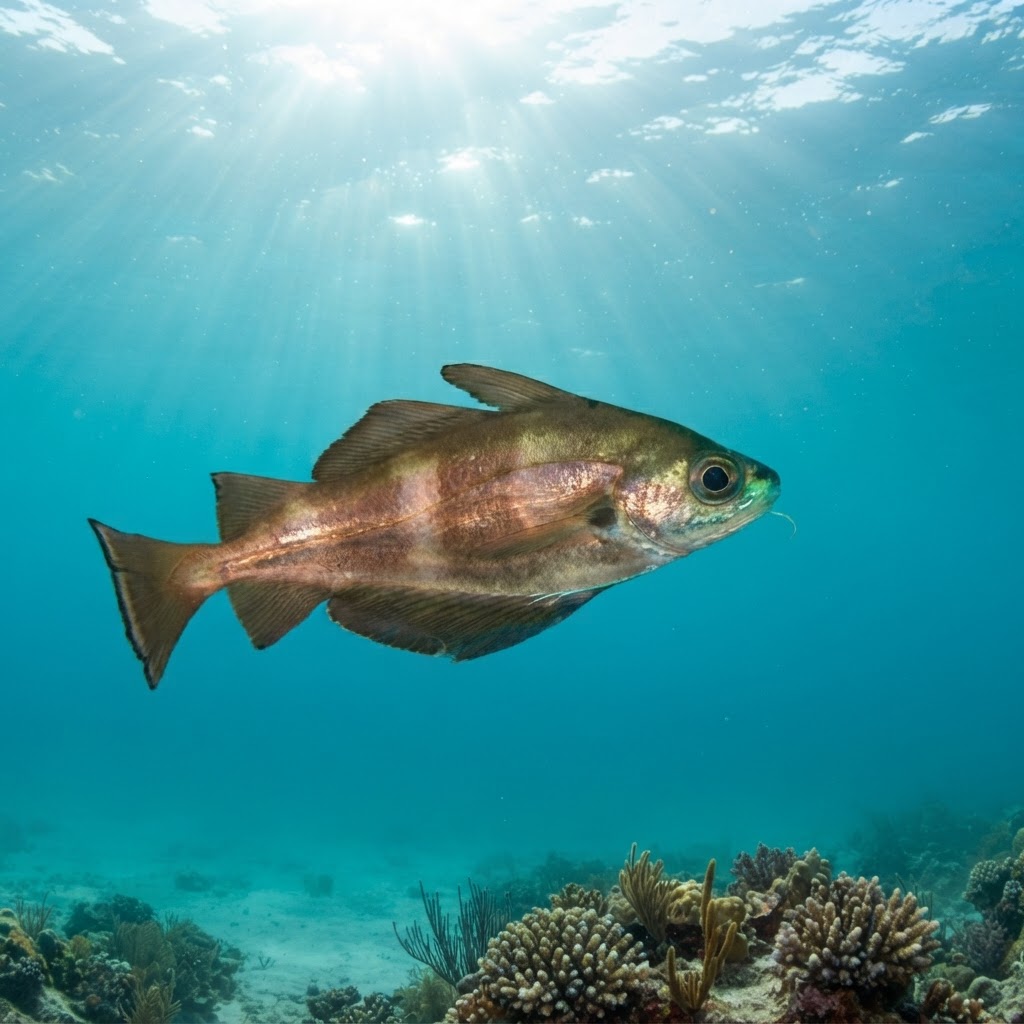
Reef neighbours a diver could mistake it for. Use the identification notes above to tell them apart.
Most reliably logged along the California coast in the United States, with strong numbers also reported from Baja California in Mexico. Divers find them tucked into rocky reef and kelp forest habitat at both ends of this range, generally between 9 and 46 metres.
Mapping where Kelp Rockfish is logged…
California in the United States is the strongest region for sightings, with Baja California in Mexico also producing consistent logs. Both areas host it on rocky reef and kelp forest habitat in the 9 to 46 metre range.
There is no strong seasonal pattern in sightings, so it is considered a year-round fish. Its recorded temperature range of about 12.8 to 19C matches conditions on California and Baja reefs for most of the year.
They carry venomous spines in their dorsal, anal and pelvic fins that can deliver a painful sting if touched. They are not aggressive toward divers, so the sensible move is to observe from a distance and avoid putting hands near rock crevices.
Look for a stocky, spiny-headed rockfish around 29 cm long with a mottled brown or olive pattern that blends into kelp and rock. It is usually motionless near the bottom rather than swimming, tucked against a ledge or kelp holdfast.
They typically reach about 29 cm in length, a modest size that keeps them well camouflaged among kelp fronds and rocky crevices.
Most dive sites report it as uncommon, with a smaller number of sites where divers consider it a common sighting and others where it is rare. It is not a guaranteed encounter, so patient searching along rock ledges and kelp holdfasts pays off.
Site and sighting data is aggregated from diver logs, iNaturalist and GBIF. For taxonomy and conservation status:
Pollack
282 sites