Trisopterus luscus
Bronze-banded and often overlooked, pouting turns up on cool-water dives from Brittany to Galicia year-round, usually as a rare but steady find.
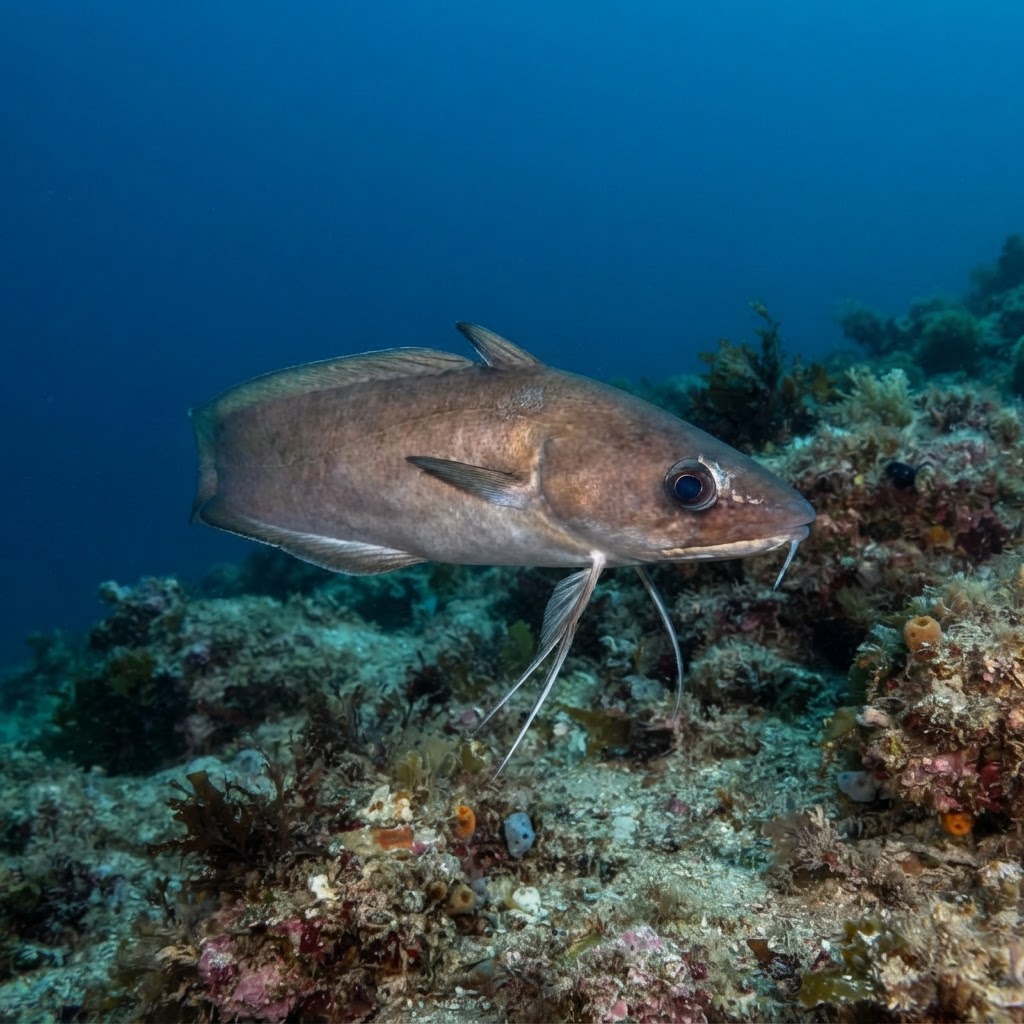
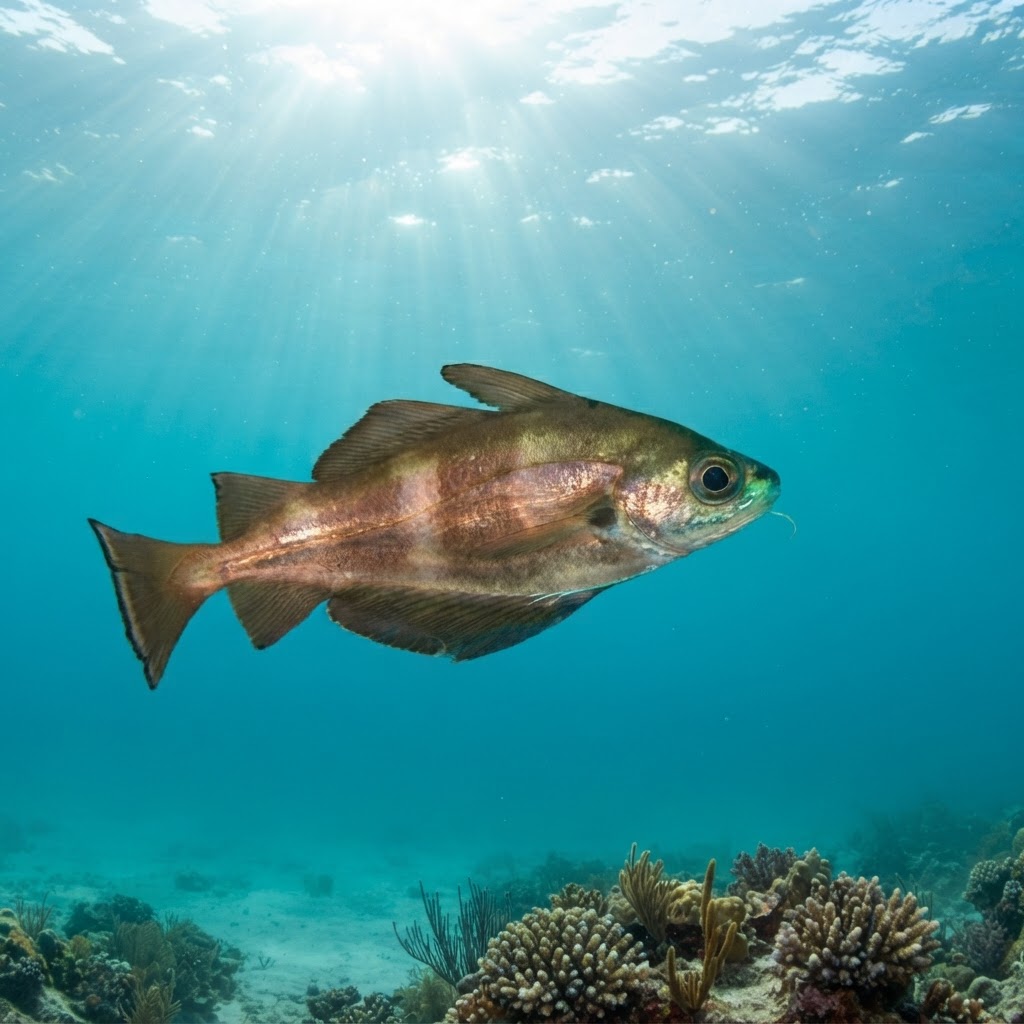
A stocky, bronze to coppery fish around 32 cm with faint dark vertical bars along its flanks and a single short barbel under the chin. The body is deep and rounded compared to slimmer rockfish, with a large dark blotch at the base of the pectoral fin that is one of the easiest cues to key on underwater. Look for it hovering close to rock, wreck or harbour structure rather than swimming in open water.
Divers typically find pouting hanging in loose groups around wrecks, rocky reefs and harbour walls, hovering just off the structure rather than out in open water. It tends to hold its ground rather than bolt, drifting back into cover if you get too close but often returning once you settle. Most sightings come from shallower rocky and wreck sites rather than deep open reef.
That chin barbel is a sensory organ used to feel out food on the seabed in low light, which is part of why pouting are often seen close to structure rather than in bright open water.
Sightings are logged year-round with no strong seasonal pattern in the data, which fits its cool-water preference of roughly 7 to 13C across Atlantic and Channel dive sites.
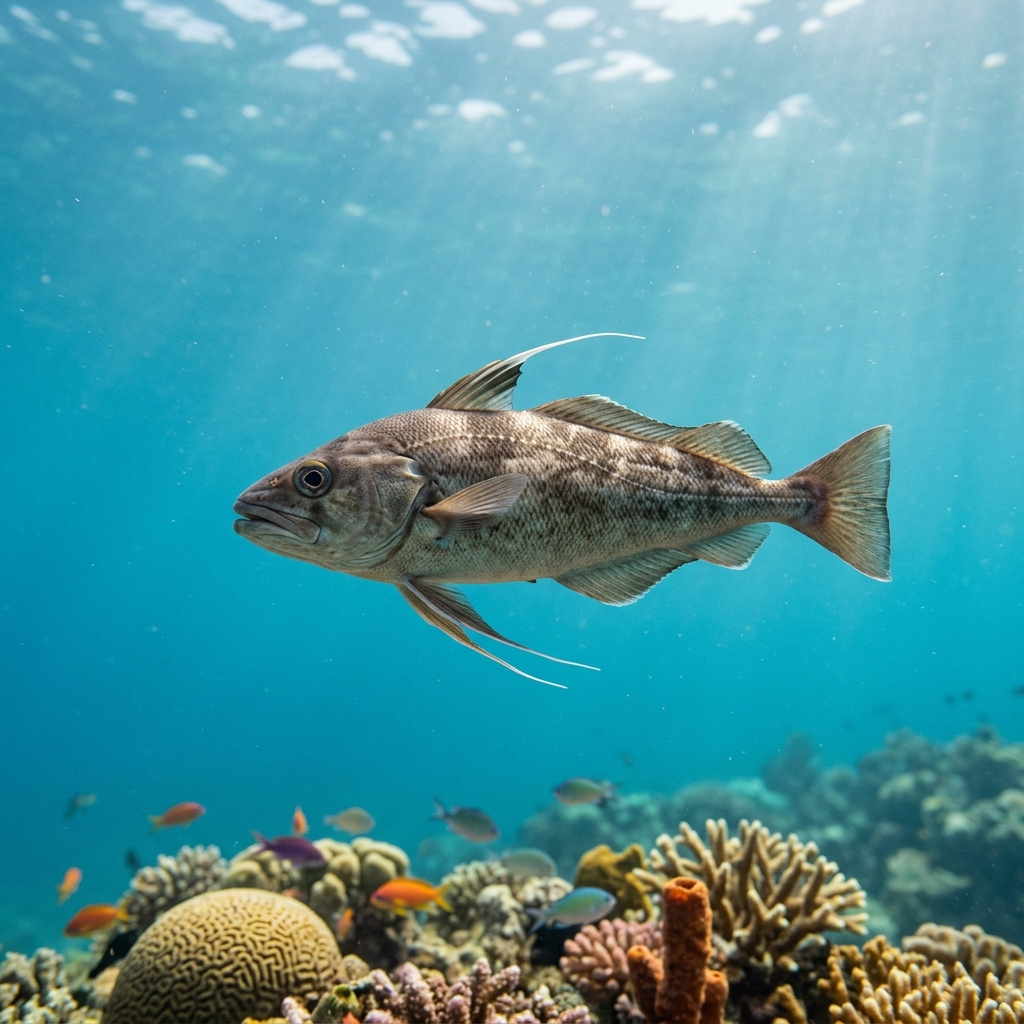
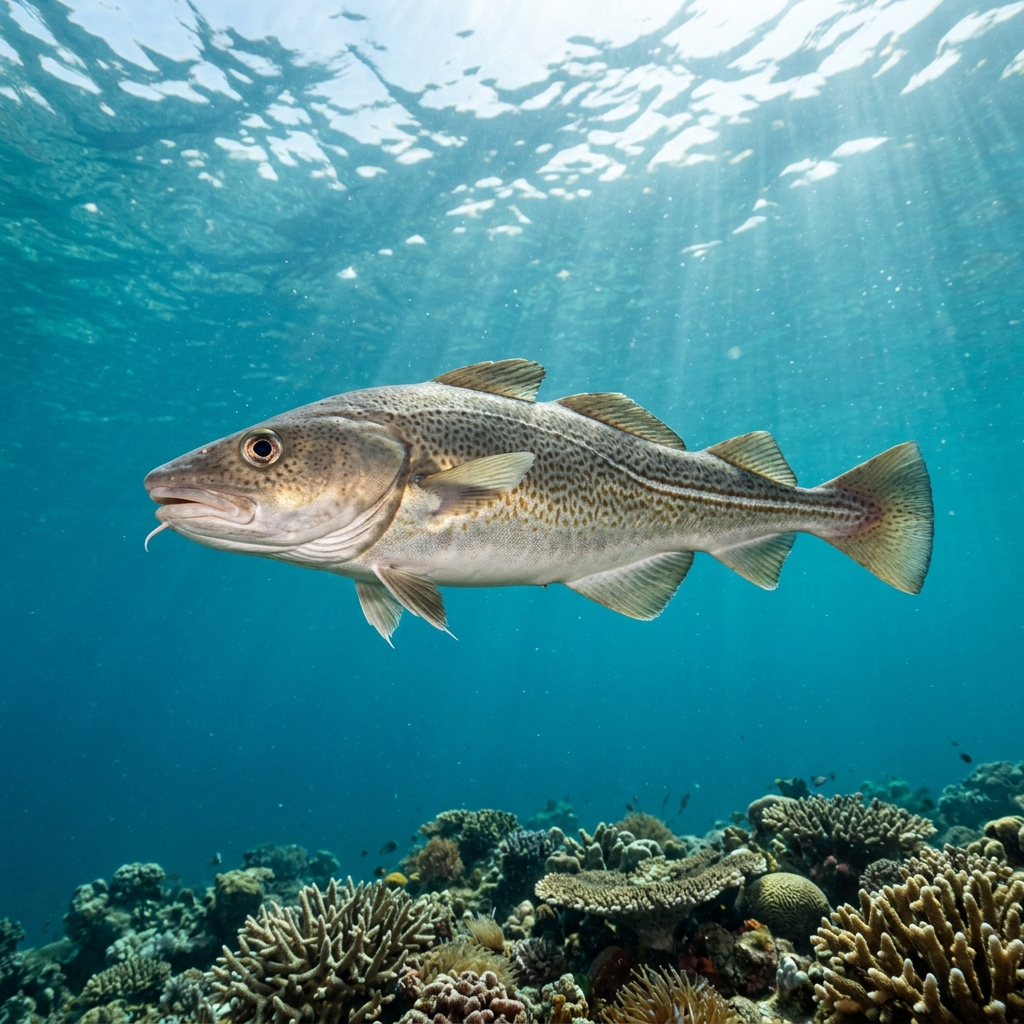
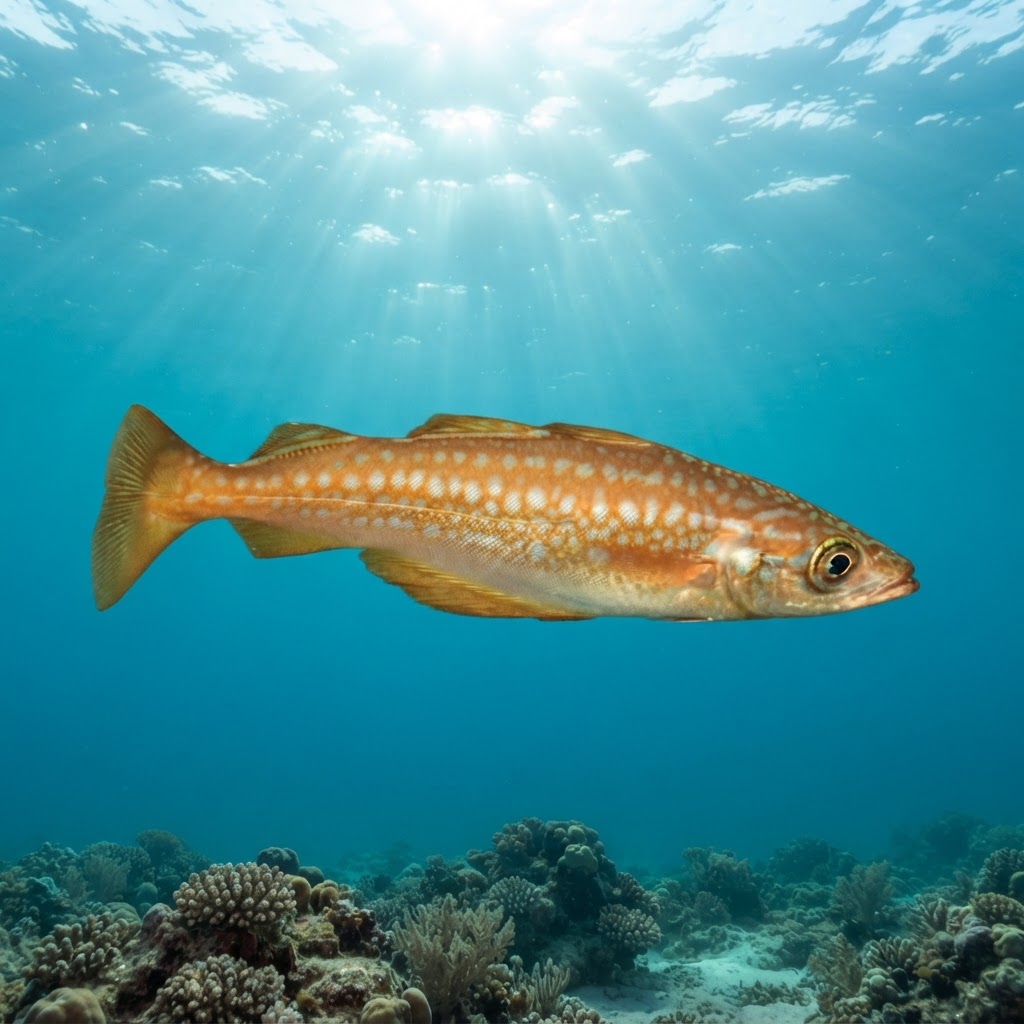
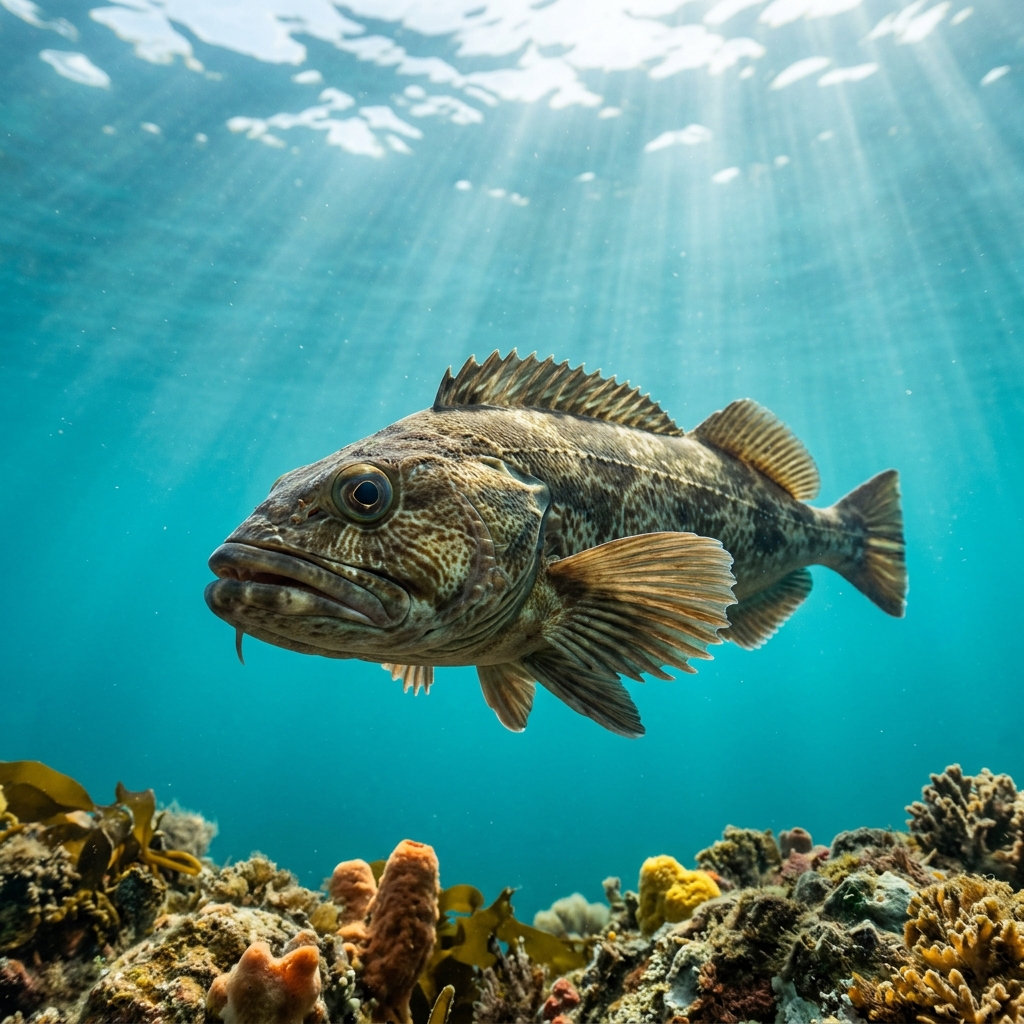
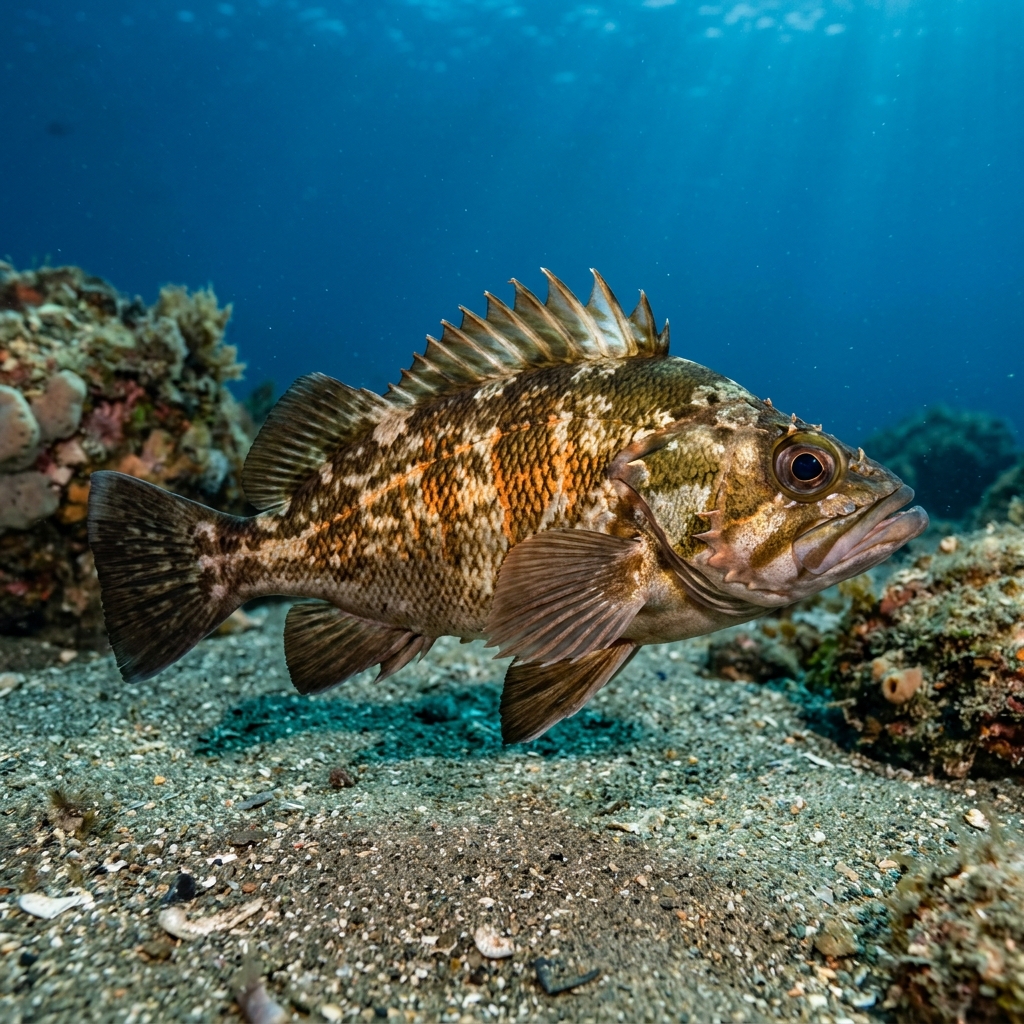
Reef neighbours a diver could mistake it for. Use the identification notes above to tell them apart.
Brittany and the Bay of Biscay in France carry the strongest sightings, with Lisbon Coast in Portugal and Galicia and the Cantabrian Coast in Spain also reliable. England and Wales in the UK and Zeeland in the Netherlands round out the range, though at most sites divers log it as a rare or occasional find rather than something you can count on every dive.
Mapping where Pouting is logged…
Brittany and the Bay of Biscay in France are the most reliable regions, with good numbers also logged along the Lisbon Coast in Portugal and Galicia in Spain. Divers in England and Wales also encounter it around rocky reefs and wrecks.
There is no strong season in the sighting data, so it is best treated as a year-round find on cool Atlantic and Channel dive sites where water sits between about 7 and 13C.
Look for a bronze to coppery, deep-bodied fish around 32 cm with faint dark bars on the flanks, a dark blotch at the base of the pectoral fin and a short barbel under the chin. It usually hovers near rock or wreck structure rather than swimming in open water.
Pouting typically reach around 32 cm in length, making them a modest-sized member of the cod family that divers usually see in small, loose groups.
No, pouting pose no danger to divers. They tend to hold near structure and simply retreat into cover if approached too closely.
Site and sighting data is aggregated from diver logs, iNaturalist and GBIF. For taxonomy and conservation status:
Pollack
282 sites