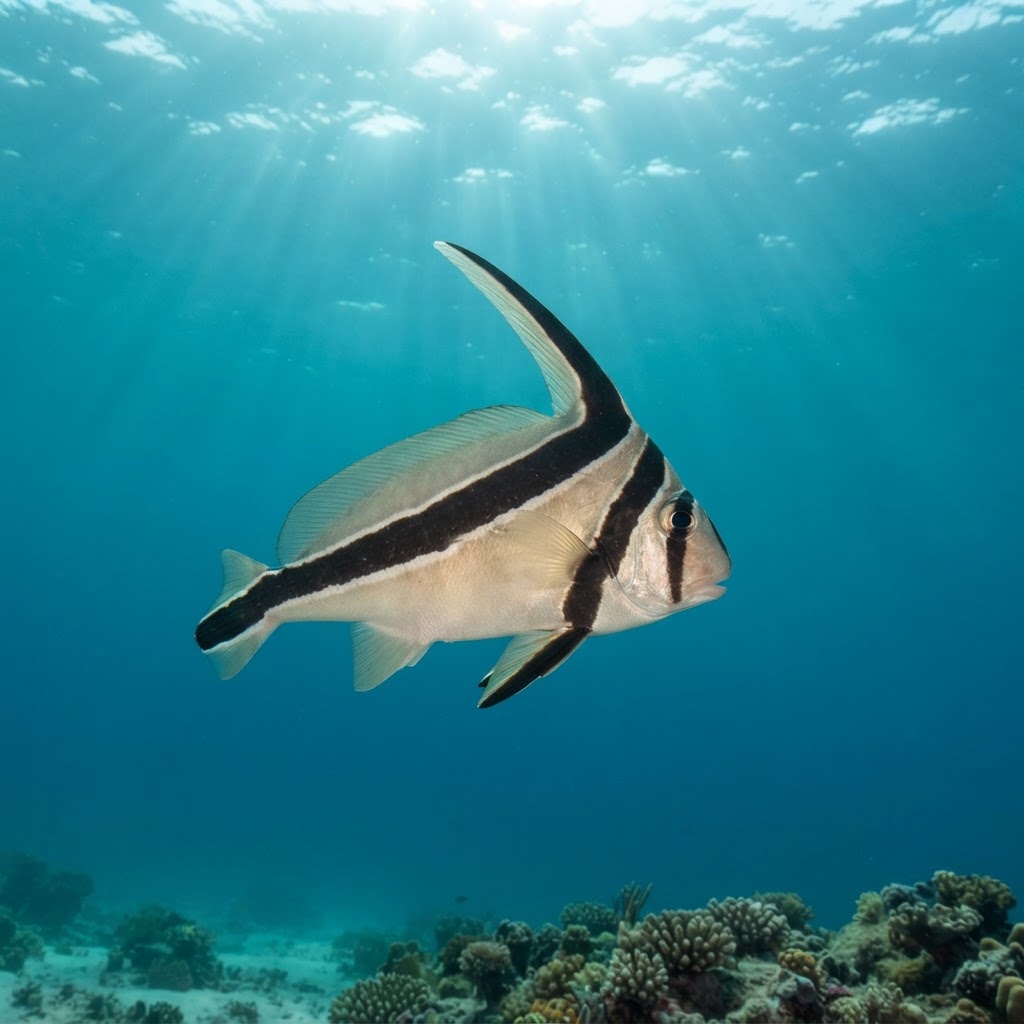
Eques lanceolatus
Find jackknife fish around Saint-Pierre, Martinique and Tent Reef, Saba, where this striped, high-finned drum sits in caves and crevices year-round.
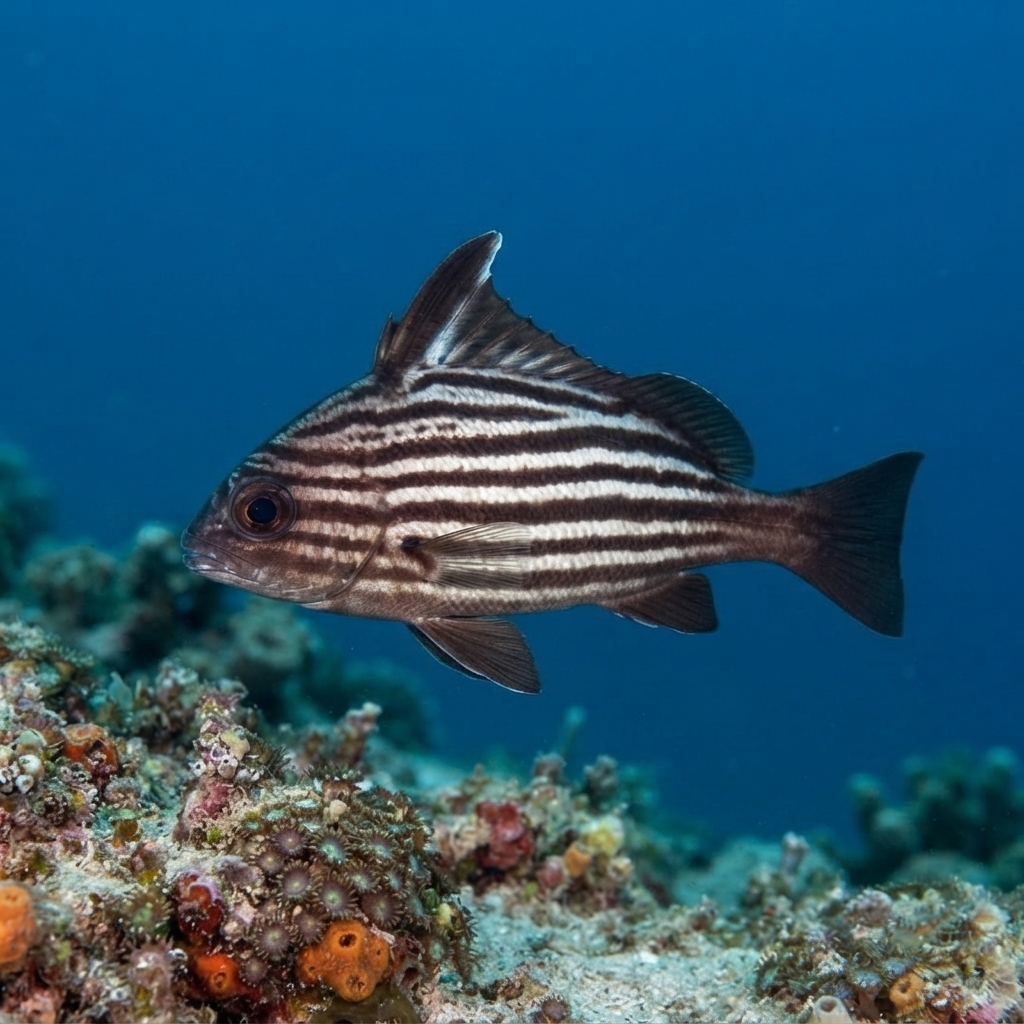
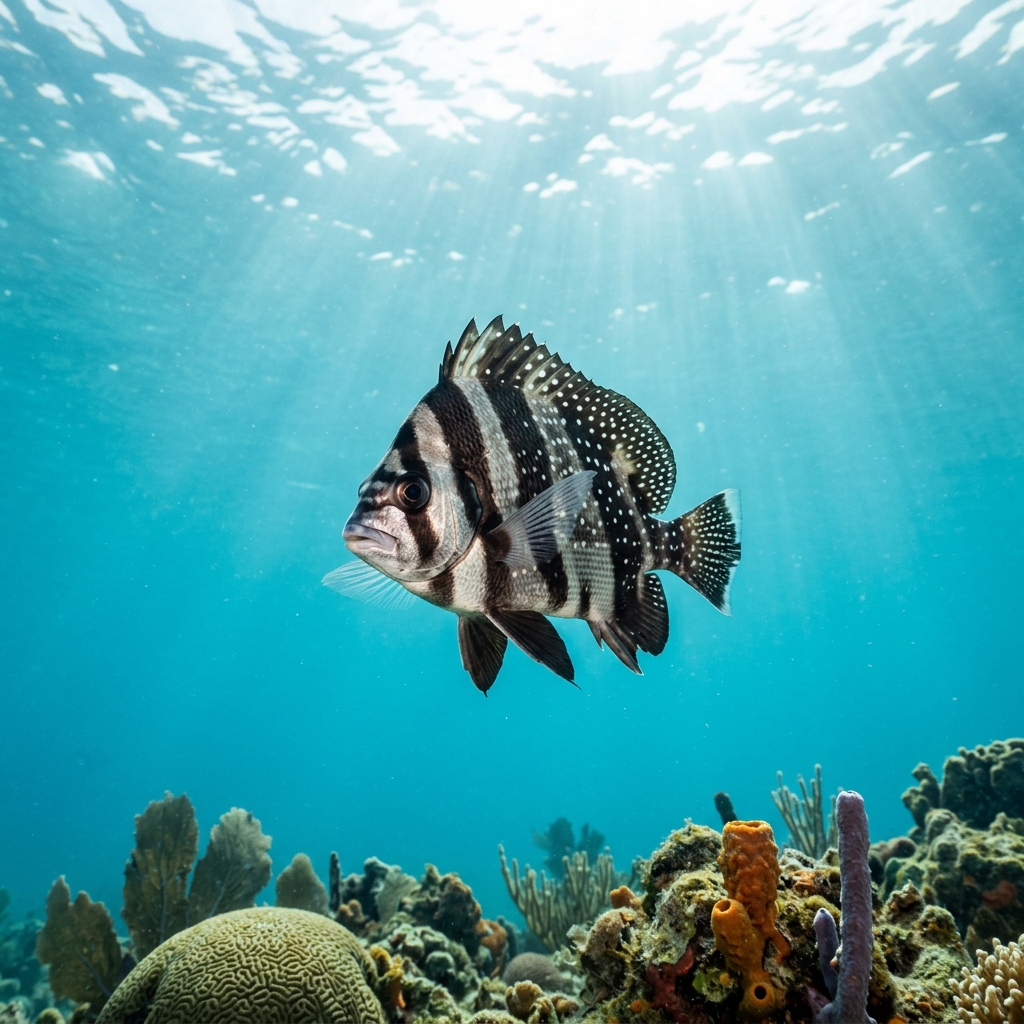
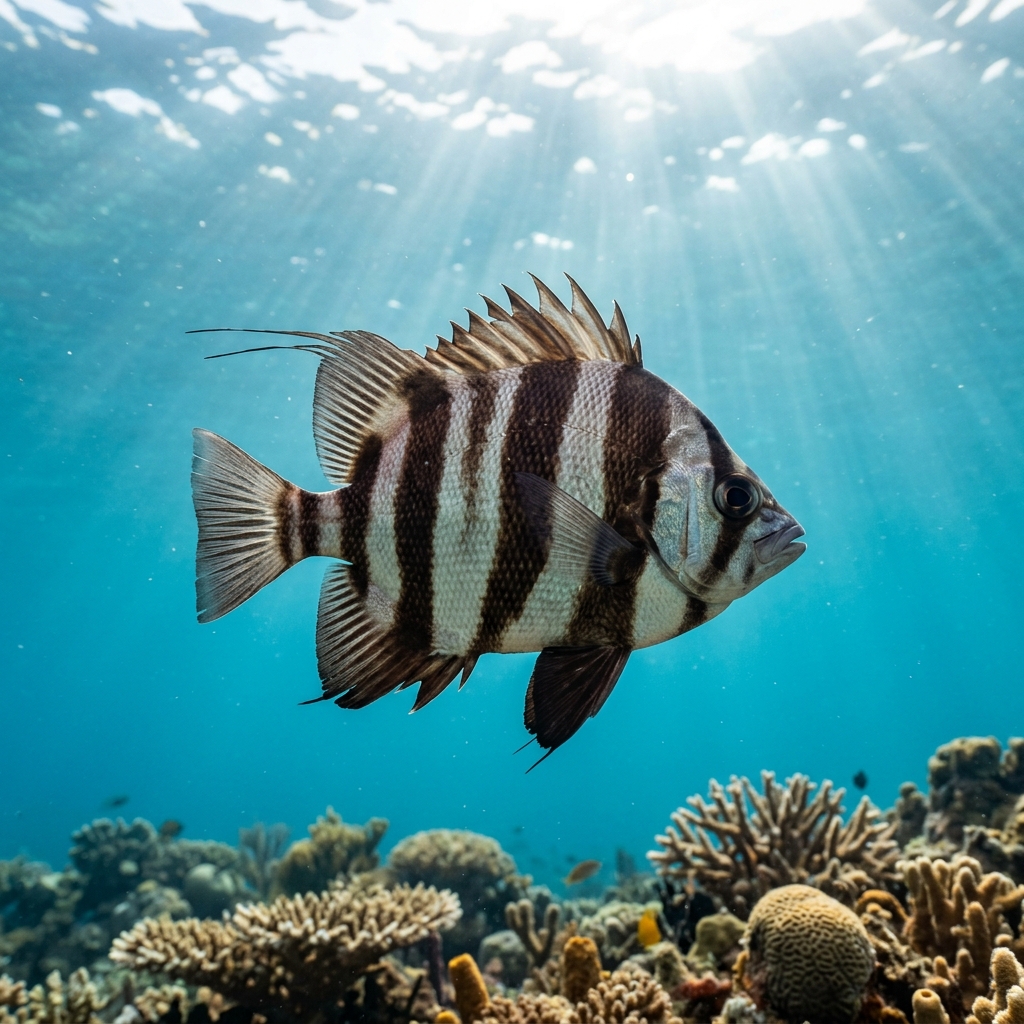
Look for a laterally flattened, silvery body carved by two or three bold black diagonal bands that shift as the fish turns. The dorsal fin is the giveaway: it rises into a tall, sail-like blade that gives the fish a slightly humpbacked silhouette. At around 18 cm it is small enough to miss in a shadowed crevice, so divers usually pick it out by that fin outline before the stripes register.
Divers tend to find it tucked under ledges, in small caves, or hovering close to reef structure rather than out in the open, which fits its uncommon sighting rate even at sites where it is known to live. It moves with a slow, almost hesitant glide and will often hold position or retreat slightly deeper into a crevice as a diver approaches rather than bolt across open water. Look for it low on the reef, near the substrate, more than up in the water column.
That tall dorsal fin and the diagonal stripe pattern break up its outline against dark reef crevices, working as camouflage rather than display, which is likely why it is logged as uncommon even at sites where it is known to occur.
No clear seasonal pattern shows up in the sightings, and the observed water temperature range of 22.7 to 28 C covers most of the year on these reefs, so it is worth looking for on any dive at Saint-Pierre or Tent Reef. Treat it as a year-round resident rather than a seasonal target.
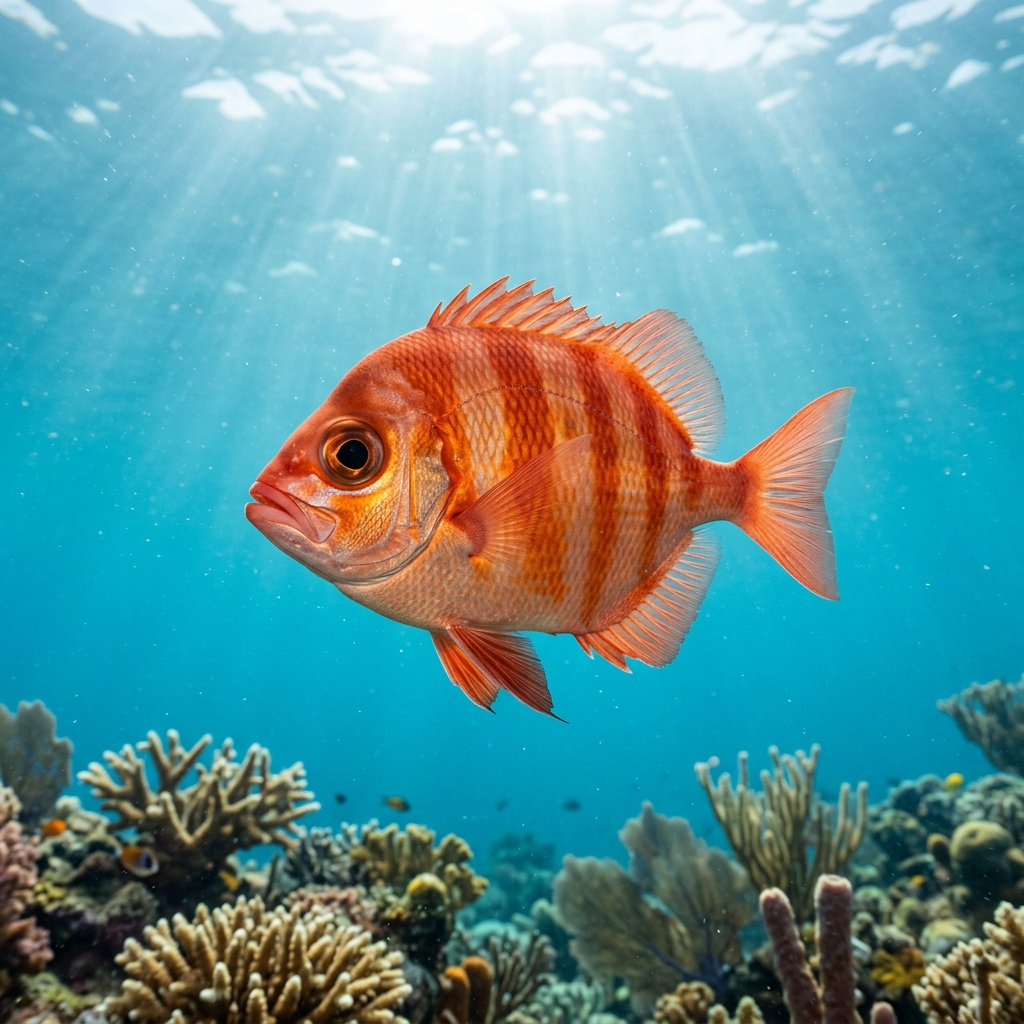
Reef neighbours a diver could mistake it for. Use the identification notes above to tell them apart.
Most reliably logged off Martinique, especially around Saint-Pierre, with a smaller but steady presence at Tent Reef in Saba. Both spots put it on reef walls and rubble slopes in the eastern Caribbean, and sightings elsewhere remain sparse in the data.
Mapping where Jackknife Fish is logged…
The strongest sightings come from Saint-Pierre in Martinique, with a smaller but consistent presence at Tent Reef in Saba. Both are Caribbean sites where it turns up on reef walls and among rubble and crevices.
There is no detected seasonal peak in the sighting data, and it has been observed across a temperature range of 22.7 to 28 C, so it is present through the year rather than tied to a specific season.
Look for a silvery, flattened body with two or three bold black diagonal stripes and a tall, arched dorsal fin that gives it a humped profile. It is usually found low on the reef near crevices rather than swimming in the open.
They typically reach around 18 cm, a small reef fish that is easy to overlook unless you spot the tall dorsal fin against a dark crevice.
No, they pose no danger to divers and are a shy, retreating fish that will tuck further into reef crevices rather than approach.
Site and sighting data is aggregated from diver logs, iNaturalist and GBIF. For taxonomy and conservation status:
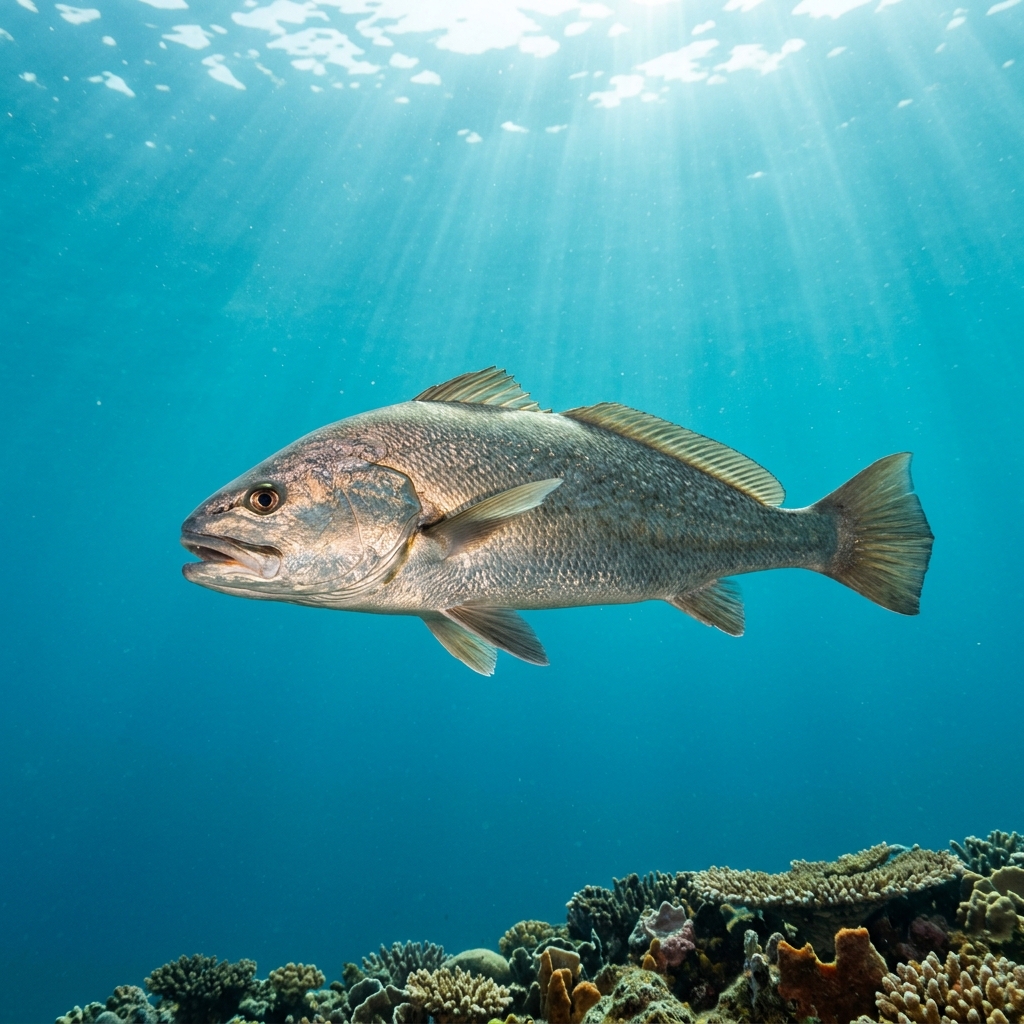
Meagre
1,159 sites