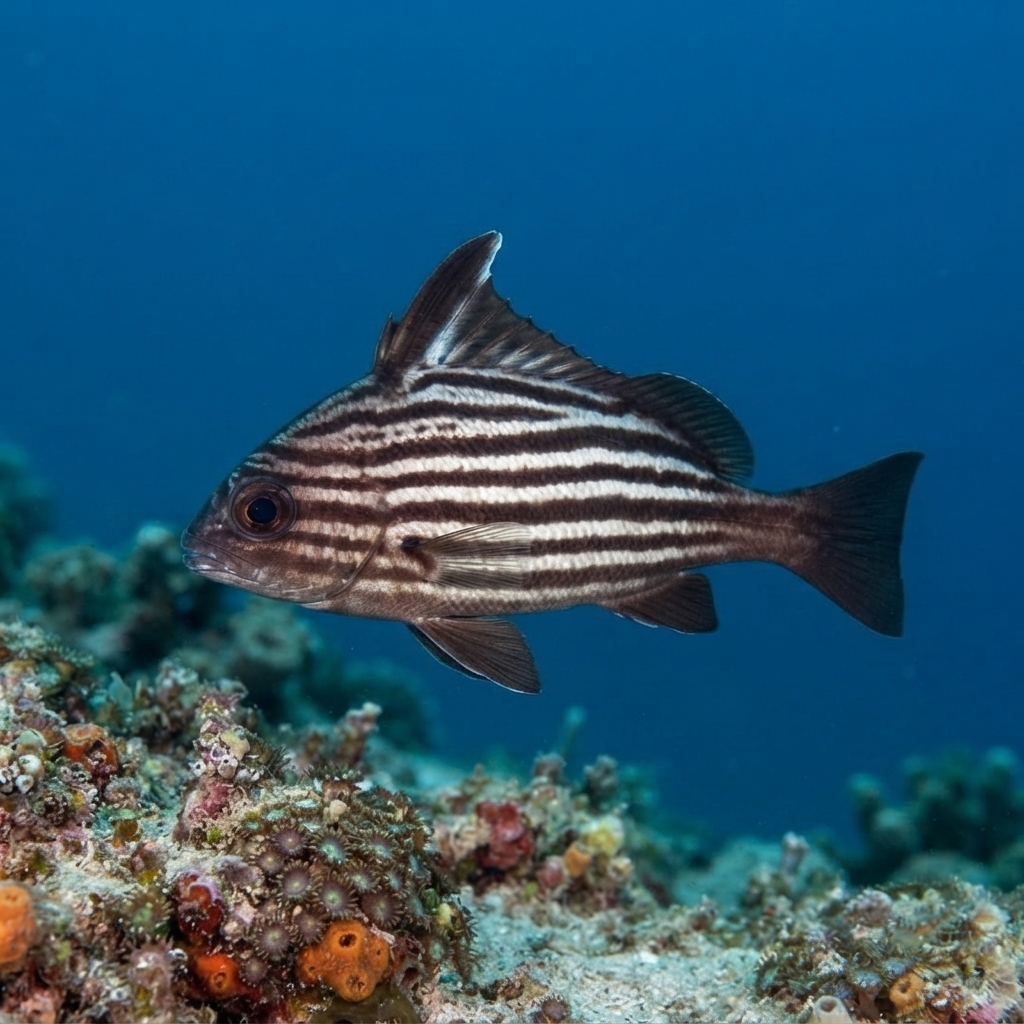
Pareques acuminatus
Striking zebra-striped reef fish logged across Florida, Yucatán and Anguilla, hiding under ledges in warm 23-28C water year-round.
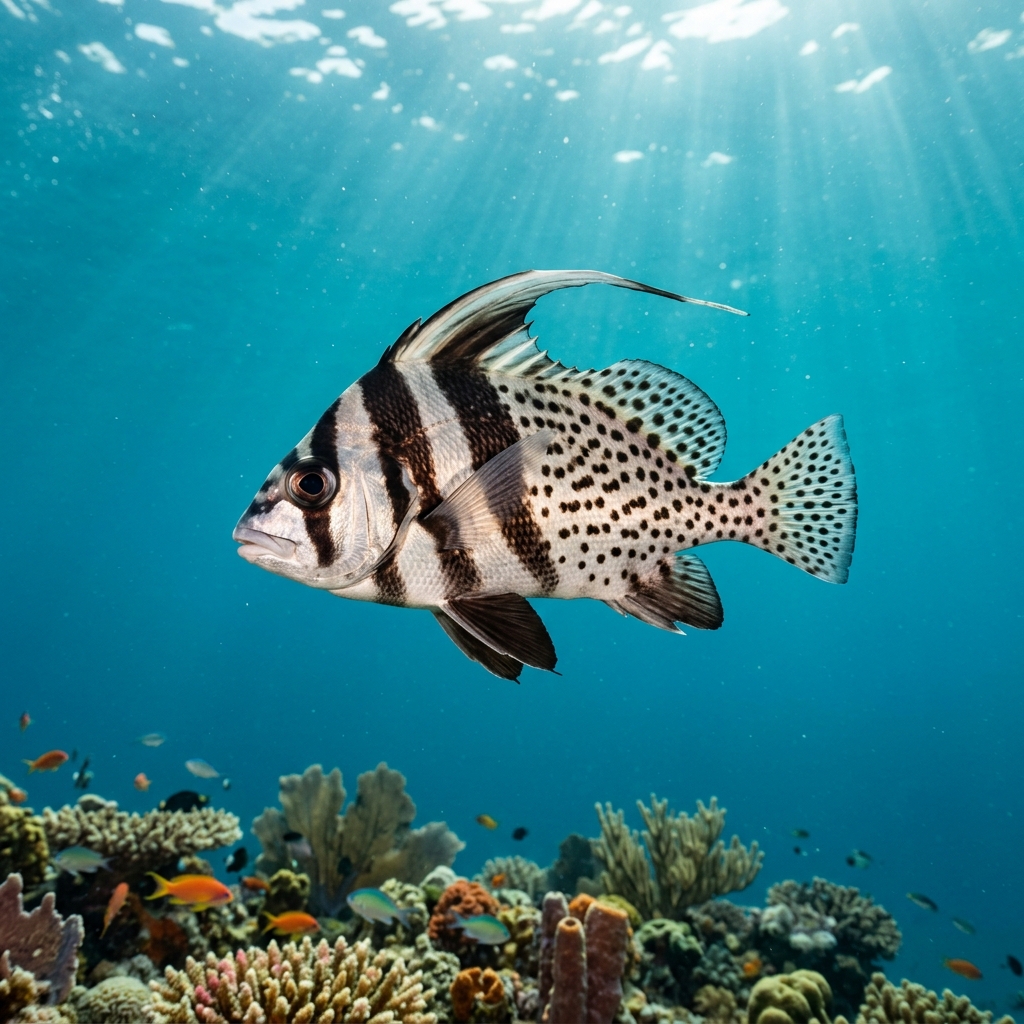
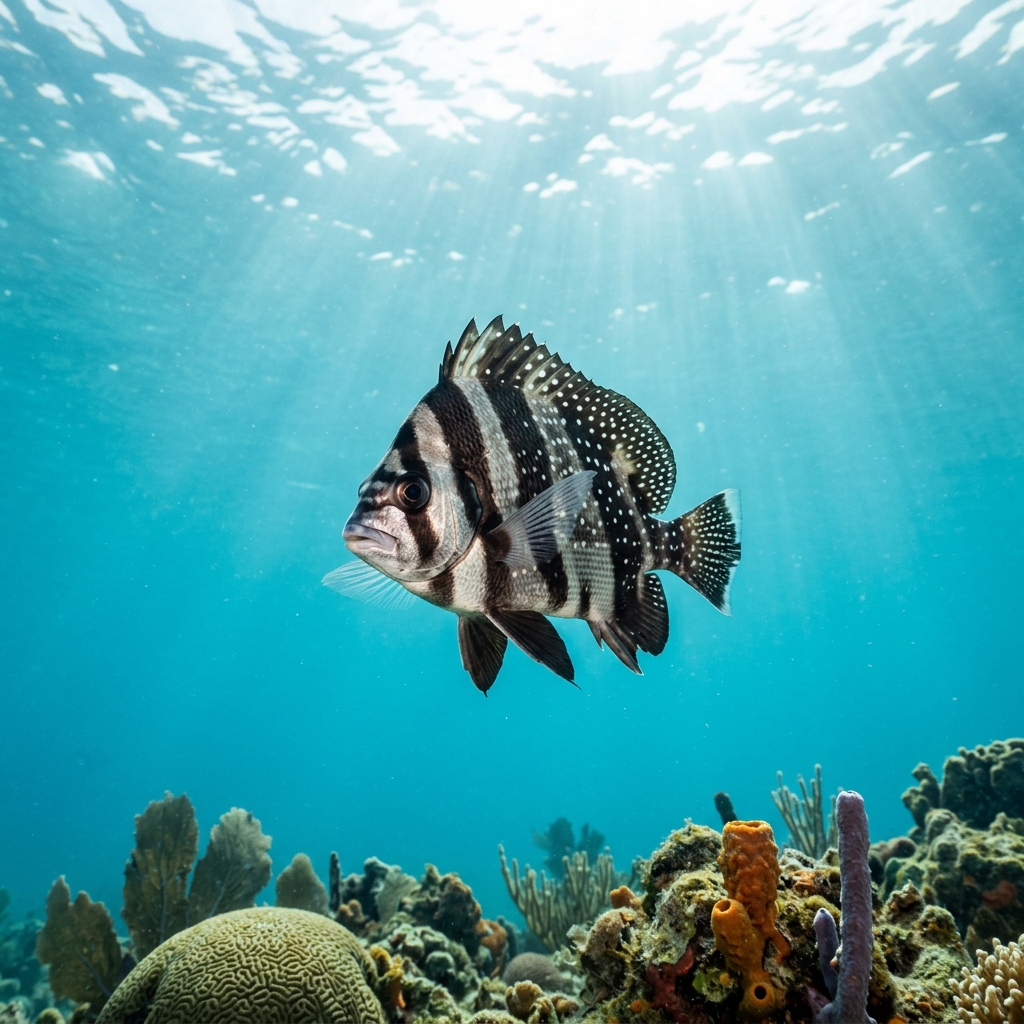
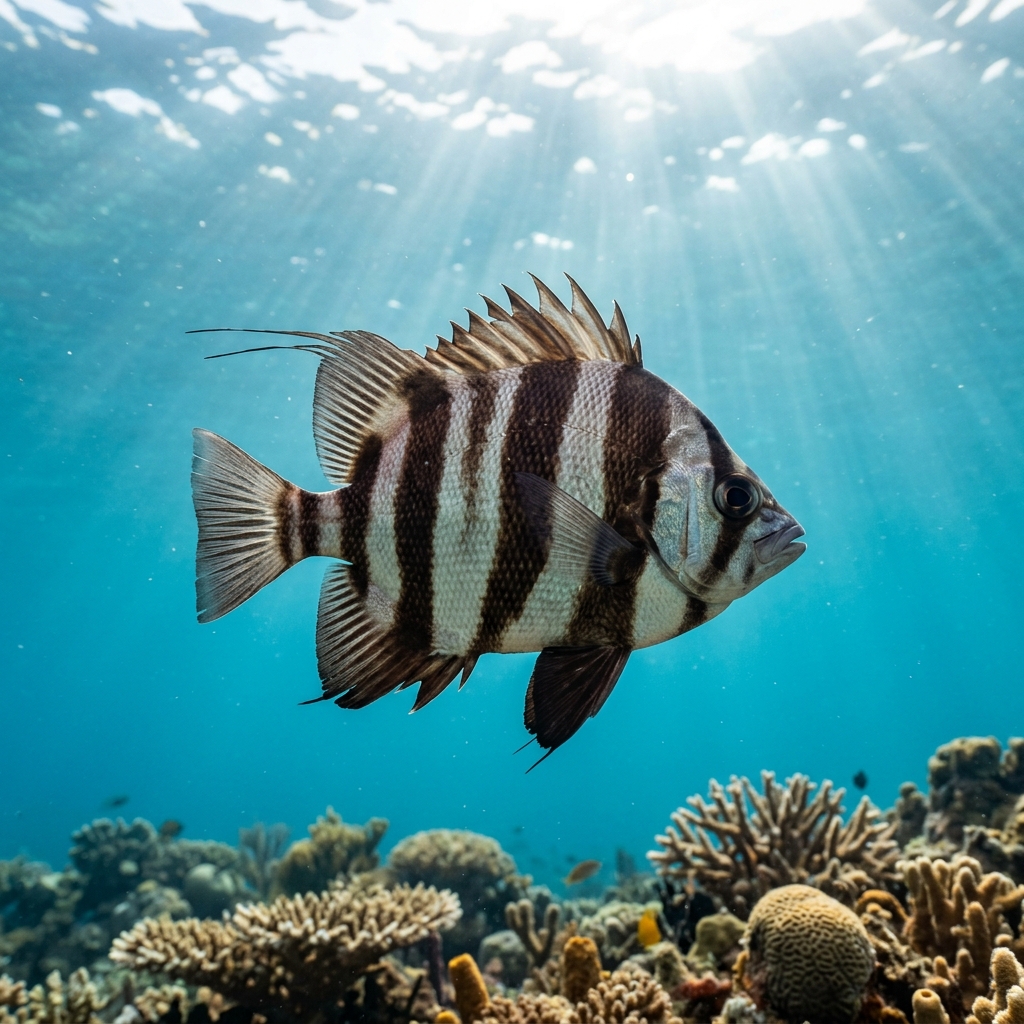
Sharp black-and-white horizontal stripes run the length of a slim, deep-bodied fish about 16 cm long, with a tall sail-like dorsal fin that gives the species its name. It usually hovers nose-in near a ledge or crevice rather than out in the open, angled head-down. Juveniles carry the same stripe pattern but with a more exaggerated, flowing dorsal fin relative to body size.
Look for it tucked under ledges, in crevices, or beneath coral overhangs, often hanging at an odd head-down angle rather than swimming freely over open reef. It tends to stay put or retreat deeper into cover when divers approach rather than bolt, and most sightings come from slow, careful looks into shaded nooks rather than mid-water encounters. Logged as uncommon at most sites, so it rewards divers who actually peer under structure instead of just scanning open reef.
Its striking stripe pattern and shy, ledge-hugging habit make it a classic case of a fish that's more often overlooked than actually rare, divers who don't check under overhangs simply miss it.
No strong seasonal pattern shows up in the data, and with a comfortable range of 22.9 to 28C it's present on these reefs year-round. Plan around your destination's general dive season rather than chasing a specific month for this species.
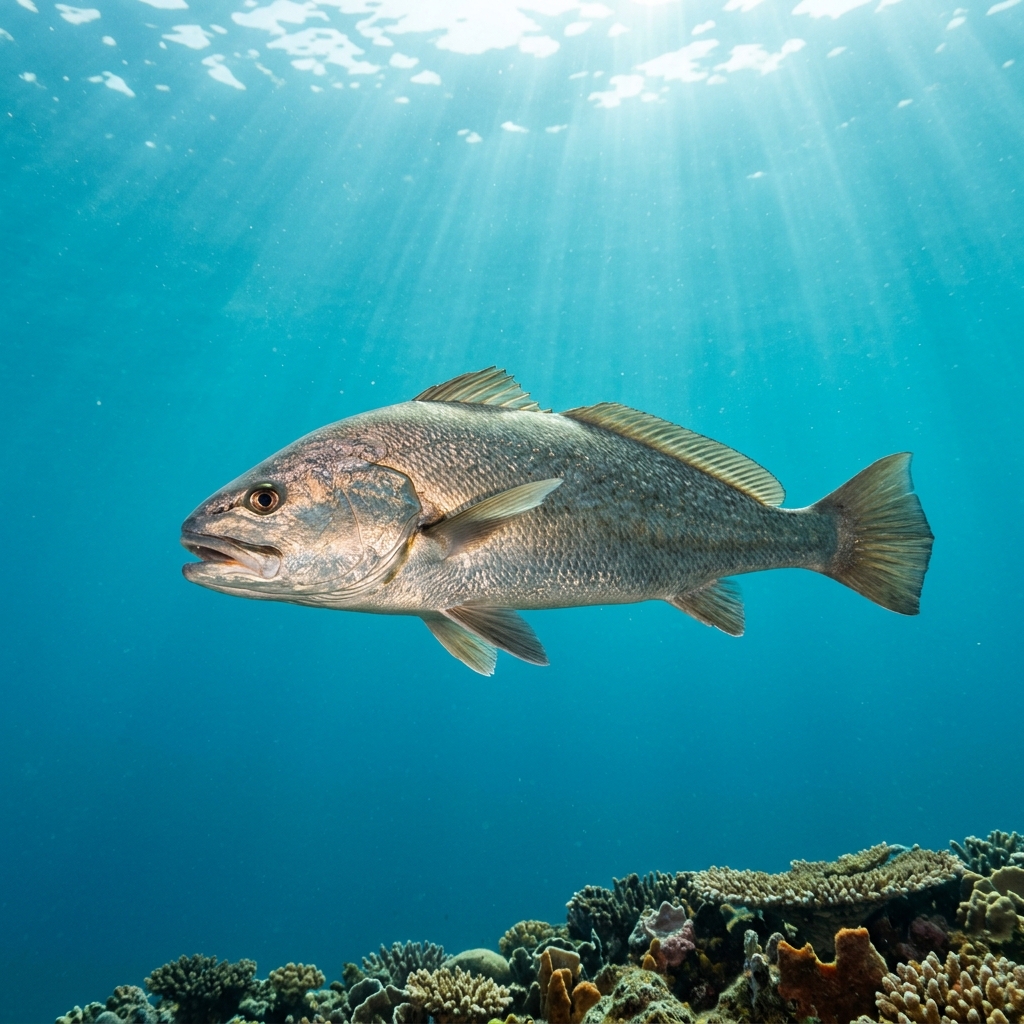
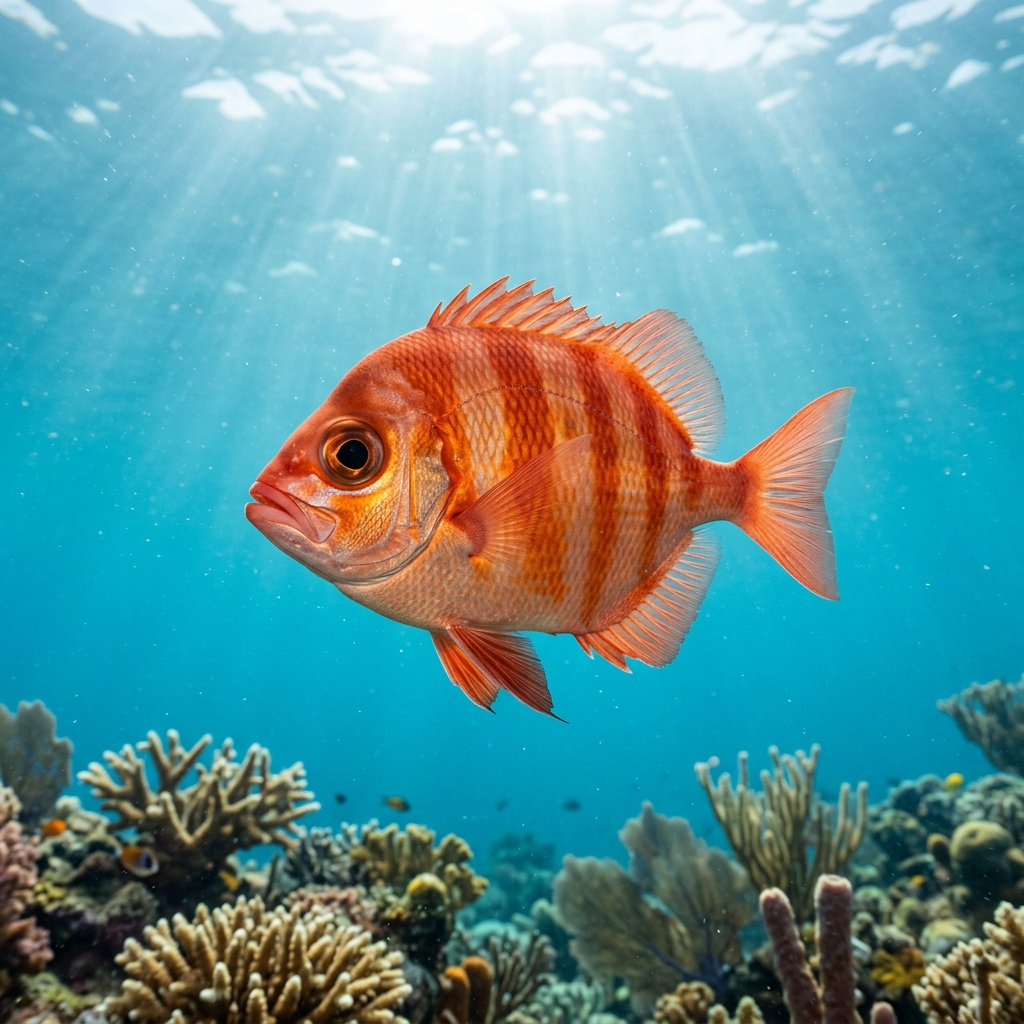
Reef neighbours a diver could mistake it for. Use the identification notes above to tell them apart.
Most reliably logged on reefs in Florida in the United States and the Yucatán Peninsula in Mexico, with strong showings on Anguilla's main island and cays, in Puerto Rico's Culebra, and around Sint Maarten and Saint Martin. Carlisle Bay in Barbados and Rio de Janeiro in Brazil also turn up sightings, making this a wide-ranging Caribbean and western Atlantic find rather than a one-country specialty.
Mapping where High-hat is logged…
Florida and Mexico's Yucatán Peninsula are the most consistent spots, with reliable sightings also in Anguilla, Puerto Rico's Culebra, Sint Maarten, Saint Martin, Barbados and Brazil.
There's no clear seasonal spike in sightings, and the species tolerates a wide 23-28C range, so it's a year-round find on the reefs where it occurs.
Look for bold black and white horizontal stripes, a slim deep body around 16 cm, and a tall dorsal fin, usually spotted hovering head-down under a ledge rather than out on open reef.
They typically reach around 16 cm, a small reef fish best spotted by checking shaded crevices and ledge undersides rather than scanning open water.
No, they pose no threat to divers. They're shy, retreat into cover when approached, and have no venom or aggressive behaviour to worry about.
Site and sighting data is aggregated from diver logs, iNaturalist and GBIF. For taxonomy and conservation status:
Meagre
1,159 sites