Monocentris japonica
Boxy, glowing yellow reef fish logged in KwaZulu-Natal and the Western Cape, most often tucked under ledges as an uncommon sighting.
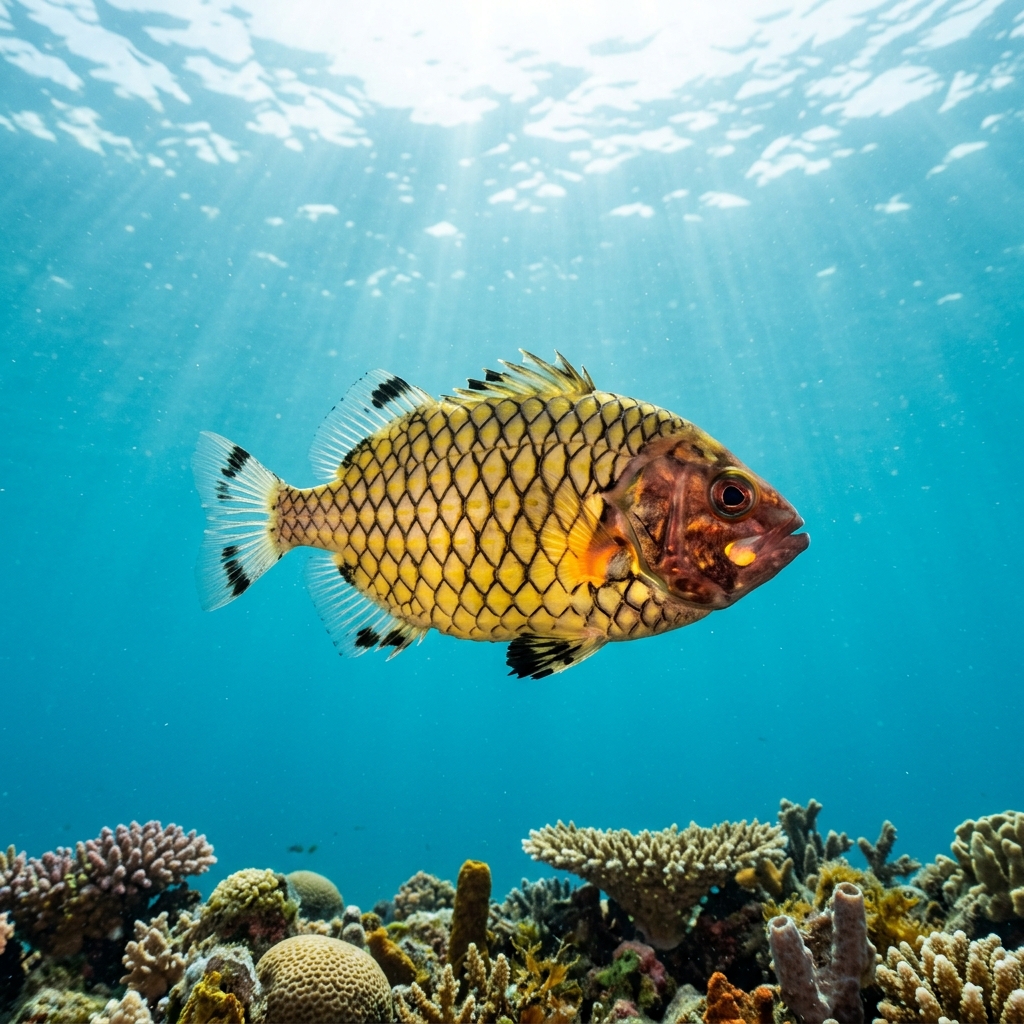
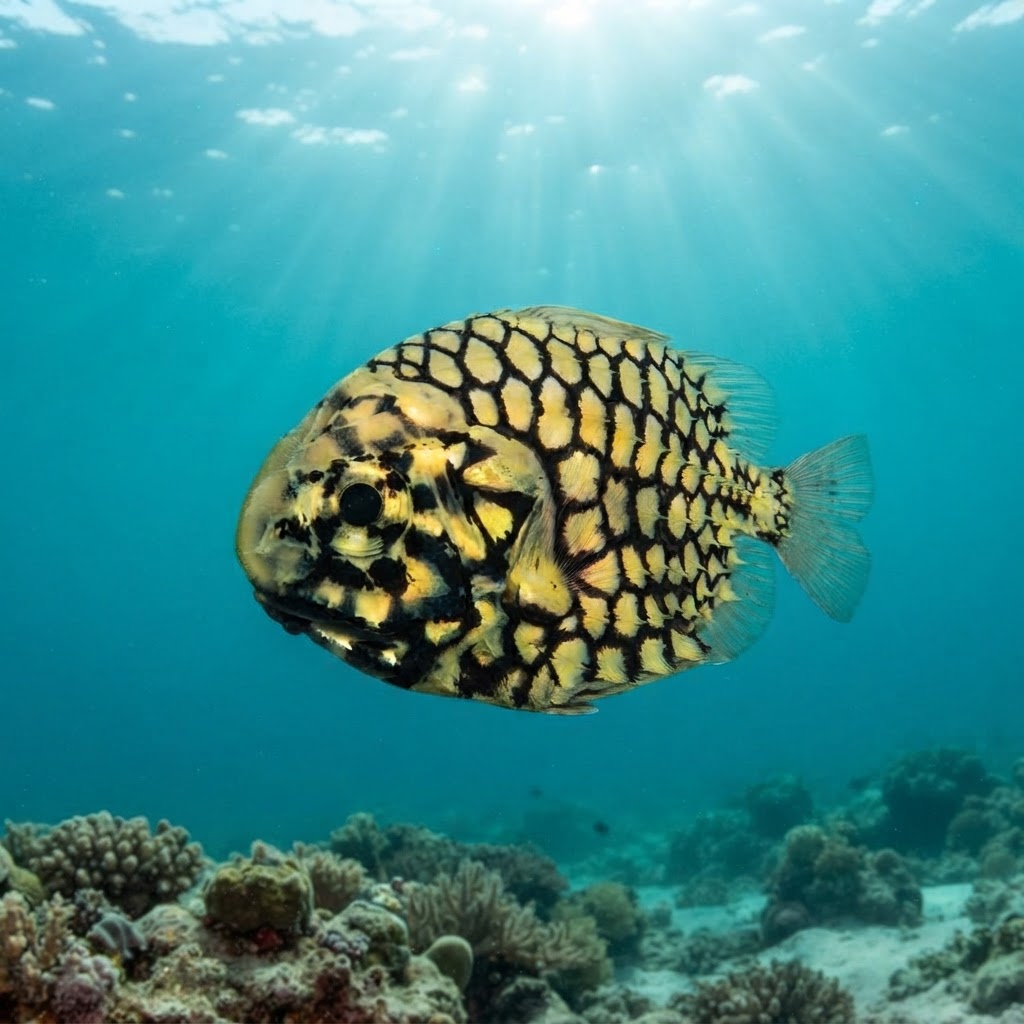
Small, boxy fish about 12 cm long with thick, plate-like scales outlined in black, giving it a honeycomb or pinecone pattern over a yellow to golden body. It swims stiffly, almost mechanically, and often hovers nose-down near caves or overhangs rather than cruising open water. Look for a pair of bioluminescent organs at the corners of the lower jaw, which can glow pale blue-green in shaded spots or at night.
Divers typically find it wedged into a cave mouth, ledge, or under a rocky overhang, sitting still or hovering with slow, deliberate fin movements rather than swimming freely over the reef. It is not skittish and will often hold position while divers get close for a photo, especially in low light where its chin organs are easiest to spot glowing.
Those twin light organs under the jaw are not powered by the fish itself: they house colonies of bioluminescent bacteria that the pineconefish farms and controls with a shutter-like flap of skin.
Sightings show no clear seasonal pattern, and the species tolerates a wide range from about 16 to 28 C, so it turns up year-round at the sites where it is known.
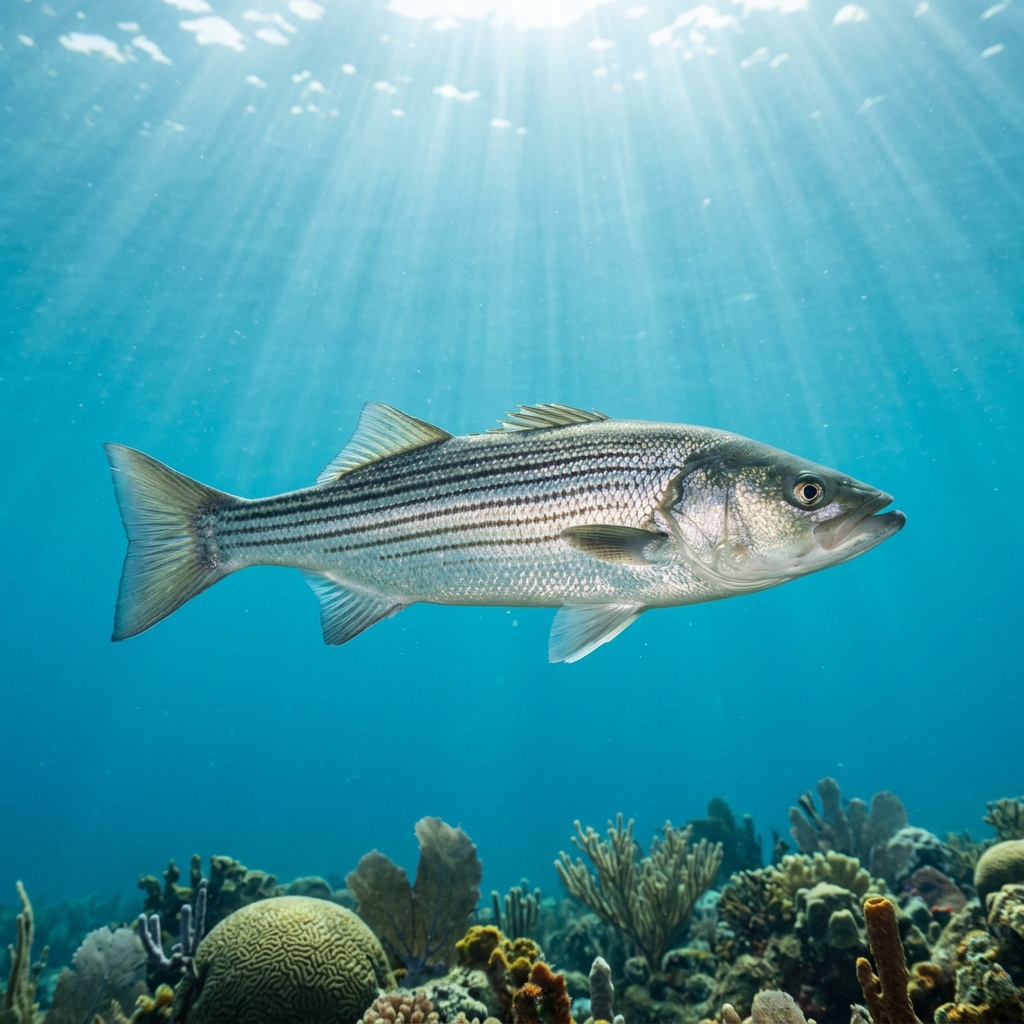
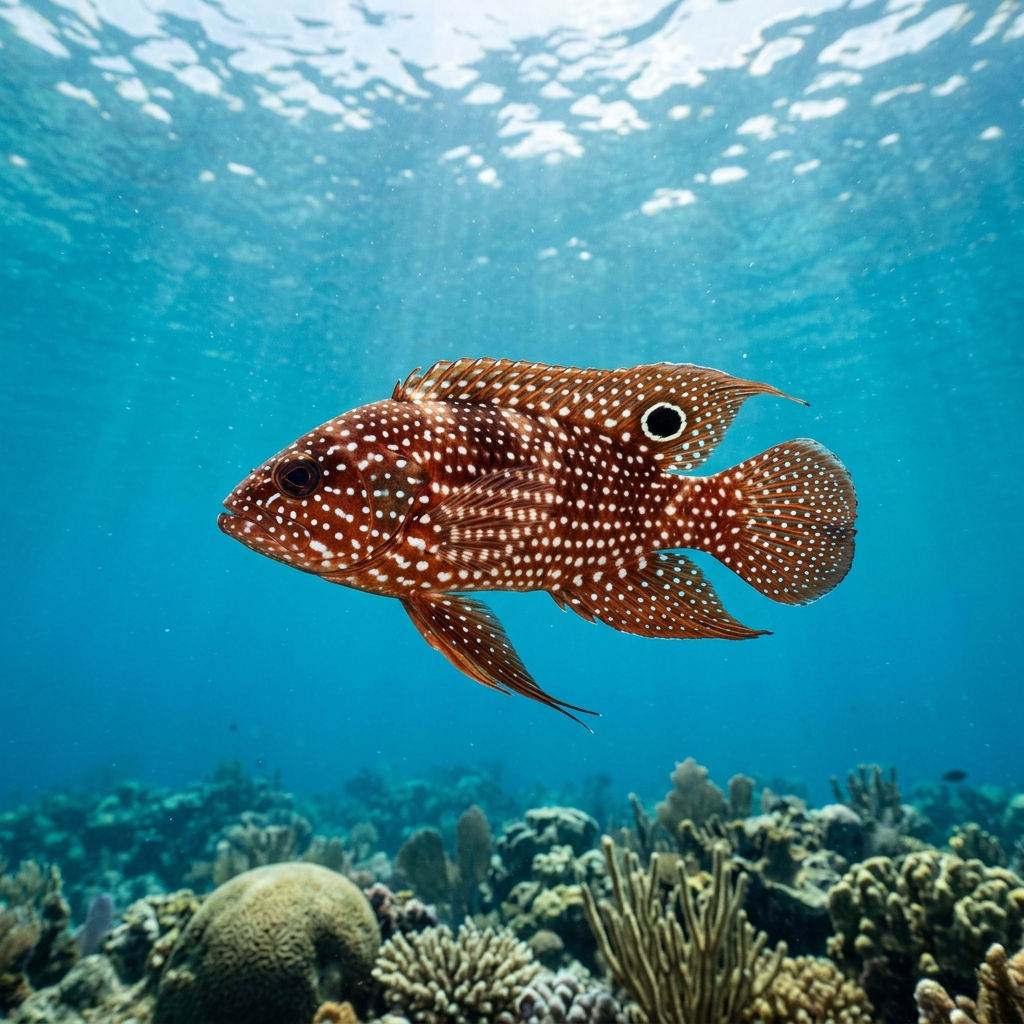
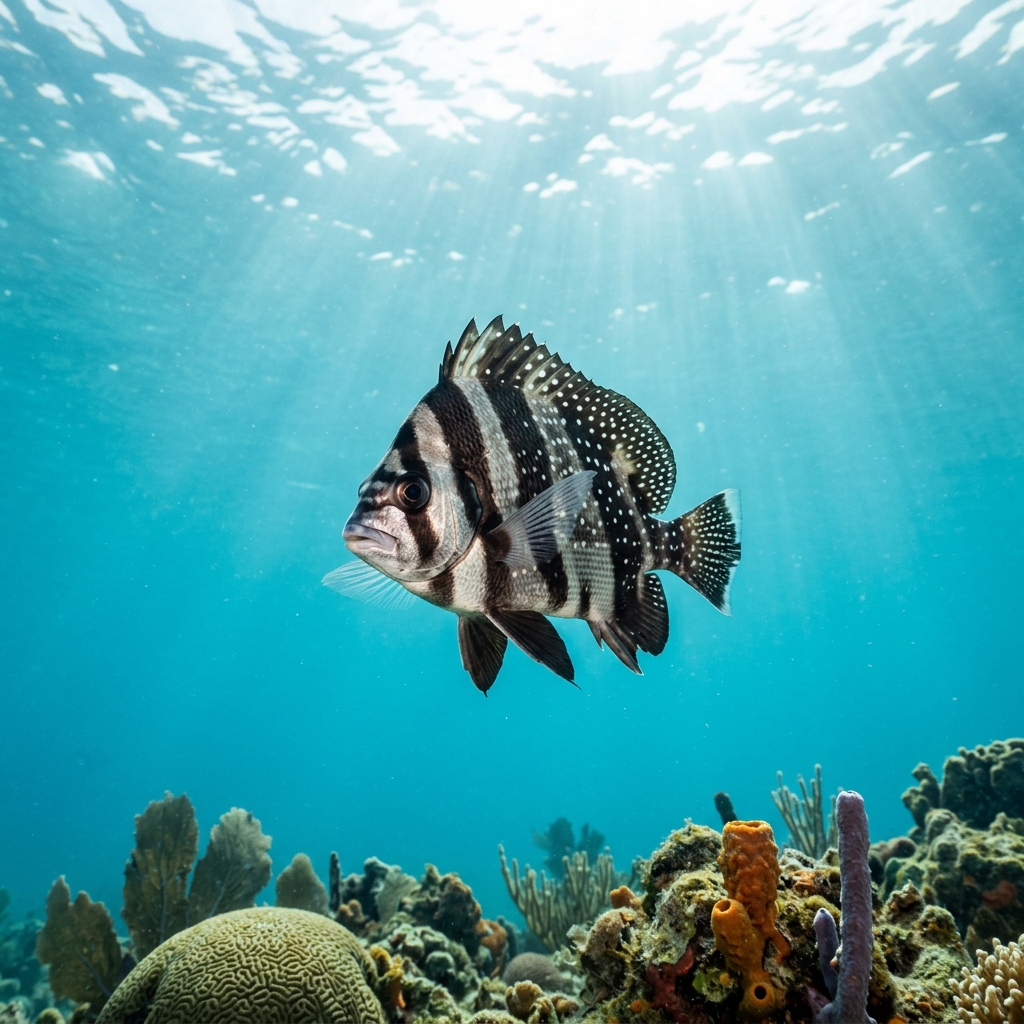
Reef neighbours a diver could mistake it for. Use the identification notes above to tell them apart.
Logged consistently along South Africa's coast, with KwaZulu-Natal the strongest area and the Western Cape also a reliable spot. All logged sightings for this species come from South African sites, making it very much a local speciality rather than a widespread tropical find.
Mapping where Pineconefish is logged…
South Africa is the place to look, with KwaZulu-Natal the most productive region and the Western Cape also worth checking. Search rocky ledges, caves, and overhangs rather than open reef.
There is no strong seasonal pattern in the sightings, so they are considered a year-round find at their known sites, helped by their comfort across a wide temperature range from roughly 16 to 28 C.
Look for a small, boxy yellow fish with thick, black-outlined scales that give it a honeycomb or pinecone texture. It moves stiffly and usually sits tucked under a ledge rather than swimming in open water, with a pair of glowing organs at the base of its lower jaw.
They are small, reaching around 12 cm in length, so a torch and a careful scan of ledges and cave mouths helps spot them against the reef.
Its chin carries two light organs packed with symbiotic bioluminescent bacteria, and the fish can hide or reveal the glow using a skin flap, effectively controlling its own headlights.
Site and sighting data is aggregated from diver logs, iNaturalist and GBIF. For taxonomy and conservation status:
Meagre
1,159 sites