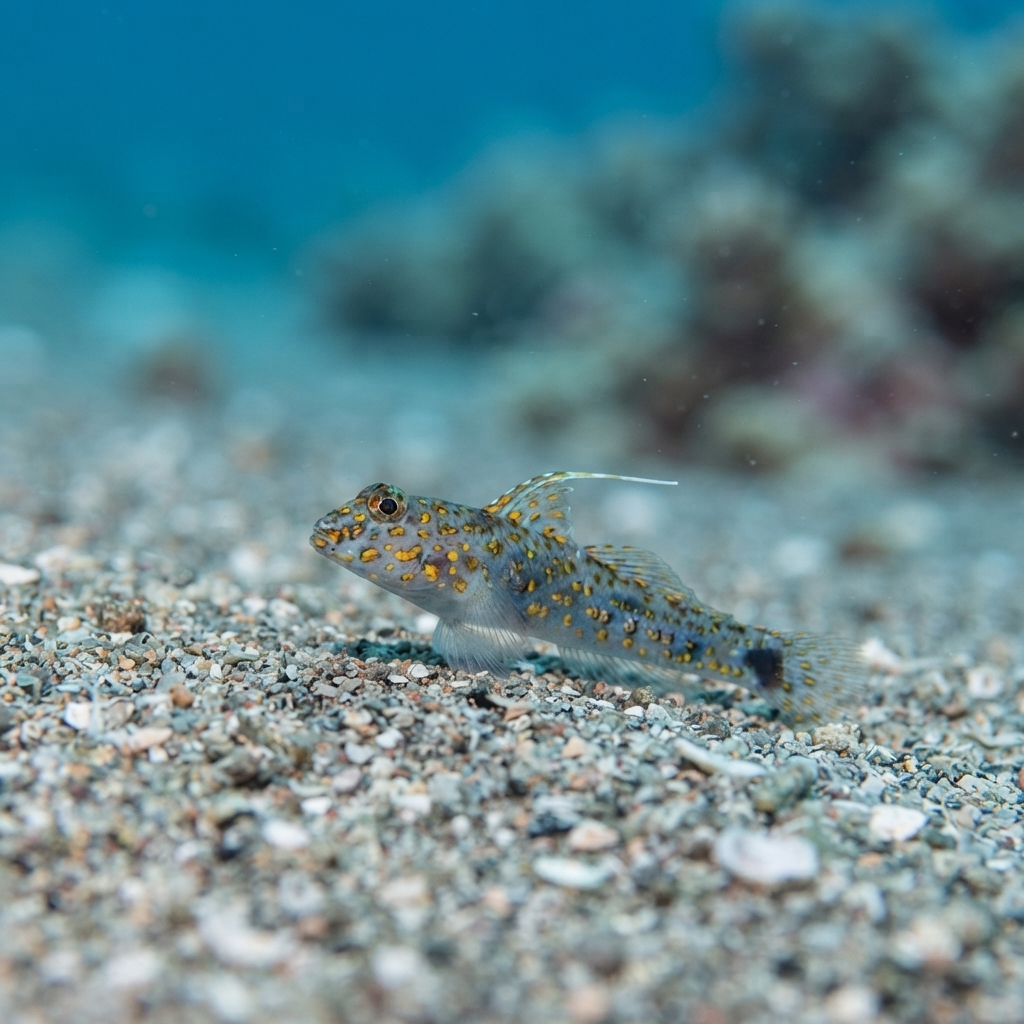
Fusigobius inframaculatus
A 2cm goby resting on sand and rubble around Dili, Timor-Leste, in warm 24-29C water year-round. Here's how to spot one.
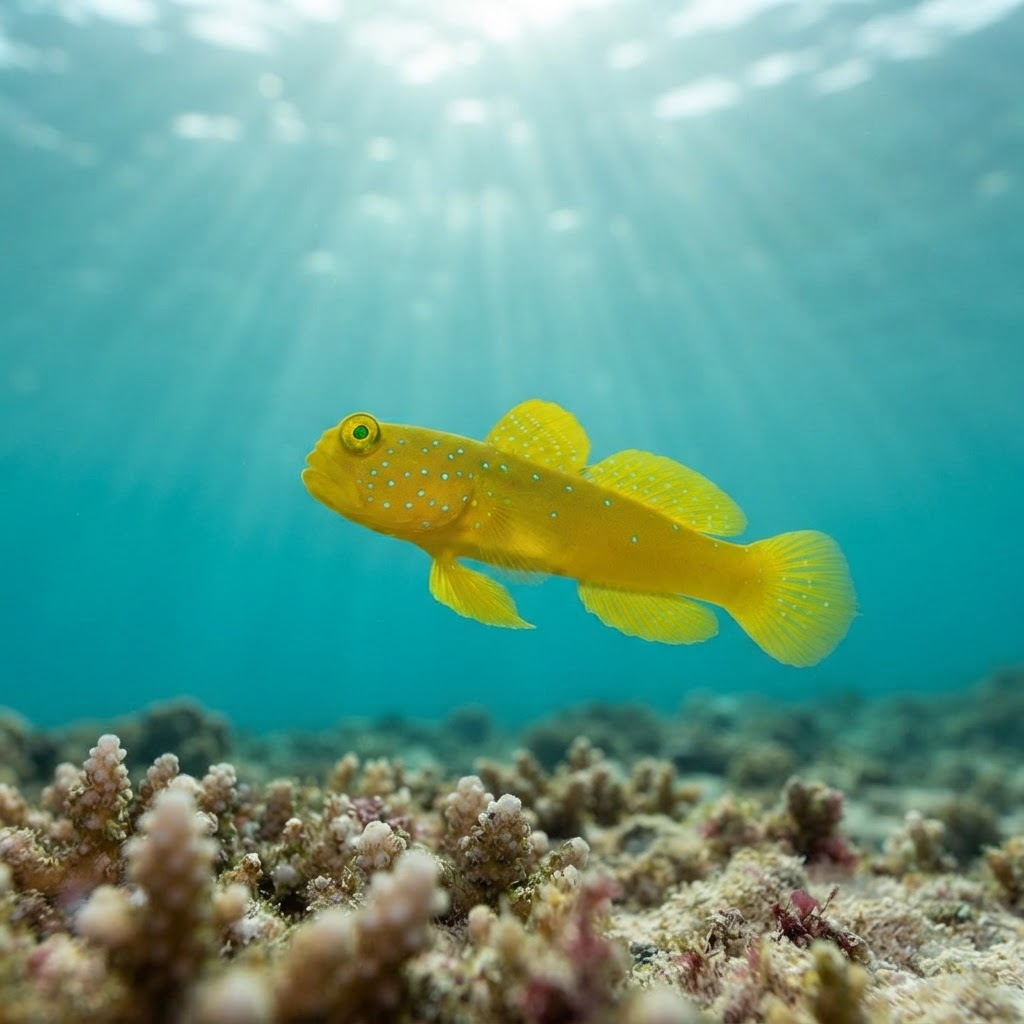
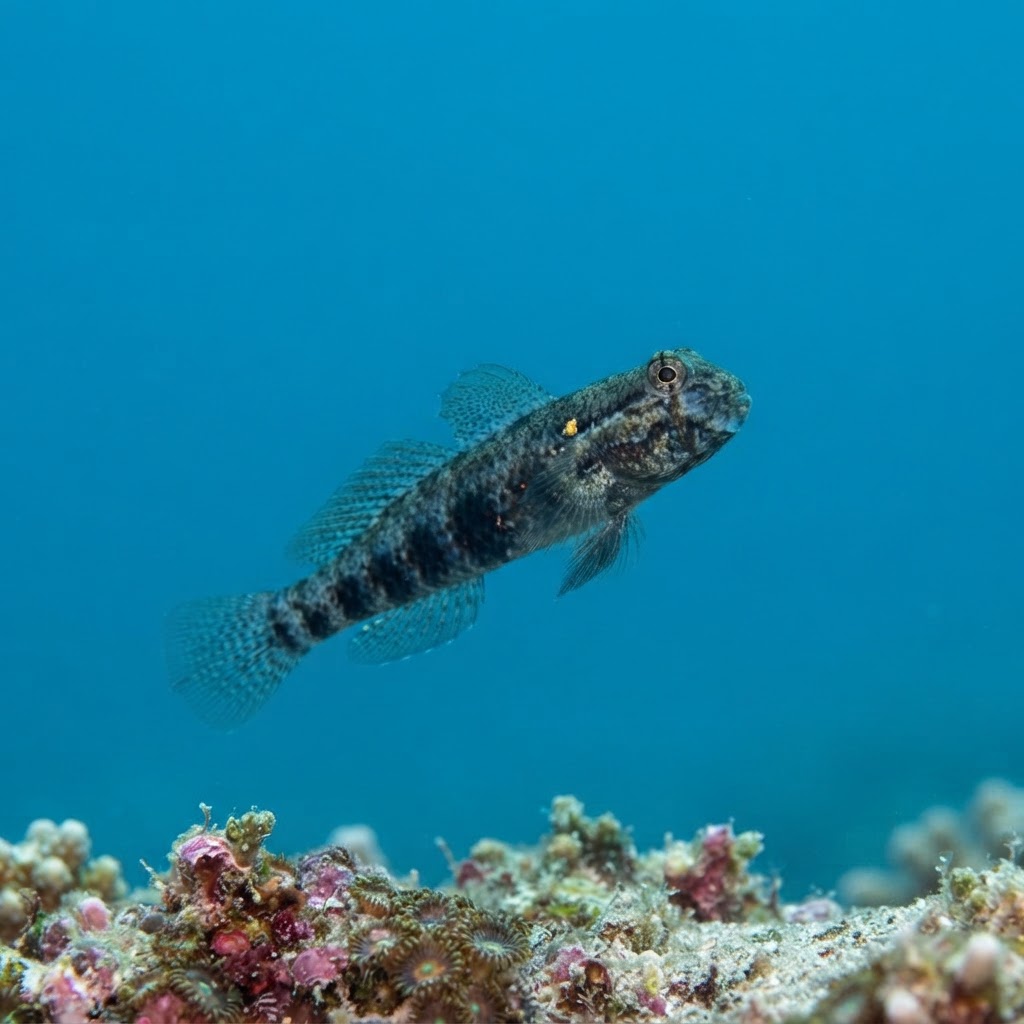
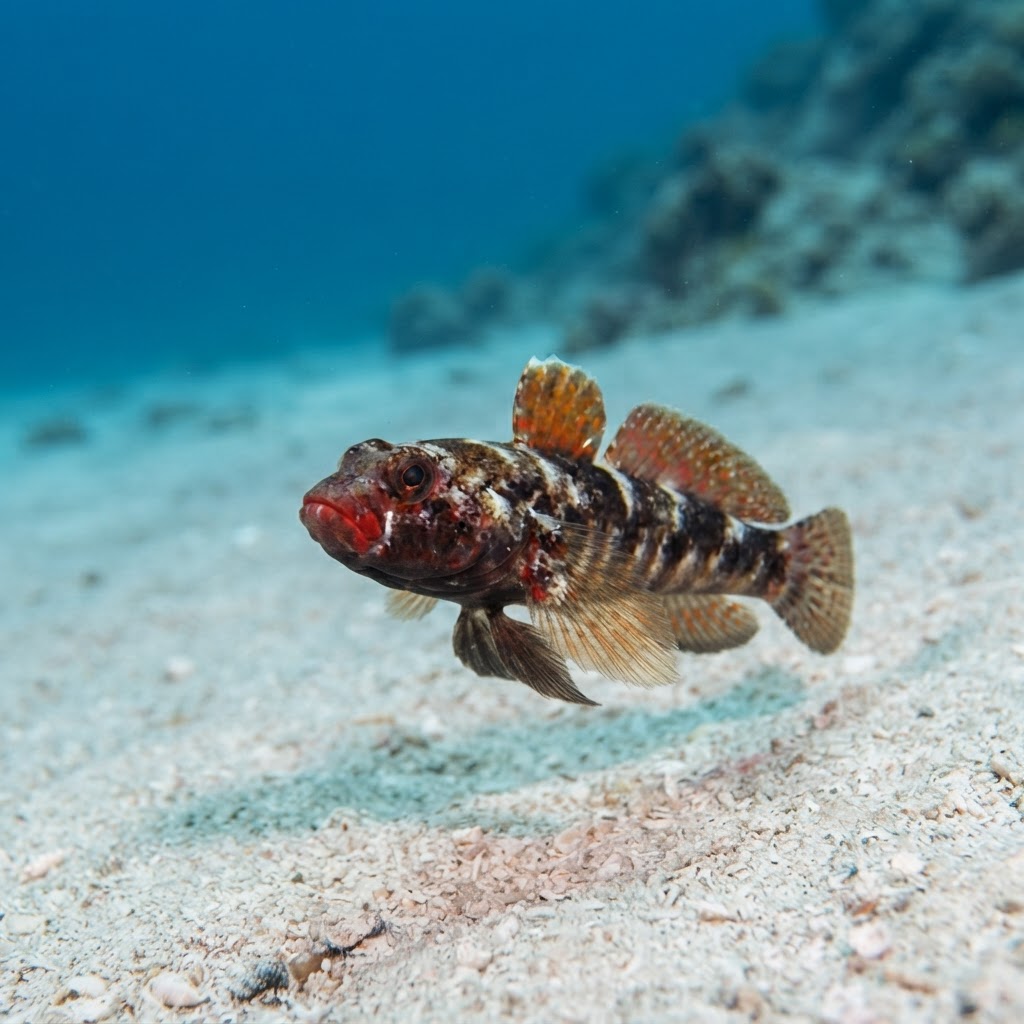
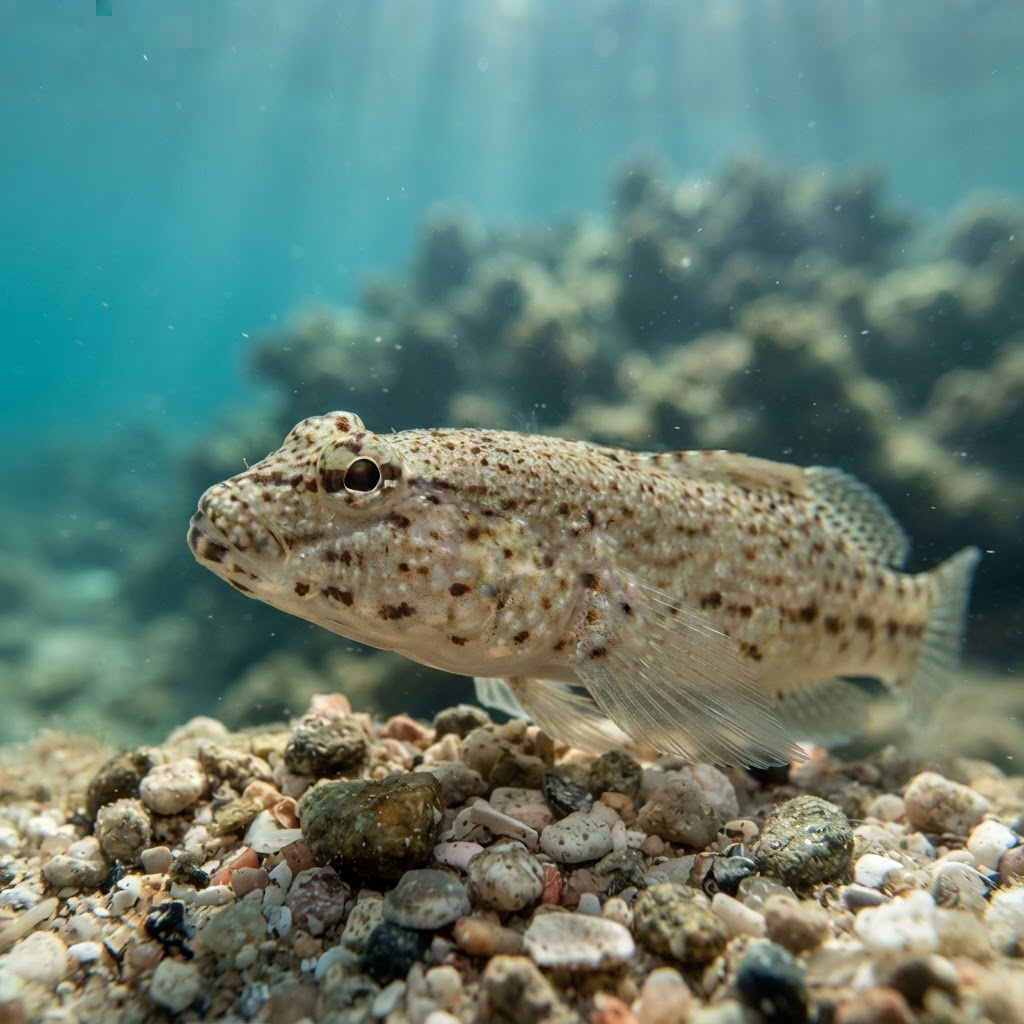
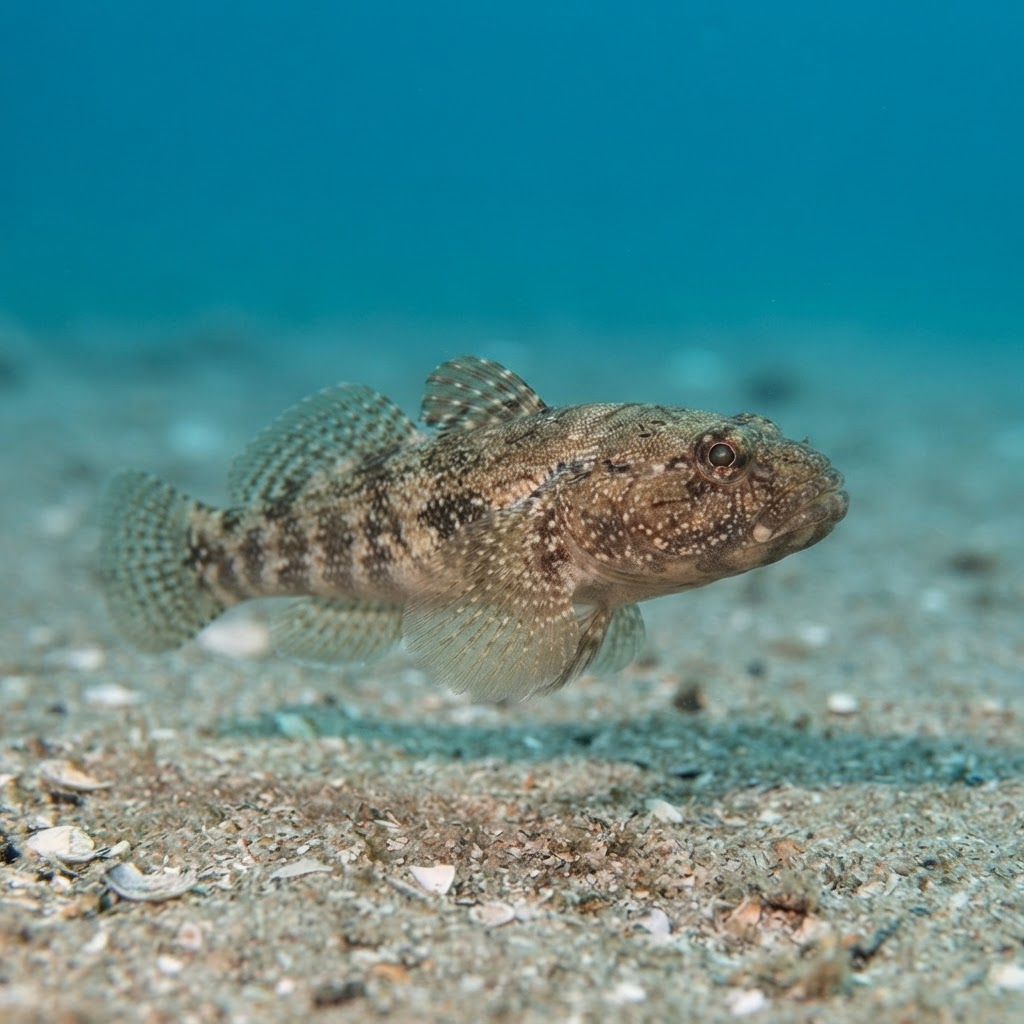
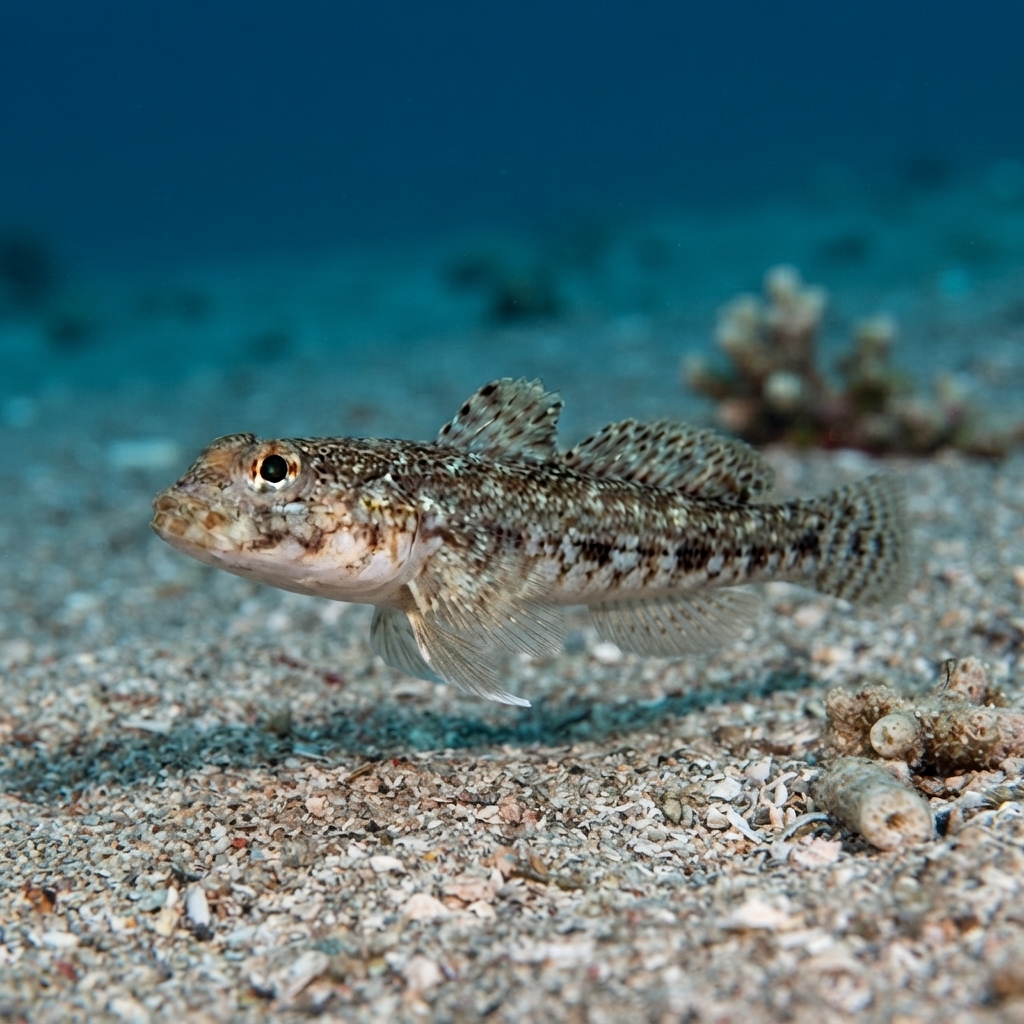
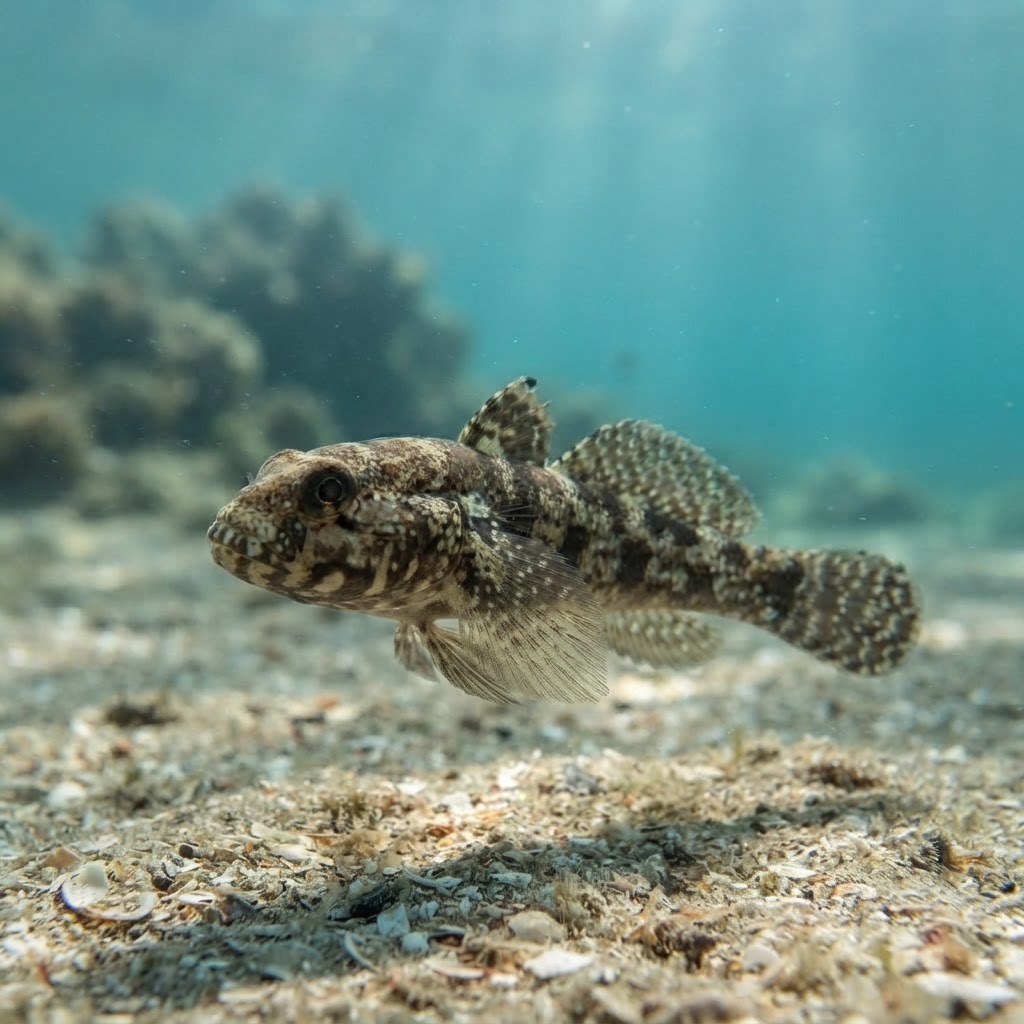
Barely 2cm long, this goby is a pale, sandy-grey fish that props itself up on its pelvic fins just above the sea floor rather than swimming freely. Look closely for the faint dark spots and mottled speckling along its flanks and the base of the tail, which is the detail that gives it its common name. It has the classic goby shape: elongated body, blunt head, large eyes set high, and a habit of freezing in place rather than darting off.
Expect to find it perched motionless on open sand, rubble patches, or the sandy fringe of a reef, propped on its fins and watching the world go by rather than actively swimming. It tends to hold its ground at close range, only darting a short distance and resettling if you get too close or move too fast. Because it is uncommon at most sites where it has been logged, spotting one usually takes a slow, deliberate scan of sand and rubble zones rather than casual reef cruising.
Like other sand gobies, it likely relies on stillness and camouflage against sand and rubble rather than speed to avoid predators, which is exactly why divers tend to swim straight past it.
No clear season shows up in the data, and with a comfortable range of 24.3 to 29.2C this goby is likely present on these reefs all year. Plan around good visibility and calm conditions at your chosen site rather than a particular month.
Reef neighbours a diver could mistake it for. Use the identification notes above to tell them apart.
Most reliably logged around Dili in Timor-Leste, which accounts for the bulk of recorded sightings, with a further cluster of sightings across the Visayas in the Philippines. Single records also exist from Western Australia and Guadalcanal in the Solomon Islands, so it turns up more widely across the Indo-Pacific than the log suggests, just rarely in numbers.
Mapping where Innerspot Sandgoby is logged…
It is most consistently logged around Dili in Timor-Leste, with additional sightings in the Visayas region of the Philippines. Occasional records also come from Western Australia and Guadalcanal in the Solomon Islands.
There is no strong seasonal pattern in the sightings, and its warm-water comfort range of 24.3 to 29.2C means it should be present on tropical reefs throughout the year.
Look for a tiny, pale grey-sand coloured goby around 2cm long, resting propped on its pelvic fins on open sand or rubble. Faint dark spotting along the body and tail base is the key mark that separates it from plainer sand-dwelling gobies.
They stay tiny, typically around 2cm long, so you need to look closely at sand and rubble patches to spot one at all.
No. They are harmless, tiny bottom-dwelling fish that pose no risk to divers and simply hold still or retreat a short distance if approached.
Site and sighting data is aggregated from diver logs, iNaturalist and GBIF. For taxonomy and conservation status:
Slender Goby
806 sites