Hypselodoris violacea
Purple-toned nudibranch logged as a common find across Sabah, Malaysia, on warm reefs between 26-32C, year-round.
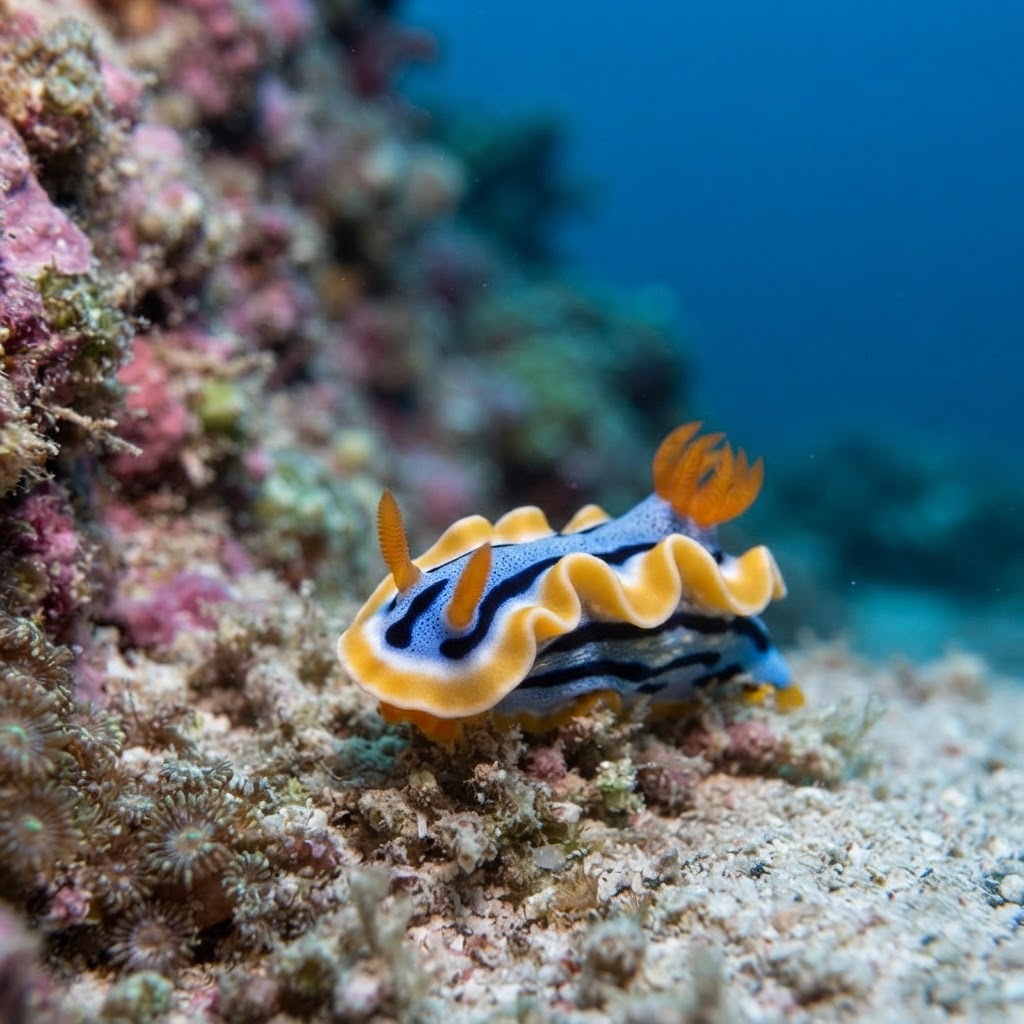
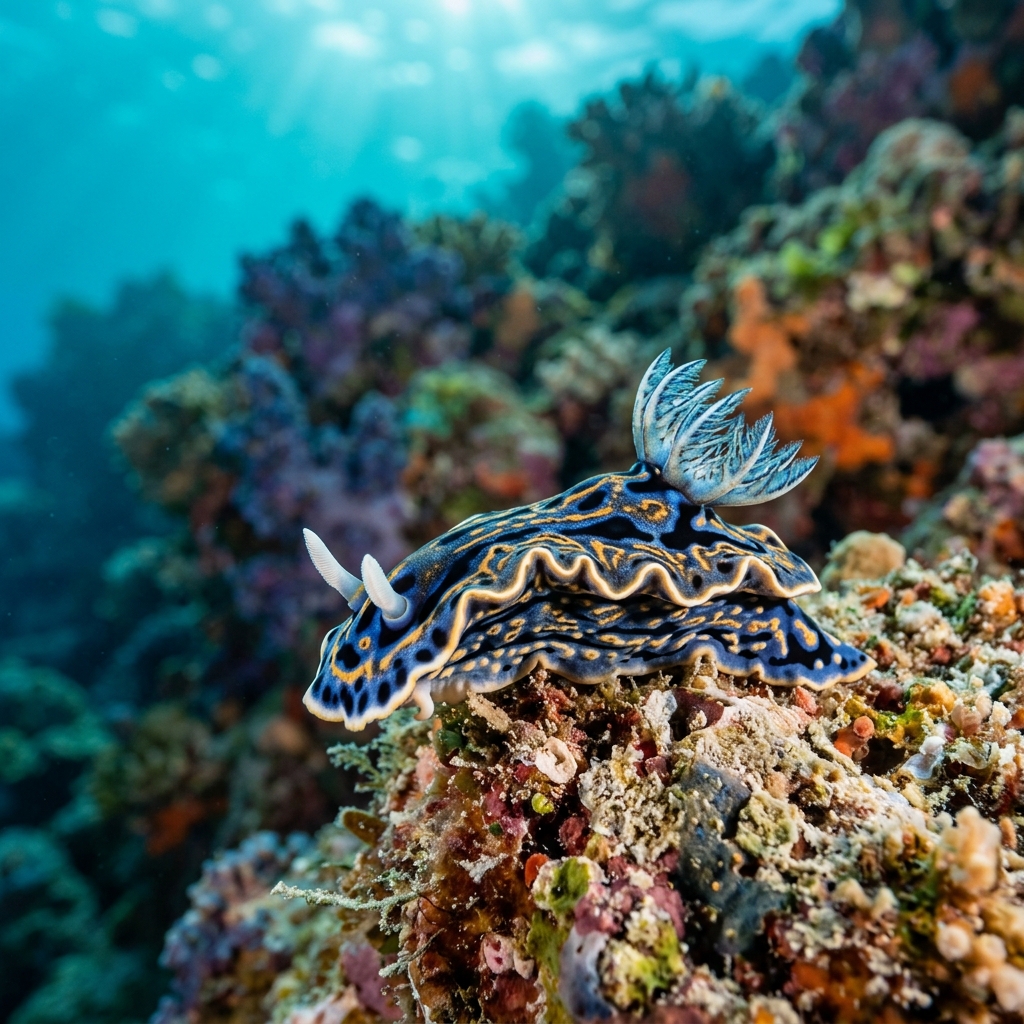
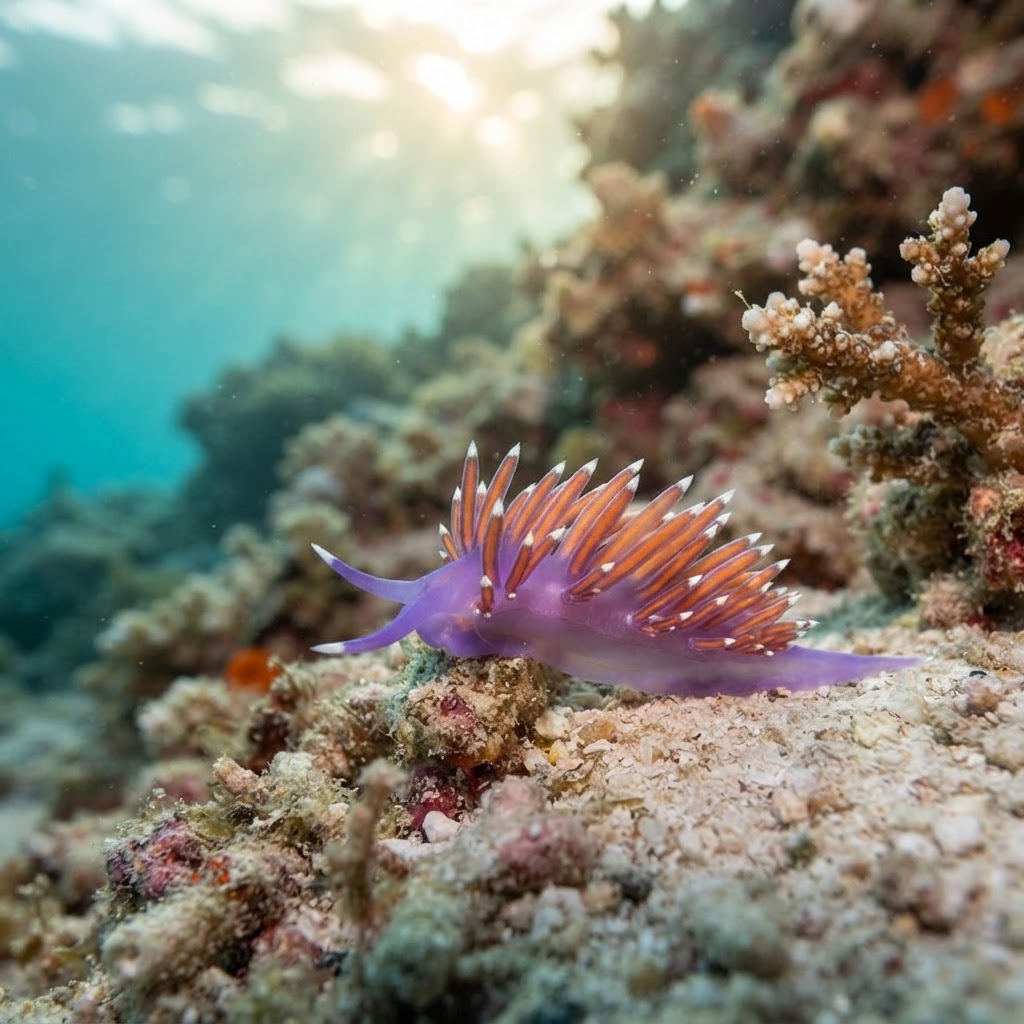
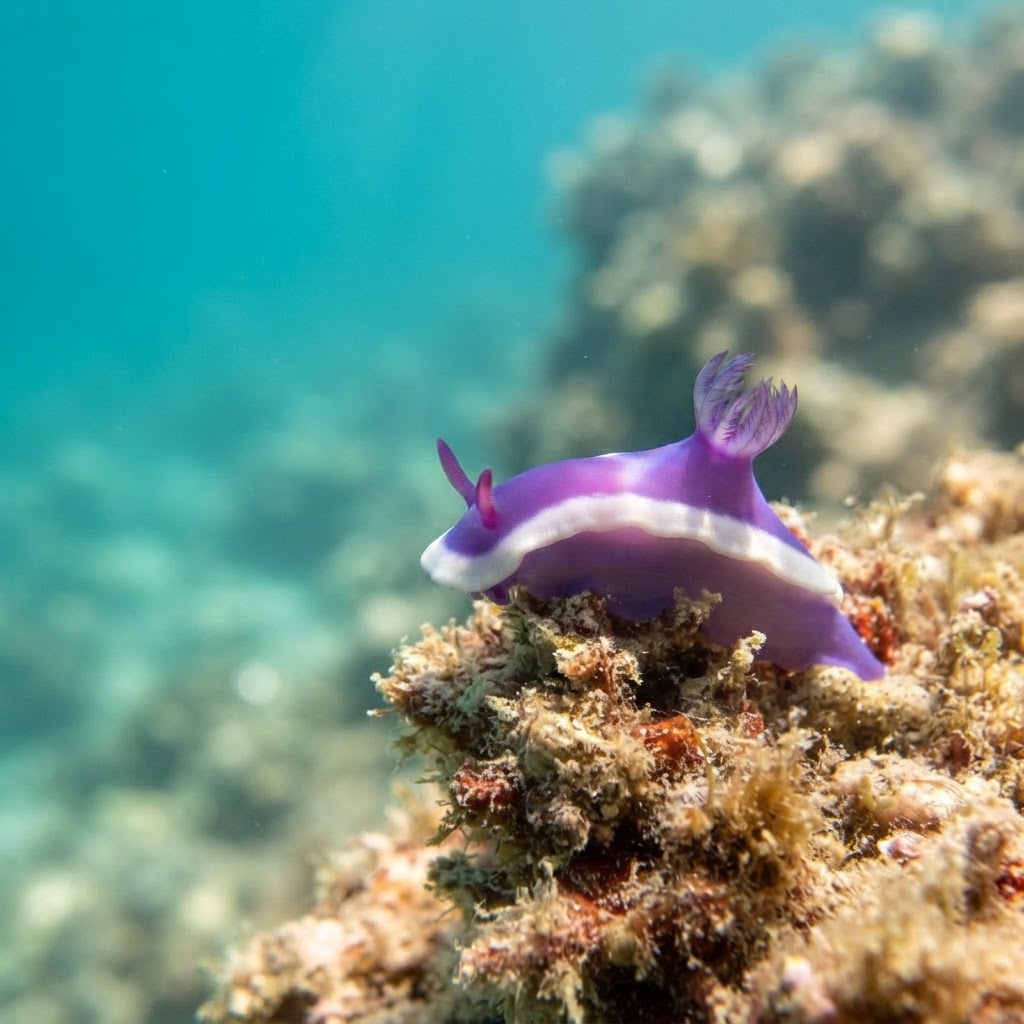
Small, slug-bodied nudibranch with a violet to purple-blue mantle, usually marked with fine darker lines or speckling running along its length. Look for the contrasting orange or yellow tips on the gill cluster (the feathery tuft near the tail) and the rhinophores (the paired sensory horns on the head), which stand out sharply against the purple body. It moves slowly and stays low, so divers key on colour contrast rather than size or shape.
Divers typically find it parked on rubble, sponge, or low reef structure, moving at the unhurried pace typical of nudibranchs as it grazes. It pays no attention to divers and won't react to a torch or close approach, making it a reliable macro subject for photographers working slow, careful dives. Most sightings come from divers scanning reef substrate rather than open water, so it rewards a close, patient look rather than a swim-by.
Like other members of the Chromodorididae family, its bright colouring likely advertises toxins absorbed from the sponges it feeds on, warning predators off rather than helping it hide.
No clear seasonal pattern shows up in the data, and with observed water temperatures sitting between 26 and 32C, conditions stay favourable on Sabah's reefs all year, so this is a year-round sighting rather than a seasonal one.
Reef neighbours a diver could mistake it for. Use the identification notes above to tell them apart.
This one is very much a Sabah, Malaysia species based on current logs, with sightings spread across a wide run of dive sites there rather than concentrated at just one or two. It's recorded as a common find at most of those sites, so divers doing muck or reef dives in Sabah have a solid chance of spotting it.
Mapping where Violet Hypselodoris is logged…
The strongest logged population is in Sabah, Malaysia, where it turns up as a common sighting across a wide spread of dive sites. Current data doesn't show it recorded outside this region.
There's no detected season, and it's found in water from 26 to 32C, so it's a year-round sighting on Sabah's reefs rather than something tied to a particular month.
Look for a small purple to violet-bodied nudibranch with orange or yellow tips on its gill tuft and rhinophores. It moves slowly over rubble and sponge, so the colour contrast is the main giveaway underwater.
No. It poses no threat to divers, has no sting or bite of concern, and simply continues grazing when approached.
Exact size data isn't confirmed for this species, but like most Hypselodoris nudibranchs it's a small, slug-bodied animal typically only a few centimetres long, best appreciated with a macro lens.
Its vivid purple colouring is thought to signal toxicity picked up from the sponges it eats, a common defence strategy across the Chromodorididae family of nudibranchs.
Site and sighting data is aggregated from diver logs, iNaturalist and GBIF. For taxonomy and conservation status:
Light-spotted Aegires
3,168 sites