Hypselodoris violabranchia
An uncommon nudibranch logged on Hawaii reefs in 22-28C water, spottable year-round if you know where to look.
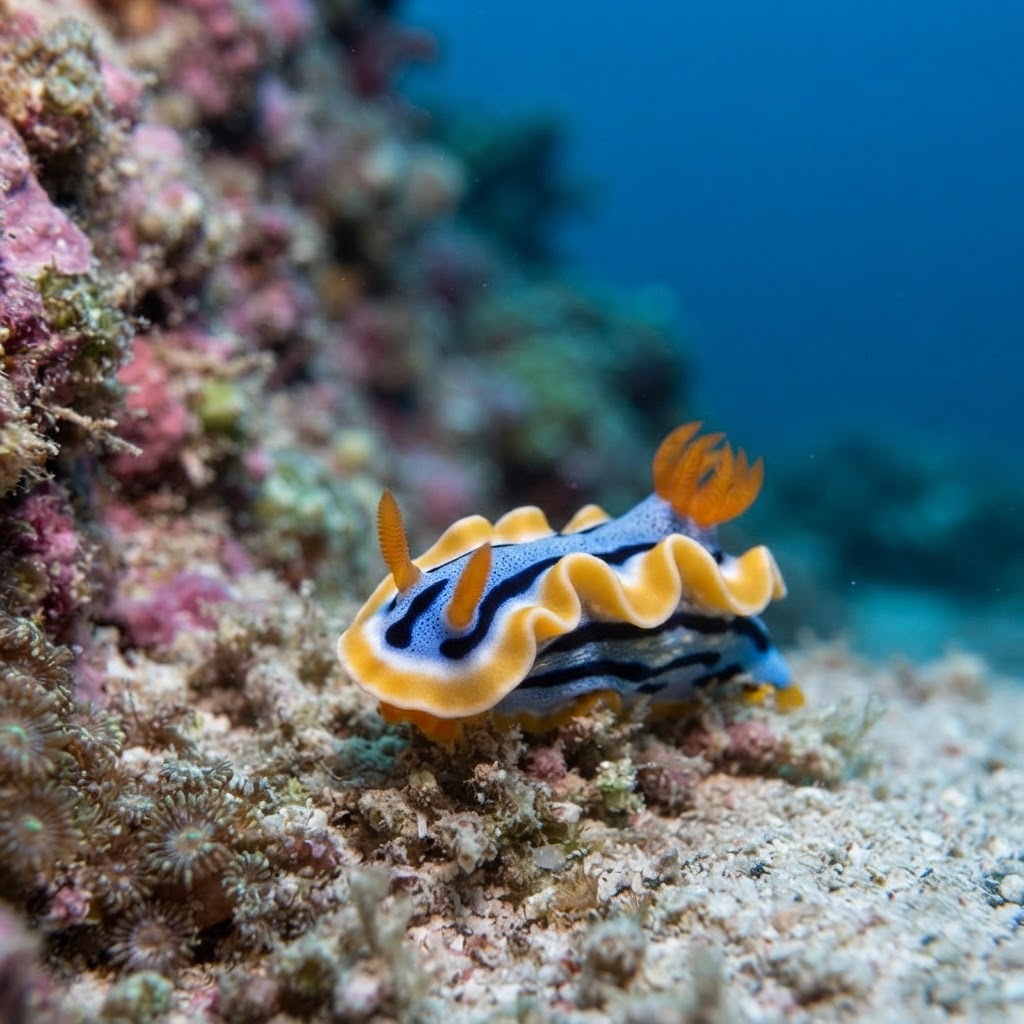
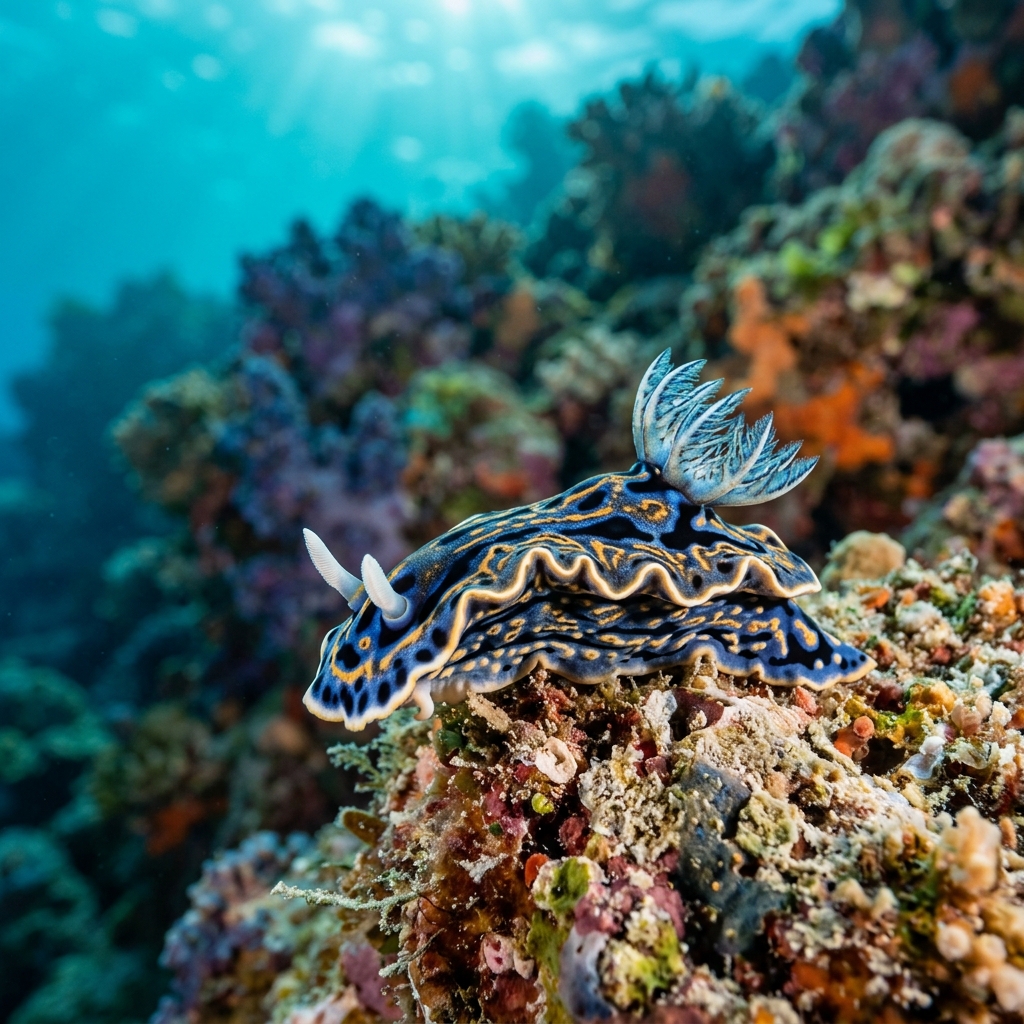
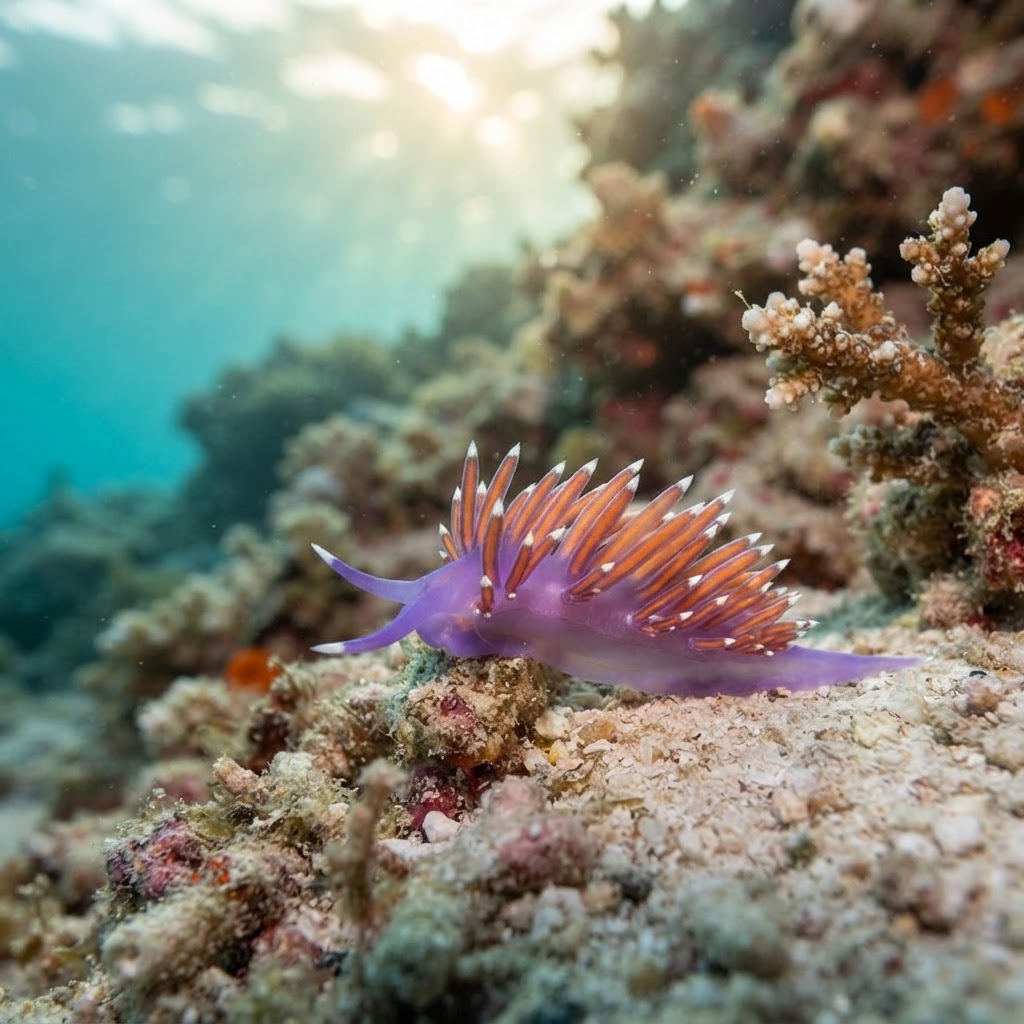
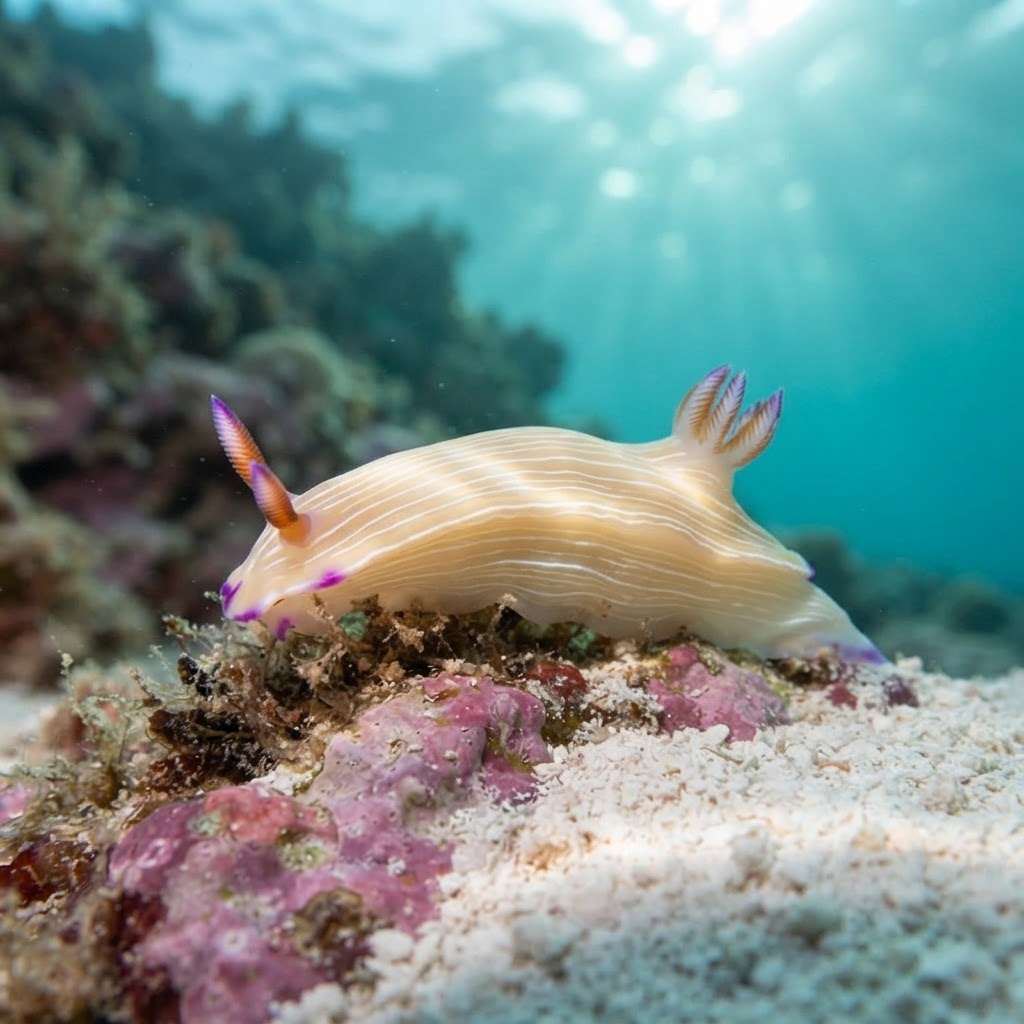
Small, elongate sea slug (nudibranch) with a soft, translucent mantle carrying a violet to purple cast, most visible along the gill cluster on its back. Look for the raised rhinophores (paired sensory horns) at the front and the feathery gill tuft near the rear, both of which often show a stronger violet tint than the rest of the body. It moves slowly over reef and rubble, so once spotted it is easy to observe closely without it fleeing.
Divers typically find it grazing slowly across reef surfaces or rubble patches, moving at the unhurried pace typical of nudibranchs as it works over sponges and algae. It shows no reaction to divers beyond continuing its crawl, making it an easy subject for a close macro look once located.
Like other sea slugs in its family, it likely gets its colour from compounds absorbed through its diet, a defence strategy that also makes it distasteful to potential predators.
No clear seasonal pattern shows up in the sighting data, and its recorded temperature range of 22.4 to 28.4C spans Hawaii's water temperatures year-round, so it can turn up on any dive regardless of month.
Reef neighbours a diver could mistake it for. Use the identification notes above to tell them apart.
Logged sightings so far come from Hawaii in the United States, making it the only confirmed region for this species. Divers looking for it should focus reef and rubble searches on Hawaiian dive sites rather than other Pacific or Indo-Pacific destinations.
Mapping where Hypselodoris violabranchia is logged…
Confirmed sightings are concentrated in Hawaii, United States. It has not yet been reliably logged outside this region.
There is no detected seasonal pattern, and its temperature range fits Hawaii's reefs year-round, so any time of year is reasonable for a sighting.
Look for a small, slow-moving nudibranch with a translucent body carrying a violet tint, especially around the rhinophores and the gill tuft on its back.
It is logged as uncommon at the sites where it has been recorded, so spotting one takes a slow, careful look over reef and rubble rather than a guaranteed encounter.
No. It poses no threat to divers and can be observed and photographed at close range without any risk.
Site and sighting data is aggregated from diver logs, iNaturalist and GBIF. For taxonomy and conservation status:
Blue Dragon
3,163 sites