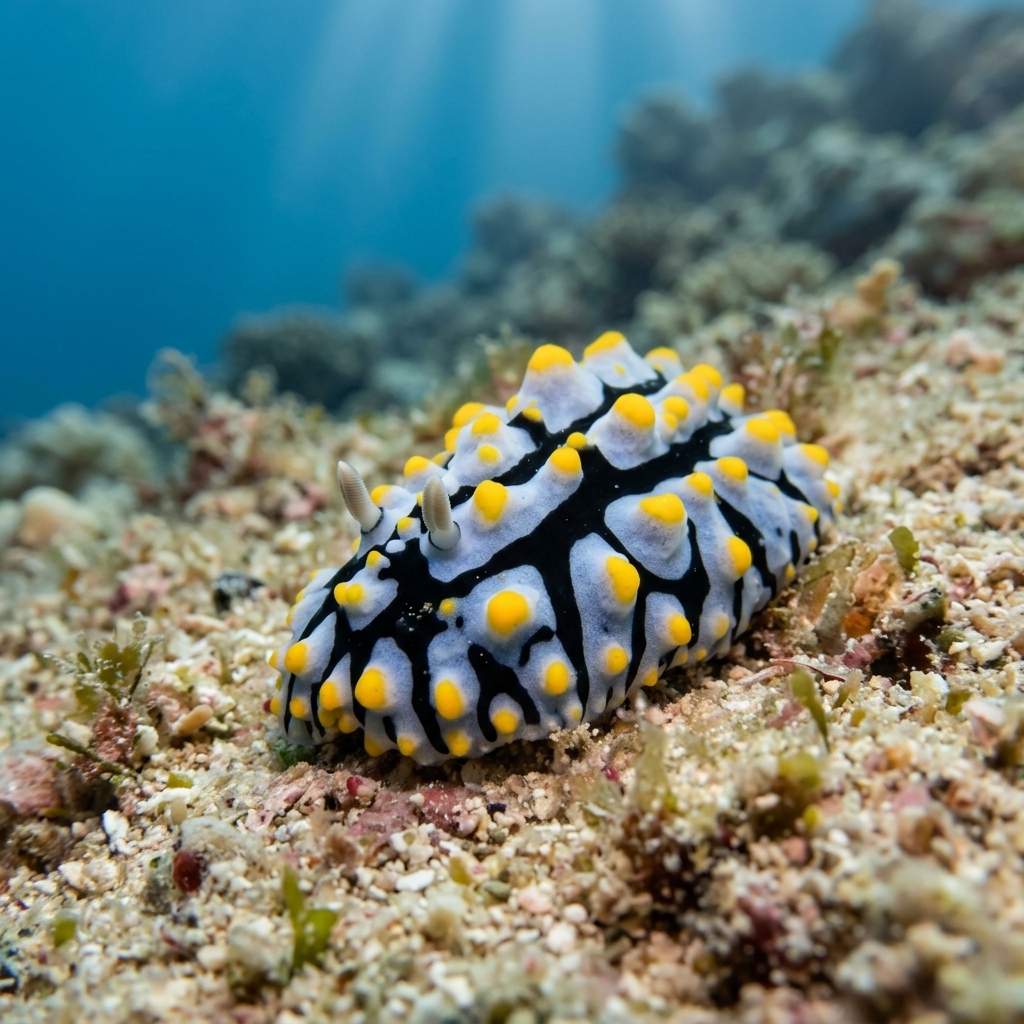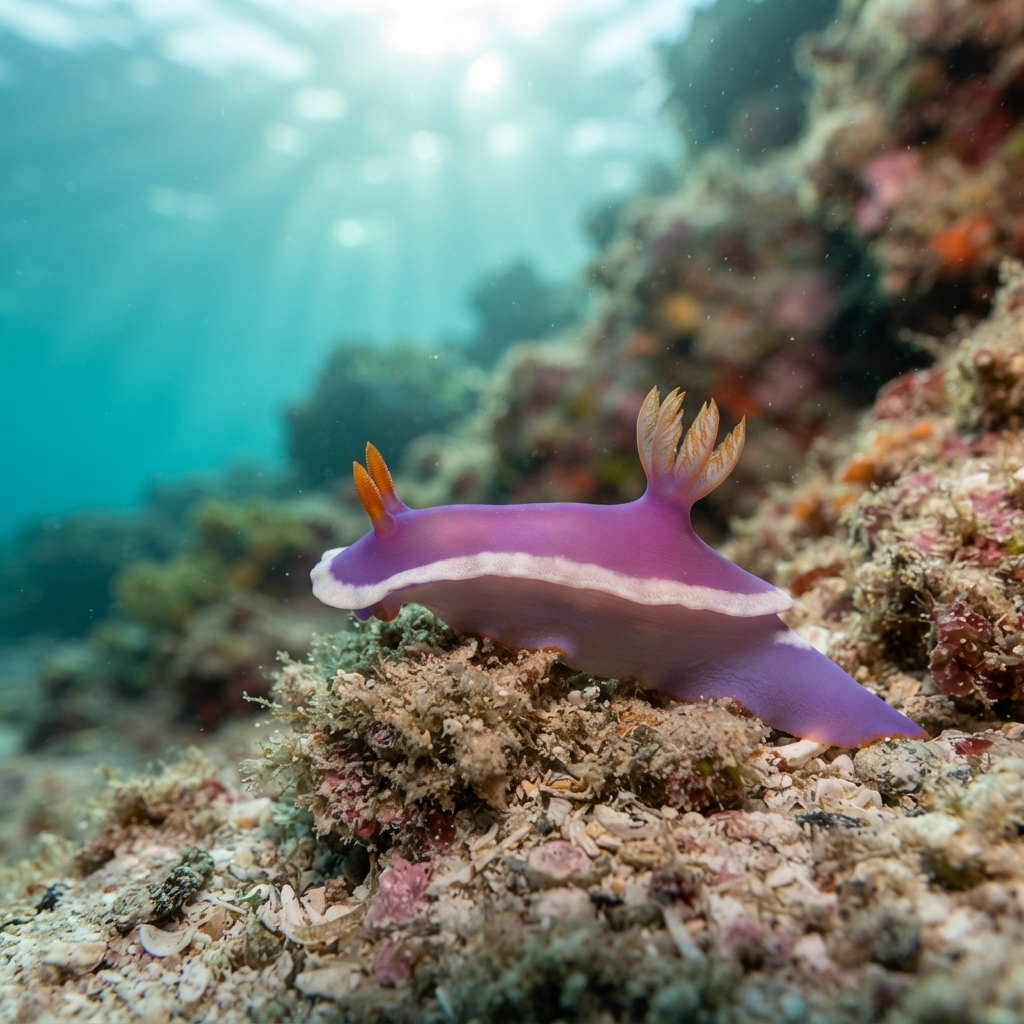
Hypselodoris variobranchia
A Sabah and Visayas nudibranch favourite, this colourful sea slug turns up on warm reefs from 25.6 to 31.6C year-round.
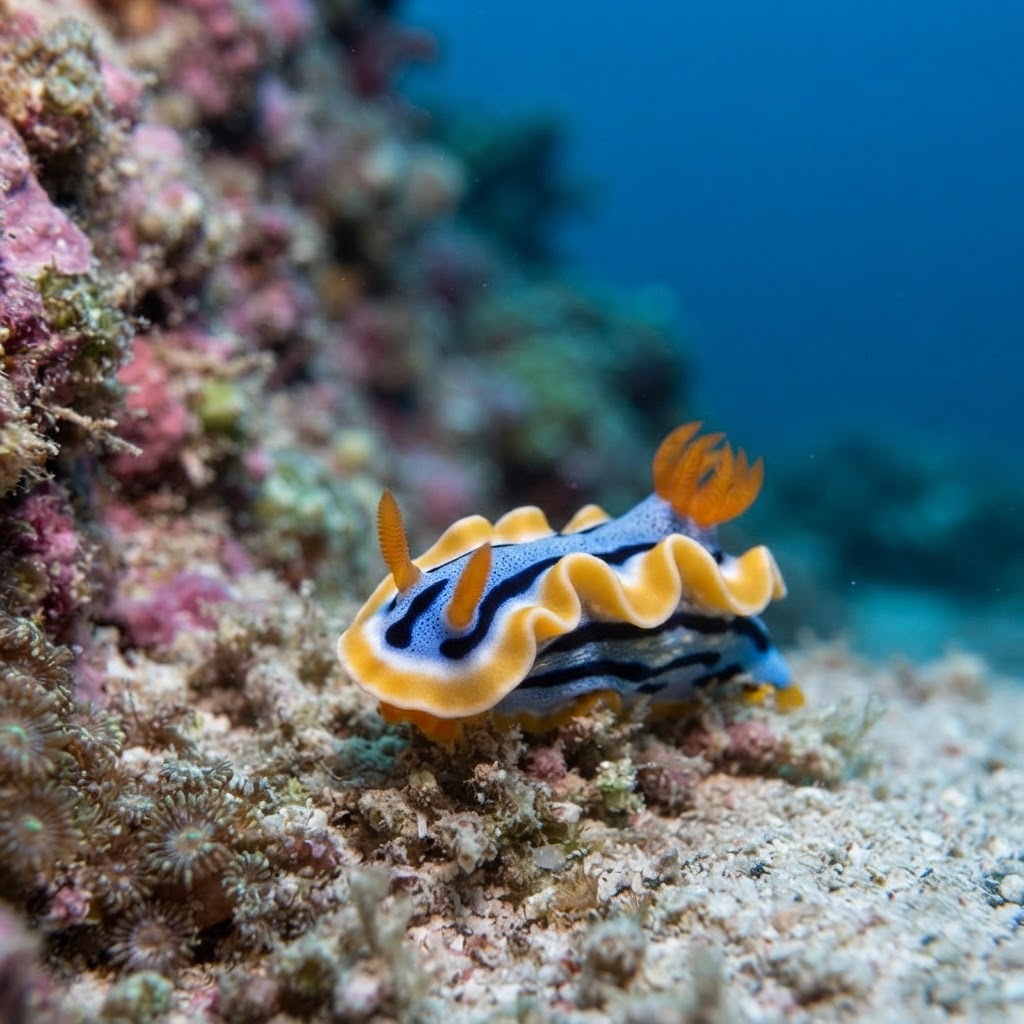
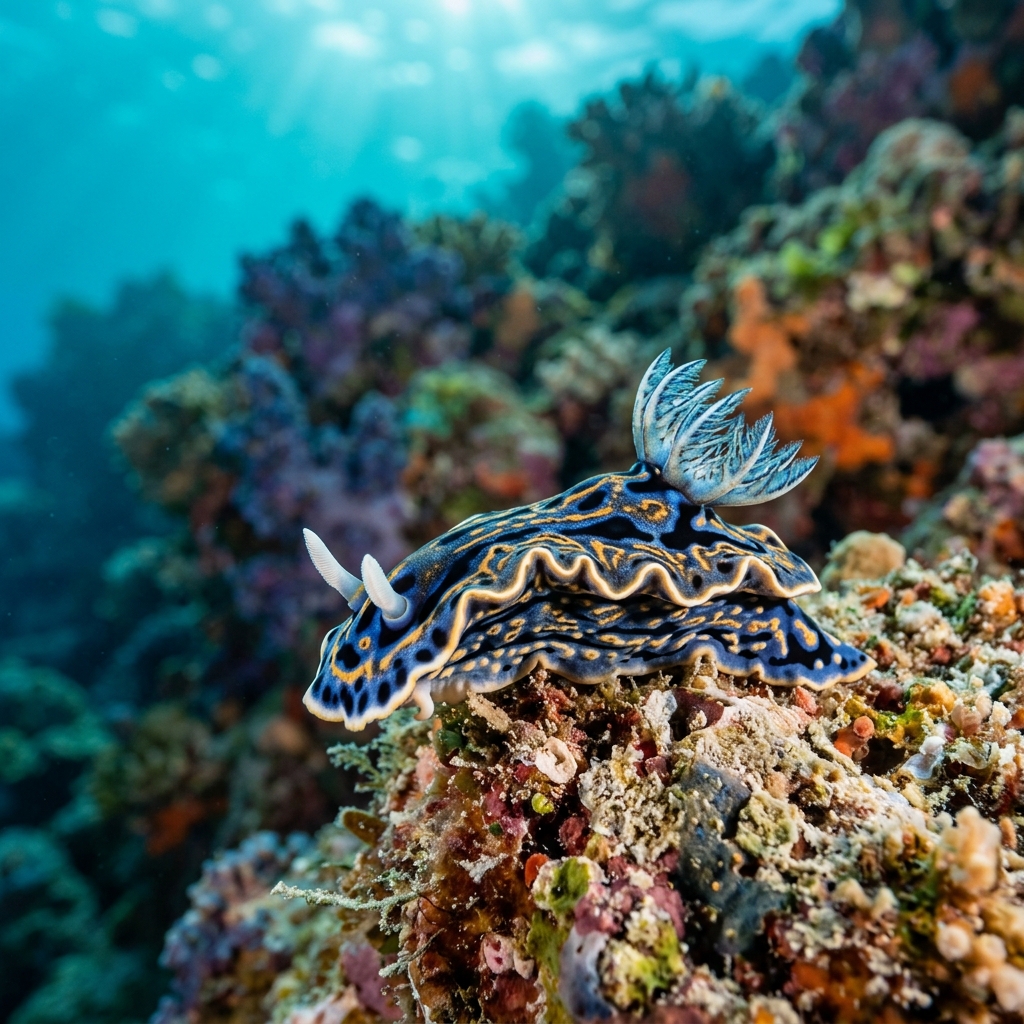
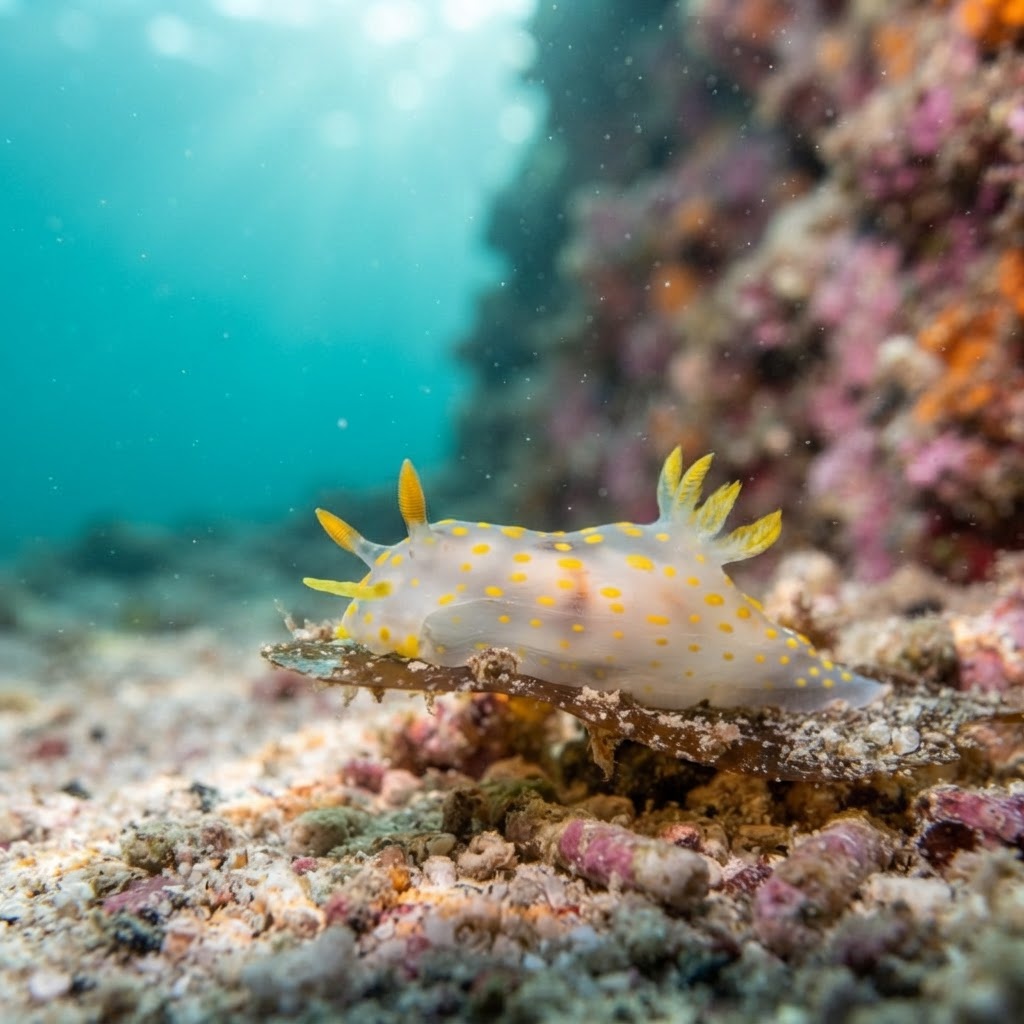
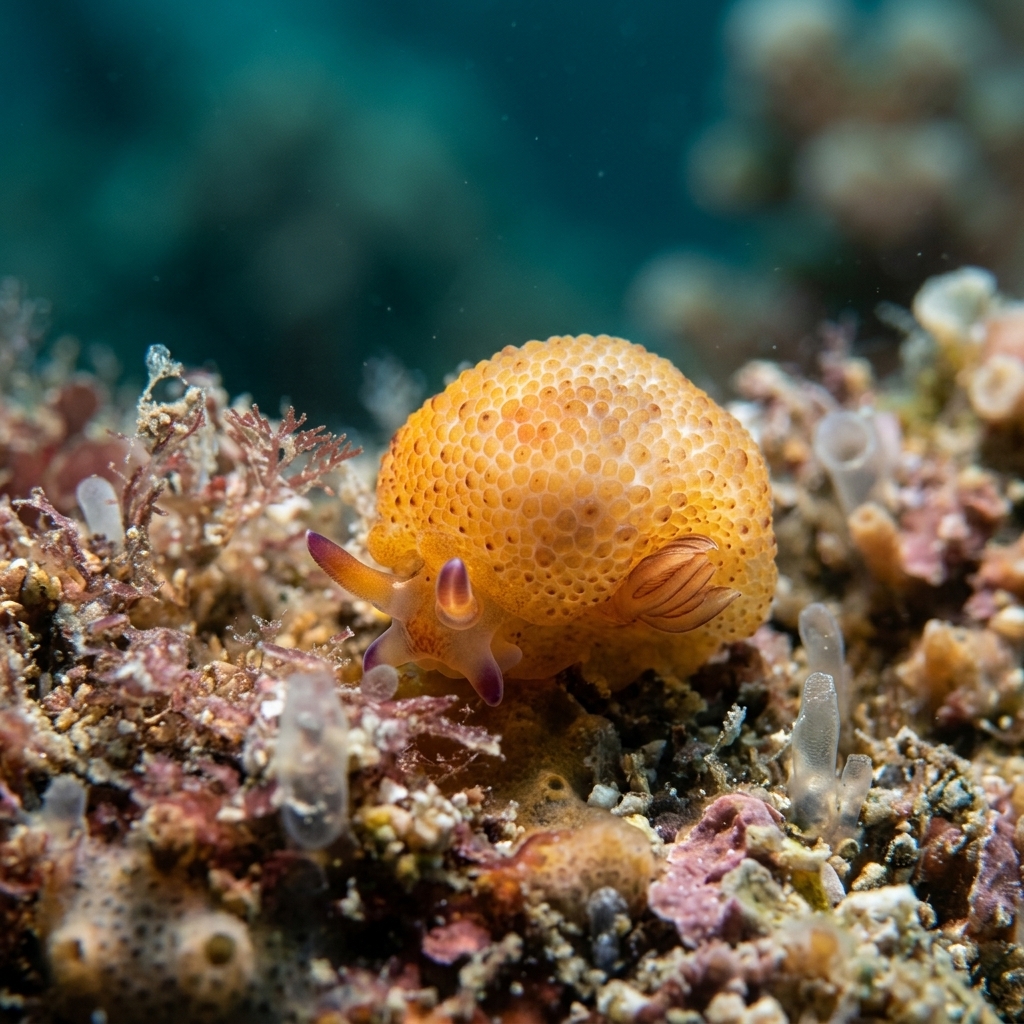
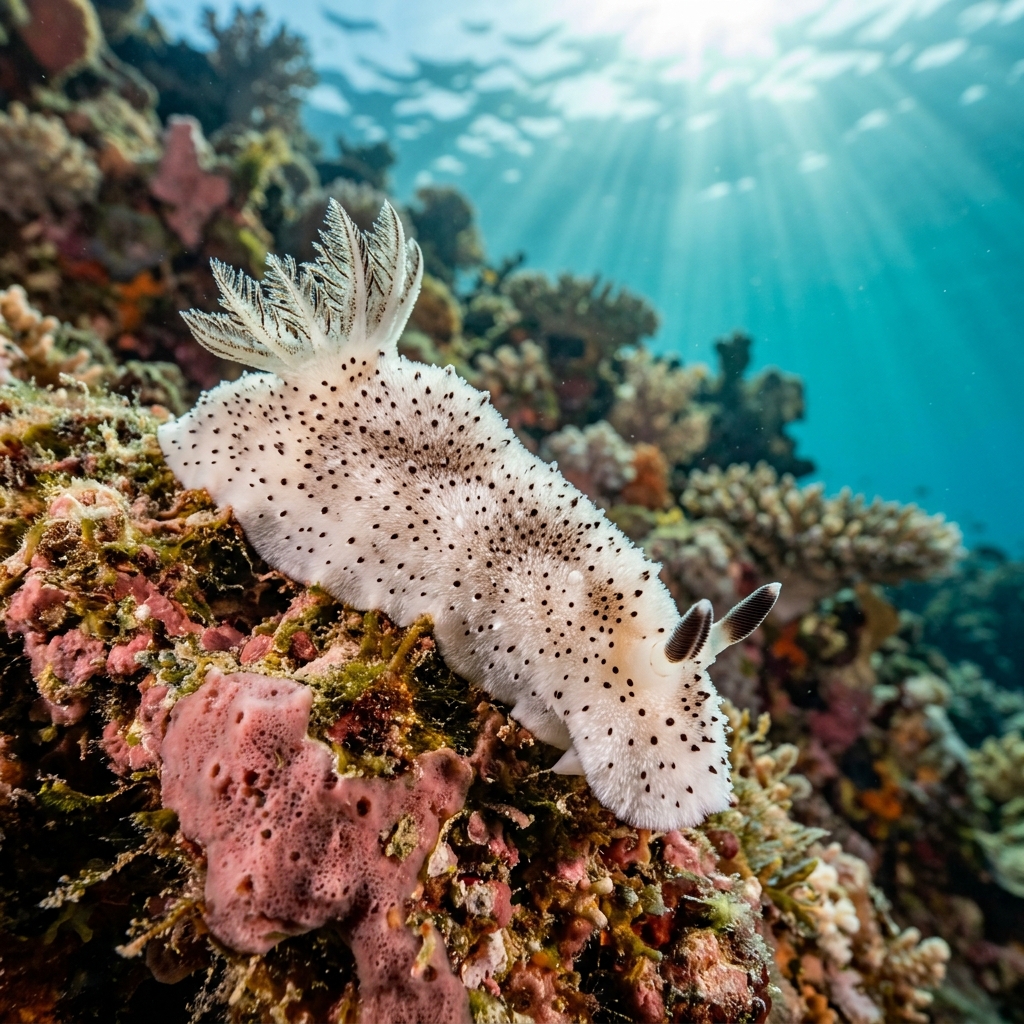
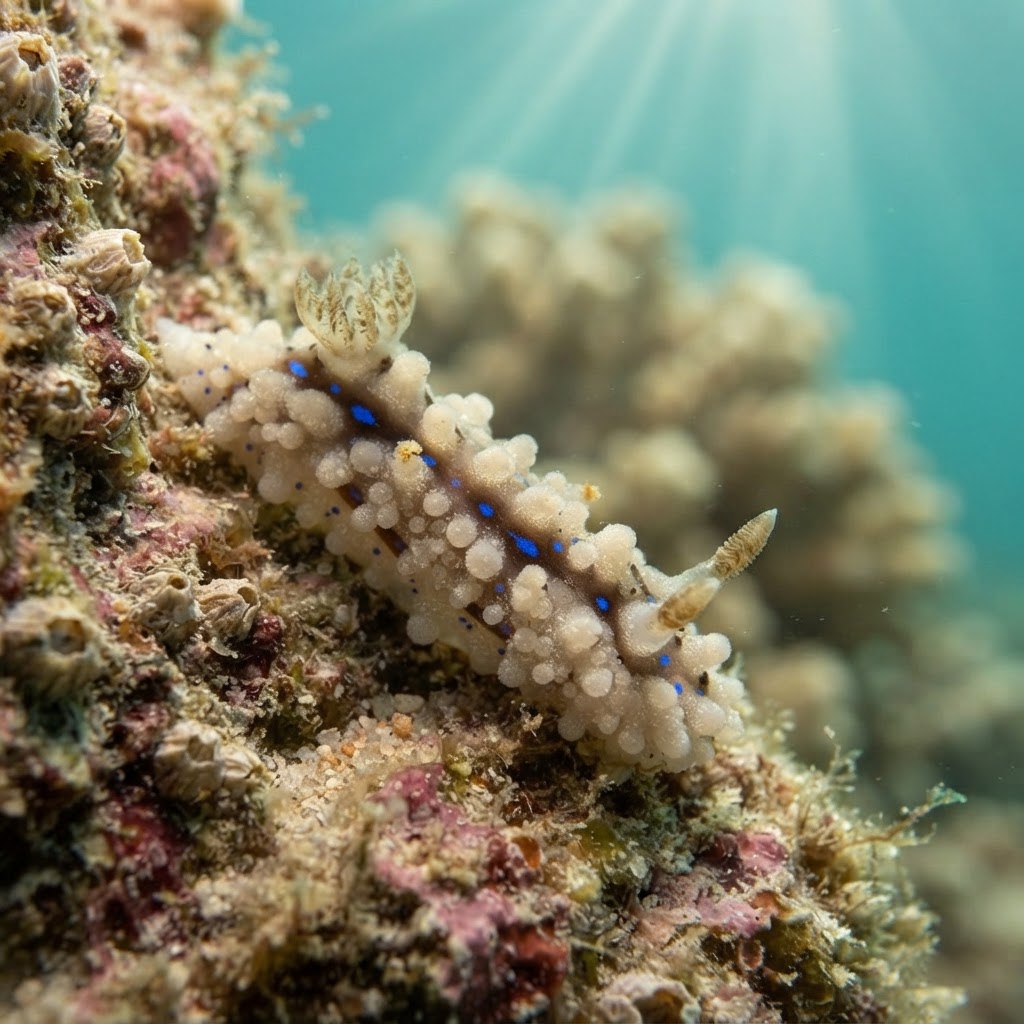
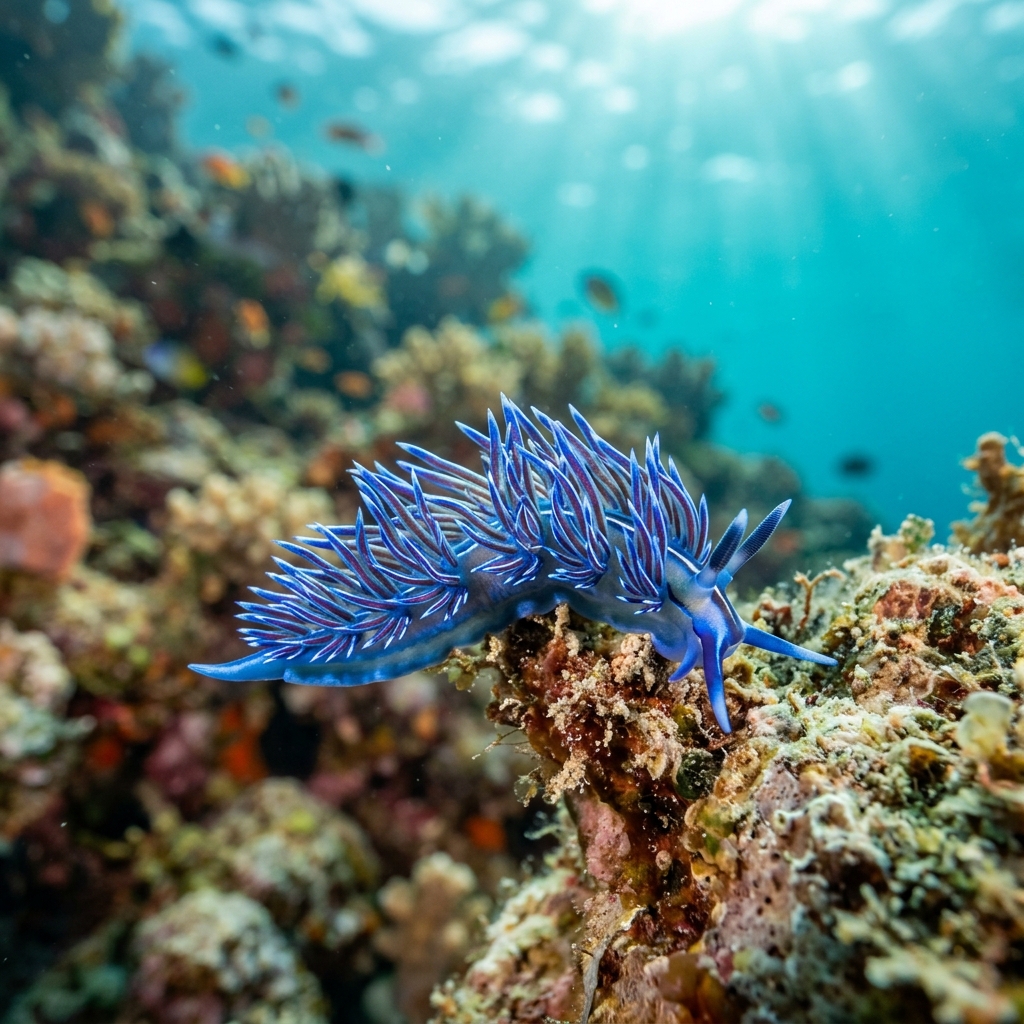
A small, soft-bodied sea slug with a smooth, colourful mantle and a cluster of feathery gills (the branchial plume) toward the rear, which gives the species its name for having variable-looking gills. Look for the pair of rhinophores (sensory tentacles) on the head and the way the mantle edge often shows a contrasting rim. It moves slowly across hard coral and rubble, so once you spot the colour pattern it is easy to hold in the beam of a torch for a closer look.
Divers usually find it grazing slowly over coral rubble, sponge-covered rock, or reef flats, feeding on the sponges that give many chromodorid nudibranchs their colour and chemical defences. It shows no reaction to divers beyond continuing its slow crawl, making it an easy subject for close-focus photography once located. Best spotted during a careful, slow-paced reef or muck dive rather than a fast drift, since it blends into the substrate at a glance.
Like other members of the Chromodorididae family, it likely absorbs and concentrates chemical compounds from the sponges it eats, using them as a form of defence against predators rather than relying on speed or camouflage to survive.
Sightings show no clear seasonal pattern, so this is a year-round find on the reefs where it occurs. Its observed range of 25.6 to 31.6C matches the warm, stable water typical of Sabah and the Philippines throughout the year.
Reef neighbours a diver could mistake it for. Use the identification notes above to tell them apart.
Most reliably logged in Sabah, Malaysia and across the Visayas region of the Philippines, with additional sightings in Palawan and Luzon. Between the two countries, divers report it as a fairly regular find rather than a rare one, making Southeast Asian muck and reef sites the best bet for a search.
Mapping where Variable-gill Hypselodoris is logged…
Sabah in Malaysia and the Visayas region of the Philippines are the strongest areas, with further sightings in Palawan and Luzon. It turns up on reef and rubble sites across Southeast Asia more broadly.
There is no strong seasonal pattern in the data, so it is considered a year-round sighting. Warm water between 25.6 and 31.6C keeps it active on tropical reefs throughout the year.
Look for a small, brightly coloured nudibranch with a feathery gill cluster near the tail and a pair of rhinophores on the head. It moves slowly across coral rubble and sponge-covered surfaces, unlike faster-moving reef fish nearby.
Exact size data is not confirmed for this species, but like most Hypselodoris nudibranchs it is a small reef animal typically measured in centimetres rather than tens of centimetres.
It likely feeds on sponges and repurposes their chemical compounds as its own defence, a strategy common across the Chromodorididae family of nudibranchs.
Site and sighting data is aggregated from diver logs, iNaturalist and GBIF. For taxonomy and conservation status:
Light-spotted Aegires
3,168 sites