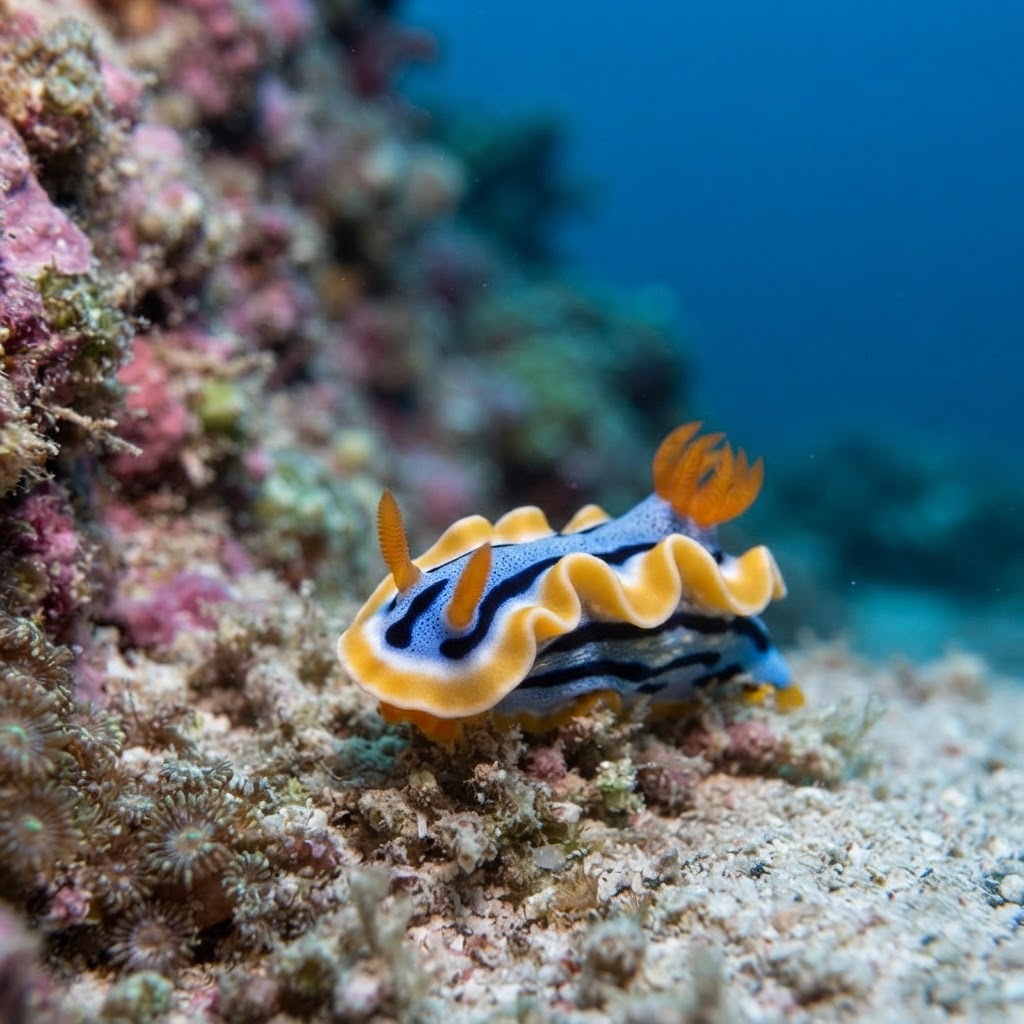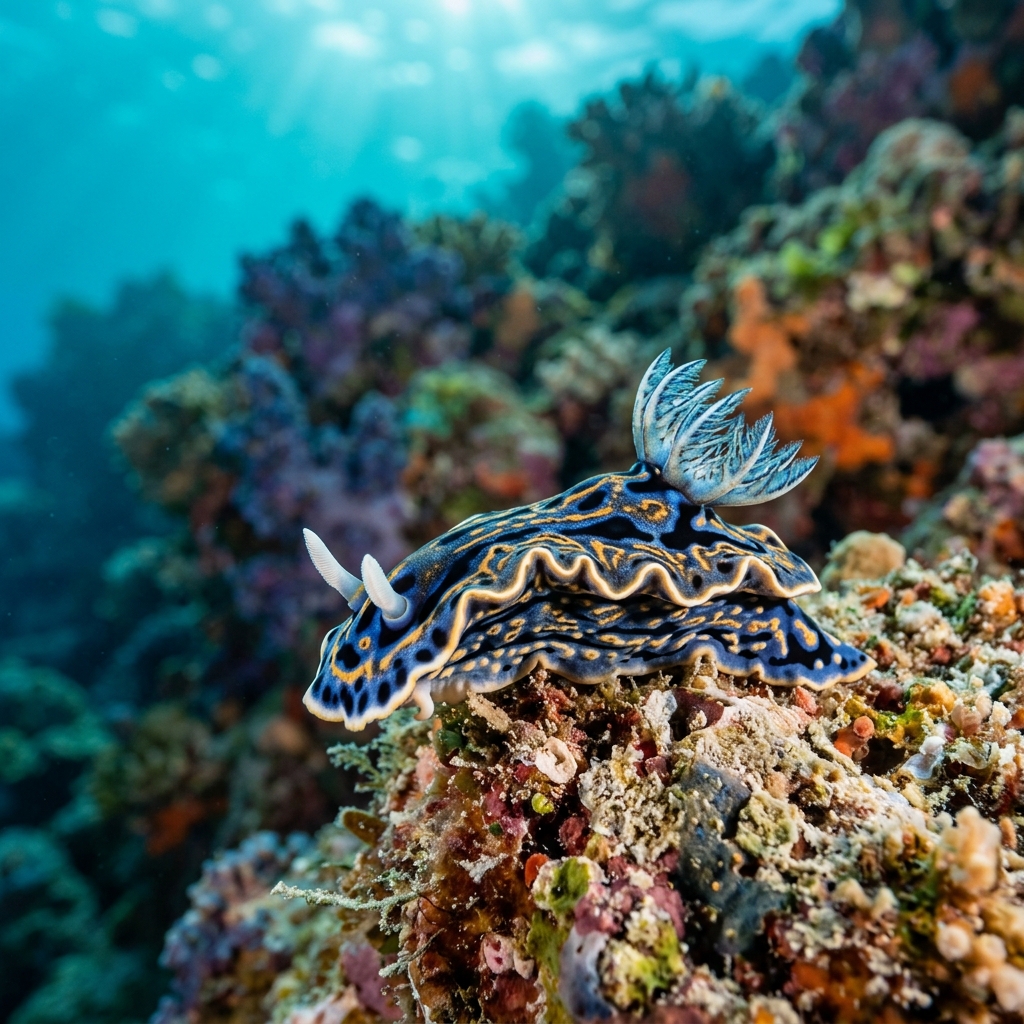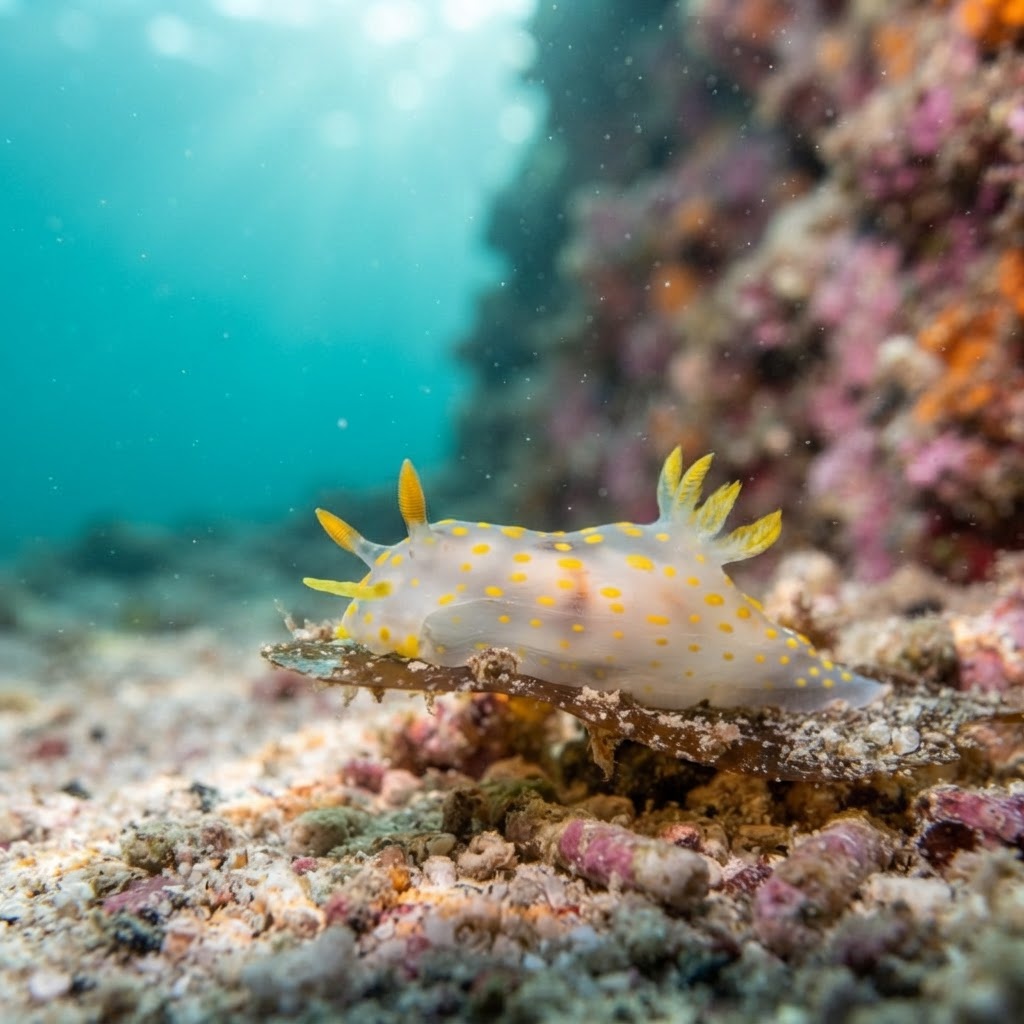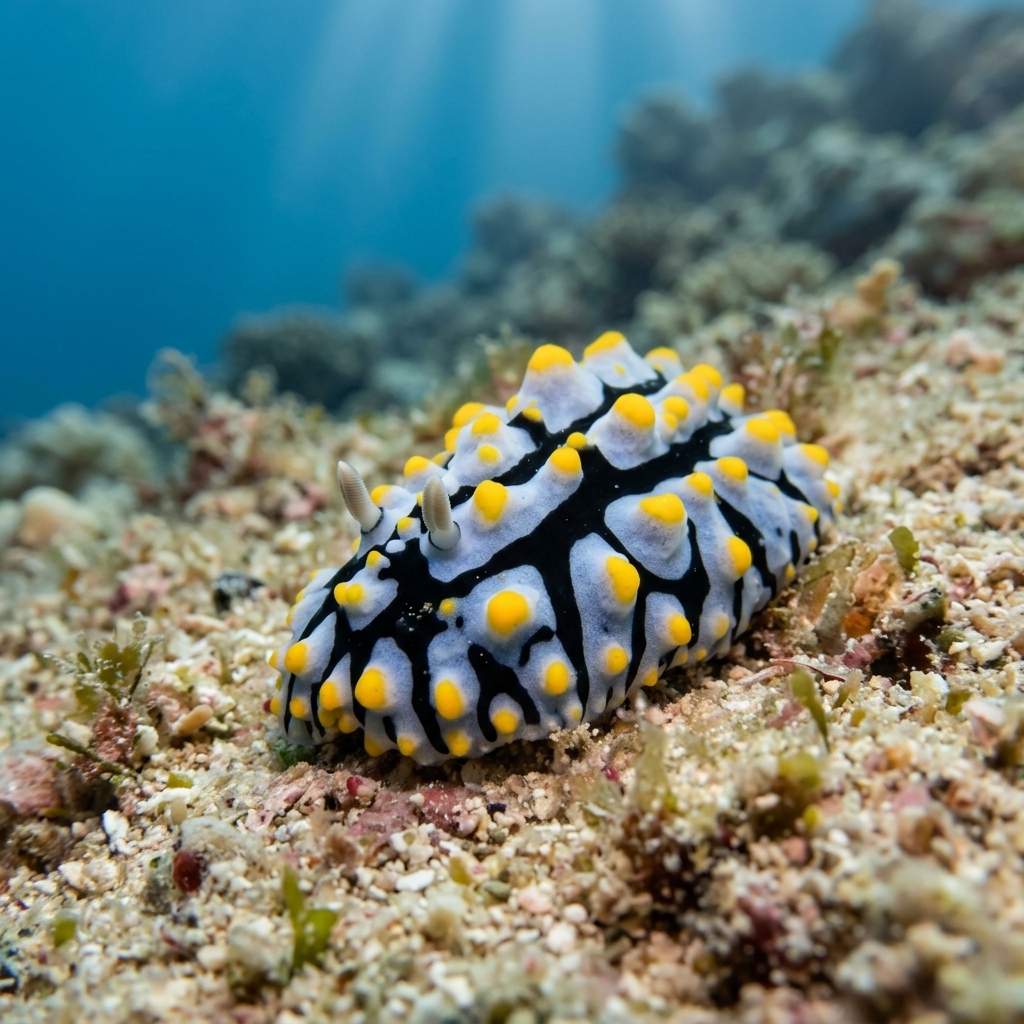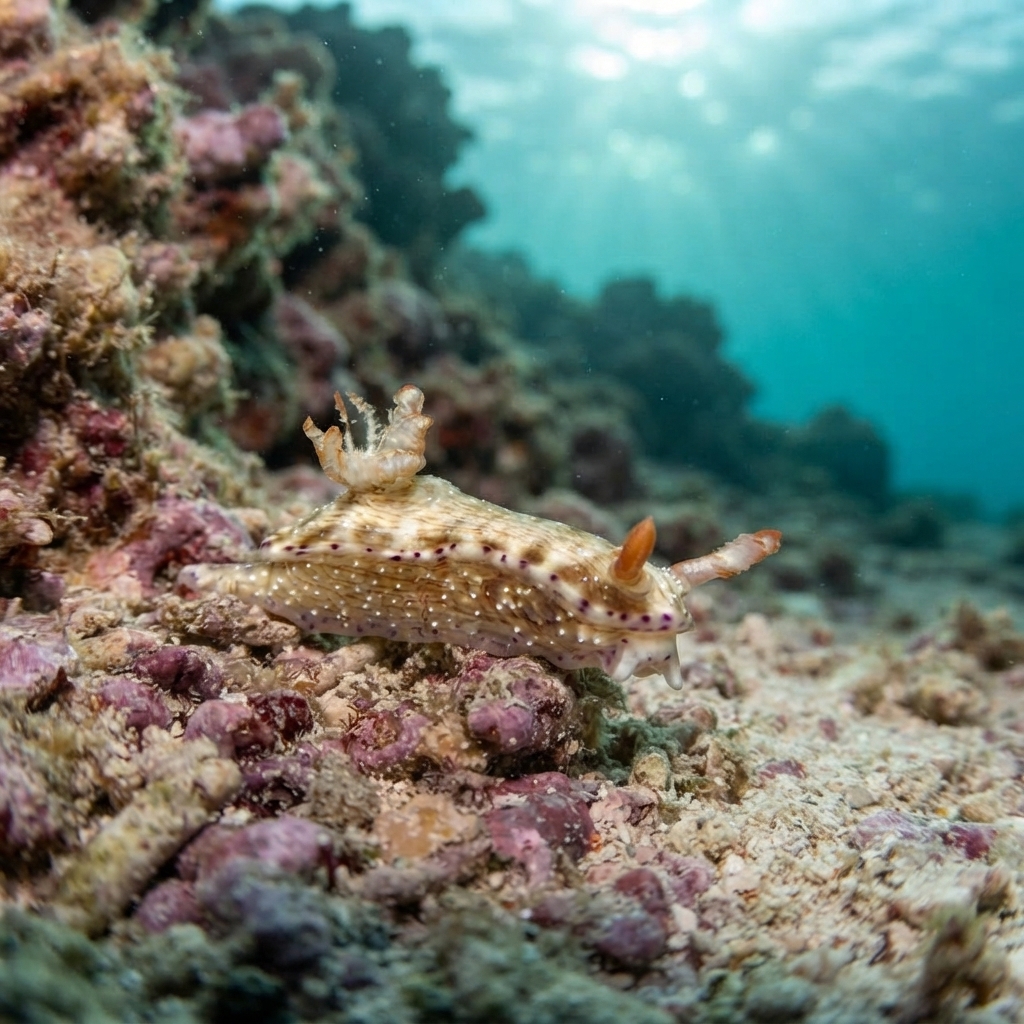
Hypselodoris skyleri
A rare, colourful nudibranch logged mostly in Kwajalein Atoll, Marshall Islands, on warm reefs between 25 and 31°C.
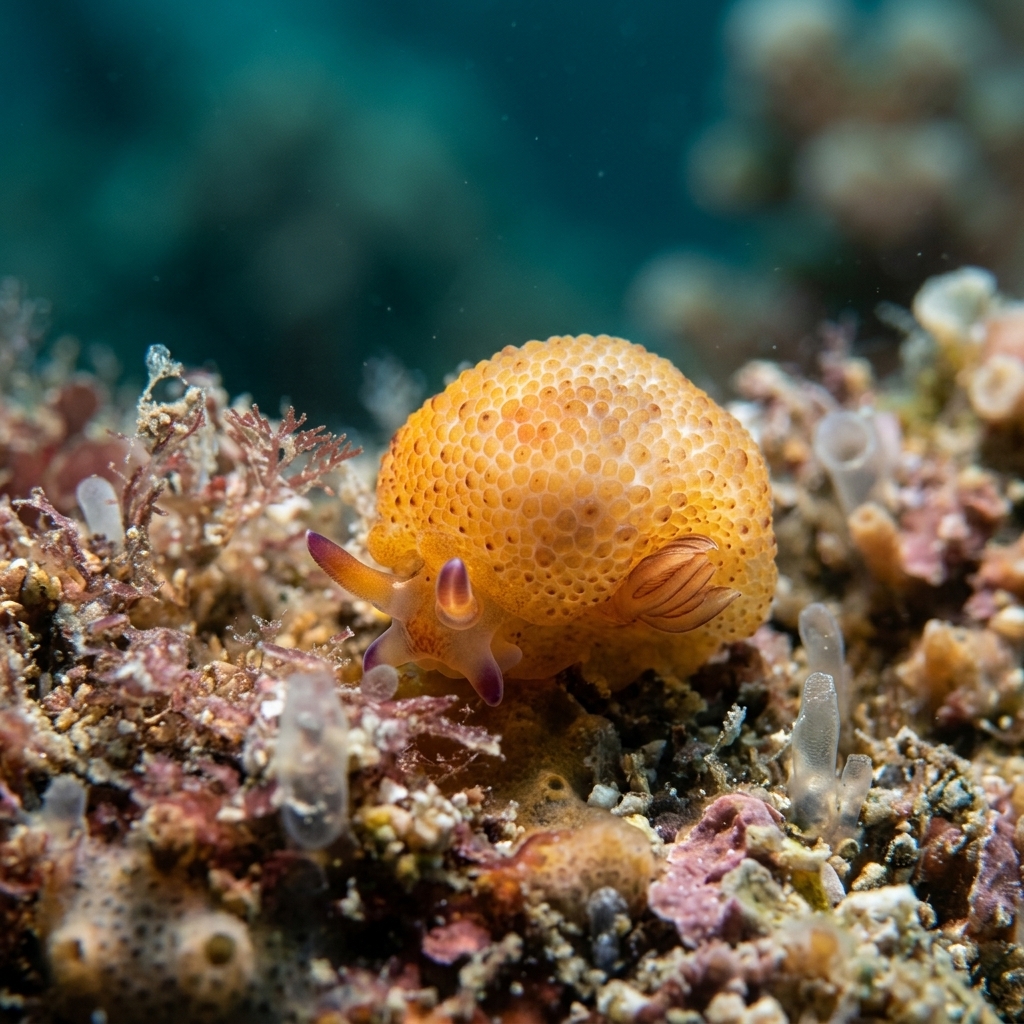
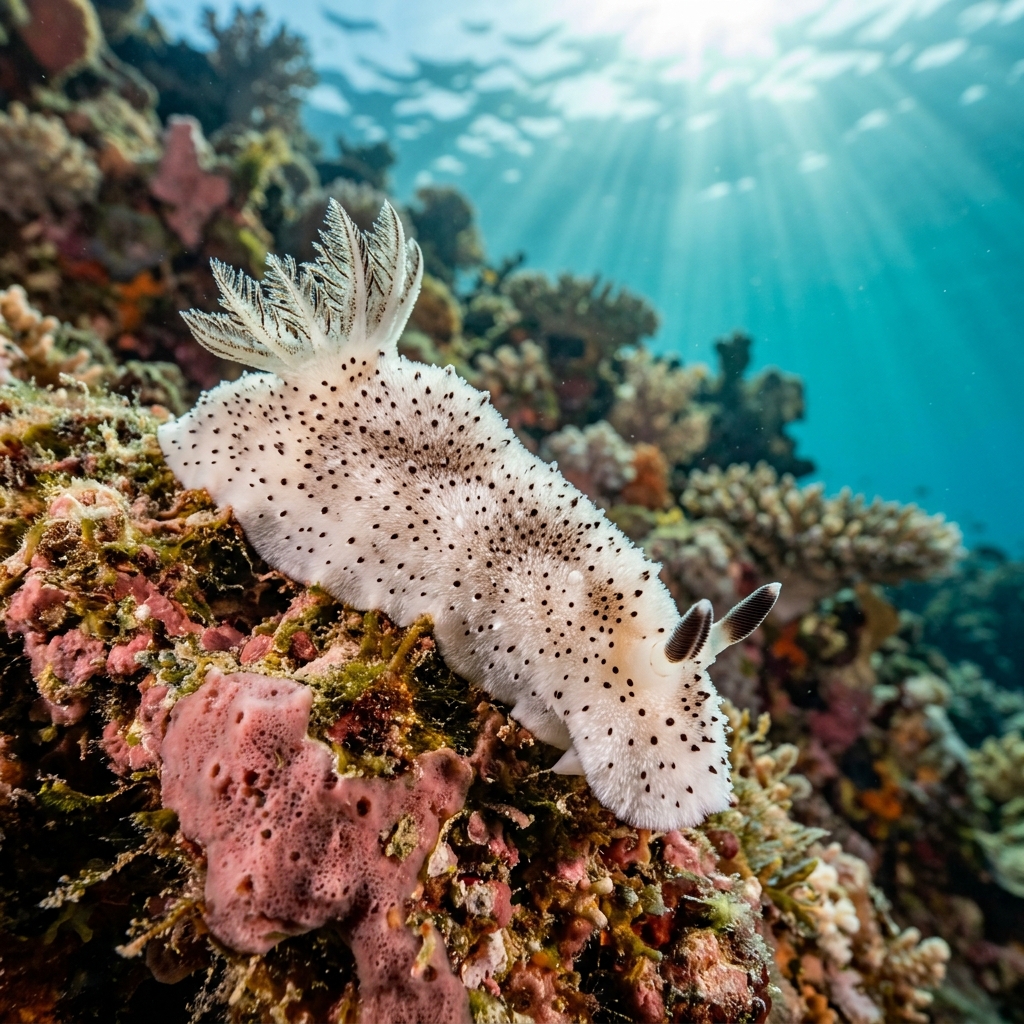
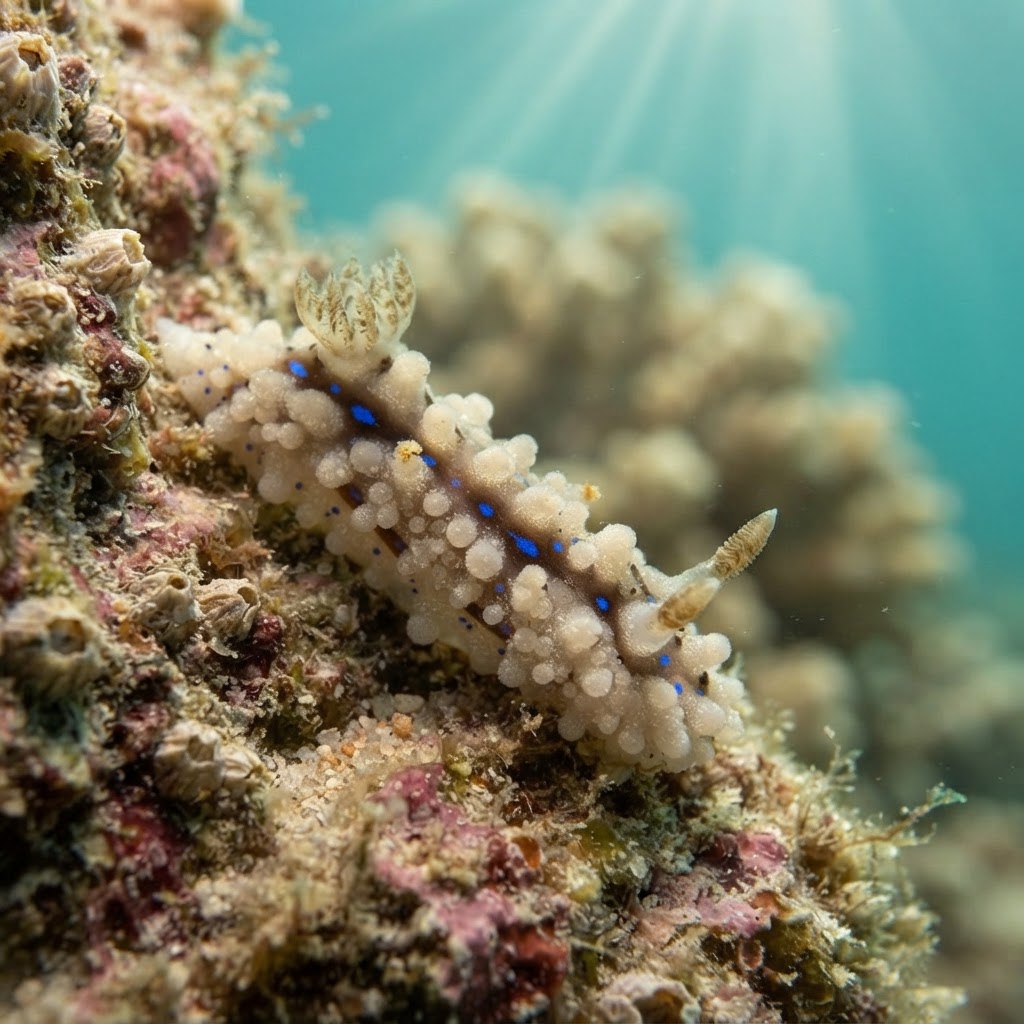
Small, soft-bodied sea slug with a smooth, elongate mantle typical of the Hypselodoris group, usually spotted crawling slowly across coral rubble or sponge-encrusted rock. Look for the contrasting mantle line and rhinophores (the paired sensory stalks on the head) that set the genus apart from plainer dorids. As with most Hypselodoris species, size in the water tends toward a few centimetres, easy to miss unless you're scanning close to the substrate.
Divers find it doing what most Hypselodoris nudibranchs do: grazing slowly over sponge-covered rock and rubble, unbothered by torches or close approach. It's logged as rare to uncommon at every site it turns up, so sightings tend to be a slow, deliberate reef-scan reward rather than a chance encounter while cruising past.
Like other members of its genus, it almost certainly feeds on specific sponges and stores their chemical compounds in its tissue as a defence against predators, part of why nudibranchs get away with such bright, exposed colouring.
No clear seasonal pattern shows up in the sighting data, and with a water-temperature niche of 25.4 to 31.4°C it's living on reefs that stay warm year-round, so any month is fair game.
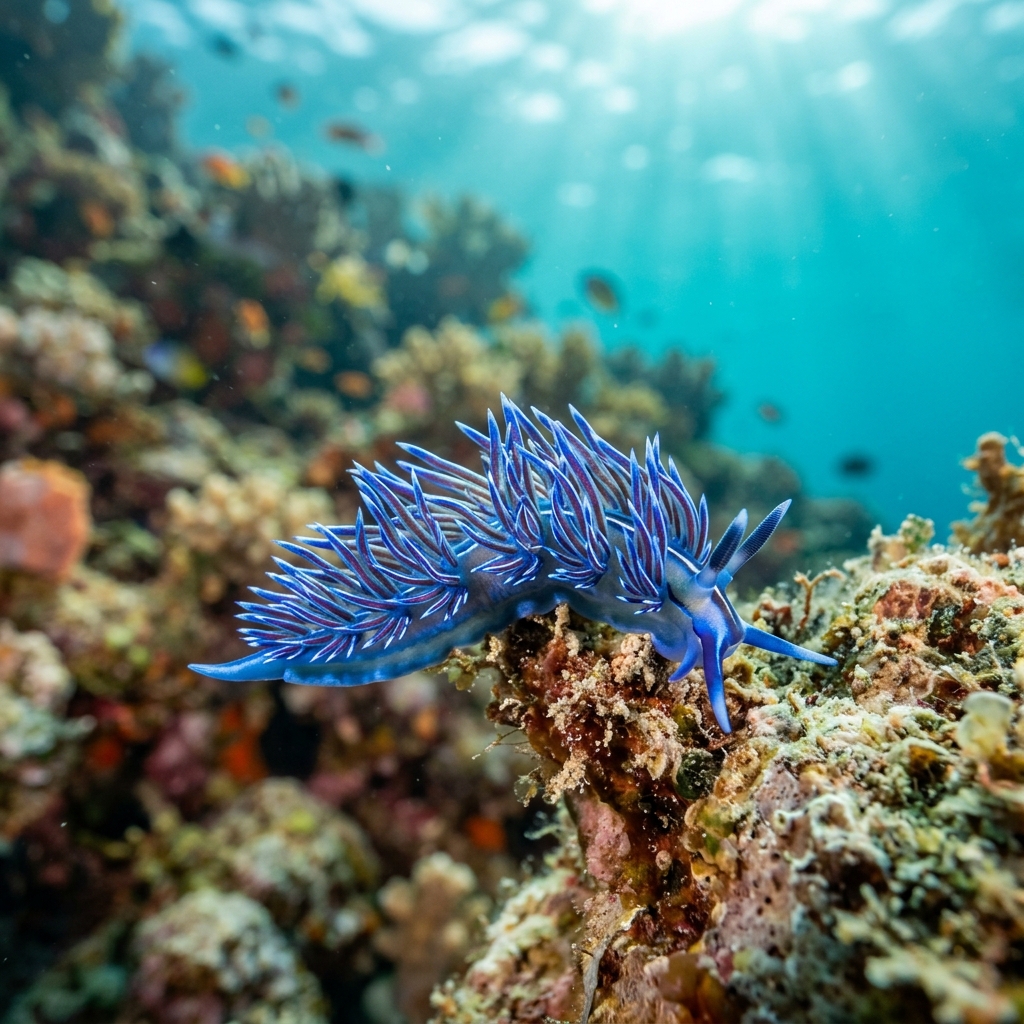
Reef neighbours a diver could mistake it for. Use the identification notes above to tell them apart.
Most consistently logged in Kwajalein Atoll in the Marshall Islands, which accounts for the bulk of confirmed sightings, with a smaller but real presence in Luzon, Philippines. Outside these two areas it hasn't been documented, so divers chasing this one should plan their macro hunting around Kwajalein's reef flats and slopes first.
Mapping where Skyler's Hypselodoris is logged…
It's most reliably found in Kwajalein Atoll, Marshall Islands, with additional sightings logged in Luzon, Philippines. These two areas cover all currently known dive sites for this species.
There's no detected seasonal pattern, and it lives comfortably across a warm 25.4 to 31.4°C range, so it's considered a year-round find on the reefs where it occurs.
Look for a small, smooth-mantled sea slug with the contrasting body line and paired rhinophores typical of Hypselodoris nudibranchs, usually crawling slowly across rubble or sponge-covered rock rather than swimming.
Exact size data isn't confirmed for this species, but like most of its genus it's a small nudibranch, typically only a few centimetres long, so close-focus scanning of the substrate is key to spotting one.
No. It poses no threat to divers and is safe to observe and photograph up close without any special precautions.
Like its relatives, it likely feeds on chemically defended sponges and repurposes those compounds in its own skin as protection from predators, a common nudibranch survival trick.
Site and sighting data is aggregated from diver logs, iNaturalist and GBIF. For taxonomy and conservation status:
Light-spotted Aegires
3,168 sites