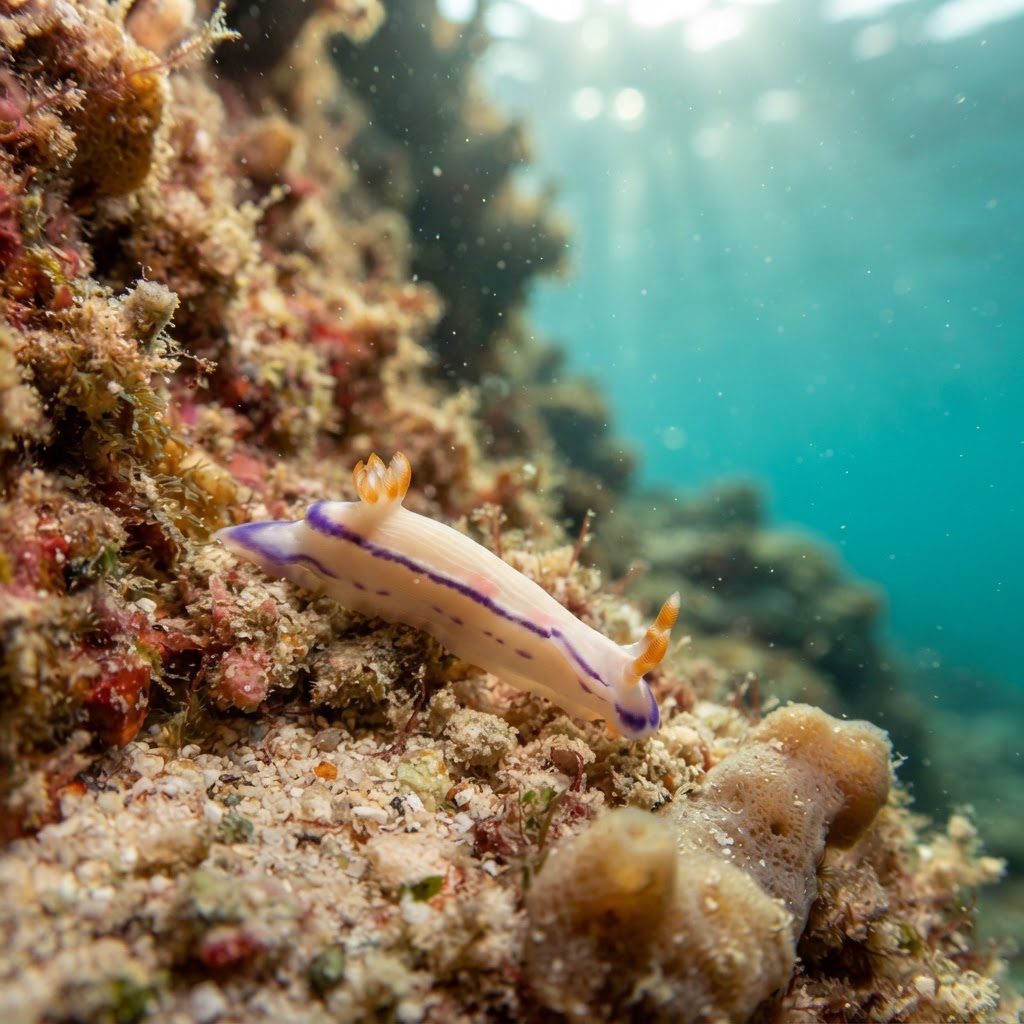
Hypselodoris peasei
A Hawaii speciality nudibranch, most commonly logged around Hawaii reefs in water between 22 and 28 C, year-round.
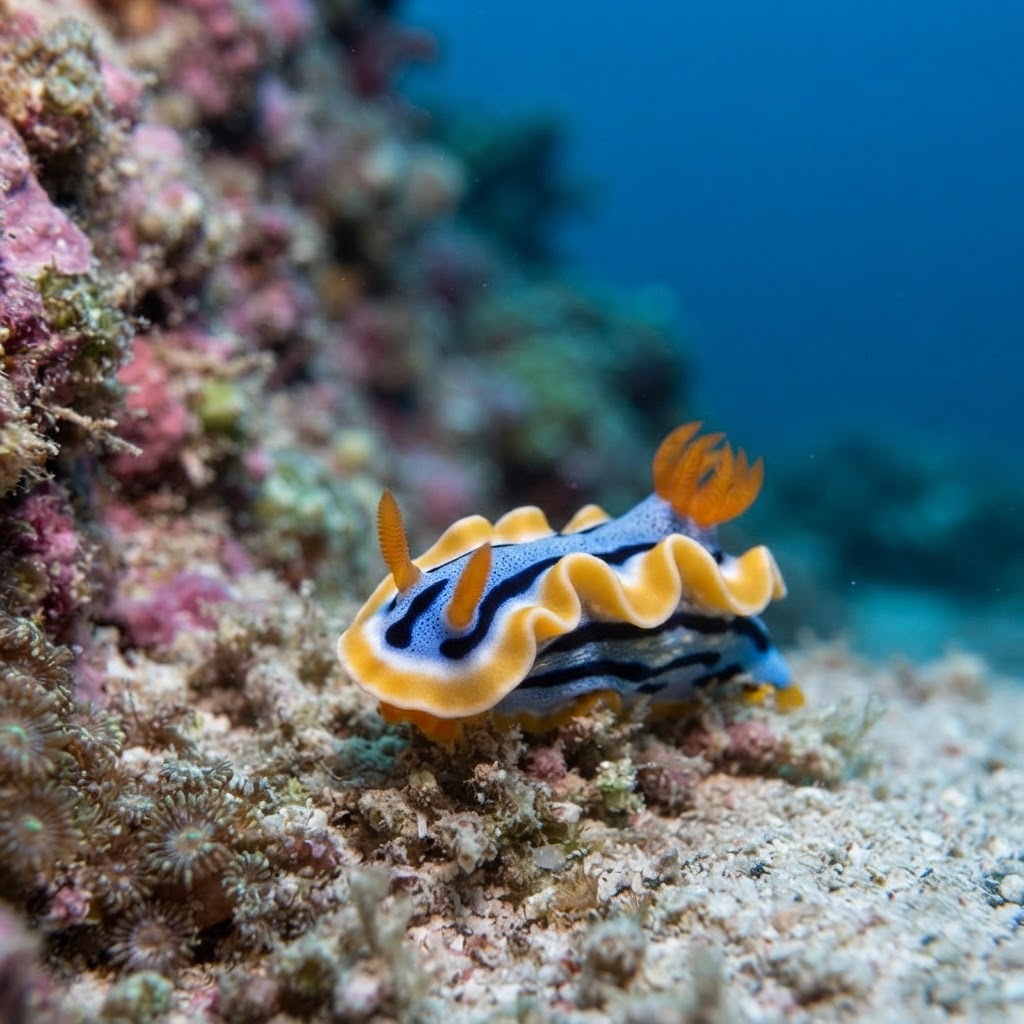
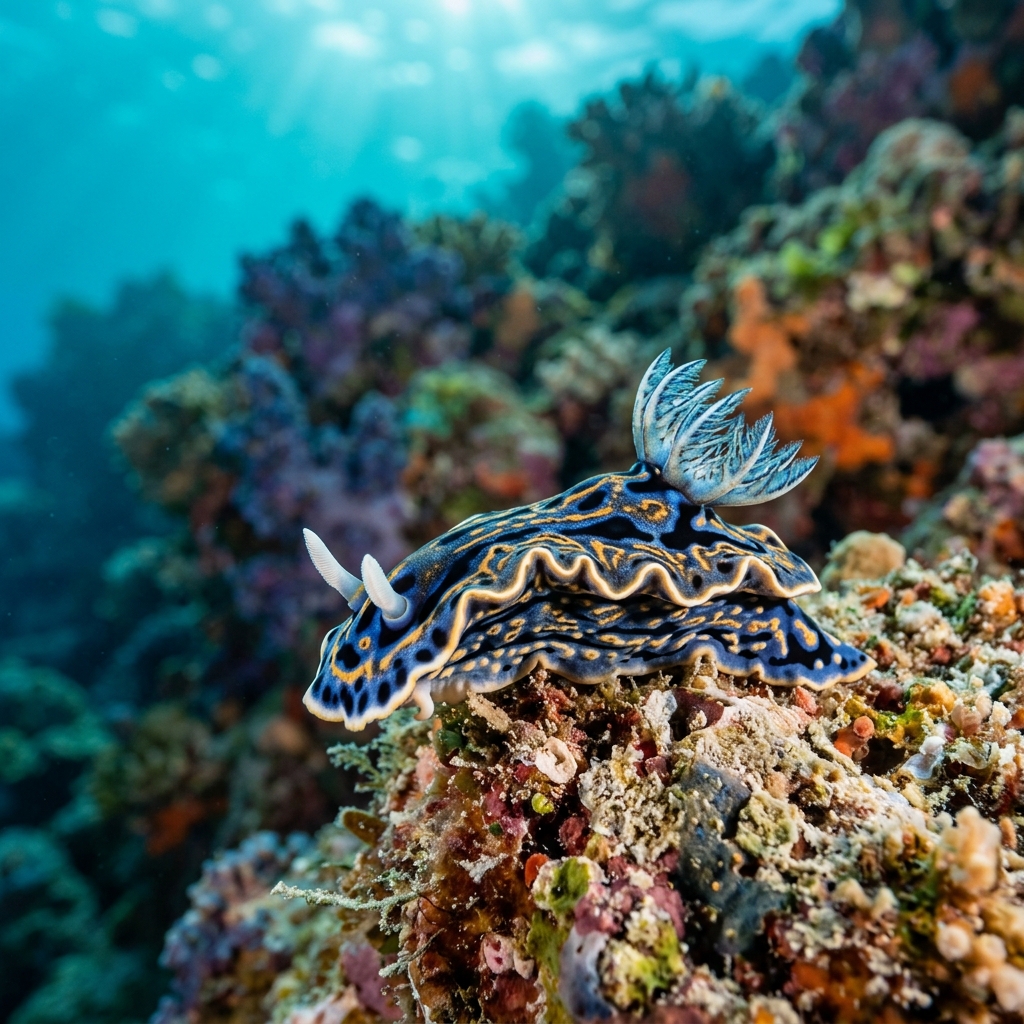
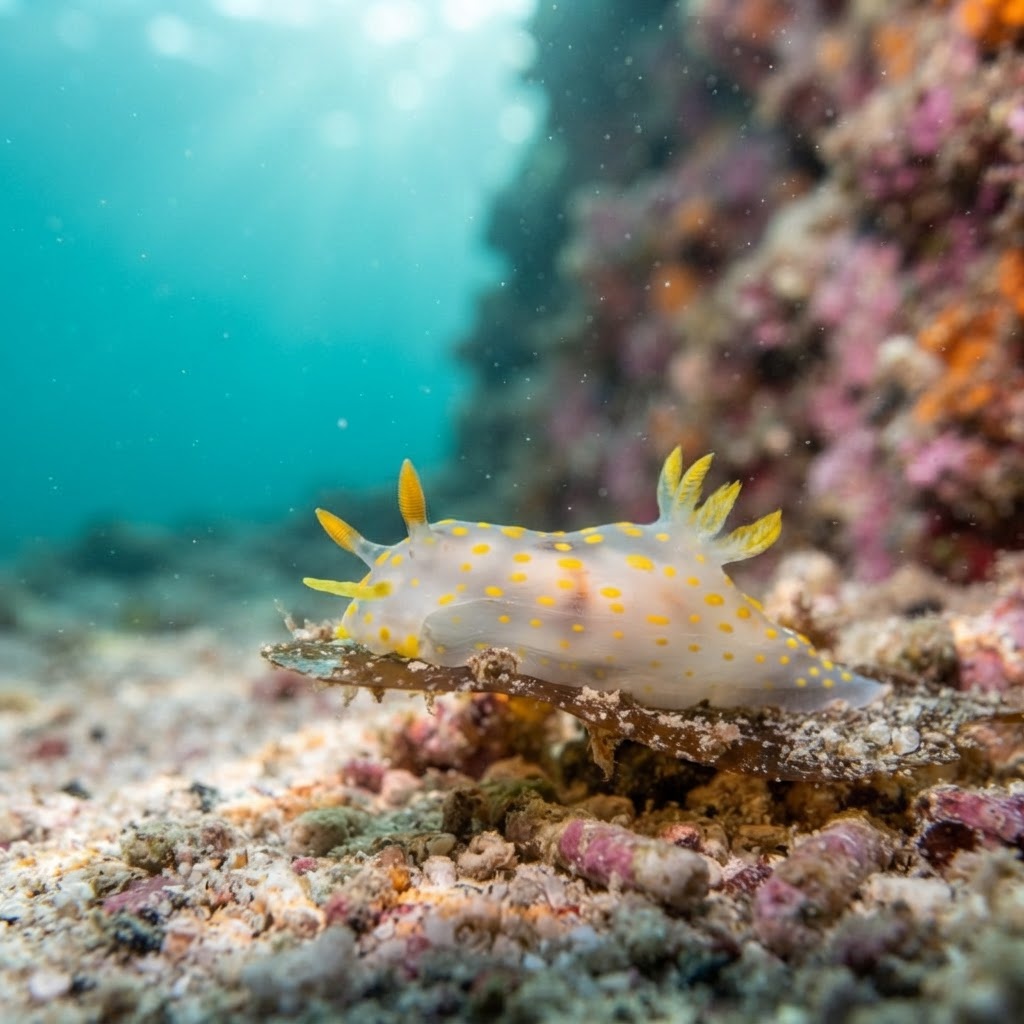
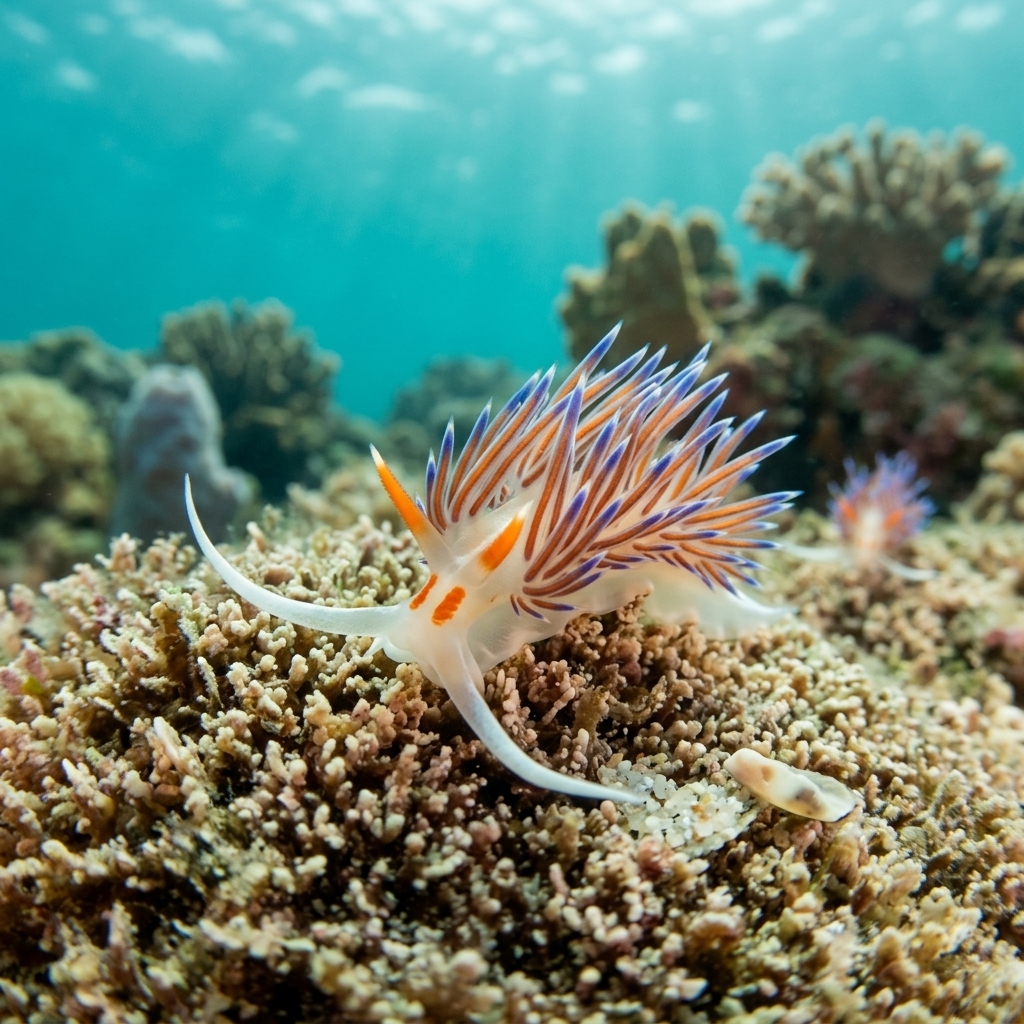
Look for a small, elongated sea slug (nudibranch) with a smooth, glossy mantle carrying the bold contrasting colour pattern typical of Hypselodoris species. It moves slowly across rock and reef surfaces, usually spotted by divers scanning walls and rubble at close range rather than swimming in open water. Its rhinophores (the paired sensory tentacles on the head) and gill plume at the rear are the two features to check against similar species when confirming an ID.
Divers typically find it parked on rock, rubble or reef substrate, grazing slowly rather than swimming, which makes it an easy subject for a close macro look once spotted. It shows no reaction to divers beyond the usual slow retreat of a slug disturbed at close range, so a careful approach and a steady light are all that is needed. Most sightings come from divers working slowly over hard bottom and reef edges rather than mid-water.
Like other Hypselodoris species, it likely feeds on sponges and stores chemical compounds from that diet in its tissue as a defence against predators, which is part of why its colours are so bold despite having no shell to hide in.
Sightings show no clear seasonal pattern, and with water temperatures logged between 22.4 and 28.4 C, it appears to be present on Hawaiian reefs year-round rather than tied to a particular month.
Reef neighbours a diver could mistake it for. Use the identification notes above to tell them apart.
This is very much a Hawaii speciality among logged sightings, with every recorded site so far coming from Hawaiian waters. Divers looking for it should focus on Hawaii's reef and rubble sites, where it turns up as an uncommon to common find depending on the location.
Mapping where Hypselodoris Peasei is logged…
Logged sightings are concentrated in Hawaii, where it turns up on reef and rubble sites as an uncommon to common find. It has not been reliably recorded outside Hawaiian waters so far.
There is no detected season for this species. Water temperatures at recorded sites range from 22.4 to 28.4 C, consistent with a year-round presence on Hawaiian reefs.
Look for a small, smooth-bodied nudibranch with a bold contrasting mantle pattern, paired rhinophores on the head and a gill plume at the tail end. It moves slowly over rock and rubble rather than swimming, so a close, patient look is usually needed to confirm the pattern.
Exact size data is not confirmed for this species, but like most Hypselodoris nudibranchs it is a small animal, typically only a few centimetres long, best spotted with a slow scan of the reef surface rather than from a distance.
No. It poses no threat to divers and can be observed and photographed safely at close range without disturbing it.
It almost certainly feeds on sponges and, like related species, may sequester chemical compounds from that diet in its skin as a defence against predators, which helps explain its bright, high-contrast colouring.
Site and sighting data is aggregated from diver logs, iNaturalist and GBIF. For taxonomy and conservation status:
Nudibranch
3,168 sites