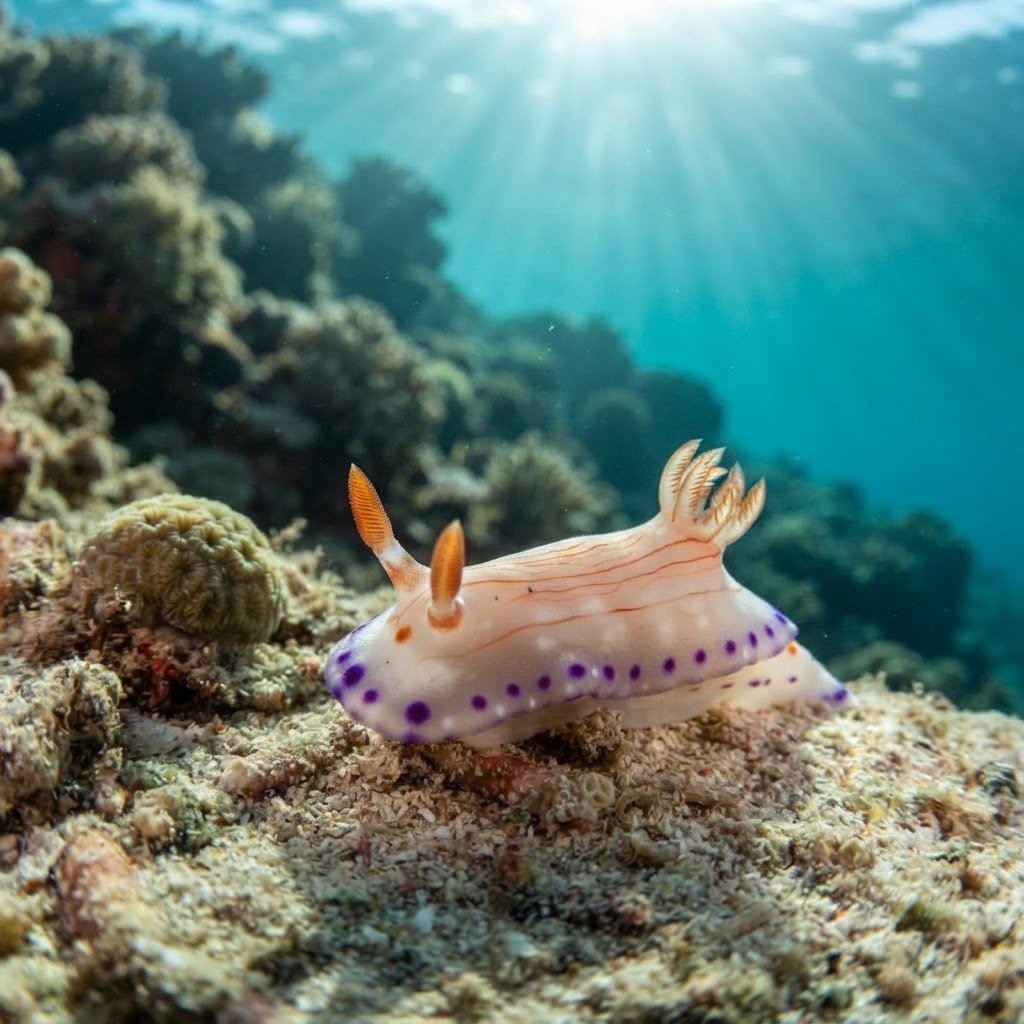
Hypselodoris katherinae
Purple-blue nudibranch logged across Maluku, Indonesia and Taiwan's Longdong reefs, uncommon but year-round on warm tropical reefs.
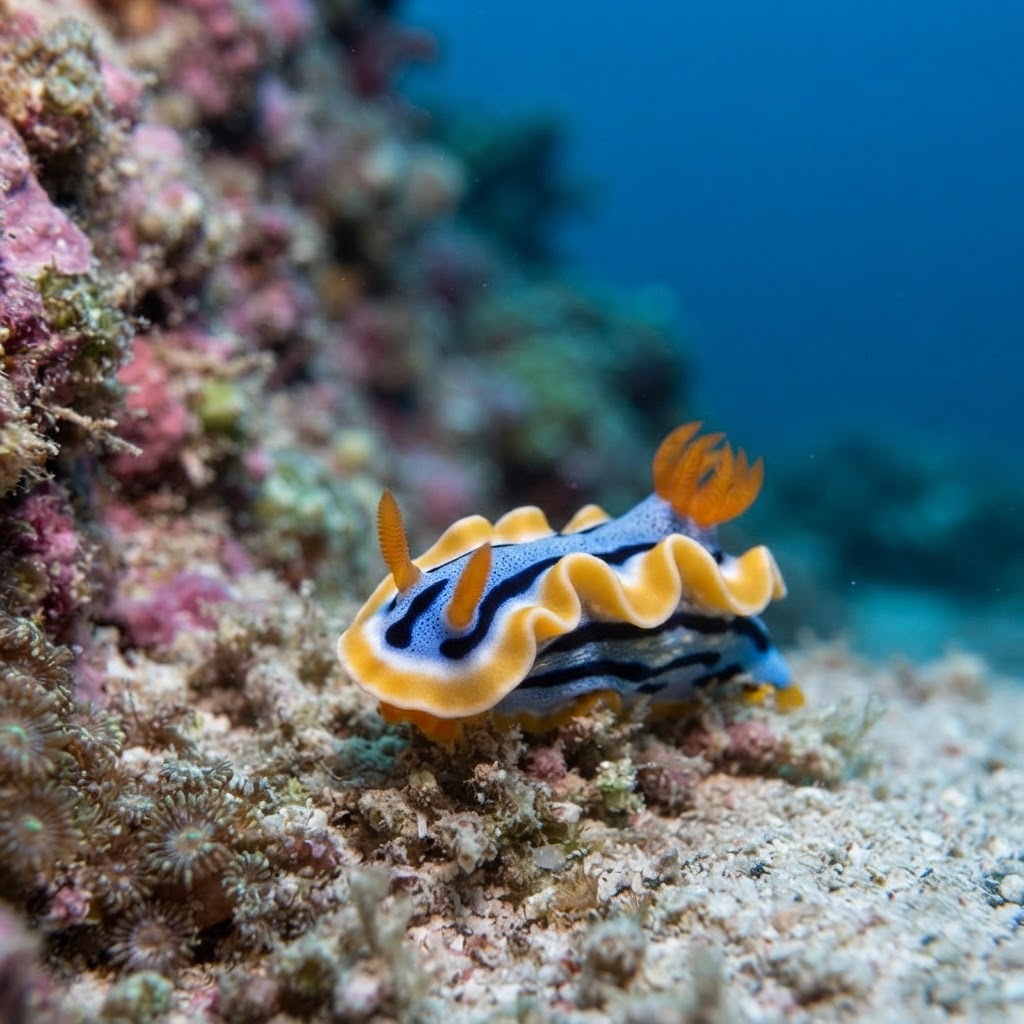
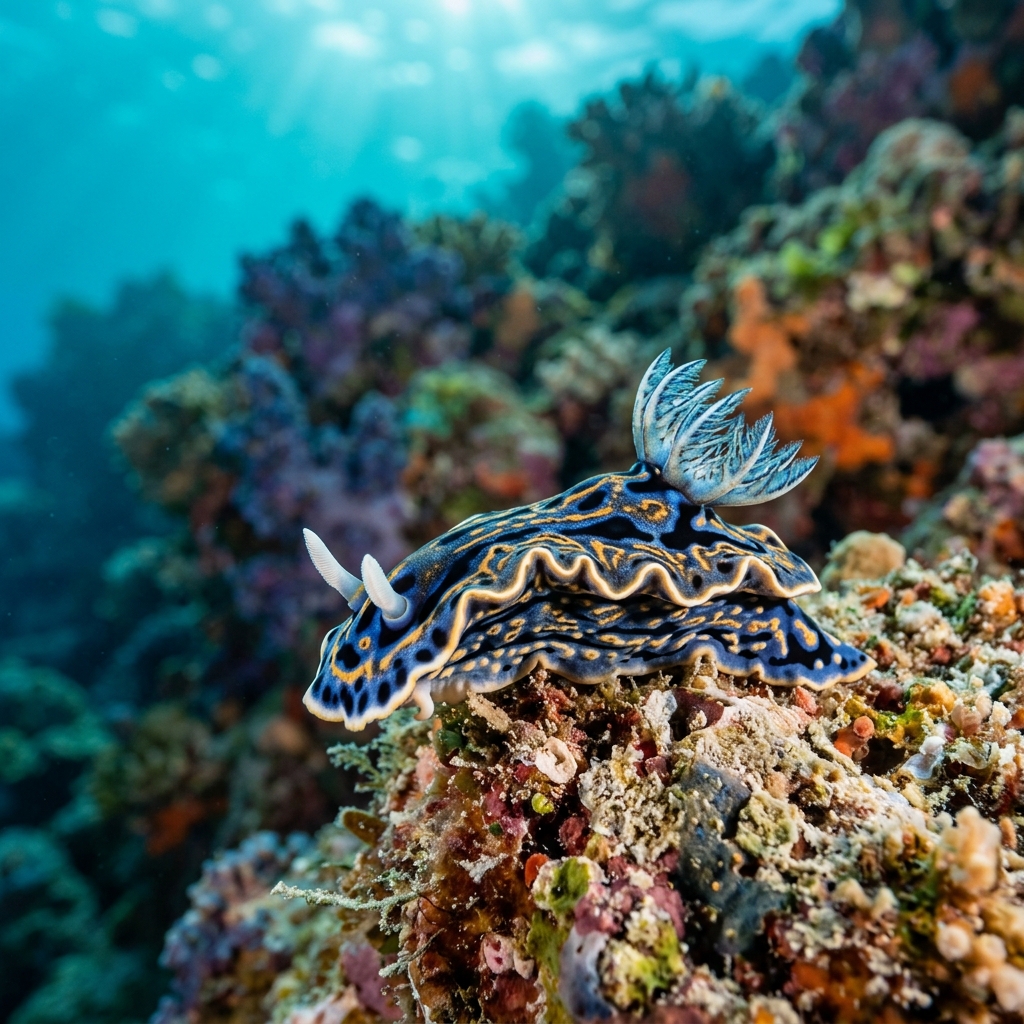
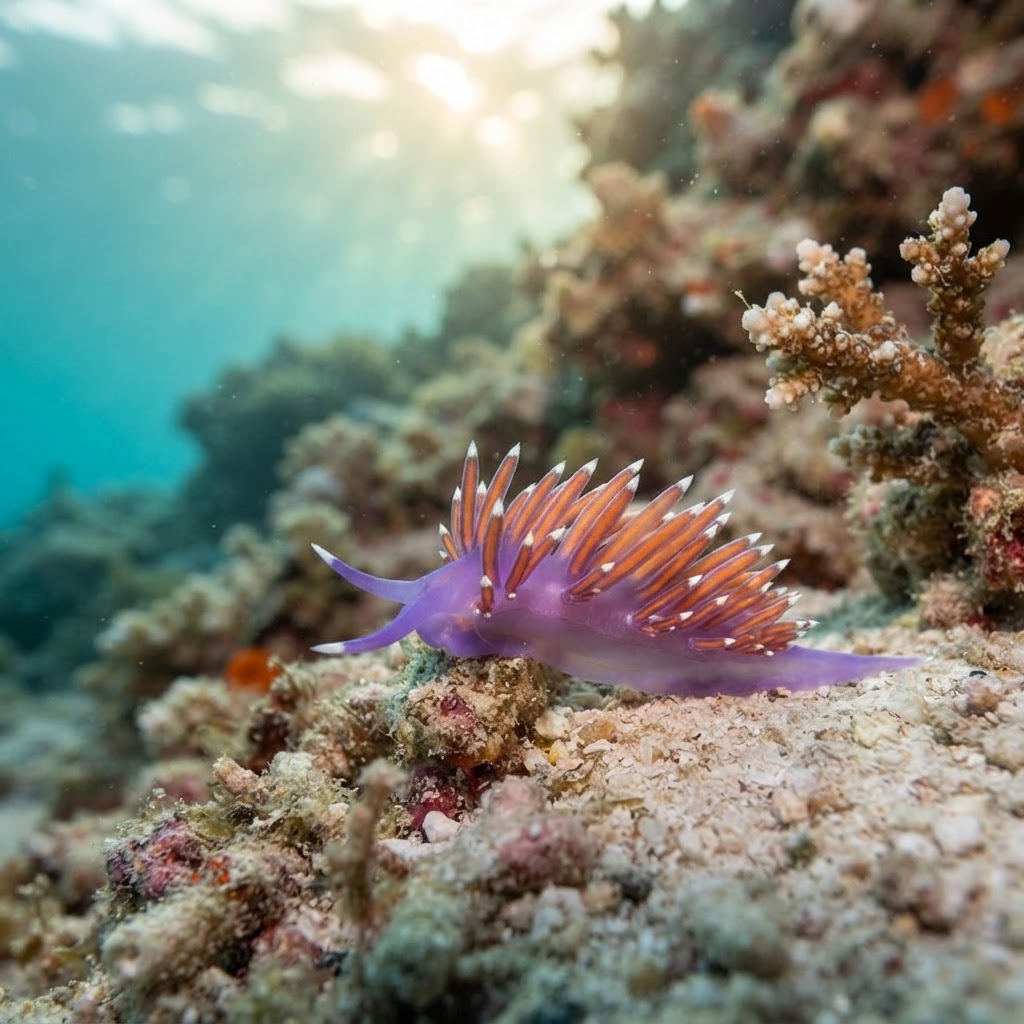
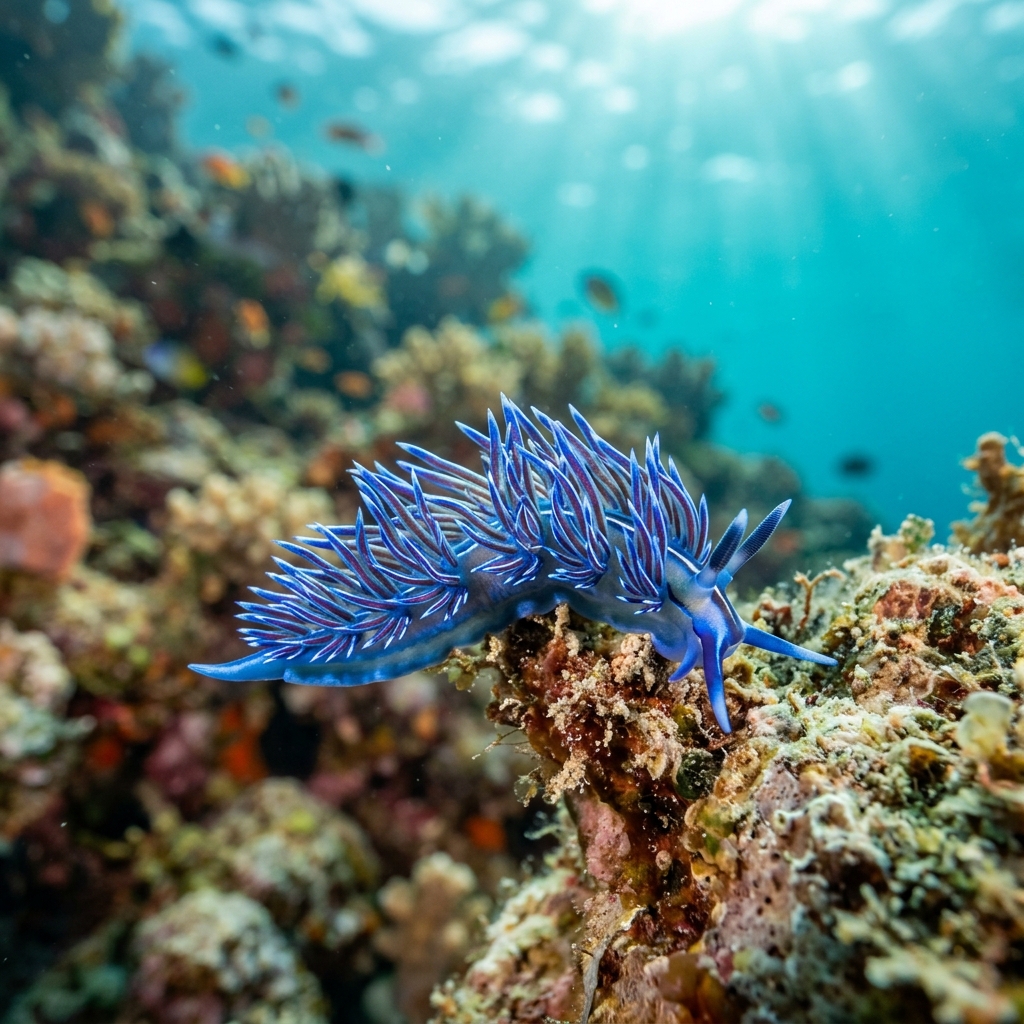
Look for a slender, soft-bodied slug in shades of violet to deep purple, usually only a few centimetres long as it moves across the reef. A cluster of feathery gills (the exposed breathing organs on its back) often shows an orange or yellow tip, and fine longitudinal lines run along the mantle edge. It moves slowly and stays low on hard substrate, so a careful scan of rubble and coral rock is usually how divers spot one.
Divers usually find this nudibranch grazing slowly over rubble, rock, or low reef structure, feeding on the sponges that make up its diet. It shows no reaction to divers beyond its usual unhurried pace, since it has no eyes or ears to register a diver's presence, and it is just as likely to be seen on a day dive as a night dive given its sluggish, constant movement.
Like other Hypselodoris species, its vivid colouring is not for show to divers but a warning to predators, since it stores distasteful or toxic compounds absorbed from the sponges it eats.
No clear seasonal pattern shows up in the data, and with a comfortable range of roughly 22 to 30 C, it turns up year-round on the tropical and subtropical reefs where it lives. Treat any dive trip to its core sites as a fair chance, not a seasonal bet.
Reef neighbours a diver could mistake it for. Use the identification notes above to tell them apart.
Most reliably logged in Maluku, Indonesia, which accounts for the largest share of sightings, followed by Longdong in Taiwan and the east coast of Peninsular Malaysia. Divers also find it in Bali, the Southern Islands of Singapore, and along New South Wales in Australia, though always in smaller numbers.
Mapping where Hypselodoris Katherinae is logged…
Maluku in Indonesia has the strongest record of sightings, with additional reliable finds at Longdong in Taiwan and along Malaysia's east coast. Smaller numbers turn up in Bali, Singapore's Southern Islands, and New South Wales, Australia.
There's no strong seasonal signal in the sighting data, so it's considered a year-round find. Its comfortable water-temperature range of roughly 22 to 30 C matches the tropical reefs it favours in every season.
Check for a small, slow-moving slug in violet to deep purple tones with fine lines along the mantle edge and orange- or yellow-tipped gills on its back. It stays close to hard substrate rather than swimming in open water.
Exact size data isn't confirmed for this species, but like most Hypselodoris nudibranchs it stays small, typically just a few centimetres long, so a slow, close look at the reef surface is needed to spot one.
Its purple colouring isn't decorative, it signals toxicity. Sponge-feeding nudibranchs like this one absorb and store distasteful chemical compounds from their prey, and bright colour warns predators off before they take a bite.
Site and sighting data is aggregated from diver logs, iNaturalist and GBIF. For taxonomy and conservation status:
Blue Dragon
3,163 sites