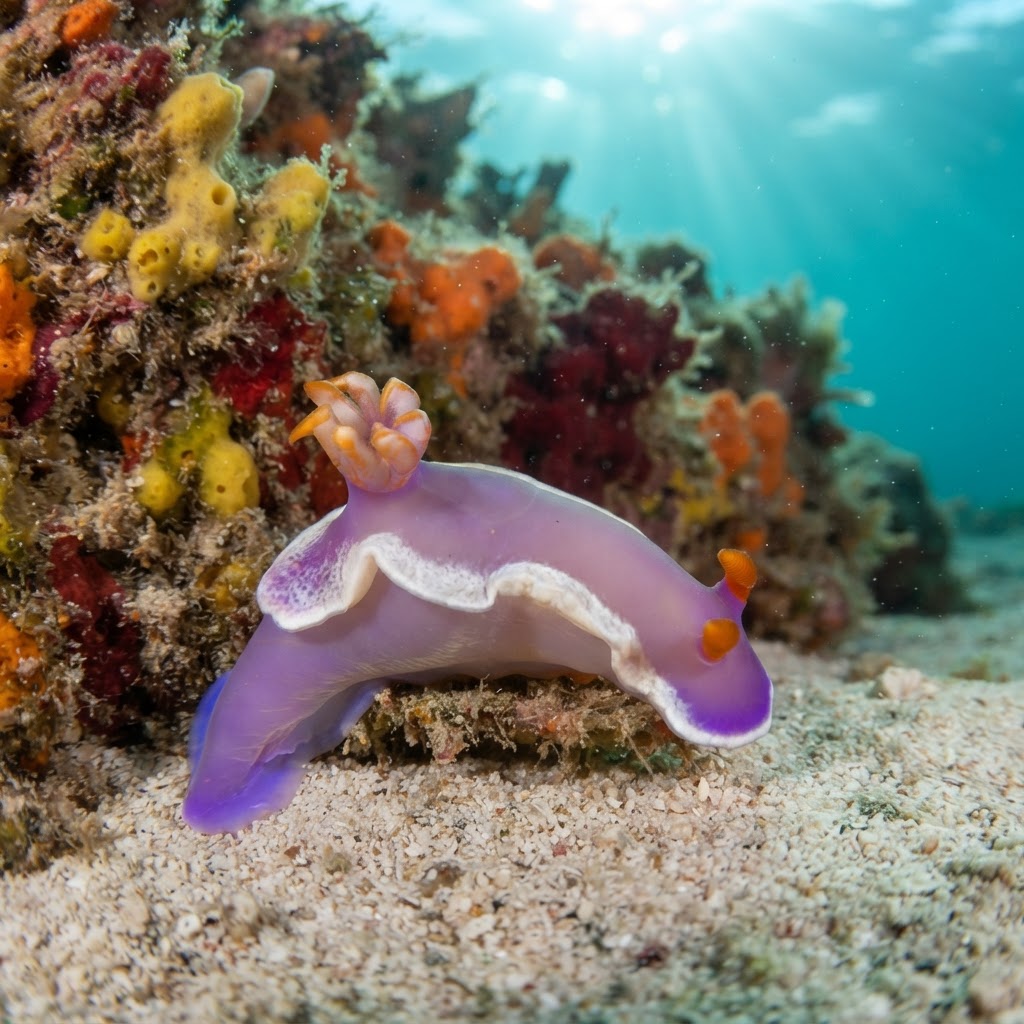
Hypselodoris iba
An uncommon nudibranch find, most reliably logged on Bali's warm reefs around 25.6 to 31.6 C year-round.
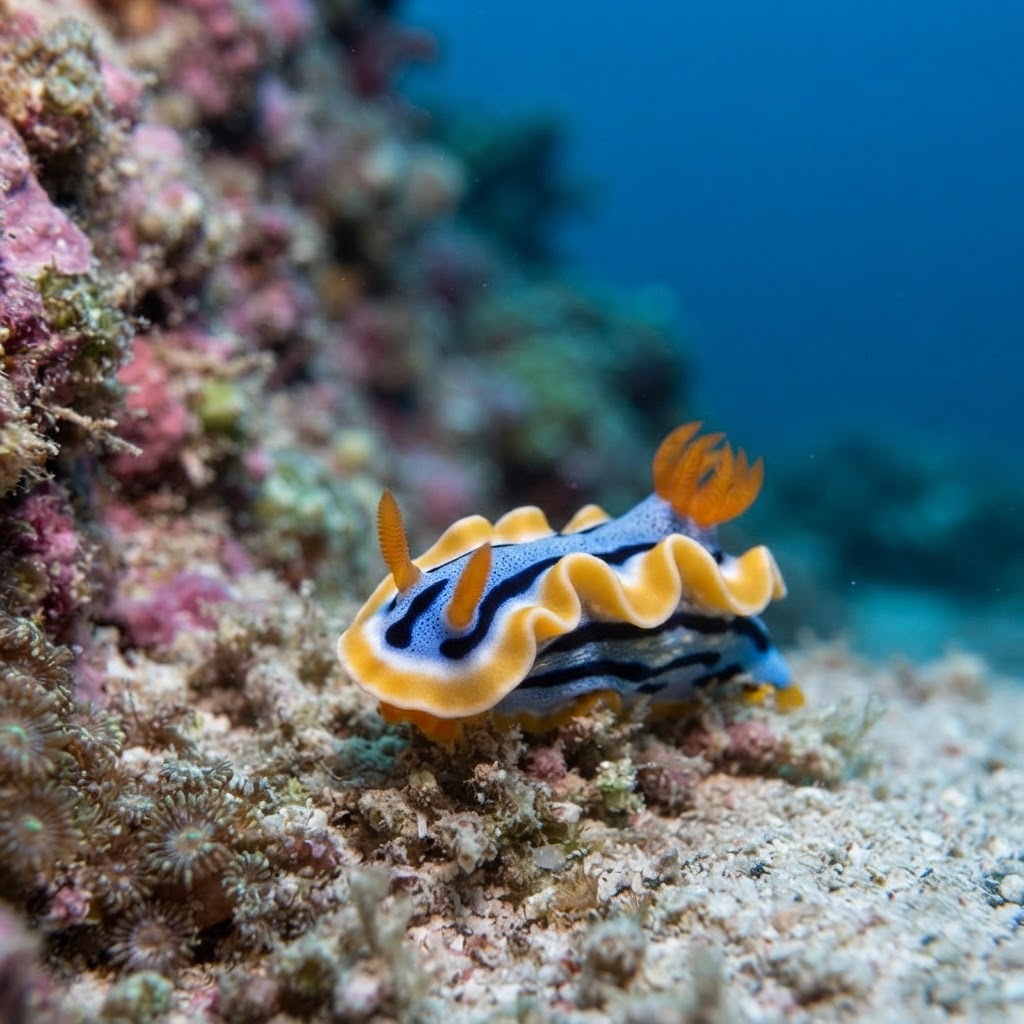
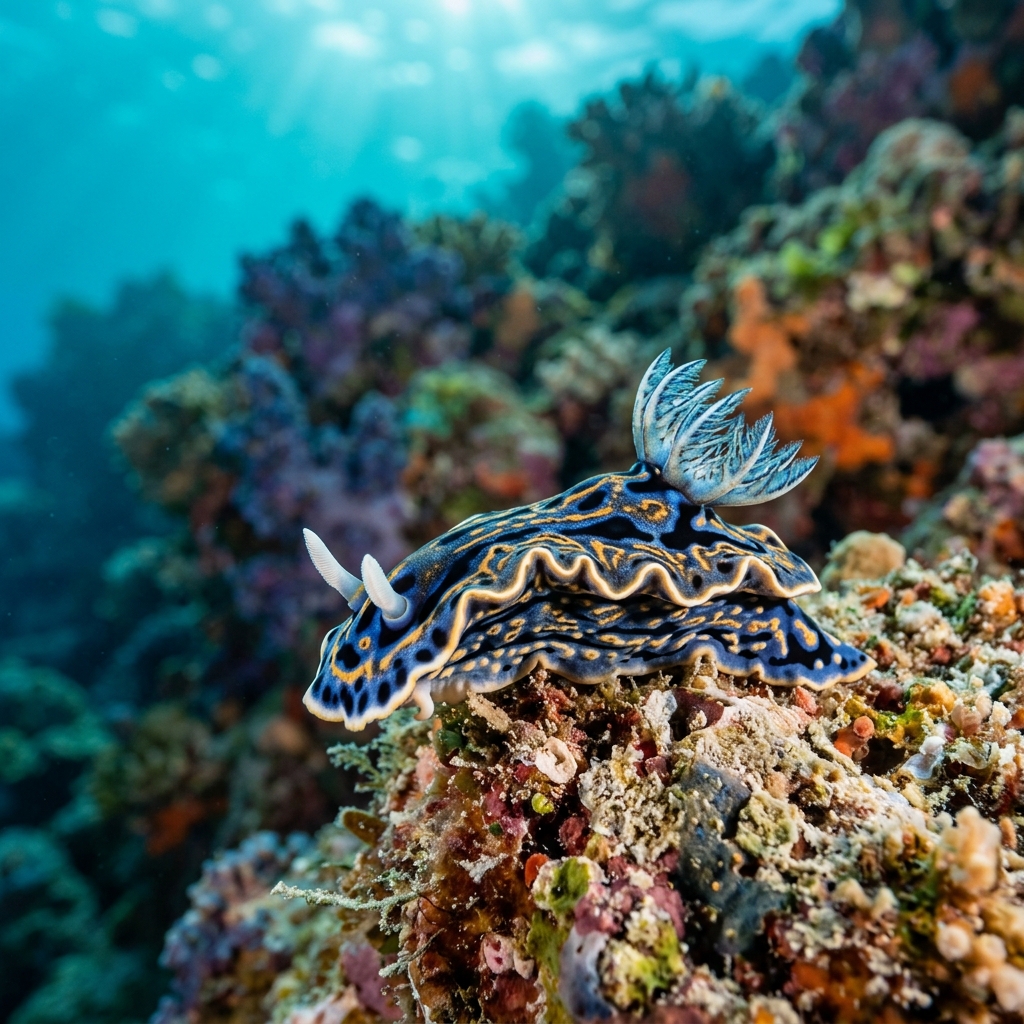
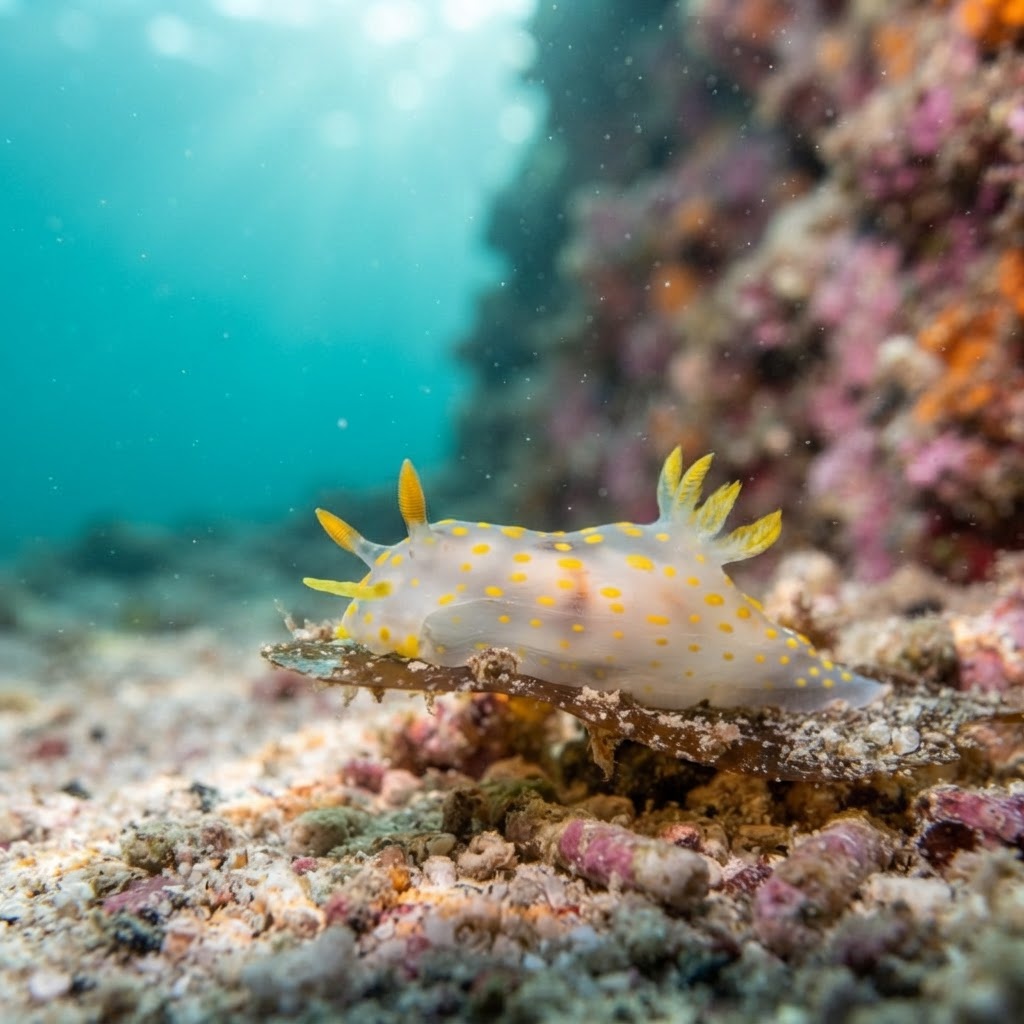
A small, soft-bodied sea slug (nudibranch) identified mainly by its patterned mantle and the pair of rhinophores (sensory tentacles) on its head plus a feathery gill cluster near the tail. Like other Hypselodoris species, it moves slowly across reef substrate and coral rubble rather than swimming, so divers get a steady close look. Exact size and colour details are not well documented for this species, so treat any photo comparison with local Chromodorididae as your best field check.
Divers find it moving slowly across the reef surface, browsing on sponges the way most Hypselodoris nudibranchs do, and it makes no attempt to flee or hide when approached. Look for it on hard coral substrate and rubble patches during daytime dives, since it is logged as an uncommon find even at the sites where it turns up. Patience and a careful eye on the substrate, rather than the water column, are what turn up a sighting.
Like other Chromodorididae, it likely absorbs chemical compounds from the sponges it feeds on and repurposes them as a defence against predators, which is part of why these nudibranchs can afford to sit out in the open on the reef.
Sightings show no detectable seasonal pattern, and the observed water temperature range of 25.6 to 31.6 C fits typical Indo-Pacific reef conditions year-round, so there is no particular month to target.
Reef neighbours a diver could mistake it for. Use the identification notes above to tell them apart.
Most consistently logged in Bali, Indonesia, which accounts for the bulk of recorded sightings, with additional finds in Sulawesi, Indonesia, the Southern Islands of Singapore, and Luzon in the Philippines. Bali is the strongest bet if you want to search it out specifically.
Mapping where Iba Hypselodoris is logged…
Bali, Indonesia is the most reliable spot, with further sightings logged in Sulawesi, Indonesia, the Southern Islands of Singapore, and Luzon in the Philippines. It is considered uncommon even at these sites, so it takes a dedicated search.
There is no clear seasonal pattern in the sighting data, and the warm 25.6 to 31.6 C water it is found in is typical of these reefs all year, so any month is worth a try.
Look for a small, slow-moving nudibranch with a patterned mantle, a pair of rhinophores on the head, and a feathery gill tuft near the tail. It sits out in the open on coral rubble and hard substrate rather than hiding.
No. It poses no threat to divers and can be observed and photographed up close without any risk.
Exact size data is not well documented for this species, but like most Hypselodoris nudibranchs it is likely only a few centimetres long, best spotted by scanning the reef surface closely.
As a member of the Chromodorididae family, it likely feeds on sponges and repurposes their chemical defences into its own skin, letting it sit exposed on the reef without much fear of predators.
Site and sighting data is aggregated from diver logs, iNaturalist and GBIF. For taxonomy and conservation status:
Light-spotted Aegires
3,168 sites