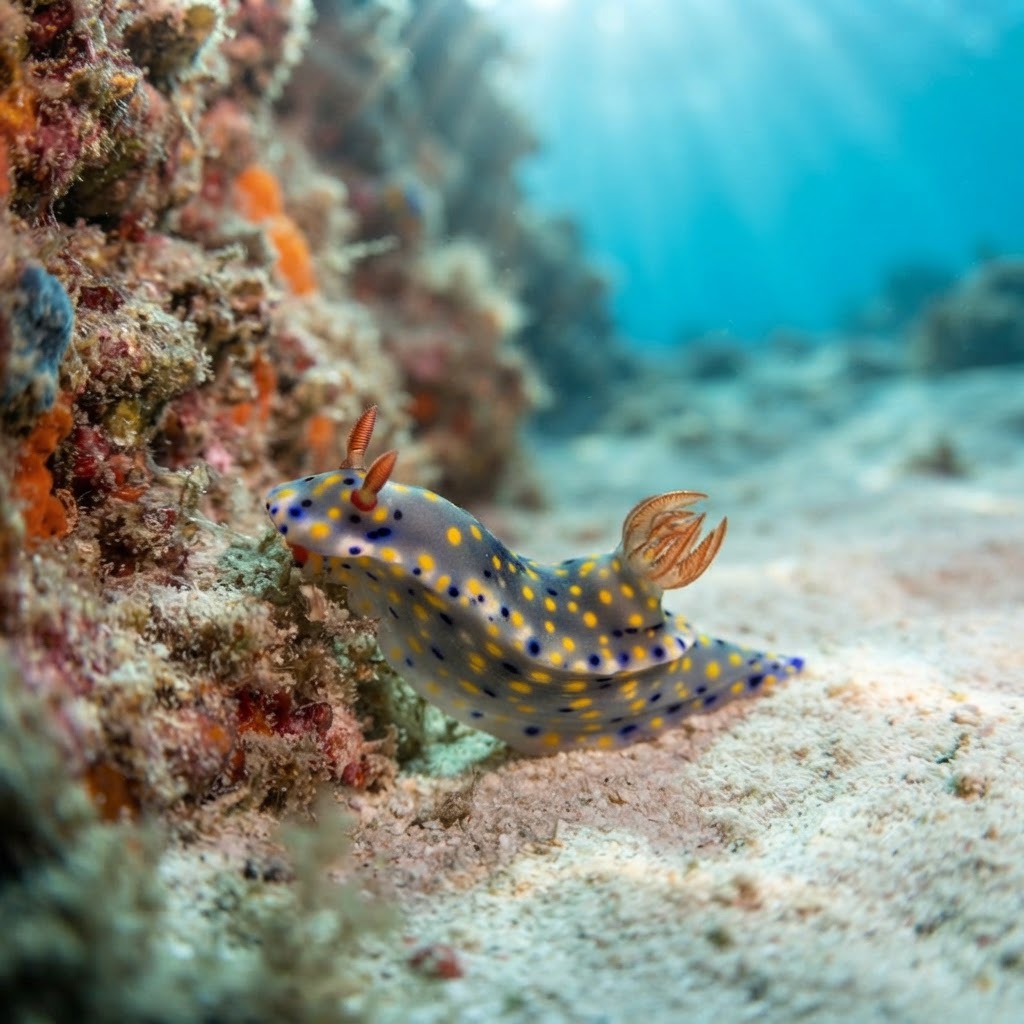
Hypselodoris confetti
Prized sighting on Bali's reefs in warm 25-31C water; uncommon but logged at multiple sites year-round.
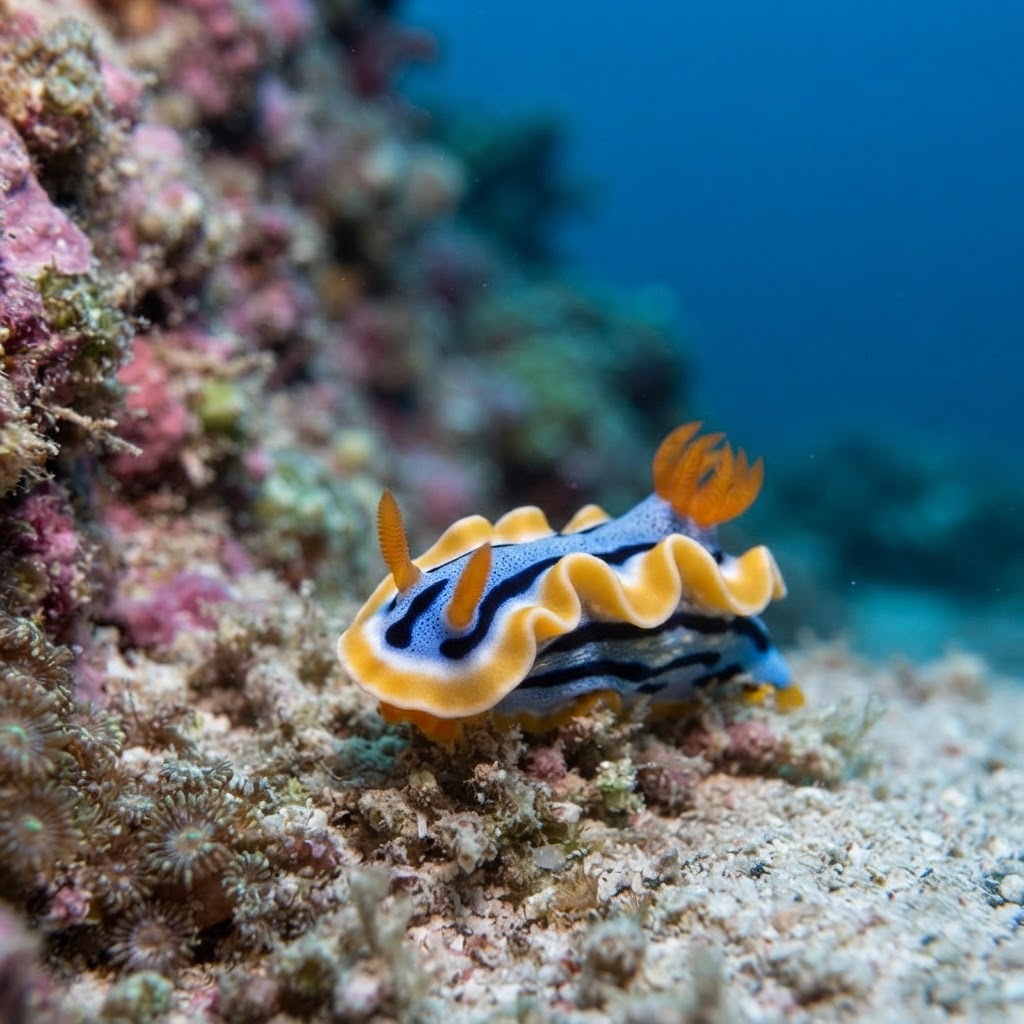
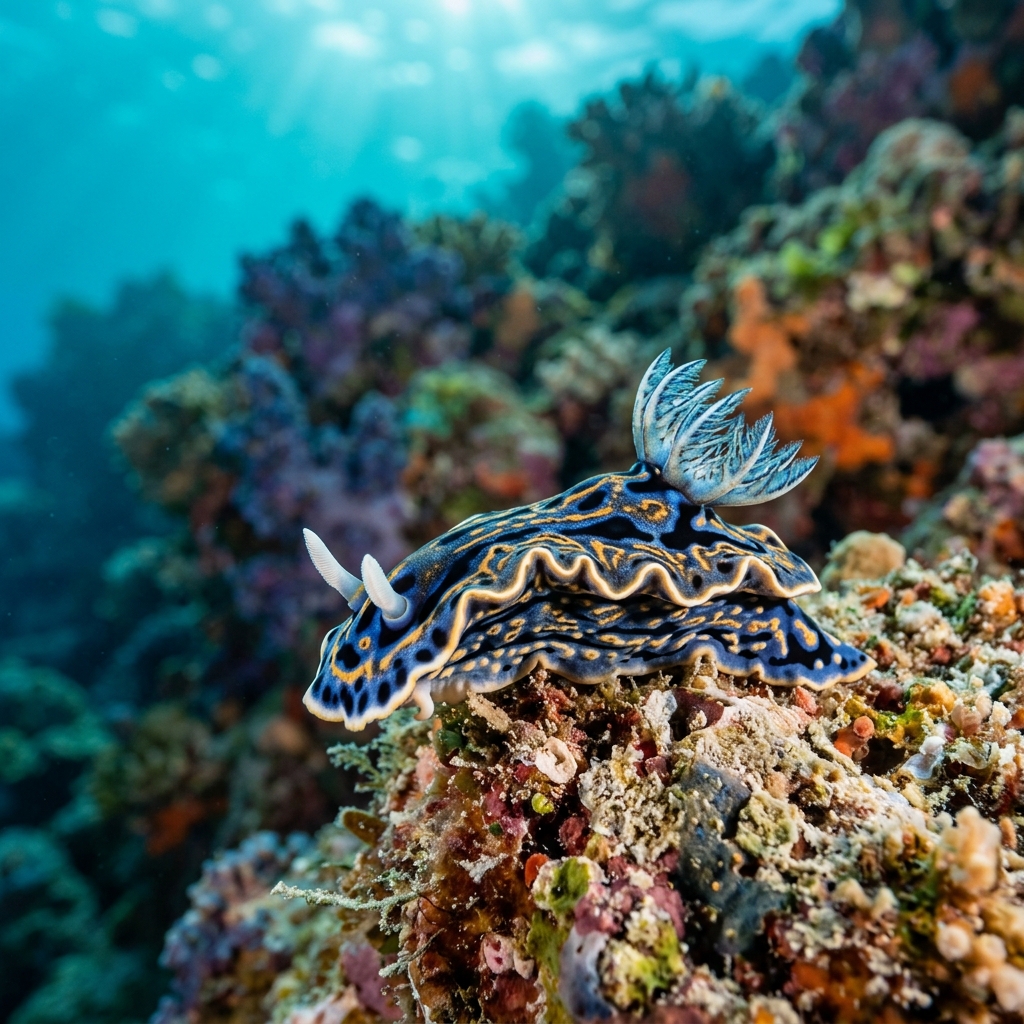
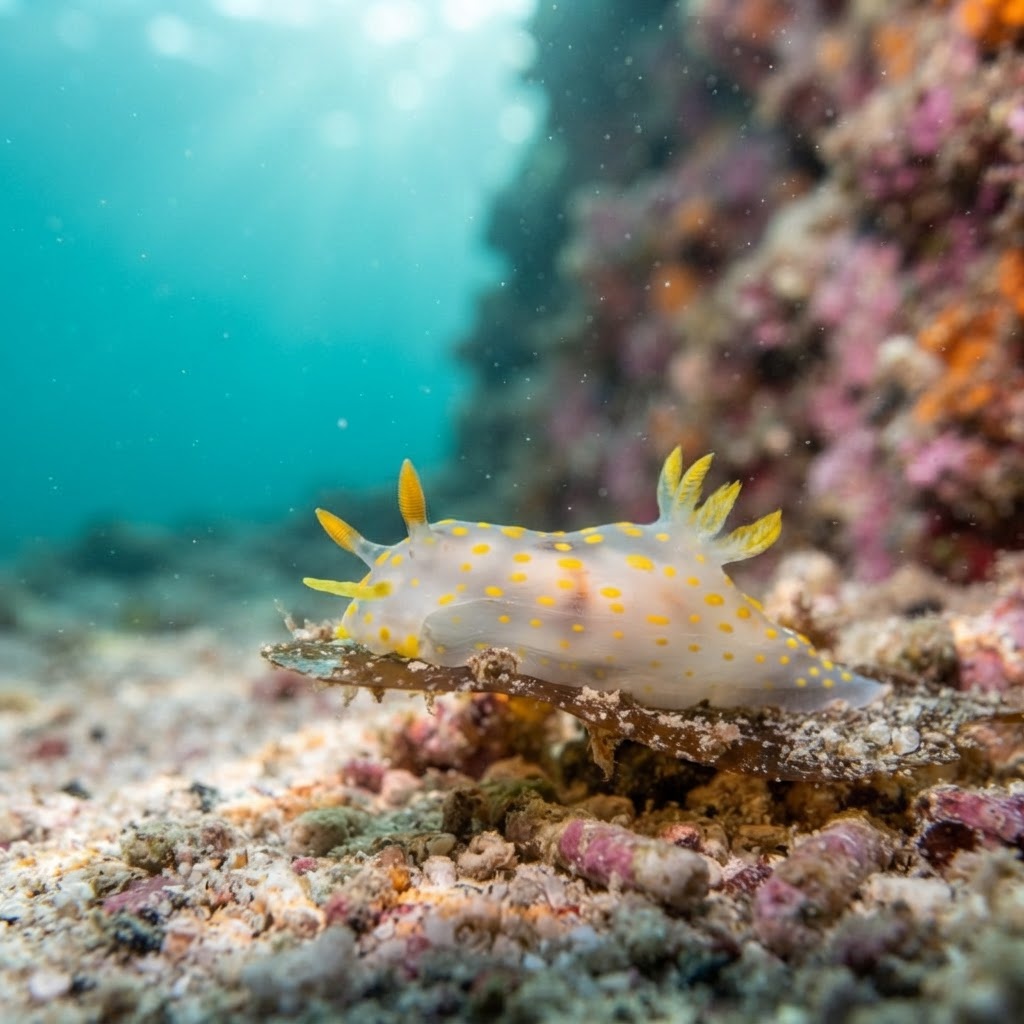
Small, elongate sea slug (nudibranch) with a soft, translucent-looking mantle covered in a fine speckled or confetti-like pattern of spots. Look for the raised gill cluster (rhinophores and gill plume) near the rear of the body, a feature shared across the Hypselodoris genus, set against a body colour that reads as a scattered, mottled wash rather than bold solid stripes. Size in the water is small, easy to swim past if you're not scanning sponge and rubble patches closely.
Divers find it moving slowly across reef substrate and rubble, doing what most Hypselodoris nudibranchs do: grazing on sponges at an unhurried pace, largely indifferent to divers hovering close by. It's logged as uncommon at every site where it appears, so sightings tend to be a one-off find during a slow, close look at the substrate rather than something you stumble on repeatedly on the same dive.
Like other Hypselodoris species, it likely feeds on specific sponges and can retain or repurpose chemical compounds from that diet as a defence against predators, a common nudibranch strategy.
No clear seasonal pattern shows up in the sighting data, and the observed water temperature range of roughly 25 to 31C holds steady on Bali's reefs year-round, so any time of year is fair game. Treat this as a species to look for on any Bali dive trip rather than one tied to a particular month.
Reef neighbours a diver could mistake it for. Use the identification notes above to tell them apart.
Every logged sighting so far comes from Bali, Indonesia, making it the only real place to plan a search for this species right now. Within Bali it turns up across a spread of sites rather than one single hotspot, so divers exploring several Bali locations on a trip improve their odds.
Mapping where Confetti Hypselodoris is logged…
Every confirmed sighting comes from Bali, Indonesia, spread across several dive sites there rather than concentrated at one spot. There's no confirmed record from outside Bali yet.
There's no detected season in the sighting data, and Bali's reef water sits in the 25 to 31C range year-round, so it can turn up on any month's dive trip.
Look for a small, soft-bodied nudibranch with a speckled, confetti-like pattern across the mantle and a gill cluster near the tail end. It's easy to confuse with other Chromodoris-type nudibranchs, so a close photo of the mantle pattern helps confirm ID.
Exact size data isn't confirmed for this species, but like most Hypselodoris nudibranchs it stays small, typically a few centimetres long, and is easy to miss unless you're scanning the reef closely.
It's logged as uncommon at every Bali site where divers have recorded it, so it's a real find rather than a guaranteed sighting, worth a slow careful look at sponge-covered rubble.
No, it poses no threat to divers. Like other nudibranchs it may carry mild chemical defences from its diet, but this only matters to predators, not to people observing it.
Site and sighting data is aggregated from diver logs, iNaturalist and GBIF. For taxonomy and conservation status:
Light-spotted Aegires
3,168 sites