Hypselodoris bertschi
Small blue nudibranch logged around Hawaii's reefs in 22.4 to 28.4C water; an uncommon but year-round find for sharp-eyed divers.
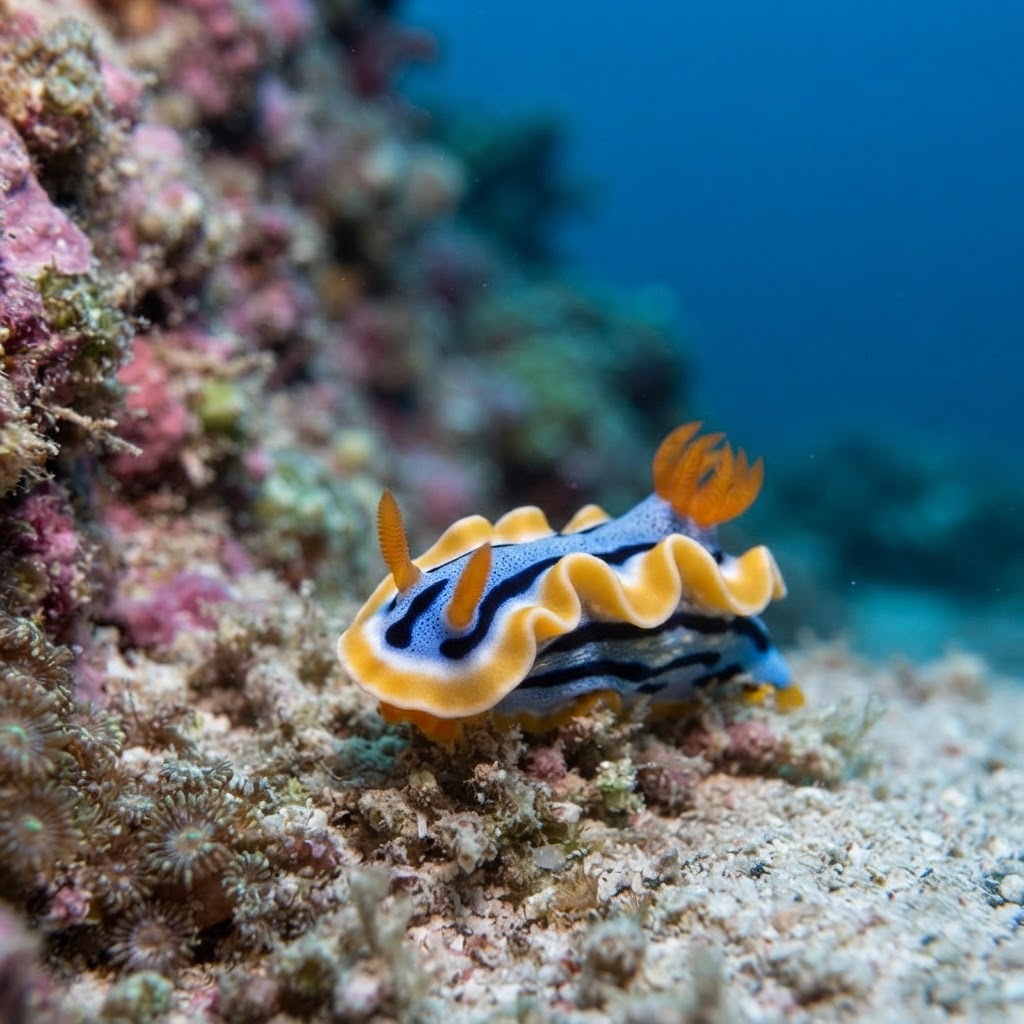
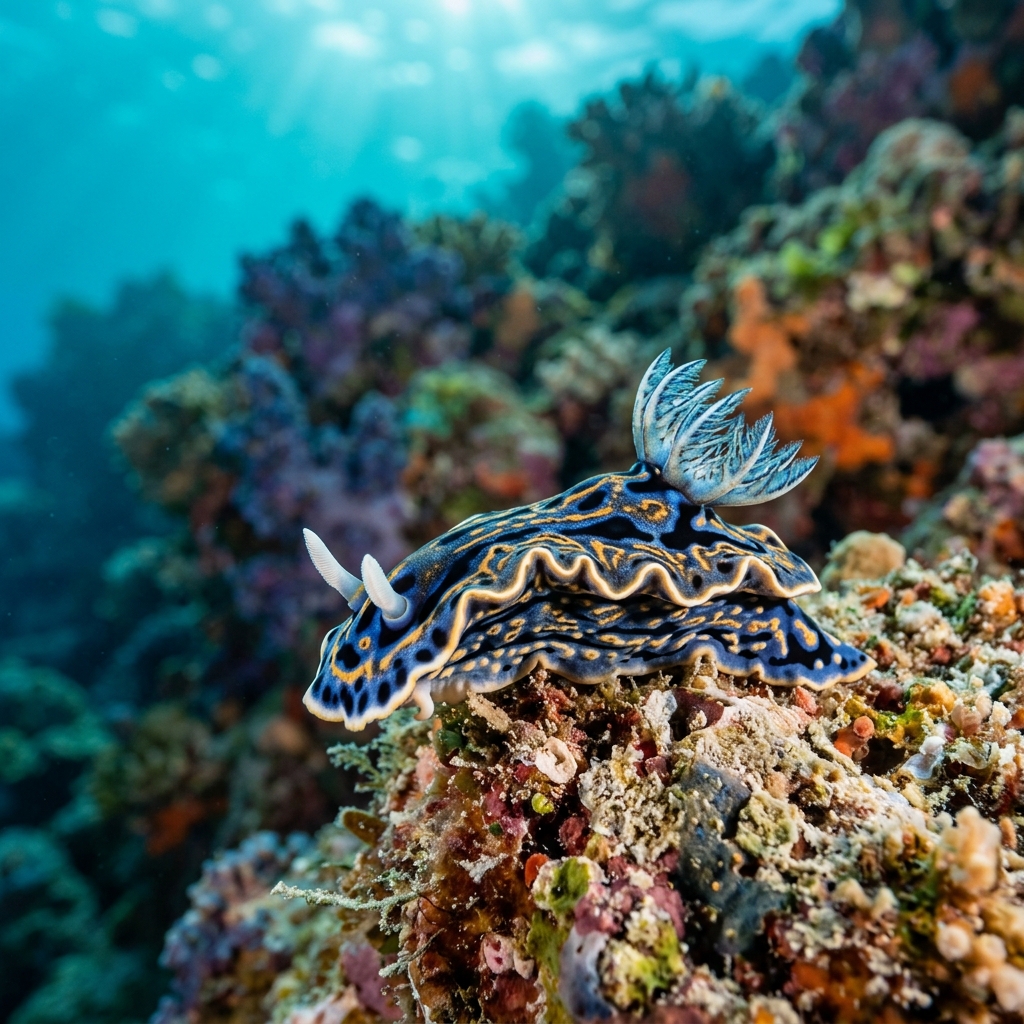
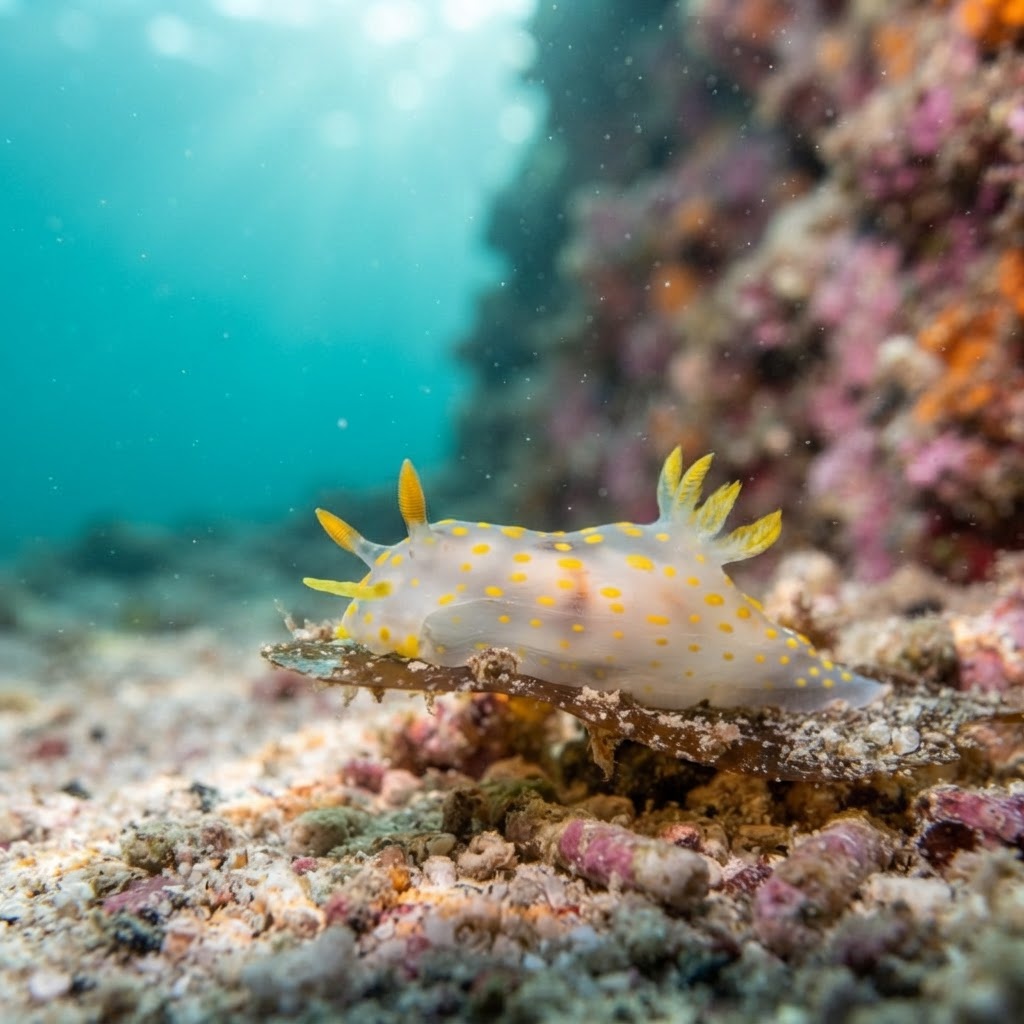
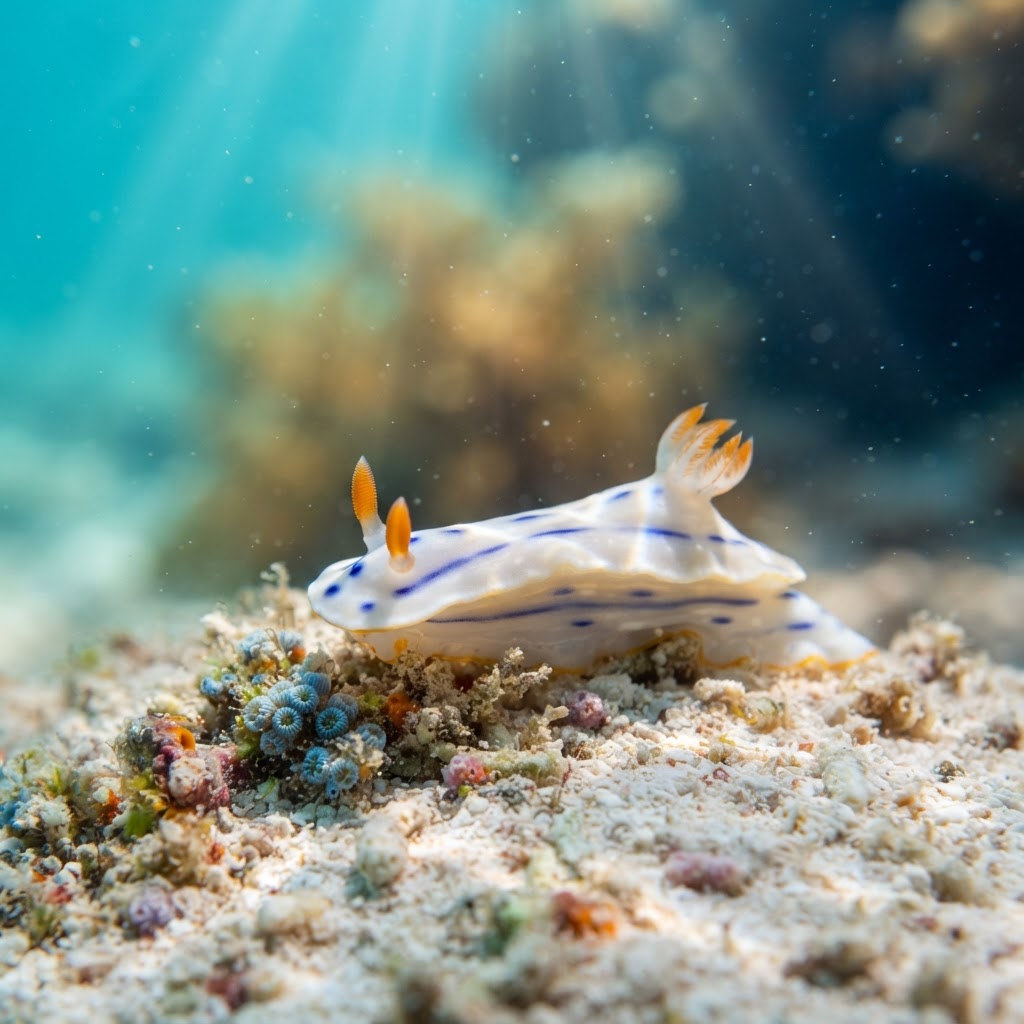
A small, slug-shaped nudibranch with a smooth, deep blue to purple mantle bordered by fine lines, and a contrasting orange-tipped gill cluster (the feathery breathing organ) at the rear. Underwater it reads as a slow-moving speck of colour against rock or rubble, usually only a few centimetres long. Look closely at the rhinophores (the paired sensory horns on the head) and the gill tuft for the colour contrast that separates it from similar dorids.
Divers typically find it grazing slowly across rock, rubble or sponge-covered surfaces, moving at the unhurried pace typical of dorid nudibranchs. It shows no reaction to divers beyond continuing its crawl, making it an easy, low-stress subject once spotted. Given its small size and uncommon status at logged sites, most sightings happen while scanning close to the substrate rather than in open water.
Like other Hypselodoris species, its bright colouring likely advertises chemical defences absorbed from the sponges it feeds on, warning predators off rather than helping it hide.
There is no detected seasonal pattern, so treat it as a year-round possibility on Hawaiian reefs where water sits comfortably between 22.4 and 28.4C. Any month is fair game; the limiting factor is patience and a slow eye, not the calendar.
Reef neighbours a diver could mistake it for. Use the identification notes above to tell them apart.
Every logged sighting for this species comes from Hawaii, United States, making it the only real place to plan a search around right now. Within Hawaii it turns up across a spread of sites rather than one hotspot, so it pays to work reef and rubble patches carefully rather than chase a single named dive.
Mapping where Hypselodoris Bertschi is logged…
All confirmed sightings come from Hawaii, United States, spread across several sites rather than concentrated at one location. It has not been logged elsewhere, so Hawaiian reefs are currently the only reliable place to look.
There is no clear seasonal pattern in the sighting data, so it is considered a year-round find. Water temperatures at recorded sites range from 22.4 to 28.4C, comfortable across the diving calendar in Hawaii.
Look for a small blue to purple-mantled nudibranch with an orange-tinged gill cluster at the tail end, crawling slowly over rock or rubble. Its size and colour contrast are the main clues, since it is easily confused with several other dorid nudibranchs at a glance.
No. It poses no threat to divers and can be observed and photographed at close range without any need for caution.
It is logged as uncommon at every site where divers have recorded it, so spotting one takes a bit of deliberate searching along the substrate rather than a casual glance.
Site and sighting data is aggregated from diver logs, iNaturalist and GBIF. For taxonomy and conservation status:
Blue Dragon
3,163 sites