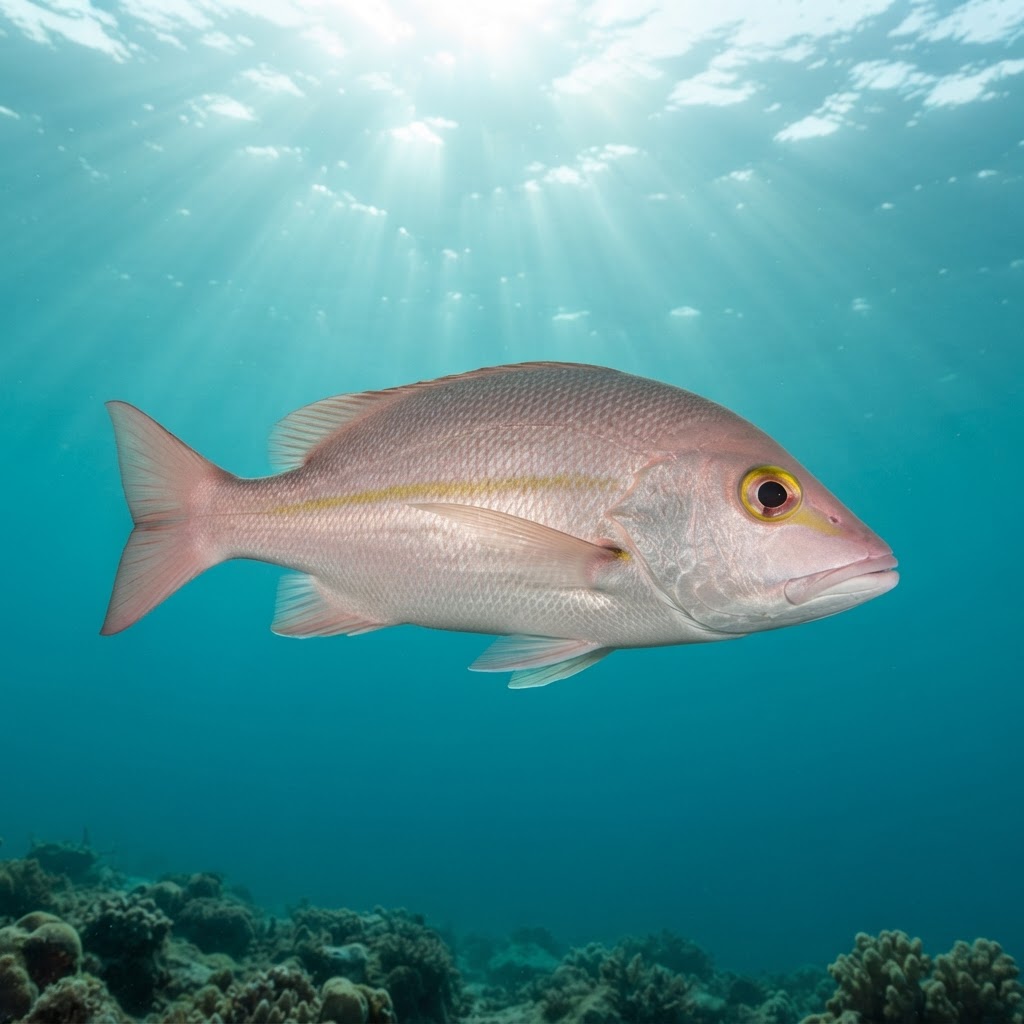
Lutjanus adetii
Hussar snapper: a pale, red-striped reef fish common on Indo-Pacific reefs in warm 23 to 28C water, year-round.
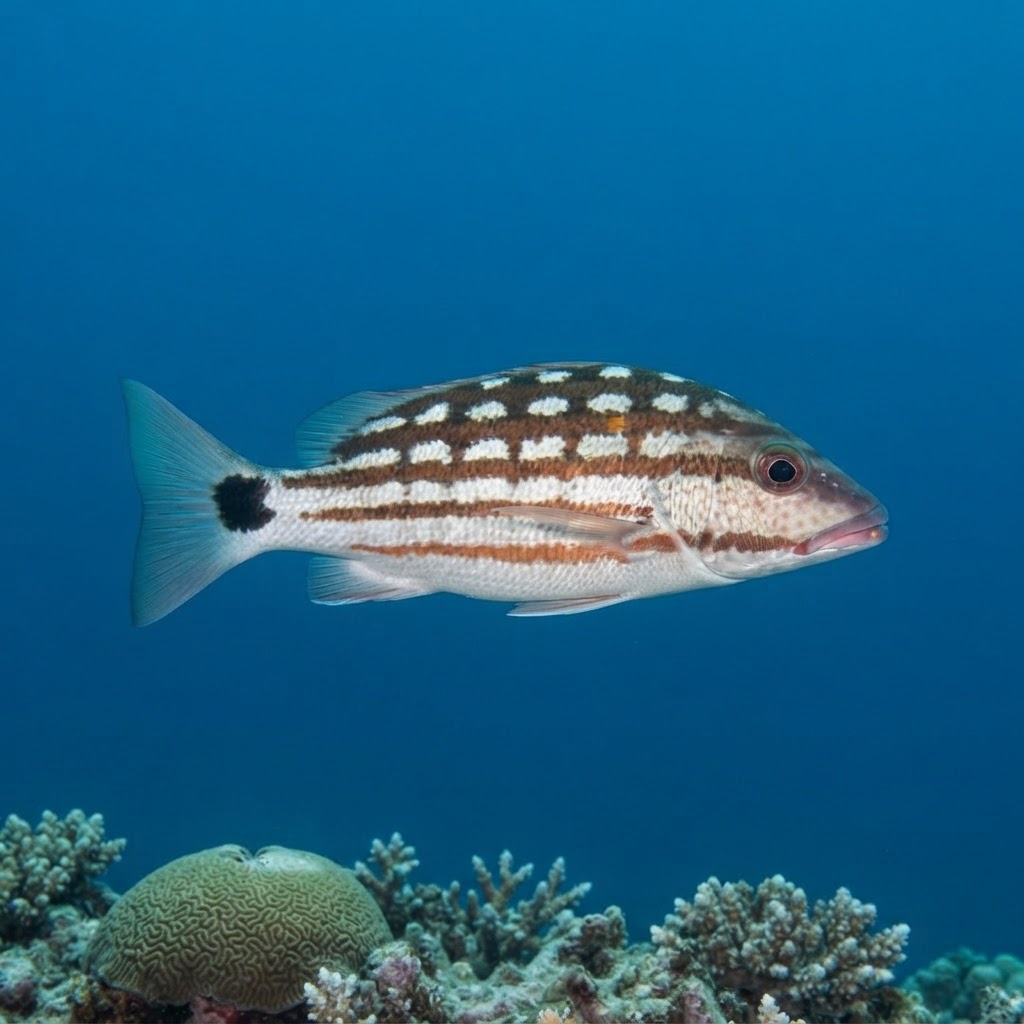
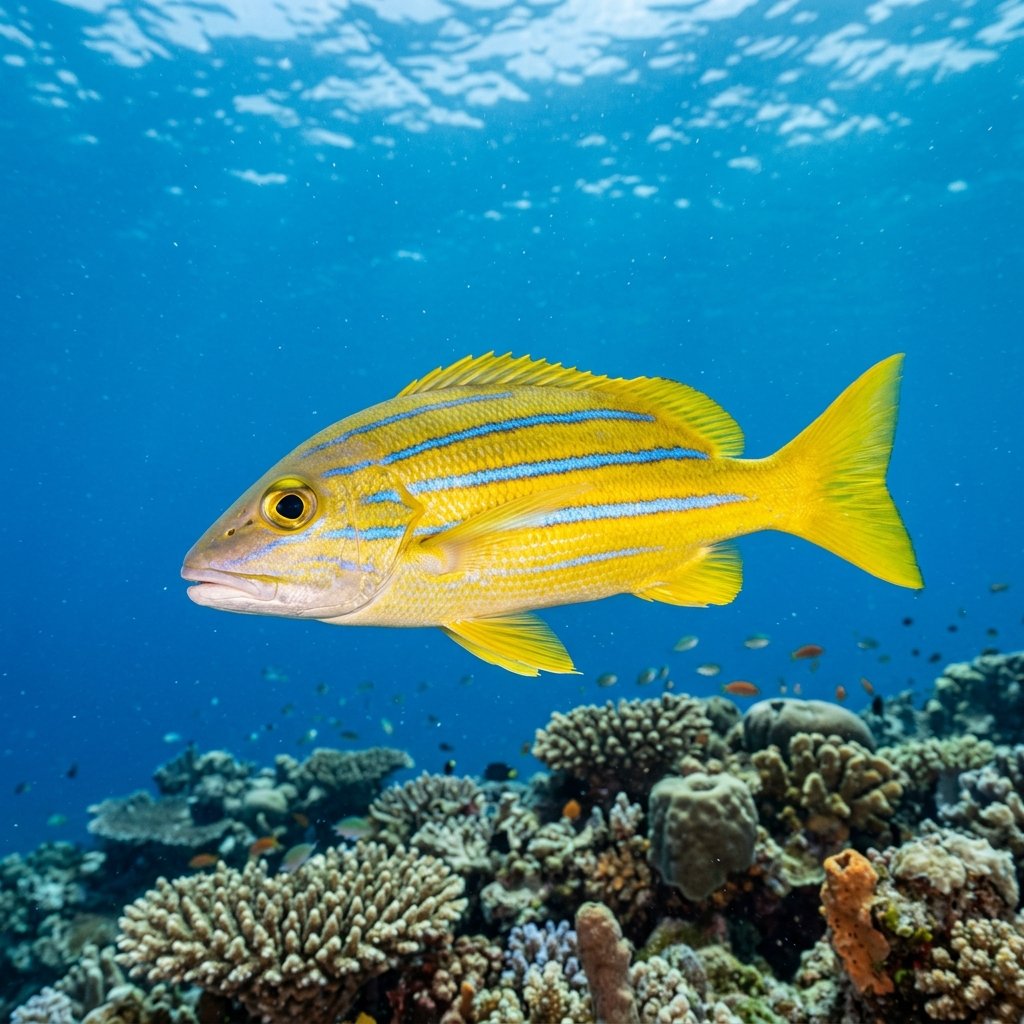
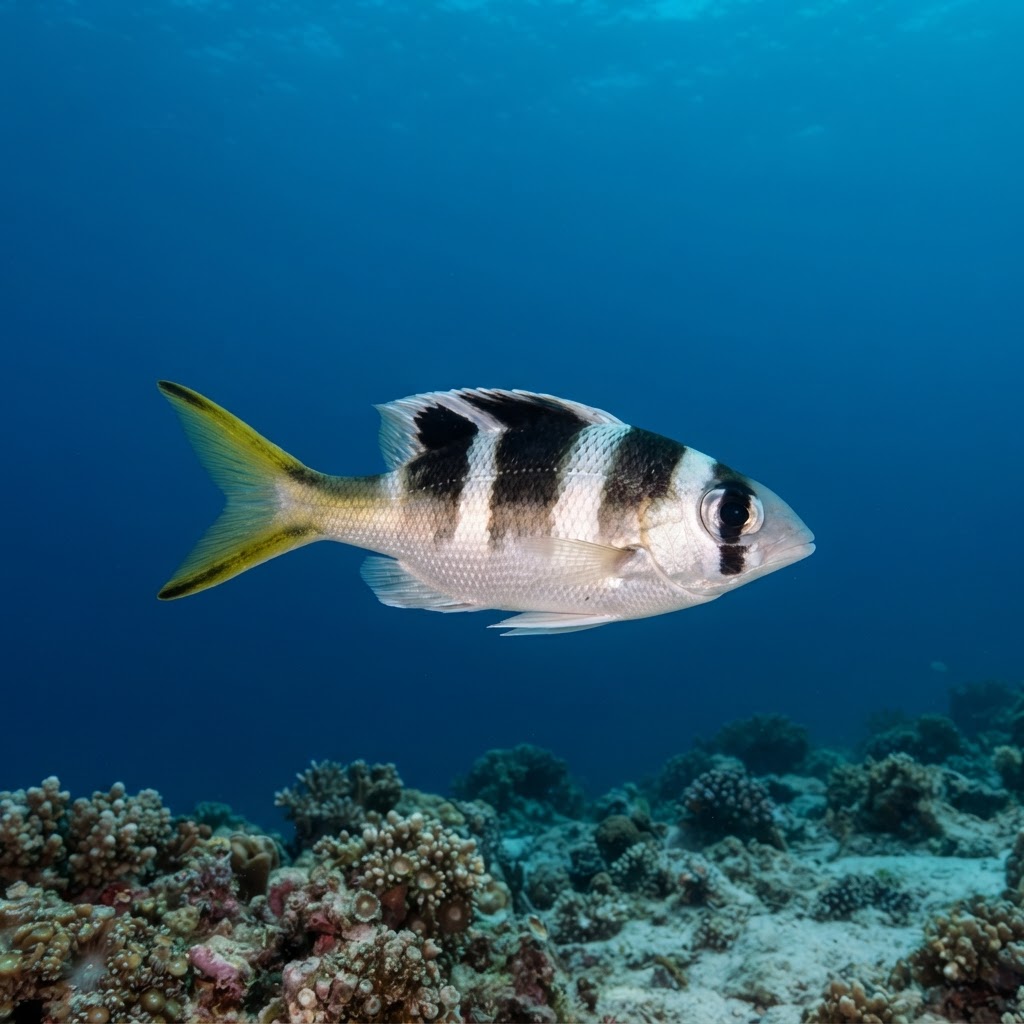
Look for a slender, silvery-white body with a distinct reddish-orange stripe running from the snout through the eye to the tail, and a matching dusky spot near the tail base. It grows to around 35 cm and swims with the compact, streamlined shape typical of snappers, often holding station just off the reef rather than hugging structure. The stripe is the giveaway: cleaner and more continuous than the mottled patterning seen on similar-looking reef snappers.
Divers typically find hussar hovering in loose schools over reef flats and coral slopes, often mixing in with other snapper species rather than sticking rigidly to their own kind. They're unbothered by divers, holding their position in midwater or drifting just above the substrate, and tend to be most active and visible during daylight hours when reef fish activity peaks.
Hussar often school alongside other snapper and bream species, which is part of why careful ID on the stripe pattern matters if you're trying to log the sighting correctly.
Sightings show no detected seasonal pattern, and with a comfortable range of 23.3 to 27.9C, hussar are likely encountered on tropical reefs throughout the year rather than at a particular time of year.
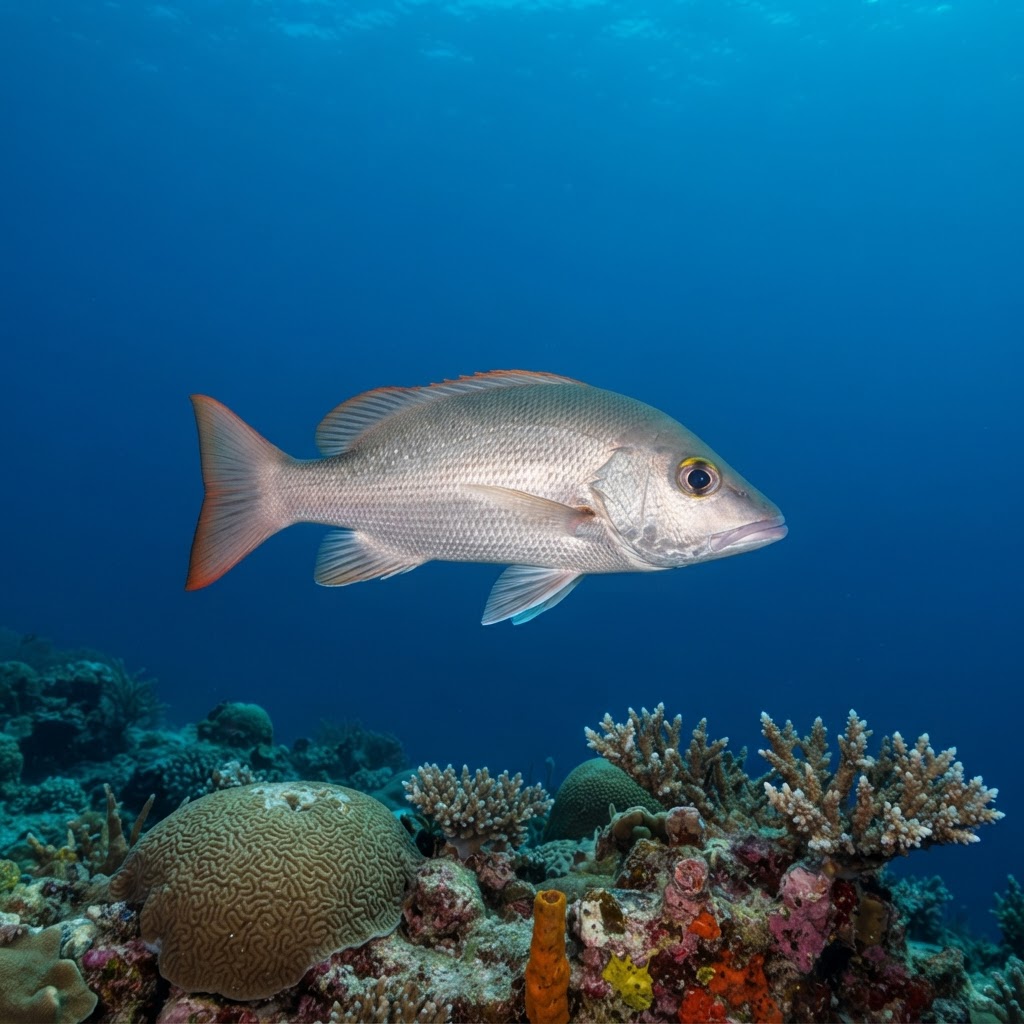
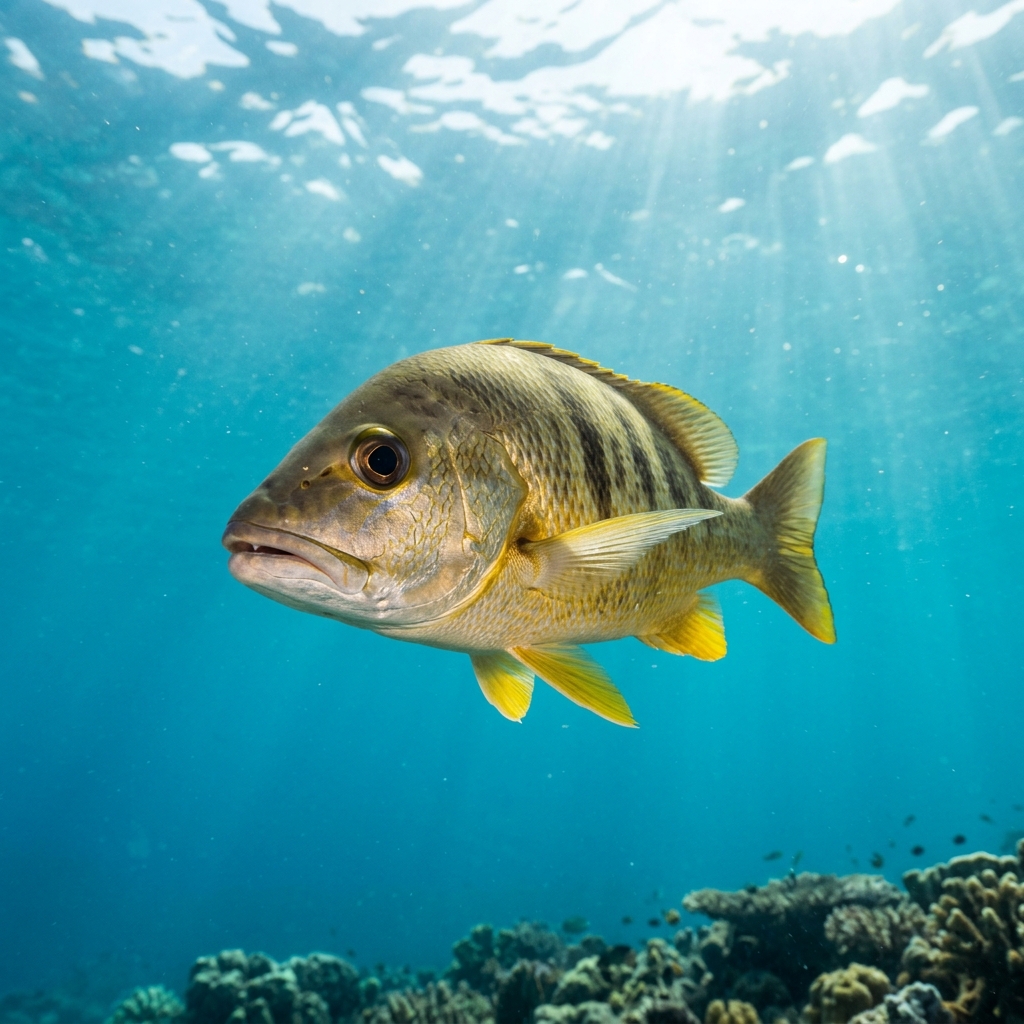
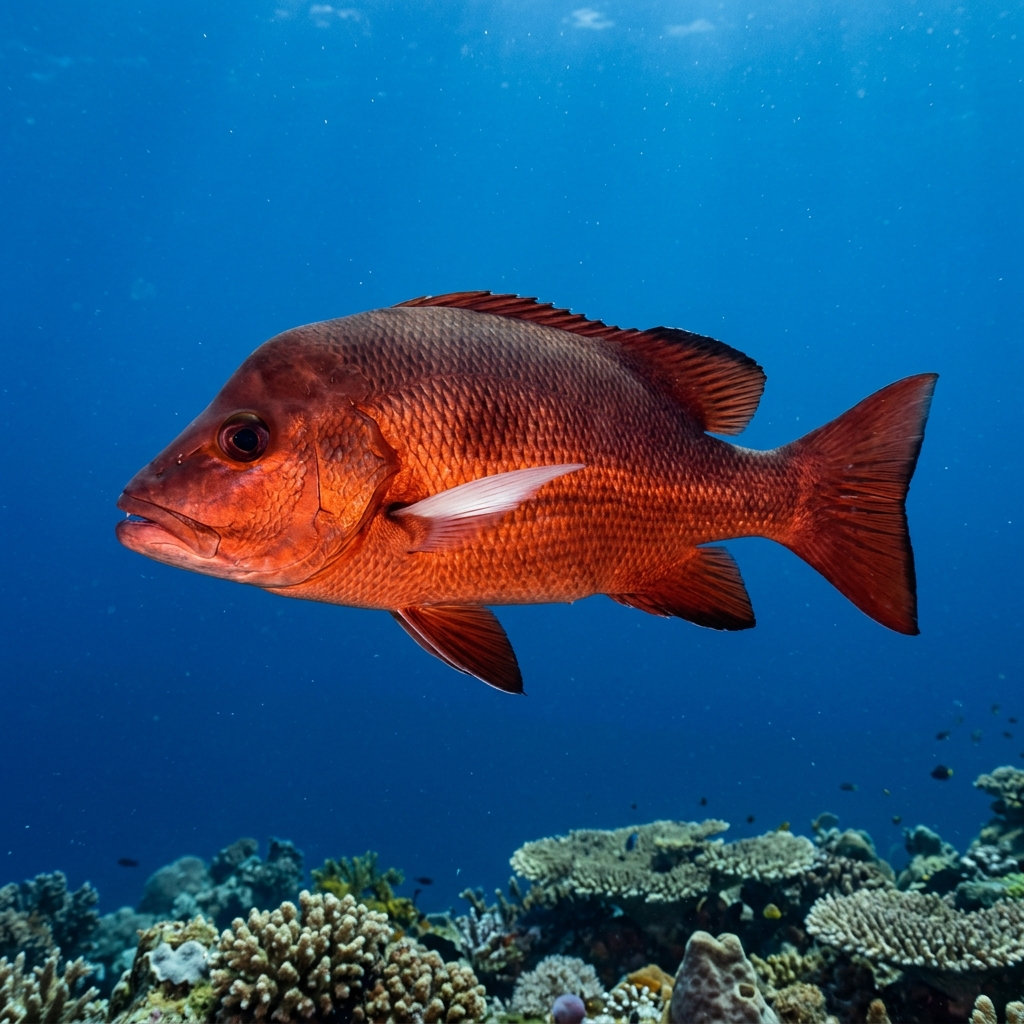
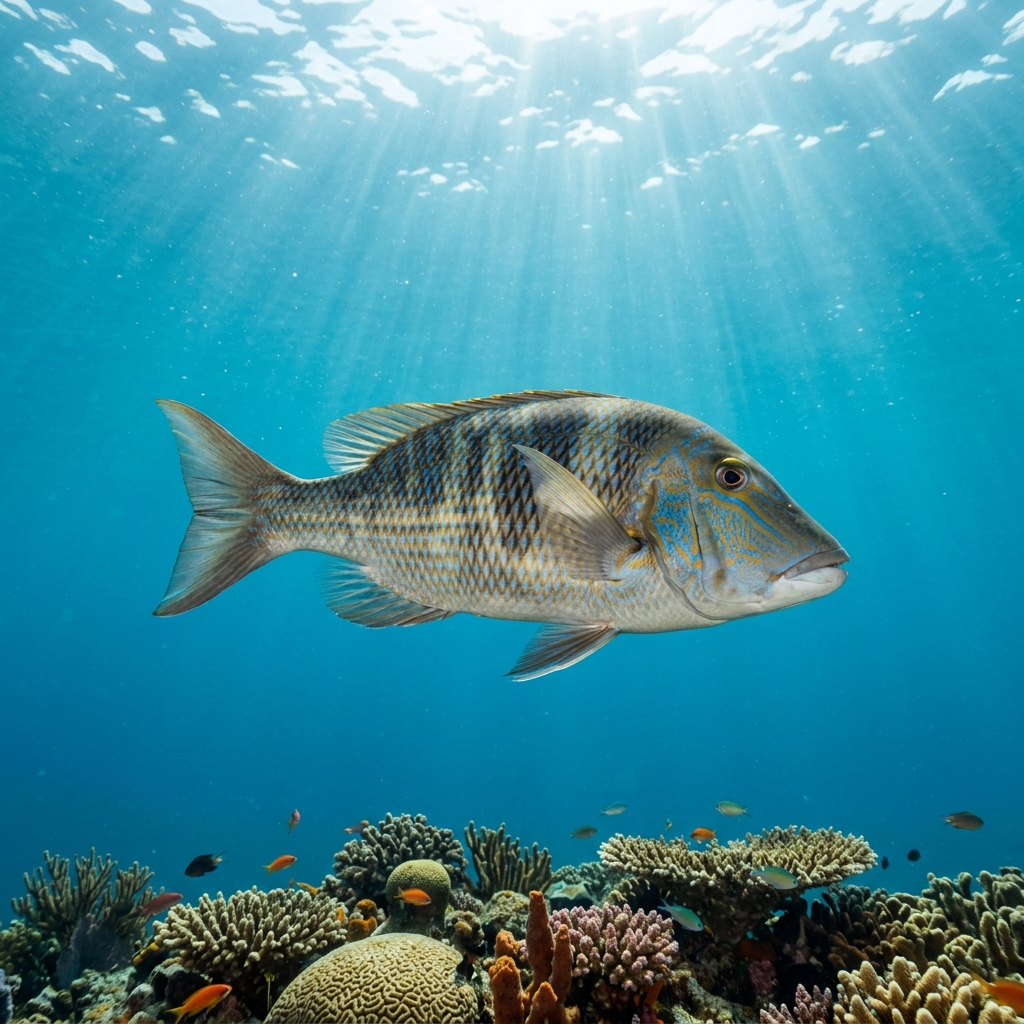
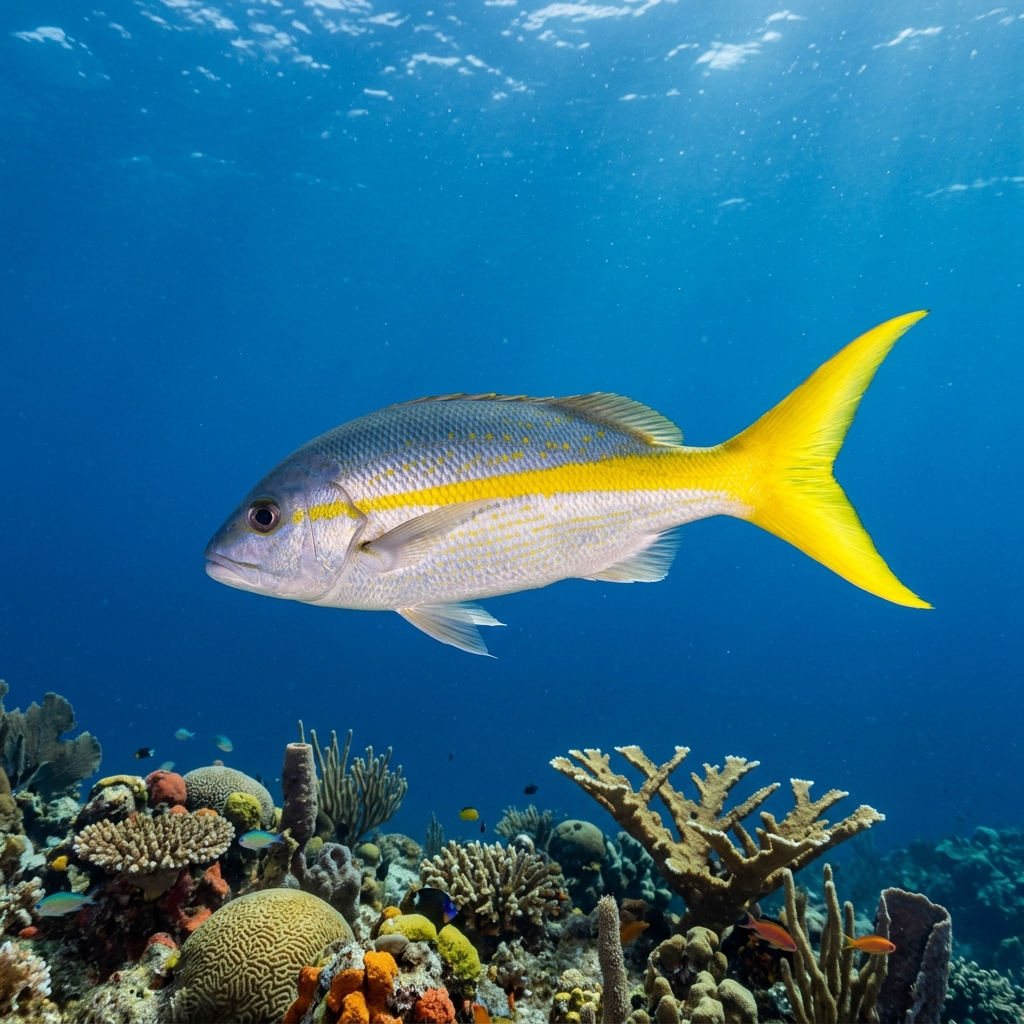
Reef neighbours a diver could mistake it for. Use the identification notes above to tell them apart.
Specific dive site data isn't available yet for this species, but hussar are an Indo-Pacific reef fish typically associated with coral and rocky reef systems across northern Australia and the wider tropical western Pacific. As more diver observations are logged, this page will show the real top sites and regions.
Mapping where Hussar is logged…
Check for a silvery-white body with a clean reddish-orange stripe running from the eye to the tail and a matching dark patch at the tail base. The stripe is more continuous and less blotchy than on similar-looking snappers, which is the easiest way to tell it apart at a glance.
Hussar typically reach around 35 cm in length, putting them in the small to mid-size range for snappers you'll encounter on a reef dive.
There's no strong seasonal pattern in the sightings data, and given their comfortable water-temperature range of roughly 23 to 28C, hussar are likely present on tropical reefs year-round rather than tied to a particular season.
No, hussar pose no danger to divers. They're a calm, non-aggressive reef fish that will tolerate divers at reasonably close range without reacting defensively.
Site and sighting data is aggregated from diver logs, iNaturalist and GBIF. For taxonomy and conservation status:
Emperor
2,052 sites