Lutjanus sebae
Spot Emperor Red Snapper in Queensland and Sabah, where it's most logged. Learn its bold red-and-white banding and what makes it stand out on the reef.
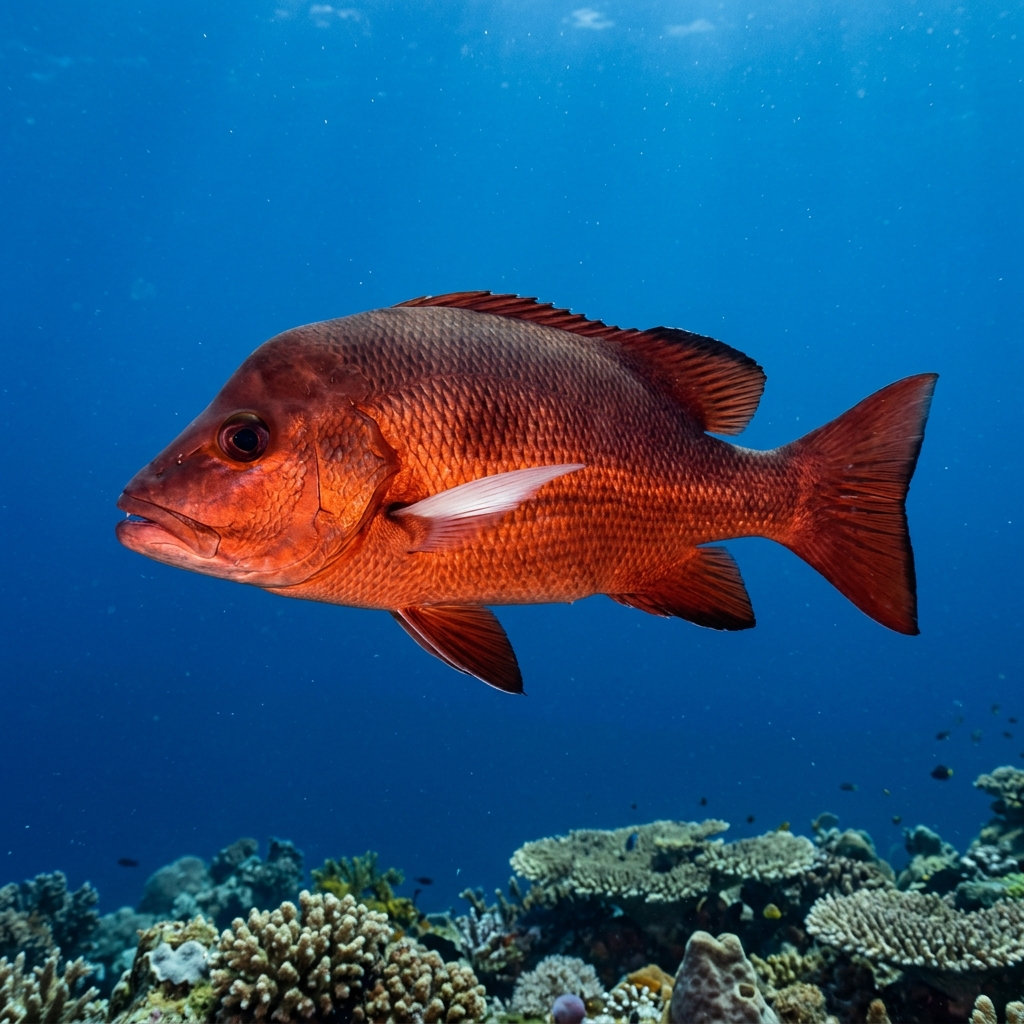
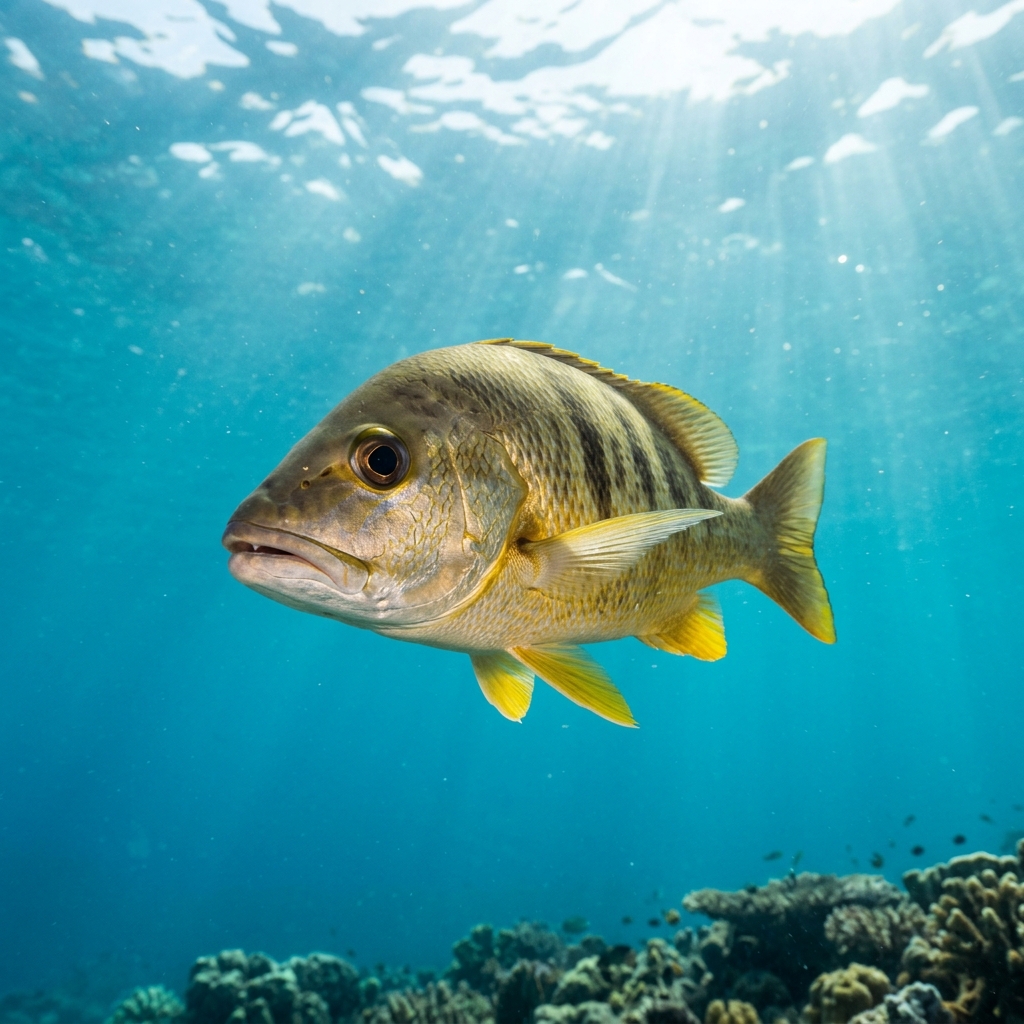
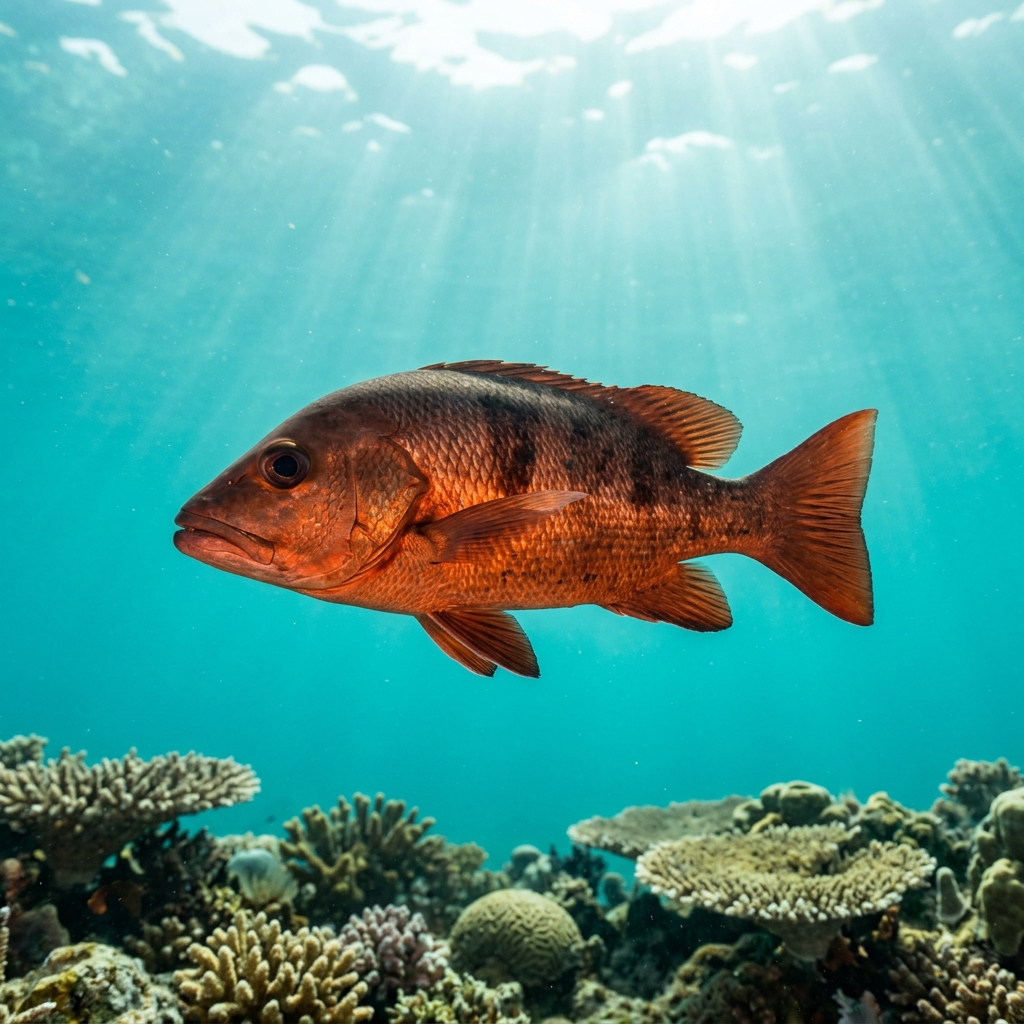
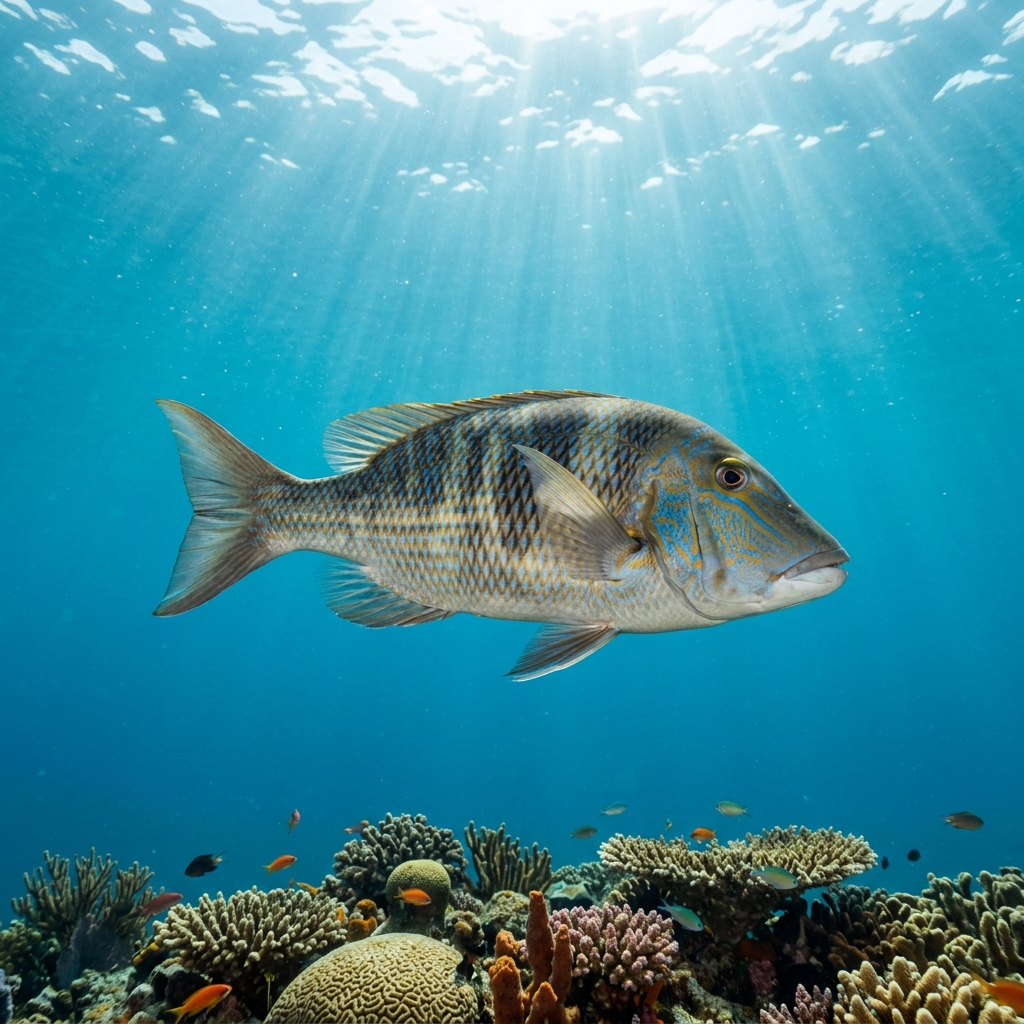
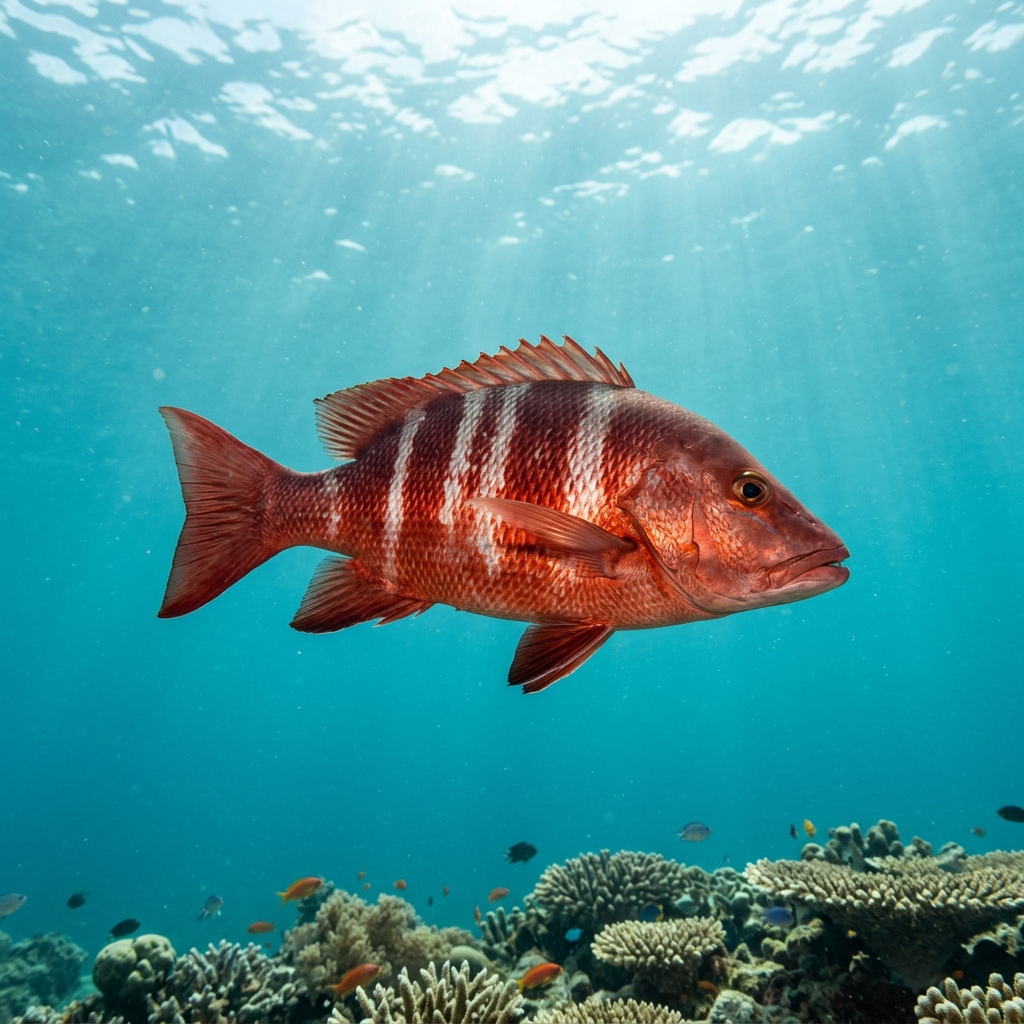
Bold diagonal red and white stripes running across the body make this one of the more striking snappers on the reef. The pattern fans out from the head and fades toward the tail, giving it an almost geometric look. Juveniles are especially vivid, with the stripes more contrasted and a larger-looking eye relative to body size. Adults grow large and robust, with a deep, laterally compressed body and a steeply sloped forehead that separates it from slimmer snapper species.
Typically encountered alone or in small groups hanging around reef structure, ledges, and drop-offs rather than out in open water. It tends to hold its ground when a diver approaches calmly, making a slow, non-direct approach the best tactic for a close look. Most sightings are during daytime reef dives, where individuals are often seen patrolling a relatively small area.
Juveniles are regularly found in seagrass beds and shallow estuarine habitats, using them as nursery areas before moving to deeper reef systems as they mature, which is why adults are the form divers most often encounter on the fore-reef.
Northern Hemisphere data points to April through July as the peak window for sightings. In Australia and other Southern Hemisphere sites, no strong seasonal signal is established in the data, so target the warmer months when water temperatures sit comfortably in the 23 to 29 °C range.
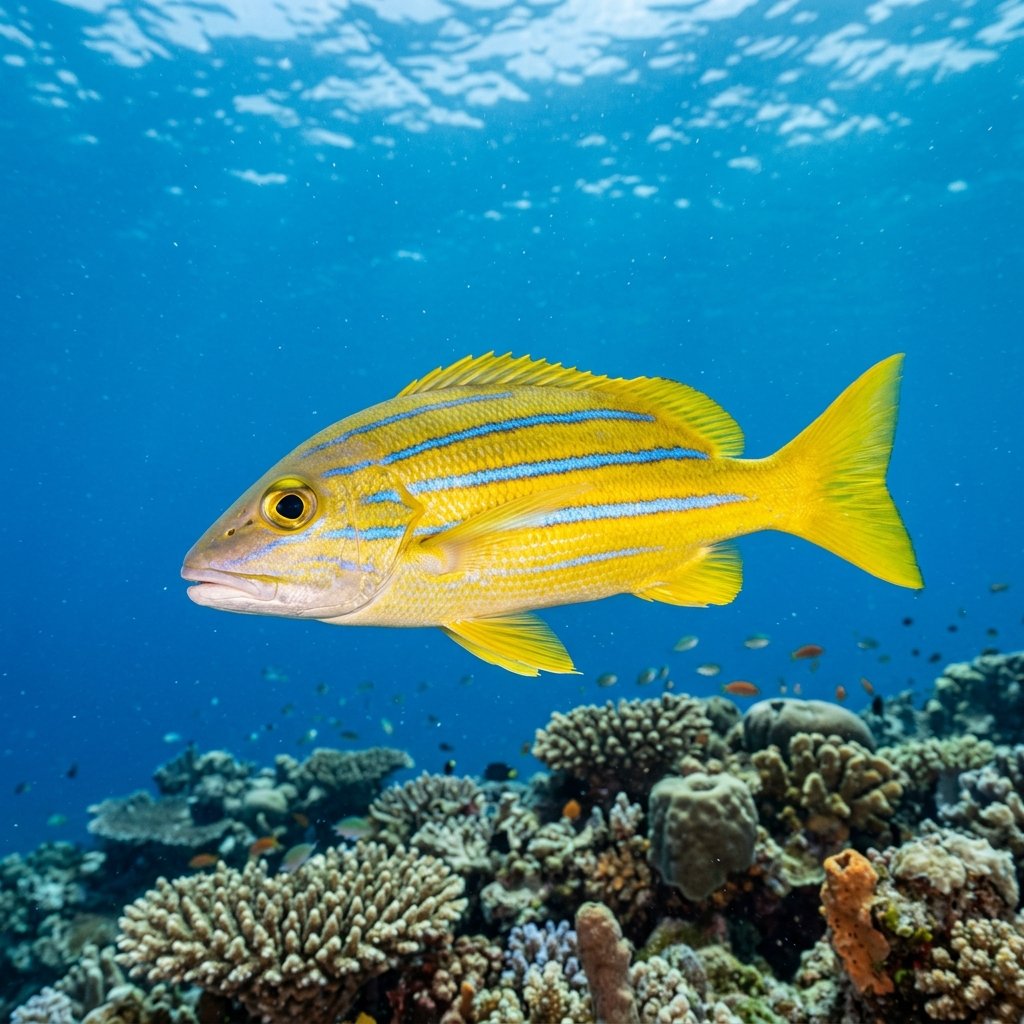
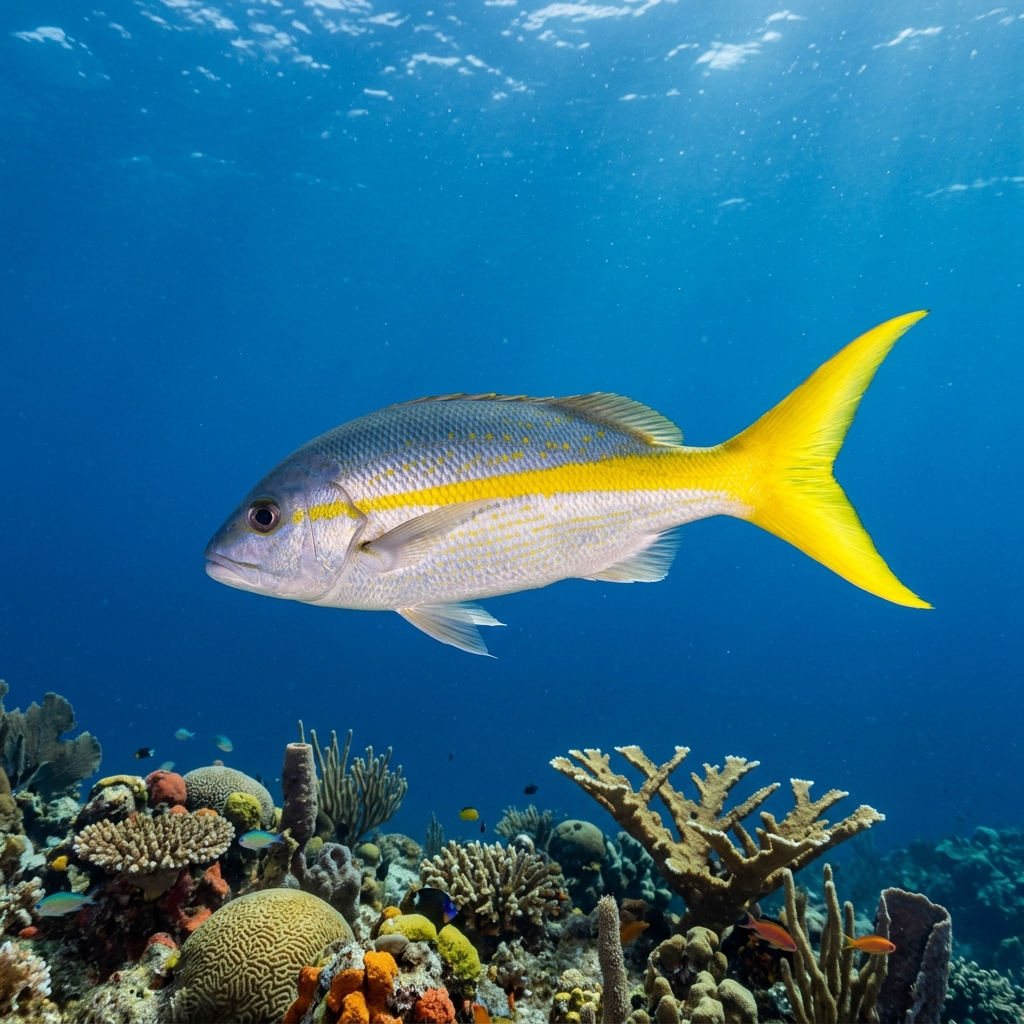
Reef neighbours a diver could mistake it for. Use the identification notes above to tell them apart.
Most commonly logged in Australia, particularly across Queensland's reefs, and in Malaysian Borneo, especially around West Sabah and Labuan. Hong Kong's Sai Kung waters and the islands around Nosy Be in Madagascar account for a solid share of sightings too, with Palawan in the Philippines and Sulawesi rounding out the spread.
Mapping where Emperor Red Snapper is logged…
The strongest presence in the dive logs is in Queensland, Australia and around West Sabah and Labuan in Malaysian Borneo. Sai Kung in Hong Kong, Nosy Be in Madagascar, and Palawan in the Philippines are also documented locations. It has been observed across a wide Indo-Pacific range but is rarely encountered in large numbers anywhere.
For Northern Hemisphere sites, sightings concentrate between April and July. The species is associated with warm tropical waters in the 23 to 29 °C range, so in Queensland and other Southern Hemisphere sites, the warmer austral spring and summer months are a reasonable target.
Look for the distinctive diagonal red and white stripes that fan across the body from head to tail, a pattern unlike most other snappers in its range. The body is deep and robust with a noticeably steep forehead profile. Juveniles carry an even bolder version of this pattern. That striped livery makes it one of the easier large snappers to put a name to.
Emperor Red Snapper are a large snapper species, capable of reaching around 116 cm in total length, though most individuals encountered on the reef are considerably smaller. Adults are noticeably deep-bodied and hefty, which helps with identification alongside the stripe pattern.
Across all documented dive sites, sightings are rated rare to uncommon, so a specific encounter should not be counted on. Queensland and Malaysian Borneo offer the best odds based on where divers log them most. Patience and reef time in the right regions improve your chances.
Site and sighting data is aggregated from diver logs, iNaturalist and GBIF. For taxonomy and conservation status:
Bluestriped Snapper
2,054 sites