Gnathanodon speciosus
Golden trevally are logged across the Maldives, Seychelles, and Coiba National Park. Here's how to spot them and where they're most reliably seen.
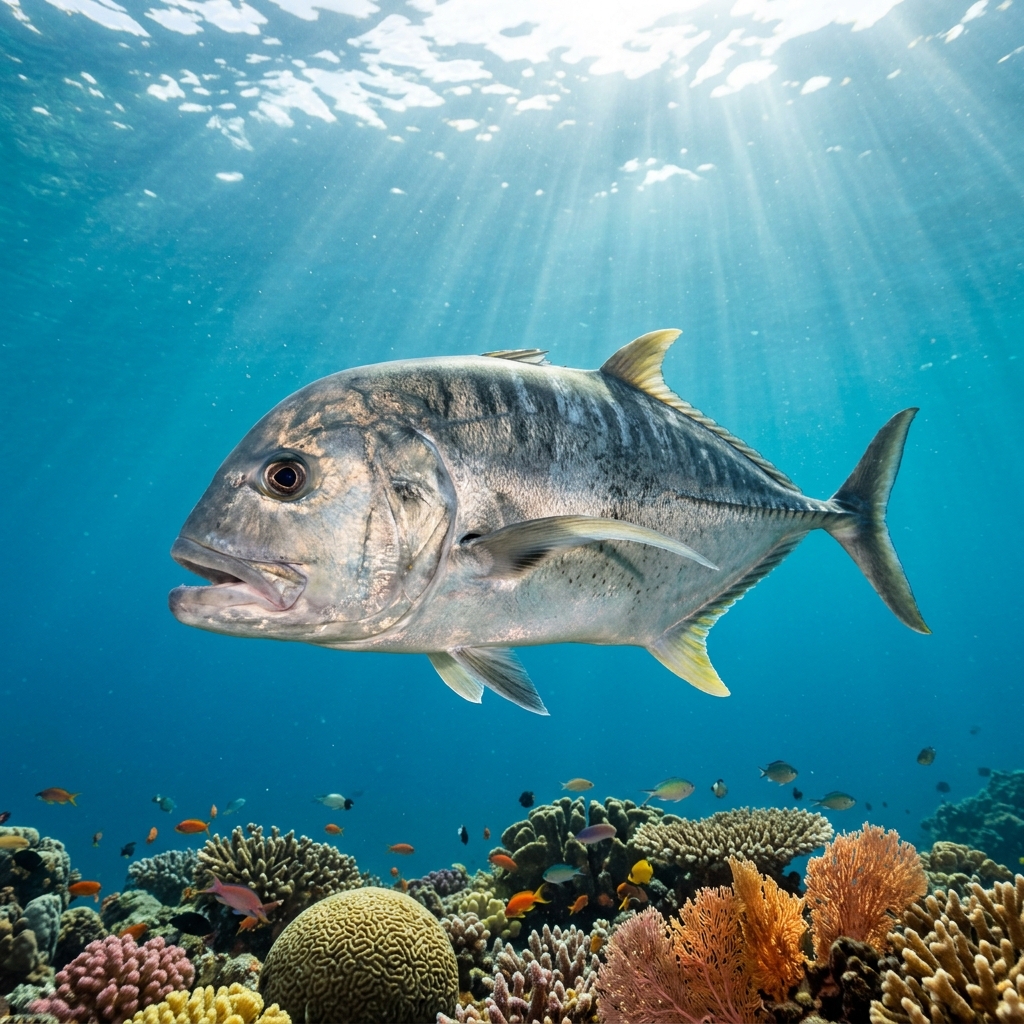
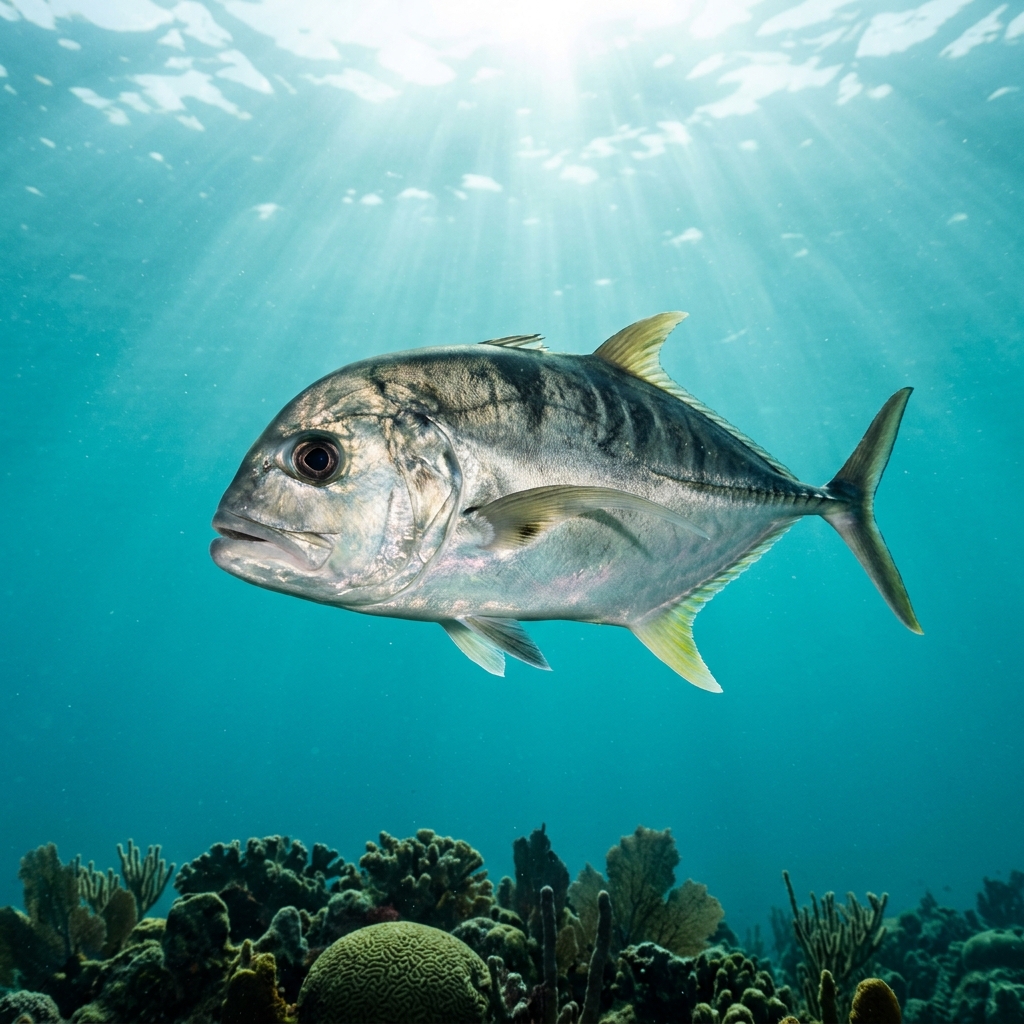
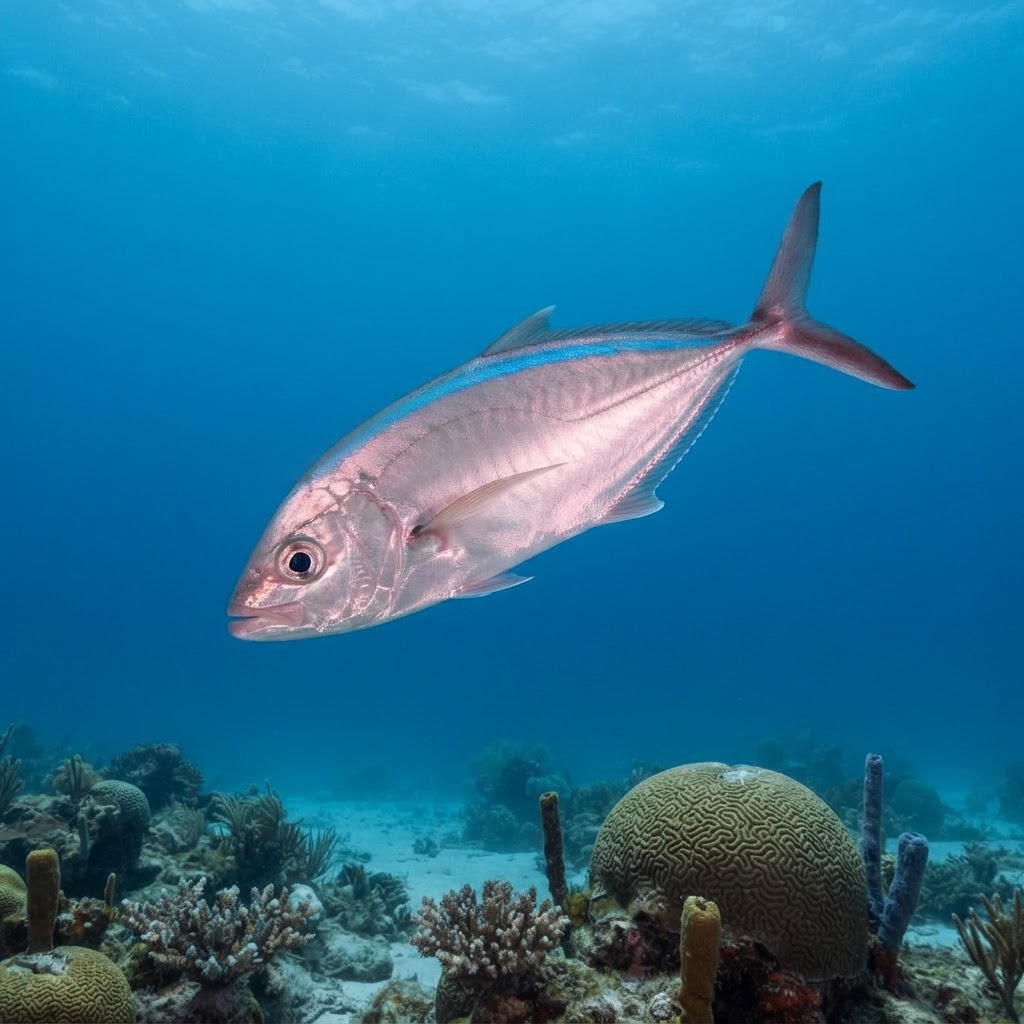
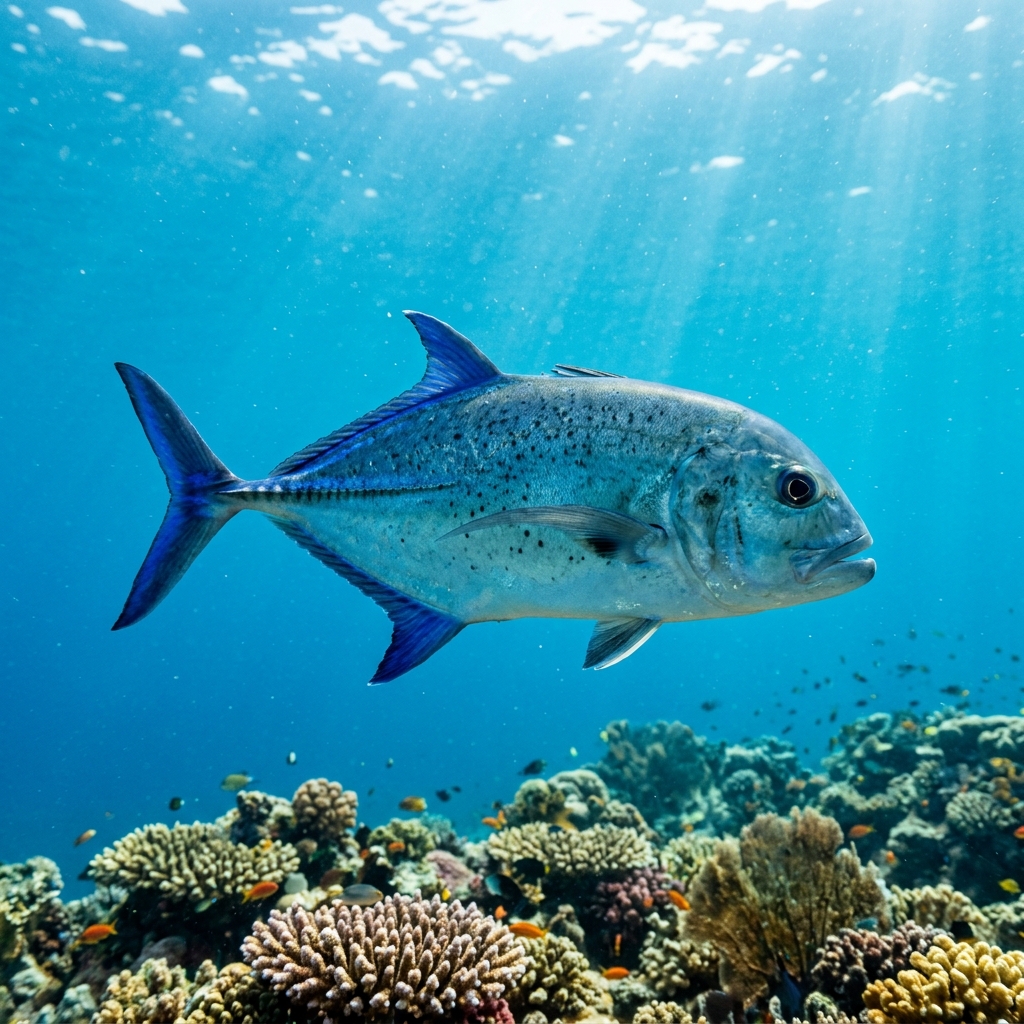
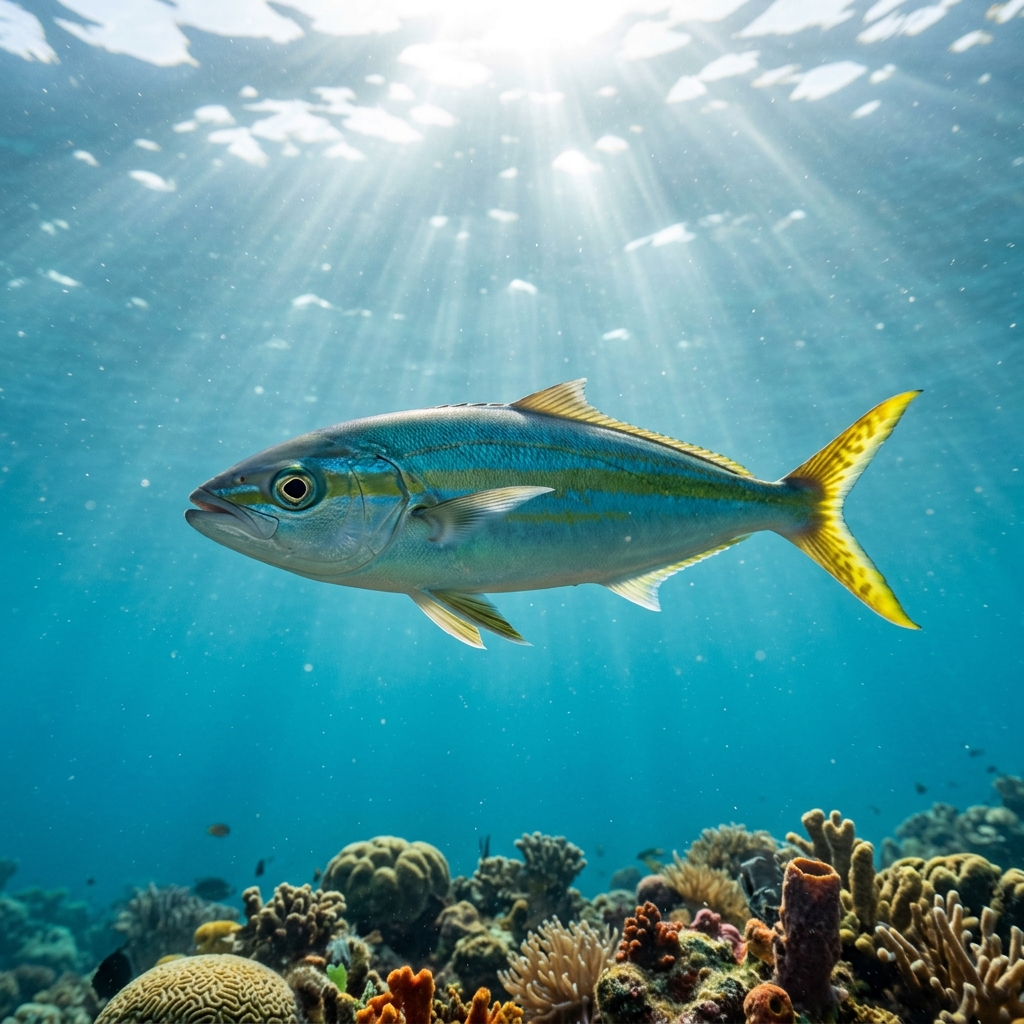
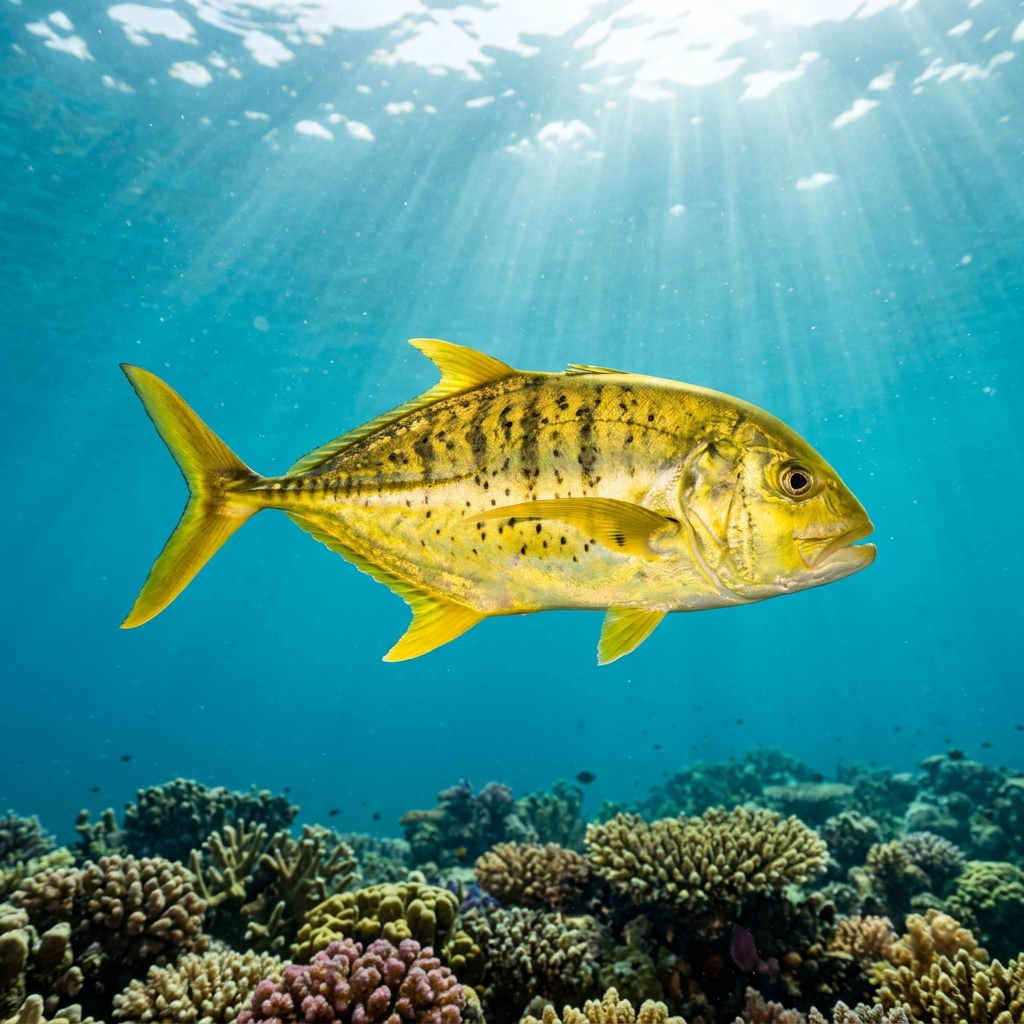
Bold yellow and silver vertical banding makes golden trevally one of the more distinctive jacks underwater, adults flash a pale gold or silvery-yellow body with darker yellow bars that fade with age. The profile is classic trevally: deep-bodied, strongly forked tail, and a blunt rounded snout with noticeably thick, fleshy lips. Juveniles are far more vivid, with intense canary-yellow bodies and sharp black bands that make them look almost like a different fish entirely.
Golden trevally tend to be encountered either cruising mid-water or moving purposefully along reef edges, often in small groups or as solitary individuals. Juveniles have a well-documented habit of shadowing large animals, sharks, rays, and even divers, using them as moving cover while they hunt. Adults are generally unfazed by divers at a respectful distance but will peel away if approached too quickly.
Juveniles are famous for their piloting behaviour: they closely shadow large sharks, rays, and sea turtles, feeding on small invertebrates stirred up by the host's movement. This makes a lone juvenile near a large animal worth a second look.
No seasonal peak has been detected from diver records, so golden trevally can be considered a year-round target on tropical reefs. Observed water temperatures run from around 23 to 29 °C, which aligns with most Indo-Pacific and Eastern Pacific tropical dive destinations throughout the year.
Reef neighbours a diver could mistake it for. Use the identification notes above to tell them apart.
Most logged across Australia (particularly Queensland and Western Australia), the Maldives (Male and Ari Atolls), and the Seychelles (Praslin and La Digue), with a strong Pacific presence in Coiba National Park, Panama and the Papagayo Gulf, Costa Rica. The Philippines, Tanzania, and Palau also have sightings recorded at multiple sites.
Mapping where Golden Trevally is logged…
They are most commonly logged in the Maldives, the Seychelles, and Australia, particularly Queensland. Coiba National Park in Panama and the Papagayo Gulf in Costa Rica are strong Eastern Pacific options, with additional sites across the Philippines, Tanzania, and Palau.
Diver records show no strong seasonal pattern, and the species is active across tropical reef temperatures of roughly 23 to 29 °C. This means any time of year is potentially viable in the top regions, though local conditions at each site should still guide trip planning.
Look for the yellow and silver vertical banding and the distinctively blunt, thick-lipped snout, unusual for a trevally. Adults are paler and more silvery-gold overall, while juveniles are vivid yellow with sharp black bars. The banding and fleshy lips together are the key field marks.
Golden trevally are a large jack species, capable of reaching over a metre in length and weights exceeding 15 kg, though most individuals divers encounter are considerably smaller. Adults are solidly built with a deep, powerful body typical of the trevally family.
Juveniles use large animals as moving shields, tucking close to them while picking off small crustaceans and invertebrates disturbed by their host's movement. This piloting behaviour is one of the more striking things to observe on a reef and is unique among trevallies.
Site and sighting data is aggregated from diver logs, iNaturalist and GBIF. For taxonomy and conservation status:
Bigeye Trevally
2,591 sites