Himantura australis
Spot Australian Whipray in the Northern Territory and Queensland. A rare but real find in warm 21-28 °C Australian waters. Here's where and how to identify it.
If you're stung
Venomous tail barbGeneral first-aid guidance, not a substitute for professional medical care. In an emergency, call your local emergency number.
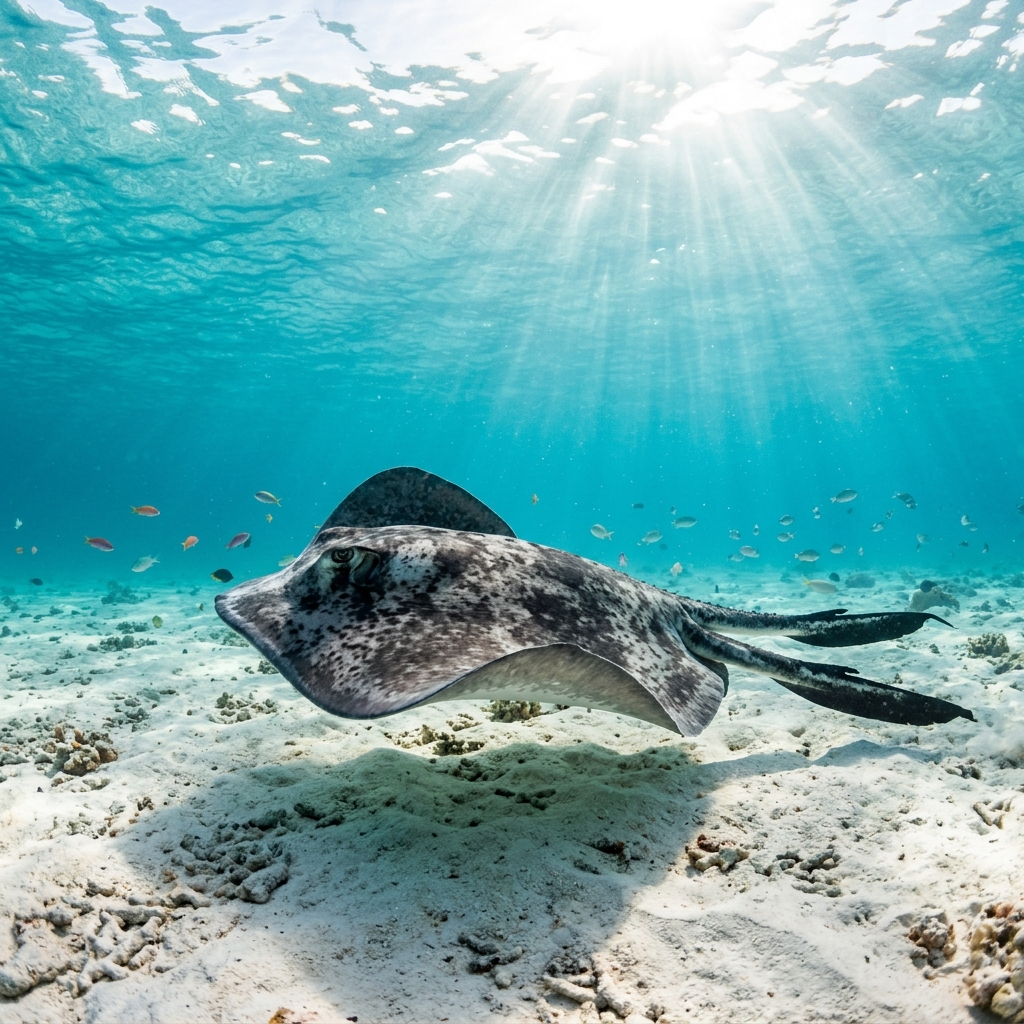
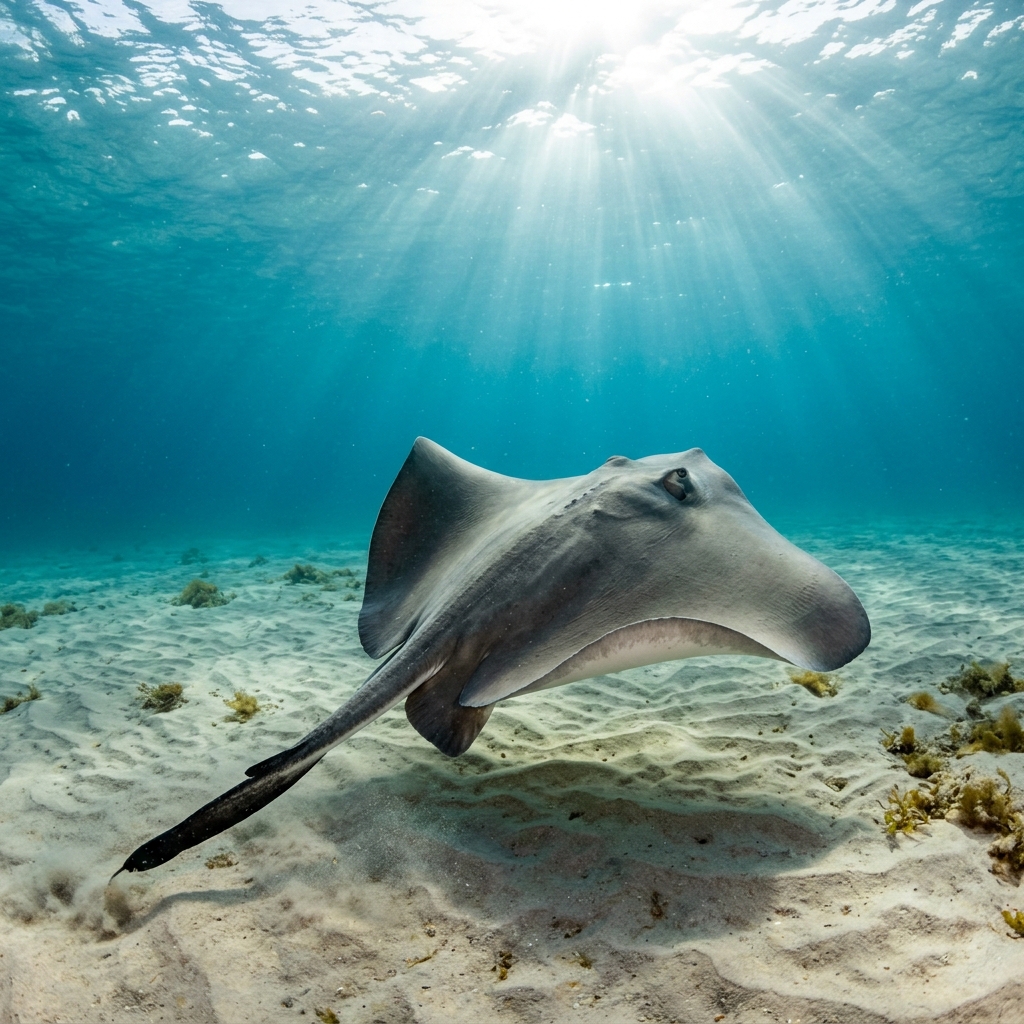
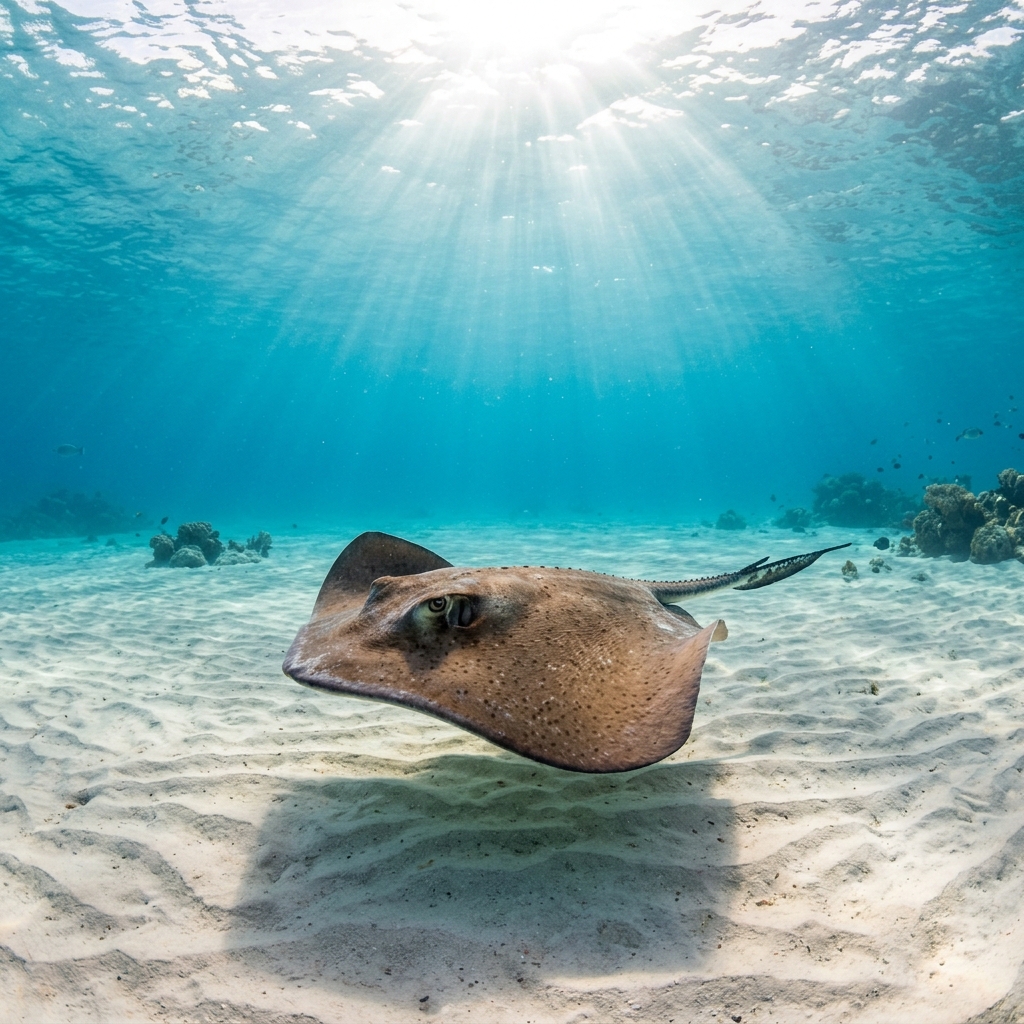
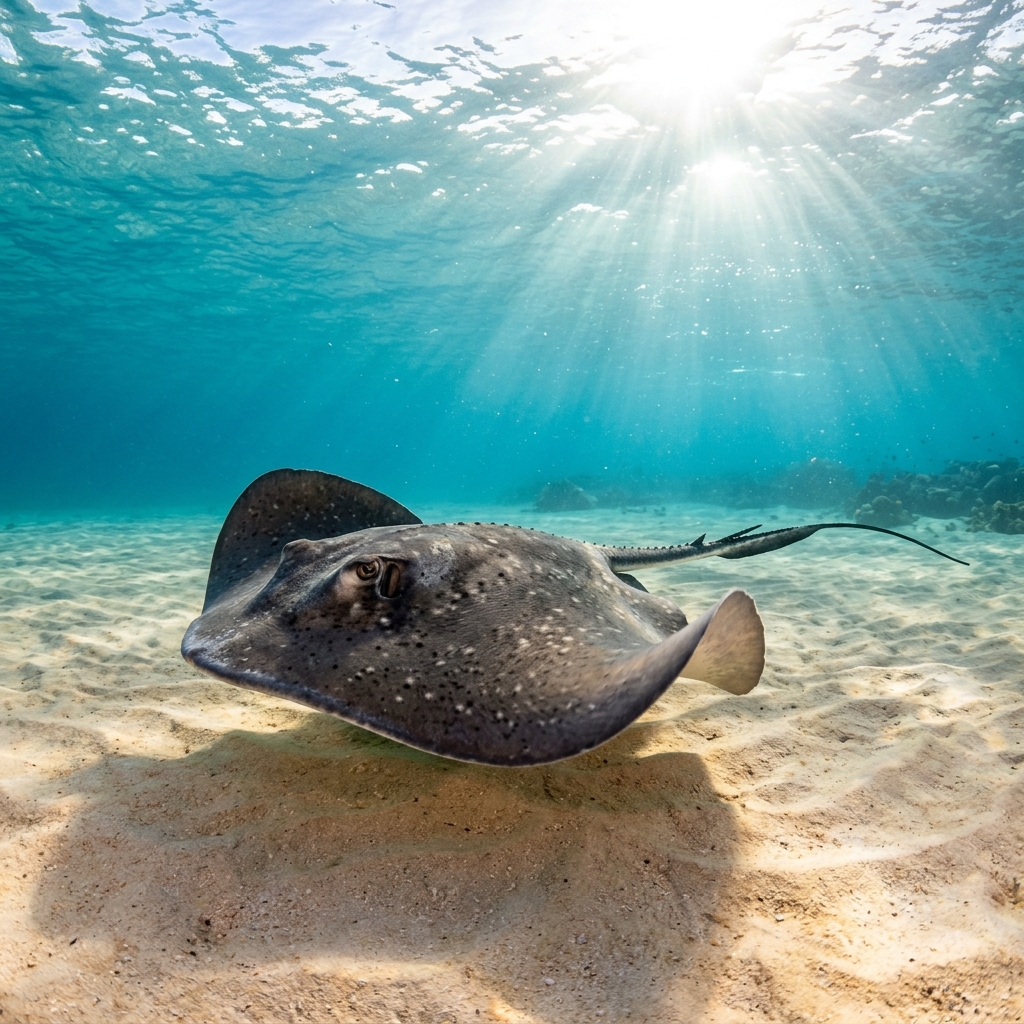
A large, broad-disc stingray with a roughly diamond-shaped body and a characteristically long, slender whip tail that extends well beyond the disc. Dorsal colouration is a uniform to faintly mottled greyish-brown, helping it blend into sandy and silty bottoms. The underside is pale or white. That plain, unpatterned upper surface is the key field mark separating it from spotted or marbled relatives at a glance.
Australian Whinprays are most often encountered resting or cruising slowly over sandy or silty bottoms in relatively shallow coastal water. Like most benthic (bottom-dwelling) stingrays, they tend to be calm around divers but will move off if approached too closely or too quickly. A slow, parallel approach gives the best view before they glide away.
This species was only formally described and separated from closely related whiprays in the 2000s, so sighting records remain sparse and the full extent of its range is still being documented by divers and researchers alike.
There is not enough seasonal data to point to a peak window, so it should be treated as potentially year-round. The observed water temperature range of roughly 21 to 28 °C aligns with warm tropical and subtropical Australian waters that remain within that band throughout much of the year.
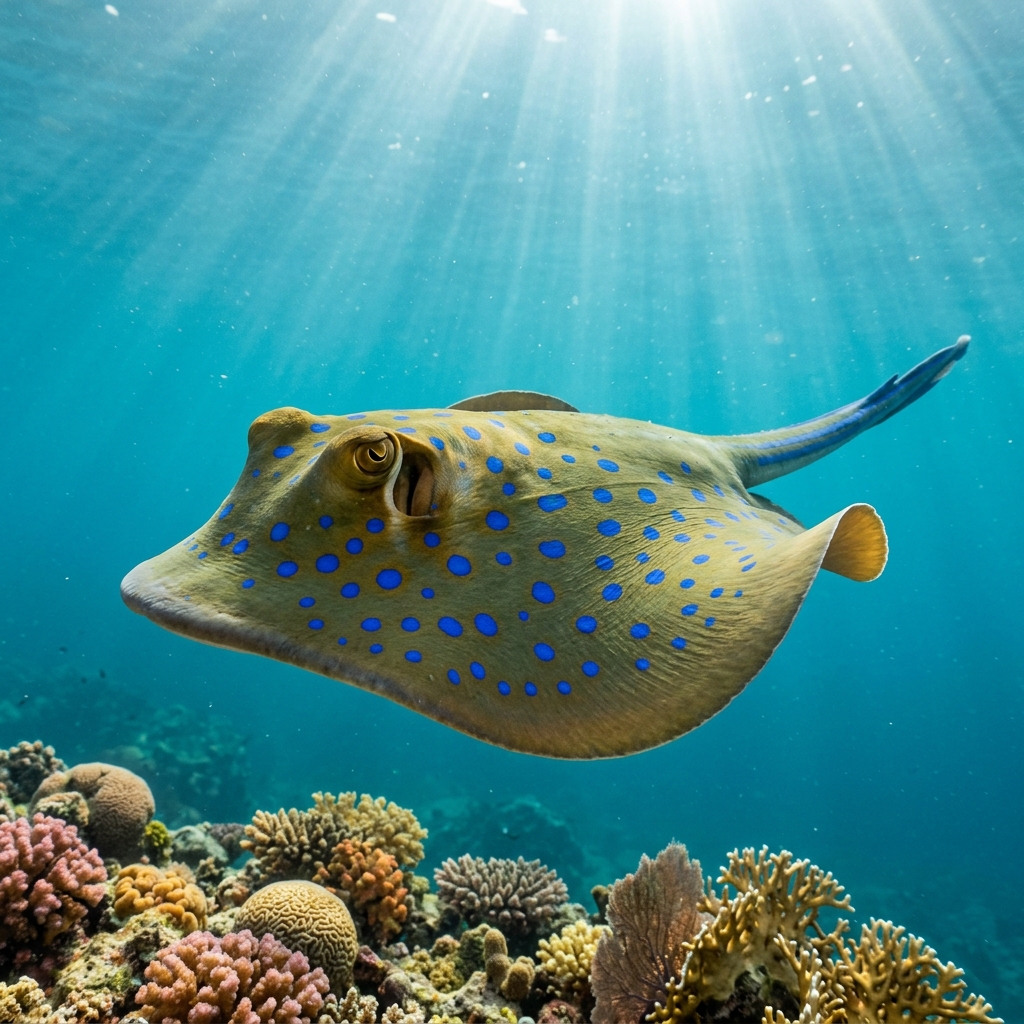
Reef neighbours a diver could mistake it for. Use the identification notes above to tell them apart.
All confirmed sightings are from Australia, concentrated in two regions: the Northern Territory and Queensland. The Northern Territory accounts for the majority of logged sites, making it the strongest bet, while Queensland adds several additional sites along the north-eastern coast.
Mapping where Australian Whipray is logged…
All recorded sightings come from Australia, with the Northern Territory holding the most logged dive sites and Queensland contributing several more. These are coastal, warm-water environments in the tropical and subtropical north of the country.
There is no confirmed seasonal peak in the data, so encounters could occur at any time of year. The species favours water temperatures between roughly 21 and 28 °C, which are available across northern Australian dive sites for much of the year.
Look for a large, diamond-shaped stingray disc with plain greyish-brown upperside and a very long whip tail. The absence of spots or marbling is the quickest way to rule out similar species. The pale underside is visible when the ray lifts or turns.
Rare is the most typical sighting frequency across the sites where it has been recorded, with a handful of sites rating it as uncommon. Encounters are not guaranteed even at known sites, so any sighting is a real find.
They are not considered dangerous. Like all stingrays they carry a venomous tail spine, but they are not aggressive. Give them space, avoid standing on sandy bottoms where they rest, and they will generally move off calmly.
Site and sighting data is aggregated from diver logs, iNaturalist and GBIF. For taxonomy and conservation status:
Whiptail Stingray
1,747 sites