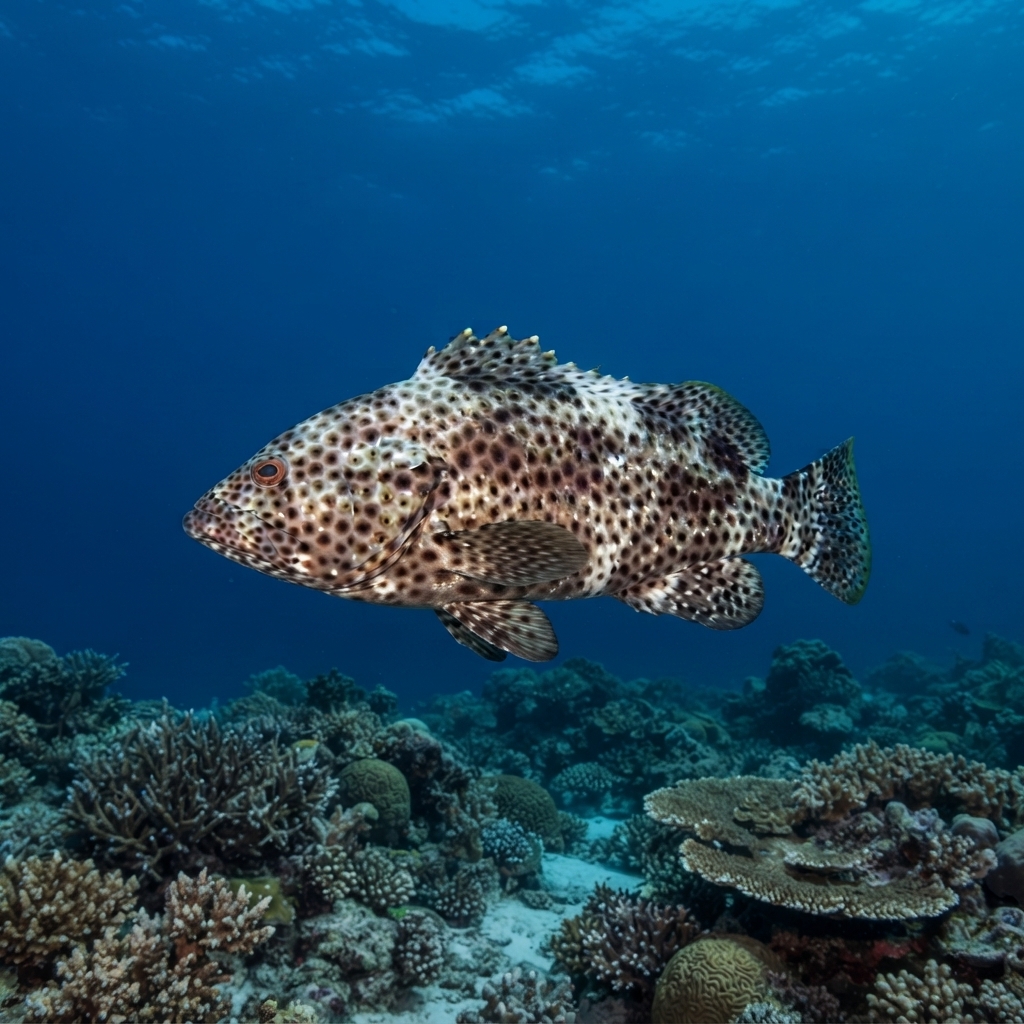
Epinephelus maculatus
A pale, dark-spotted grouper found around Nouméa reefs and Queensland, comfortable in 24 to 29C water year-round.
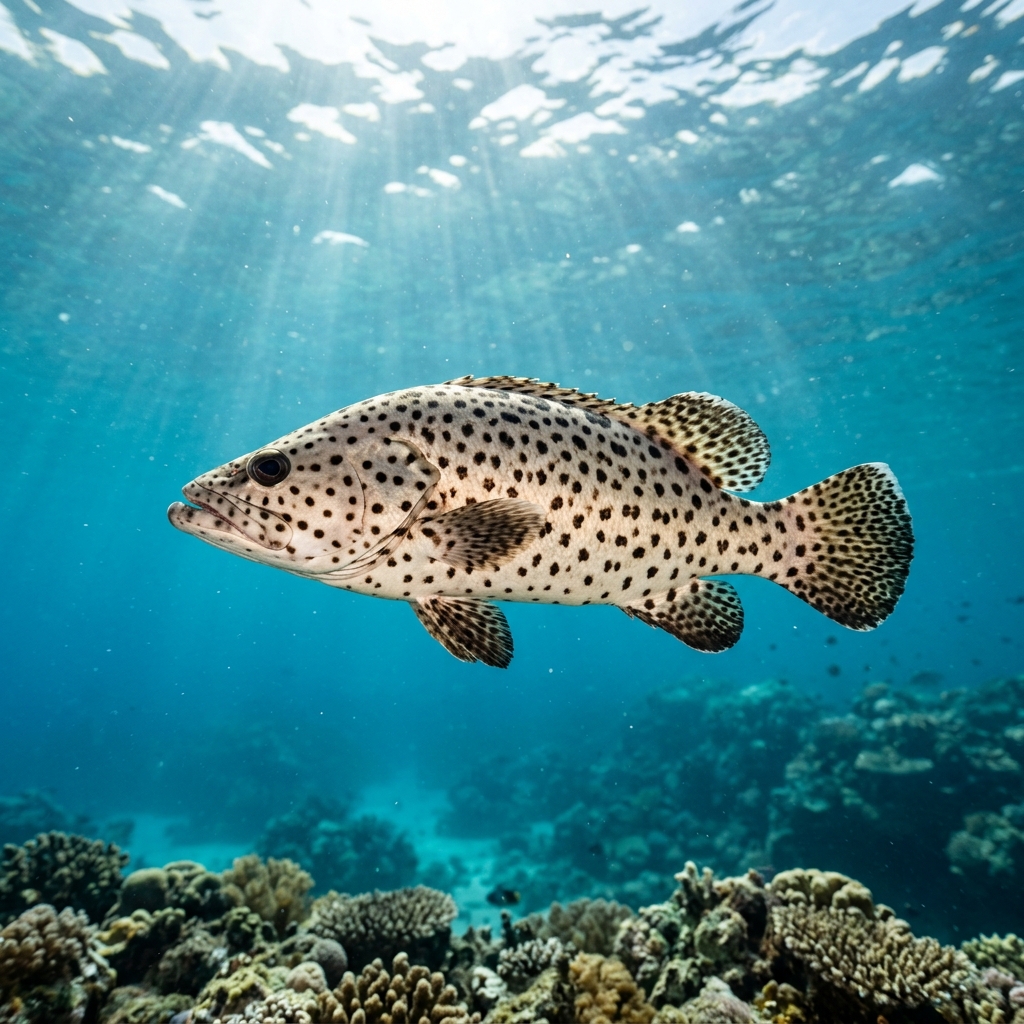
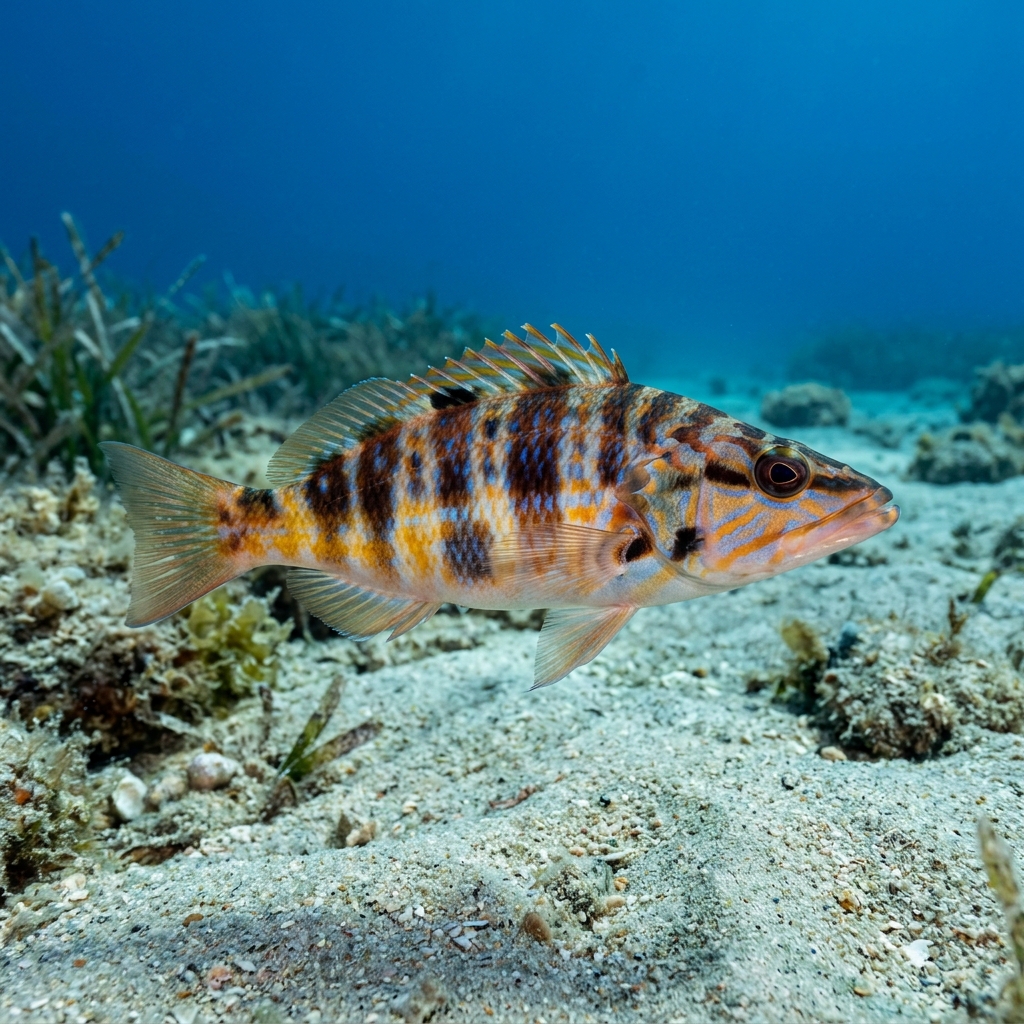
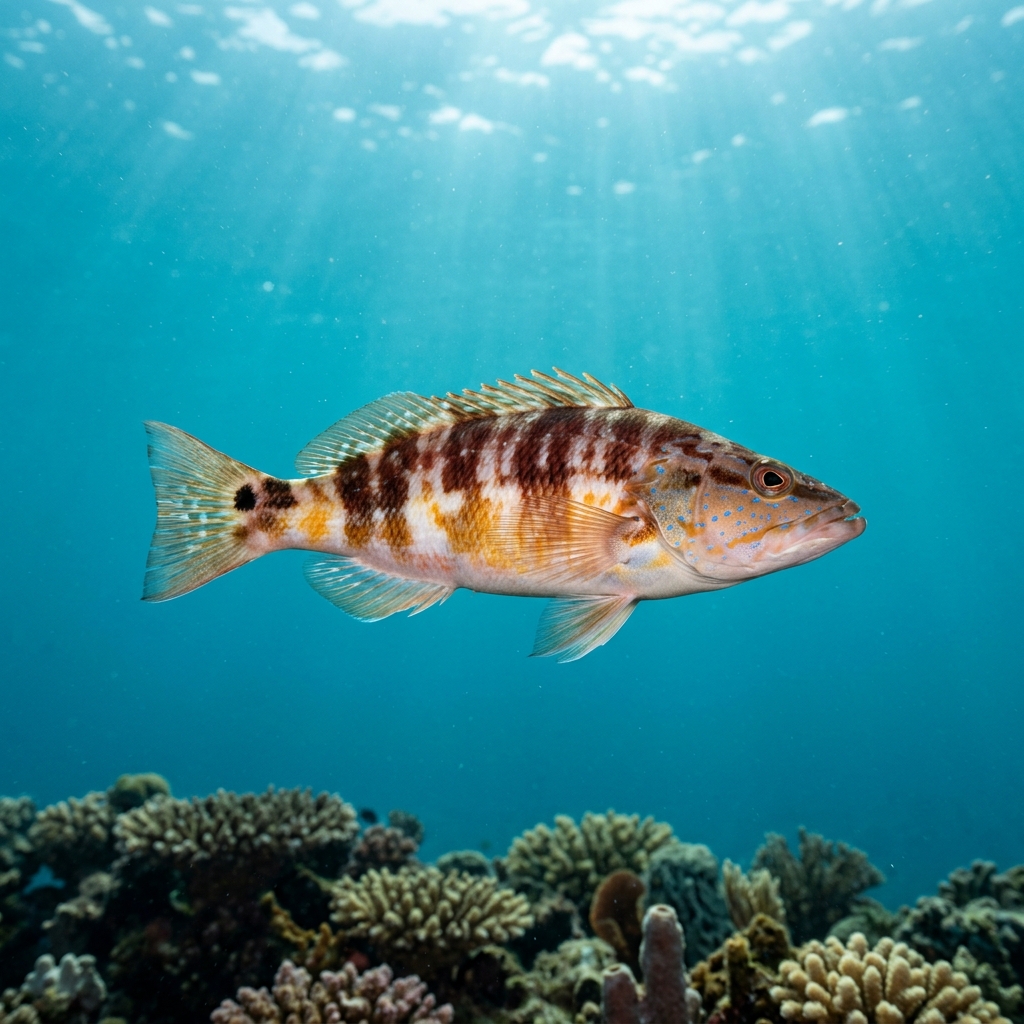
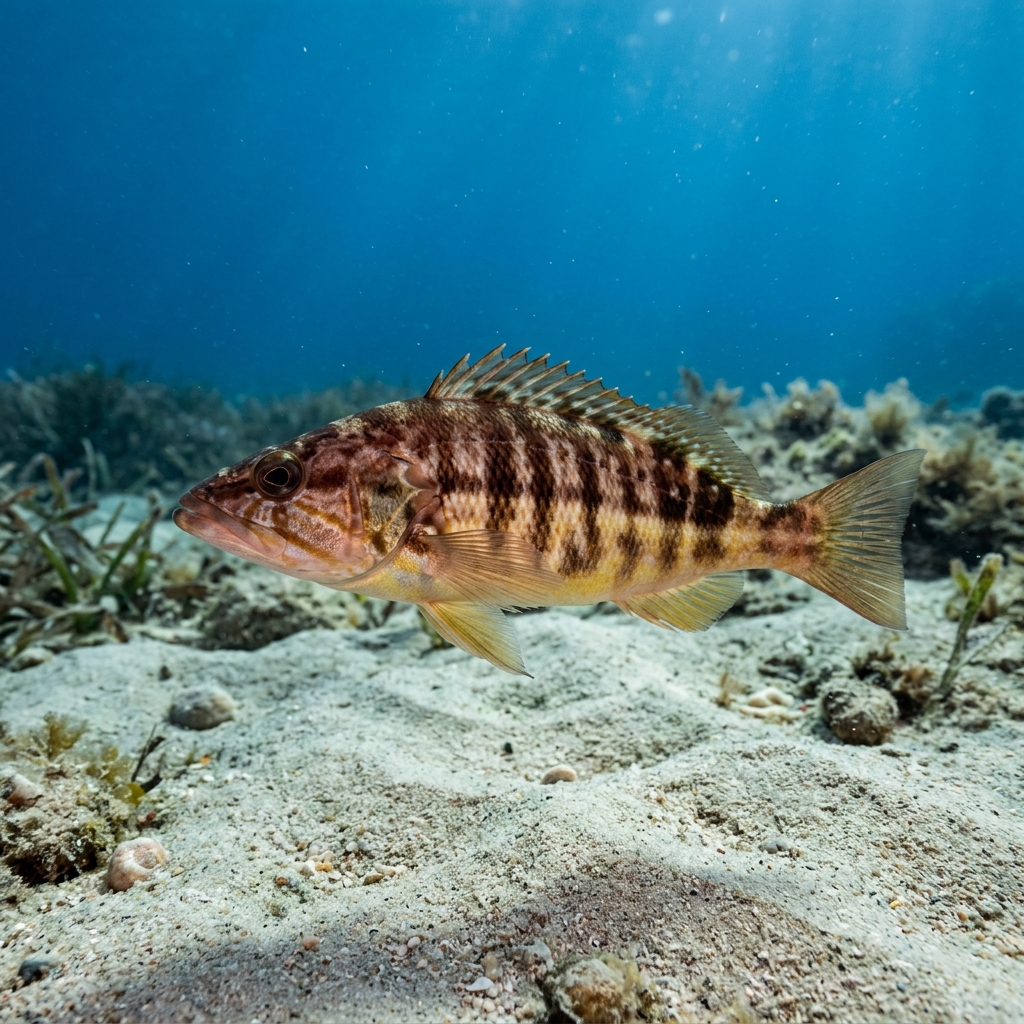
Grows to around 42 cm and shows a pale grey to cream body covered in dense dark brown to blackish spots that run across the head, body and fins, giving it a speckled, almost polka-dotted look. The dorsal fin is noticeably raised at the front, which is where the common name comes from, and the tail is rounded rather than squared off. It sits low on the reef, often tucked against a ledge or coral head rather than swimming in open water.
Typically seen resting motionless near a ledge, coral overhang or reef crevice rather than out cruising, which fits its ambush-style hunting approach. Divers usually log it as a solitary, still subject that tolerates a reasonably close approach before easing back under cover. Most sightings come from daytime reef dives at moderate depth rather than deep drop-offs or the shallow reef flat.
Like many groupers it is a sit-and-wait predator, relying on camouflage and a sudden lunge to take passing small fish and crustaceans rather than chasing prey down.
No clear seasonal pattern shows up in the sightings, and with a comfortable range of roughly 24 to 29C it likely sits on these reefs year-round rather than showing up in a particular month.
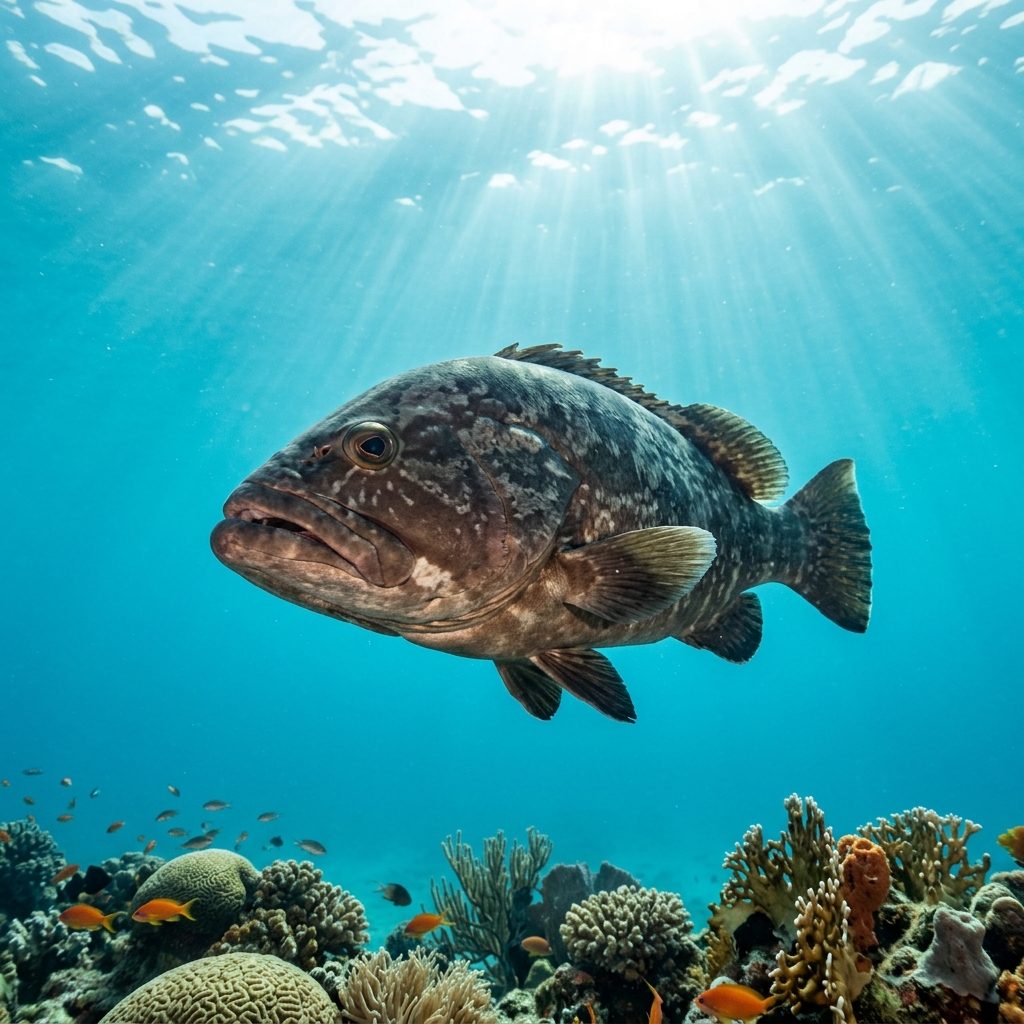
Reef neighbours a diver could mistake it for. Use the identification notes above to tell them apart.
Most reliably logged around Nouméa in New Caledonia and on reefs off Queensland, Australia, with occasional sightings further north in Fiji's Lomaiviti region and Indonesia's Maluku province. New Caledonia currently holds the strongest run of sightings, so reef dives around Nouméa are a solid bet if this species is on your list.
Mapping where Highfin Grouper is logged…
The most consistent sightings come from reefs around Nouméa in New Caledonia and off Queensland in Australia, with fewer records from Fiji's Lomaiviti region and Indonesia's Maluku province.
There's no strong season in the sighting data, and its water-temperature range of roughly 24 to 29C spans most of the year on tropical reefs, so it's considered a year-round sighting rather than a seasonal one.
Look for a pale grey to cream grouper around 42 cm long, covered in dense dark spots, with a distinctly raised front section of the dorsal fin. It's usually found resting near a ledge or coral head rather than swimming openly.
They typically reach around 42 cm in length, making them a mid-sized reef grouper rather than one of the giant species.
No, they're not considered dangerous to divers. They're a still, reef-associated predator that tends to hold its ground near cover rather than approach or act defensively.
Site and sighting data is aggregated from diver logs, iNaturalist and GBIF. For taxonomy and conservation status:
Blacktip Grouper
2,726 sites