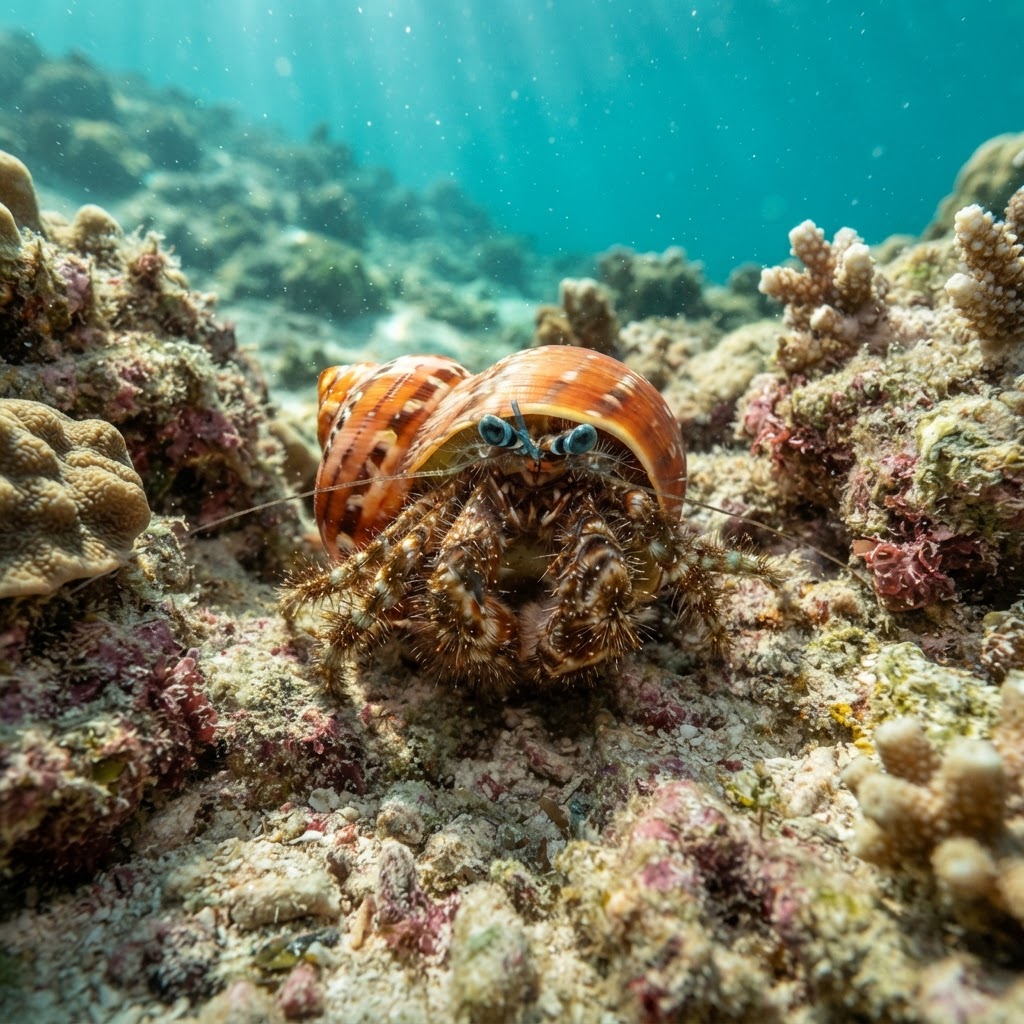
Pagurus hirtimanus
Look for a borrowed shell tucked into rubble in Visayas or Okinawa: these hermit crabs are an uncommon but rewarding macro find year-round.
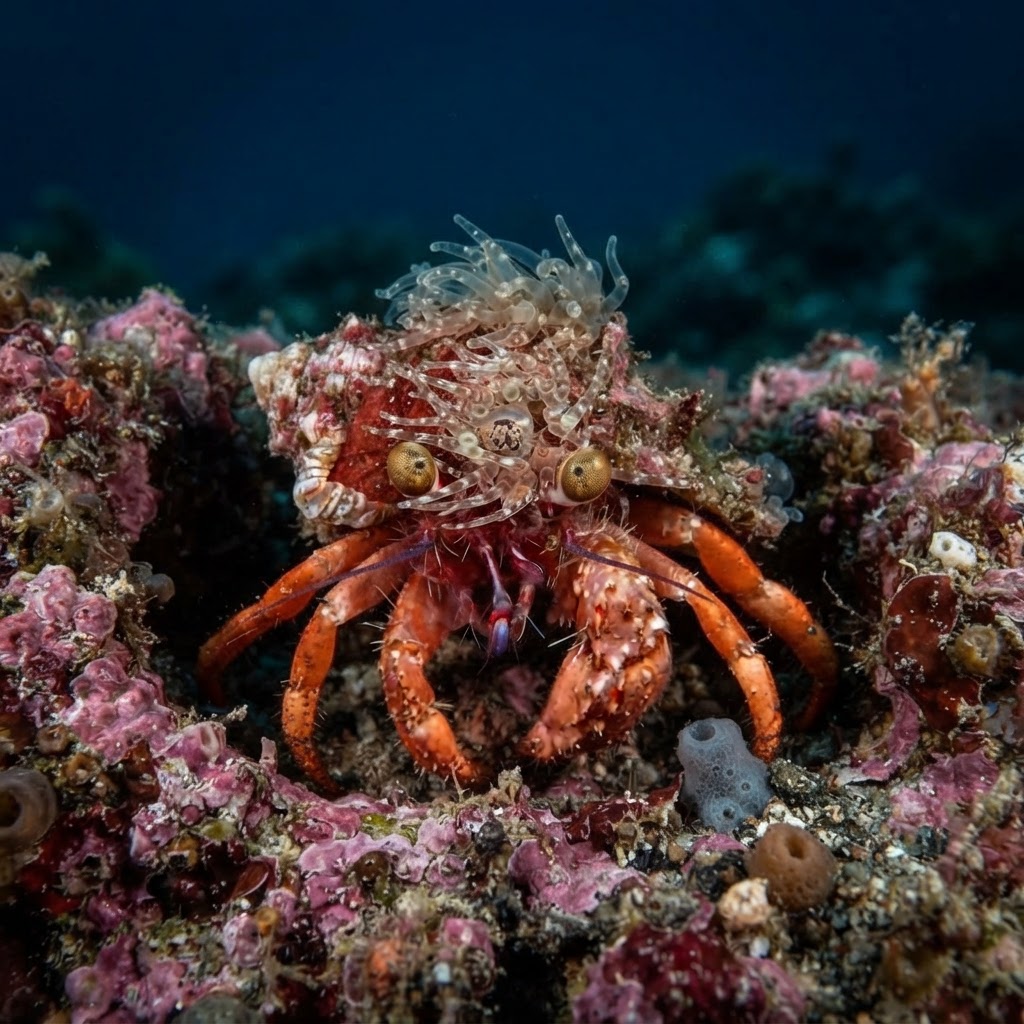
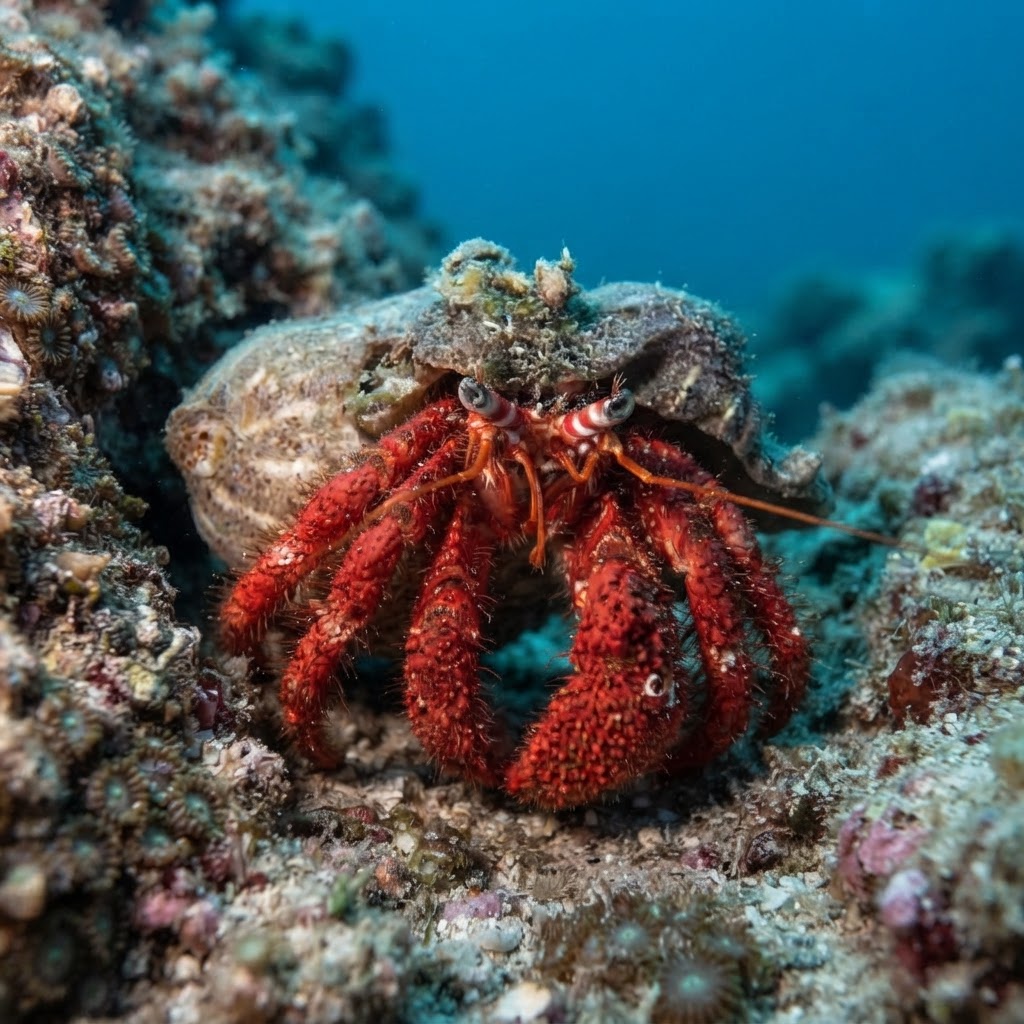
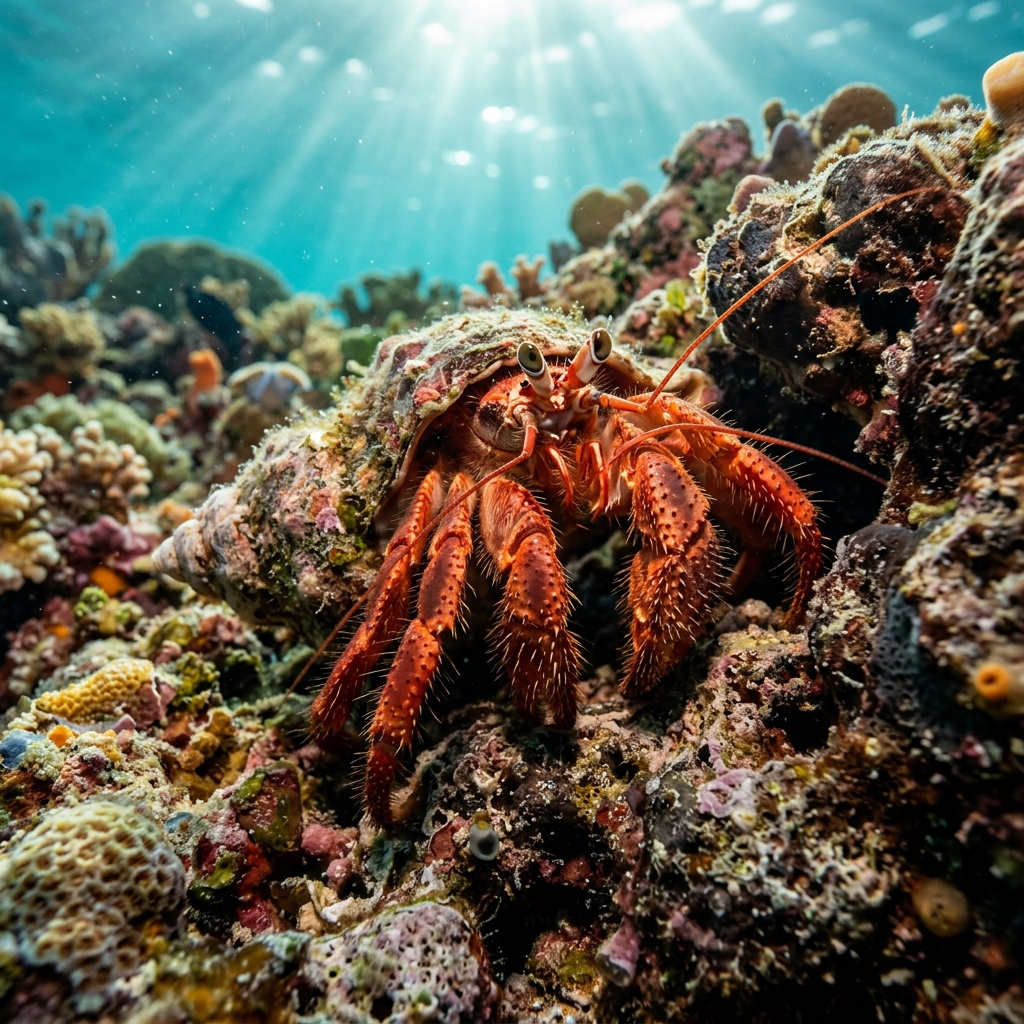
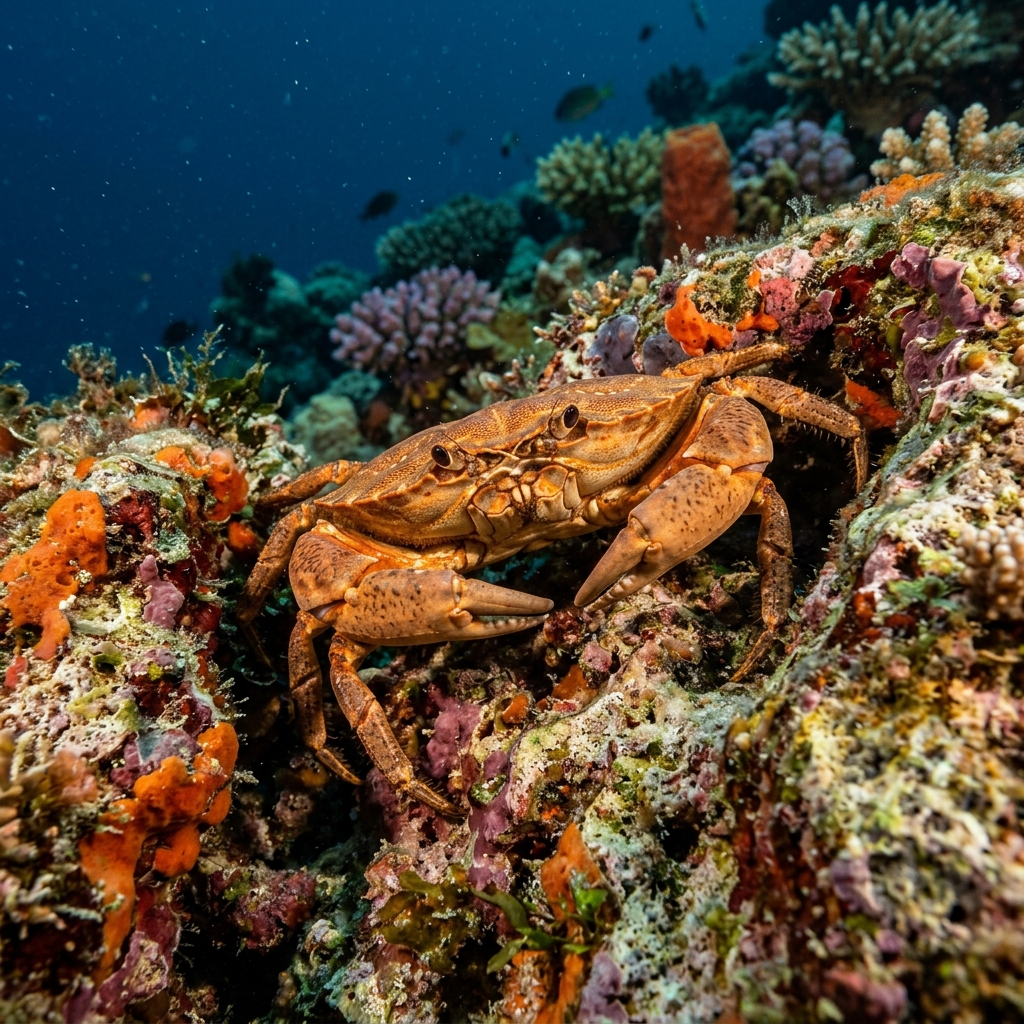
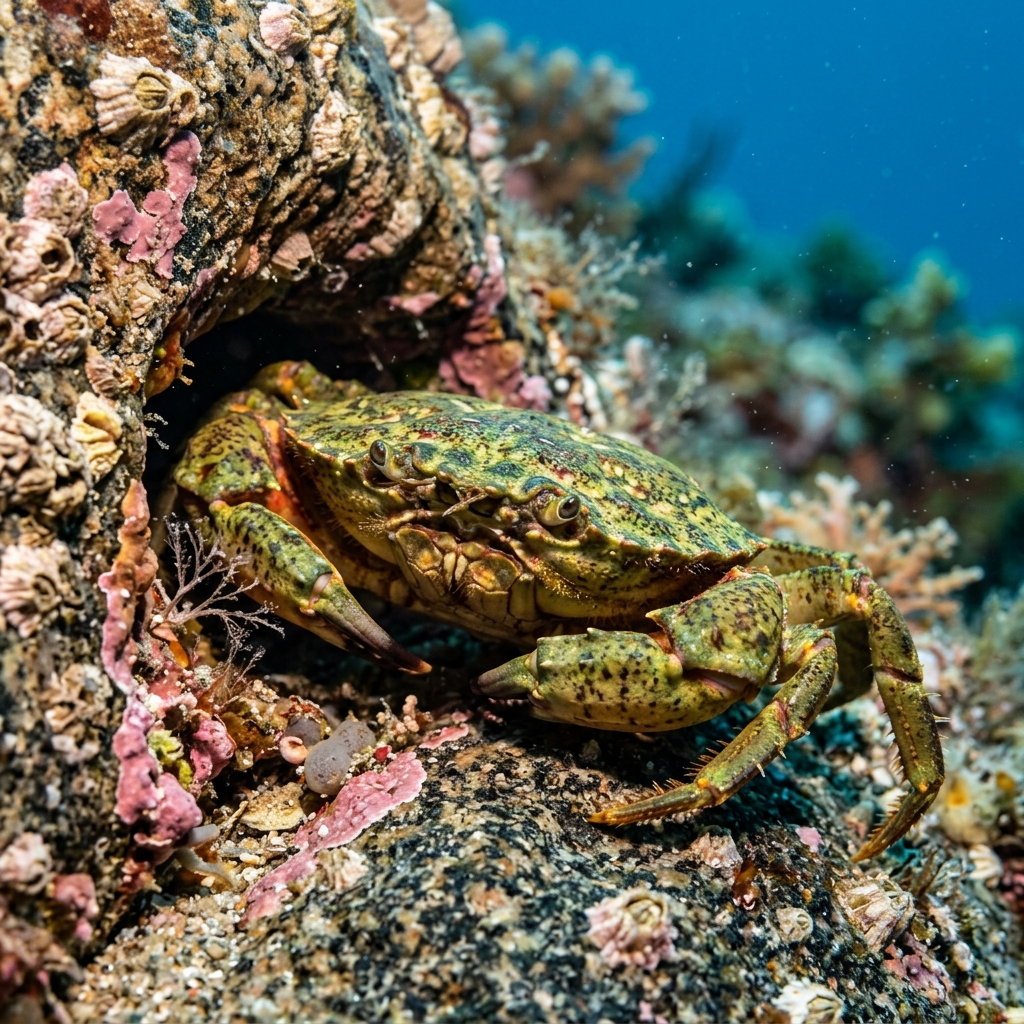
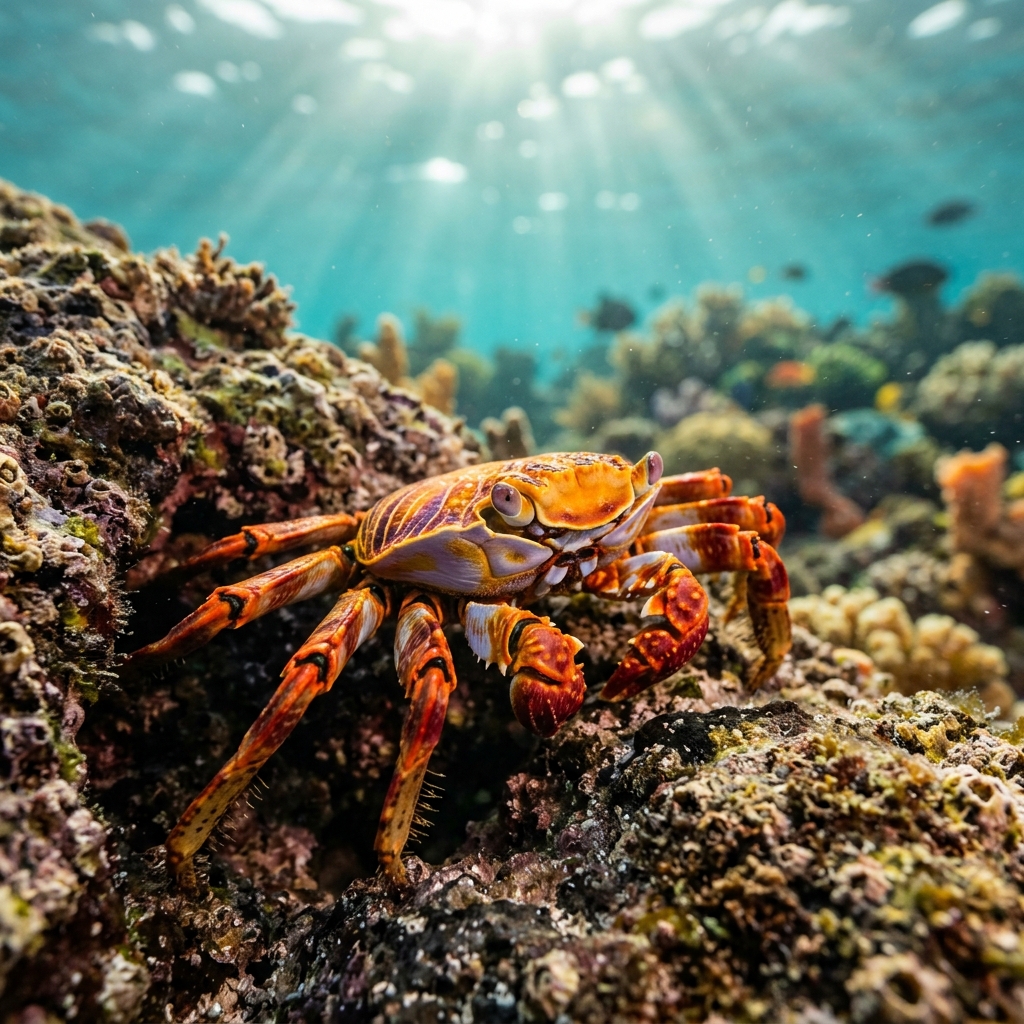
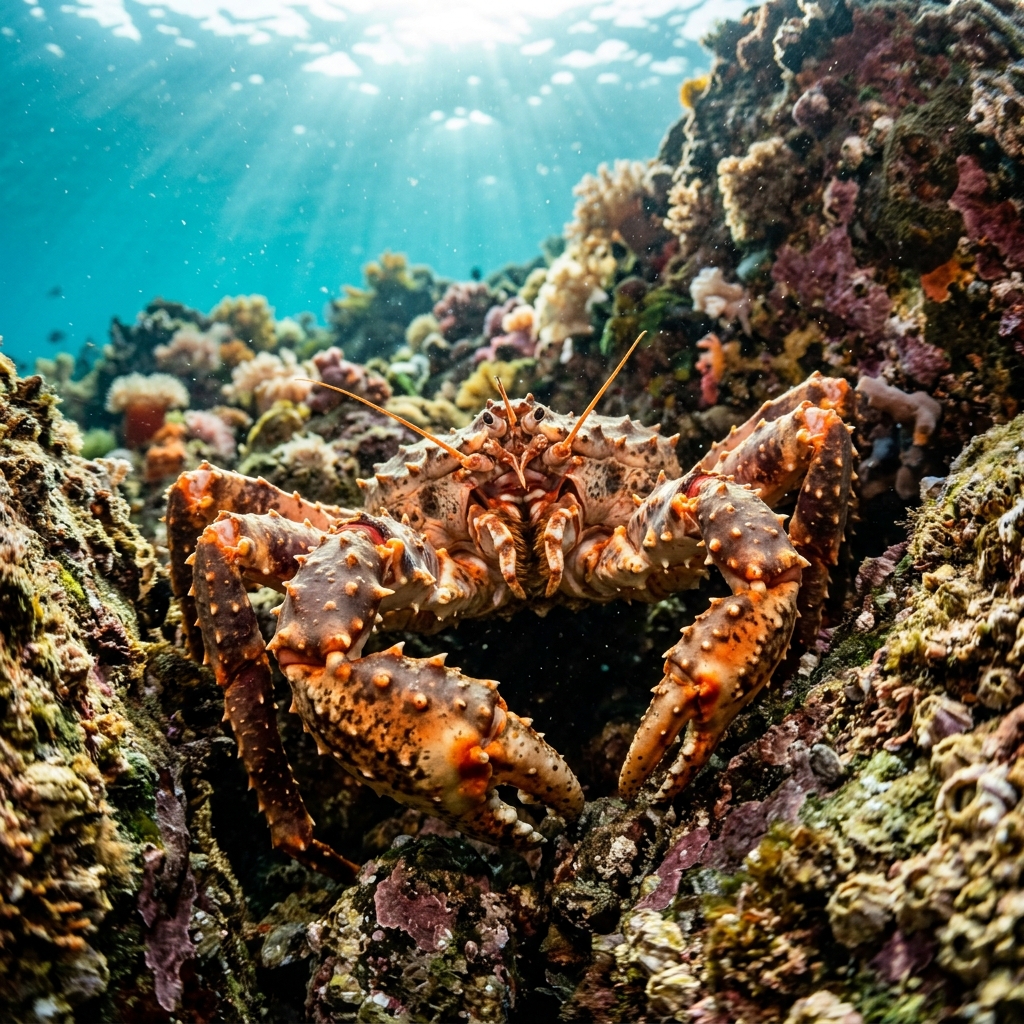
Look for a small crab dragging a scavenged snail shell across the reef floor or rubble patch rather than a hard shell of its own. The exposed claws and legs are hairy-looking (hence hirtimanus) and often mottled brown or reddish, while the soft abdomen stays hidden inside the borrowed shell. When threatened it withdraws entirely into the shell opening, blocking it with an oversized claw. Size varies with the shell it happens to be wearing at the time, so scale is not a reliable ID cue.
Divers usually find these crabs shuffling slowly across sand, rubble, or low reef structure, often at night or tucked into crevices during the day. They are shy and will retreat fully into their shell at the first sign of a torch or a close approach, so patient, still observation gets the best look. Watch for the telltale jerky walk of a shell being dragged rather than a true reef-dwelling snail.
As it grows it has to abandon its current shell and hunt for a roomier one, sometimes fighting or queuing with other hermit crabs for the best vacant shell nearby.
There is no clear seasonal pattern in the sightings, and the observed water temperature range of 23.3 to 29.6 C spans most of the diving calendar in its core regions, so it can turn up on any dive year-round. Treat it as an any-month macro find rather than a seasonal target.
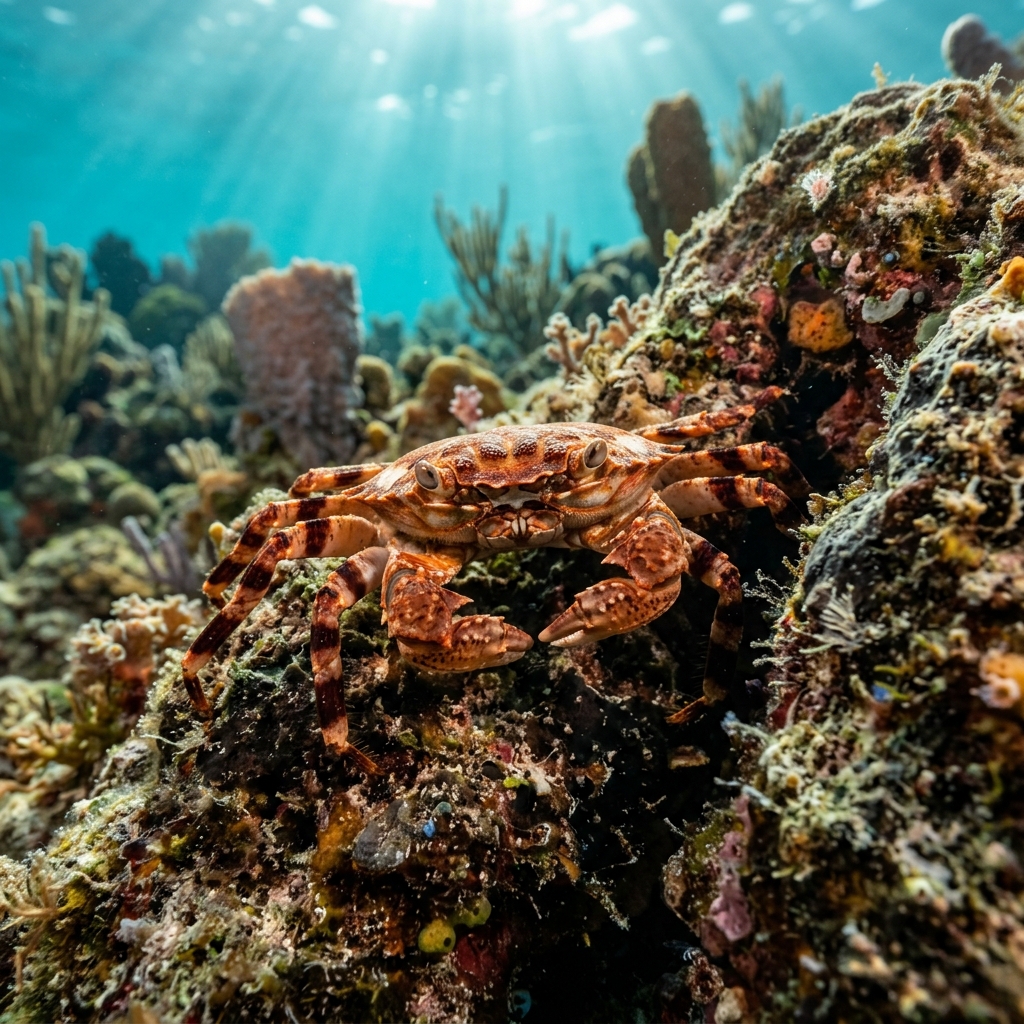
Reef neighbours a diver could mistake it for. Use the identification notes above to tell them apart.
This species turns up most reliably on reefs in the Visayas region of the Philippines and around Okinawa and the Ryukyu Islands in Japan, with a smaller but steady presence in South Sinai, Egypt, and along the Queensland coast of Australia. Divers doing muck or rubble dives in these areas have the best odds, though sightings stay uncommon even where it is logged.
Mapping where Indo-Pacific Hairy Hermit Crab is logged…
The most consistent sightings come from the Visayas region of the Philippines and Okinawa in Japan, with smaller populations logged in South Sinai, Egypt, and Queensland, Australia. They favour rubble and sandy reef edges over open coral.
There is no strong season in the sighting data, and the water temperature they are found in (23.3 to 29.6 C) covers most of the year in their range, so any month is a fair shot.
Look for a small crab carrying a scavenged snail shell instead of a shell of its own, with hairy-looking legs and claws often coloured brown or reddish. If disturbed, it retreats fully into the shell and blocks the opening with a claw.
Size is not fixed for this species and depends largely on the borrowed shell it is currently occupying, since it grows into progressively larger shells over its life.
Their soft, coiled abdomen has no hard armour, so they occupy empty snail shells for protection and swap to bigger ones as they grow, sometimes competing with other hermit crabs for the best available shell.
No, they pose no threat to divers. They are shy scavengers that withdraw into their shell rather than confront anything larger than themselves.
Site and sighting data is aggregated from diver logs, iNaturalist and GBIF. For taxonomy and conservation status:
European Green Crab
2,469 sites