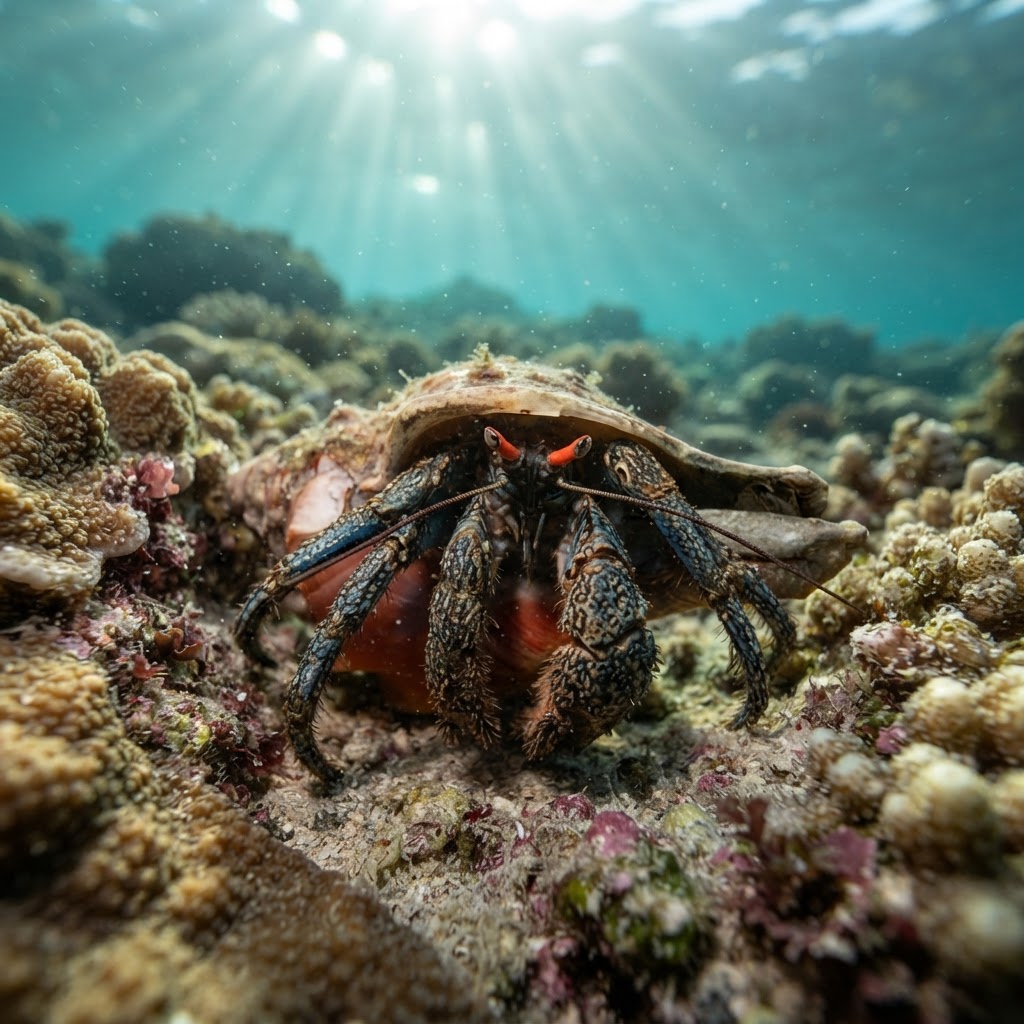
Clibanarius longitarsus
Uncommon but reliable find on reef rubble in Peninsular Malaysia and Ponta do Ouro, year-round in warm water.
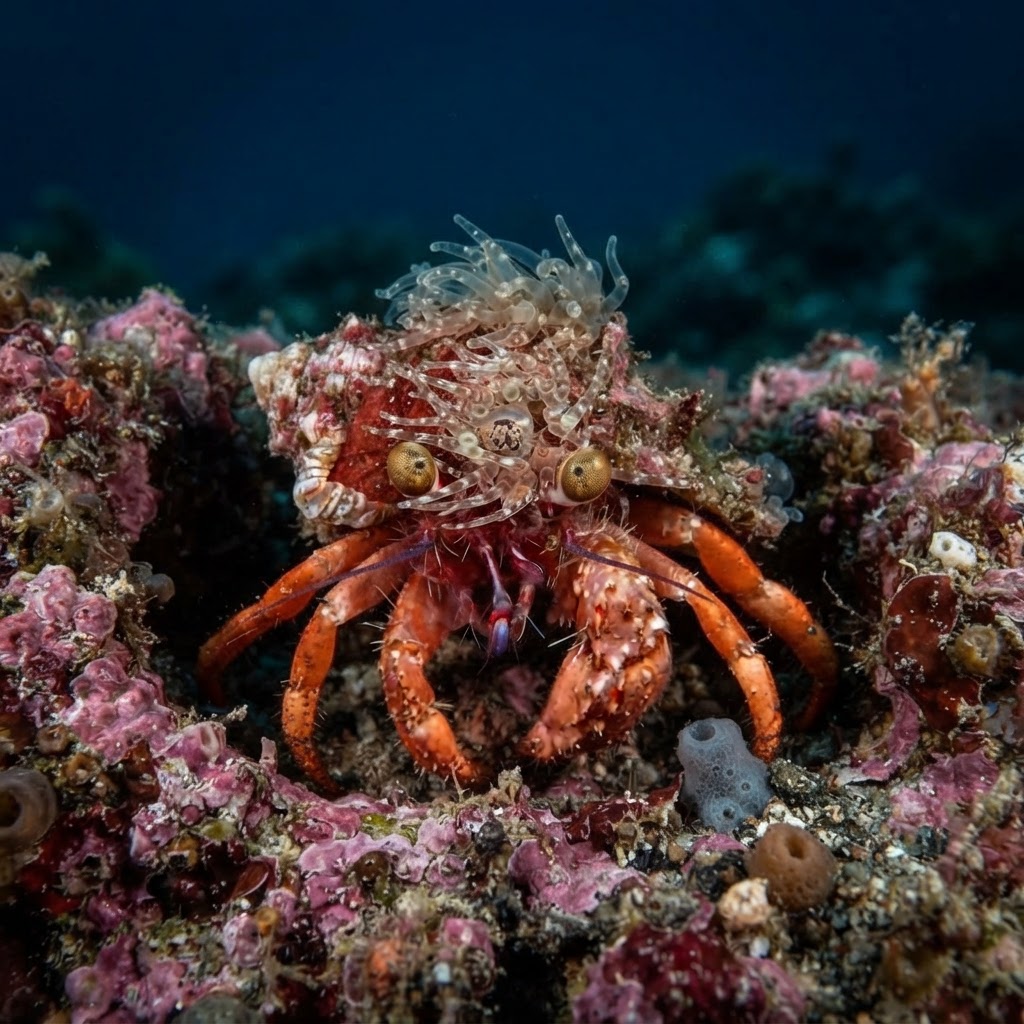
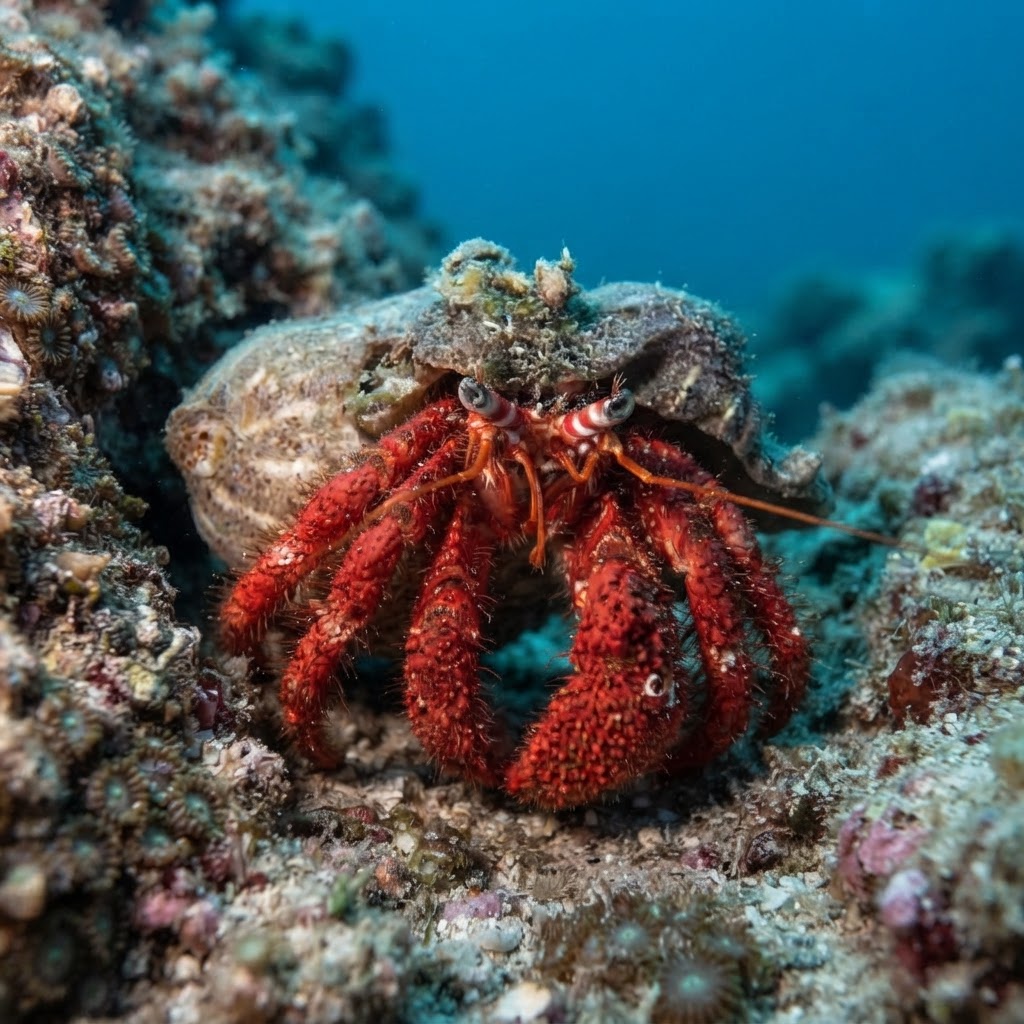
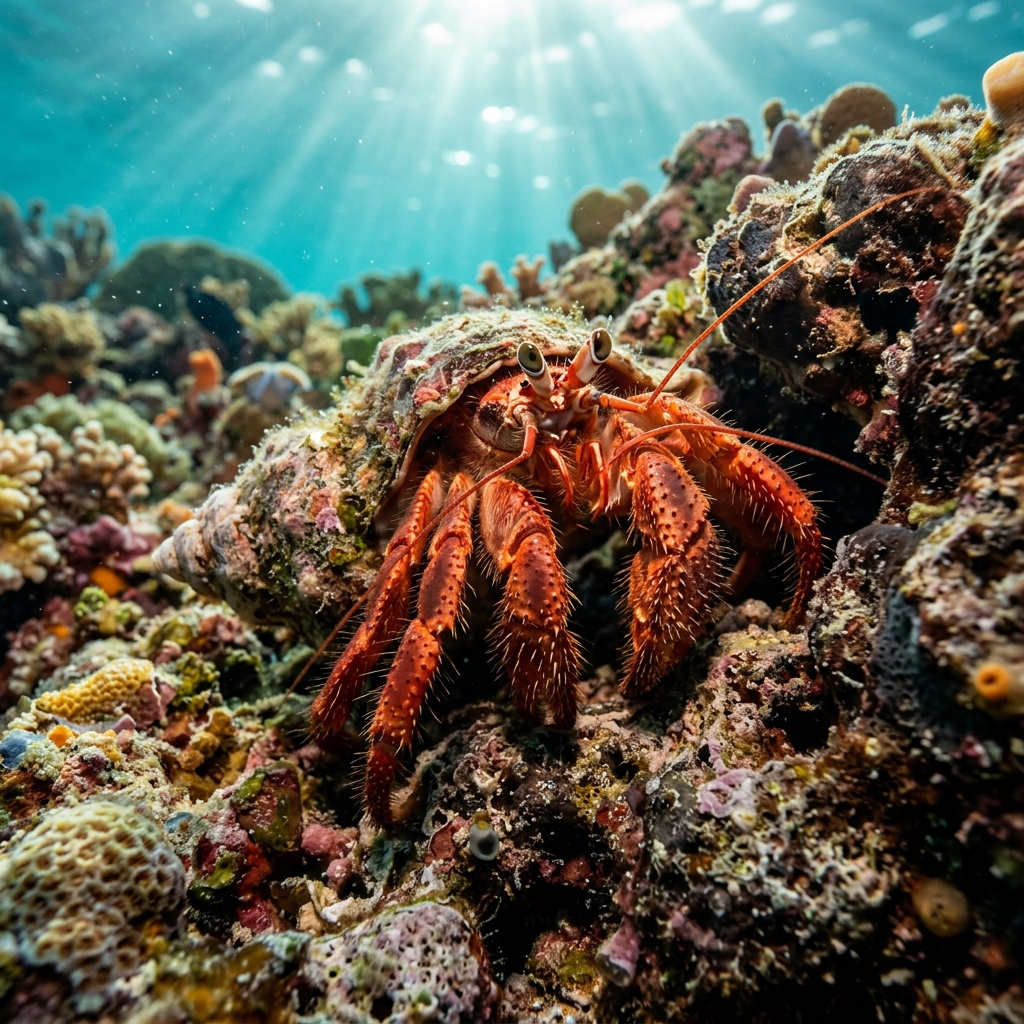
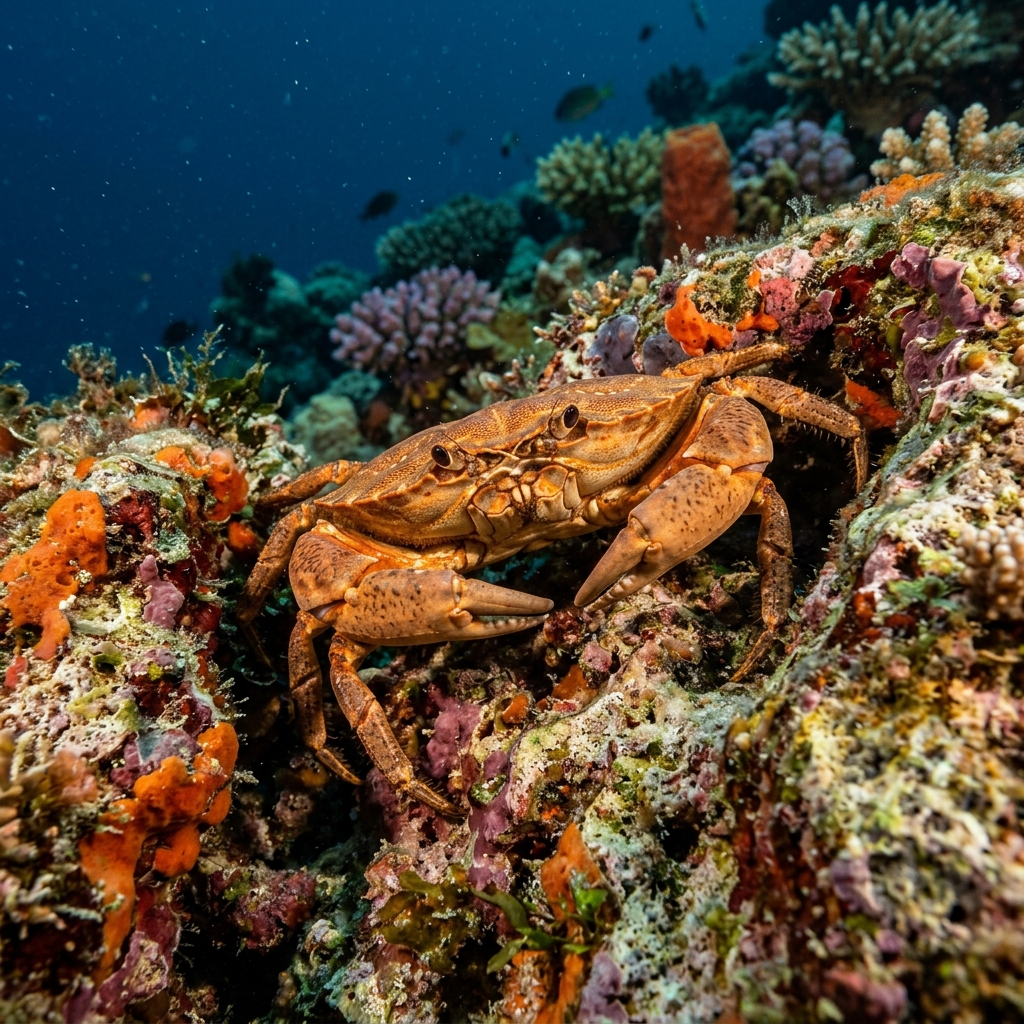
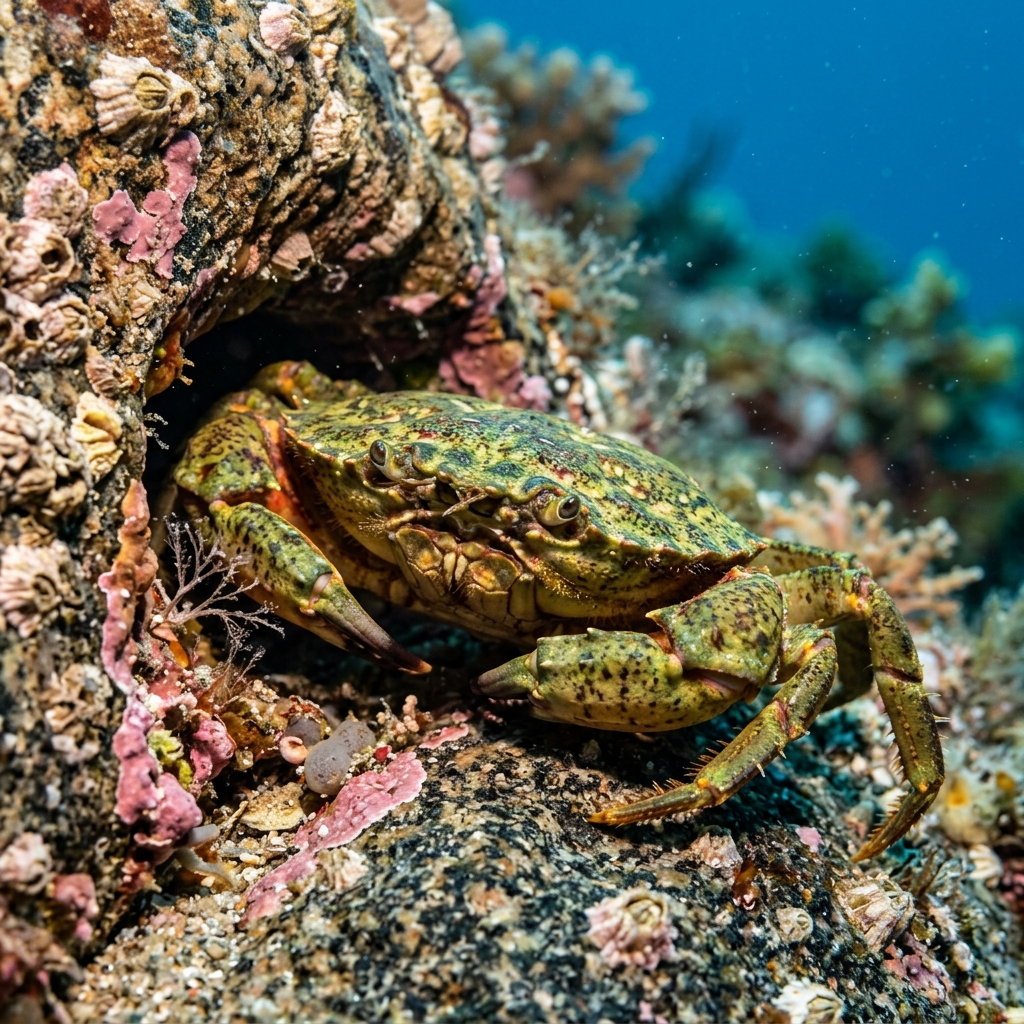
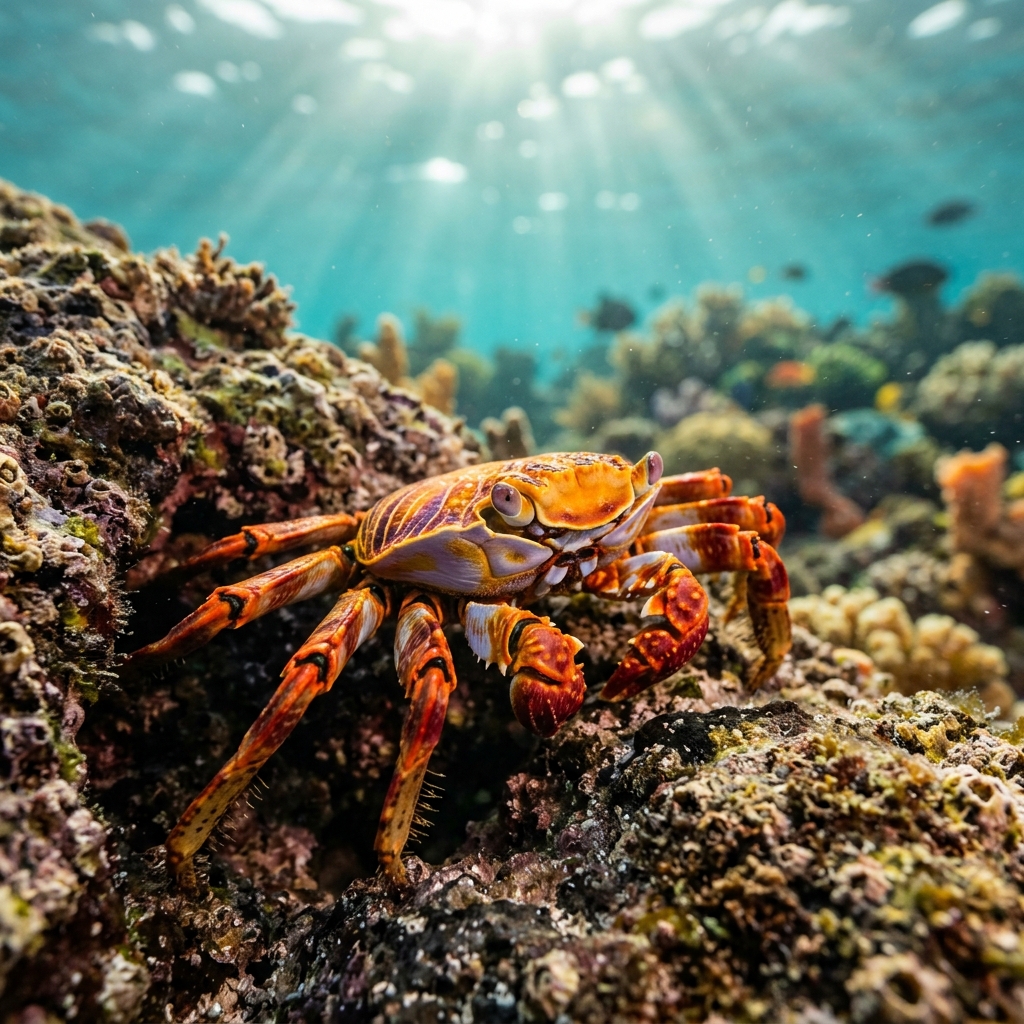
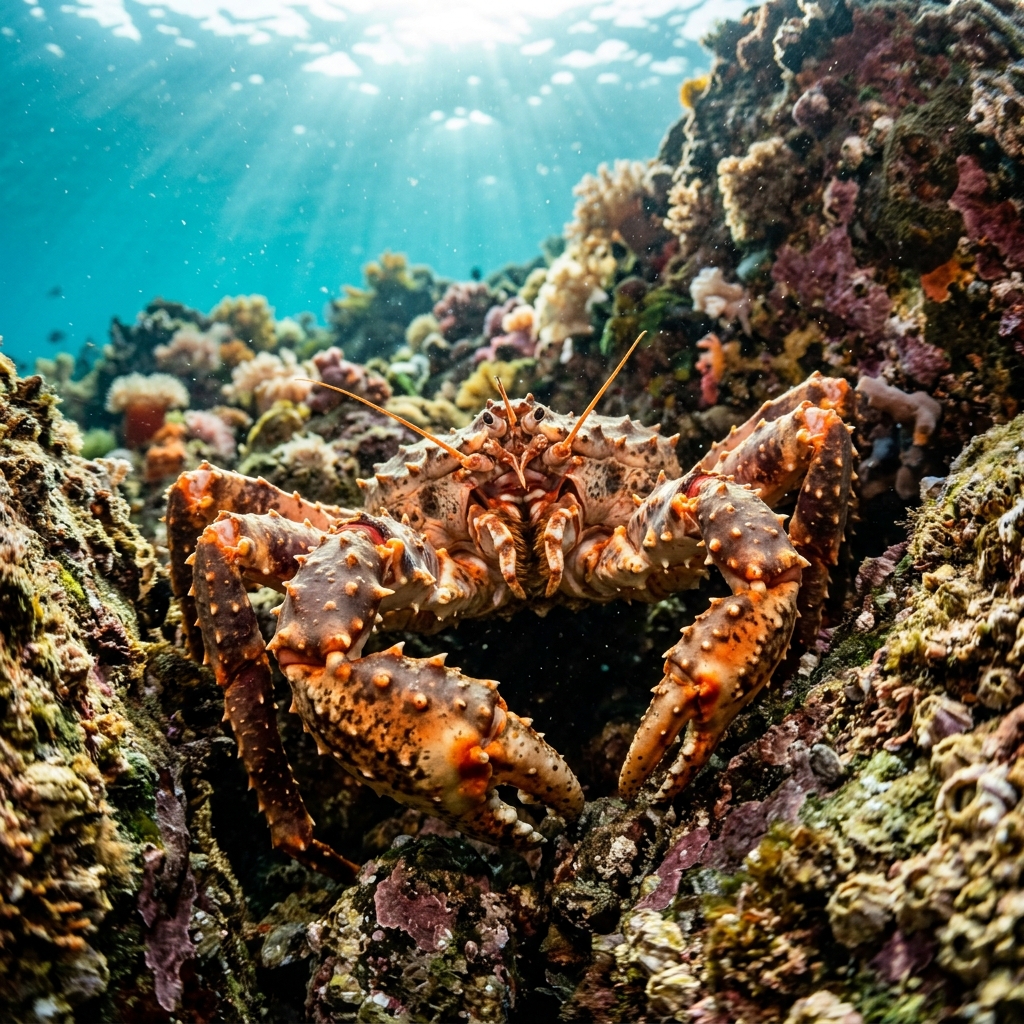
Look for a small crab dragging a scavenged snail shell across sand or rubble, with only the front claws and eyestalks poking out of the shell opening. The claws and legs are typically banded or striped, and one claw is usually noticeably larger than the other. Body colour ranges from olive to reddish brown, blending in against reef rubble, so it is often spotted by its shell's movement rather than its own colour.
Divers usually find it shuffling slowly across sand, rubble or seagrass patches, often close to the reef base rather than out in open water. It tends to withdraw fully into its borrowed shell if a torch beam or hand gets too close, then re-emerges once the disturbance passes. Most sightings happen on daytime dives, since it stays active scavenging over the substrate rather than hiding in a crevice.
Like all hermit crabs it does not grow its own shell but recycles empty snail shells, swapping to a bigger one as it grows, which means the same individual can look like a completely different species from one dive to the next.
There is no clear seasonal pattern in the sightings, and with a comfortable range of roughly 24 to 30 C it turns up on tropical and subtropical reefs throughout the year. Treat it as a year-round find rather than something tied to a particular month.
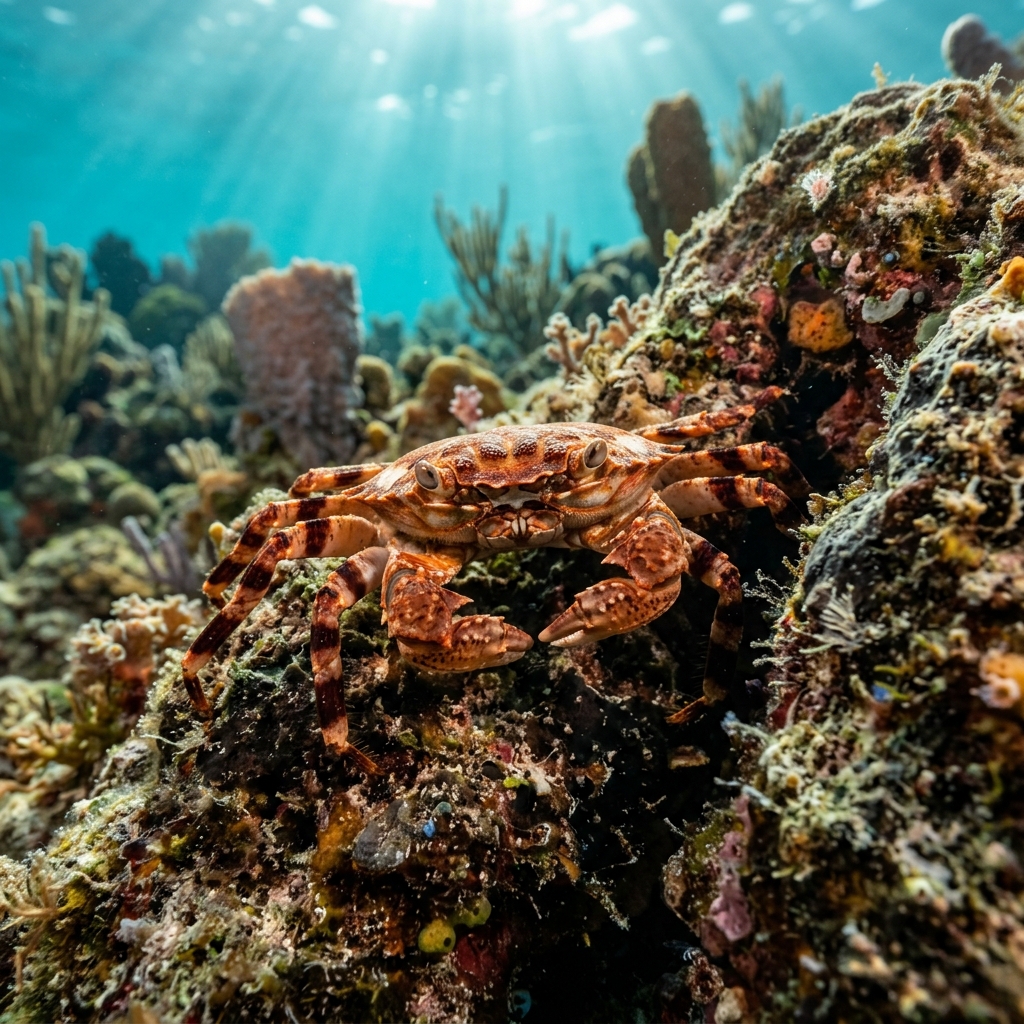
Reef neighbours a diver could mistake it for. Use the identification notes above to tell them apart.
Most consistently logged on reefs and rubble patches in Peninsular Malaysia's east coast, with a smaller but reliable presence around Ponta do Ouro in Mozambique. Divers also report it in Australia's Northern Territory and Queensland, and along South Africa's KwaZulu-Natal coast.
Mapping where Long-legged Hermit Crab is logged…
It shows up most reliably on rubble and sandy reef patches in Peninsular Malaysia's east coast, and it is also a steady sighting around Ponta do Ouro in Mozambique. Smaller numbers are logged in Australia's Northern Territory, Queensland and along South Africa's KwaZulu-Natal coast.
There is no strong seasonal pattern in the sightings, so it is best treated as a year-round find. It favours warm water in the 24 to 30 C range, which most of its tropical and subtropical sites hold throughout the year.
No, this species poses no threat to divers. It is a small scavenger that retreats into its shell rather than confronting anything nearby, so it can be watched or photographed from close range without concern.
Look for a scavenged snail shell moving across sand or rubble with claws and eyestalks emerging from the opening. Banded or striped legs and one oversized claw are the main visual clues, since the crab's own body is usually tucked inside the shell.
It has a soft, unprotected abdomen and cannot grow its own hard shell, so it scavenges empty snail shells for protection. As it grows it abandons each shell for a larger one, so the same crab can look quite different over its lifetime.
Site and sighting data is aggregated from diver logs, iNaturalist and GBIF. For taxonomy and conservation status:
European Green Crab
2,469 sites