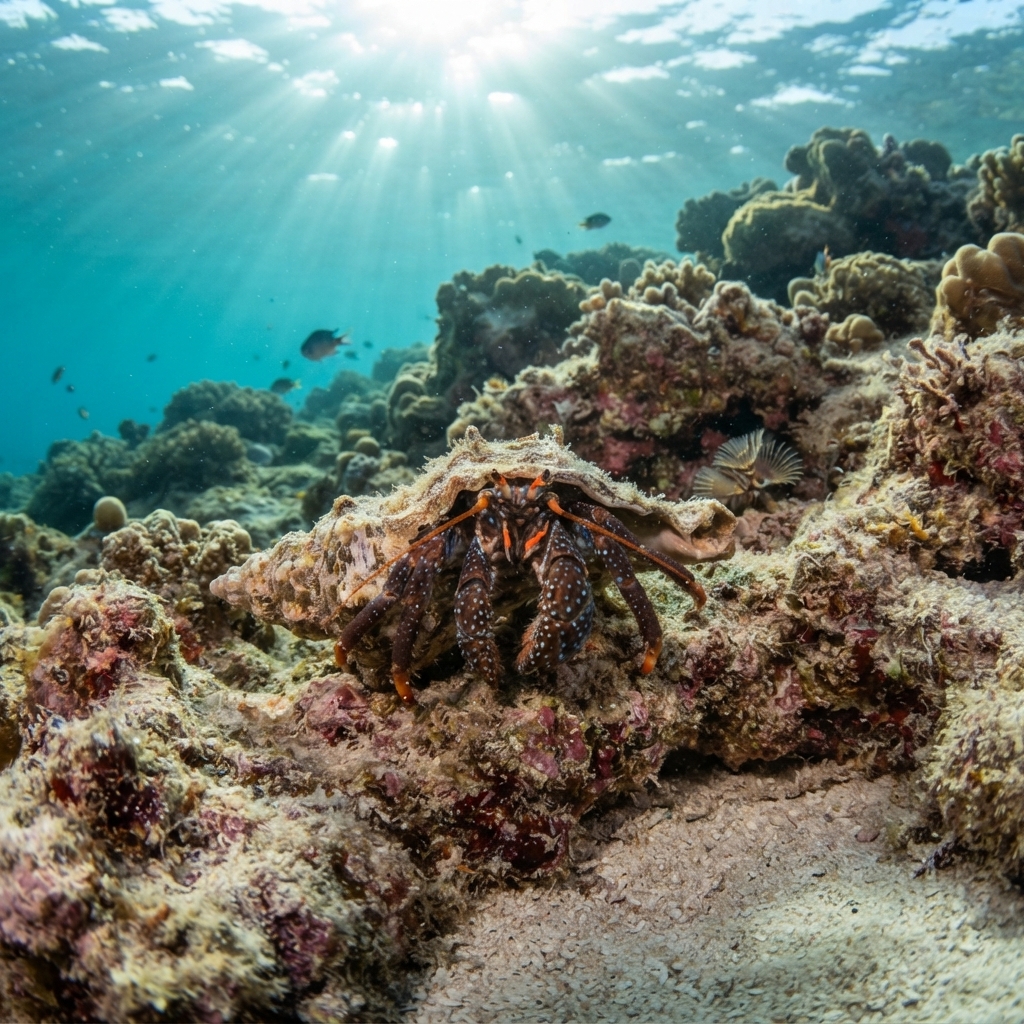
Clibanarius aequabilis
A common find on Tenerife and Gran Canaria reef rubble, this hermit crab turns up year-round in mild Canary Islands water.
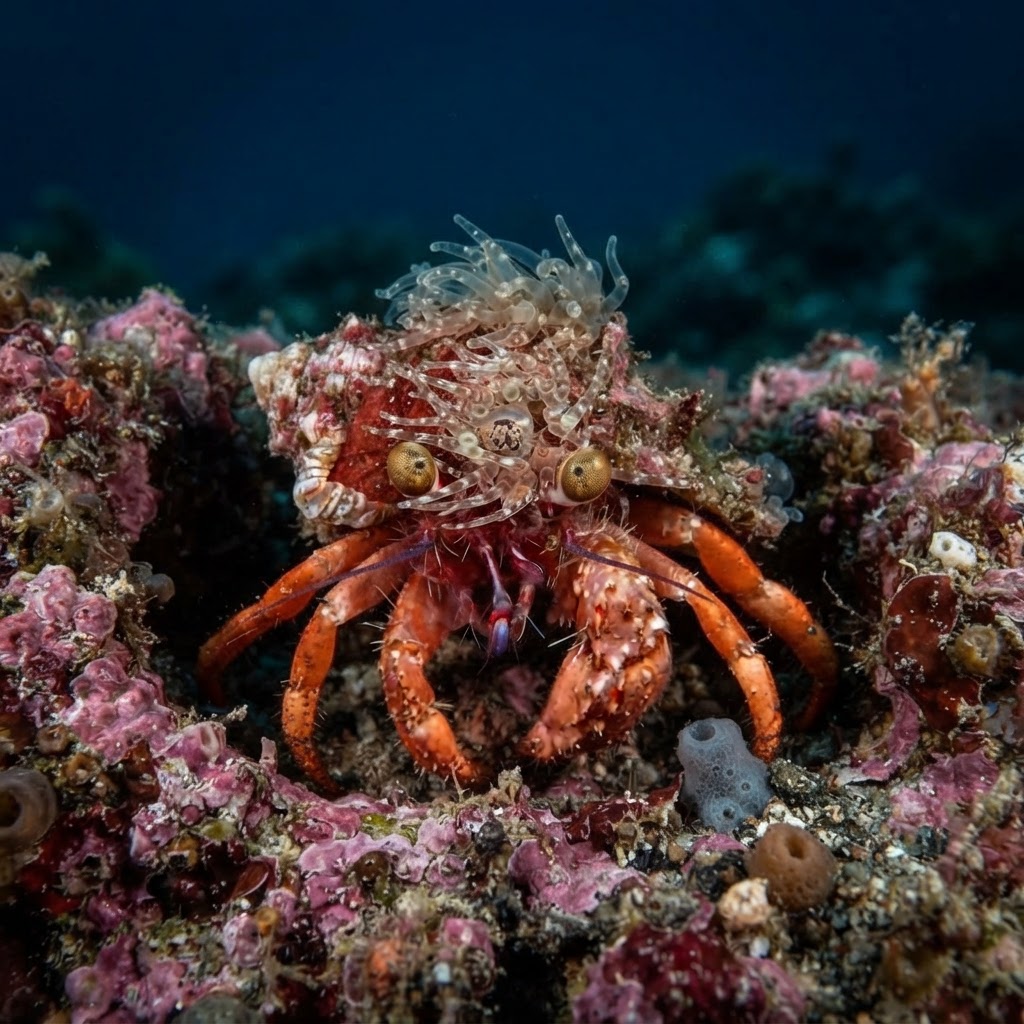
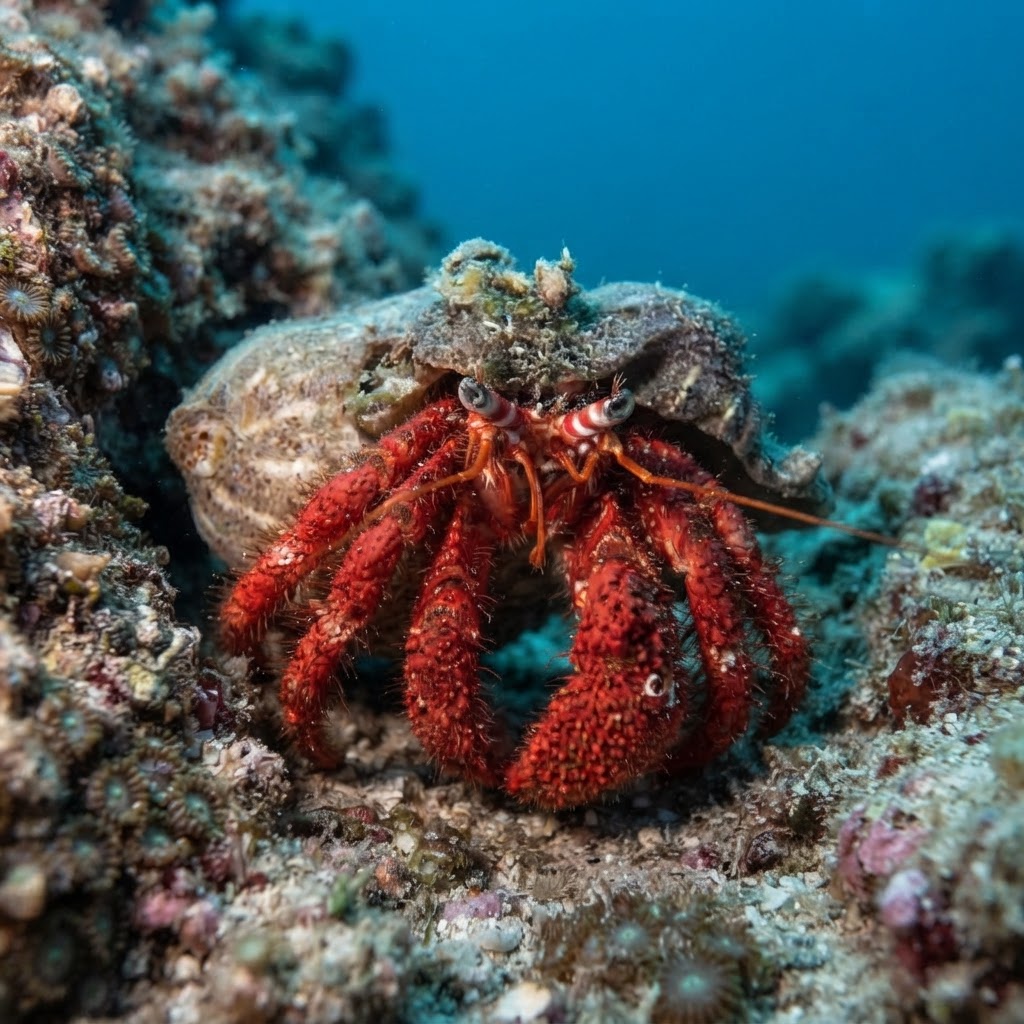
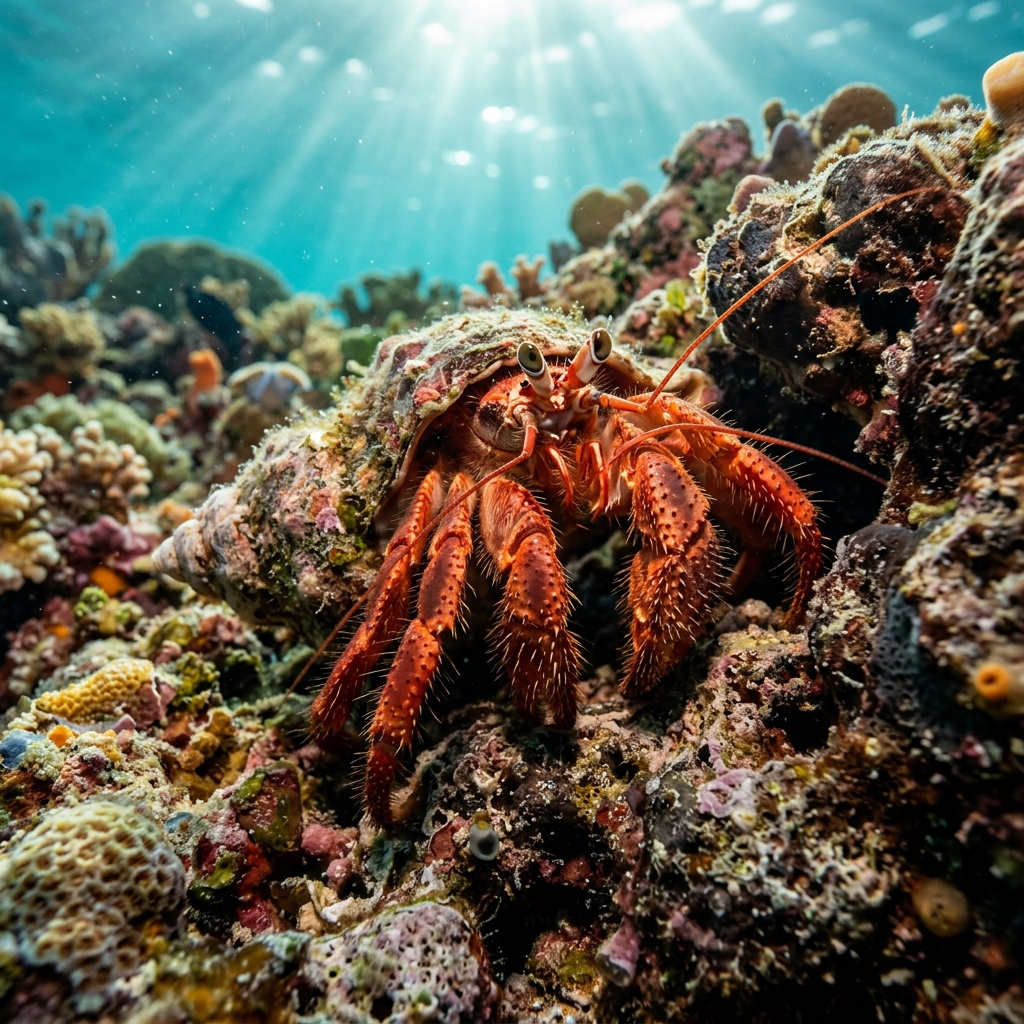
Look for a small crab dragging a borrowed gastropod shell across rock and rubble, with only the front claws and banded legs showing outside the opening. The visible legs typically show alternating light and dark bands, and one claw is often noticeably larger than the other for blocking the shell entrance. Size in the water is modest, easy to overlook unless you are scanning low over rubble and rock crevices rather than open sand.
Divers usually find it picking over rock and rubble close to the seabed, foraging on algae and detritus rather than swimming or drawing attention to itself. It tends to withdraw fully into its shell if a torch beam or hand gets too close, then re-emerge once the disturbance passes. Most sightings come from slow, close-focus looks at rubble patches rather than mid-water or open reef scanning.
Like all hermit crabs, this one does not grow its own armour: it occupies empty gastropod shells and trades up to a larger one as it grows, so the same individual can look like a completely different-sized animal from one dive to the next depending on its current shell.
Sightings show no clear seasonal pattern, and the species turns up across the year in water running from about 18 to 24 C. Plan around good visibility and calm conditions on the Canary Islands and Madeira rather than chasing a particular month.
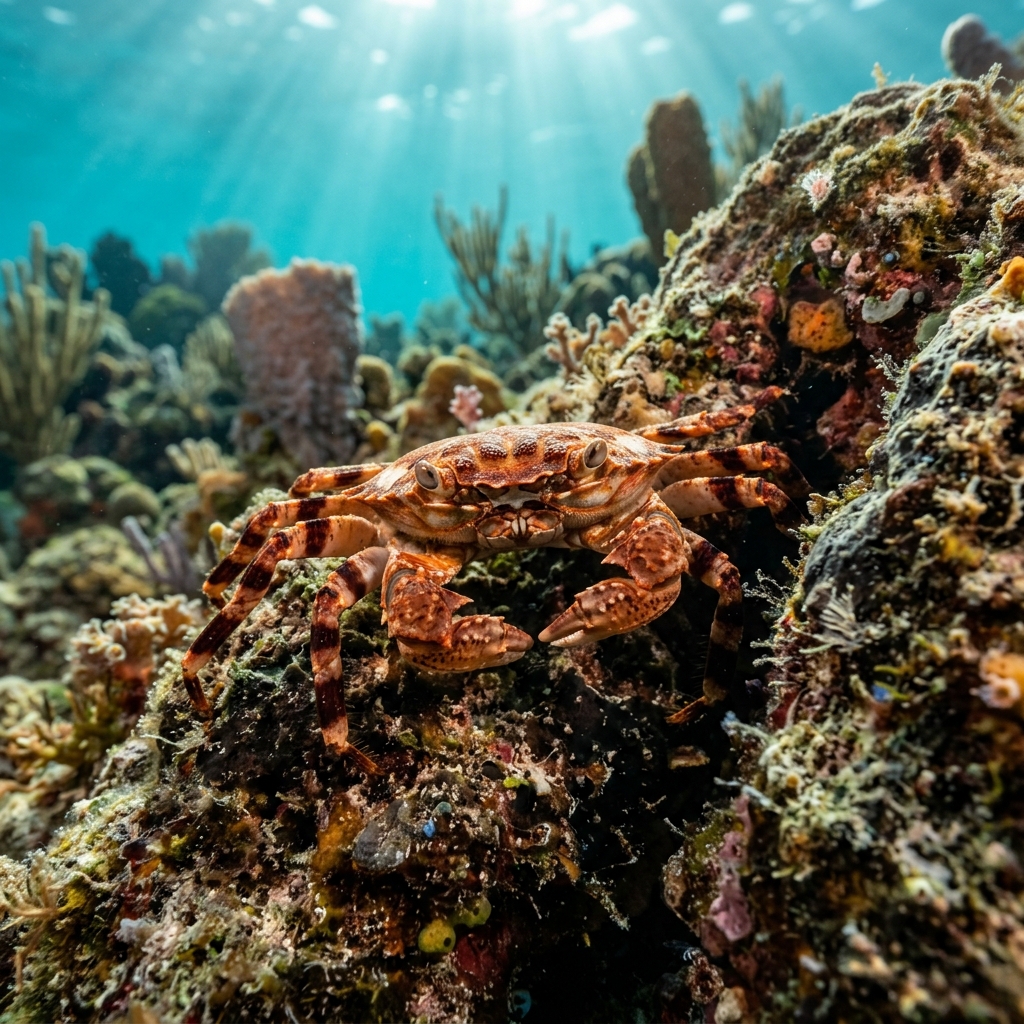
Reef neighbours a diver could mistake it for. Use the identification notes above to tell them apart.
This species is most reliably logged around the Canary Islands, with strong numbers on Tenerife, Gran Canaria, and Fuerteventura, plus further sightings on Lanzarote and La Palma. Madeira also produces a steady run of records, making the Macaronesian islands the core range for divers wanting a look.
Mapping where Uniform Hermit Crab is logged…
The Canary Islands are the stronghold, especially Tenerife, Gran Canaria, and Fuerteventura, with Lanzarote and La Palma also reliable. Madeira offers a smaller but consistent number of sightings too.
There is no strong season in the data, so it is seen year-round in water between roughly 18 and 24 C. Any month with decent visibility around the Canary Islands or Madeira should work.
Look for banded legs and claws protruding from a scavenged snail shell moving slowly over rock or rubble. One claw is usually larger and used to seal the shell opening when threatened.
Exact size data is not confirmed for this species, but like most Clibanarius hermit crabs it stays small, easily overlooked among rubble unless you are looking closely.
They do not grow their own shell at all, instead occupying empty gastropod shells and moving into progressively larger ones as they grow. A single crab might change shells several times over its life.
Site and sighting data is aggregated from diver logs, iNaturalist and GBIF. For taxonomy and conservation status:
European Green Crab
2,469 sites