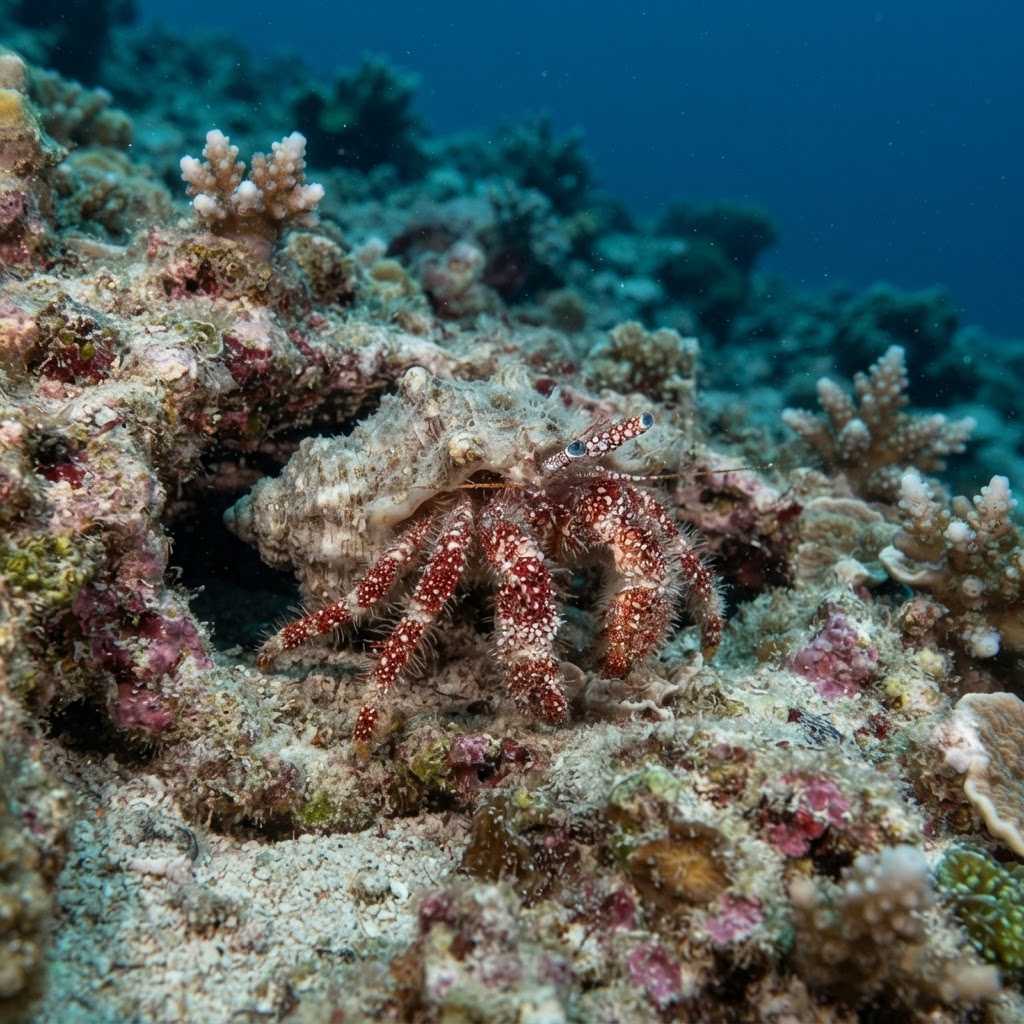
Paguristes puncticeps
Look for orange antennae poking from a borrowed shell on reefs from Tortola to Sint Eustatius, year-round in 25 to 31C water.
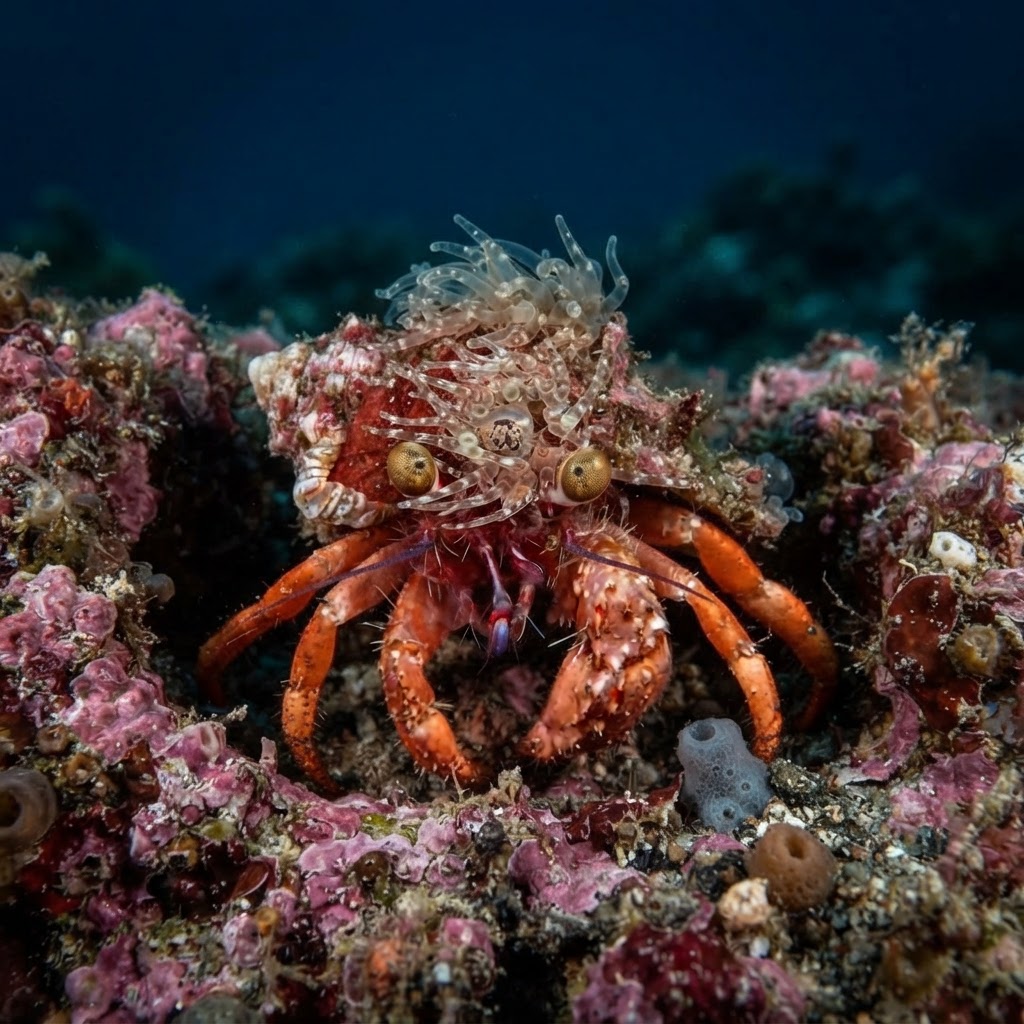
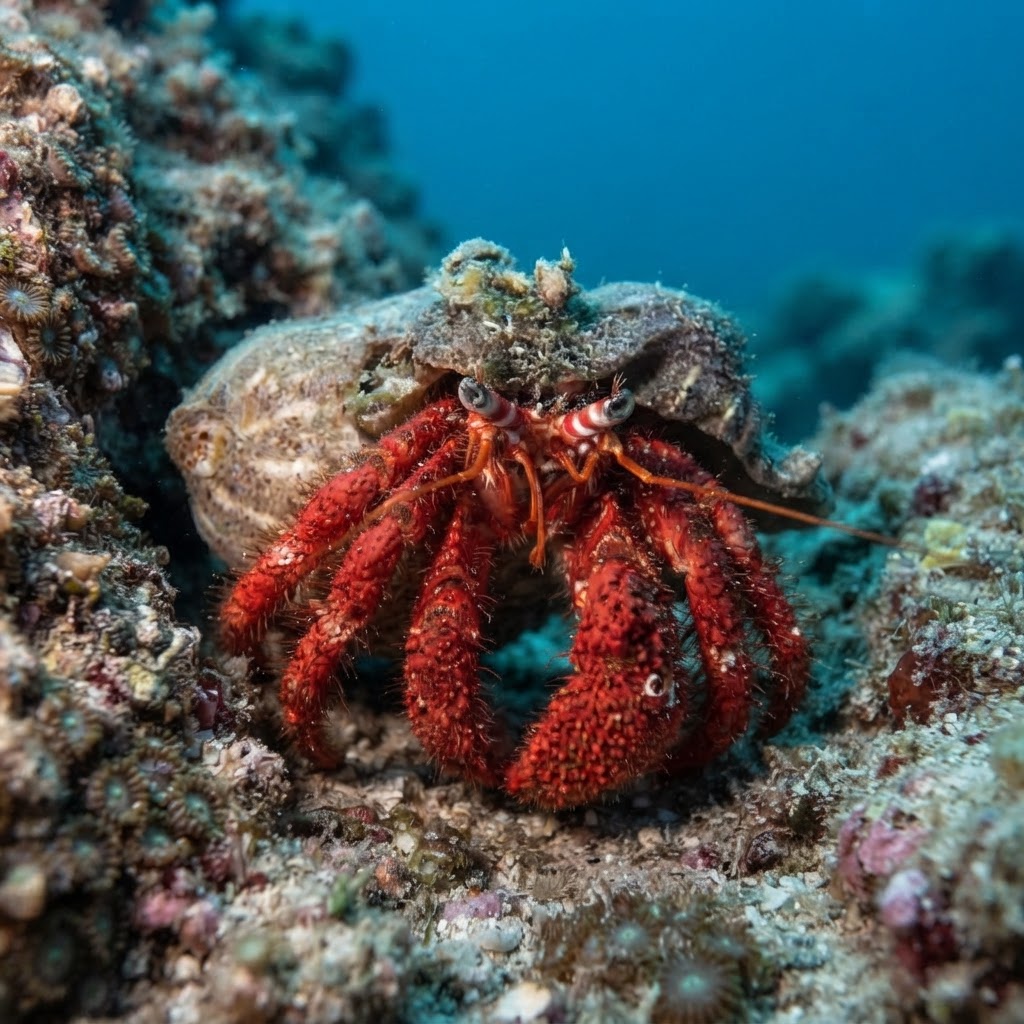
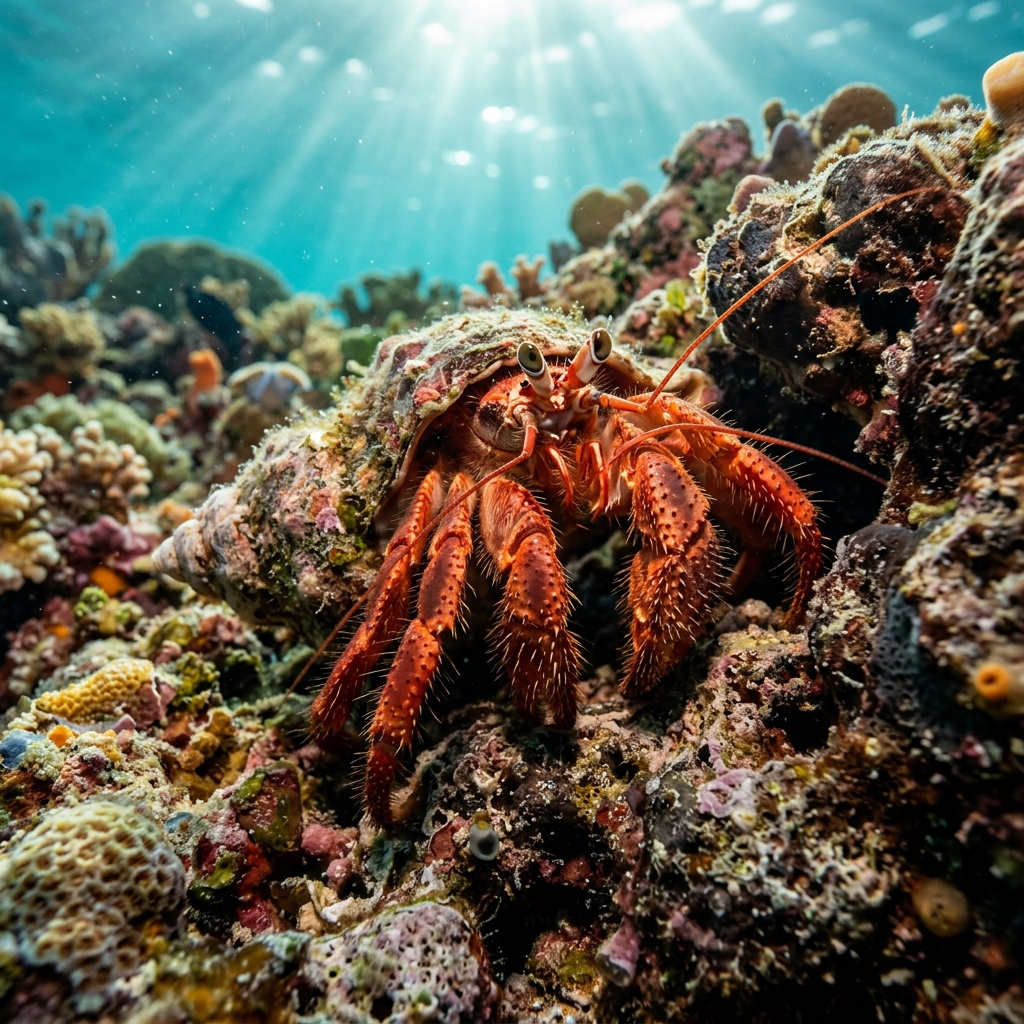
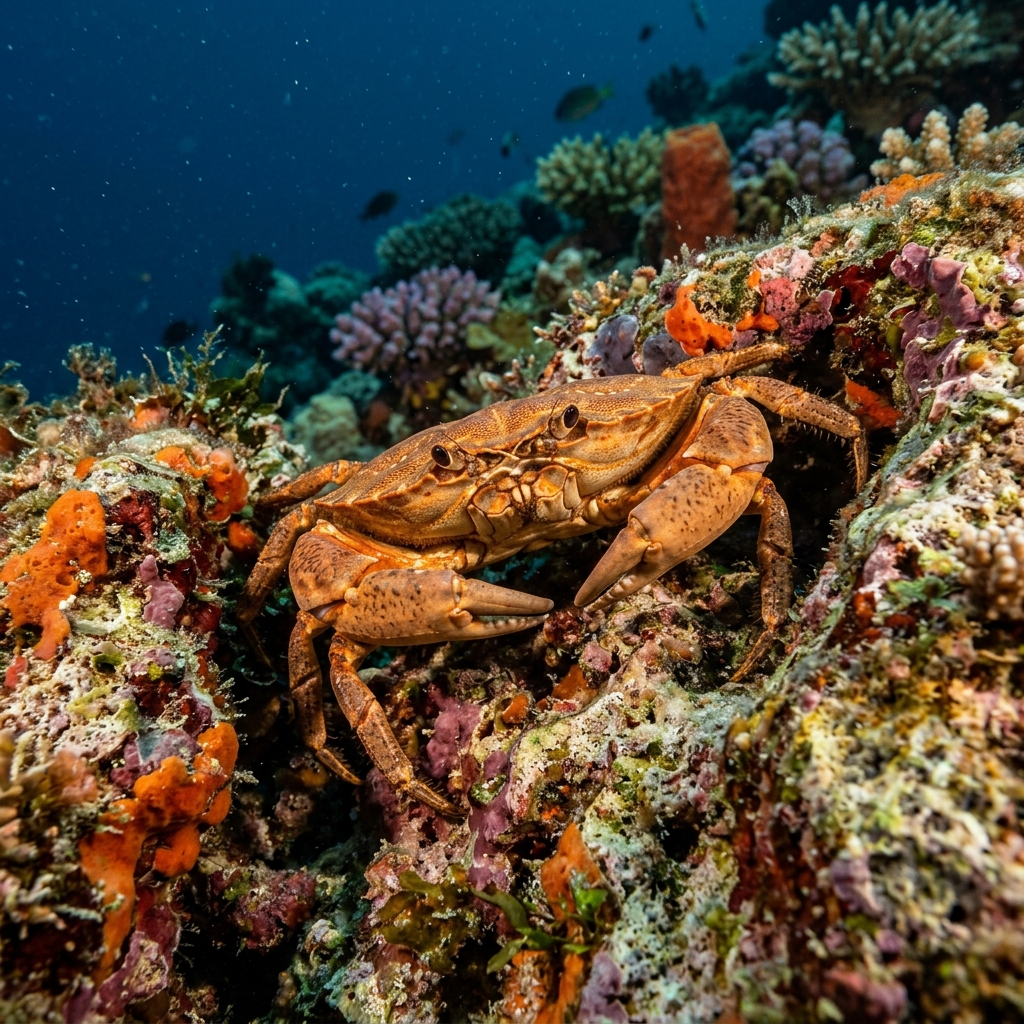
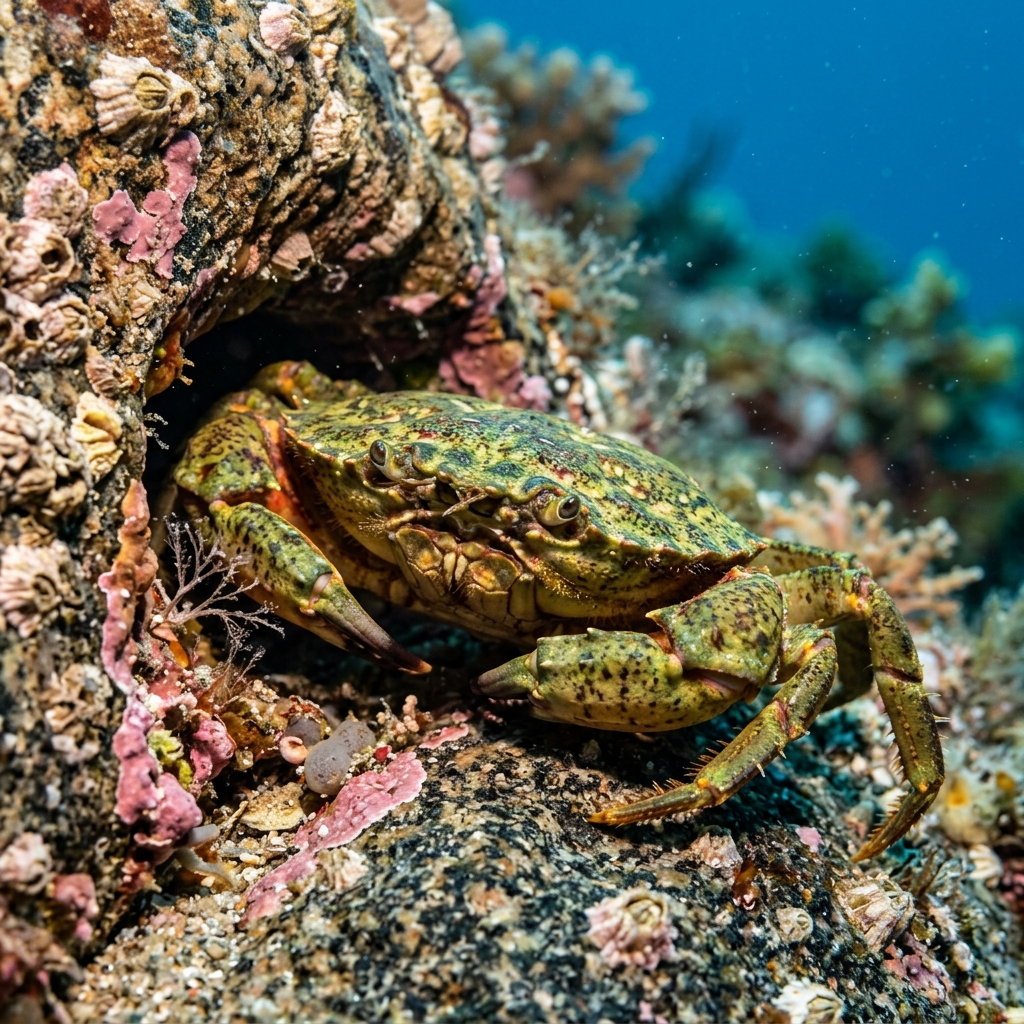
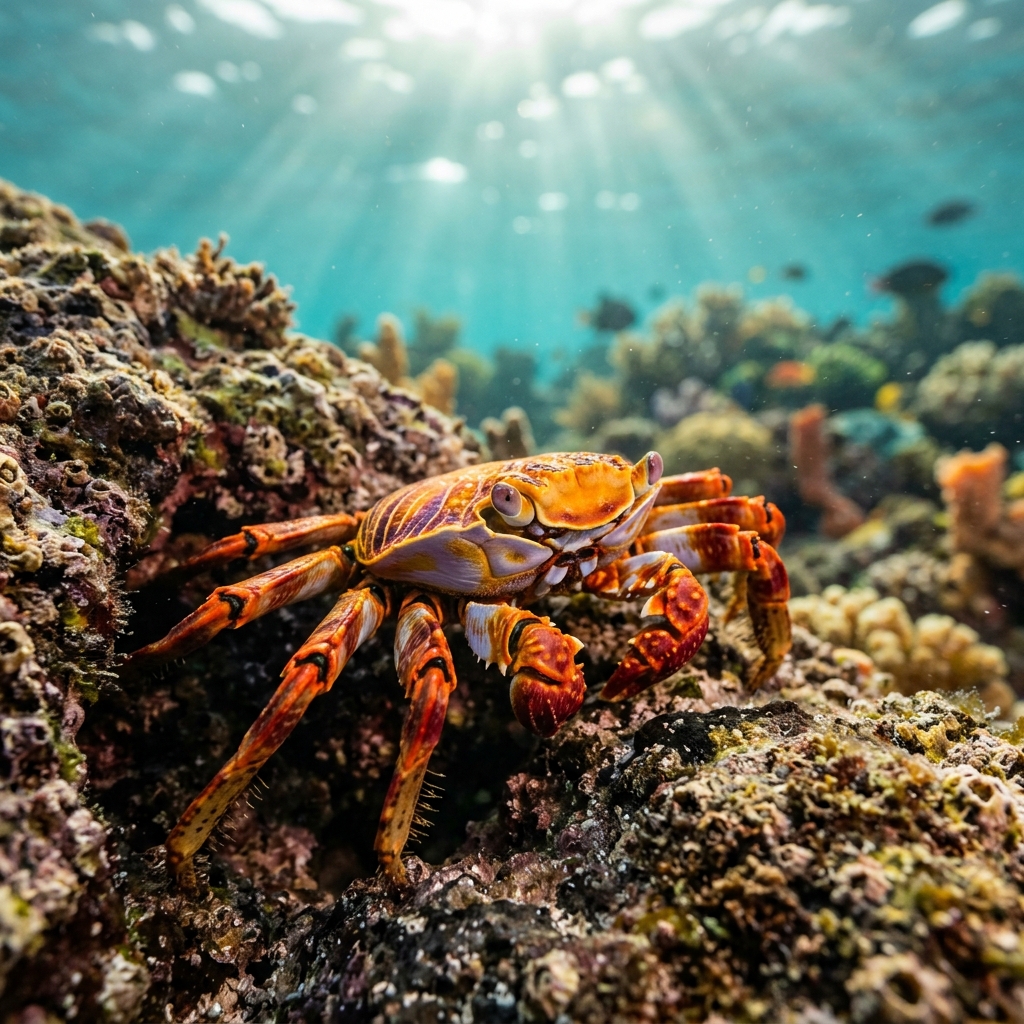
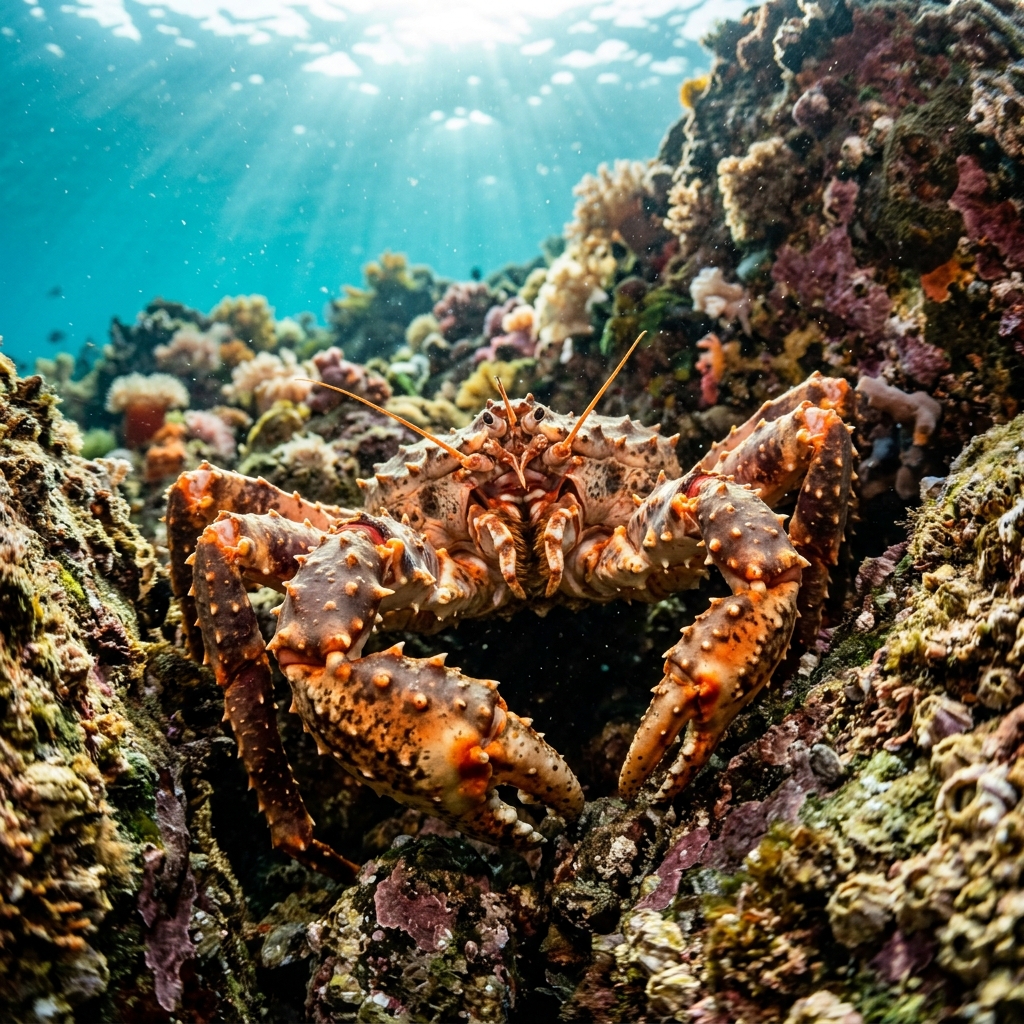
Recognisable less by the animal itself than by its home: a soft-bodied crab tucked into a scavenged snail shell, with only the front legs, claws and eyestalks on show. Look for banded orange or reddish legs and long antennae sweeping the sand as it moves the whole shell along the reef. Size in the water is modest, easily overlooked among rubble and coral debris unless you slow down and scan the substrate.
Divers typically find it ambling slowly across sand patches, rubble or reef edges, dragging its shell home behind it while foraging with its front legs. It is unbothered by torch light on night dives and tends to freeze or retreat into its shell rather than flee if approached too fast, so a slow, low approach gets the best look.
As it grows it has to abandon its shell for a larger one, so part of its life is spent house-hunting among empty gastropod shells on the reef floor.
No clear seasonal pattern shows up in the data, and with a comfortable range of roughly 25 to 31C, reefs across the Caribbean and Mexico stay within its comfort zone all year, so any month works.
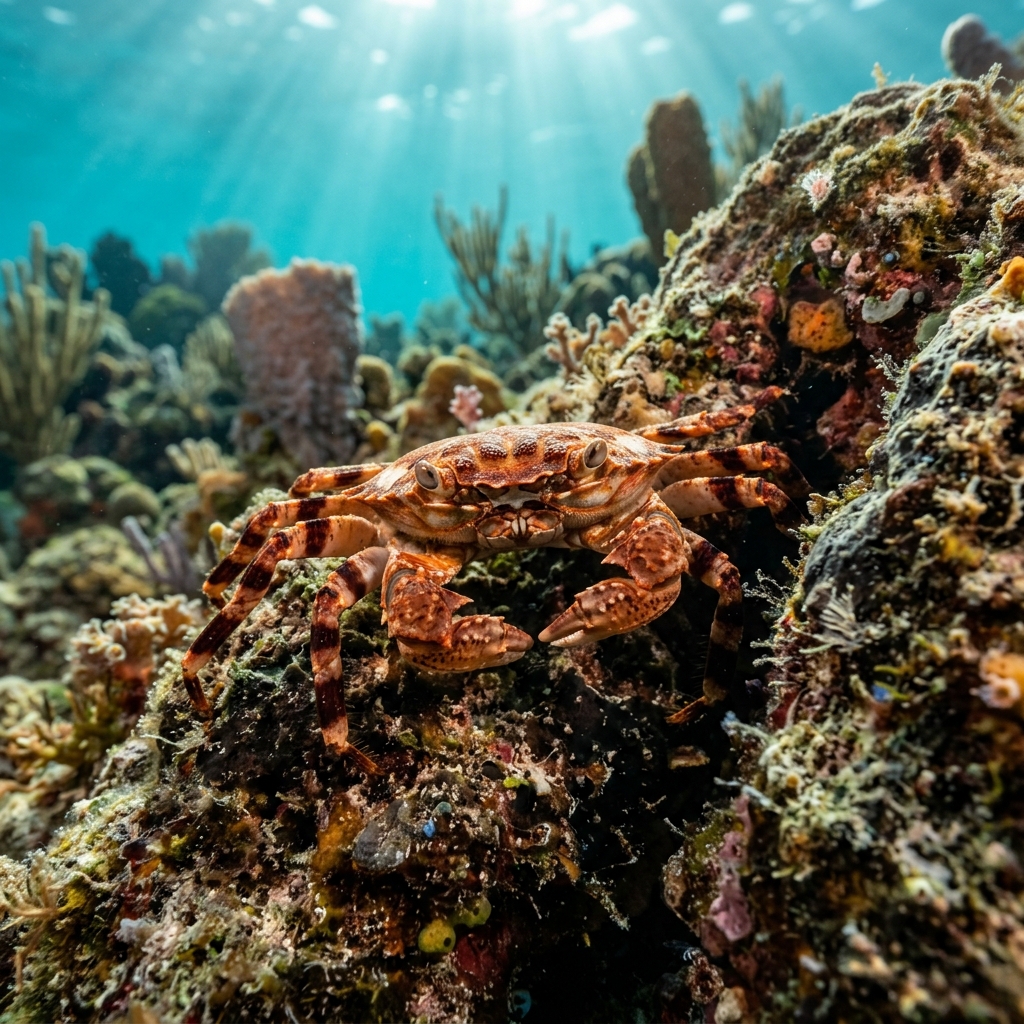
Reef neighbours a diver could mistake it for. Use the identification notes above to tell them apart.
Most reliably logged in the British Virgin Islands, especially around Tortola and the Southern Islands, with strong showings in the Cayman Islands (Cayman Brac and Little Cayman) and Mexico's Yucatán Peninsula. Sint Eustatius, Belize's Lighthouse Reef and Portsmouth in Dominica are also solid bets, with smaller numbers reported from Turks and Caicos and Cuba.
Mapping where White-speckled Hermit is logged…
The British Virgin Islands, particularly Tortola and the Southern Islands, produce the most sightings, alongside the Cayman Islands, Mexico's Yucatán Peninsula, Sint Eustatius, Belize's Lighthouse Reef and Dominica's Portsmouth area.
There is no strong seasonal pattern in sightings, and warm reef water in the 25 to 31C range means it can be found year-round on Caribbean and Mexican reefs.
Look for banded orange legs and long antennae emerging from a scavenged snail shell rather than a typical hard crab body. The shell itself moves as the crab walks, which is often the first thing that catches a diver's eye.
Exact size data is not available for this species, but like most reef hermit crabs it is a small, easily overlooked animal best spotted by scanning sand and rubble patches closely.
Its abdomen is soft and unprotected, so it occupies empty snail shells for defence and has to move house to a bigger shell as it grows, a constant search that plays out across the reef floor.
No, they pose no threat to divers and simply retreat into their shell or move away if disturbed.
Site and sighting data is aggregated from diver logs, iNaturalist and GBIF. For taxonomy and conservation status:
European Green Crab
2,469 sites