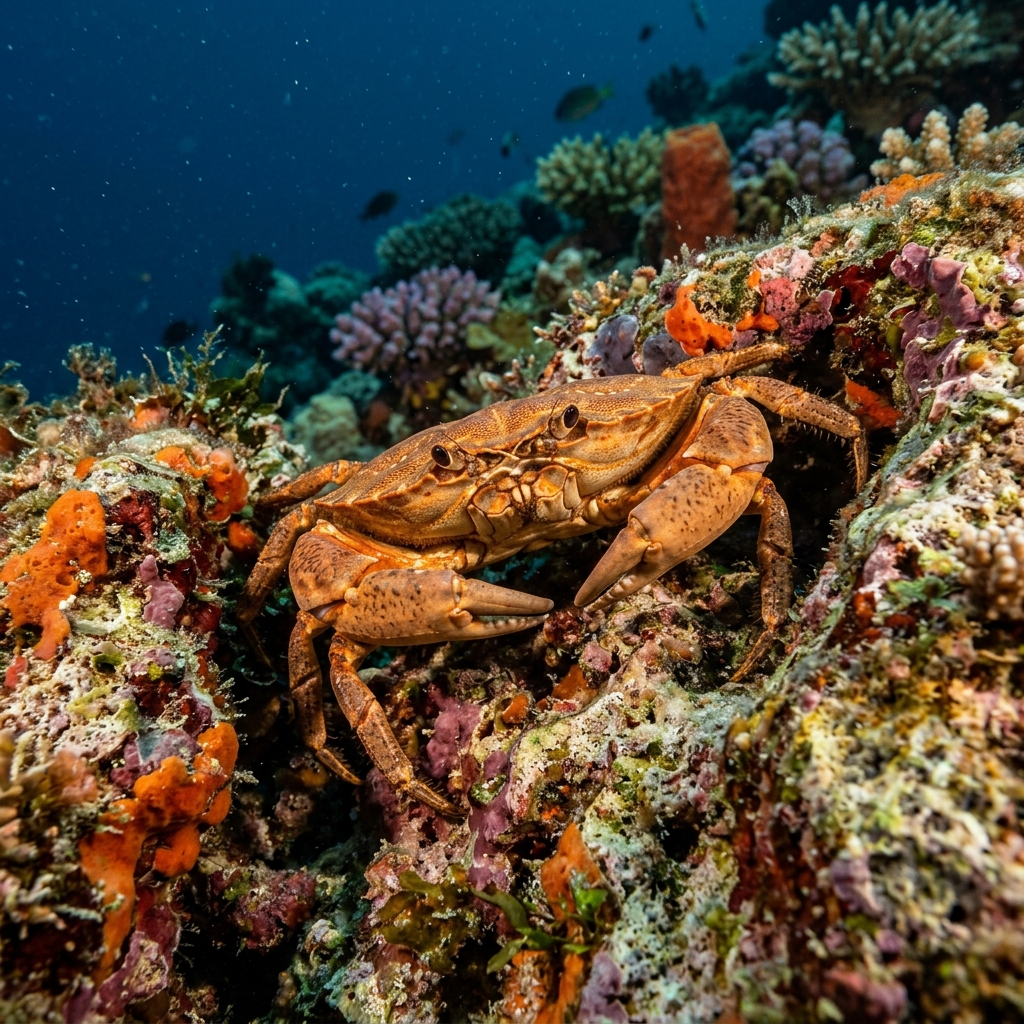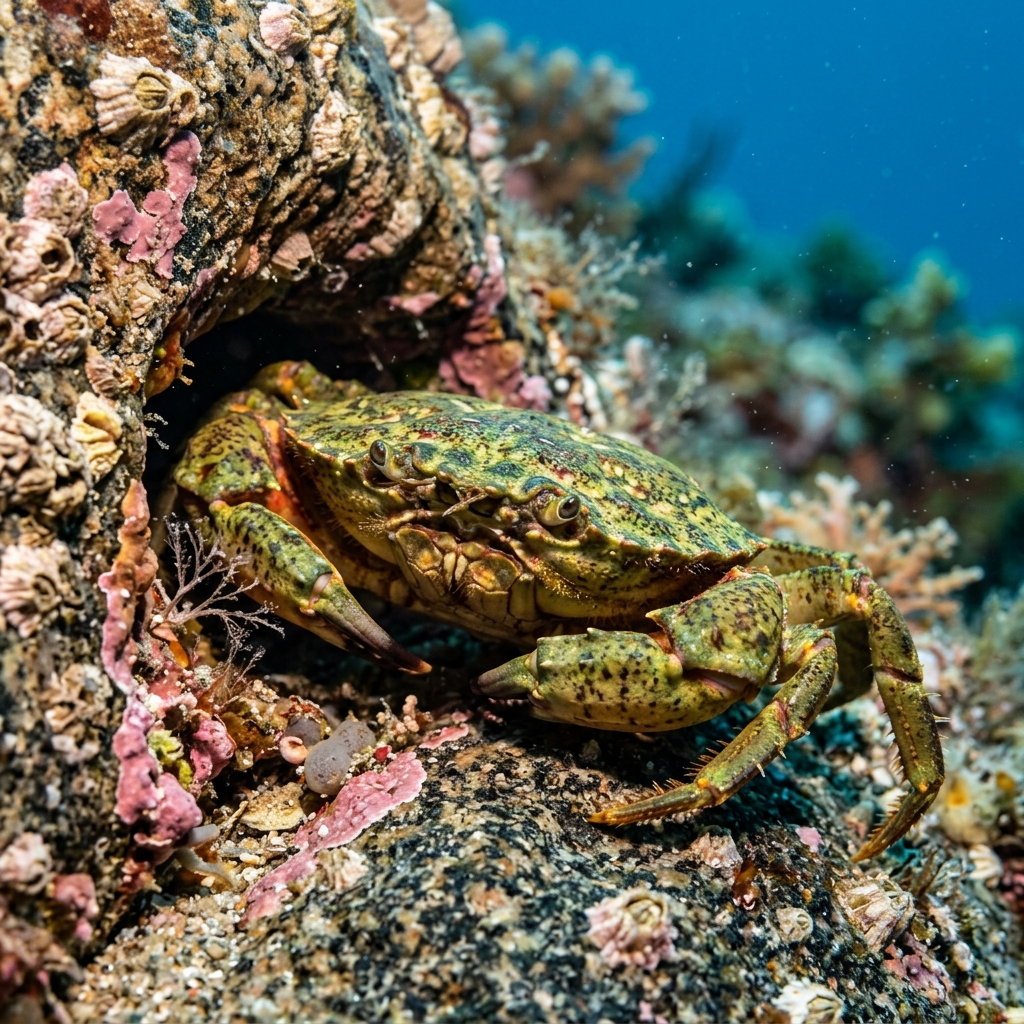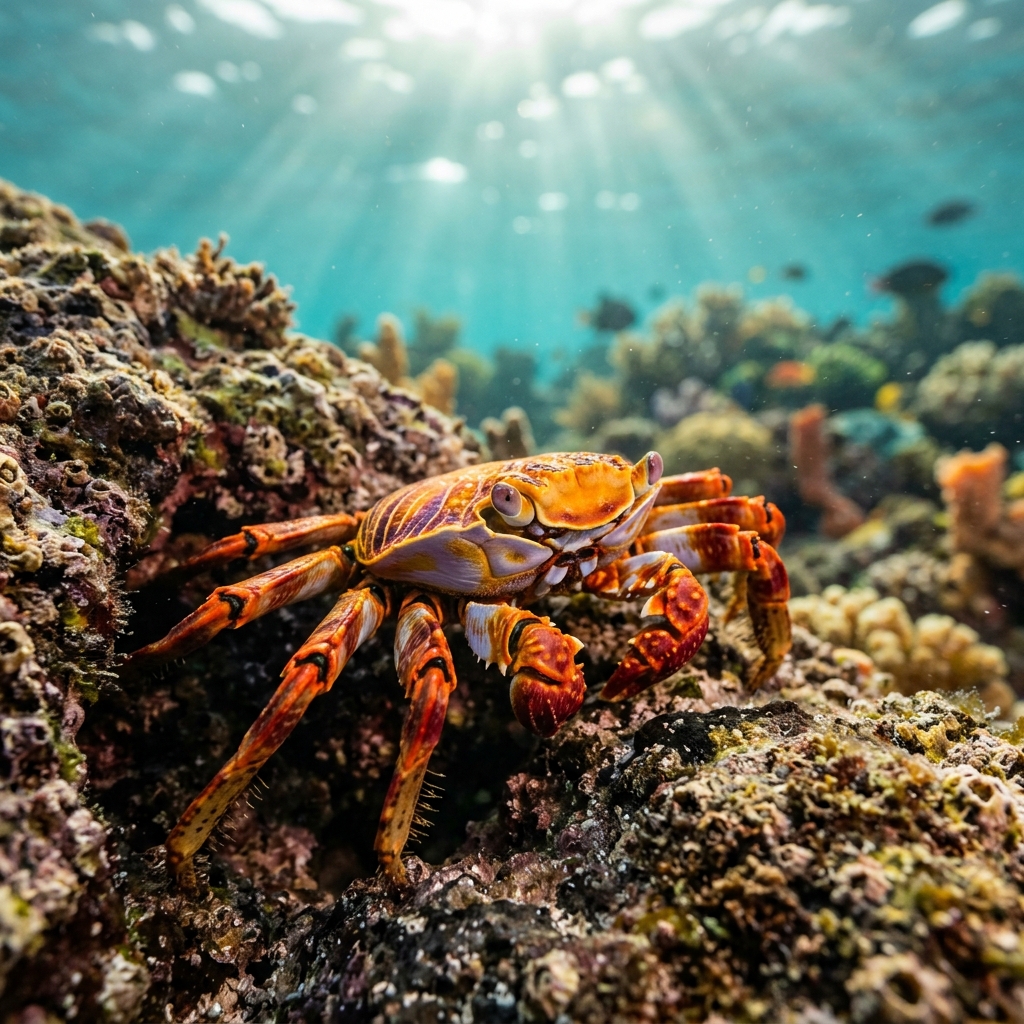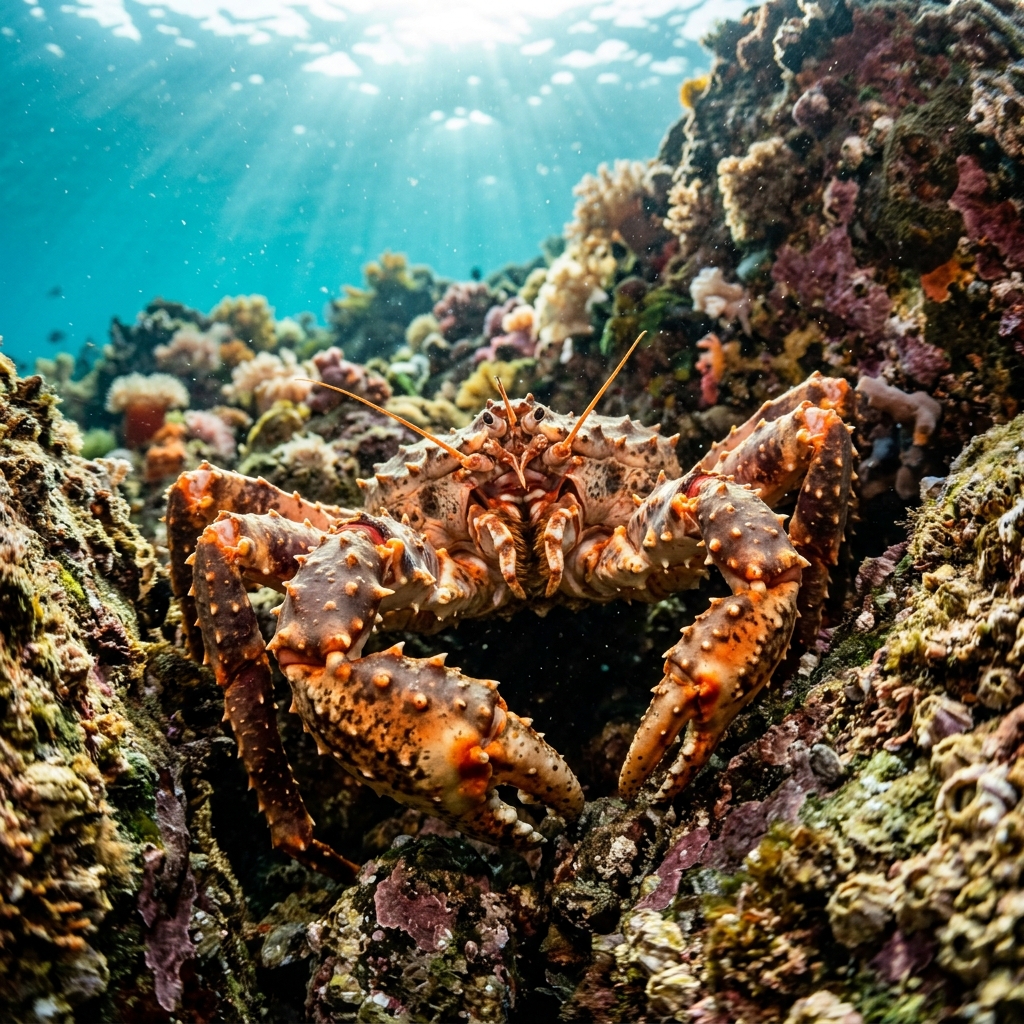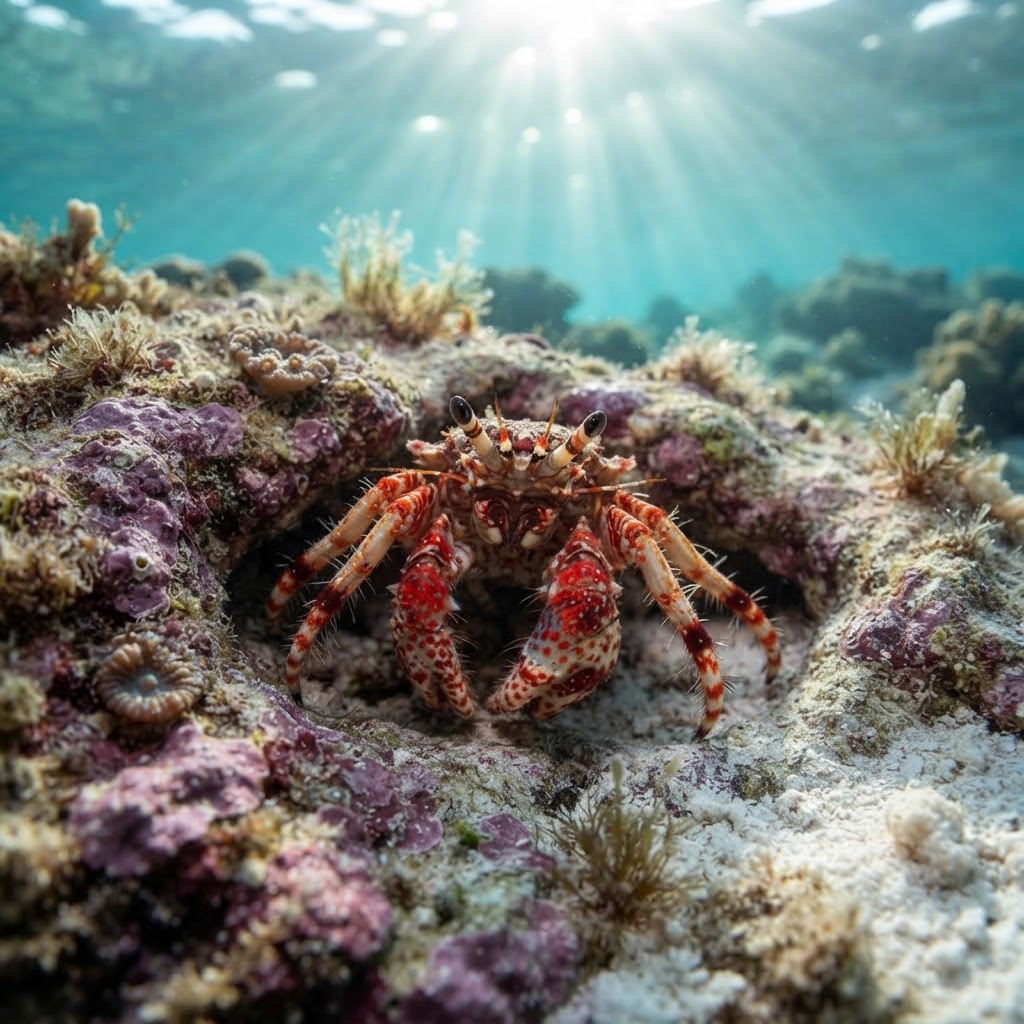
Calcinus tubularis
Spot this small blue-eyed hermit crab tucked in rocky crevices across Catalonia, the French Riviera and Sardinia in mild Mediterranean waters.
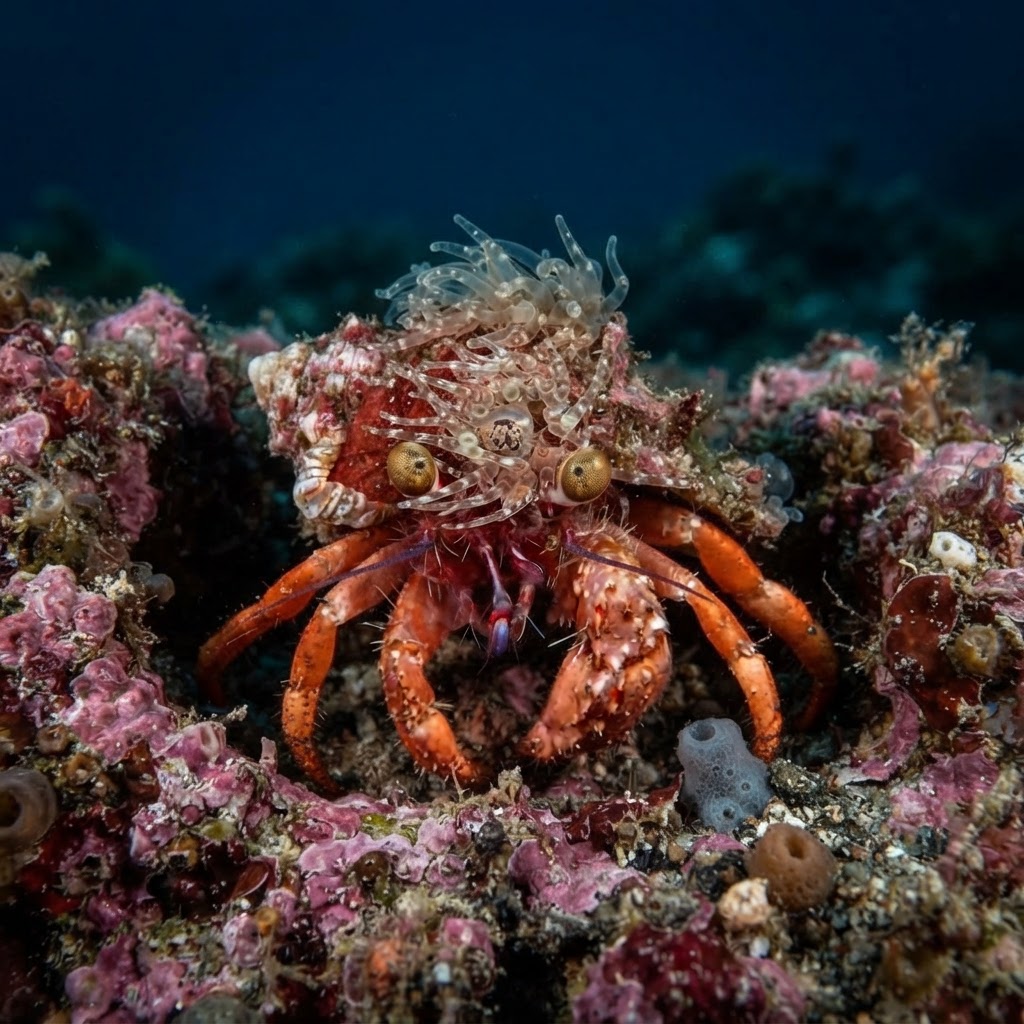
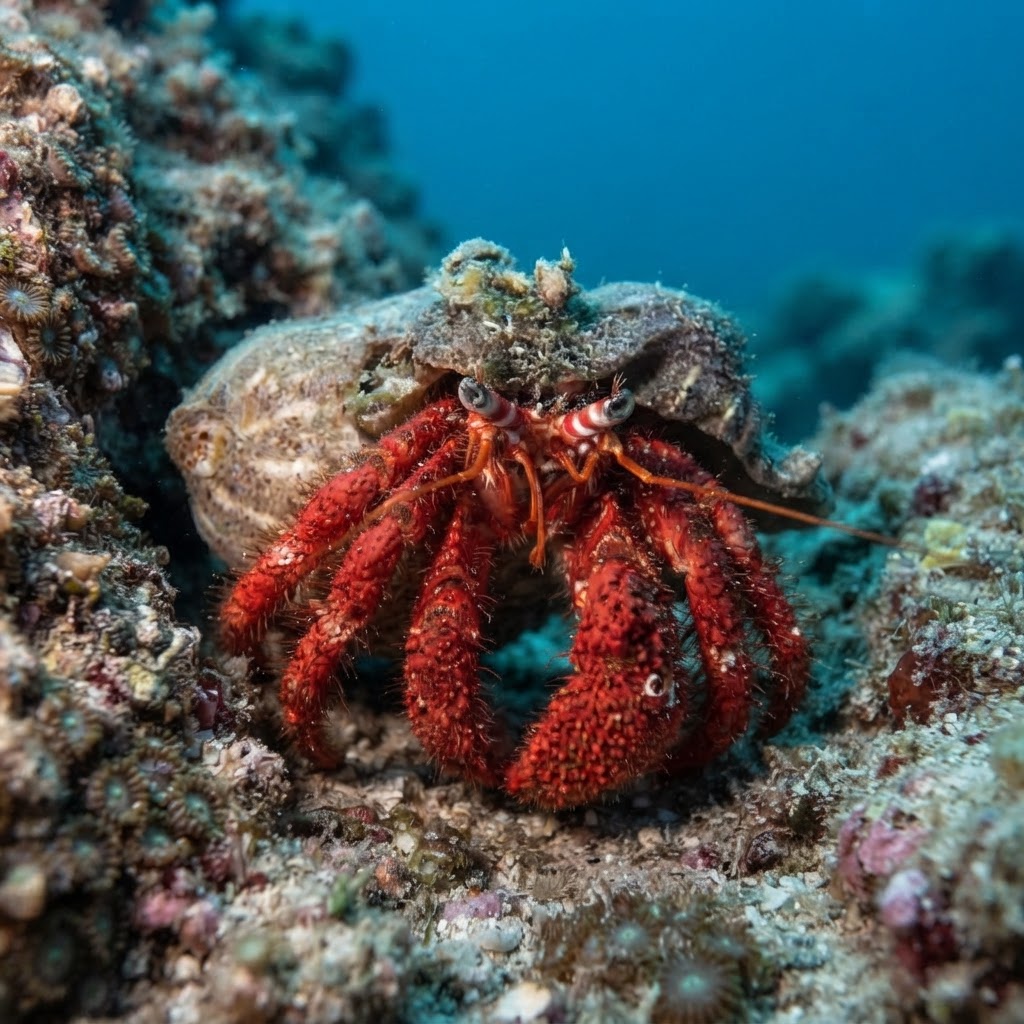
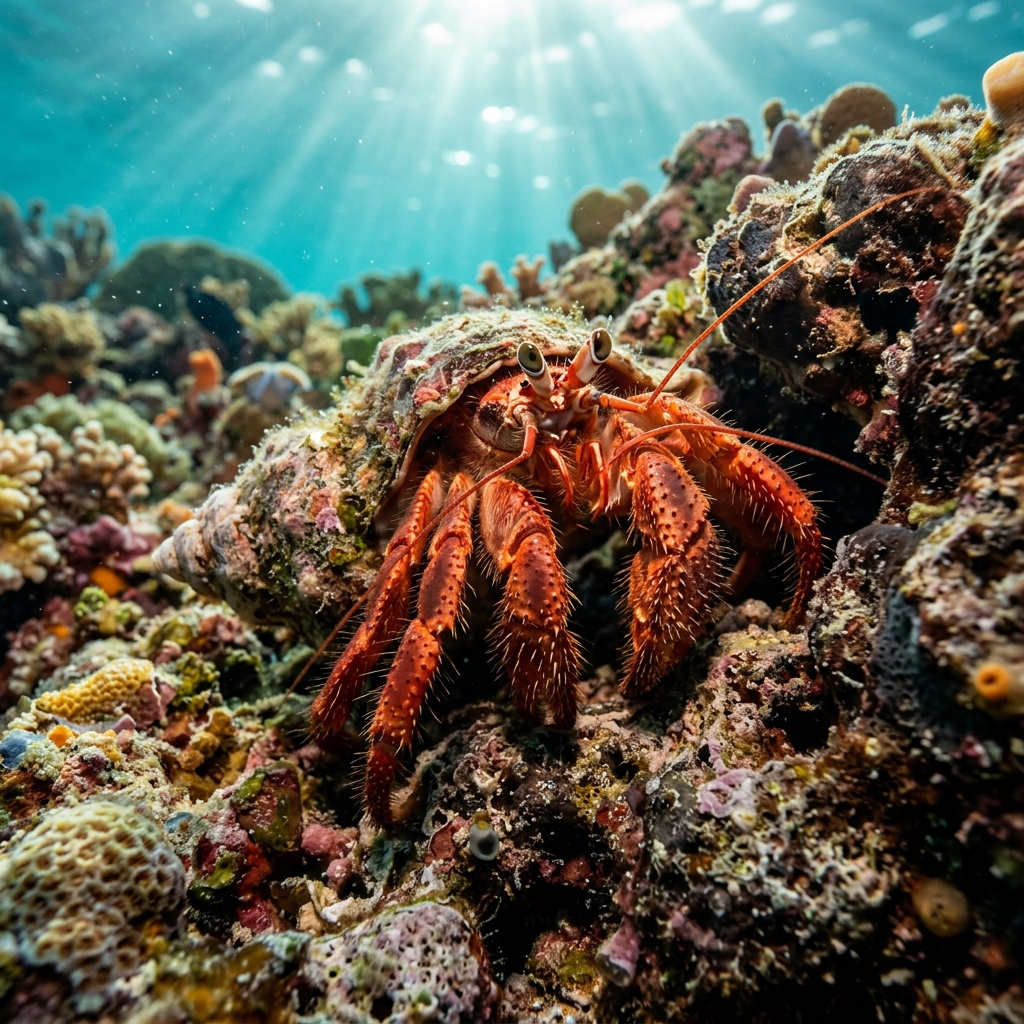
Small enough to miss on a first pass, this hermit crab drags around a scavenged snail shell rather than growing its own. Look for a dark reddish-brown to black body with pale banded legs and a pair of vivid blue eyes on short stalks, the giveaway detail once you know to check. It moves in short jerky steps across rock and rubble, ducking fully into its shell if a torch beam lingers too long.
Divers usually find it picking over rock crevices, weed-covered boulders and rubble patches by day, using its claws to sift algae and detritus rather than chasing anything down. It is unbothered by a slow approach but will retract into its borrowed shell if you get too close or shine a light directly on it. Most sightings come from macro-focused divers working slowly along a wall or reef base rather than mid-water passes.
Like all hermit crabs it does not grow its own shell, so as it grows it has to find and move into a bigger abandoned shell, sometimes fighting or evicting another hermit crab to get one.
No clear seasonal pattern shows up in sightings, and with a comfortable range of roughly 15.6 to 21.6°C it can be found on Mediterranean rock and rubble dives year-round.
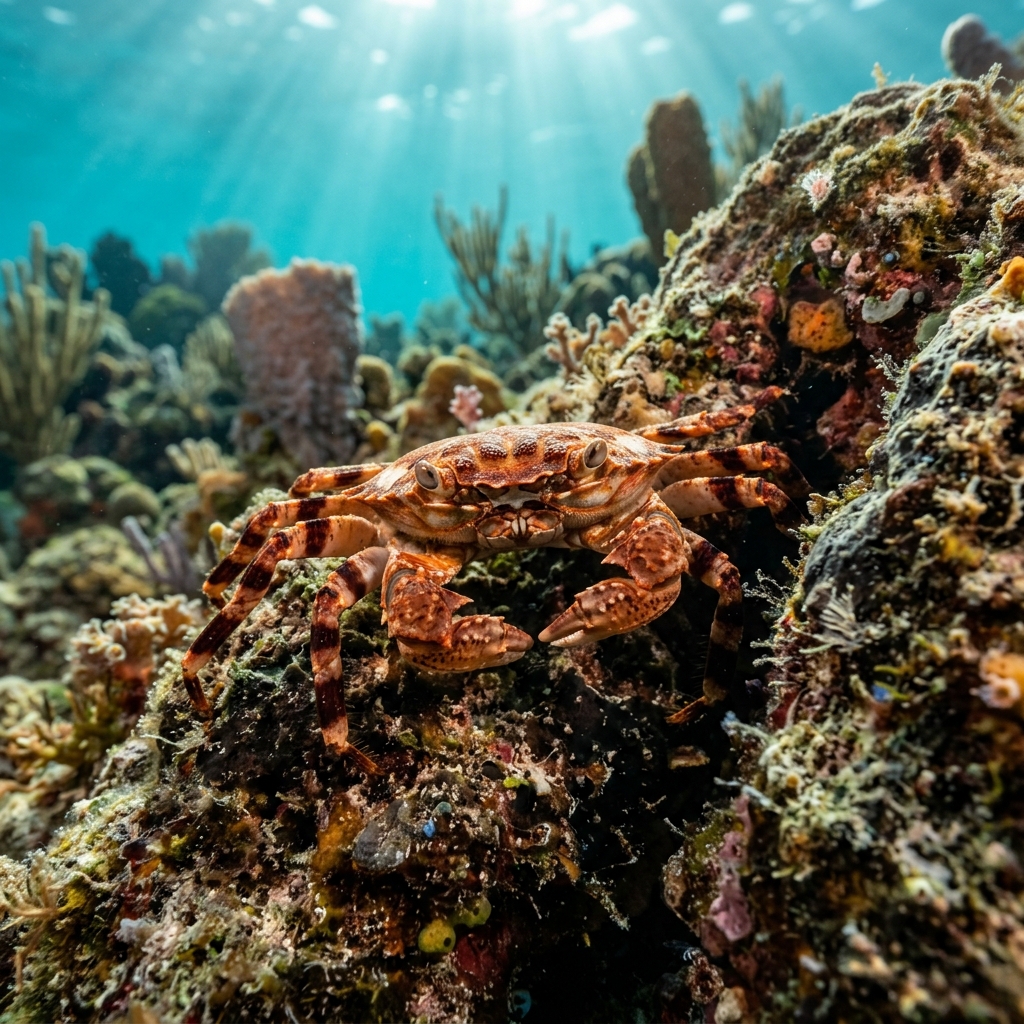
Reef neighbours a diver could mistake it for. Use the identification notes above to tell them apart.
This is a Mediterranean regular, most commonly logged in Catalonia and Murcia in Spain, along the French Riviera and Provence coast, and across Sardinia, Sicily and Tuscany in Italy. It also turns up reliably around El Hierro in the Canary Islands and Sal in Cape Verde, with smaller but steady numbers in Turkey, Greece and Croatia.
Mapping where Tube Hermit Crab is logged…
Catalonia and Murcia in Spain, the French Riviera, and Sardinia, Sicily and Tuscany in Italy are among the most reliable spots, with El Hierro in the Canary Islands and Sal in Cape Verde also worth checking.
There is no strong season in the sighting data, so it is found year-round on Mediterranean rock and rubble dives within its comfortable 15.6 to 21.6°C range.
Look for a small dark reddish-brown to black hermit crab with pale banded legs, bright blue eyestalks and a scavenged snail shell as its home, moving in short steps over rock and rubble.
Exact size data is not available for this species, but like most Calcinus hermit crabs it stays small, generally a few centimetres across including the shell it carries.
No, they pose no threat to divers and simply withdraw into their shell if approached too closely or lit up with a torch.
Hermit crabs have a soft, unprotected abdomen, so they occupy empty snail shells for defence and move to a larger shell as they grow, sometimes competing with other hermit crabs for the best fit.
Site and sighting data is aggregated from diver logs, iNaturalist and GBIF. For taxonomy and conservation status:
European Green Crab
2,469 sites