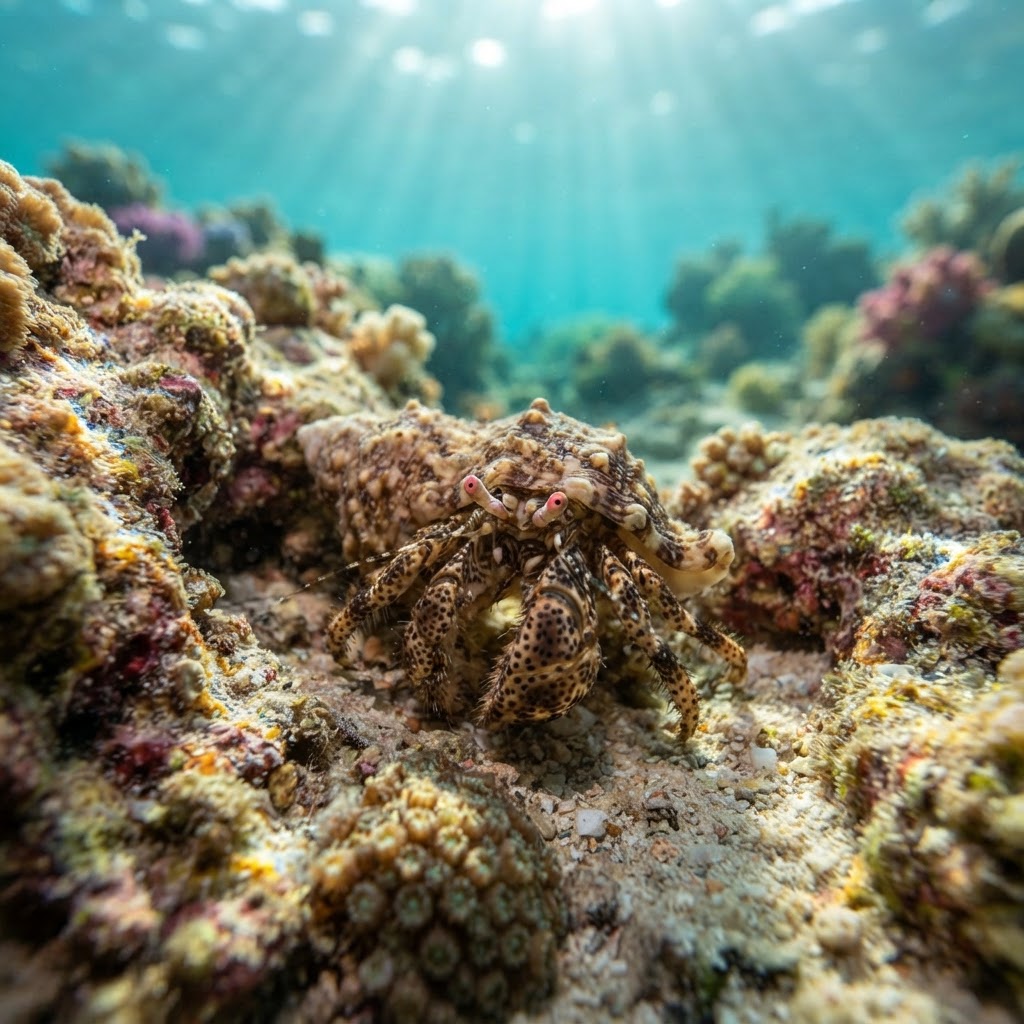
Pagurus brevidactylus
Rare but rewarding: spot this small hermit crab tucked into reef crevices around Grand Cayman and Bermuda in warm 25-31C water.
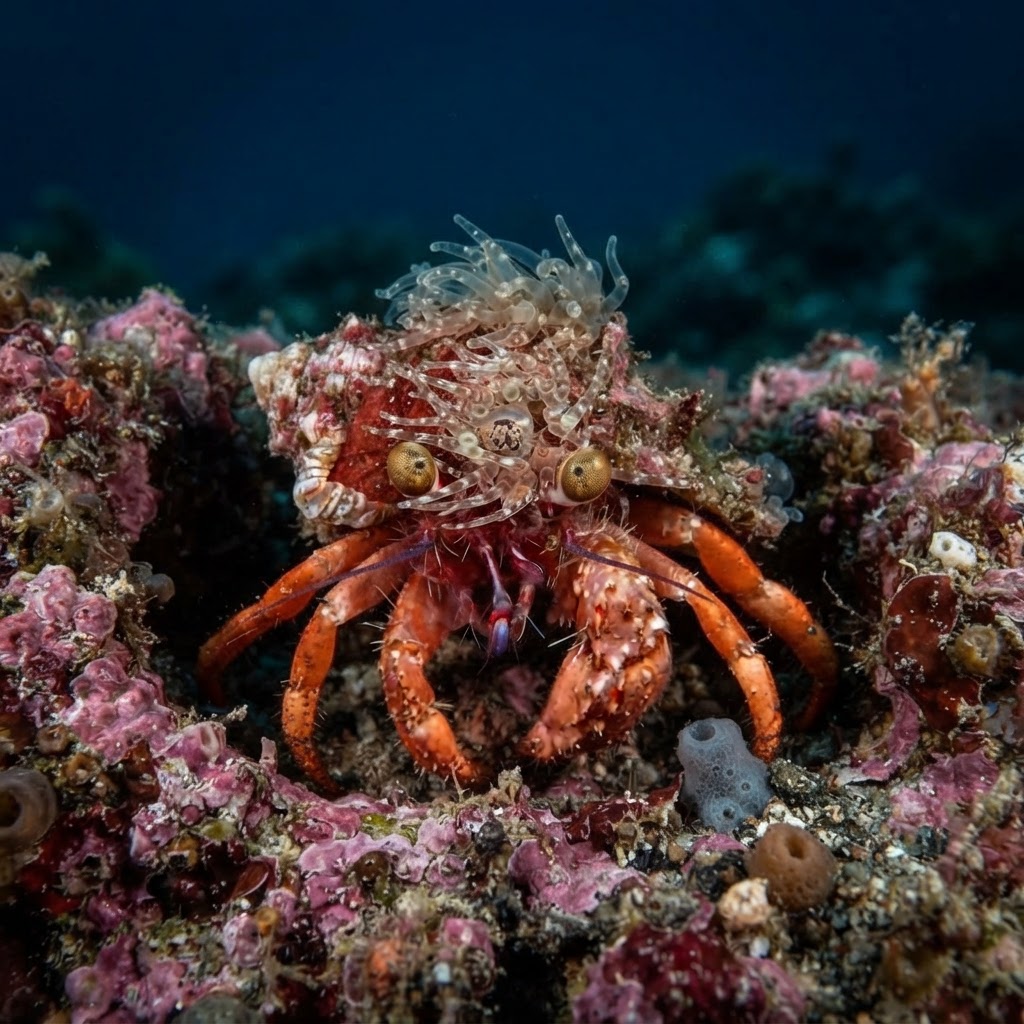
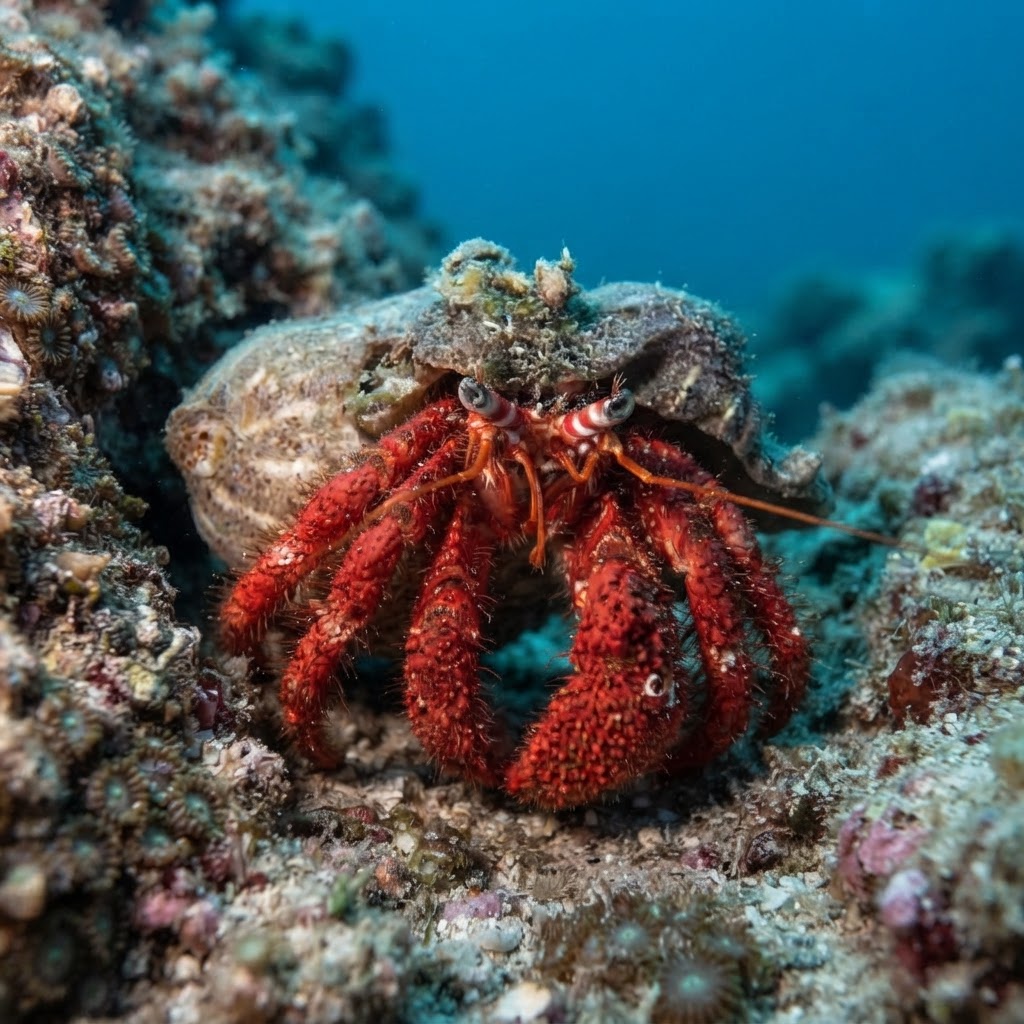
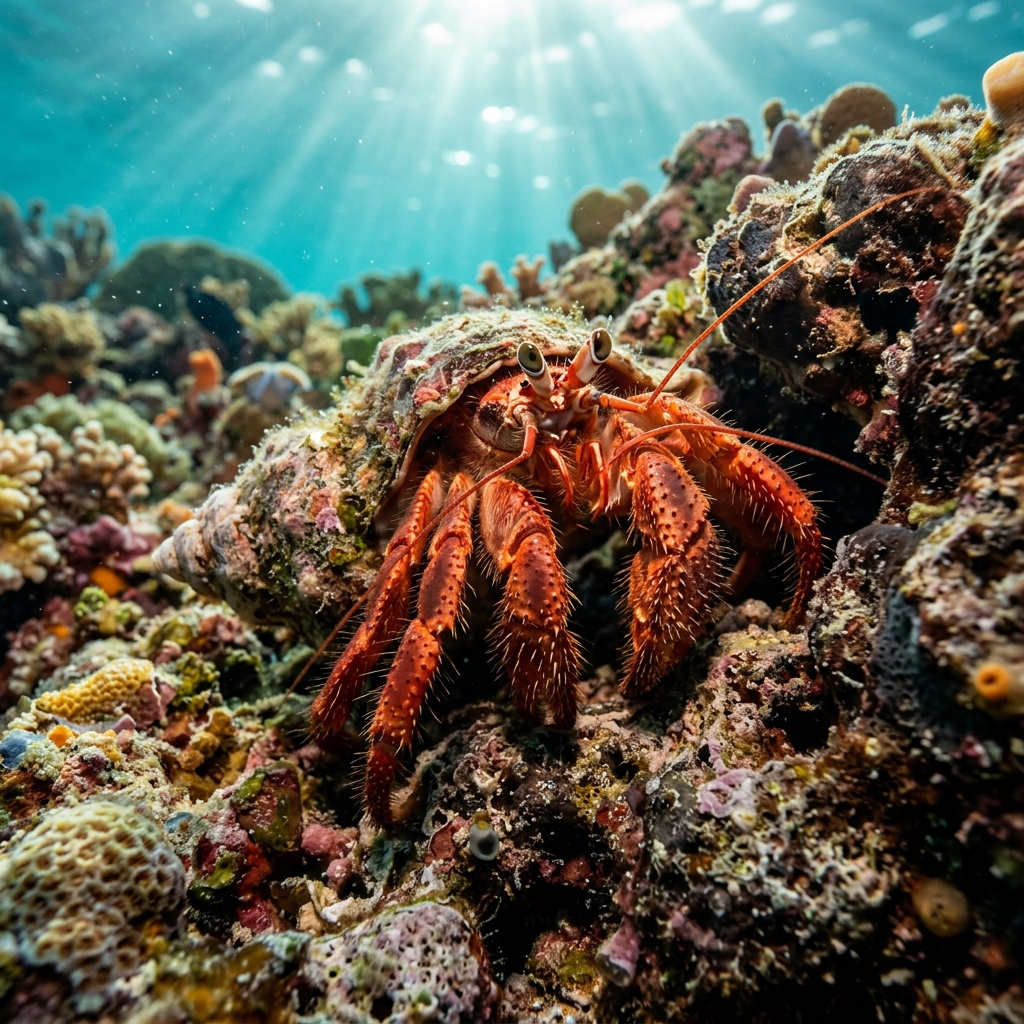
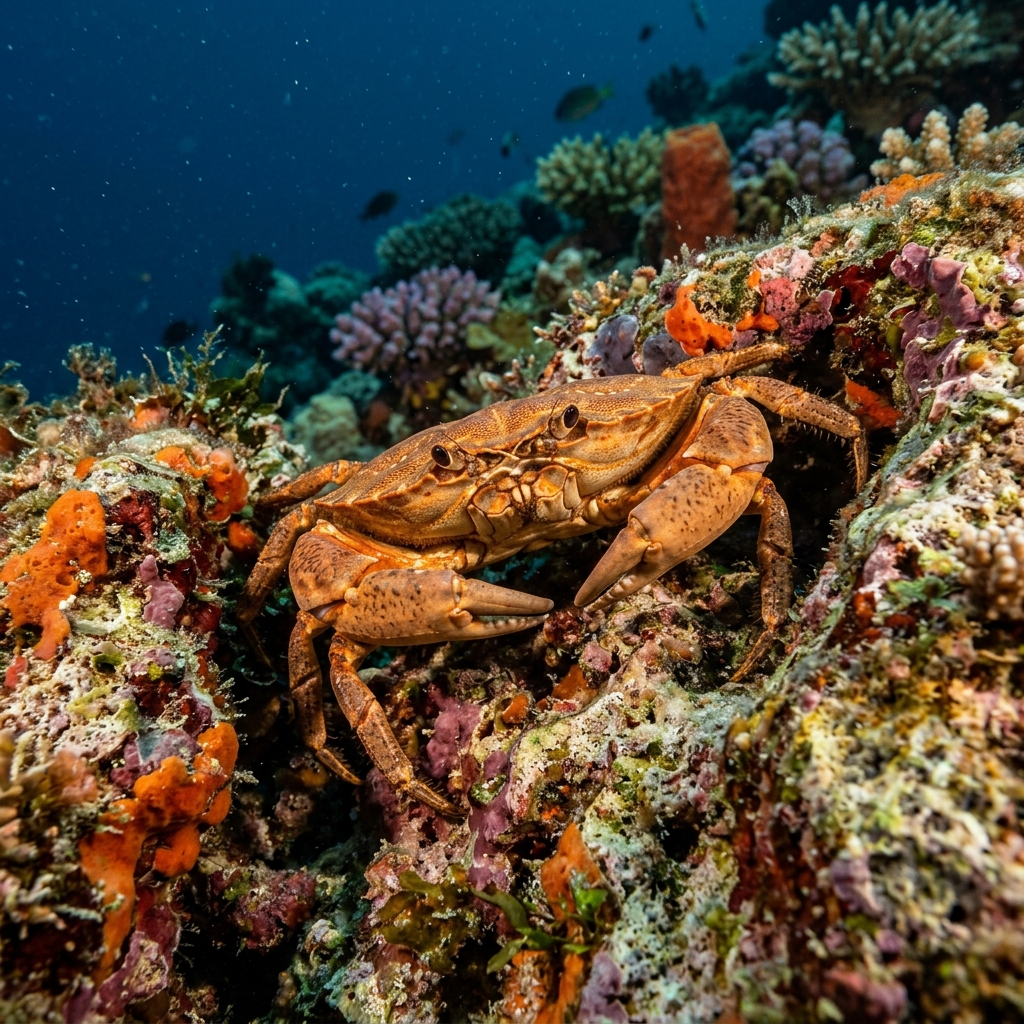
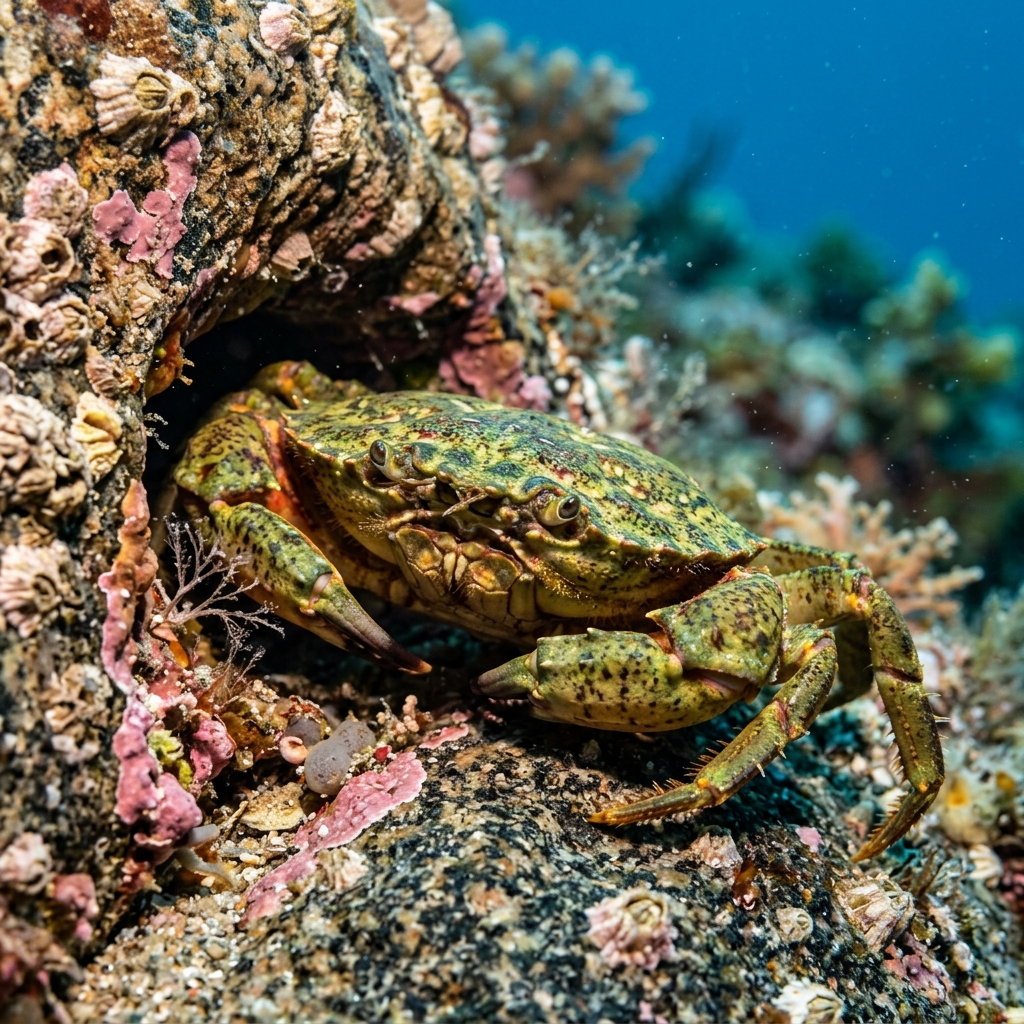
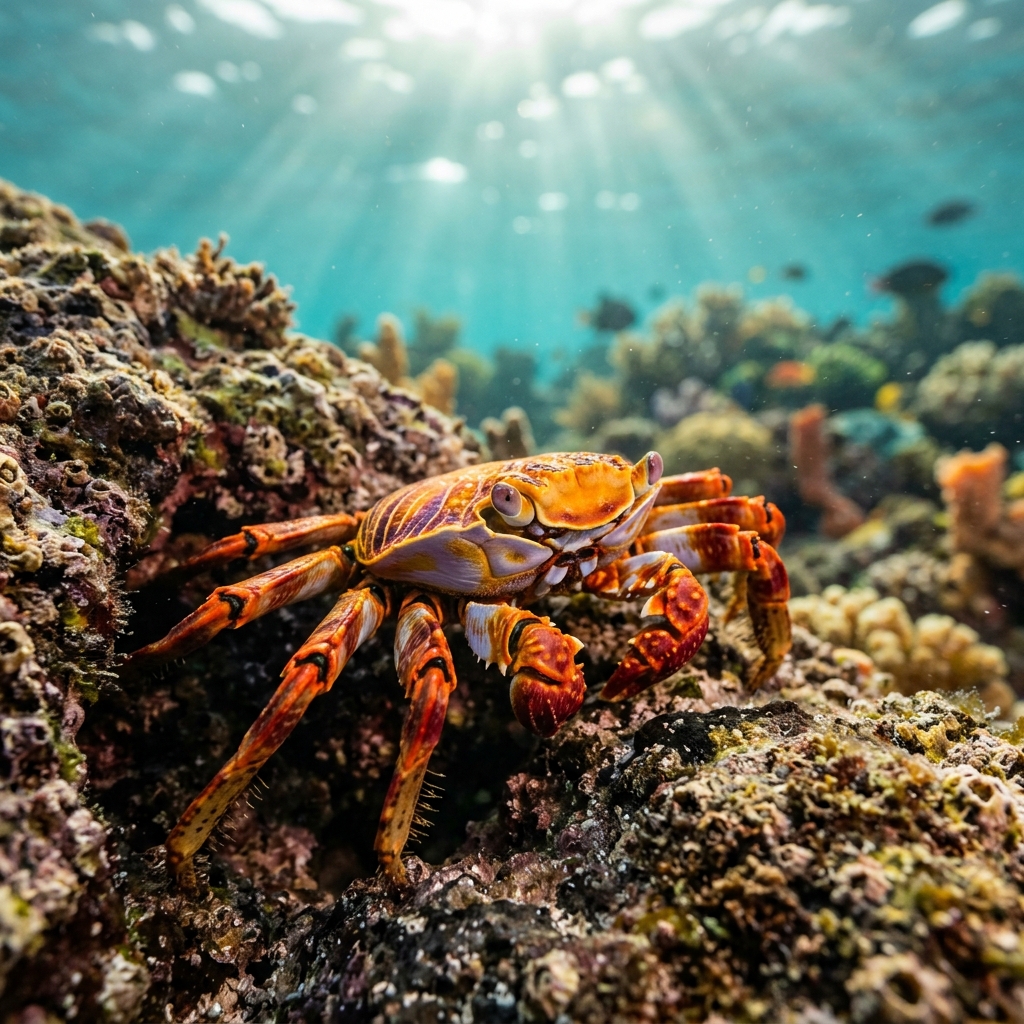
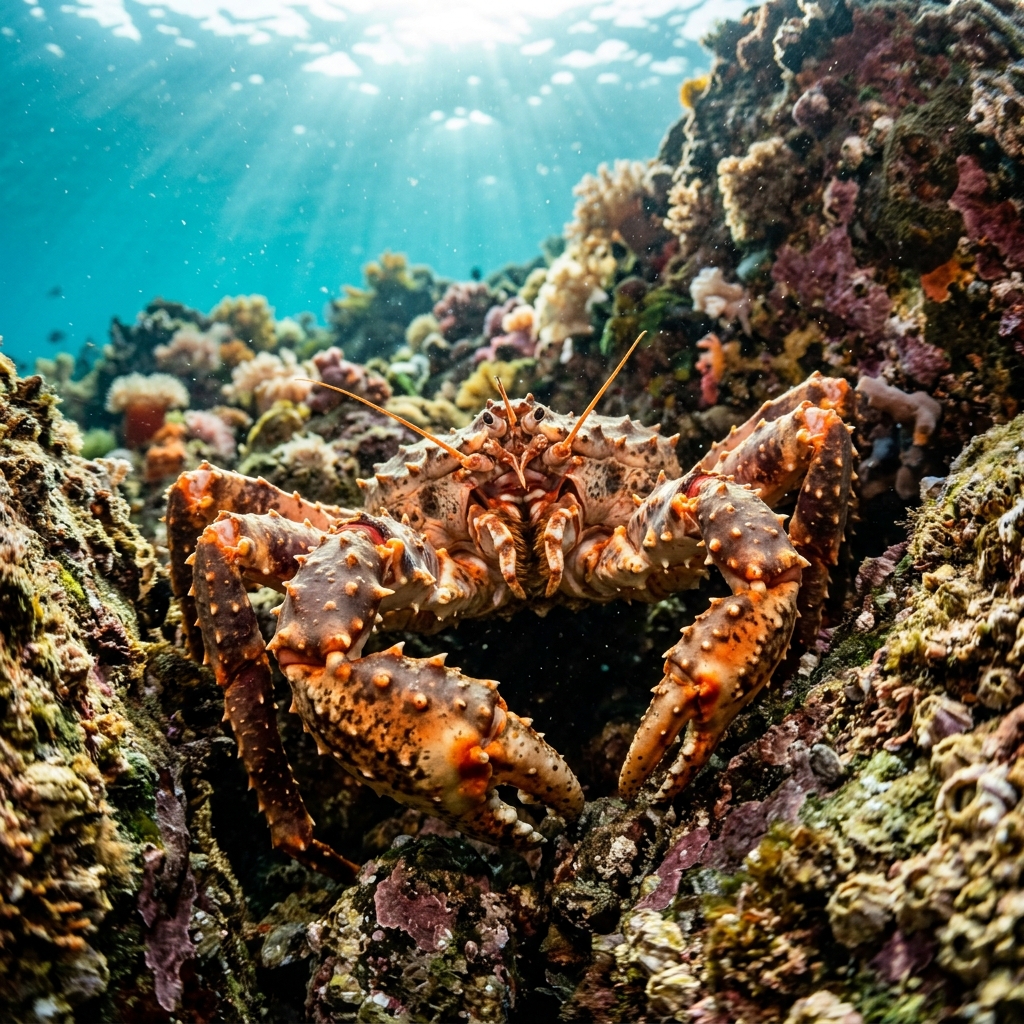
A small crab whose soft abdomen is tucked entirely into a scavenged snail shell, leaving only the front claws, eyestalks and walking legs exposed. Look for banded or spotted legs and a pair of unequal claws, one noticeably larger than the other, used for defence and blocking the shell opening. Because the shell is borrowed rather than grown, colour and pattern vary between individuals of the same species, so behaviour and posture are often the better giveaway than shell colour alone.
Divers usually find it wedged into a crevice, under rubble, or ambling slowly across the reef floor, often close to sponges or coral debris where it can vanish into its shell at the first sign of disturbance. It is not a fast mover and tends to freeze or retreat rather than flee, so a patient, still diver gets the best look. Most logs describe it as an incidental find during a slow scan of the substrate rather than something spotted from a distance.
As it grows, it has to abandon its shell and find a larger empty one, and disputes over good shells between hermit crabs are common, sometimes settled by one crab physically evicting another.
Sightings show no clear season, and with water sitting comfortably between 25 and 31C year-round at these sites, it is a fair bet on any dive in the Cayman Islands or Bermuda regardless of month.
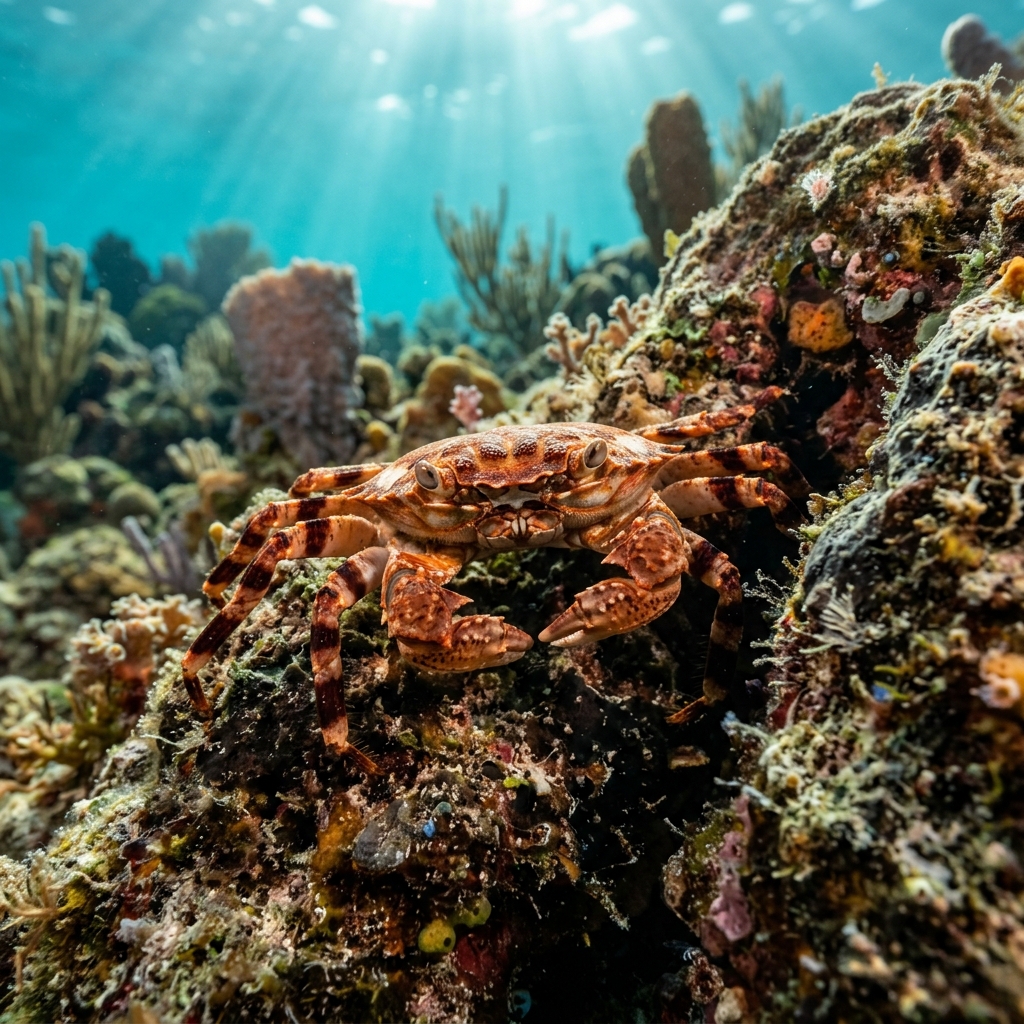
Reef neighbours a diver could mistake it for. Use the identification notes above to tell them apart.
Most reliably logged around Grand Cayman in the Cayman Islands, with a second solid cluster of sightings across Bermuda. Both are shallow, reef-and-rubble destinations where this hermit crab turns up tucked into crevices rather than out in the open.
Mapping where Shortfinger Hermit is logged…
The strongest logs come from Grand Cayman in the Cayman Islands and from reef sites around Bermuda. Both are shallow warm-water locations where the species turns up as an occasional find among rubble and crevices.
There is no detected season for this species, and it is found year-round in water from about 25 to 31C, so any month diving Grand Cayman or Bermuda gives similar odds.
Look for a small crab with its soft body hidden inside a scavenged spiral shell, only the legs, eyestalks and unequal claws showing. The larger claw is often used to block the shell opening when threatened.
No. It is a small, harmless scavenger that retreats into its shell rather than confront a diver, and it poses no risk if left alone.
Exact size data is not confirmed for this species, but like most reef hermit crabs it is small enough to fit inside a snail shell a few centimetres across, easy to overlook against rubble.
Its abdomen is soft and unprotected, so it occupies an empty snail shell for armour and upgrades to a bigger shell as it grows, sometimes competing with other hermit crabs for the best fit.
Site and sighting data is aggregated from diver logs, iNaturalist and GBIF. For taxonomy and conservation status:
European Green Crab
2,469 sites