Elysia hedgpethi
A 1cm green sea slug found in cold Pacific waters from California to British Columbia, most reliably spotted in the Pacific Northwest.
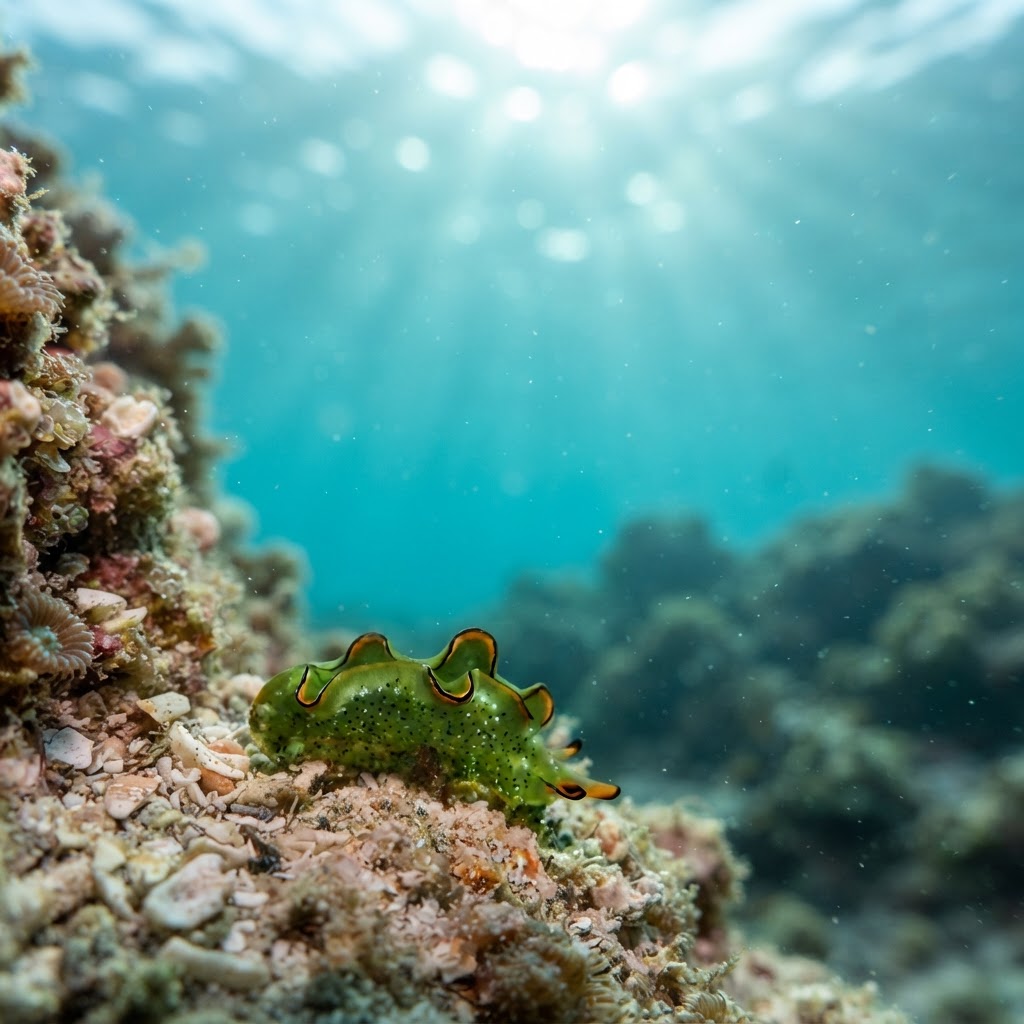
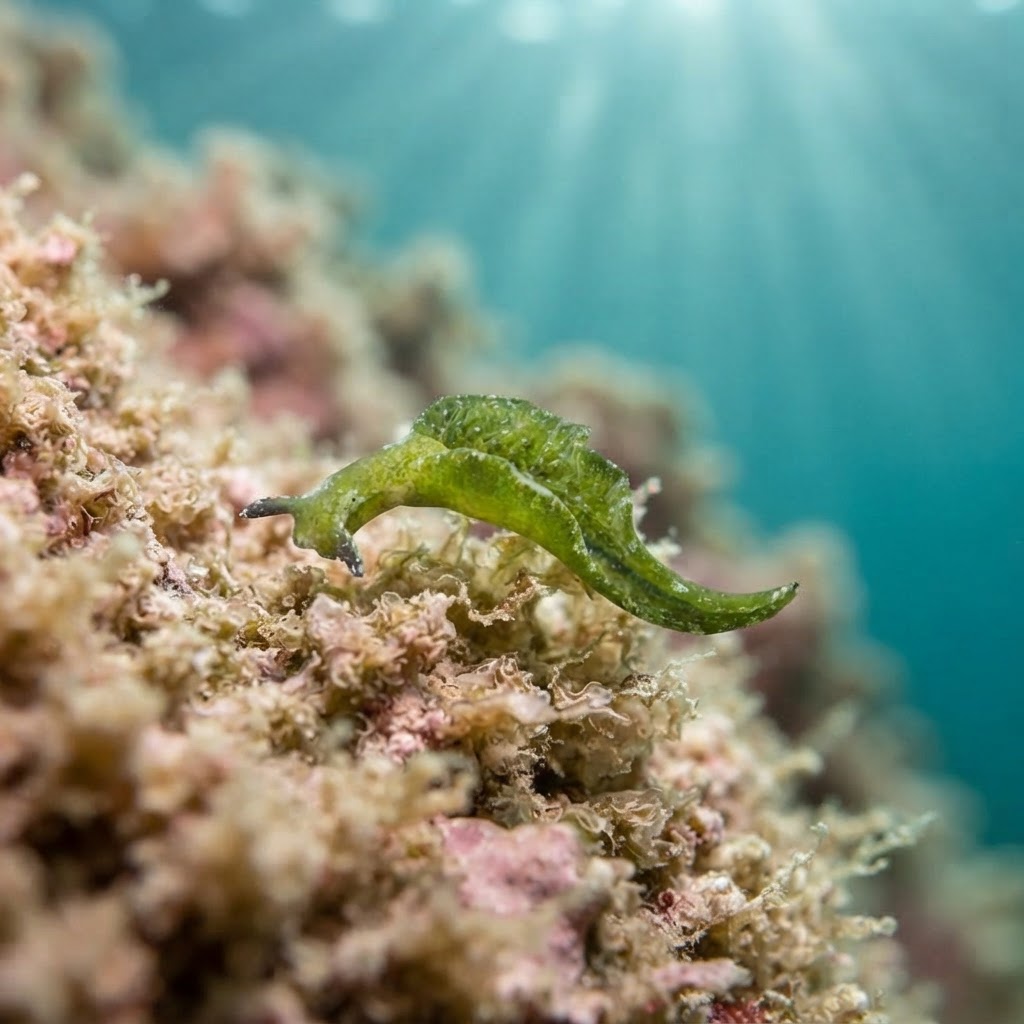
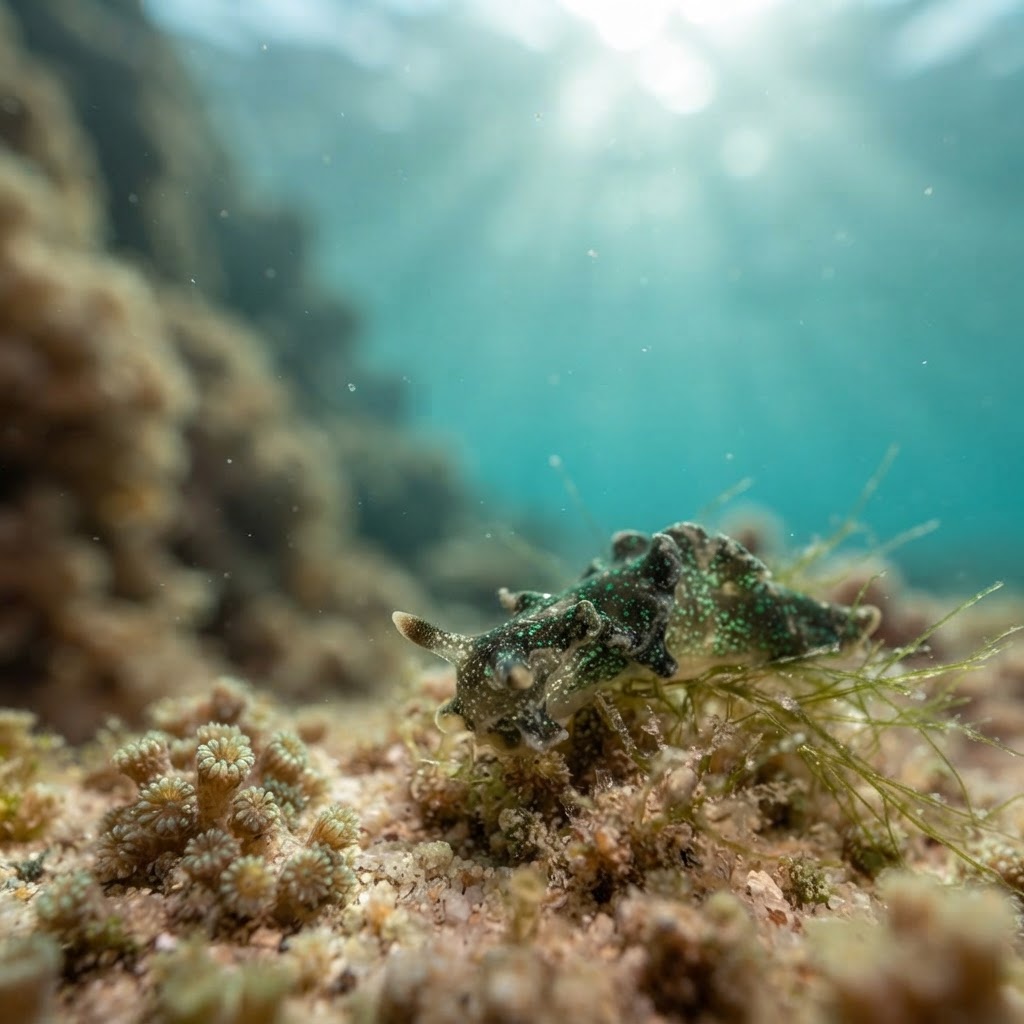
Barely a centimetre long, this sea slug shows a translucent to mottled green body that lets it blend almost perfectly into the algae it feeds on. Look for the paired flaps (parapodia) running along its back, often edged with fine white or dark speckling, and a pair of short rhinophores (sensory tentacles) up front. Its small size and colour-matching make it one you find by scanning algae fronds closely rather than spotting from a distance.
Divers find it parked directly on the algae it feeds on, moving slowly across the surface as it grazes rather than swimming or drifting in the water column. It shows no reaction to divers beyond continuing its slow crawl, and is easiest to spot with a careful, close look at algae-covered rock rather than a general reef scan.
Like other sacoglossans, it feeds by piercing algal cells and can retain functional chloroplasts from its food for a period afterward, giving it a limited capacity to photosynthesise its own energy.
Sightings show no detectable seasonal pattern, so treat it as a year-round find where the water sits in its comfortable 9 to 19C range. Cold-water divers in the Pacific Northwest and California can reasonably look for it on any dive through the year.
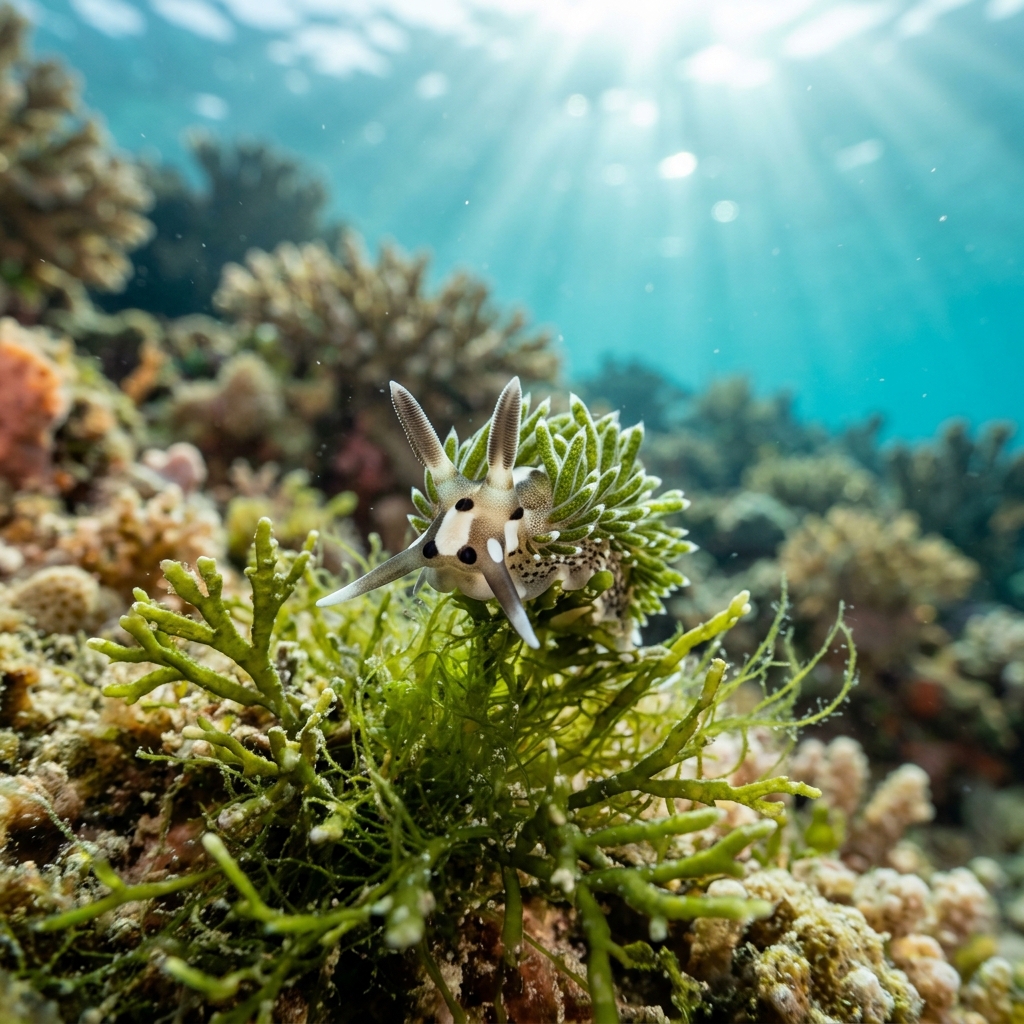
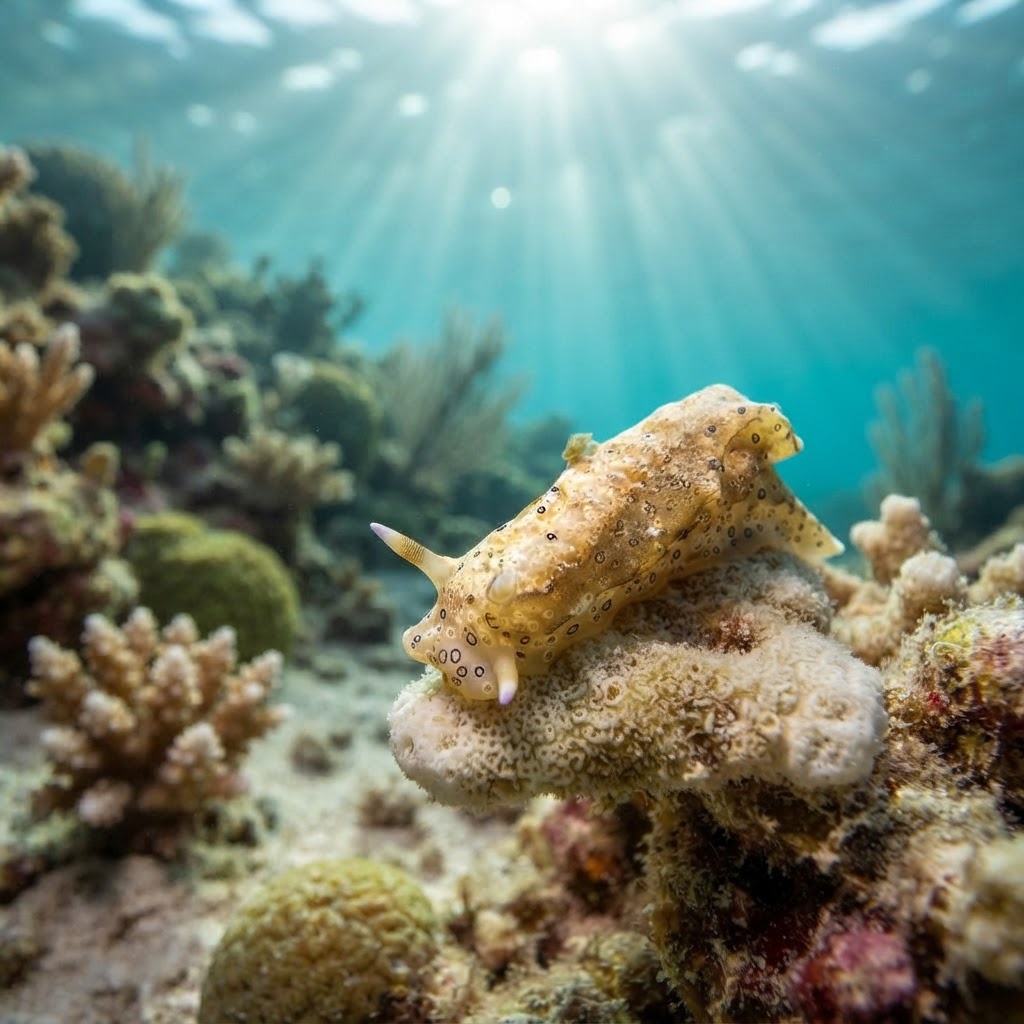
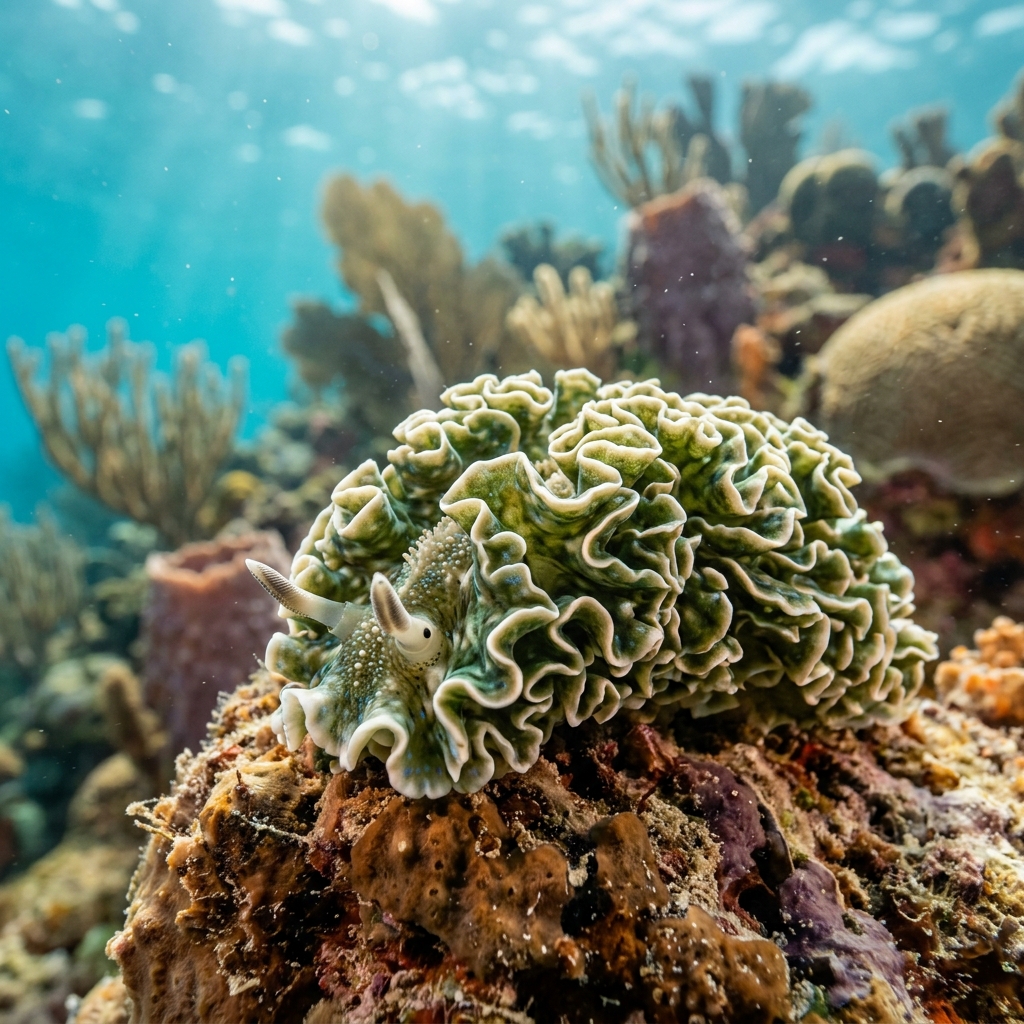
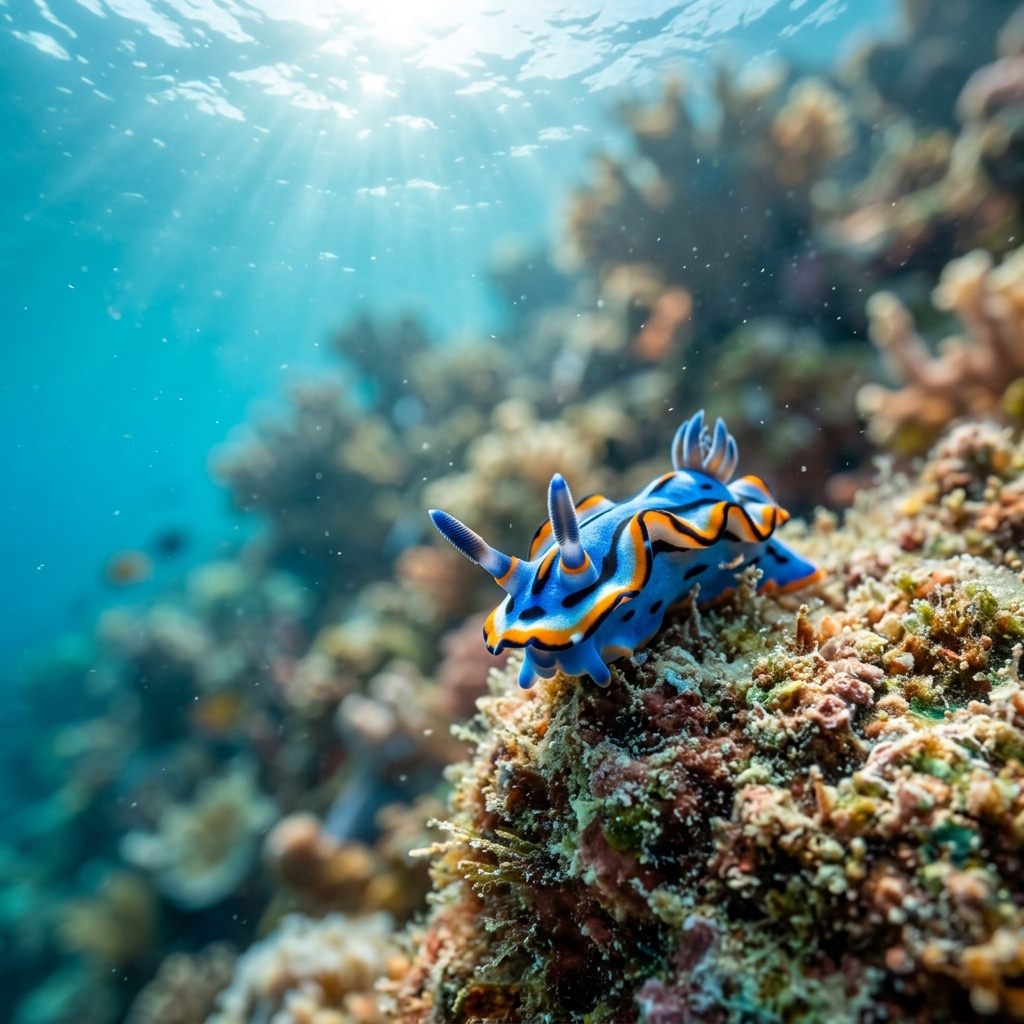
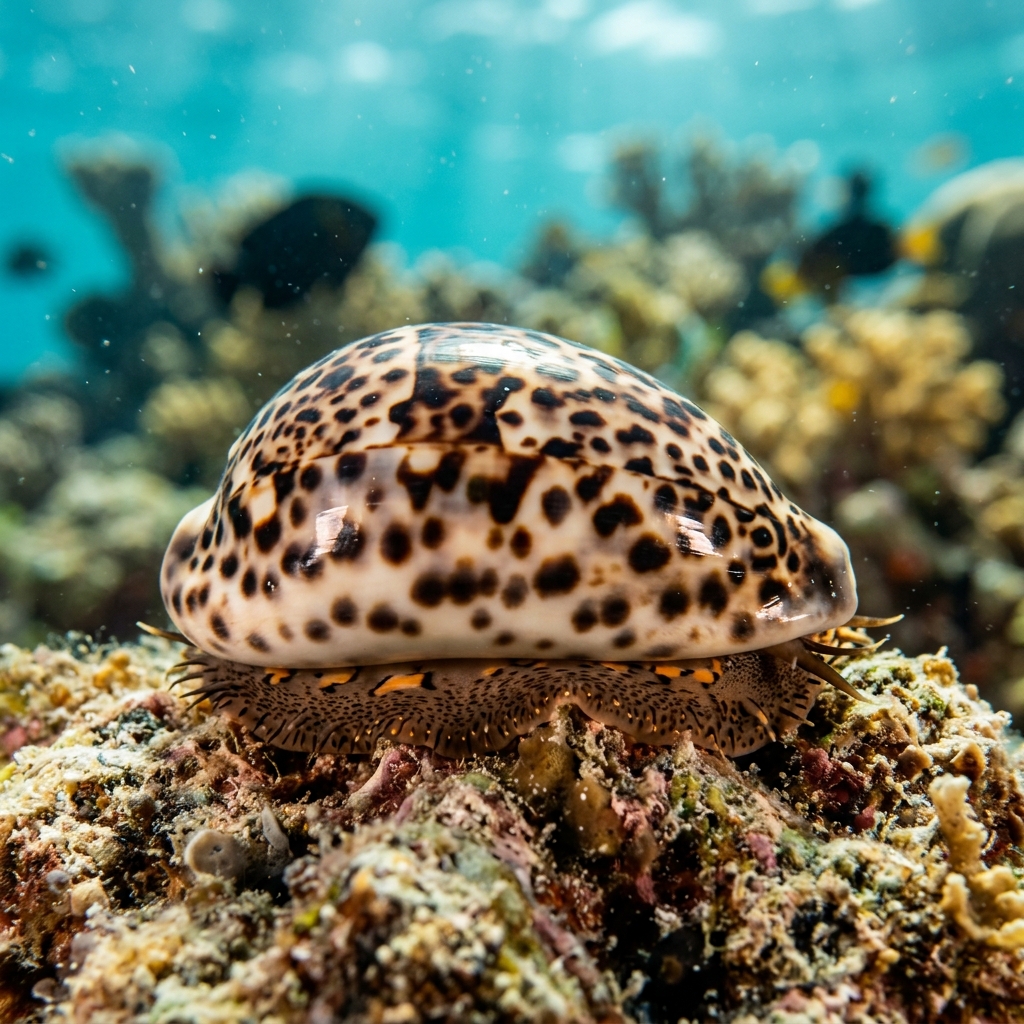
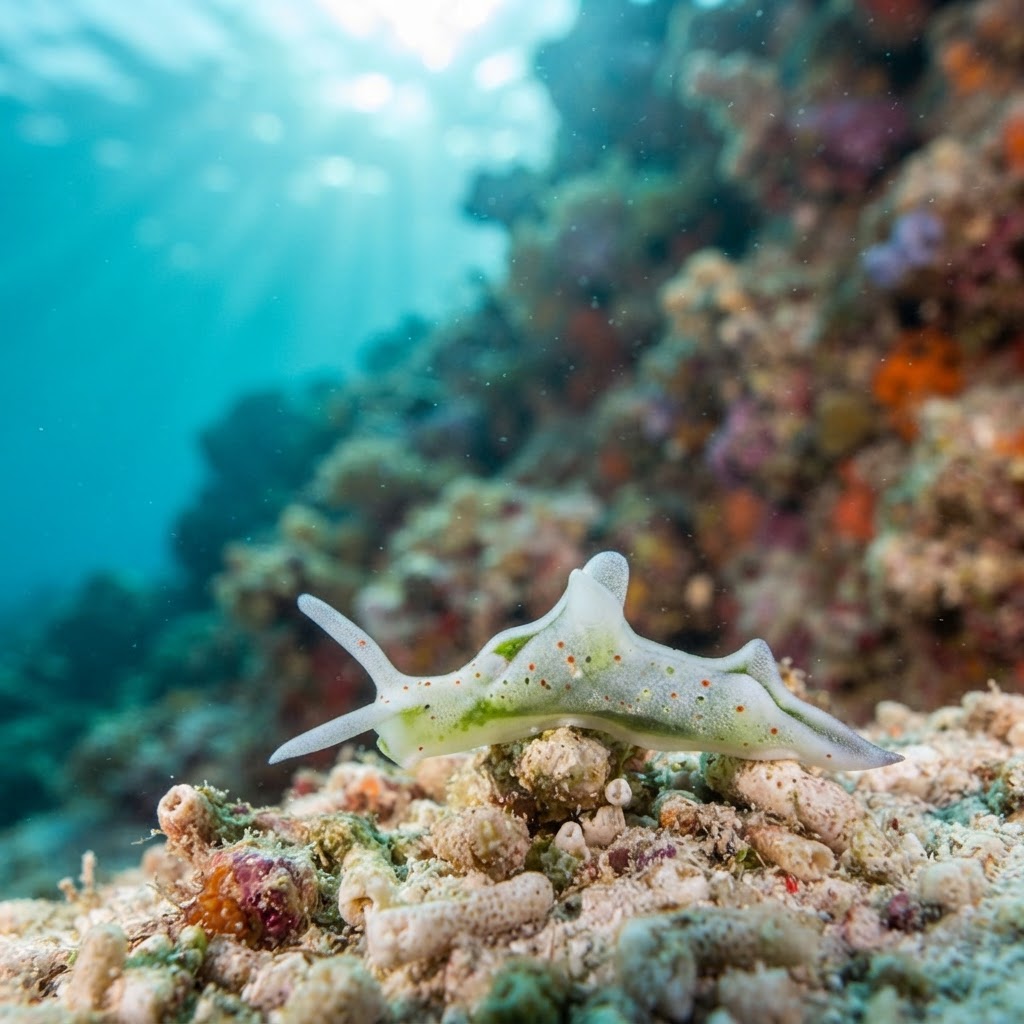
Reef neighbours a diver could mistake it for. Use the identification notes above to tell them apart.
Most consistently logged along the Pacific coast of the United States, with sightings concentrated in the Pacific Northwest and California, and a further reliable record from British Columbia, Canada. This is a cold-water Pacific species, so look for it on temperate rocky reefs and algae-covered sites rather than tropical ones.
Mapping where Hedgpeth's Sapsucker is logged…
It is most often logged along the Pacific coast of the United States, particularly in the Pacific Northwest and California, with additional sightings from British Columbia, Canada. Look for it on cold-water reefs with plenty of algae growth.
There is no strong seasonal pattern in sightings, so it can turn up year-round. It is found in water from about 9 to 19C, matching typical Pacific Northwest and California conditions across most of the year.
It is tiny, around 1cm, with a translucent green body that camouflages against algae. Look closely for the paired back flaps and short sensory tentacles rather than expecting bright, obvious colouring.
It stays small, reaching roughly 1cm in length, making it one of the harder sea slugs to spot without a close, deliberate search of algae-covered rock.
It can hold onto chloroplasts from the algae it eats, using them briefly to photosynthesise its own energy in a process called kleptoplasty. It is a trick shared with several other sap-sucking slugs in its family.
Site and sighting data is aggregated from diver logs, iNaturalist and GBIF. For taxonomy and conservation status:
Elysia Timida
573 sites