Biuve fulvipunctata
A 1cm slug divers rarely spot but Queensland macro hunters know: found on reefs from 17 to 29.5C, most logged around Queensland's dive sites.
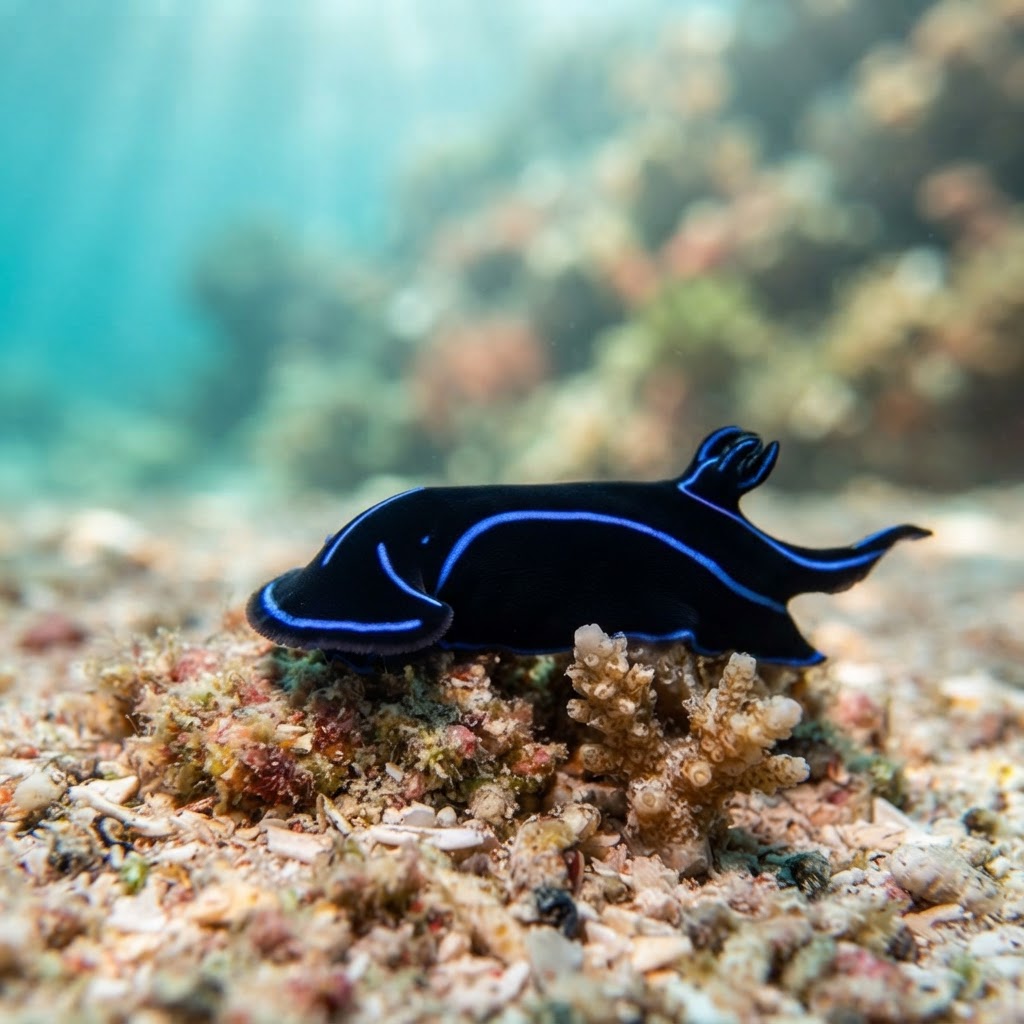
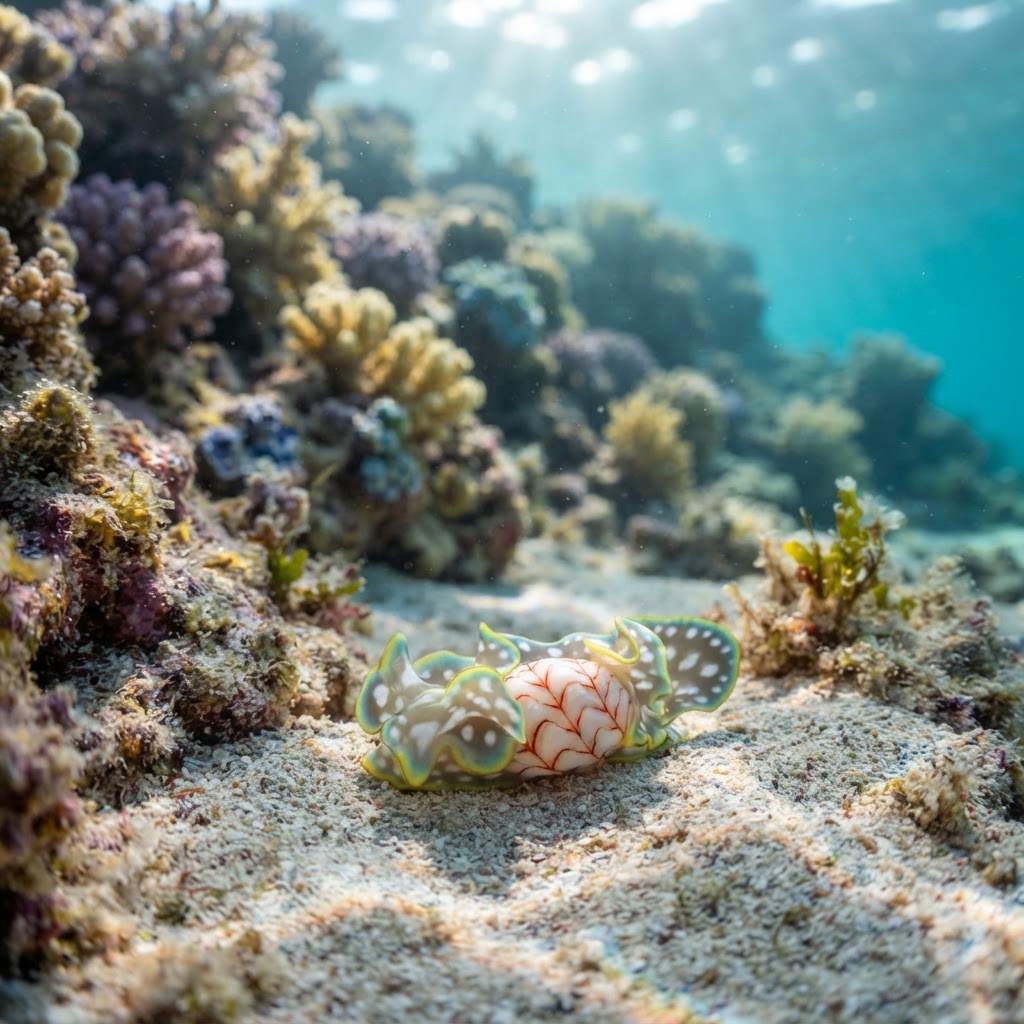
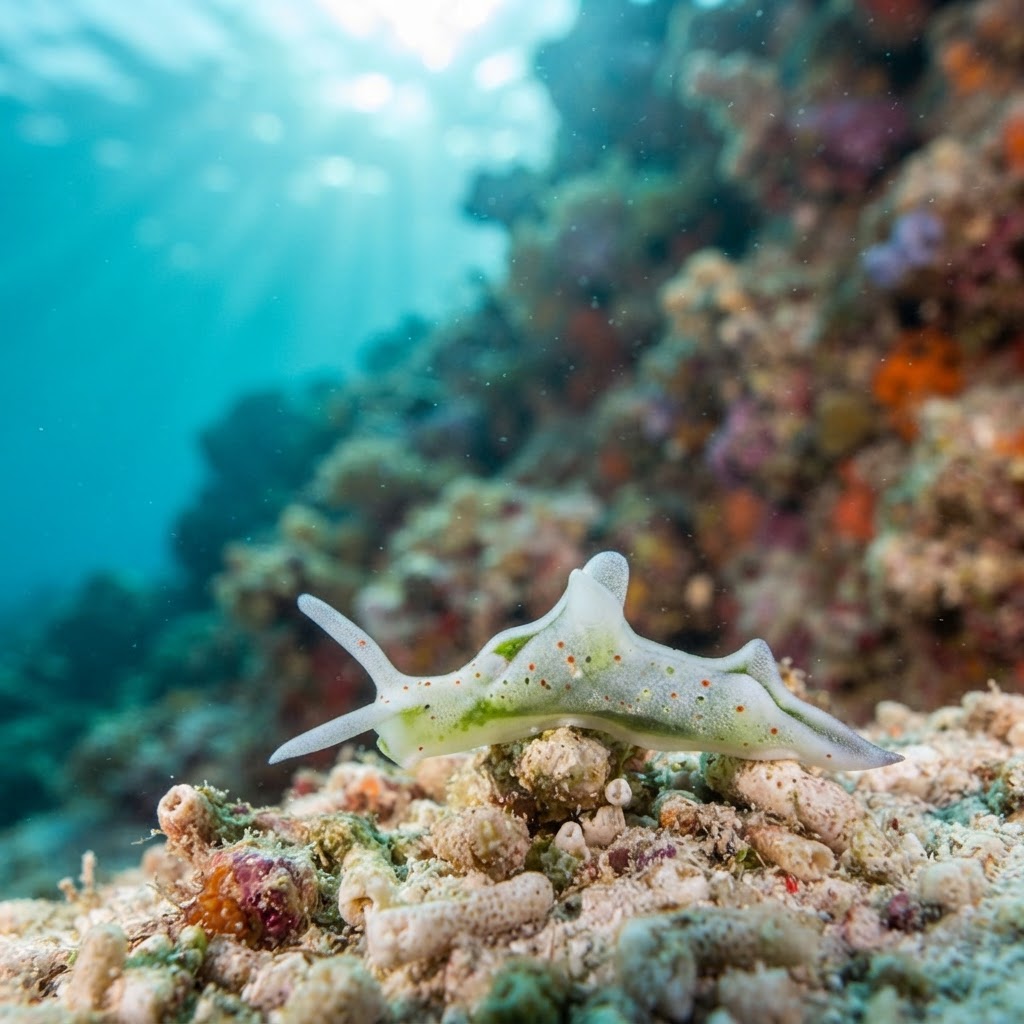
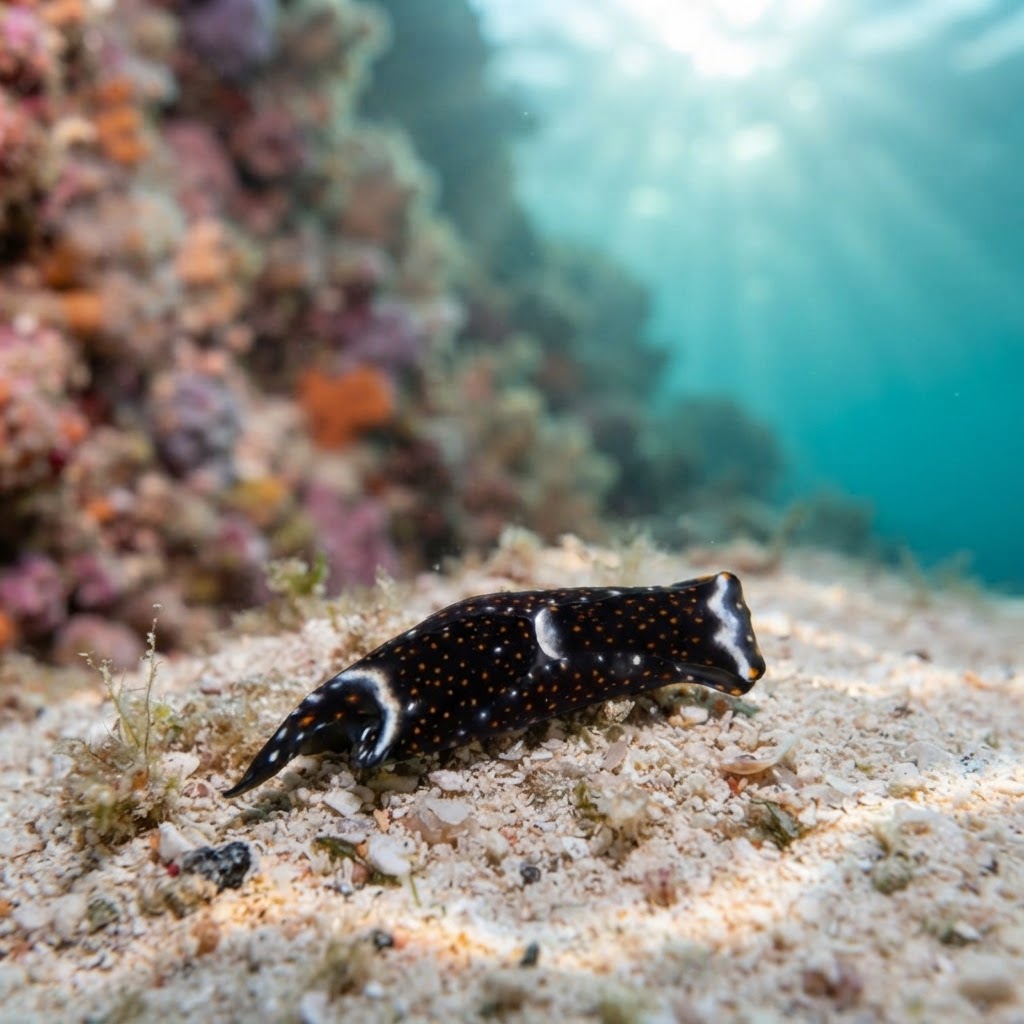
At just 1cm long, this is a macro-only find: a smooth, glossy body shaped like a flattened shield rather than a typical sea slug silhouette, with fine orange or rust speckling scattered over a paler background. It lacks the frilly external gills or rhinophores (sensory tentacles) that many nudibranchs show, giving it a slick, almost polished look under a torch. Spotting one usually means someone was already scanning the sand or rubble at close range with a magnifying lens or macro lens.
Divers encounter this one cruising slowly over sand, rubble or fine sediment, usually during the day while working a reef bottom at close range rather than up in open water. It shows no reaction to divers beyond its usual slow glide, and because of its size it is almost always found by someone deliberately scanning the substrate rather than spotted in passing.
It belongs to the headshield slug family (Aglajidae), a group of sand-dwelling slugs that hunt smaller invertebrates by ploughing through sediment, using their smooth shield-like shell remnant to plane through loose substrate rather than crawl over hard reef.
Records don't show a clear seasonal pattern, and the water temperatures it's been logged in, roughly 17 to 29.5C, cover both cooler and warm-season conditions on Queensland reefs. Treat it as a year-round possibility rather than something tied to a particular month.
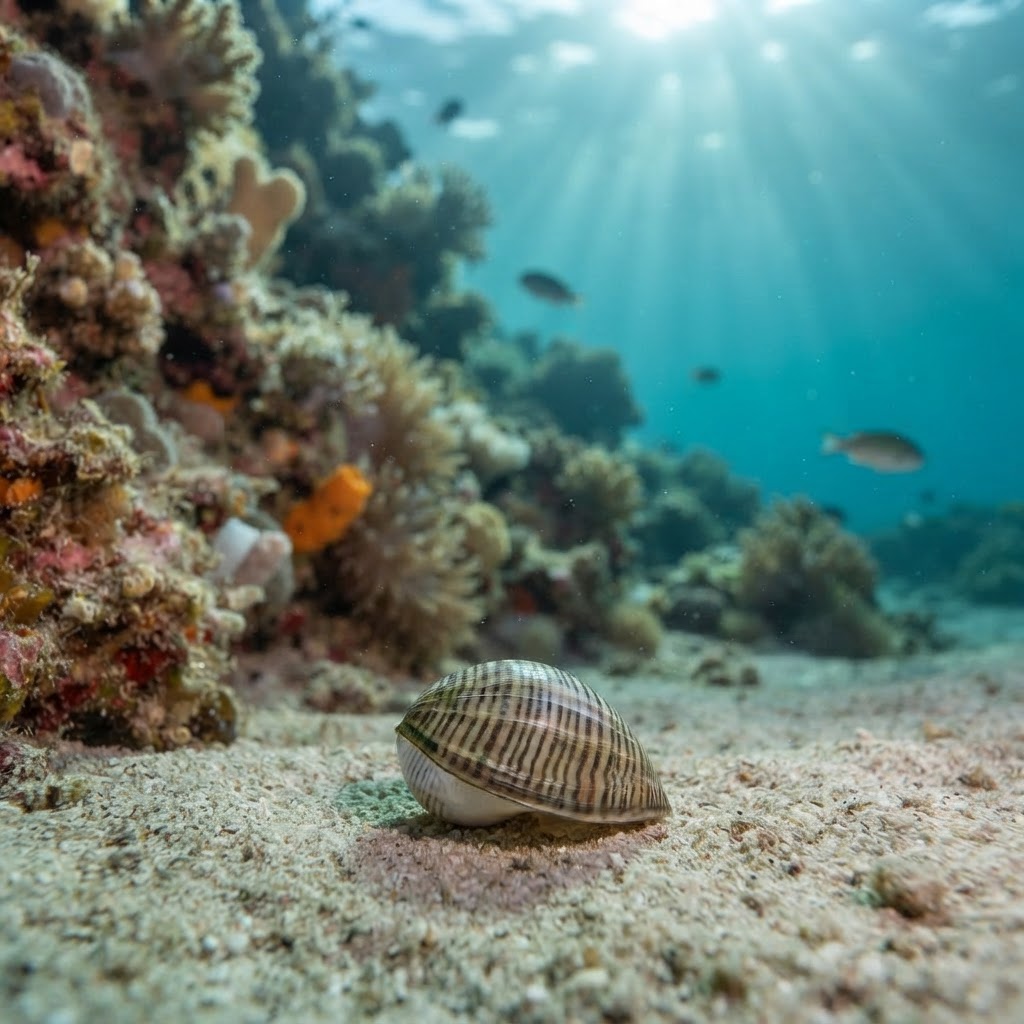
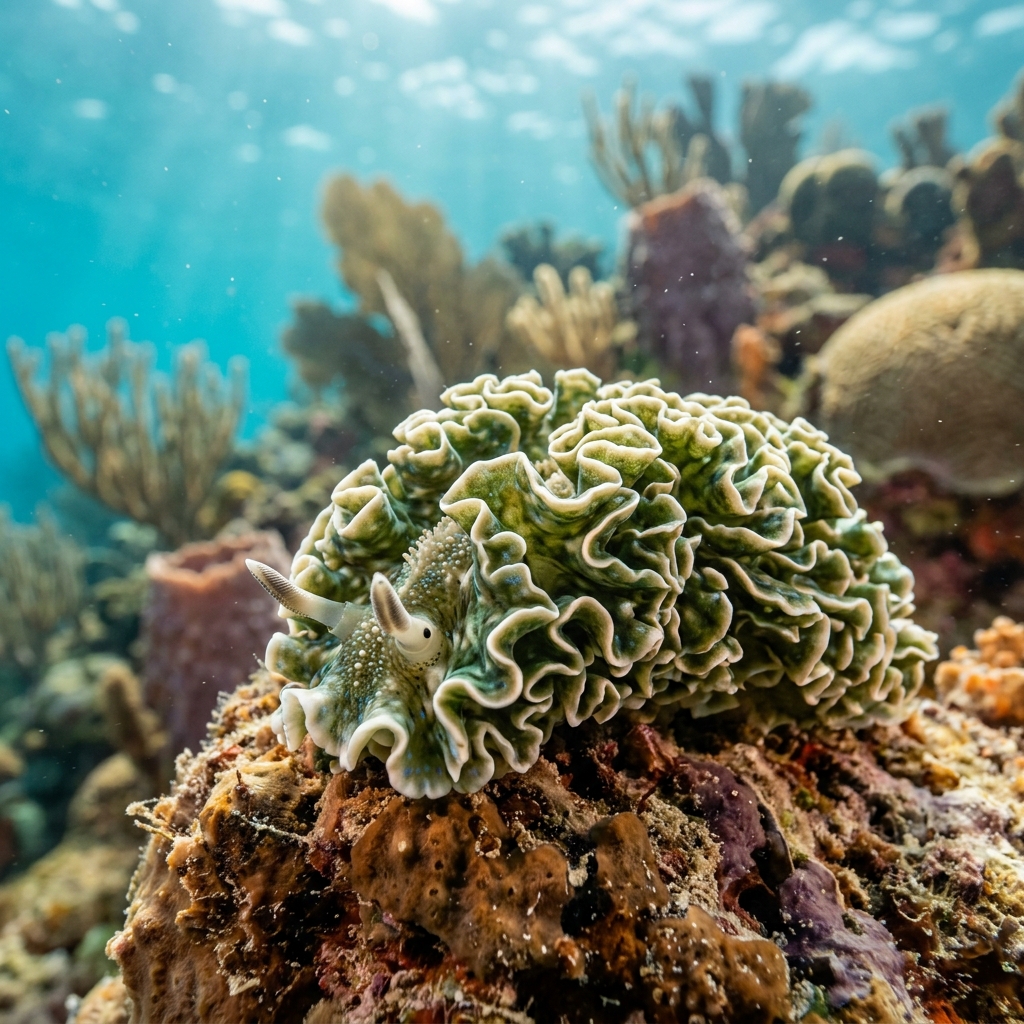
Reef neighbours a diver could mistake it for. Use the identification notes above to tell them apart.
Sightings so far come entirely from Australia, with Queensland producing the large majority of logged encounters and a single record from New South Wales. Within Queensland it turns up across a spread of dive sites rather than one standout location, so it is best treated as a possible find on any reef with the right sandy or rubble microhabitat rather than a guaranteed target.
Mapping where Headshield Slug is logged…
Nearly all logged sightings come from Queensland, Australia, spread across a number of different dive sites, with one additional record from New South Wales. It hasn't yet been documented outside Australia in diver observations.
There's no detected seasonal pattern, so it's considered a year-round possibility. It has been recorded in water from about 17 to nearly 30C, spanning cooler and warmer months alike.
They're tiny, around 1cm long, which is why most sightings come from divers specifically scanning sand and rubble at close range rather than noticing one in passing.
Look for a smooth, shield-shaped body under 1cm long with fine orange or rust speckling and no frilly external gills. It glides slowly over sand or rubble rather than climbing over hard coral.
Yes, at most sites where it has been recorded divers rate it rare, with a handful of sites logging it as uncommon. Finding one usually takes a deliberate macro search rather than a casual reef swim.
Site and sighting data is aggregated from diver logs, iNaturalist and GBIF. For taxonomy and conservation status:
Elysia Timida
573 sites