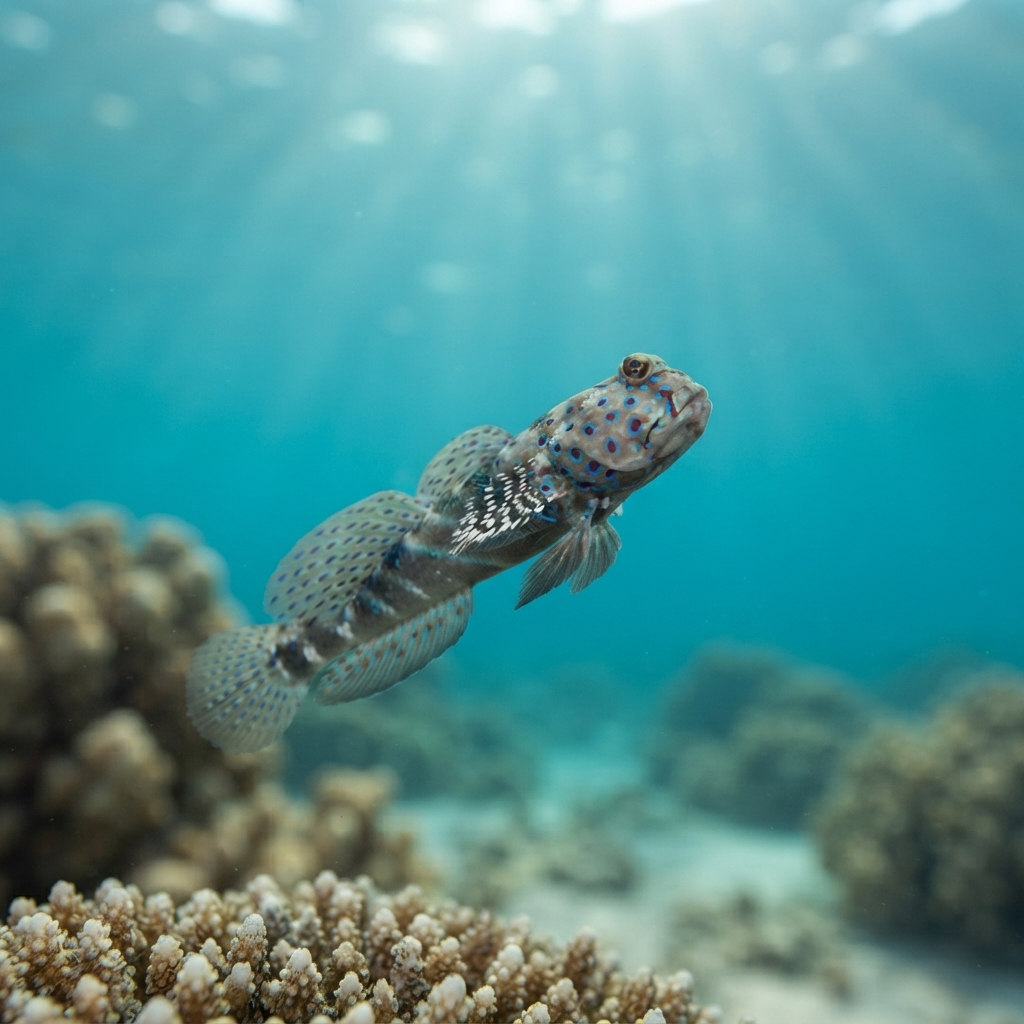
Cryptocentrus caeruleopunctatus
Spot this pale blue-spotted goby on Red Sea sand flats, most reliably logged along Egypt's Red Sea Riviera in water around 25 to 29 C.
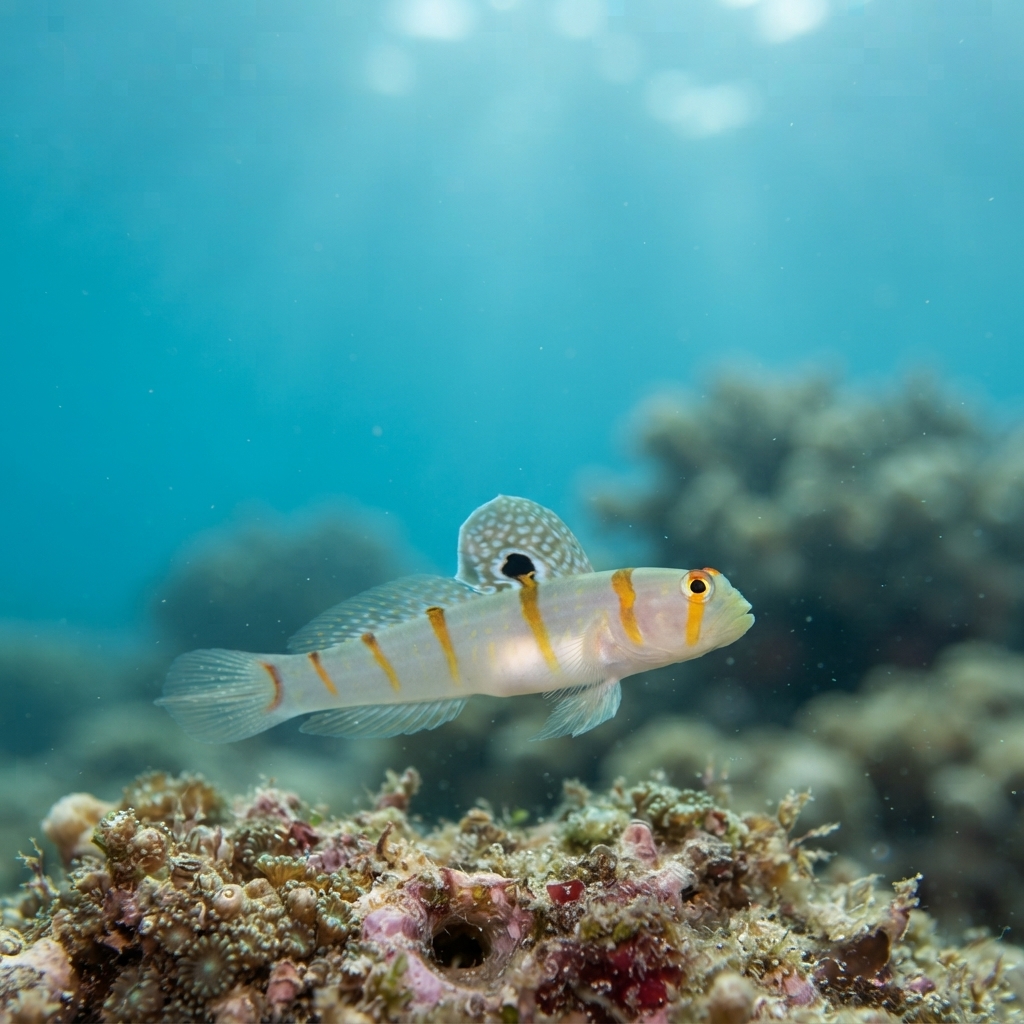
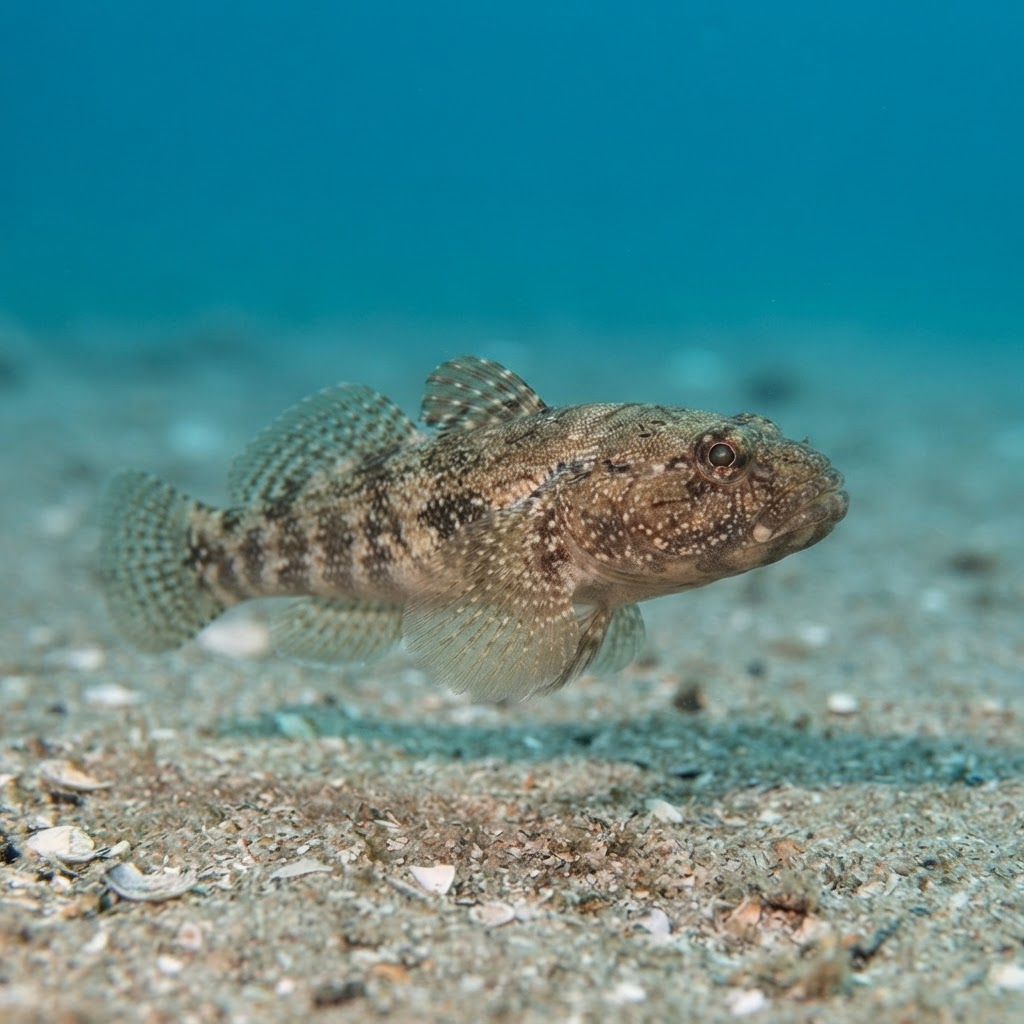
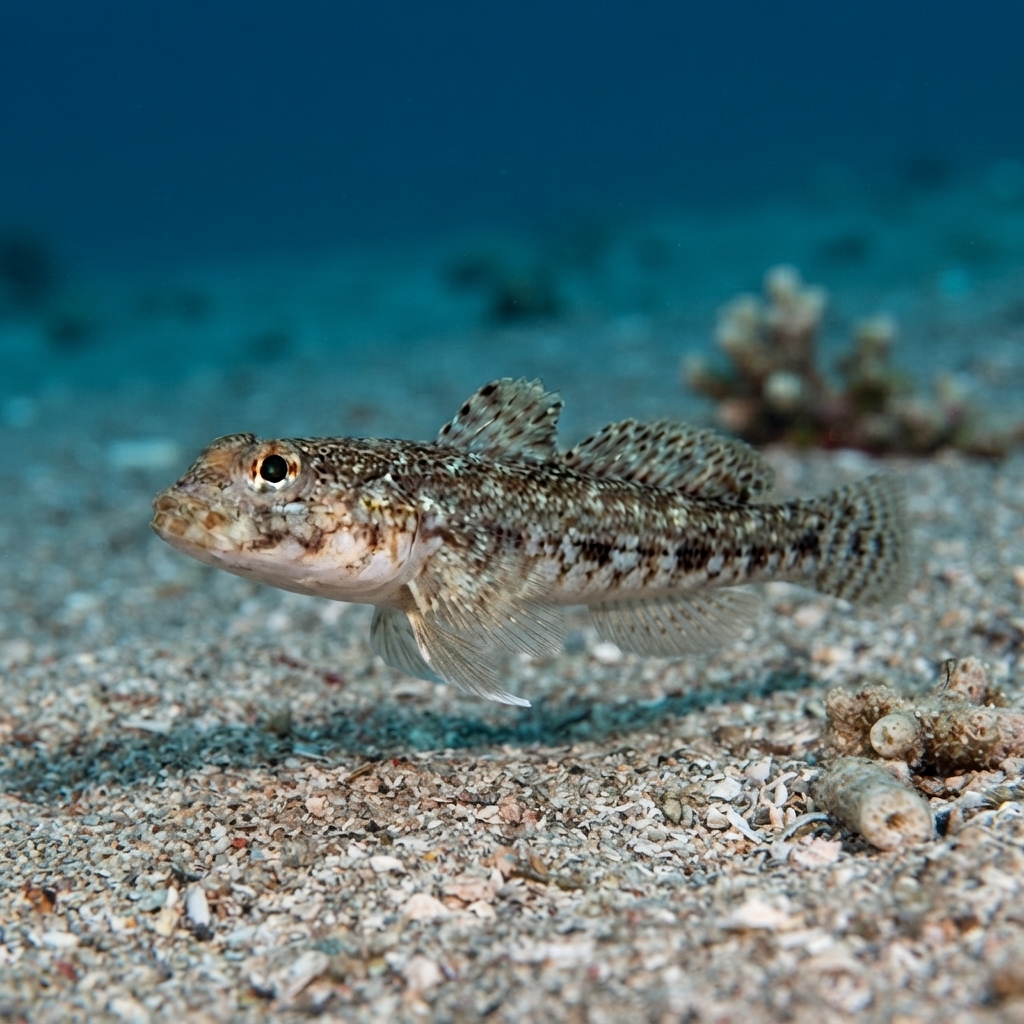
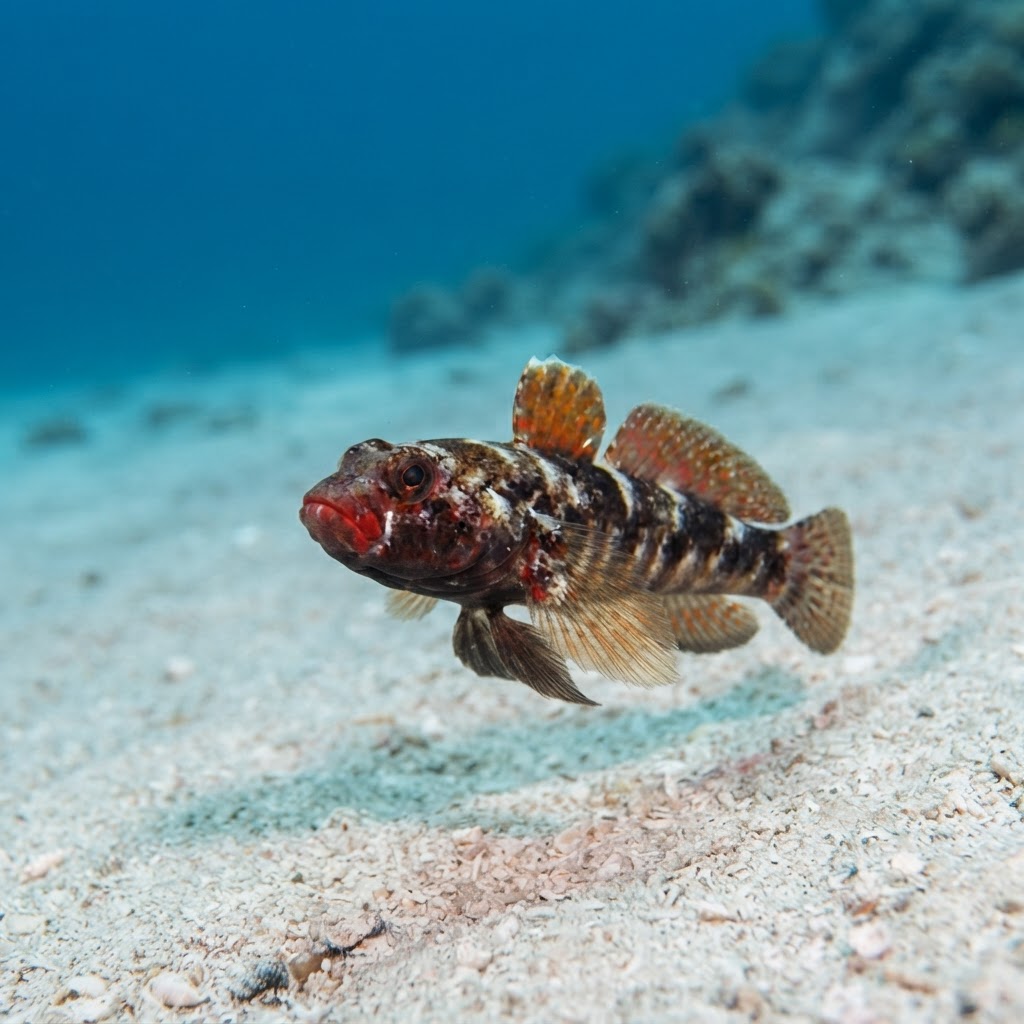
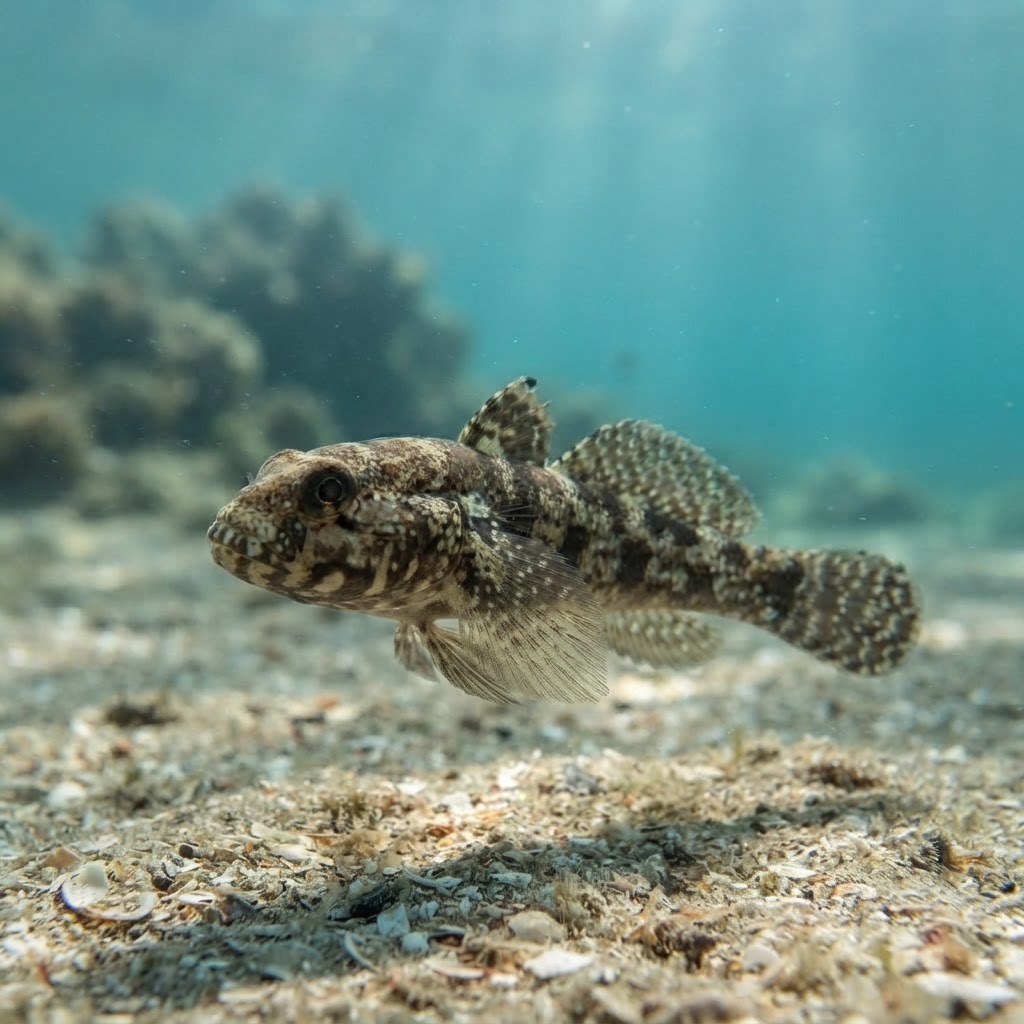
Small goby, around 9 cm, with a slender pale grey to tan body scattered with fine pale blue spots and dashes along the head and flanks. It holds a raised, alert posture just above a burrow entrance in sand or rubble, with a slightly humped forehead and large eyes that track movement. Look for it hovering rather than resting flat, ready to drop back into its hole the moment it feels threatened.
Watch sandy patches and rubble edges near the reef base and you'll likely find it stationed at the mouth of its burrow, sharing the hole with a partner shrimp that keeps the tunnel clear. It hovers close to the entrance, fanning gently, and reacts to divers by freezing or dropping into the burrow rather than fleeing across open sand. Slow, low approaches and patience are rewarded, as it will often re-emerge within a minute or two once it decides you're not a threat.
Like other prawn-gobies, it lives in a real partnership with a burrowing shrimp: the shrimp digs and maintains the shared tunnel while the goby stands guard, flicking its tail as a warning signal that sends both animals bolting underground at the first sign of danger.
Sightings show no clear season, and with water temperatures logged between 24.8 and 29.2 C, it appears to be present on Red Sea sand and rubble flats year-round.
Reef neighbours a diver could mistake it for. Use the identification notes above to tell them apart.
Most commonly logged in Egypt, particularly along the Red Sea Riviera and South Sinai, with further sightings around Marsa Alam and the Deep South. It also turns up on the Red Sea coast of Saudi Arabia, so the northern and central Red Sea is the reliable stretch for this species.
Mapping where Harlequin Prawn-goby is logged…
Egypt is the stronghold, especially the Red Sea Riviera and South Sinai, with additional sites around Marsa Alam and the Deep South. It has also been logged on the Red Sea coast of Saudi Arabia.
There's no strong seasonal pattern in sightings, and it tolerates a wide temperature range of roughly 25 to 29 C, so it can be found on Red Sea sand flats at any time of year.
Look for a small, pale grey to tan goby around 9 cm long, marked with fine pale blue spots, hovering upright at the entrance to a burrow in sand or rubble rather than lying flat on the bottom.
They reach about 9 cm in length, making them one of the smaller, easy-to-overlook gobies you'll find hovering over sand and rubble patches.
It forms a partnership with a burrowing shrimp that digs and maintains the tunnel while the goby keeps watch outside, flicking its tail to warn the shrimp of danger so both can retreat underground together.
Site and sighting data is aggregated from diver logs, iNaturalist and GBIF. For taxonomy and conservation status:
Slender Goby
806 sites