Halicampus crinitus
A wiry reef-dweller logged from Cuba to Colombia's Caribbean Coast, most divers find it uncommon and easy to miss at 24.5-29C.
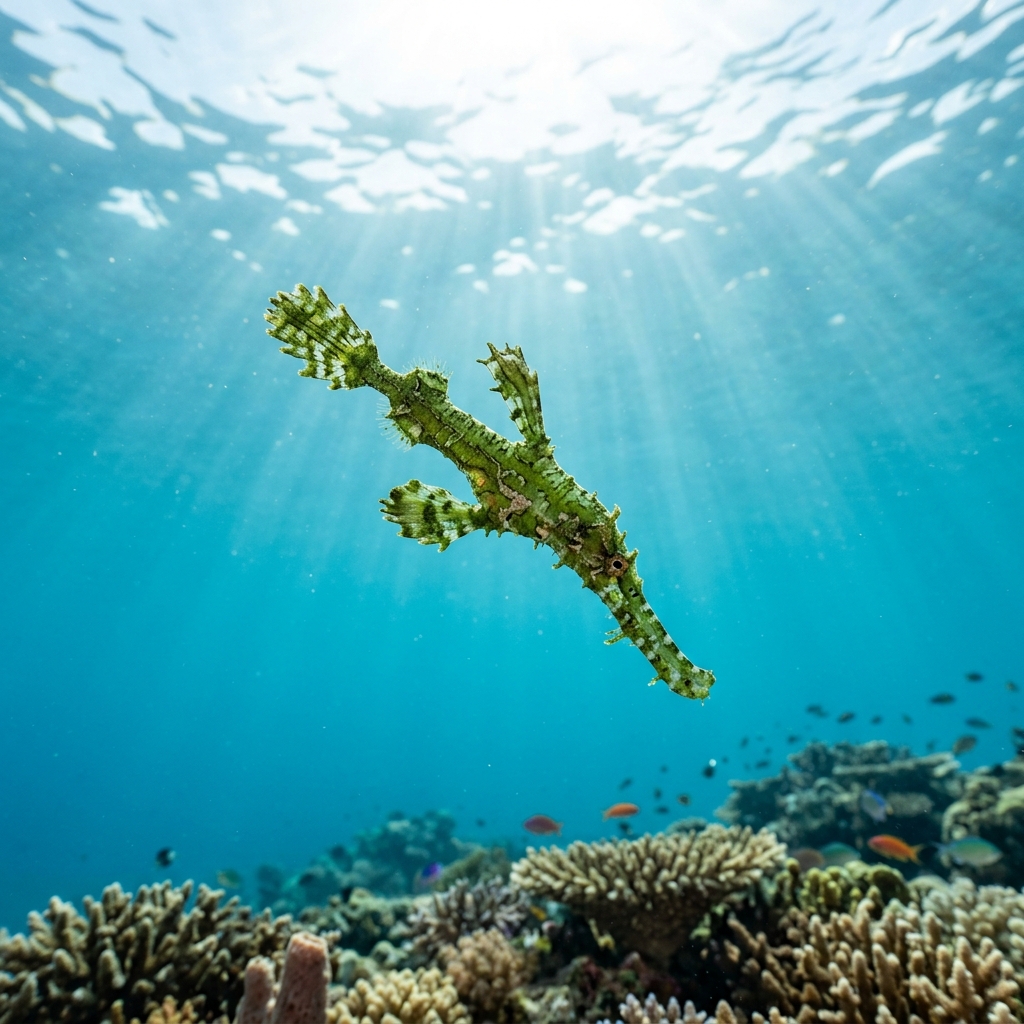
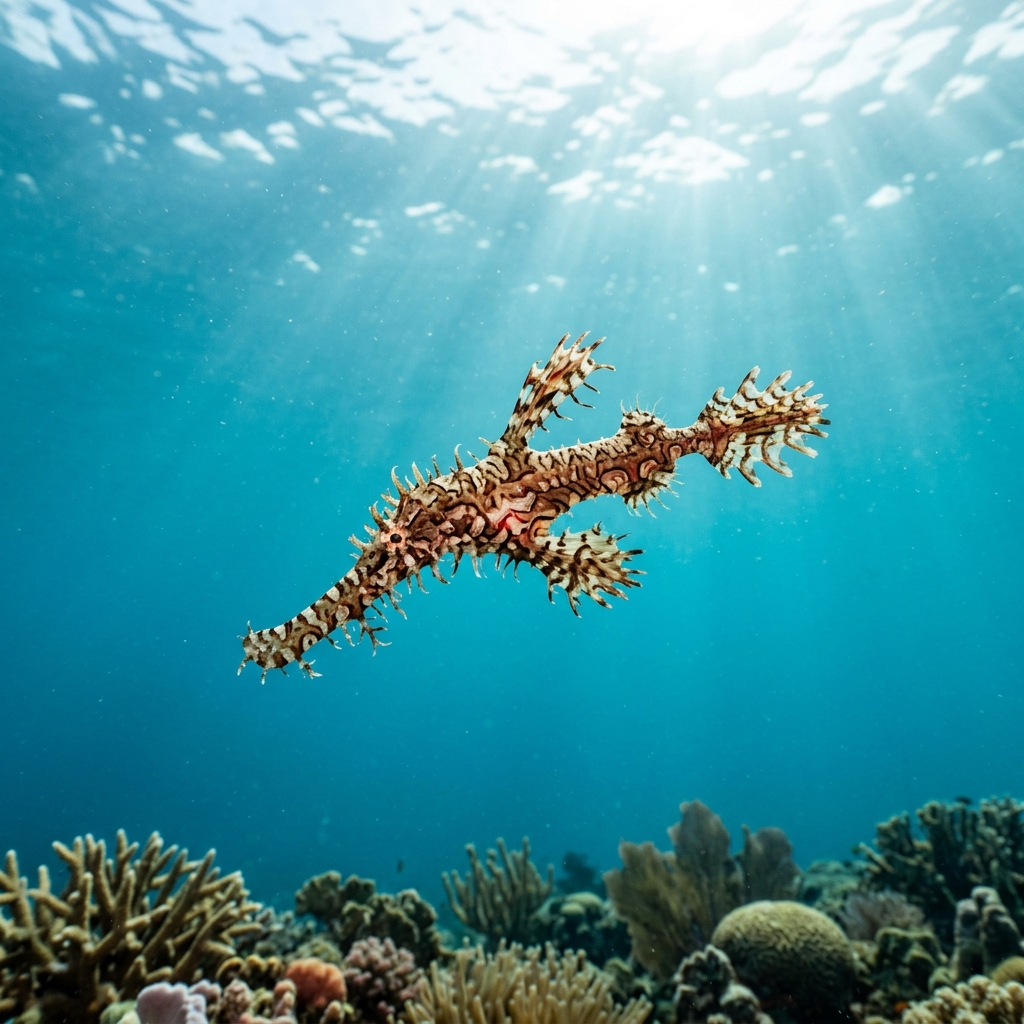
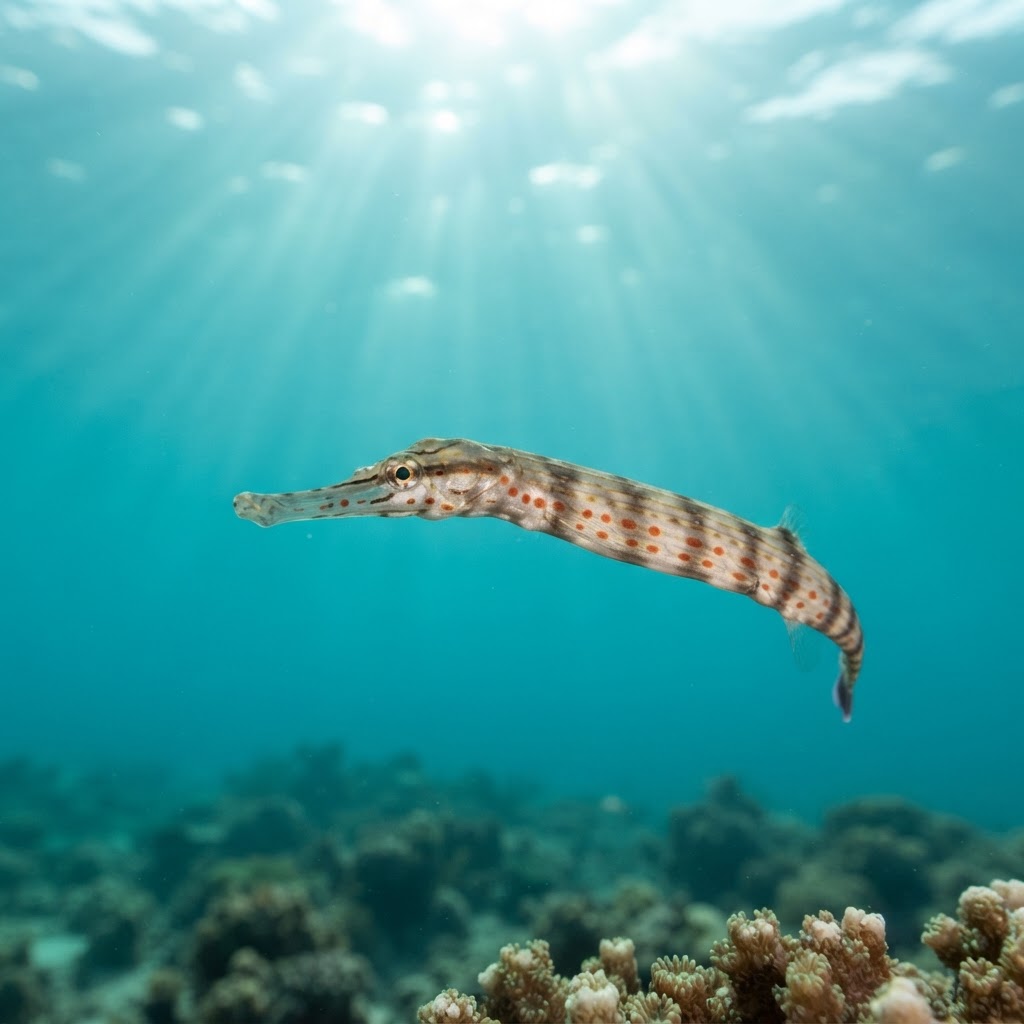
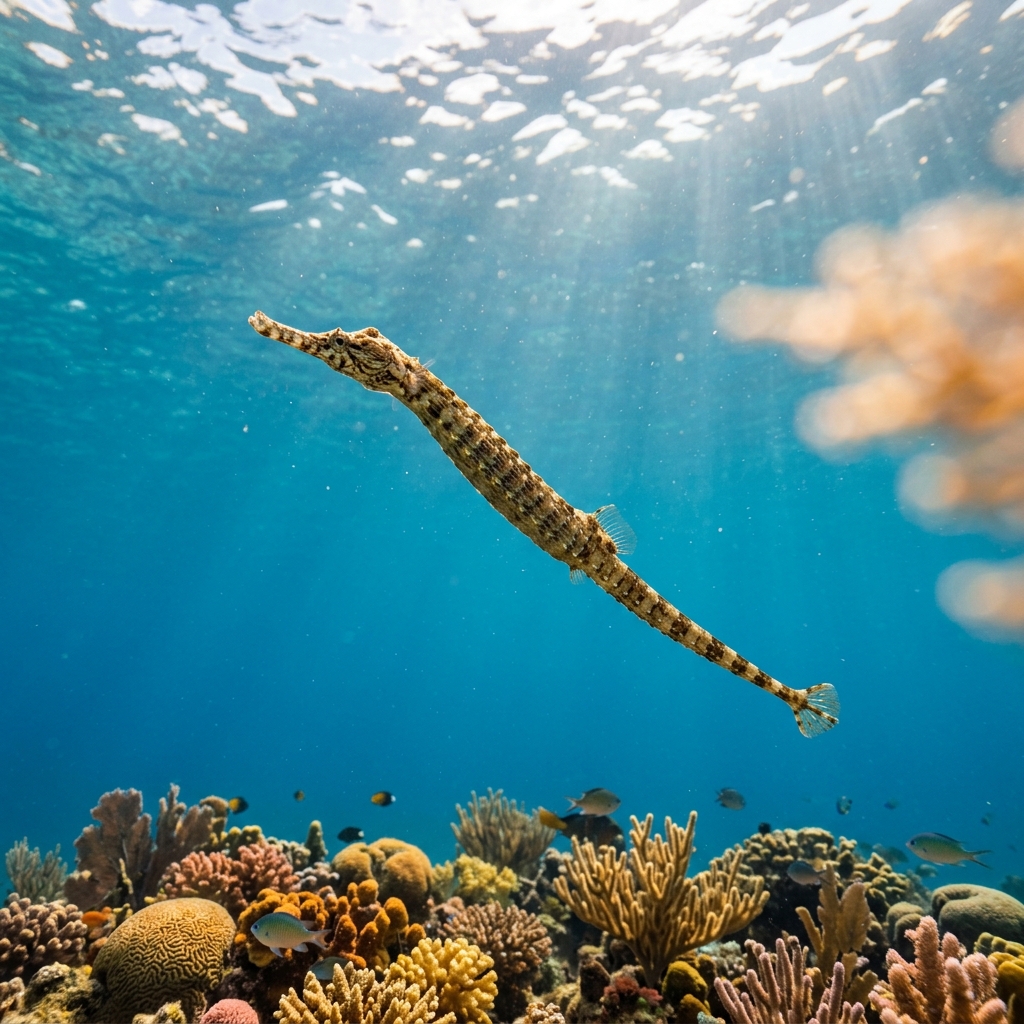
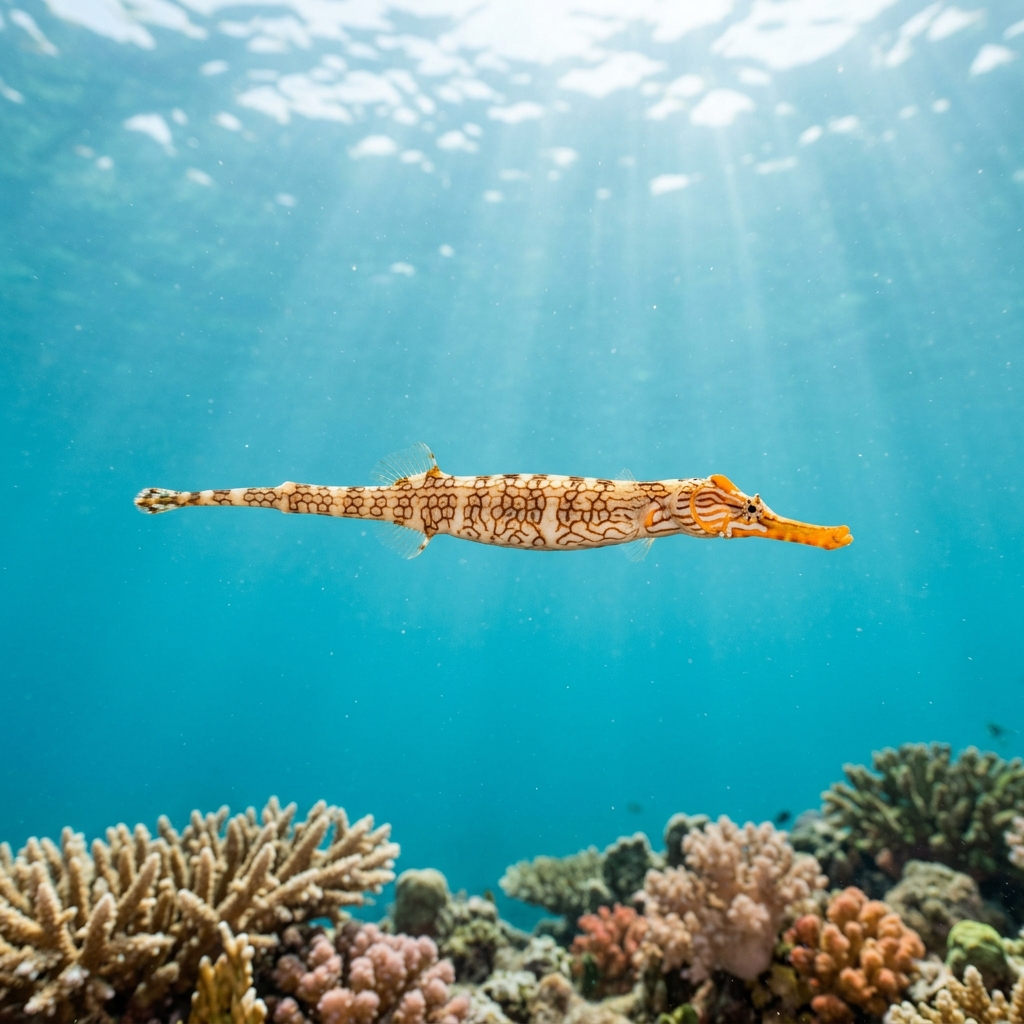
Long, thin, wire-bodied fish with a segmented, armour-plated look typical of pipefish, usually mottled brown, tan or reddish to match rubble and algae. Small fleshy filaments or tufts along the body break up its outline, which is the main giveaway once you know to look for it. It swims in a stiff, almost mechanical way rather than gliding, and tends to hold still against a matching background rather than dart off.
Divers usually find it holding motionless against rubble, sponge or weedy substrate rather than out in the open, relying on its broken-up shape to disappear rather than fleeing. It is not a fish you find by swimming past quickly; slow, methodical scanning of the reef floor and crevices is what turns up sightings. Where logged, it comes up as an uncommon find even at sites where it is known to occur, so treat any sighting as a bit of a result.
Like other pipefish, males of this family carry fertilised eggs on their body until they hatch, so what looks like an unusually lumpy belly on a pipefish can actually be a brood pouch full of young.
No clear seasonal pattern shows up in the sighting data, and its comfortable range of 24.5 to 29C matches warm Caribbean and tropical Atlantic reefs year-round, so any month is fair game.
Reef neighbours a diver could mistake it for. Use the identification notes above to tell them apart.
Most reliably logged across the Caribbean, with strong numbers of sites in Cuba, Venezuela, Brazil, Colombia and the Bahamas. Colombia's Caribbean Coast and Florida in the United States carry the heaviest concentration of records, with further sightings around Jardines del Rey in Cuba, Carriacou in Grenada, Pernambuco in Brazil and the Yucatan Peninsula in Mexico.
Mapping where Harlequin Pipefish is logged…
Best chances are in the wider Caribbean, particularly Cuba, Venezuela, Brazil, Colombia and the Bahamas. Colombia's Caribbean Coast and Florida have the most recorded sites, alongside Jardines del Rey in Cuba and Carriacou in Grenada.
There is no strong seasonal signal in the data, and its 24.5 to 29C comfort range spans Caribbean reef conditions all year, so it can turn up on any dive regardless of month.
Look for a long, thin, wire-like body in mottled brown or reddish tones with small fleshy tufts breaking up its outline, usually held still against rubble or algae. It moves stiffly rather than swimming smoothly, which helps separate it from true fish of similar shape.
Exact size data is not confirmed for this species, but like most pipefish in the Syngnathidae family it stays small and slender, easily overlooked against rubble or weed unless you are looking closely.
It is logged as uncommon even at the sites where divers have found it, so sightings are a real highlight rather than a routine spot. Patient, close scanning of rubble and sponge-covered bottom improves your odds.
Site and sighting data is aggregated from diver logs, iNaturalist and GBIF. For taxonomy and conservation status:
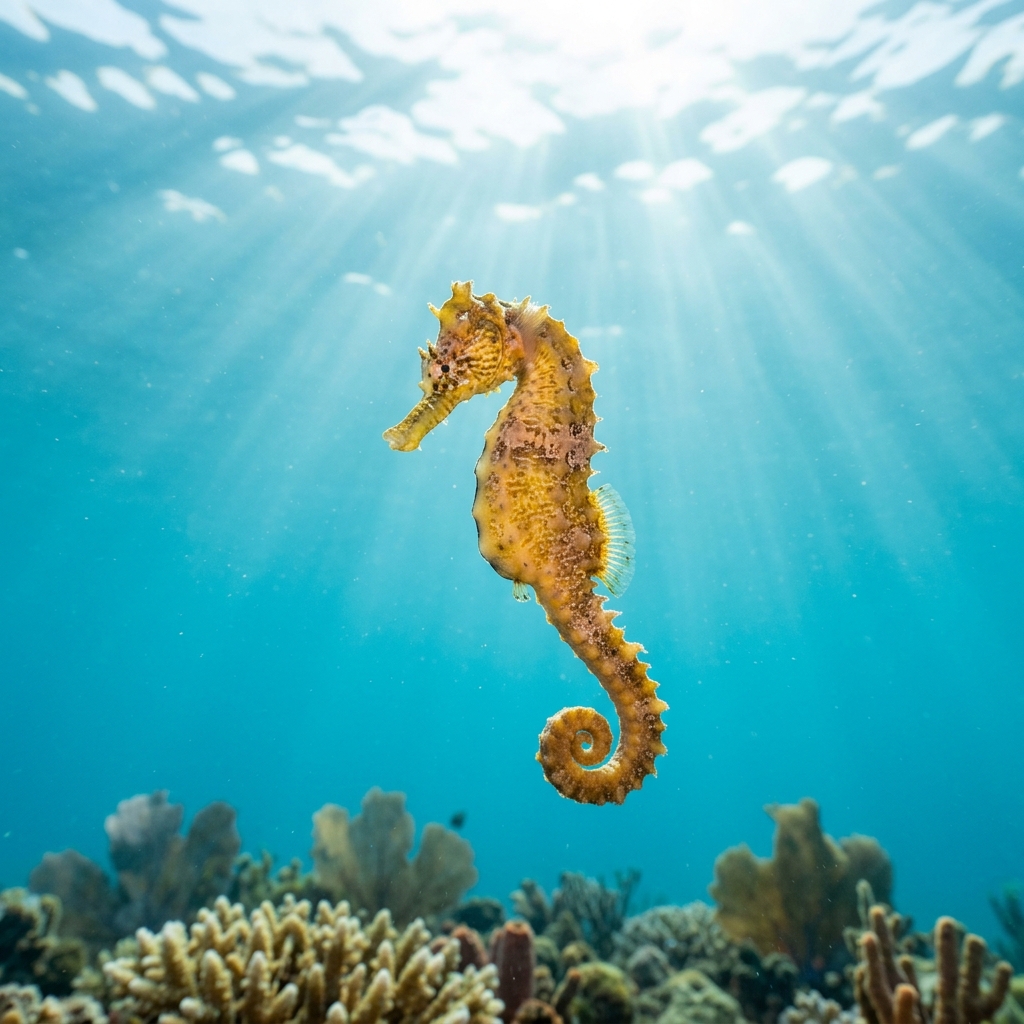
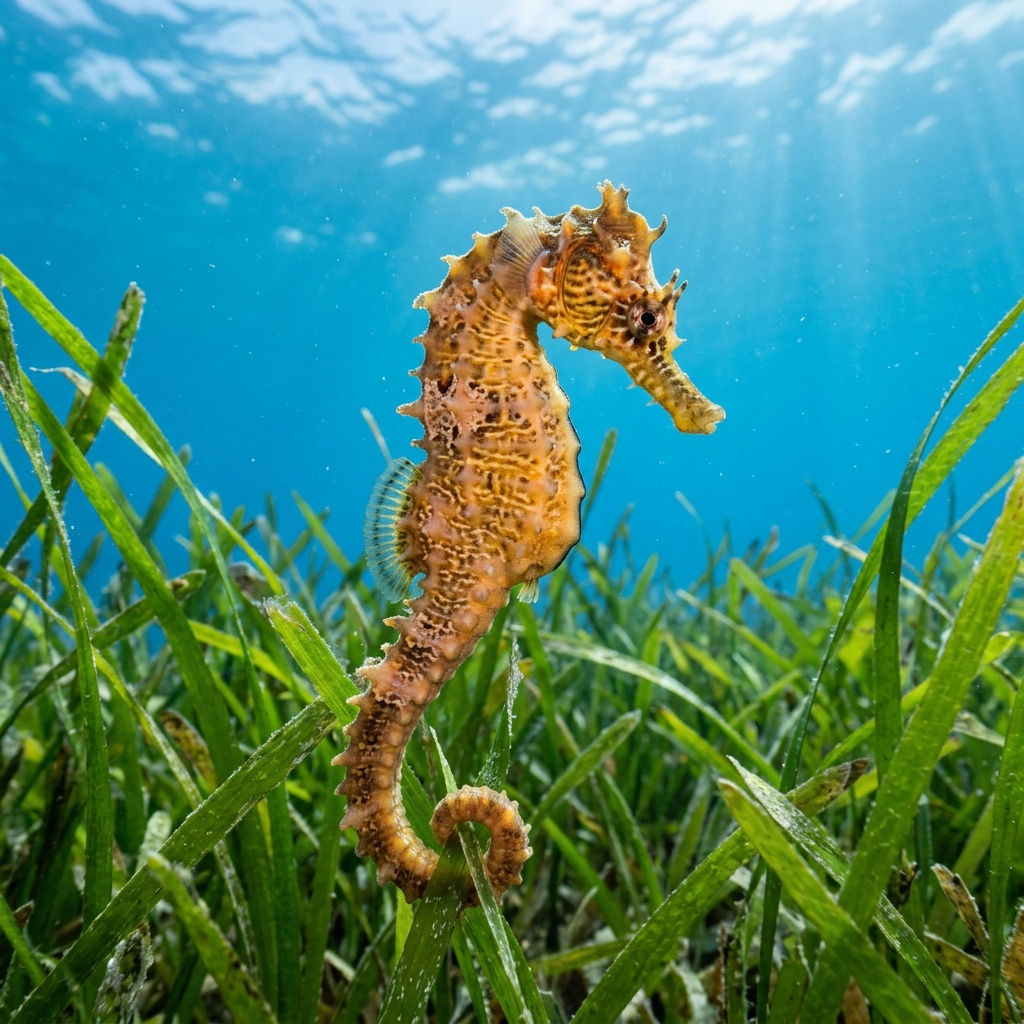
Seahorse
1,346 sites