Haminoea hydatis
A small glassy bubble snail logged around Occitanie, France, in mild 17 to 23 C water, spotted year-round if you know where to look.
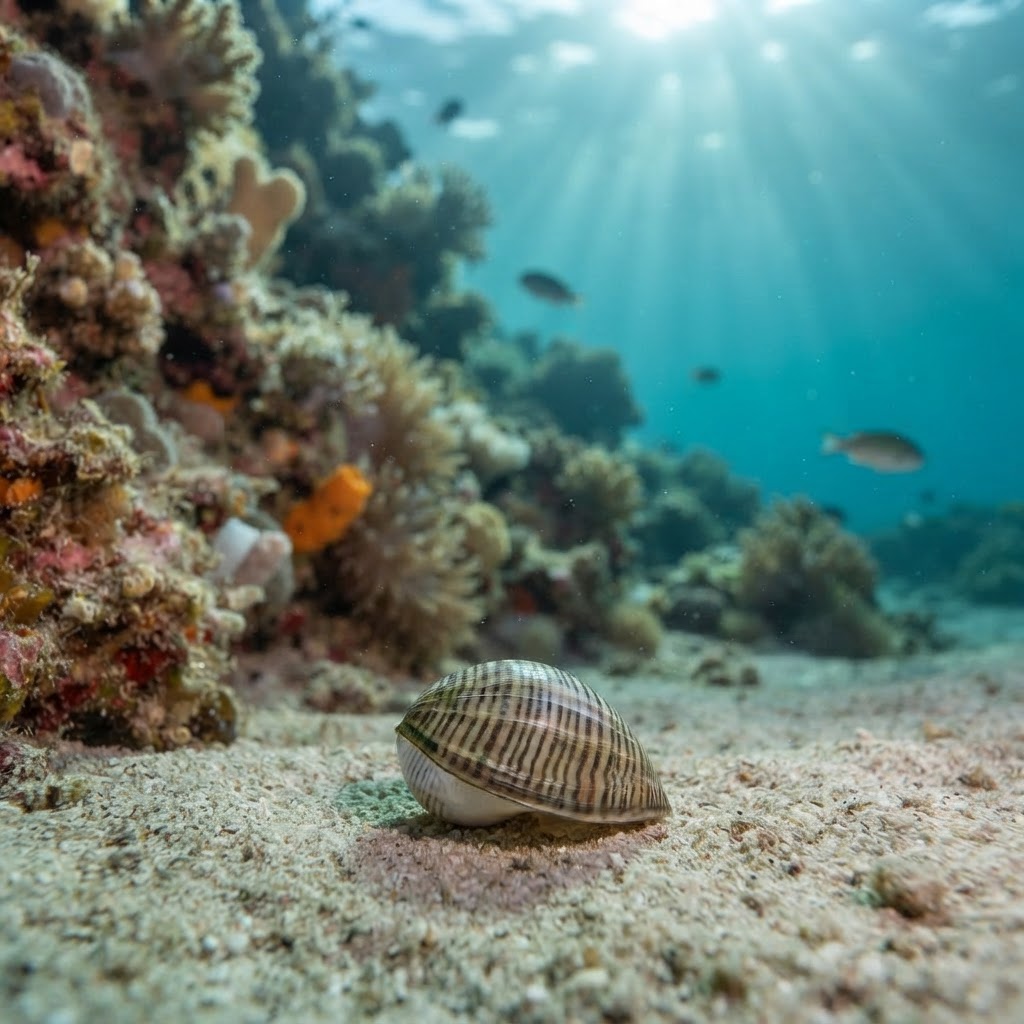
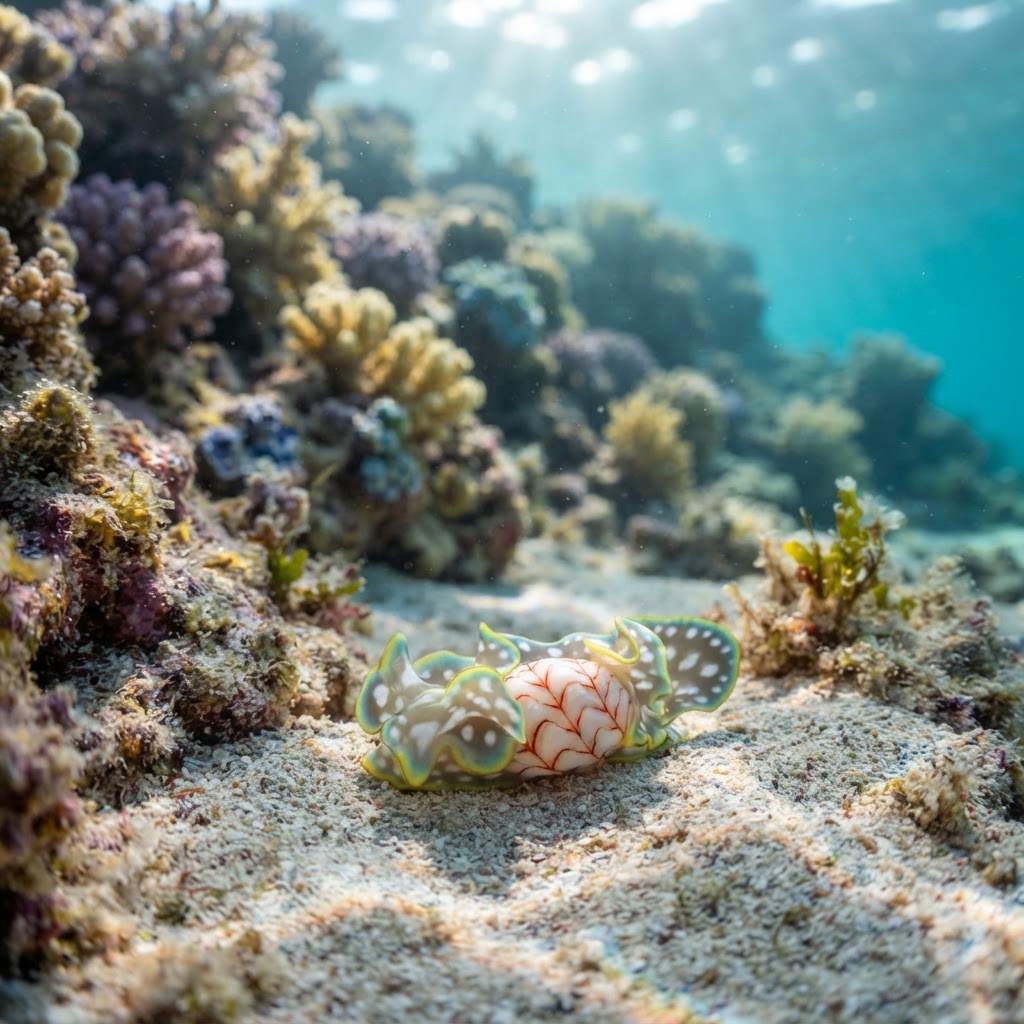
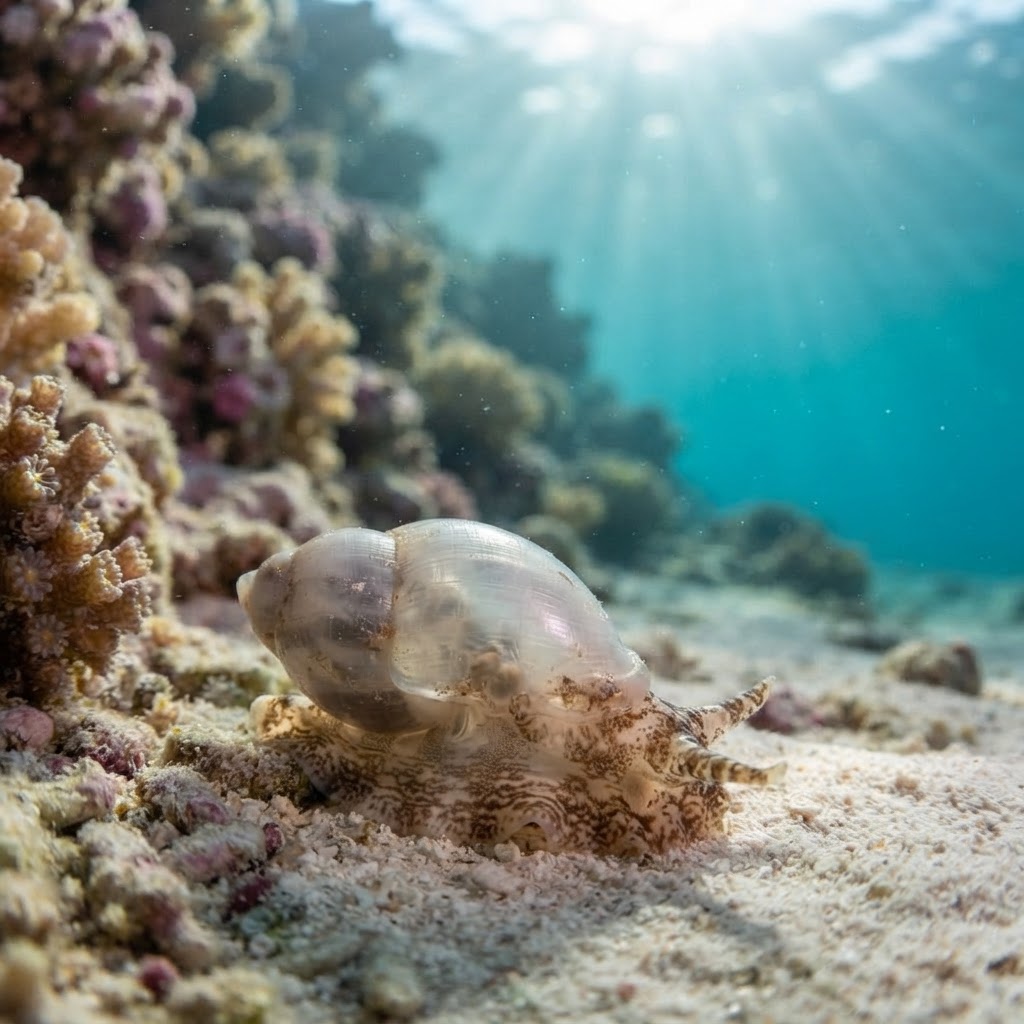
A small, thin-shelled sea slug with a glassy, semi-transparent bubble-shaped shell that the soft body partly overflows on either side. The body itself is pale and often mottled or speckled, blending into sand and fine algae. Look for the rolled, ear-like flaps (parapodia) at the sides of the body, a shared trait of bubble shells that helps separate it from finless nudibranchs. Size in the water is small enough that most divers only notice it on a slow, close look at the substrate.
Divers log this one crawling slowly over sand and low algae, usually close to the substrate rather than out in open water. It shows no reaction to divers beyond its normal slow grazing pace, and sightings so far are uncommon to rare, so finding one is more about scanning sandy patches carefully than expecting a guaranteed encounter.
Like other bubble shells in the family Haminoeidae, it carries a fragile, almost see-through shell that it can partially withdraw into, a holdover from its snail ancestry that most divers overlook because the soft body covers so much of it.
No clear seasonal pattern shows up in the sighting data, and the observed temperature range of 17.4 to 23.4 C spans much of the local diving calendar, so treat it as a year-round possibility in Occitanie rather than a seasonal target.
Reef neighbours a diver could mistake it for. Use the identification notes above to tell them apart.
All logged sightings so far come from France, with every recorded site clustered in Occitanie on the Mediterranean coast. It is not yet documented elsewhere in the diver/iNaturalist data, so Occitanie is currently the place to look for it.
Mapping where Southern Bubble-shell is logged…
Current sightings are concentrated in Occitanie, on the French Mediterranean coast, where it has been logged at a small number of dive sites. It has not been documented elsewhere in the available data.
There is no detected seasonal peak in the sighting data. It has been recorded across a temperature range of roughly 17.4 to 23.4 C, so it is best treated as a year-round possibility rather than tied to a specific month.
Look for a small, glassy, bubble-shaped shell with a pale, mottled soft body that spills out around its edges. The body has rolled side flaps typical of bubble shells, and it moves slowly over sand or fine algae rather than swimming.
Exact size figures are not documented, but like other members of the Haminoeidae family it is a small species, easy to miss unless you are looking closely at the seabed.
No, it poses no known danger to divers. It has no stinging or venomous defences reported and simply grazes over sand and algae.
Site and sighting data is aggregated from diver logs, iNaturalist and GBIF. For taxonomy and conservation status:
Triton Shell
2,297 sites