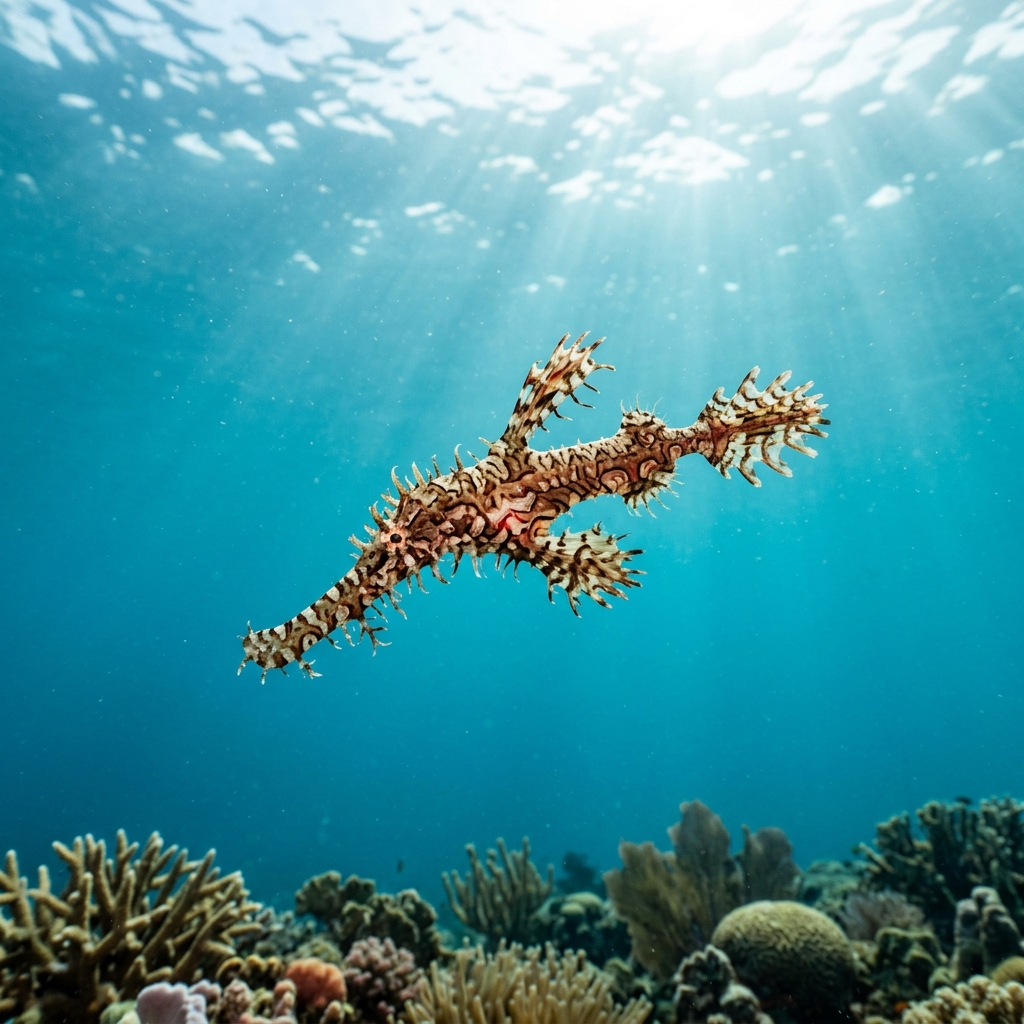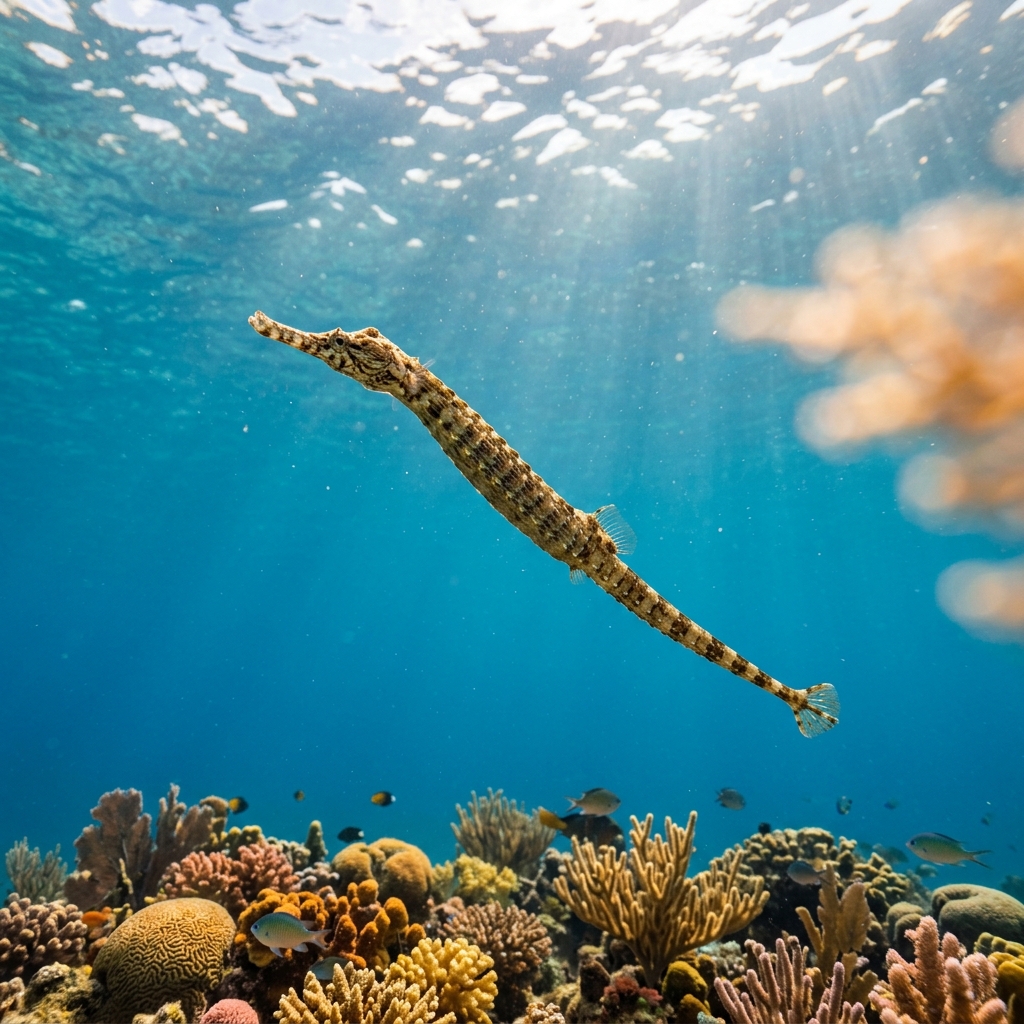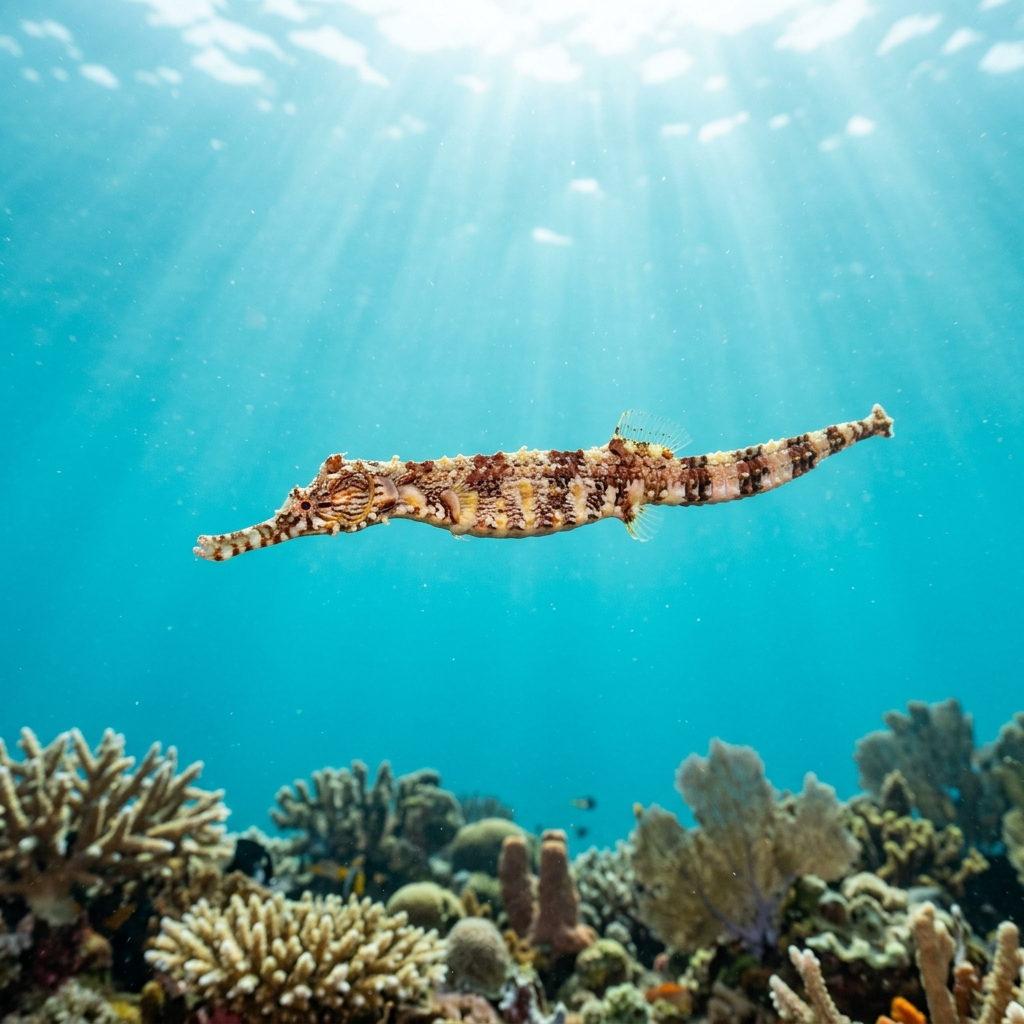
Halicampus macrorhynchus
Ornate Pipefish are most reliably logged around Grenada and Sipadan. Spot them in warm 27-29 °C waters year-round with these ID tips.
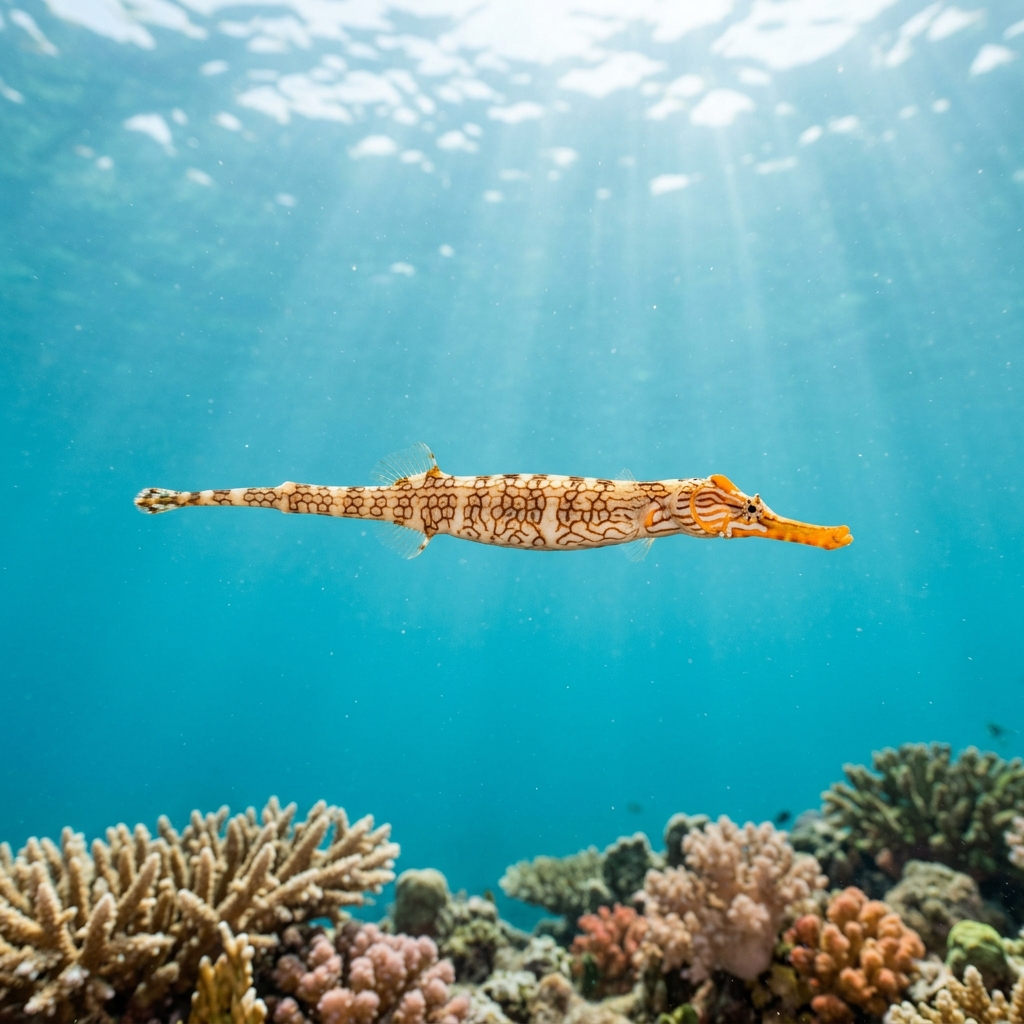
A slender, elongated pipefish with an unusually long snout, the species name macrorhynchus means 'large-nosed', and that proboscis is your first clue underwater. Body colouration tends toward pale cream or tan with darker banding or mottling along the trunk, helping it disappear against encrusting growth. It moves little, hovering nearly motionless among soft corals, algae, or rubble in a posture that looks almost plant-like. The long snout, combined with a rigid, ringed body (the bony external rings typical of pipefish), separates it from most look-alikes at a glance.
Ornate pipefish are benthic (bottom-associated) ambush animals that anchor themselves among soft corals, sponges, or algae and rely on camouflage rather than flight. When encountered, they tend to stay put or drift slowly to the opposite side of a coral head rather than bolting, which actually makes them easier to observe once spotted. Patience is the key technique: scan reef structure slowly at close range, because this species is easy to overlook against textured backgrounds.
Like all syngnathids, it is the male that carries the eggs, females transfer them to a brood pouch on the male's underside, where he fertilises and incubates them until they hatch as miniature, fully formed pipefish.
No concentrated season has emerged from the available data, so ornate pipefish can be treated as a year-round target. The observed temperature range of roughly 27 to 29 °C points firmly to tropical reef conditions, meaning the sites where it occurs maintain suitable conditions throughout the year.
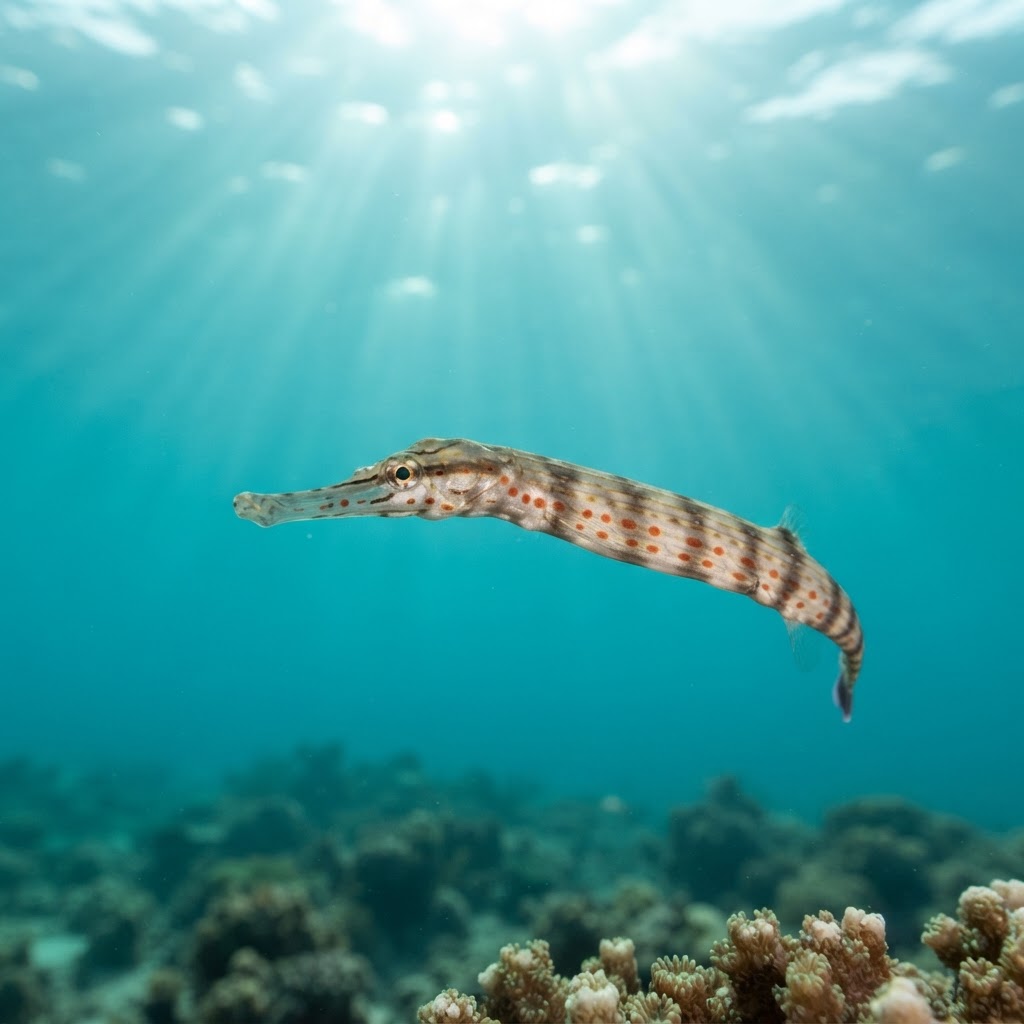
Reef neighbours a diver could mistake it for. Use the identification notes above to tell them apart.
Most sightings are concentrated around Grenada Island in the Caribbean, which dominates the logged records by a wide margin, making it by far the strongest destination to target this species. Sipadan and the east Sabah coast of Malaysia account for a solid cluster of Indo-Pacific sightings, while Iles des Saintes and Basse-Terre in Guadeloupe add a further Caribbean foothold. If Grenada is already on your itinerary, your odds of an encounter are better here than almost anywhere else on record.
Mapping where Ornate Pipefish is logged…
Grenada Island in the Caribbean is by far the most reliably logged location for this species. Sipadan and the east Sabah coast of Malaysia are the standout Indo-Pacific sites, and Iles des Saintes and Basse-Terre in Guadeloupe offer additional Caribbean encounters.
There is no clear peak season in the data, so sightings appear possible year-round. The species is associated with warm tropical water in the 27-29 °C range, which is present at top sites like Grenada and Sipadan throughout the year.
Look for the distinctively long snout, noticeably longer than on most other pipefish. The rigid, banded body is pale with darker mottling that blends into coral and algae. It rarely swims actively; if you spot something pencil-thin and motionless among reef growth, look for that elongated proboscis to confirm the ID.
Males do. Females deposit eggs into a brood pouch on the male's underside, where he fertilises and incubates them. A male with a swollen pouch is carrying a brood, look for that bulge along the belly when you get close.
Site and sighting data is aggregated from diver logs, iNaturalist and GBIF. For taxonomy and conservation status:
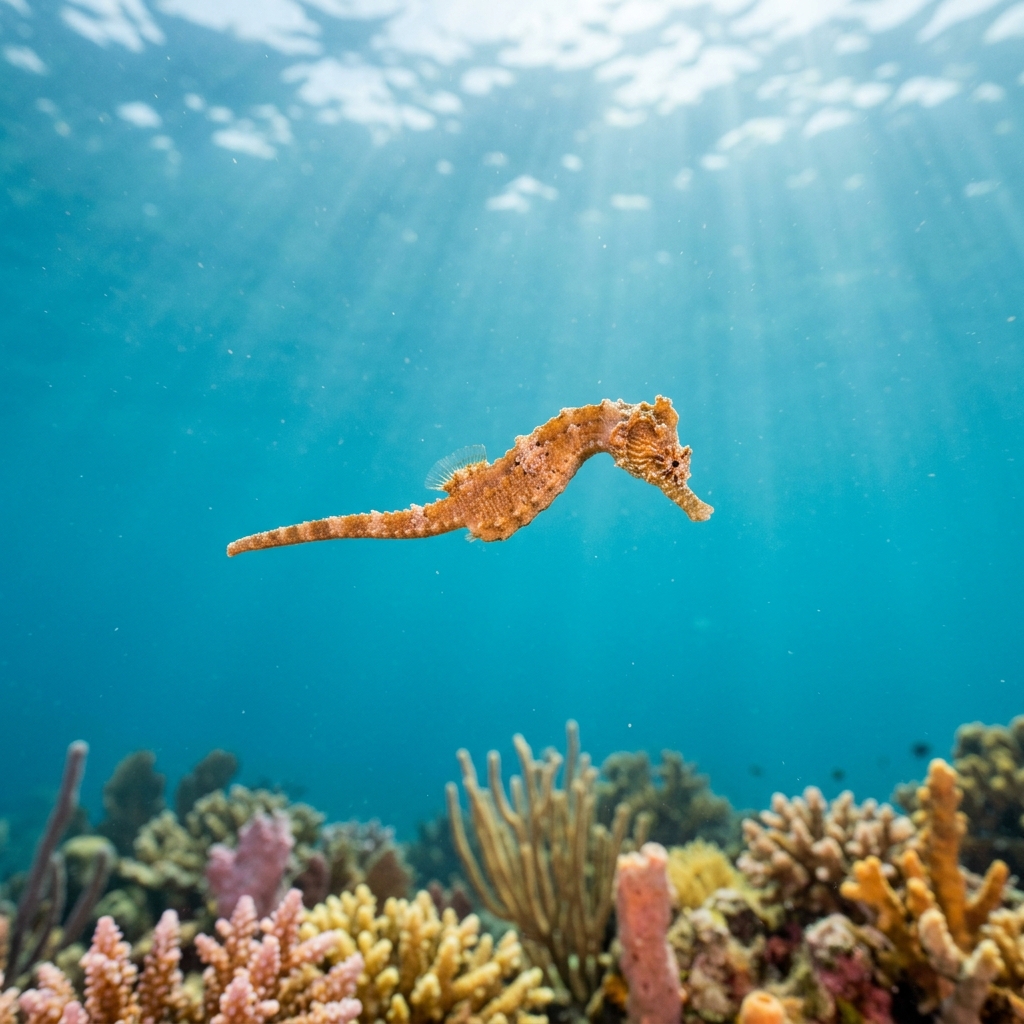
Seahorse
1,346 sites