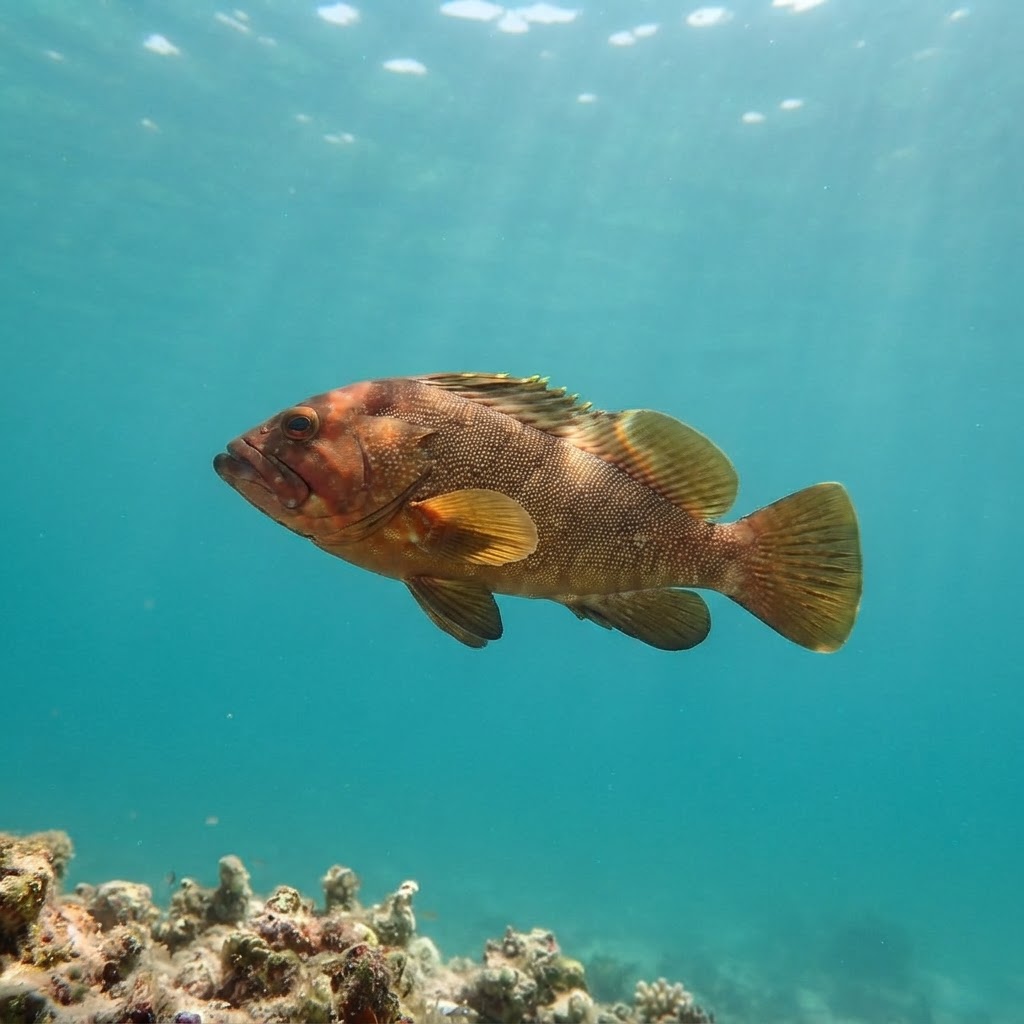
Epinephelus rivulatus
Grey-brown grouper with pale blue spots, most reliably found on reefs in Western Australia and KwaZulu-Natal, year-round in 21.5 to 28.8C water.
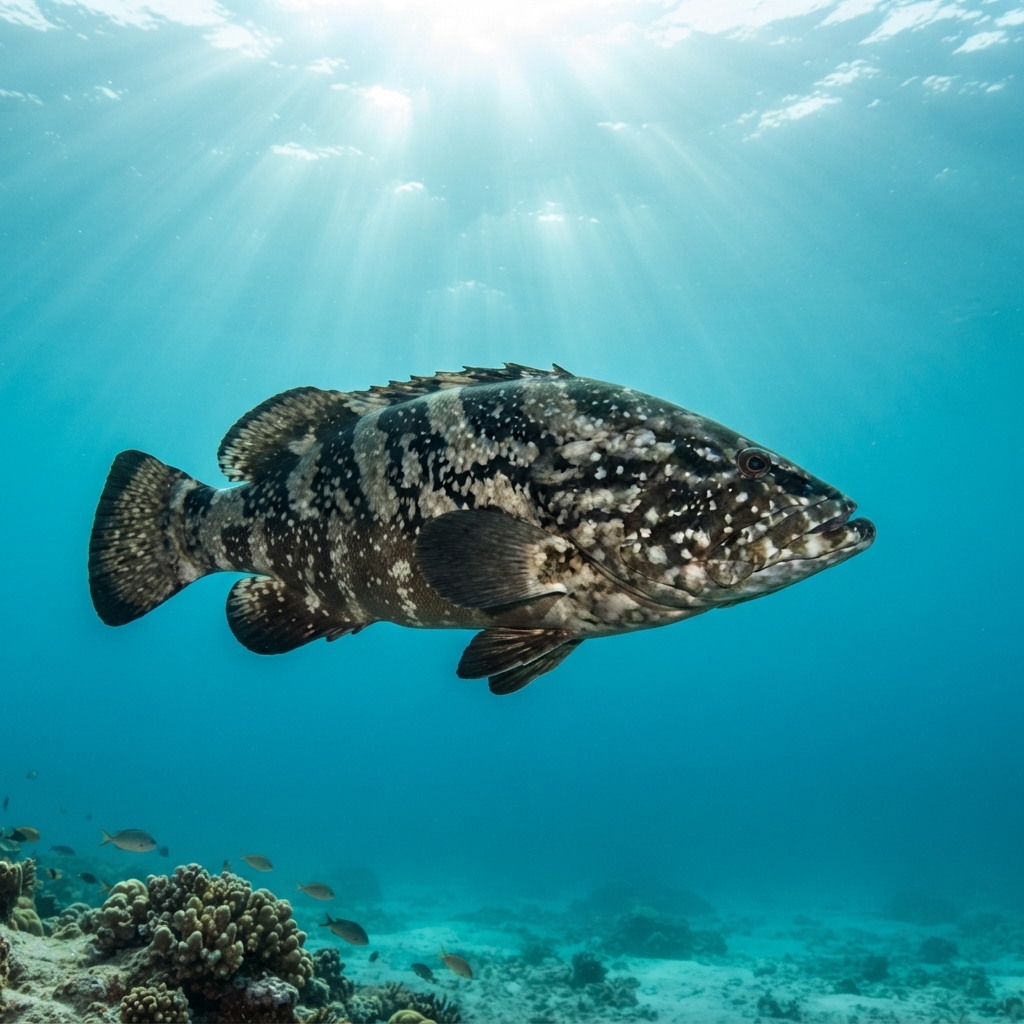
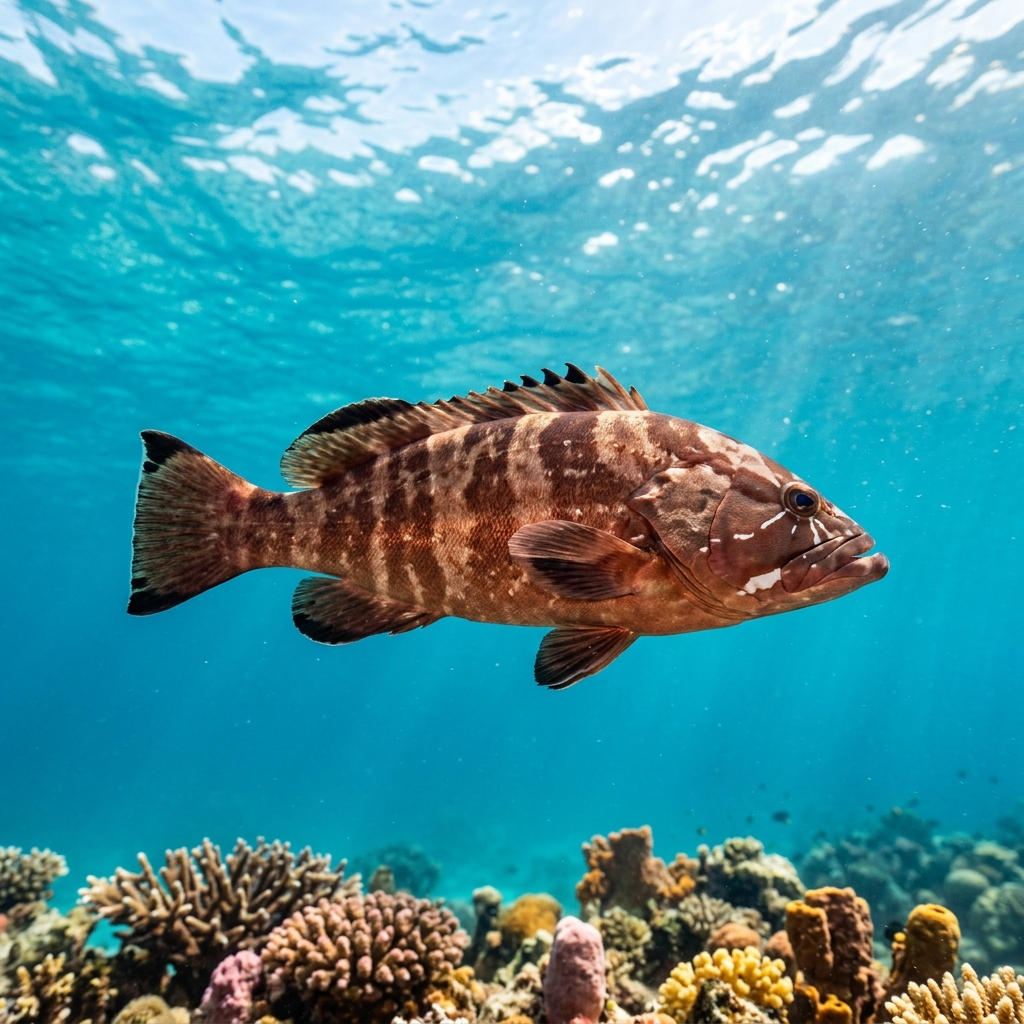
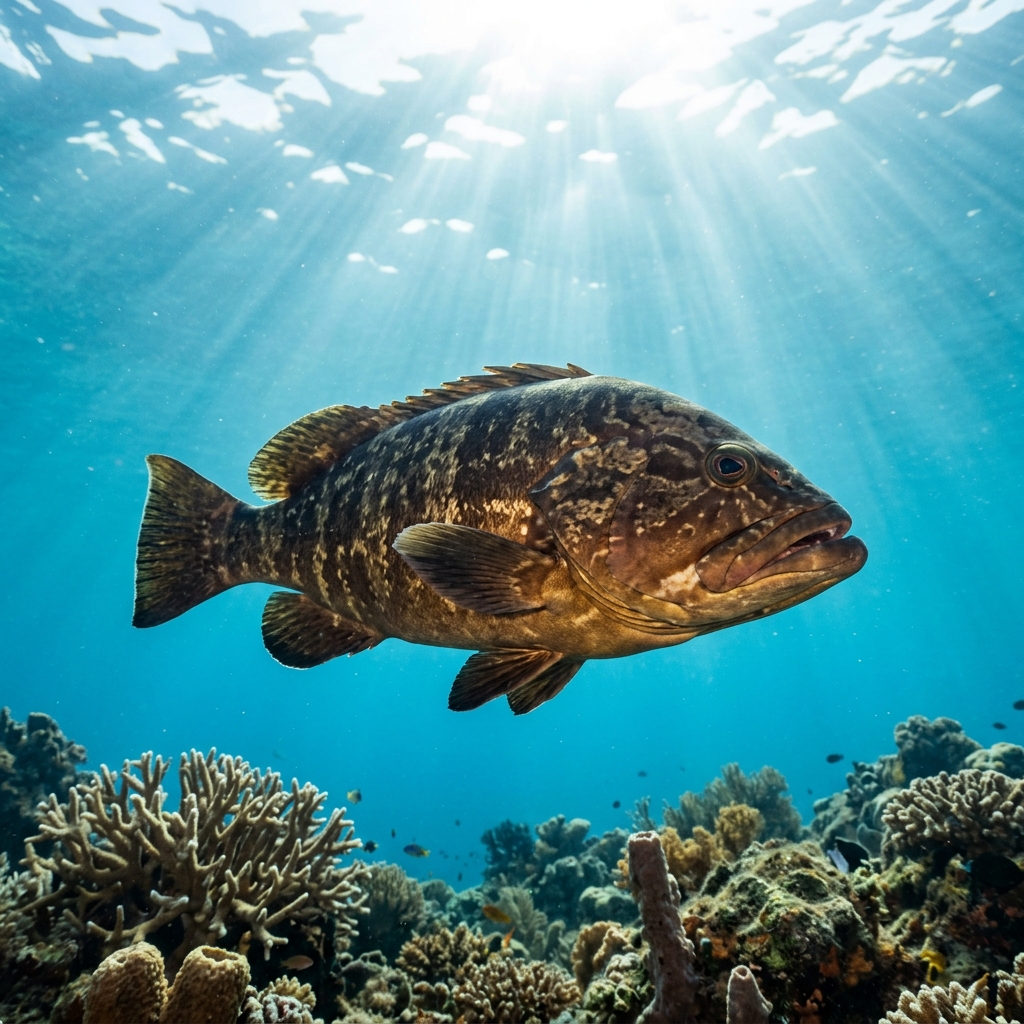
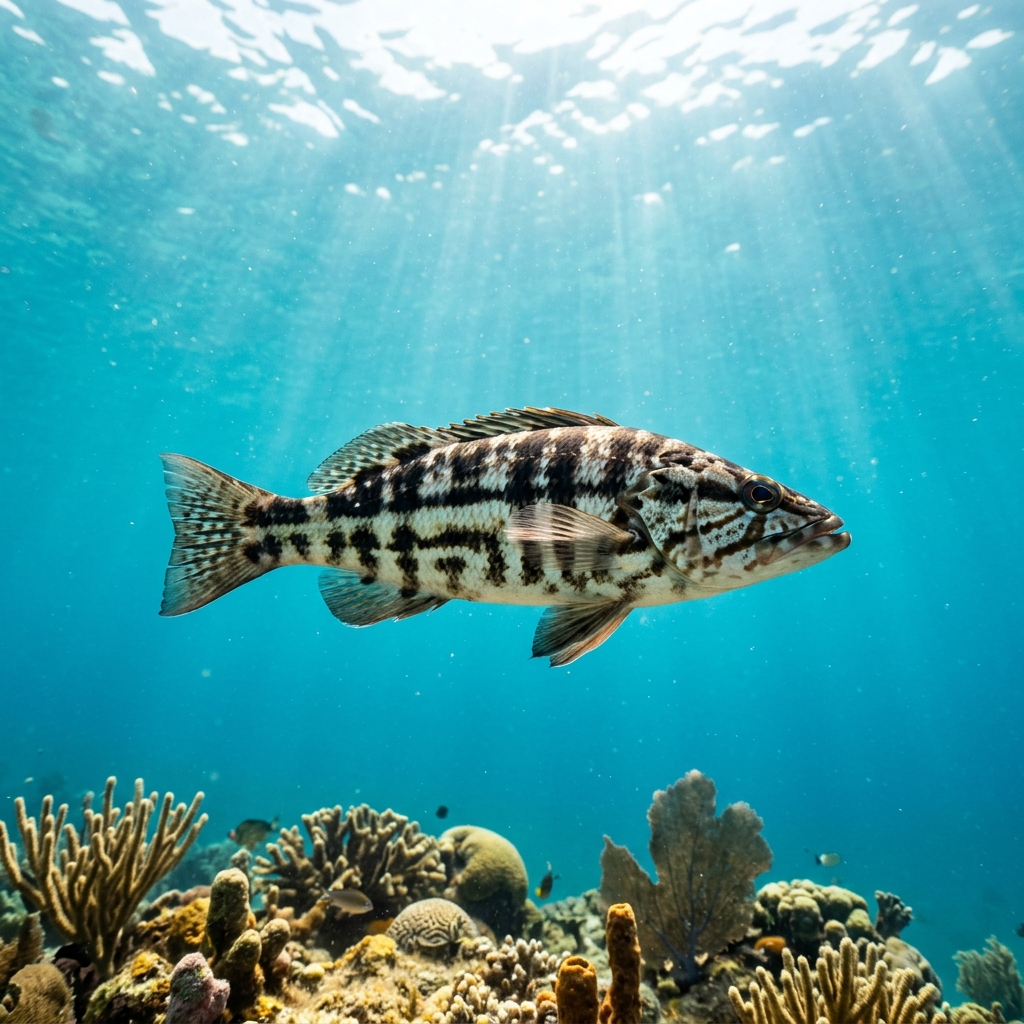
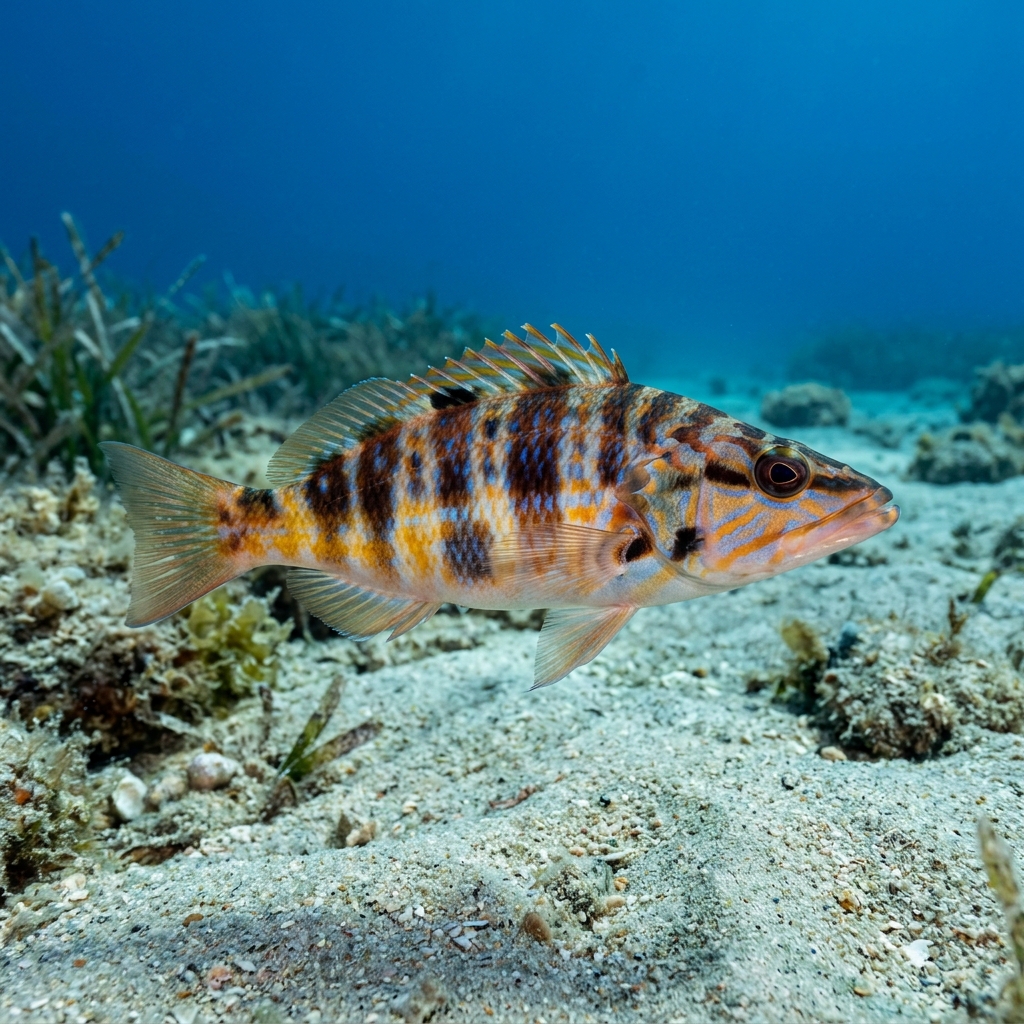
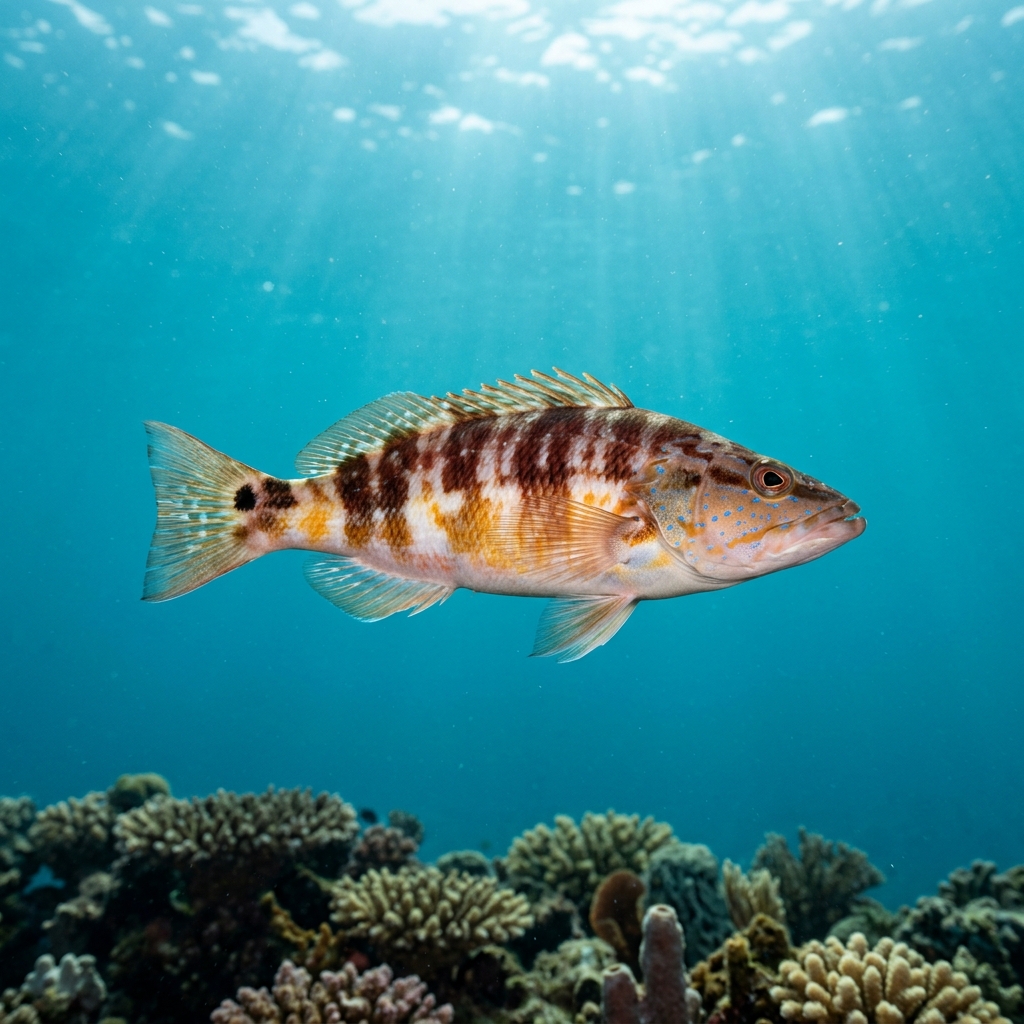
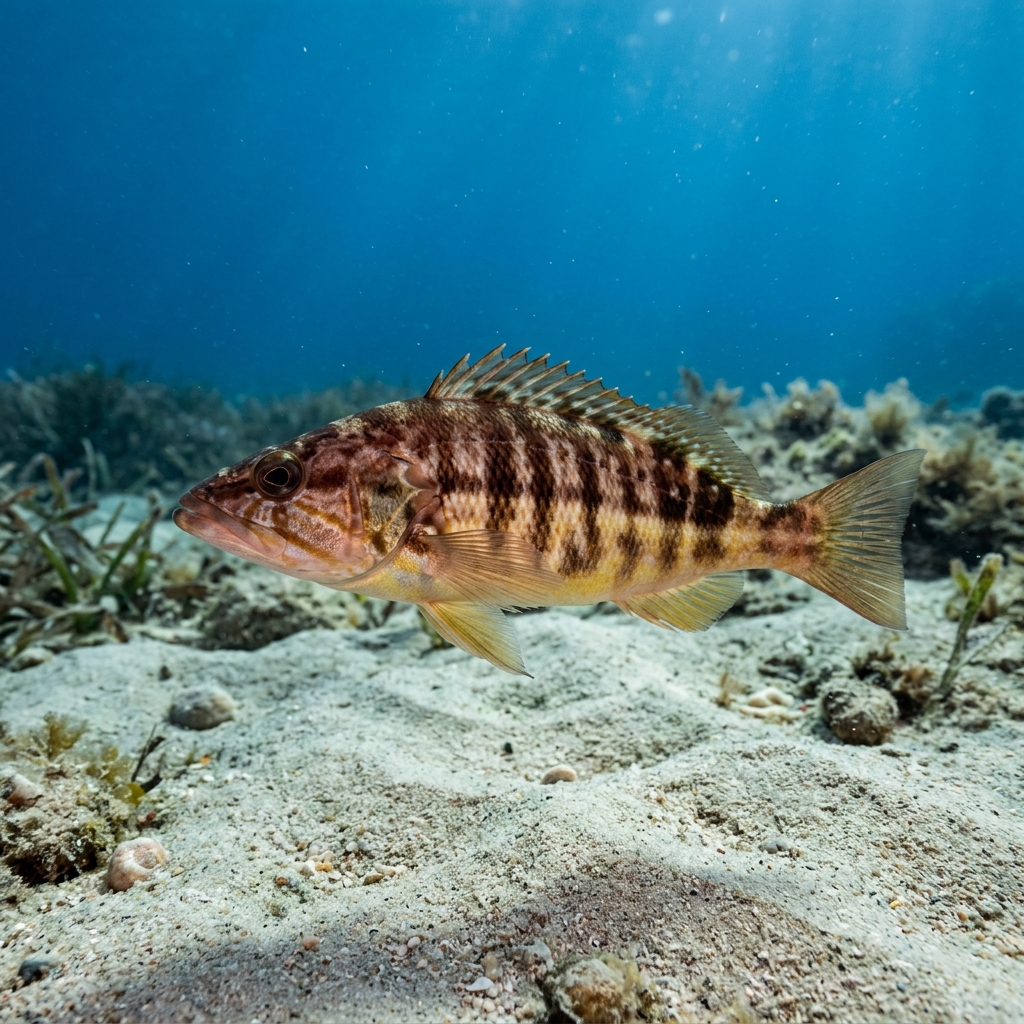
A stocky, thick-bodied grouper reaching about 31cm, mottled grey-brown to olive with faint pale blue or whitish spots scattered across the body and fins. Look for the squared-off tail and heavy-set head typical of groupers, usually seen hovering close to a ledge or cave mouth rather than out in open water. The spotting is finer and less contrasty than on the flashier reef groupers, which is often the giveaway when you're trying to rule out look-alikes.
Typically found tucked against a rocky ledge, overhang, or cave entrance rather than cruising the open reef, and divers most often log it as a solitary, still presence rather than an active swimmer. It tends to hold its ground when approached slowly, making for a decent close look, though at most sites it's logged as uncommon to rare so don't expect a guaranteed sighting.
Like many groupers in the family, halfmoon groupers are protogynous hermaphrodites, meaning individuals typically start life as females and some later transition to males as they grow.
No clear seasonal pattern shows up in the sighting data, and its comfortable range of 21.5 to 28.8C spans both warmer and cooler months in its temperate range, so it's a fair year-round target wherever it's found.
Reef neighbours a diver could mistake it for. Use the identification notes above to tell them apart.
Most consistently logged on reefs in Western Australia, which accounts for the bulk of sightings, with smaller but steady populations off KwaZulu-Natal in South Africa and North Island, New Zealand. Divers looking for a reliable encounter should focus on temperate and subtropical rocky reef sites in these three regions rather than tropical coral reefs.
Mapping where Halfmoon Grouper is logged…
Western Australia is the most reliable region, with further sightings off KwaZulu-Natal in South Africa and North Island in New Zealand. It favours rocky reef ledges and overhangs in these temperate to subtropical zones.
There's no strong seasonal signal in the sighting data, and it tolerates a wide temperature range from 21.5 to 28.8C, so it's reasonable to look for it any time of year at the sites where it occurs.
Look for a stocky grey-brown grouper around 31cm long with faint pale blue spotting and a squared tail, usually sitting still near a ledge or crevice rather than swimming in open water.
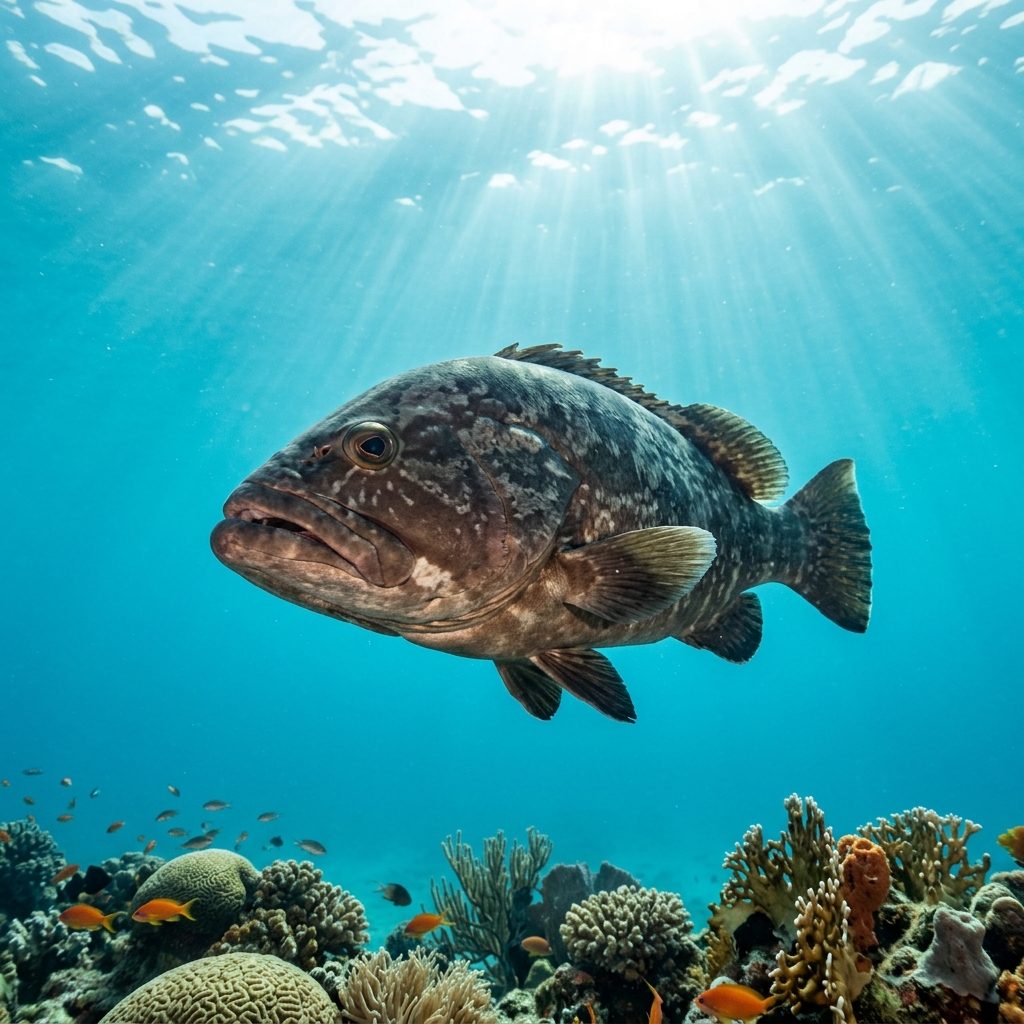
They're a small grouper by family standards, typically reaching around 31cm, so don't expect the bulk of a potato bass or goliath grouper.
No, they pose no threat to divers and generally hold their position on the reef rather than reacting defensively when approached calmly.
Yes, like several relatives in the grouper family it's a protogynous hermaphrodite, starting life as female with some individuals later becoming male as they mature.
Site and sighting data is aggregated from diver logs, iNaturalist and GBIF. For taxonomy and conservation status:
Blacktip Grouper
2,726 sites