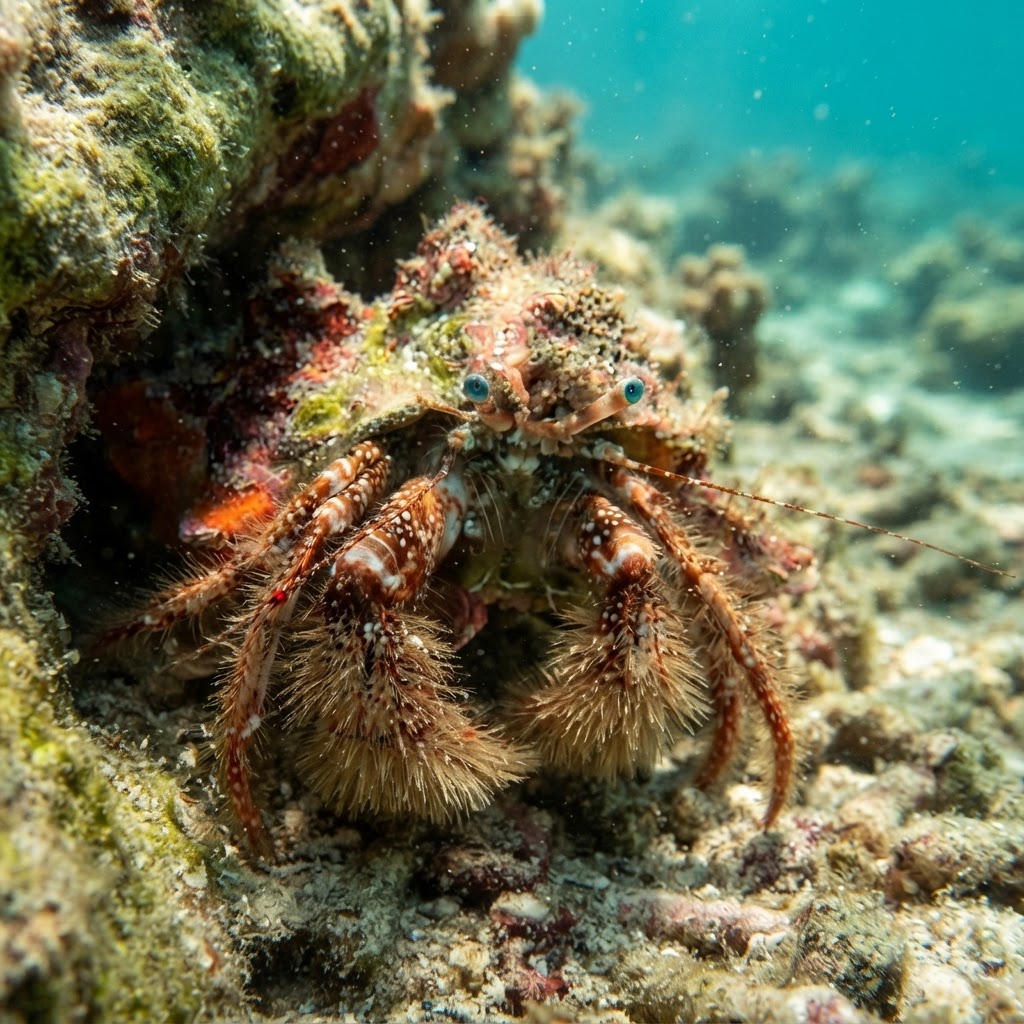
Pagurus cuanensis
Spot this bristly little hermit crab on night dives in Tuscany and the French Riviera, in mild 15-21C water, year-round.
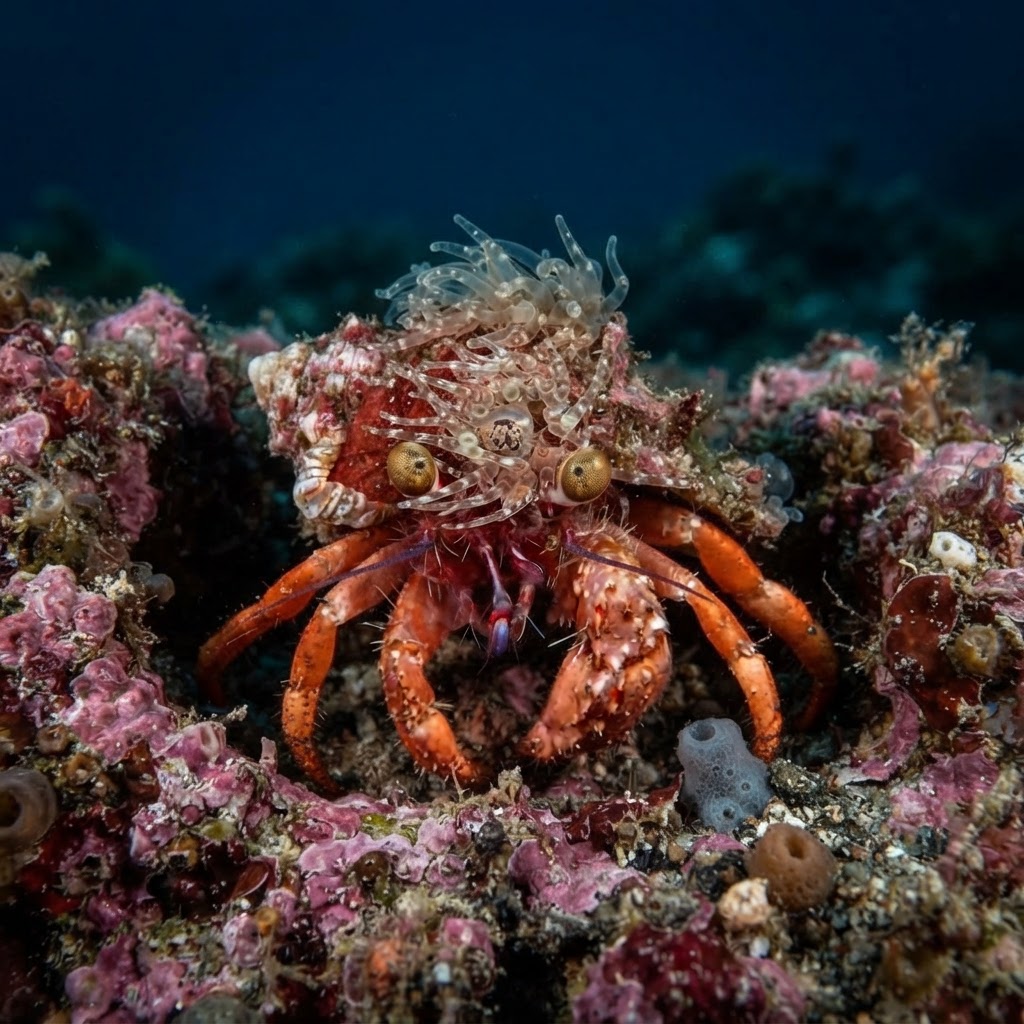
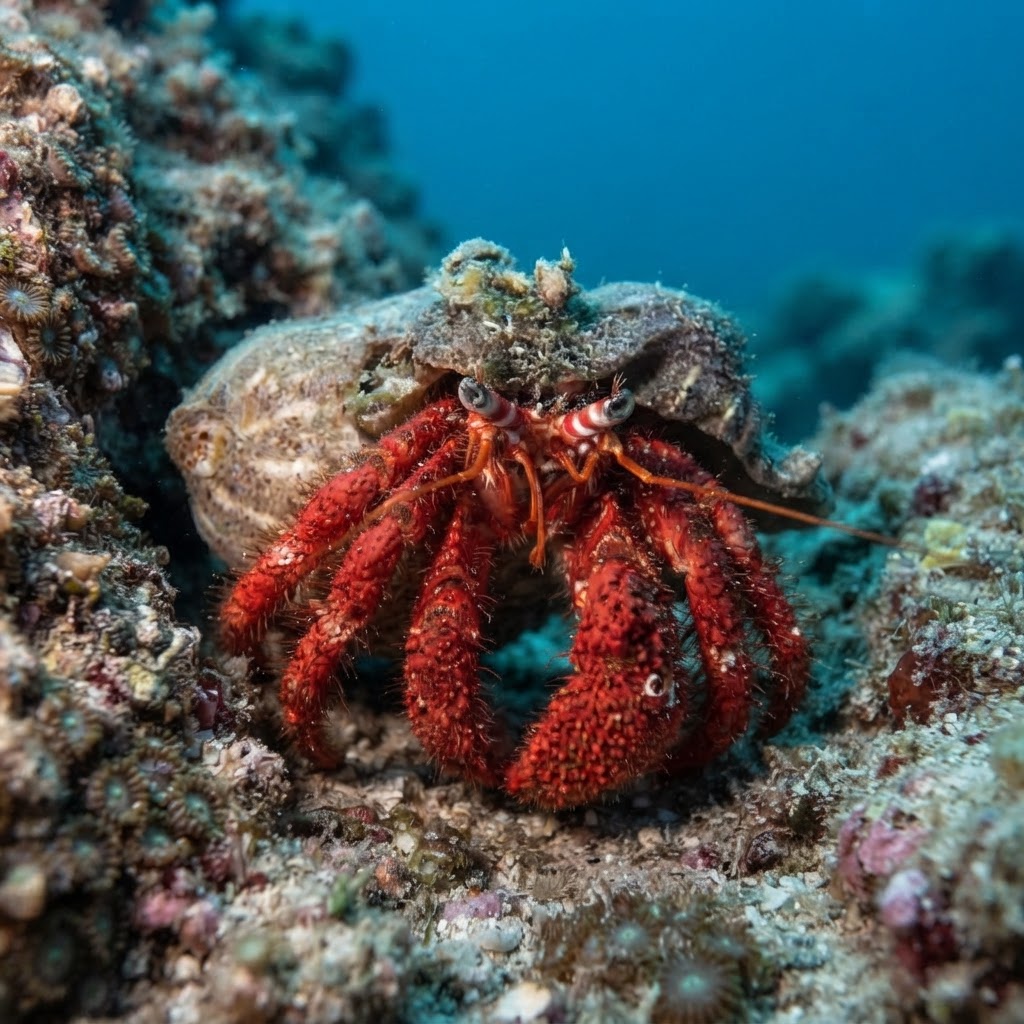
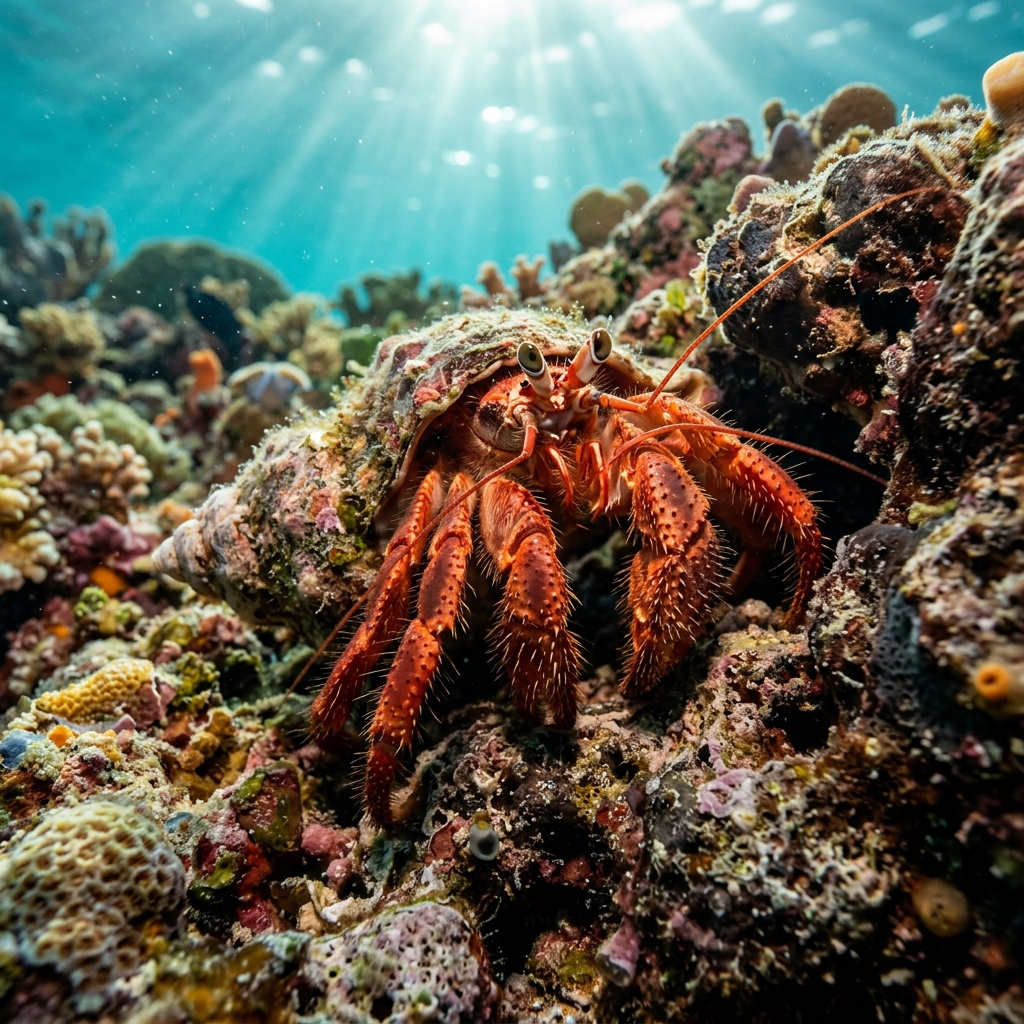
Small hermit crab recognised by the dense bristles (setae) covering its walking legs and claws, giving it a fuzzy, unkempt look rather than a smooth shell. It tucks into a salvaged spiral snail shell, so what you actually see is a stubby, hairy-legged crab dragging a shell across rock or sand. Eyes sit on short stalks and the claws are noticeably uneven in size, one larger than the other.
Found ambling slowly over rock, rubble and sandy patches on the seabed, usually alone and unhurried. It tends to withdraw into its borrowed shell if a torch beam or hand gets too close, then re-emerges once left alone, making it an easy but patient macro subject rather than something that flees the scene.
Like all hermit crabs it doesn't grow its own shell, so as it grows it has to find and move into a larger empty one, meaning the exact shell shape you see on any given crab is really just whatever spare housing it found nearby.
No clear seasonal pattern shows up in the sightings, and it sits comfortably in 15.4 to 21.4C water, so divers log it across the year rather than in one particular month.
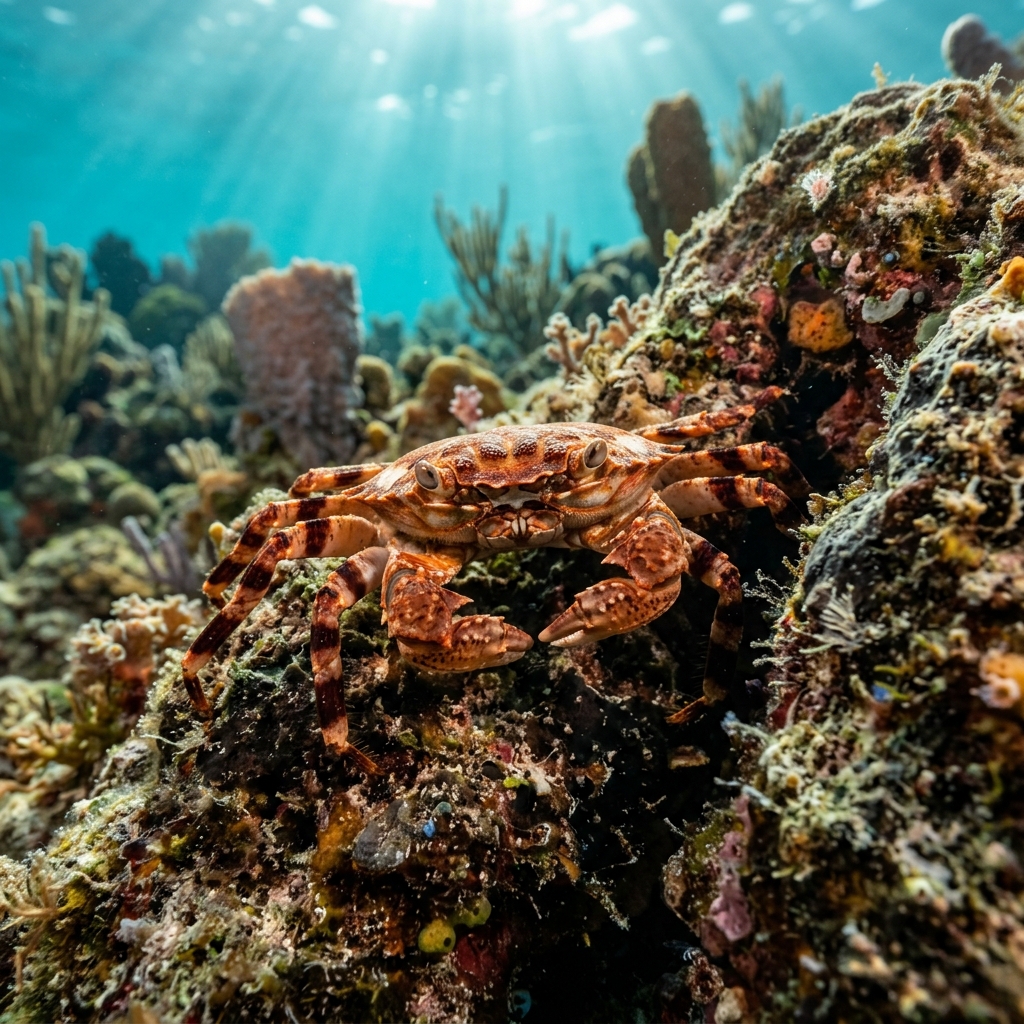
Reef neighbours a diver could mistake it for. Use the identification notes above to tell them apart.
Most reliably logged in Tuscany and along the French Riviera and Provence coast, with further sightings in Corsica and Catalonia. Smaller but consistent numbers turn up in South Africa's Western Cape and around Lanzarote in the Canary Islands, so it's really a Mediterranean specialist with an Atlantic fringe.
Mapping where Atlantic Hairy Hermit Crab is logged…
Tuscany and the French Riviera and Provence are the strongest areas, with further sightings in Corsica, Catalonia, South Africa's Western Cape and Lanzarote.
There's no strong season in the sighting data, and it tolerates a fairly wide 15.4 to 21.4C range, so divers spot it at any time of year.
Look for a small crab with visibly bristled, fuzzy-looking legs dragging a spiral snail shell across rock or sand, with one claw distinctly larger than the other.
No, they pose no threat to divers and simply retreat into their shell if disturbed.
Exact size figures aren't well documented for this species, but like most hermit crabs in its family it stays small, easily overlooked unless you're scanning rock and rubble closely.
Site and sighting data is aggregated from diver logs, iNaturalist and GBIF. For taxonomy and conservation status:
European Green Crab
2,469 sites