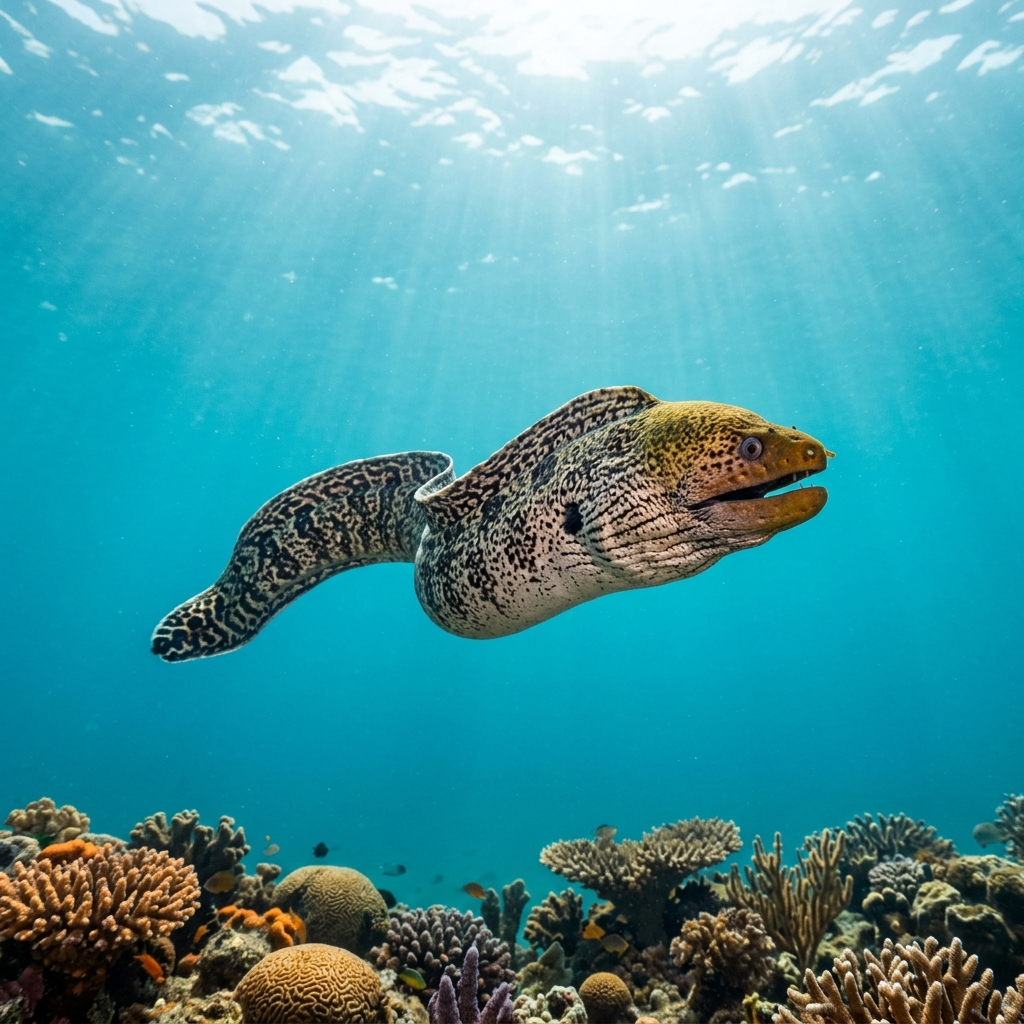
Gymnothorax undulatus
Spot the undulated moray on tropical reefs from the Maldives to Hawaii. Recognised by its bold wavy markings in warm 23-29 °C waters year-round.
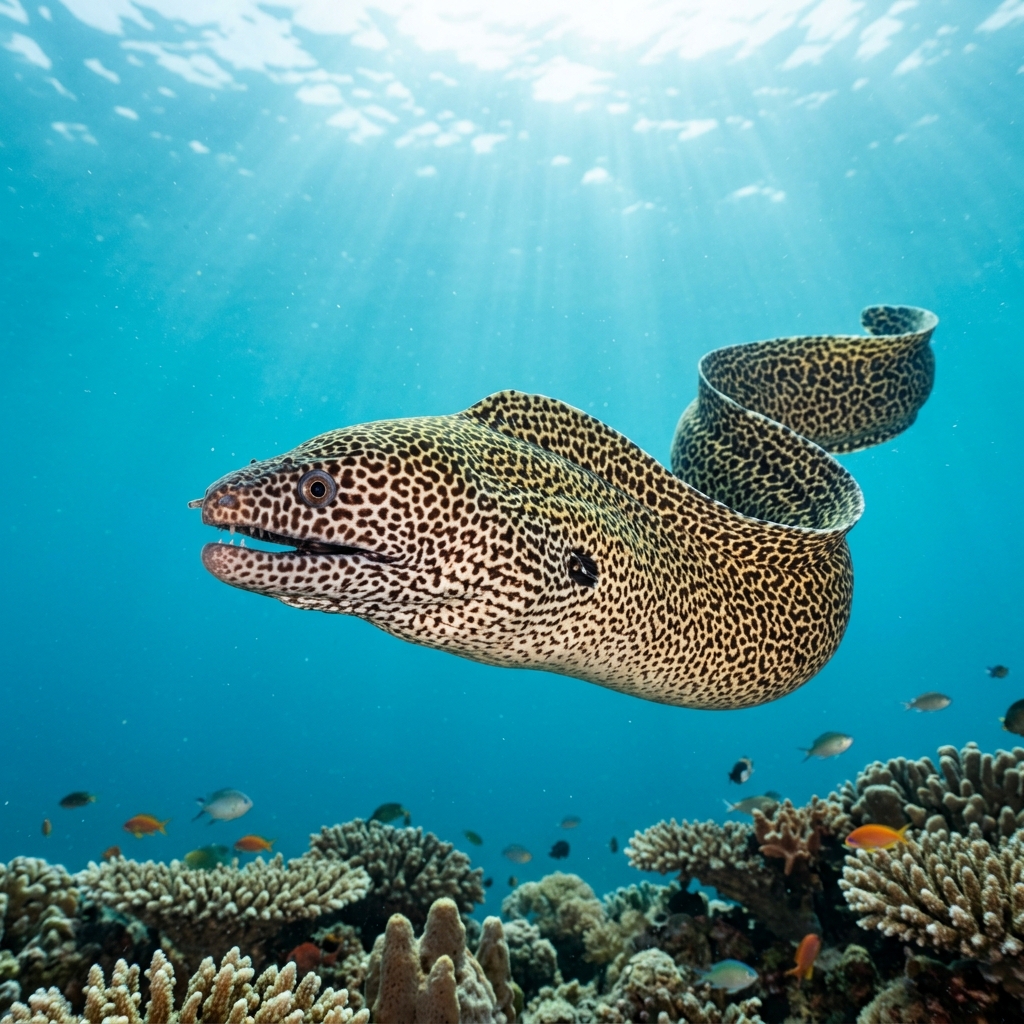
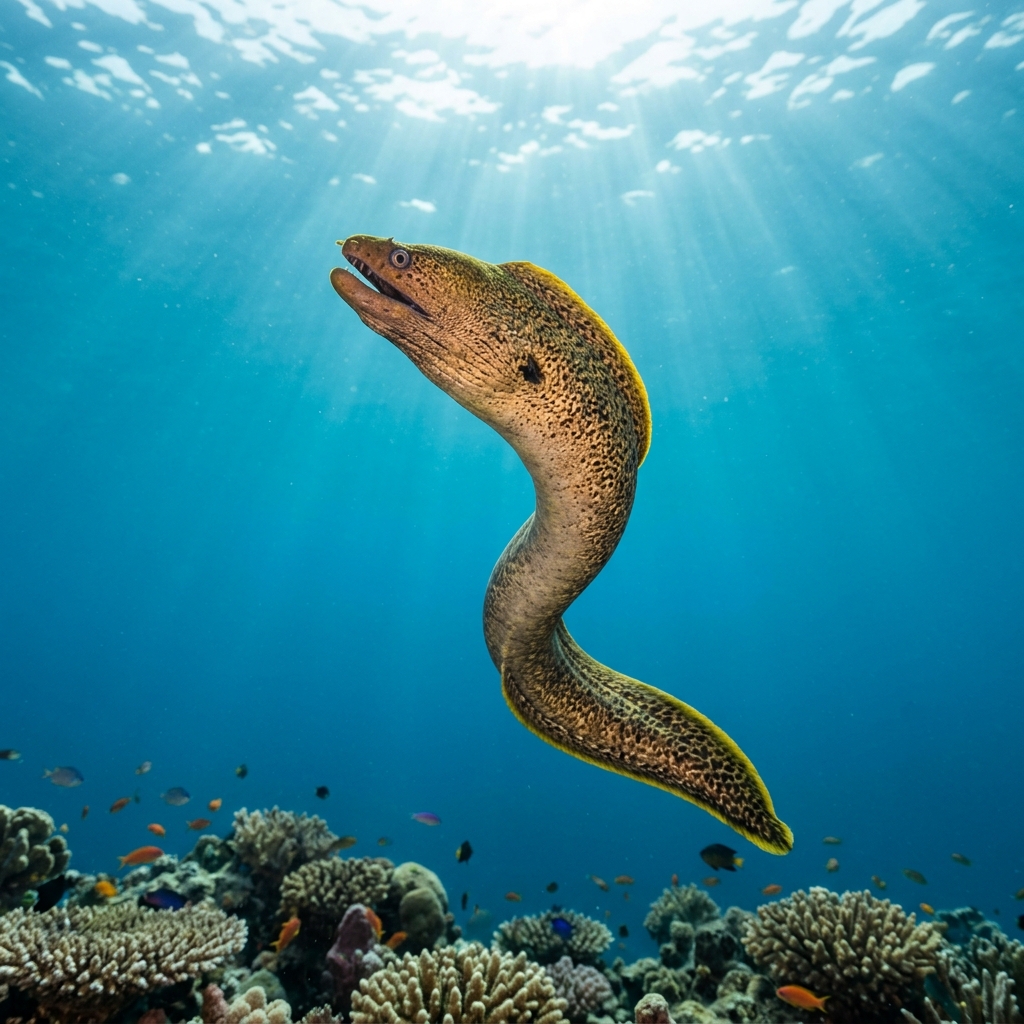
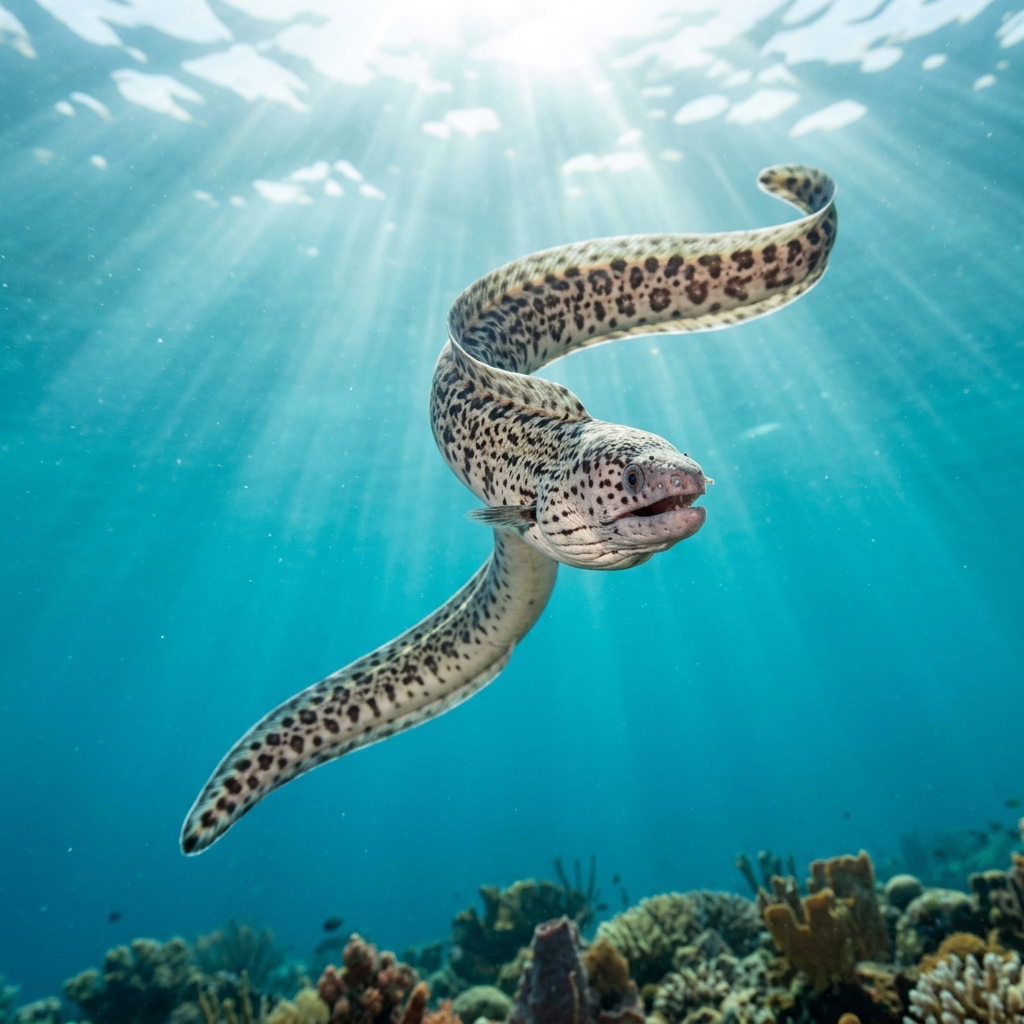
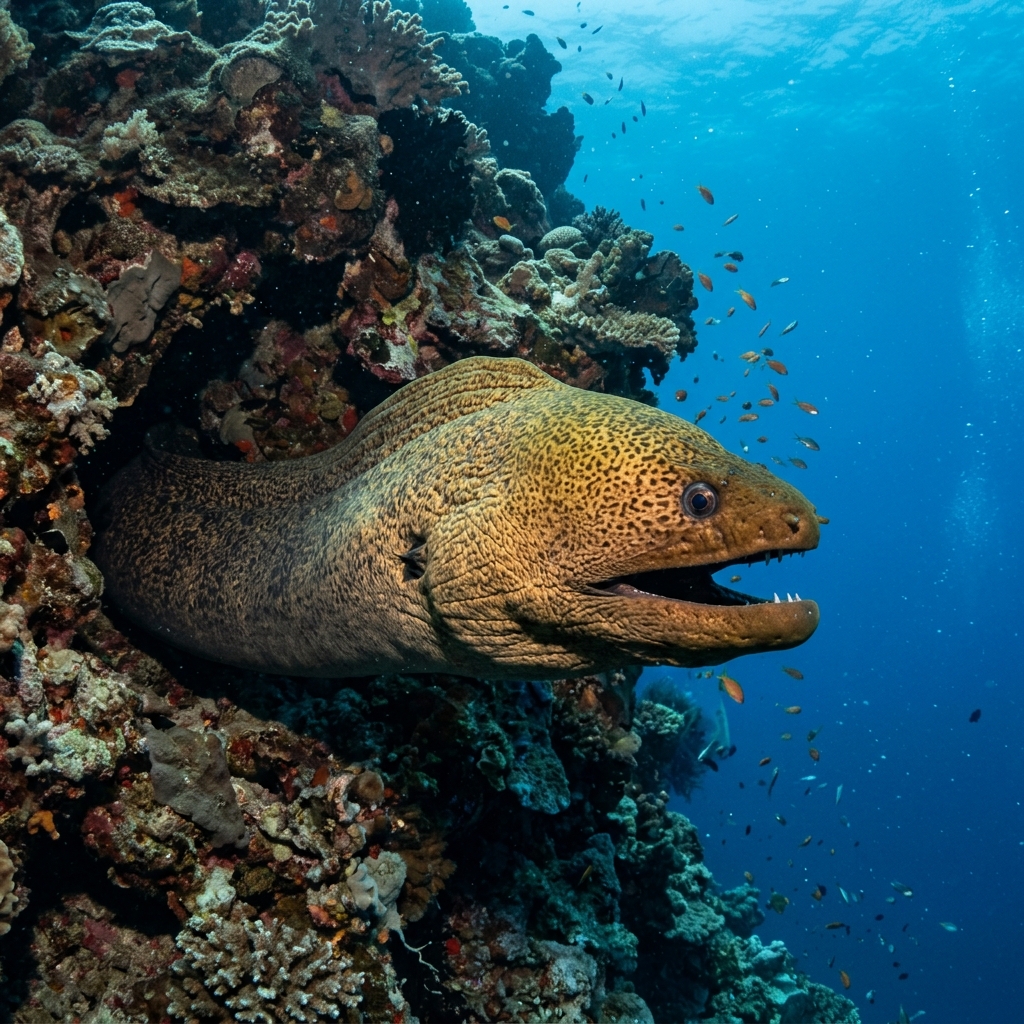
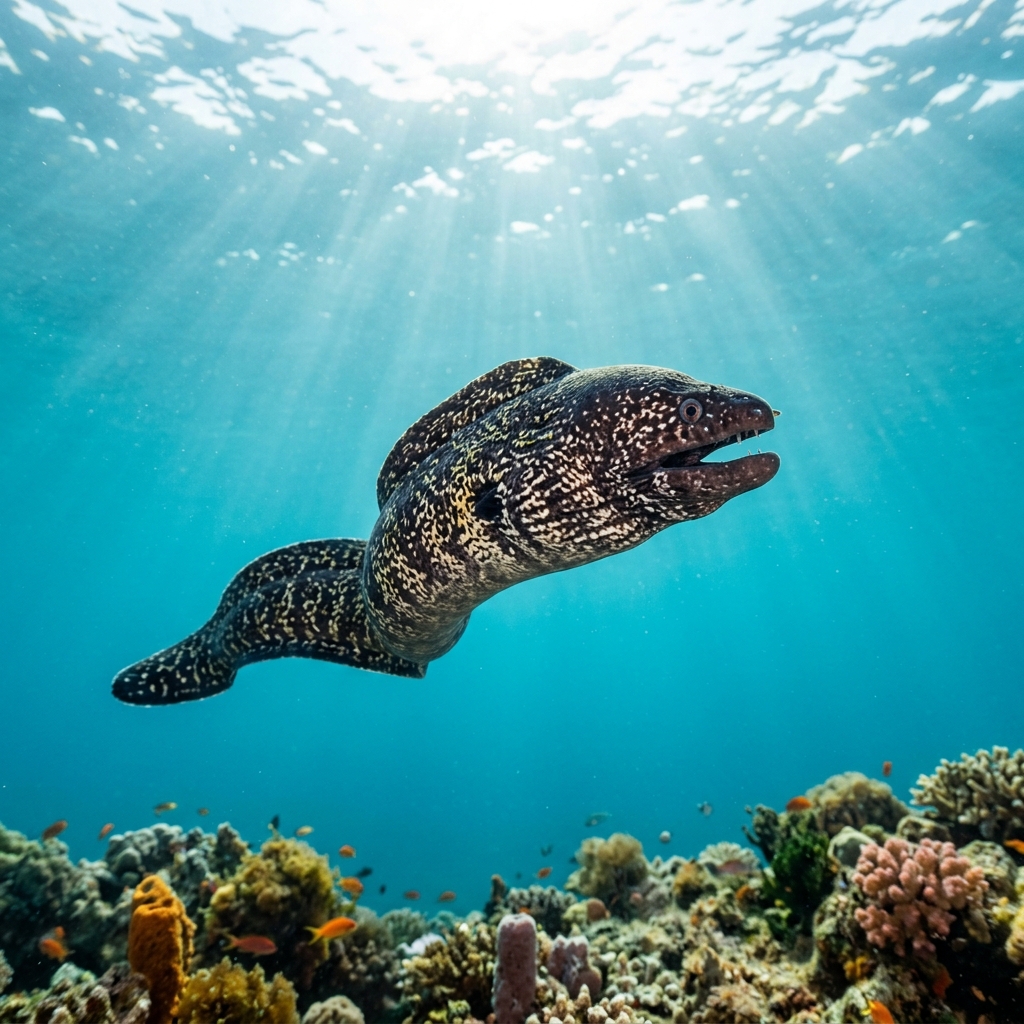
Bold, irregular wavy (undulating) brown and pale markings cover the entire body from head to tail, giving it a strongly marbled appearance that is distinctive among morays in the Indo-Pacific and Red Sea. The head is relatively slender and the jaws are noticeably narrow compared with bulkier species like the giant moray. Underwater, the contrast between the dark brown reticulations and the pale interspaces is the key feature to lock onto, even when only the head is poking from a crevice.
Typically encountered with the head projecting from a coral or rock crevice, rhythmically opening and closing the mouth to pass water over its gills, not a threat display. During the day it rarely moves far from its den, but at dusk and into the night it becomes more active, hunting across the reef. Most individuals are tolerant of slow, calm divers and will hold position if you approach without sudden movements.
Like all morays, the undulated moray has a second set of jaws inside its throat (pharyngeal jaws) that shoot forward to grip prey, an adaptation that lets it swallow fish without the suction that other reef predators rely on in confined spaces.
Present year-round wherever water temperatures sit in the 23-29 °C range, which describes virtually every tropical reef where it occurs. There is no concentrated season recorded in the data, so timing your dive around site conditions or visibility rather than a specific month makes most sense.
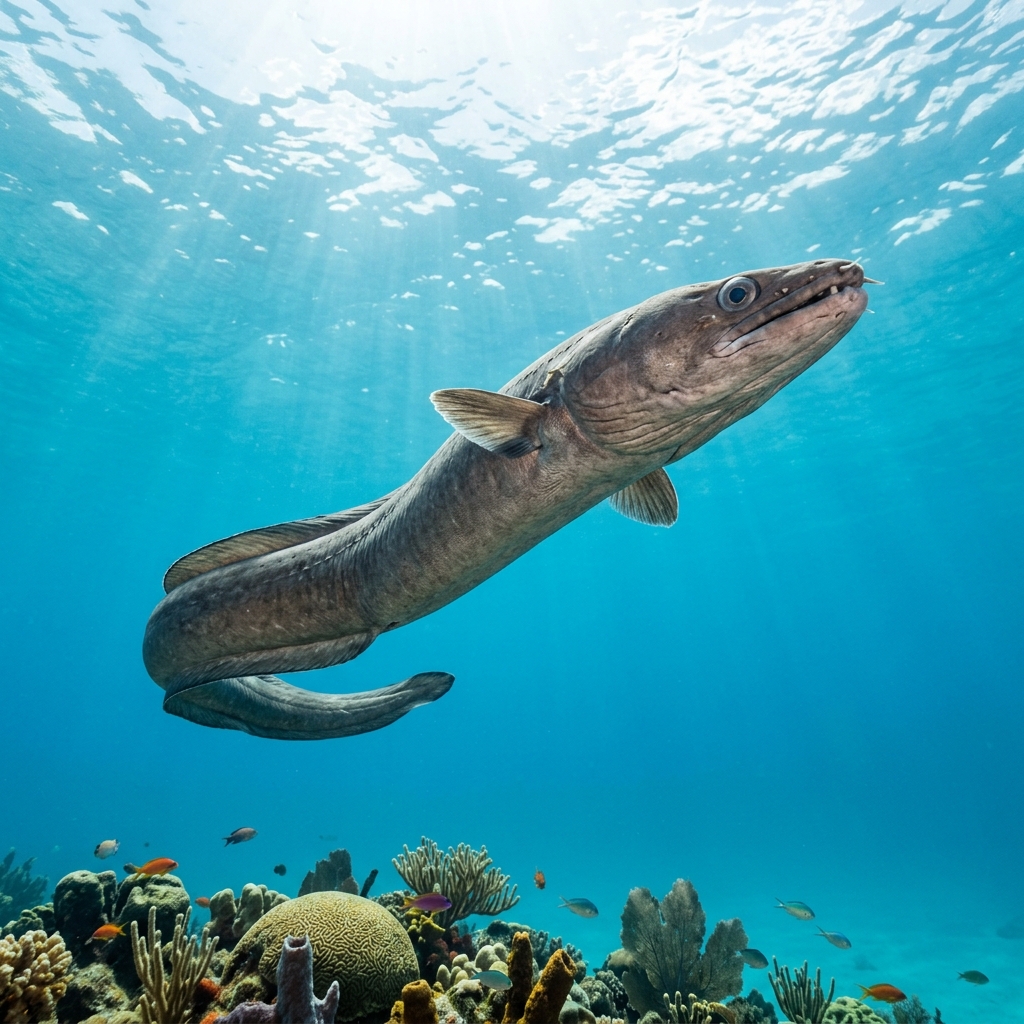
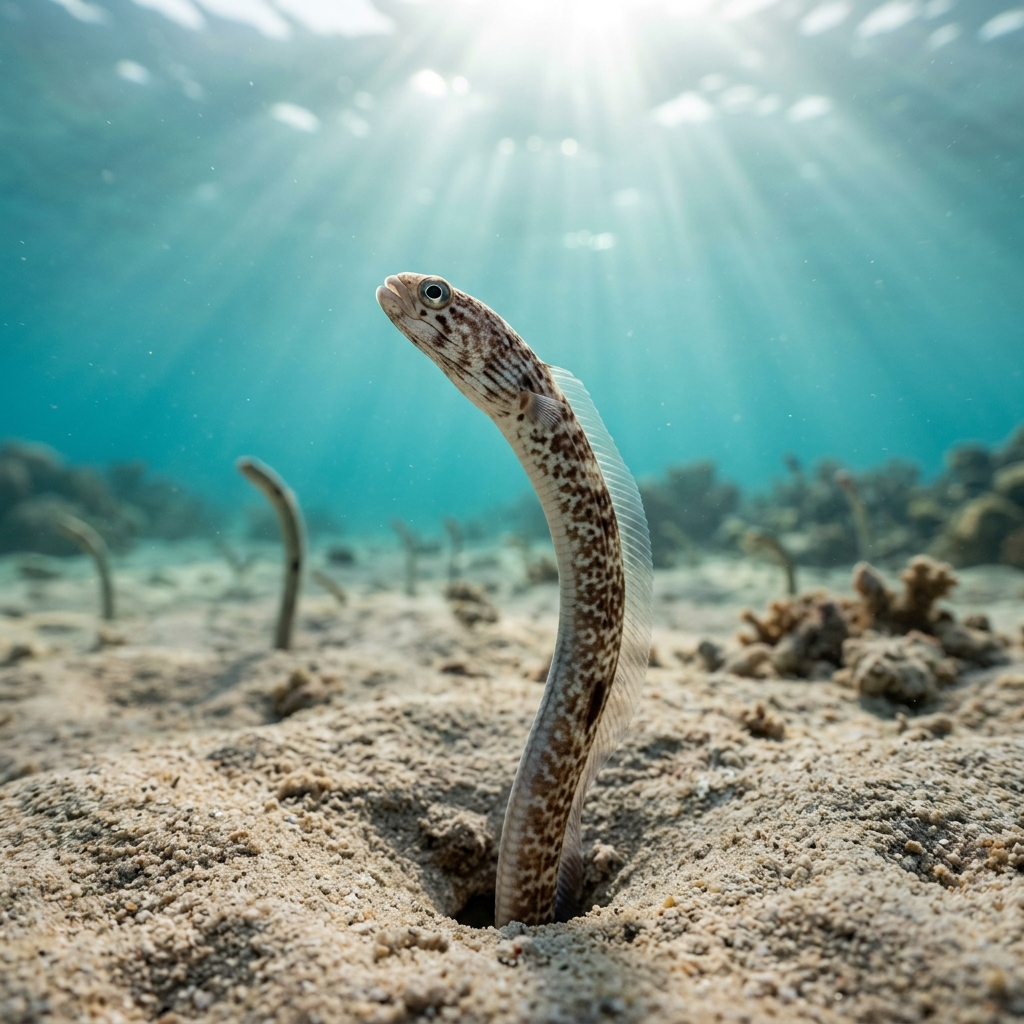
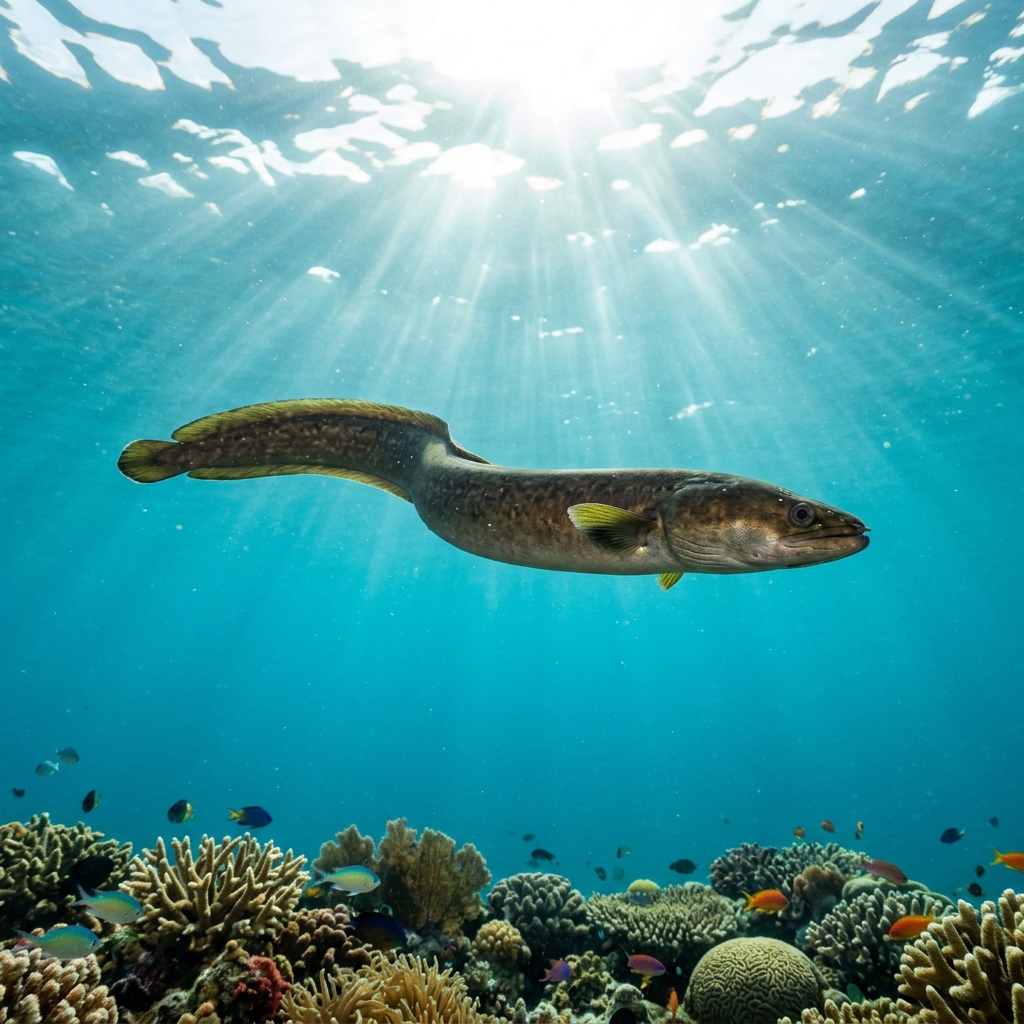
Reef neighbours a diver could mistake it for. Use the identification notes above to tell them apart.
Most commonly logged in the Maldives, particularly around the Male and Ari Atolls, making it one of the standout reef eel destinations for this species. Strong populations are also recorded in Muscat (Oman), Hawaii, and throughout the Egyptian Red Sea around Sharm el Sheikh. The United Arab Emirates, Jordan, Israel, and Zanzibar round out a spread that covers the wider Indo-Pacific and Red Sea reef systems.
Mapping where Undulated Moray is logged…
The most reliable sightings come from the Maldives, especially Male and Ari Atolls, and from Muscat in Oman. Hawaii, the Egyptian Red Sea around Sharm el Sheikh, Zanzibar, and the reefs of Jordan and Israel are all solid options. The species is widely distributed across the Indo-Pacific and Red Sea.
Year-round diving works well for this species. It is comfortable in water temperatures from around 23 °C to 29 °C, which covers the full calendar year on most tropical reefs where it lives. No single season produces noticeably better sightings.
Look for a strongly marbled or wavy brown-and-pale pattern running the full length of the body, the 'undulated' name describes it well. The jaws are slender compared with the giant moray. Even when only the head is visible in a crevice, the bold contrasting reticulations make it recognisable.
No. Undulated morays are not considered dangerous and are not known to be aggressive towards divers. Like any moray, they can bite if grabbed or cornered, so keep hands away from crevices and move calmly around them.
They are nocturnal hunters that prey mainly on fish and crustaceans. The species possesses a second set of pharyngeal jaws inside the throat that shoot forward to grip struggling prey, an evolutionary solution for hunting in tight reef crevices where suction feeding would not work.
Site and sighting data is aggregated from diver logs, iNaturalist and GBIF. For taxonomy and conservation status:
Garden Eel
2,448 sites