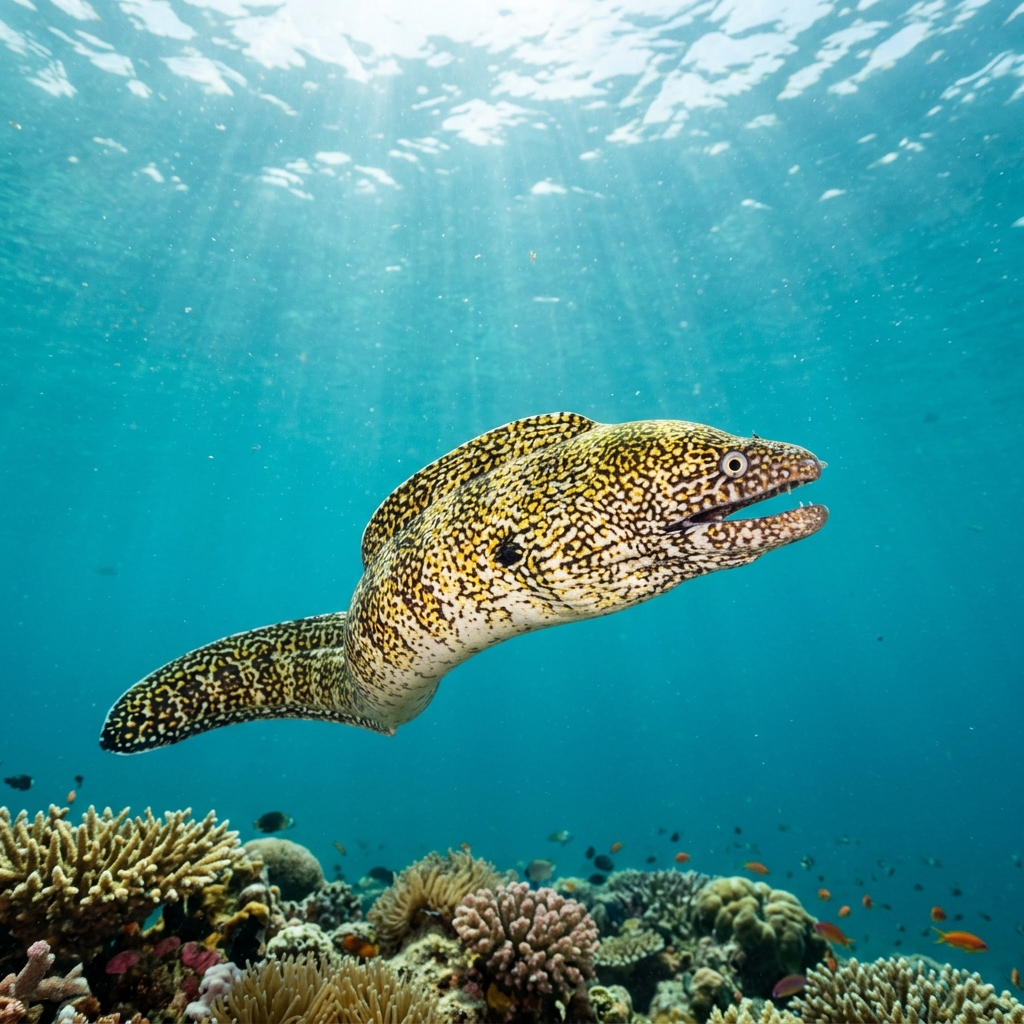
Gymnothorax nudivomer
Spot the Starry Moray in Oman, South Africa and the Red Sea. Recognised by its yellow-spotted skin and yellow interior mouth. Most active Oct, Apr.
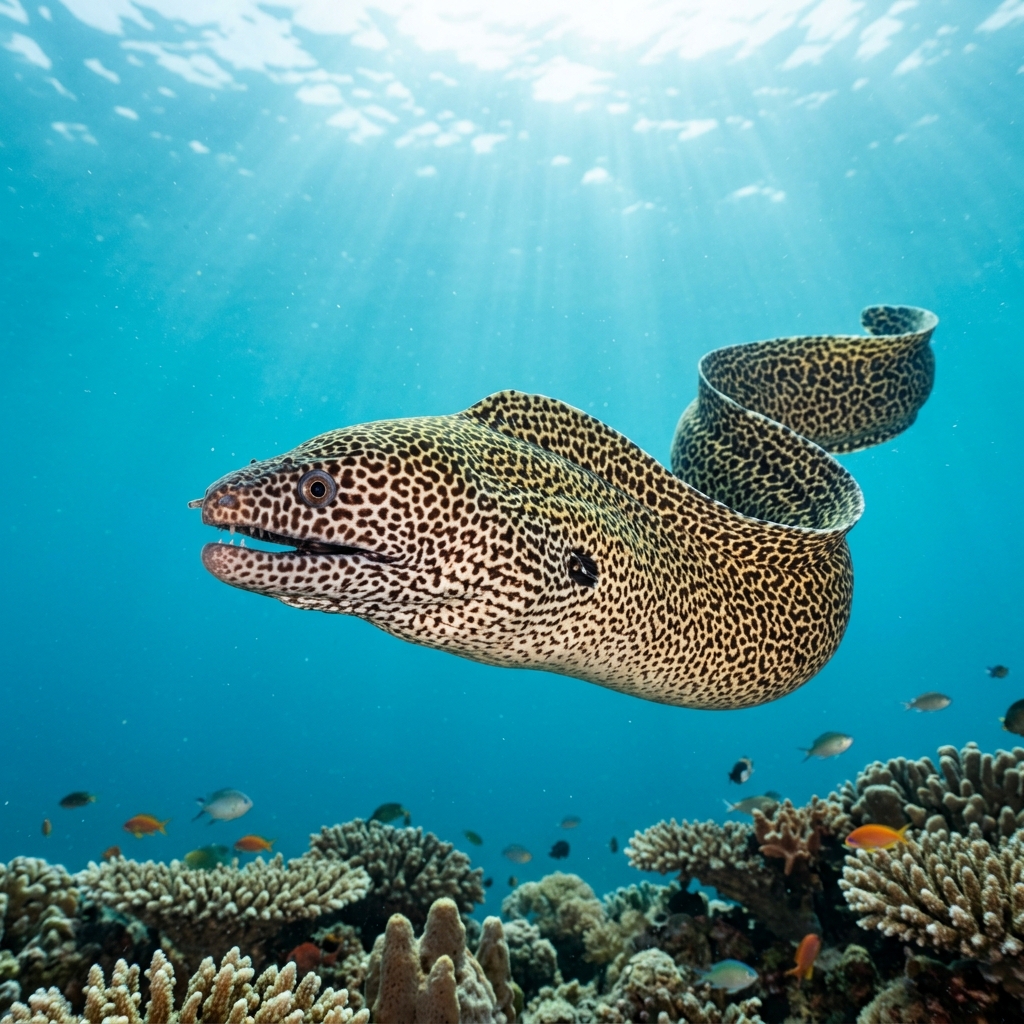
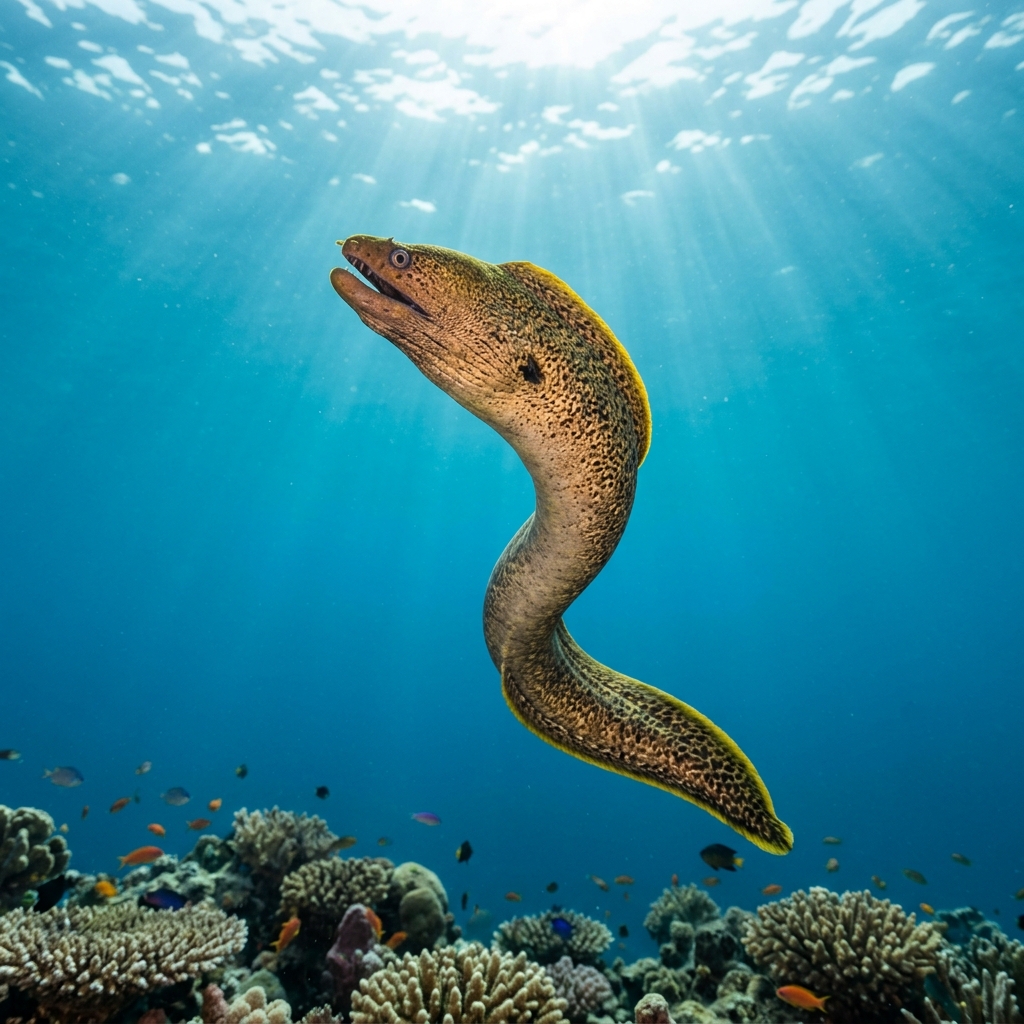
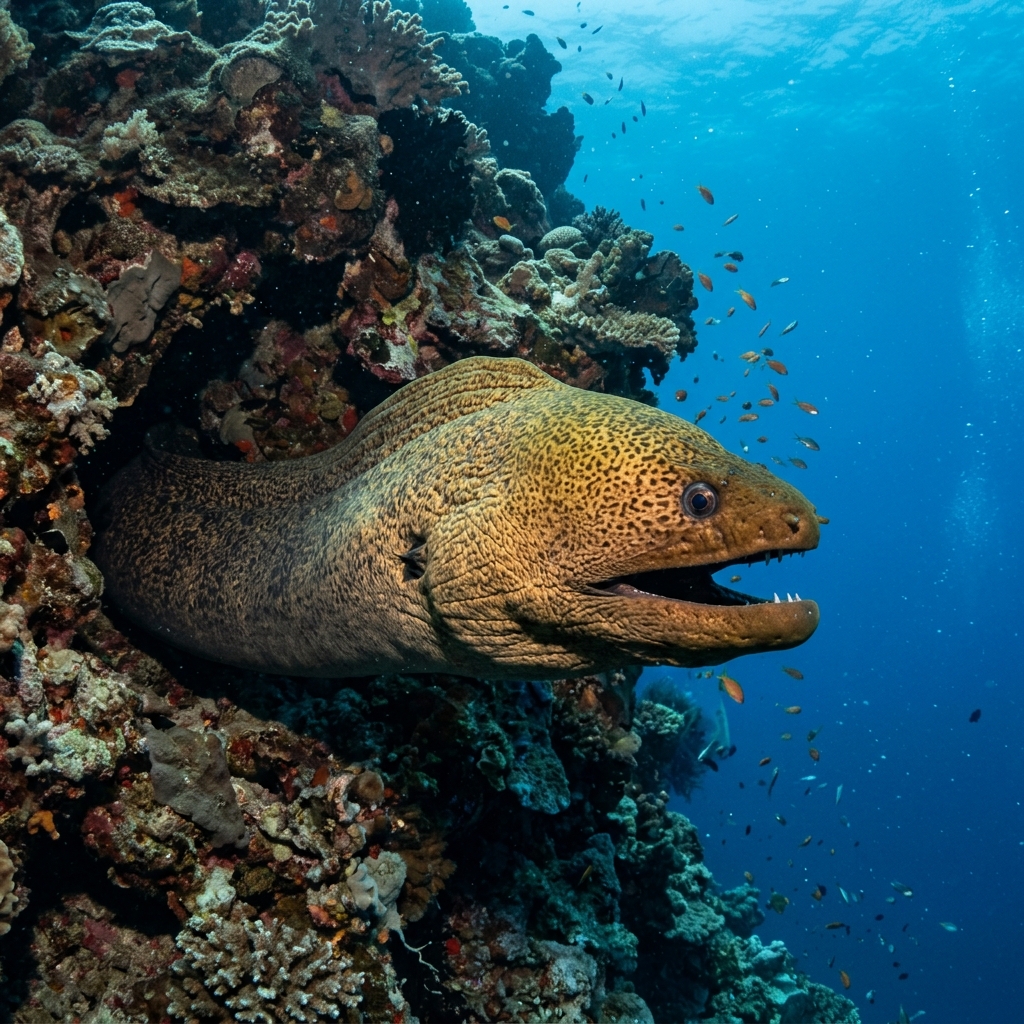
A dark brown to blackish body covered densely with small pale yellow or cream spots gives this moray its name. The most reliable field mark is the vivid yellow interior of the mouth, visible whenever it gapes to breathe. It is a large, robust eel, and the spotted pattern extends right onto the head rather than fading near the snout. On a busy reef the combination of dense spotting and that yellow oral lining sets it apart from most other morays at a glance.
Like most morays, this species spends the day wedged into reef crevices and overhangs with only its head visible, opening and closing its mouth in a steady respiratory rhythm. It is not aggressive towards divers and will typically hold its ground rather than retreat, giving patient observers a close look. Encounters are solitary; it hunts nocturnally, so daytime dives reveal a resting animal rather than an active hunter.
That bright yellow mouth lining is not just a useful ID feature; the oral mucous of Gymnothorax nudivomer contains a toxin called ichthyocrinotoxin, making it one of the few morays known to produce a mucous-borne secretion that deters predators.
Northern Hemisphere sites such as the Red Sea and Oman show sightings concentrated from October through April, so the cooler half of the year is the period most divers encounter them there. The observed temperature range of roughly 22 to 28 °C fits the Red Sea's winter and shoulder seasons well.
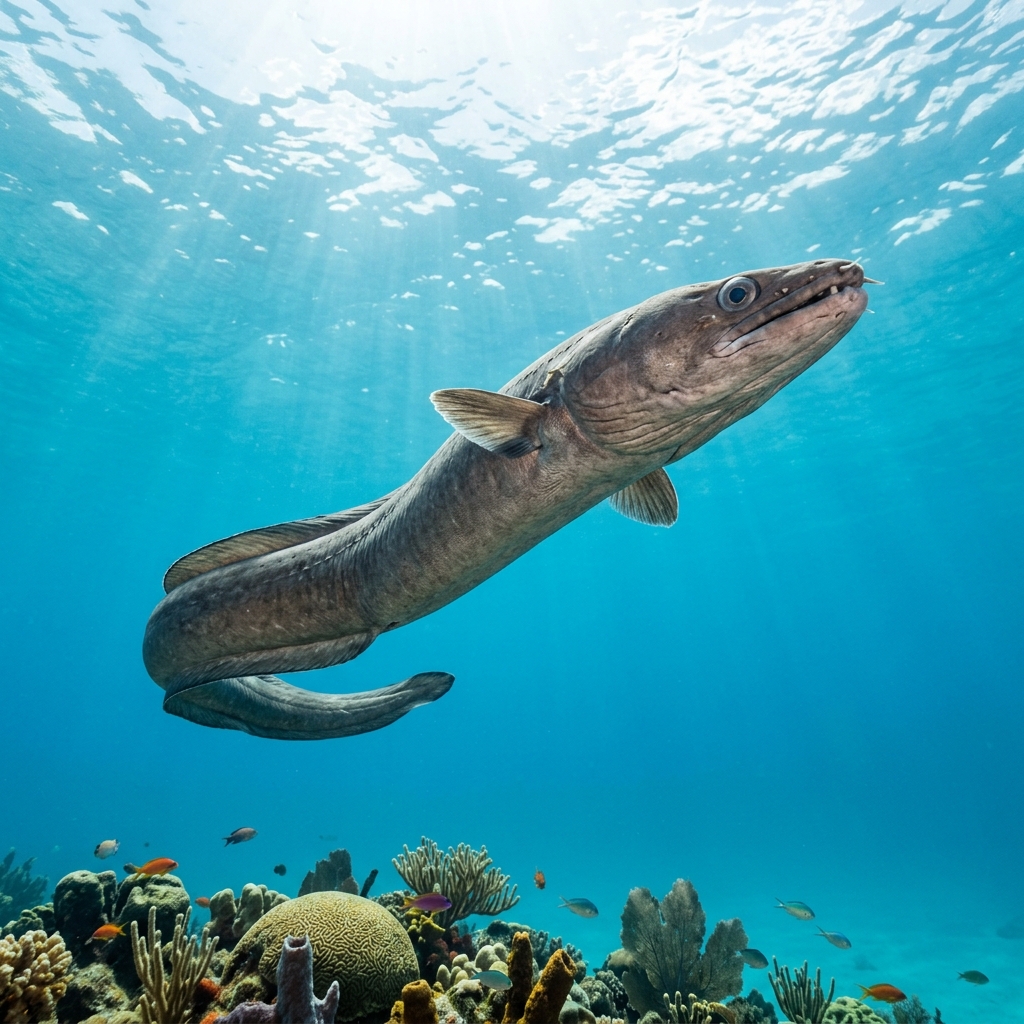
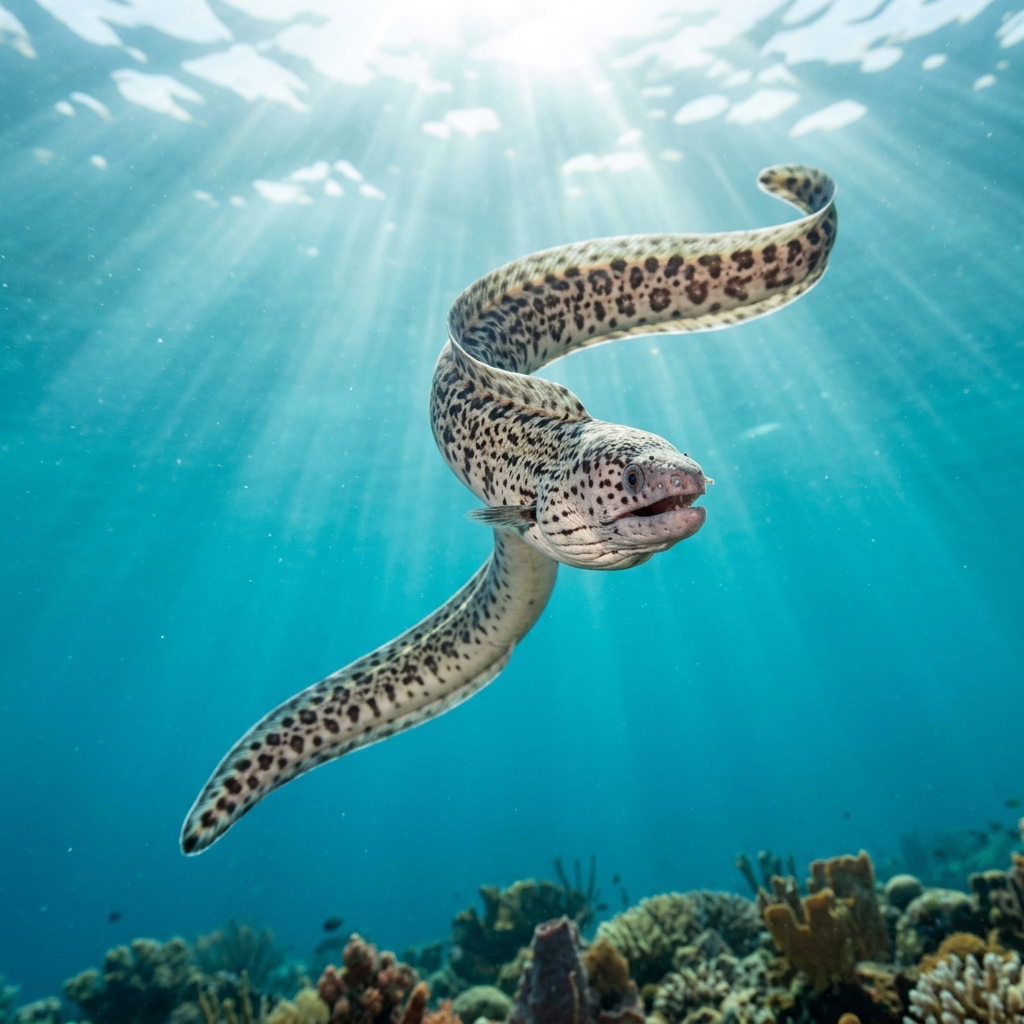
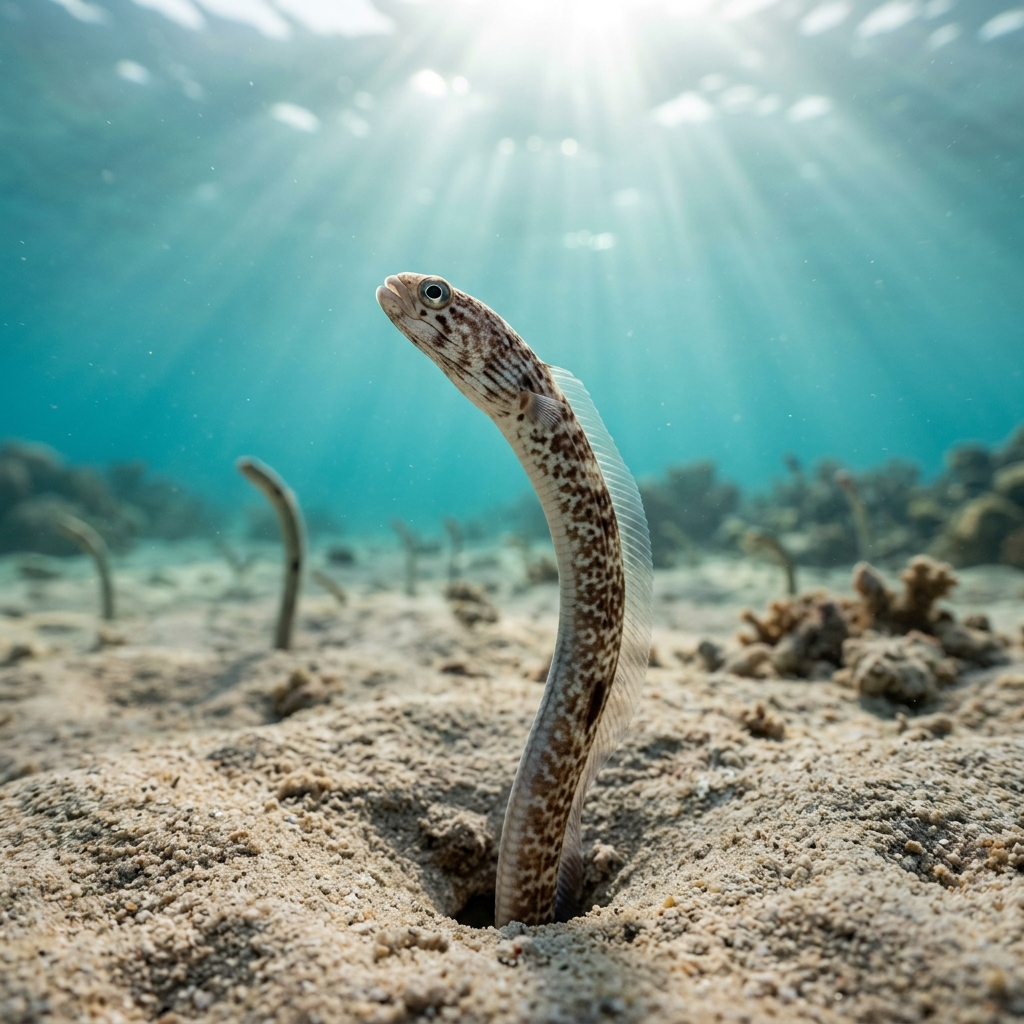
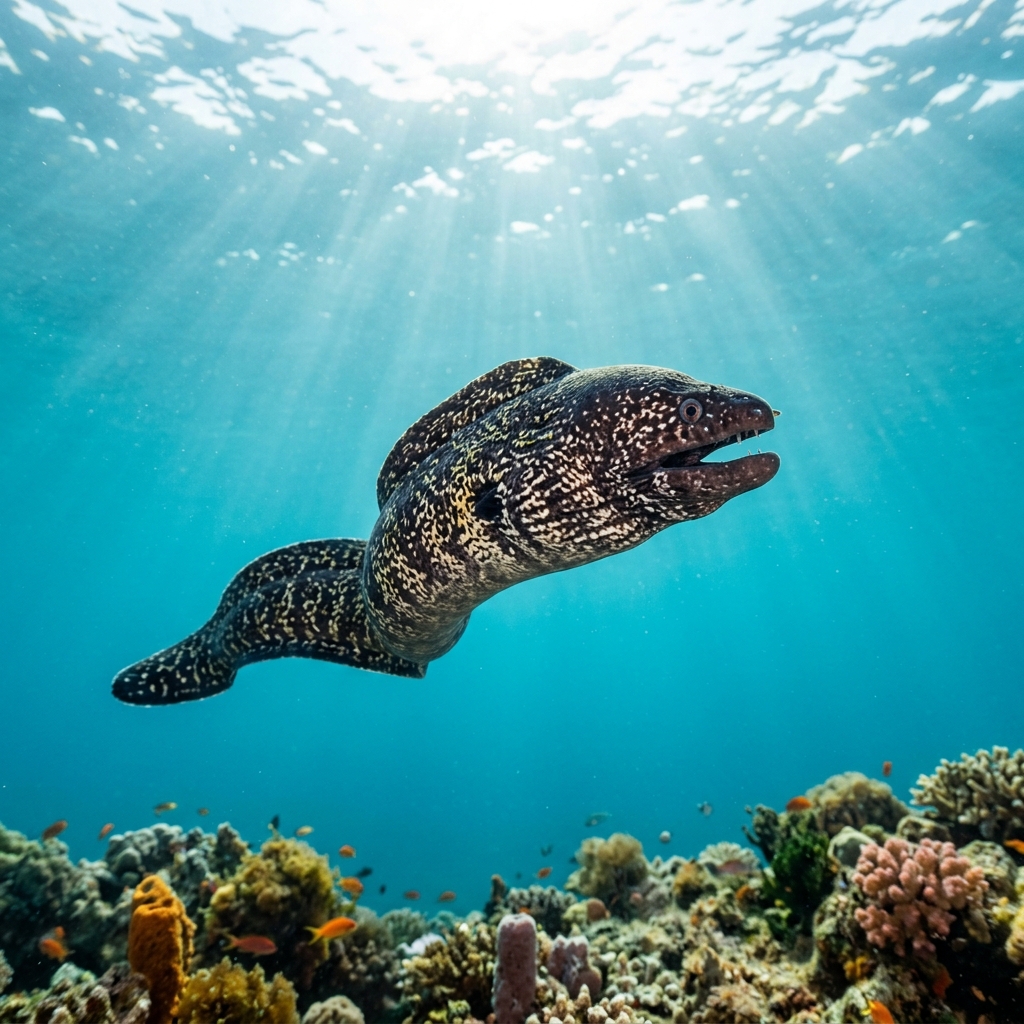
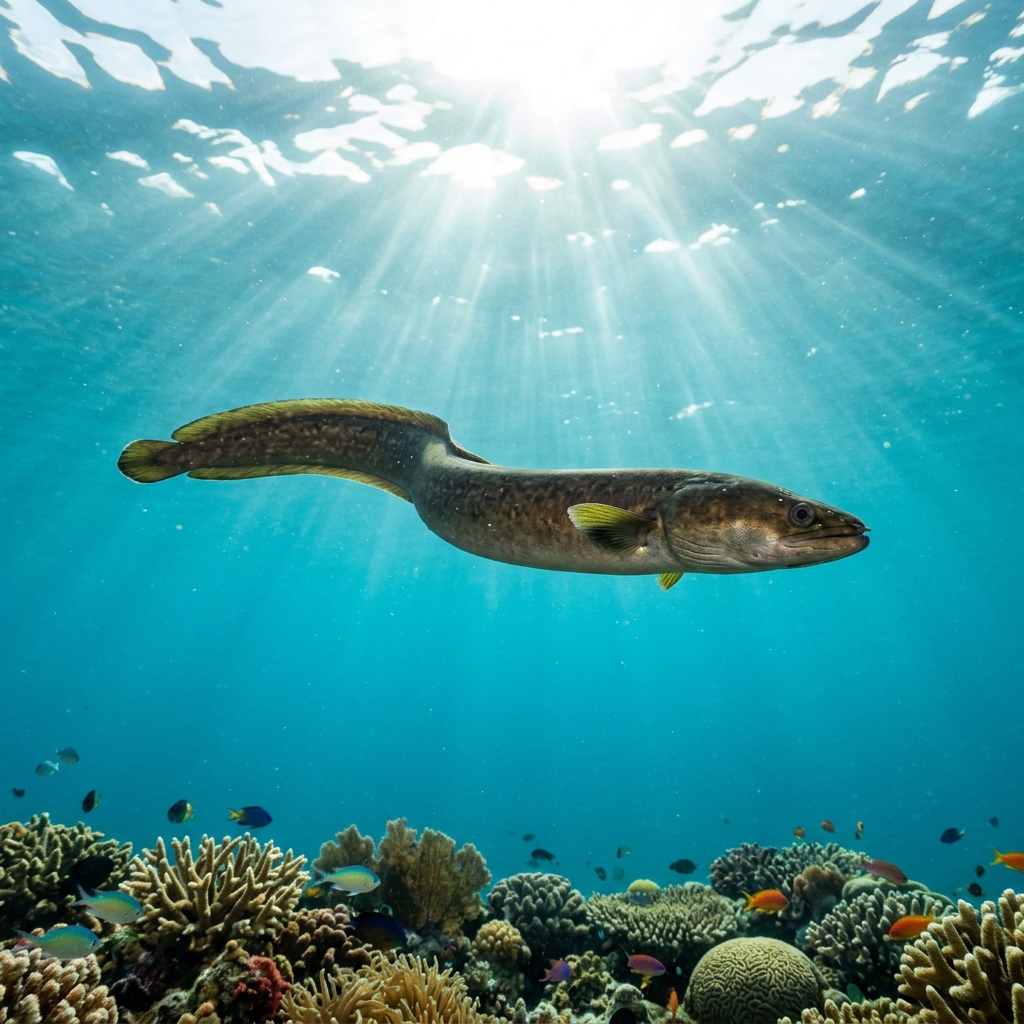
Reef neighbours a diver could mistake it for. Use the identification notes above to tell them apart.
Oman accounts for the largest share of logged sightings, with Muscat's reefs the single most reliable area; the Durban and North Coast region of South Africa is another strong hotspot. The Red Sea rounds out the core range, with solid records across Sharm el Sheikh, Dahab, and the reefs around Eilat and Aqaba.
Mapping where Starry Moray is logged…
Oman, particularly the reefs around Muscat, is the most reliably logged location. South Africa's KwaZulu-Natal coast and the Red Sea sites around Sharm el Sheikh, Dahab, Eilat and Aqaba are also strong bets. A smaller number of records come from Mauritius.
At Red Sea and Omani sites, diver sightings concentrate between October and April. If you're diving South Africa's KwaZulu-Natal coast, plan around those same cooler months for the best chance, though year-round sightings do occur there.
Look for a large, dark brown eel covered in dense small pale yellow spots over its entire body and head, paired with a strikingly yellow mouth interior. The yellow oral lining visible as it breathes is the quickest single field mark. No other common moray in its range combines both dense all-over spotting and that yellow mouth colour.
No. Like all morays they should not be hand-fed or harassed, but the Starry Moray is not considered dangerous to divers under normal conditions. It will typically stay put in its crevice and poses no threat to an observer who keeps a respectful distance.
The inside of its mouth is bright yellow, which is visible each time the eel gapes to breathe. This is more than decoration: the oral mucous contains ichthyocrinotoxin, a toxin thought to deter would-be predators, making this moray unusual even among its own family.
Site and sighting data is aggregated from diver logs, iNaturalist and GBIF. For taxonomy and conservation status:
Garden Eel
2,448 sites